Showing posts with label Great Feasts. Show all posts

Thursday, December 17, 2020

"Called to the Great Banquet of the Kingdom of God", sermon by Metropolitan Nicholas of Mesogaia

"Called to the Great Banquet of the Kingdom of God", sermon by Metropolitan Nicholas of Mesogaia, with English subtitles (source)

Through the prayers of our Holy Fathers, Lord Jesus Christ our God, have mercy on us and save us! Amen!

Monday, December 23, 2013

St. Paisios on experiencing the Nativity of Christ

The Nativity of Christ (source)
 
Elder Paisios on experiencing the Nativity of Christ

Christ, with His great love and His great rejoicing shines upon the souls of the faithful with all of His holy feasts, and truly resurrects us, having lifted us up high spiritually. We only must participate and have a spiritual appetite to celebrate spiritually. Then we will feast spiritually and get drunk spiritually from the wine of Paradise that the Saints bring to us to treat us.

For us to experience the feasts, we must have our mind on the holy days, and not of the chores that we have to do for the holy days. Let us know about the events of every holy day, and say the [Jesus] prayer, glorifying God. Thus we will celebrate each feast with great reverence.

We should study and live the divine events continuously. When someone studies the events of every feast, naturally he will be moved, and he will pray with a special piety. Then, during the services, the nous is on the events that we are celebrating, and with reverence we will follow the hymns which are being changed. When the nous is on the divine meanings, man experiences the events, and is thus changed.

-Elder, after the Vigil for Christmas, do we sleep?
It is Christmas, and we are sleeping?! My mother said: “Tonight, only the Jews are sleeping.” Do you see, the night that Christ was born, the rulers were sleeping deeply, and the shepherds were “keeping watch”. They were protecting their sheep at night, playing the flute. Do you understand? The shepherds who were keeping vigil saw Christ.

-Elder, how was the Cave [where Christ was born]?
It was a cave within a rock and it had a manger, and nothing else. It was a place that a poor man would go and leave his animals. Panagia with Joseph, because all of the rooms were filled and they had nowhere to stay, took refuge in this cave. There was the mule and and the calf, who were keeping Christ warm with their breath! Does not the Prophet Isaiah say: “the ox knows its master, and the donkey its owner’s manger” (Isaiah 1:3).

-In one of the hymns, Elder, it says that the Most-Holy Theotokos, beholding the newborn Christ, “rejoiced, but also wept”. She was pondering: “I nurse You, Who feeds all things, and I hymn You, as my Son and my God? How can I have familiarity with You?”
These are mysteries of God, the very great condescension of God, which we cannot comprehend!

-Elder, how can we experience the event of the Nativity, that, in other words, “Today, Christ is born of the Virgin”?
For us to experience these divine events, the nous must be on the divine meanings. Then, man is changed. “A great and paradoxical wonder is completed today”, we chant. If our nous is there, on the “paradoxical”, then we will experience the great mystery of the Nativity of Christ.

I pray that your hearts become the Holy Manger, and that the All-Holy Infant of Bethlehem will give you all of His blessings.
Elder Paisios of the Holy Mountain, Words Volume VI “Regarding Prayer” (pg. 195-196). Edition of the Holy Hesychasterion “St. John the Theologian”, Souroti, Thessaloniki. Amateur translation of text from: source.
 
The Nativity of Christ (source)
   
Through the prayers of our Holy Fathers, Lord Jesus Christ our God, have mercy on us and save us! Amen!

Saturday, June 22, 2013

Homily on Pentecost by St. John Chrysostom

The Great and Holy Feast of Pentecost (source)
 
Homily on Pentecost by St. John Chrysostom
Let us spiritually extol the grace of the Holy Spirit in spiritual hymns, since spiritual grace has on this day shown upon us from heaven. Though our words are too weak to express adequately the greatness of this grace, we shall praise its power and activity to the extent of our abilities; for the Holy Spirit probes all things, even the depths of divinity.

We are celebrating the day of Pentecost, the day of the Descent of the Holy Spirit to the Apostles, the day of the hope of perfection, the end of expectation, the longing for salvation, the fulfillment of prayer and the image of patience. Today the Spirit Who acted to scatter the nations in the time of Heber has formed tongues of fire among the Apostles. His action of old led to the confusion of the nations, in order to restrain the will of man from its brazenness and consequent chastisement; on this occasion, however, amidst fiery tongues, the deeds wrought by the activity of the Holy Spirit served to preserve us as recipients of preaching, in fulfillment of the will of God.

In the beginning the Spirit of God moved over the water, and later, in the time of Christ, the same Holy Spirit of God rested upon him . Then He moved, and now He rested, as being one in essence, equal in honor, ever-existent and unoriginate together with the Father and the Son.

He Who by the flight of a dove over the waters of the Flood heralded fair weather to Noah, the same Holy Spirit, by the sight of a dove at the waters of the Jordan, showed the world the Sonship of Him Who was baptized. Moreover, the Lord had a terrifying answer for those who dared to utter blasphemy against the Holy Spirit:

“Whoever speaks blasphemy against the Holy Spirit, it shall not be forgiven him, neither in this world, neither in the world to come.”

David, declaring his desire for this Holy Spirit, prayed to God, saying: “Cast me not away from Thy presence, O Lord; and take not Thy Holy Spirit from me.”

As is well known, where He is absent, every sort of corruption sets in. Thus, the Spirit of the Lord departed from Saul, and an evil spirit entered into him, wherefore David said,

“Take not Thy Holy Spirit from me.”

This same Holy Spirit sanctified the prophets, instructed the apostles and empowered the mar­tyrs. This same Holy Spirit consecrated Isaiah, taught Ezekiel and revealed the resurrection of the dead. As he says,

“The hand of the Lord was upon me, and carried me out in the spirit of the Lord.”

This same Holy Spirit chose Jeremiah from his mother’s womb, and raised up Daniel to deliver Susanna. As it is written,

“God raised up by the Holy Spirit a young youth, whose name was Daniel.”

David so loved the presence of this same Holy Spirit that he prayed to God, saving,

“Thy Holy Spirit shall lead me in the land of uprightness.”

This same Holy Spirit of God came to dwell in the holy Virgin Mary, embracing her with the communion of the Divine Word at the good pleasure of the Father, and making her the Theotokos. Elizabeth, being filled with this same Holy Spirit, understood that the Lord had come to her by means of the Virgin; wherefore she said,

“And whence is this to me, that the Mother of my Lord should come to me?”

Zachariah, the father of John, was filled with the same Holy Spirit, whereby he declared that the son born to him would be the prophet and forerunner of the King Who was to come. John himself was also filled with the same Holy Spirit; the eyes of his intellect were given light, and he beheld the heavens opened, and the Holy Spirit hovering over Him Who was being bap­tized, Him Who baptized with the Spirit and fire.

By the action of the same Holy Spirit, the Lord Himself, when He was giving His Apostles His teaching in detail and strength­ening their minds for the time of His Passion, said to them:

“If I go not away, the Com­forter will not come unto you.”

Moreover, revealing to them the Spirit’s consubstantial power, He said:

“When the Holy Spirit is come, Which proceedeth from the Father, He will guide you into all truth.”

The holy Apostles waited expectantly for the coming of the power of this same Holy Spirit; they waited together to be clothed with power from on high, according to the commandment of the Lord, Who had said:

“Tarry ye in the city of Jerusalem, until ye be endued with power from on high; for, behold, I shall send the promise of My Father upon you.”

And, as it is written,

“when the day of Pentecost was fully come, all the holy Apostles were assembled with one accord in one place, and the Paraclete was sent to them under the appearance of tongues of fire.”

Having received the abundant promise of the Father and the Holy Spirit, they were strengthened, and they manifested Him Who was sent to them, His grace and His power. The martyr and protodeacon Stephen, filled with the same Holy Spirit, Whom he received by the laying-on of hands of the Apostles, did great wonders and miracles among the people. Being full of the Holy Spirit, he saw the doors of heaven opened and the Only-begotten Son and Word of God standing in the flesh at the right hand of the power of God. Filled with this same Holy Spirit, Paul became the preacher of divine mysteries. As Ananias said to him:

“The Lord, even the Savior, hath sent me to thee, that thou mightest receive thy sight, and be filled with the Holy Spirit.”

And Paul afterwards said with assurance:

“And I think also that I have the Spirit of God.”

The same Holy Spirit came to Cornelius and those that were to be baptized with him, and each of them spoke in his own tongue and magnified God. This same Holy Spirit came upon the Ethiopian eunuch after he went down into the water [of baptism], and he was filled with joy, and he went on his way rejoicing.

This is the same Holy Spirit Who preached by the prophets, Who gave understanding to the apostles, Who spoke to men. He was given to them by the Lord, and all their adversaries were not able to gainsay or resist Him. For, as the Lord said,

“It is not ye that speak, but the Spirit of your Father Which speaketh in you.”

This Holy Spirit also or­dains priests, consecrates churches, purifies altars, perfects sacrifices and cleanses people of their sins. This Holy Spirit abides with the godly, refines the righteous and guides kings. This same Holy Spirit preserved the soul of Simeon, lengthening the time of his life and re­versing the rules of death, until the day when he beheld Him Who is the Redeemer of life and death; for it had been promised unto him by the Holy Spirit, that he should not see death before he had seen the Lord’s Christ.

It was the same Holy Spirit Who gave strength to Elijah, and Whose power Elisha desired when he asked of Elijah:

“Let there be, I pray thee, a double portion of thy spirit upon me.”

This Holy Spirit enlightens souls and sanctifies bodies. It was the same Holy Spirit Who descended upon the Apostles and filled them with divine wisdom. Having received His gifts, they were all filled with the knowledge of God; not only were they given divine knowledge, but also spiritual gifts.

Simon Magus, being a stranger to the Holy Spirit, fell to his perdition. As Peter said to Simon:

“Thy money perish with thee, because thou hast desired to purchase the priceless grace of the Holy Spirit with money.”

Therefore, beloved, let us strive to keep our bodies uncorrupted; for one who has acquired a new body, which is a temple of the Holy Spirit, has become a true victor over the devil. What the Spirit of God has said, may it be done unto me.

Moreover, Joseph, strength­ened by this same Holy Spirit, desired not that his body be defiled by the vile deeds of this life; for he knew that the Spirit does not abide in a body that has commerce with sin; there­fore, he attained a royal rank. This Spirit enlightened Bezaleel, so that he fashioned the tabernacle with all beauty and skill. Joshua the son of Nun, possessing the same Spirit, be­came a faithful heir to Moses and obtained the inheritance of the Promised Land for his people. As God said to Moses:

“Take to thyself Joshua the son of Nun, a man who has the Spirit of God in him.”

This is the Spirit of Whom the Lord, when He breathed upon His disciples after His Resurrection from the dead on the third day, said:

“Receive ye the Holy Spirit.”

And again, it is the same Spirit Who has vouchsafed to give eternal life to the faithful after the general resurrection from the dead. As it is written:

“Thou wilt send forth Thy Spirit, and they shall be created; and Thou shalt renew the face of the earth.”

Many are the gifts of the Holy Spirit; many and all-powerful are His gifts.

As it says in a certain place: By the Word of the Lord were the heavens established, and all the might of them by the Spirit of His mouth. And Isaiah says:

“The Spirit of God shall rest upon him, the spirit of wisdom and understanding, the spirit of counsel and strength, the spirit of knowledge and godliness.”

And Paul adds,

“The Spirit of adoption and of grace.”

He Who is equally ever-existent, and equally unoriginate, and Who shares the throne and the honor of God, His Son and Word, called this Spirit the Spirit Who is our Comforter. David calls Him the Holy Spirit, since the Holy Spirit is sent by holiness; the governing Spirit, since He has dominion over all, be­cause all things came from Him and are kept in existence by Him; and the good Spirit, since salvation and all kinds of goodness are from Him.

And what does Isaiah call Him? The Spirit of God, because He proceeds from God the Father; thus does God Himself speak of the Spirit of God as proceeding, in the words, Which proceedeth from the Father. Isaiah further calls Him the Spirit of wisdom and understanding, because all wisdom and good understanding have been given through Him; and the Spirit of counsel and strength, because He is able to bring to pass that which is desired; and also the Spirit of knowledge and godliness. Ezekiel, a man of the spirit, says:

“And I will give you a new heart and a new Spirit.”

He is one in essence, one in principle and one in counsel with the Father and the Son. Wouldst thou believe? Listen to what the Scriptures say of Him:

“When He prepared the heaven, I was present with Him.”

The prophet further says:

“The Lord, and His Spirit hath sent me.”

Lest anyone think, from what was said, that this new Spirit would come from any creatures living or yet to come, or from any other person, He says:

“And I will put My Spirit in you;”

inasmuch as He said,

“A new Spirit.”

In the Acts of the holy Apostles, this was ex­pressed in commandments:

“The Holy Spirit said, ‘Separate me Barnabas and Saul for the work whereunto I have called them.’”

And again,

“It seemed good to the Holy Spirit, and to us;”

even as it had been said,

“I will put My Spirit in you.”

Would you demonstrate that this was indeed His coming, as was foretold in parables, and that it was His grace acting upon the holy Apostles? Will you believe what was said? Listen to St. John the Evangelist, who says:

“The Holy Spirit was not yet given, because that Jesus was not yet glorified.”

Paul called this Spirit the Spirit of adoption and the Spirit of grace, inasmuch as in the waters of the baptismal font men are born again of water and the Spirit, and we receive the adoption of sons. In the same way, the Lord said to Nicodemus:

“Except a man be born of water and of the Spirit, he cannot enter into the kingdom of God.”

Thus, the Holy Spirit is the Spirit of sonship and the Spirit of grace; for grace and truth came by Jesus Christ, through the Holy Spirit, for those who have been born by the power of God.

Moreover, the Spirit is called the Comforter, because He is also our advocate with the Father. And not only is He with the Father, but He is always with us also as a gift.

“And I will pray the Father, and He shall give you another Comforter, that He may abide with you forever,”

comforting your hearts and making them steadfast in divine patience and trust in Christ. Whereas the holy Apostles re­ceived this testament after Christ’s holy Rising from the dead, and were sent forth to teach and to baptize in the name of the Father and of the Son and of the Holy Spirit, and whereas we have already been vouchsafed this true washing by the Holy Spirit, let us strive to keep our souls and our bodies undefiled as we glorify the Most holy and consubstantial Trinity, the Father and the Son and the Holy Spirit, now and ever and unto the ages of ages. Amen
(source)
  
Through the prayers of our Holy Fathers, Lord Jesus Christ our God, have mercy on us and save us! Amen!

Sunday, May 12, 2013

Homily on St. Thomas Sunday, by St. John of Kronstadt

Christ is risen! Truly He is risen!
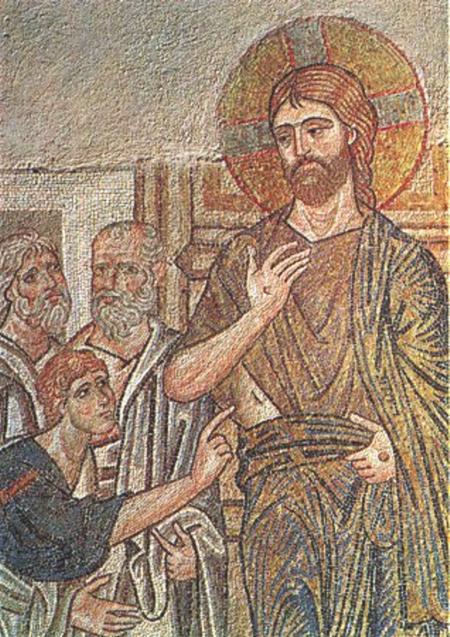
St. Thomas touching the risen Christ (source)
   
Homily on St. Thomas Sunday, by St. John of Kronstadt
Christ is Risen!

Beloved brothers, so Bright Week has passed and taken with it our deeds to the throne of the Heavenly Master and Judge: there, brothers, there are our deeds now. I say this in order to frighten with the fear of the heavenly judgment those who unworthily, not Christian-like, spent the feast of the bright Resurrection of Christ and to comfort those who spent it with temperance and spiritual joy.

How did very many spend the feast of the bright Resurrection? I would not like to call to remembrance foul human deeds but they, together with those that performed them, need to be remembered and judged on behalf of God. The all-bright feast was met, after the bright Paschal service, with dark deeds: intemperance and drunkenness, fights, cursing, and all types of sin. Consider that we fasted before the feast only in order to, with even more eagerness, rush into all fleshly, sinful deeds so that we can unashamedly and with insolence indulge in every iniquity. Alas! Woe unto us!

All those who met the feast with intemperance and drunkenness, adultery, cursing, and other similar deeds of the flesh lost all the benefit which they had received (if they even received any) from the fast, lost the benefit from repentance and communion of the Holy Mysteries, trampled them as an unreasonable animal under their feet, lost the acceptable time for salvation, given them by the mercy of the Lord, time which will not be returned. It was proper to say to you during the fast, behold, now is the accepted time; behold, now is the day of salvation (2 Cor. 6:2) for it was just then that you had come to the saving font of repentance and to the all-cleansing, true Mysteries of the body and blood of the Lord. Now your confession and communion is put off until the next fast but who knows if the Lord will vouchsafe you to again confess and commune? Who knows if you will repose in those very iniquities with which again, after the font of repentance, you have defiled yourself? How painful, how piteous, beloved brothers, that so soon you have turned out to be betrayers of Christ and have given yourself over to the devil to serve him, the original murderer, the author of, and instructor in of every type of sin! You are, using the words of the Savior, and I, a great sinner, am as well are of your father the devil, and the lusts of your father ye will do (John 8:44).

What, then, remains for us to do, beloved brothers? To pray and weep for our sins. To weep that not Christian-like and not even human-like did many of us meet the feast but like vile idol worshipers and like wild animals, which have not been fed for a long time with their favorite food. To weep that we have trampled upon the great, soul-saving Mysteries of Christ, that is, repentance and communion, and counted them as nought. To weep that the time, given for salvation, we have thoughtlessly lost. May we weep and pray to the Lord that He “not become angry with us neither destroy us with our iniquities” (first morning prayer) but would return us to the way of repentance and make us skilled performers of His commandments. Let us firmly decide from now on not to give ourselves over to intemperance and drunkenness and all the sins which follow, and with tears ask the Lord that He, with the Grace of the Holy Spirit, would strengthen us in our intentions and good deeds.

Brothers! May we all shed tears for we all unworthily met the great feast of the Lord and angered our Lord; not in this way, not in this way indeed, should we meet the feasts of the Lord. We need to meet them with spiritual joy in the Lord, for our deliverance from sins and for our eternal salvation through Christ, the Son of God, with deeds of mercy, temperance from passions, visiting the church of God in spirit and truth and with simplicity in food and clothing.

O, you, decorated with gold and a multitude of precious fabrics, women and maids! In the name of the Lord, I direct my speech to you! What a multitude of poor would you have been able to cause to rejoice on the all-bright day of the Resurrection of Christ and, in that way, worthily meet that great feast, if you would have, in generosity and Christian love, changed even a few of these decorations into money and given that money to the poor who are so many in our city? Would it not have been reasonable, in a Christian way, if you had fewer precious clothing and the money remaining you had given to the poor? What rich mercy would you have received on that day from Christ the Lord? Yes, truly Christian-like would you have then met the feast of Christ’s Resurrection. But now what? You are decorated like idols but the members of Christ are without clothes; you are satiated but the members of Christ are in want; you roll in every possible pleasure but those are in tears; we are in rich and decorated dwellings but those are in cramped conditions and uncleanness, in dwellings which are often not any better than a pigsty. We do not have Christian love and, therefore, there is no true feast of the Resurrection of Christ, for those truly celebrate the Resurrection who himself is raised from dead deeds to deeds of virtue and Christian faith and love, trampling on intemperance, luxury, and all of the passions. Brothers! May we celebrate the feasts of the Lord as Christians and not as pagans! Amen.

(source)
   

Christ has risen from the dead, by death he has trampled on death, and to those in the graves given life!
Truly the Lord is risen!

Sunday, August 5, 2012

Homily on the Transfiguration of Christ by St. Gregory Palamas


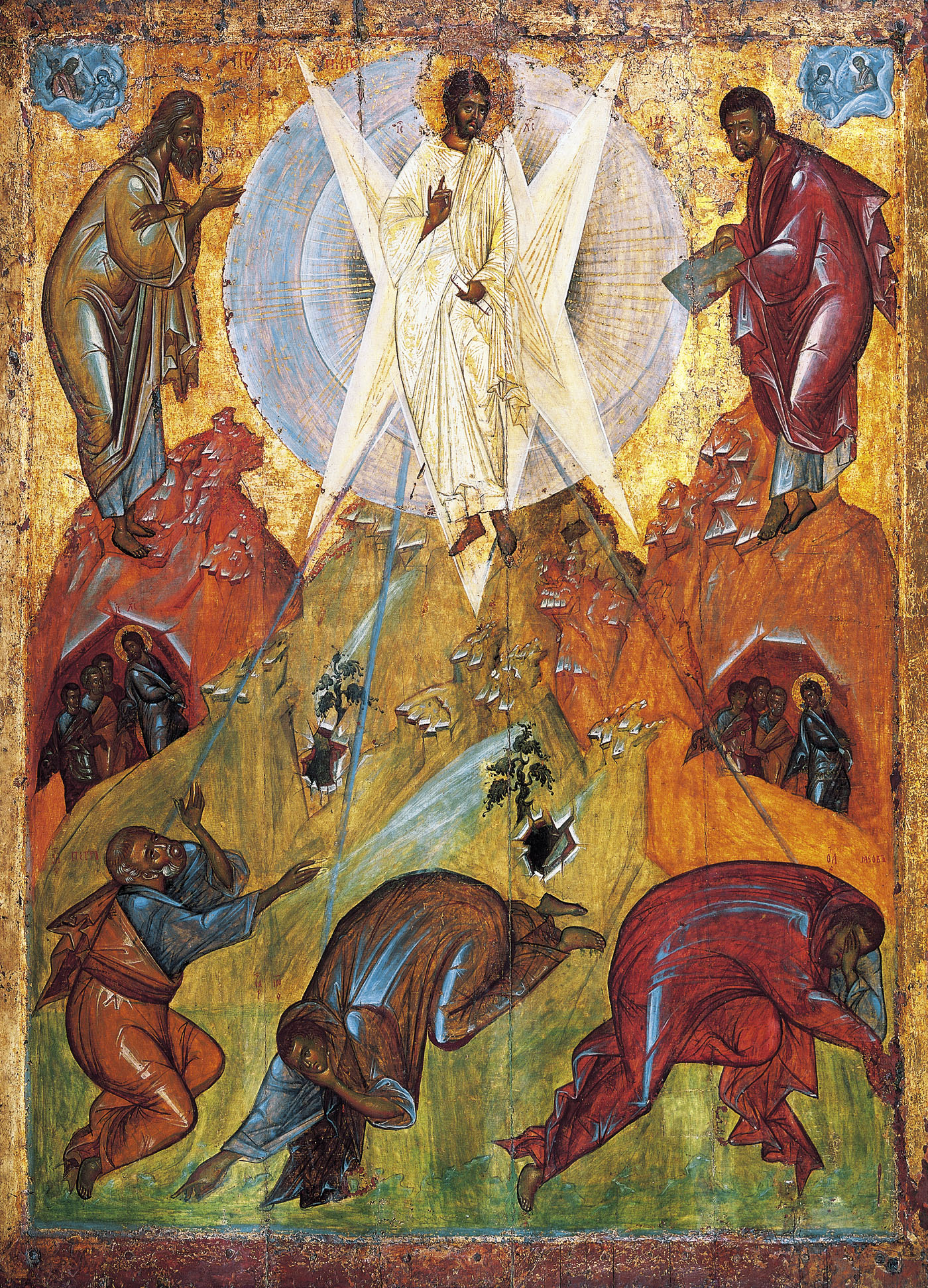
Homily on the Transfiguration of Christ by St. Gregory Palamas
For an explanation of the present Feast and understanding of its truth, it is necessary for us to turn to the very start of today’s reading from the Gospel: “Now after six days Jesus took Peter, James and John his brother, and led them up onto a high mountain by themselves” (Mt 17:1).
   
First of all we must ask, from whence does the Evangelist Matthew begin to reckon with six days? From what sort of day be it? What does the preceding turn of speech indicate, where the Savior, in teaching His disciples, said to them: “For the Son of Man shall come with his angels in the glory of His Father,” and further: “Amen I say to you, there are some standing here who shall not taste death, until they have seen the Son of Man coming in His Kingdom” (Mt 16:27-28)? That is to say, it is the Light of His own forthcoming Transfiguration which He terms the Glory of His Father and of His Kingdom.
   
The Evangelist Luke points this out and reveals this more clearly saying: “Now it came to pass about eight days after these words, that He took Peter and John and James, and went up the mountain to pray. And as He prayed, His countenance was altered, and His raiment became a radiant white” (Lk 9:28-29). But how can the two be reconciled, when one of them speaks definitively about the interval of time as being eight days between the sayings and the manifestation, whereas the other (says): “after six days?”
   
There were eight on the mountain, but only six were visible. Three, Peter, James and John, had come up with Jesus, and they saw Moses and Elias standing there and conversing with Him, so altogether there were six of them. However, the Father and the Holy Spirit were invisibly with the Lord: the Father, with His Voice testifying that this was His Beloved Son, and the Holy Spirit shining forth with Him in the radiant cloud. Thus, the six are actually eight, and there is no contradiction regarding the eight. Similarly, there is no contradiction with the Evangelists when one says “after six days,” and the other says “eight days after these words.”
   
But these twofold sayings as it were present us a certain format set in mystery, and together with it that of those actually present upon the Mount. It stands to reason, and everyone rationally studying in accordance with Scripture knows that the Evangelists are in agreement one with another. Luke spoke of eight days without contradicting Matthew, who declared “after six days.” There is not another day added on to represent the day on which these sayings were uttered, nor is the day on which the Lord was transfigured added on (which a rational person might reasonably imagine to be added to the days of Matthew).
   
The Evangelist Luke does not say “after eight days” (like the Evangelist Matthew says “after six days”), but rather “it came to pass eight days after these words.” But where the Evangelists seem to contradict one another, they actually point out to us something great and mysterious. In actual fact, why did the one say “after six days,” but the other, in ignoring the seventh day, have in mind the eighth day? It is because the great vision of the Light of the Transfiguration of the Lord is the mystery of the Eighth Day, i.e., of the future age, coming to be revealed after the passing away of the world created in six days.
   
About the power of the Divine Spirit, through Whom the Kingdom of God is to be revealed, the Lord predicted: “There are some standing here who shall not taste death, until they have seen the Son of Man coming in His Kingdom” (Mt 16:28). Everywhere and in every way the King will be present, and everywhere will be His Kingdom, since the advent of His Kingdom does not signify the passing over from one place to another, but rather the revelation of its power of the Divine Spirit. That is why it is said: “come in power.” And this power is not manifest to simply ordinary people, but to those standing with the Lord, that is to say, those who have affirmed their faith in Him like Peter, James and John, and especially those who are free of our natural abasement. Therefore, and precisely because of this, God manifests Himself upon the Mount, on the one hand coming down from His heights, and on the other, raising us up from the depths of abasement, since the Transcendent One takes on mortal nature. Certainly, such a manifest appearance by far transcends the utmost limits of the mind’s grasp, as effectualized by the power of the Divine Spirit.
   
Thus, the Light of the Transfiguration of the Lord is not something that comes to be and then vanishes, nor is it subject to the sensory faculties, although it was contemplated by corporeal eyes for a short while upon an inconsequential mountaintop. But the initiates of the Mystery, (the disciples) of the Lord at this time passed beyond mere flesh into spirit through a transformation of their senses, effectualized within them by the Spirit, and in such a way that they beheld what, and to what extent, the Divine Spirit had wrought blessedness in them to behold the Ineffable Light.
   
Those not grasping this point have conjectured that the chosen from among the Apostles beheld the Light of the Transfiguration of the Lord by a sensual and creaturely faculty, and through this they attempt to reduce to a creaturely level (i.e., as something “created”) not only this Light, the Kingdom and the Glory of God, but also the Power of the Divine Spirit, through Whom it is meet for Divine Mysteries to be revealed. In all likelihood, such persons have not heeded the words of the Apostle Paul: “Eye has not seen, nor ear heard, nor has it entered into the heart of man, what things God has prepared for those who love Him. But to us God has revealed them through His Spirit. For the Spirit searches all things, even the deep things of God” (1 Cor 2:9-10).
   
So, with the onset of the Eighth Day, the Lord, taking Peter, James and John, went up on the Mount to pray. He always prayed alone, withdrawing from everyone, even from the Apostles themselves, as for example when with five loaves and two fish He fed the five thousand men, besides women and children (Mt 14:19-23). Or, taking with Him those who excelled others, as at the approach of His Saving Passion, when He said to the other disciples: “Sit here while I go over there and pray” (Mt 26:36). Then He took with Him Peter, James and John. But in our instance right here and now, having taken only these same three, the Lord led them up onto a high mountain by themselves and was transfigured before them, that is to say, before their very eyes.
   
“What does it mean to say: He was transfigured?” asks the Golden-Mouthed Theologian (Chrysostomos). He answers this by saying: “It revealed something of His Divinity to them, as much and insofar as they were able to apprehend it, and it showed the indwelling of God within Him.” The Evangelist Luke says: “And as He prayed, His countenance was altered” (Lk 9:29); and from the Evangelist Matthew we read: “And His face shone as the sun” (Mt 17:2). But the Evangelist said this, not in the context that this Light be thought of as subsistent for the senses (let us put aside the blindness of mind of those who can conceive of nothing higher than what is known through the senses). Rather, it is to show that Christ God, for those living and contemplating by the Spirit, is the same as the sun is for those living in the flesh and contemplating by the senses. Therefore, some other Light for the knowing the Divinity is not necessary for those who are enriched by Divine gifts.
   
That same Inscrutable Light shone and was mysteriously manifest to the Apostles and the foremost of the Prophets at that moment, when (the Lord) was praying. This shows that what brought forth this blessed sight was prayer, and that the radiance occured and was manifest by uniting the mind with God, and that it is granted to all who, with constant exercise in efforts of virtue and prayer, strive with their mind towards God. True beauty, essentially, can be contemplated only with a purified mind. To gaze upon its luminance assumes a sort of participation in it, as though some bright ray etches itself upon the face.
   
Even the face of Moses was illumined by his association with God. Do you not know that Moses was transfigured when he went up the mountain, and there beheld the Glory of God? But he (Moses) did not effect this, but rather he underwent a transfiguration. However, our Lord Jesus Christ possessed that Light Himself. In this regard, actually, He did not need prayer for His flesh to radiate with the Divine Light; it was but to show from whence that Light descends upon the saints of God, and how to contemplate it. For it is written that even the saints “will shine forth like the sun” (Mt 13:43), which is to say, entirely permeated by Divine Light as they gaze upon Christ, divinely and inexpressibly shining forth His Radiance, issuing from His Divine Nature. On Mount Tabor it was manifest also in His Flesh, by reason of the Hypostatic Union (i.e., the union of the two perfect natures, divine and human, within the divine Person [Hypostasis] of Christ, the Second Person of the Most Holy Trinity). The Fourth Ecumenical Council at Chalcedon defined this Hypostatic union of Christ’s two natures, divine and human, as “without mingling, without change, without division, without separation.”
   
We believe that at the Transfiguration He manifested not some other sort of light, but only that which was concealed beneath His fleshly exterior. This Light was the Light of the Divine Nature, and as such, it was Uncreated and Divine. So also, in the teachings of the Fathers, Jesus Christ was transfigured on the Mount, not taking upon Himself something new nor being changed into something new, nor something which formerly He did not possess. Rather, it was to show His disciples that which He already was, opening their eyes and bringing them from blindness to sight. For do you not see that eyes that can perceive natural things would be blind to this Light?
   
Thus, this Light is not a light of the senses, and those contemplating it do not simply see with sensual eyes, but rather they are changed by the power of the Divine Spirit. They were transformed, and only in this way did they see the transformation taking place amidst the very assumption of our perishability, with the deification through union with the Word of God in place of this.
   
So also she who miraculously conceived and gave birth recognized that the One born of her is God Incarnate. So it was also for Simeon, who only received this Infant into his arms, and the aged Anna, coming out [from the Jerusalem Temple] for the Meeting, since the Divine Power illumined, as through a glass windowpane, giving light for those having pure eyes of heart.
   
And why did the Lord, before the beginning of the Transfiguration, choose the foremost of the Apostles and lead them up onto the Mount with Him? Certainly, it was to show them something great and mysterious. What is particularly great or mysterious in showing a sensory light, which not only the foremost, but all the other Apostles already abundantly possessed? Why would they need a transforming of their eyes by the power of the Holy Spirit for a contemplation of this Light, if it were merely sensory and created? How could the Glory and the Kingdom of the Father and the Holy Spirit project forth in some sort of sensory light? Indeed, in what sort of Glory and Kingdom would Christ the Lord come at the end of the ages, when there would not be necessary anything in the air, nor in expanse, nor anything similar, but when, in the words of the Apostle, “God will be all in all” (1 Cor 15: 28)? That is to say, will He alter everything for all? If so, then it follows that light is included.
Hence it is clear that the Light of Tabor was a Divine Light. And the Evangelist John, inspired by Divine Revelation, says clearly that the future eternal and enduring city “has no need of the sun or moon to shine upon it. For the Glory of God lights it up, and the Lamb will be its lamp” (Rev 21:23). Is it not clear, that he points out here that this [Lamb] is Jesus, Who is divinely transfigured now upon Tabor, and the flesh of Whom shines, is the lamp manifesting the Glory of divinity for those ascending the mountain with Him?
   
John the Theologian also says about the inhabitants of this city: “they will not need light from lamps, nor the light of the sun, for the Lord God will shed light upon them, and night shall be no more” (Rev 22:5). But how, we might ask, is there this other light, in which “there is no change, nor shadow of alteration” (Jas 1:17)? What light is there that is constant and unsetting, unless it be the Light of God? Moreover, could Moses and Elias (and particularly the former, who clearly was present only in spirit, and not in flesh [Elias having ascended bodily to Heaven on the fiery chariot]) be shining with any sort of sensory light, and be seen and known? Especially since it was written of them: “they appeared in glory, and spoke of his death, which he was about to fulfill at Jerusalem” (Lk 9:30-31). And how otherwise could the Apostles recognize those whom they had never seen before, unless through the mysterious power of the Divine Light, opening their mental eyes?
   
But let us not tire our attention with the furthermost interpretations of the words of the Gospel. We shall believe thus, as those same ones have taught us, who themselves were enlightened by the Lord Himself, insofar as they alone know this well: the Mysteries of God, in the words of a prophet, are known to God alone and His perpetual proximity. Let us, considering the Mystery of the Transfiguration of the Lord in accord with their teaching, strive to be illumined by this Light ourselves and encourage in ourselves love and striving towards the Unfading Glory and Beauty, purifying our spiritual eyes of worldly thoughts and refraining from perishable and quickly passing delights and beauty which darken the garb of the soul and lead to the fire of Gehenna and everlasting darkness. Let us be freed from these by the illumination and knowledge of the incorporeal and ever-existing Light of our Savior transfigured on Tabor, in His Glory, and of His Father from all eternity, and His Life-Creating Spirit, Whom are One Radiance, One Godhead, and Glory, and Kingdom, and Power now and ever and unto ages of ages. Amen.
   
Through the prayers of our Holy Fathers, Lord Jesus Christ our God, have mercy on us and save us! Amen!

Friday, December 23, 2011

St. Paisios on spiritually celebrating the Feasts

  
St. Paisios on spiritually celebrating the Feasts (amateur translation)
For us to experience the feasts, we must have our minds on the holy days, and not on the work that we have to do for the holy days. We should think about the events of every holy day (Christmas, Theophany, Pascha, etc.) and we should say the [Jesus] prayer, glorifying God. Thus we will celebrate each feast with great reverence. Wordly people associate Christmas with pork, Pascha with lamb, Meatfare with confetti. But true monks experience the divine events every day, and rejoice continually. Every week they experience Holy Week. Every Wednesday, Thursday, Friday, they experience Holy Wednesday, Holy Thursday, Holy Friday, in other words, the Passion of Christ, and every Sunday, Pascha, the Resurrection.
(http://ahdoni.blogspot.com/2011/12/blog-post_3183.html)
  
St. Paisios the Athonite (source)
  
Through the prayers of our Holy Fathers, Lord Jesus Christ our God, have mercy on us and save us! Amen!

Friday, August 5, 2011

Selected hymns from the Great Feast of the Transfiguration of Christ

The Holy Transfiguration of Christ - Celebrated on August 6 

Selected hymns from the Great Feast of the Transfiguration of Christ


Apolytikion
You were transfigured upon the mountain, O Christ our God, showing to Your disciples Your glory as much as they could bear. Do also in us, sinners though we be, shine Your everlasting light, at the intercession of the Theotokos, O Giver of light. Glory to You.

Kathisma I. Mode 4. Joseph marveled.
You were transfigured on the Mount* Tabor, and demonstrated thus* the transformation mortal men* shall with Your glory undergo* at the fearful Second Coming of You our Savior.* Moses and Elias were conversing with You.* And You called together three of Your disciples there,* who gazed upon Your glory, O Master,* and were astounded by Your fulgurant light.* O Lord who then shined Your light upon them,* do also illuminate our souls.

Kontakion. Grave Mode.
Upon the mountain were You transfigured, and Your disciples beheld Your glory as far as they were able, O Christ our God; so that when they would see You crucified they might understand that Your Passion was deliberate, and declare to the world that in truth You are the Father’s radiance.

Å’kos
Awake you dull thoughts, be not always groveling and bending my soul towards the earth; arise and go up to the height of divine ascent. Let us run to join Peter and Zebedeeʹs sons, and with them go directly to Mount Tabor; that with them we may see the glory of our God, and may also hear the voice that they heard from heaven; and they proclaimed the Father’s radiance.

Excerpt from the Ninth Ode of the Second Canon of the Feast, in the Plagal of the Fourth Tone
Glory to You, our God, glory to You.
That You might manifestly show * Your unutterable second descent to come, * how You the Most High God * will then be seen standing in the midst of gods, * You did ineffably shine forth * on Moses and Elias and * on the Apostles, O Lord, * on Mount Tabor. Hence we magnify You, O Christ

Glory.
People, come listen to me. * Let us climb that mountain, holy and heavenly, and immaterially * stand in the city of the living God. * Let us noetically see * the immaterial Divinity * of the Father and the Spirit, * shining forth in the Only‐begotten Son.

Both now.
You have enraptured me, O Christ, * with Your longing and transformed me with love divine. * I pray, completely consume * with immaterial fire all my sins. * And count me worthy to be filled * fully with the delight in You, * that I may magnify * both Your Comings, O good Master, exultantly.

Exaposteilarion. Mode 3. Original Melody.
O Logos, light unaltered* of light, unbegotten Father,* we have beheld light, the Father,* and light the all‐holy Spirit* today in Your light appearing* upon Mount Tabor,* guiding with light all creation.

Prosomoia of the Praises in the Fourth Tone
Before You went to Your precious Cross and Passion,* taking those holy Disciples You had specially* chosen, O Lord, You went up with them* into Mount Tabor,* wishing to show them Your glory as You did.* And when they beheld You thus transfigured and they saw* that You were shining more brightly than* the sun, they fell down* and were astounded by Your authority.* They cried aloud: You are the timeless light,* and the Father’s bright radiance, even though* as You willed You became flesh* without changing and were thus beheld.

O God the Word who exist before the ages,* who cover yourself with light as with a garment, O Lord,* You were transfigured before the eyes* of Your Disciples* and shined, O Logos, more brightly than the sun.* Moses and Elias stood by You betokening* that You are truly the Lord of both* the dead and living,* And they doxologized Your ineffable* mercy and dispensation and Your great* condescension by which You have saved the world* which was lost in transgressions* and was perishing because of sins.

When Your Disciples were there with You together,* the voice of the Father then explicitly declared* that You are His own beloved Son,* the same in essence,* sharing the same throne, in whom He is well pleased,* You who from a virgin cloud were born becoming flesh,* and were transfigured, O sovereign Lord,* upon Mount Tabor,* and were encompassed with a bright shining cloud.* Wherefore did Peter in astonishment* say, “O Master, it is well that we are here,”* not knowing what he was saying,* O Benefactor rich in mercy.

Doxastikon of the Praises in the Plagal of the Fourth Tone
Glory; both now.
Christ took Peter, James, and John,and led them up on a high mountain apart by themselves; and He was transfigured before them; and His face shone like the sun, and His clothes became as white as the light. Moses and Elijah appeared to them, talking with Him. Then a bright cloud overshadowed them; and suddenly a voice came out of the cloud, saying, ʺThis is My beloved Son, in whom I am well pleased. Listen to Him!ʺ


Through the prayers of our Holy Fathers, Lord Jesus Christ our God, have mercy on us and save us! Amen!

Friday, December 24, 2010

"The Word became flesh", by St. John of Kronstadt

Christ is born! Glorify Him!
   
Icon of the Holy Nativity of Christ (http://www.icon-art.info/hires.php?lng=ru&type=1&id=572)
   

THE WORD BECAME FLESH:

A Sermon by St John of Kronstadt on the Nativity of Christ

The Word became flesh; that is, the Son of God, co-eternal with God the Father and with the Holy Spirit, became human – having become incarnate of the Holy Spirit and the Virgin Mary. O, wondrous, awesome and salvific mystery! The One Who had no beginning took on a beginning according to humanity; the One without flesh assumed flesh. God became man – without ceasing to be God. The Unapproachable One became approachable to all, in the aspect of an humble servant. Why, and for what reason, was there such condescension [shown] on the part of the Creator toward His transgressing creatures – toward humanity which, through an act of its own will had fallen away from God, its Creator?

It was by reason of a supreme, inexpressible mercy toward His creation on the part of the Master, Who could not bear to see the entire race of mankind – which, He, in creating, had endowed with wondrous gifts – enslaved by the devil and thus destined for eternal suffering and torment.

And the Word became flesh!...in order to make us earthly beings into heavenly ones, in order to make sinners into saints; in order to raise us up from corruption into incorruption, from earth to heaven; from enslavement to sin and the devil – into the glorious freedom of children of God; from death – into immortality, in order to make us sons of God and to seat us together with Him upon the Throne as His royal children.

O, boundless compassion of God! O, inexpressible wisdom of God! O, great wonder, astounding not only the human mind, but the angelic [mind] as well!

Let us glorify God! With the coming of the Son of God in the flesh upon the earth, with His offering Himself up as a sacrifice for the sinful human race, there is given to those who believe the blessing of the Heavenly Father, replacing that curse which had been uttered by God in the beginning; they are adopted and receive the promise of an eternal inheritance of life. To a humanity orphaned by reason of sin, the Heavenly Father returns anew through the mystery of re-birth, that is, through baptism and repentance. People are freed of the tormenting, death-bearing authority of the devil, of the afflictions of sin and of various passions.

Human nature is deified for the sake of the boundless compassion of the Son of God; and its sins are purified; the defiled are sanctified. The ailing are healed. Upon those in dishonour are boundless honour and glory bestowed.

Those in darkness are enlightened by the Divine light of grace and reason.

The human mind is given the rational power of God – we have the mind of Christ (Cor. 2, 16), says the Holy apostle Paul. To the human heart, the heart of Christ is given. The perishable is made immortal. Those naked and wounded by sin and by passions are adorned in Divine glory. Those who hunger and thirst are sated and assuaged by the nourishing and soul-strengthening Word of God and by the most pure Body and Divine Blood of Christ. The inconsolable are consoled. Those ravaged by the devil have been – and continue to be – delivered.

What, then, O, brethren, is required of us in order that we might avail ourselves of all the grace brought unto us from on high by the coming to earth of the Son of God? What is necessary, first of all, is faith in the Son of God, in the Gospel as the salvation-bestowing heavenly teaching; a true repentance of sins and the correction of life and of heart; communion in prayer and in the mysteries [sacraments]; the knowledge and fulfillment of Christ’s commandments. Also necessary are the virtues: Christian humility, alms-giving, continence, purity and chastity, simplicity and goodness of heart.

Let us, then, O brothers and sisters, bring these virtues as a gift to the One Who was born for the sake of our salvation – let us bring them in place of the gold, frankincense and myrrh which the Magi brought Him, as to One Who is King, God, and Man, come to die for us. This, from us, shall be the most-pleasing form of sacrifice to God and to the Infant Jesus Christ.
Amen.

(Translated into English by G. Spruksts, from the Russian text appearing in Chapter 2 of "Solntse Pravdy: O Zhizni i Uchenii Gospoda Nashego, Iisusa Khrista" ["The Sun of Righteousness: On the Life and Teaching of Our Lord, Jesus Christ"], by Protopriest [Saint] Ioann [John] (Sergiev) of Kronstadt, pp. 4-6. English-language translation copyright © 1983, 1996 by The Saint Stefan of Perm' Guild, The Russian Cultural Heritage Society, and the Translator. All rights reserved. Reprinted by permission from "KITEZH: The Journal of the Russian Cultural Heritage Society," Vol. 12, No. 4 (48). http://www.orthodox.net/nativity/nativity-sjok-2.html)
   
Icon depicting the events surrounding Christ's Nativity (i.e. the Magi seeing the star and meeting with Herod, Joseph being instructed by the angel in a dream, the Magi worshipping Christ, the Slaughter of the Innocents, etc.) (http://www.icon-art.info/hires.php?lng=ru&type=1&id=1409)
   
Through the prayers of our Holy Fathers, Lord Jesus Christ our God, have mercy on us and save us! Amen!

Thursday, August 5, 2010

St. Ephraim the Syrian on the Transfiguration of Christ

  
Sermon on the Transfiguration of our Lord and God and Saviour, Jesus Christ.

by St. Ephraim the Syrian
1. From the land comes the joy of harvest, from the vineyard fruits that give food, and from the Scriptures teaching that gives life. The land has one season for the harvest, and the vineyard has one season for the vintage, but the Scripture when read always overflows with teaching that gives life. The land when it has been harvested lies fallow and the vineyard when the grapes have been picked is unproductive, but when Scripture is harvested the grapes of those who expound it are not lacking in it. It is picked every day and the grape clusters of the hope in it are never exhausted. Let us then draw near to this land and enjoy its life-giving furrows; and let us harvest from it grapes of life, the words of our Lord Jesus Christ, who said to his Disciples, ‘There are some of those standing here who will not taste death until they see the Son of man coming in his glory’.[1]

2. ‘And after six days he took Simon Peter and James and John his brother to a very high mountain and he was transfigured before them, and his face shone like the sun, and his garments became white like light’.[2] Men whom he said would not taste death until they saw the image of his coming, are those whom he took and led up the mountain and showed them how he was going to come on the last day in the glory of his divinity and in the body of his humanity.

3. He led them up the mountain to show them who the Son is and whose he is. Because when he asked them, ‘Whom do men say the Son of man is?’[3] They said to him, some Elias, others Jeremias, or one of the Prophets. This is why he leads them up the mountain and shows them that he is not Elias, but the God of Elias; again, that he is not Jeremias, but the one who sanctified Jeremias in his mother’s womb;[4] not one of the Prophets, but the Lord of the Prophets, who also sent them. And he shows them that he is the maker of heaven and earth, and that he is Lord of living and dead. For he gave orders to heaven and brought down Elias, and made a sign to the earth and raised up Moses.

4. He led them up the mountain to show them that he is the Son of God, born from the Father before the ages and in the last times incarnate from the Virgin, as he knows how, born ineffably and without seed, preserving her virginity incorrupt; for wherever God wills it, the order of nature is overcome.[5] For God the Word dwelt in the Virgin’s womb, and the fire of his divinity did not consume the members of the Virgin’s body, but protected them carefully by its nine month presence. He dwelt in the Virgin’s womb, not abhorring the unpleasant smell of nature, and God incarnate came forth from her to save us.

5. He led them up the mountain to show them the glory of the godhead and to make known to them that he is the redeemer of Israel, as he had shown through the Prophets, and they should not be scandalised in him when they saw his voluntary sufferings, which as man he was about to suffer for us. For they knew him as a man, but did not know that he was God. They knew him as son of Mary, going about with them in the world[6], and he made known to them on the mountain that he was Son of God and God. They saw that he ate and drank, toiled and rested, dozed and slept, things which did not accord with his divine nature, but only with his humanity, and so he took them to the mountain that the Father might call him Son[7] and show that he is truly his Son and that he is God.

6. He led them up the mountain and showed them his kingship before his passion, and his power before his death, and his glory before his disgrace, and his honour before his dishonour, so that, when he was arrested and crucified by the Jews, they might know that he was not crucified through weakness, but willingly by his good pleasure for the salvation of the world.

7. He led them up the mountain and showed the glory of his divinity before the resurrection, so that when he rose from the dead in the glory of his divine nature, they might know that it was not because of his harsh toil that he accepted glory, as if he lacked it, but it was his before the ages with the Father and together with the Father, as he said as he was coming to his voluntary passion,[8] ‘Father, glorify me with the glory which I had with you before the world existed’.[9]

8. And so on the mountain he showed his Apostles the glory of his divinity, concealed and hidden by his humanity. For they saw his face bright as lightning and his garments white as light. They saw two suns; one in the sky, as usual, and one unusually; one visible in the firmament and lighting the world, and one, his face, visible to them alone. His garments white as light showed that the glory of his divinity flooded from his whole body, and his light shone from all his members. For his flesh did not shine with splendour from without, like Moses,[10] but the glory of his divinity flooded from him. His light dawned and was drawn together in him. Nor did depart somewhere else and leave him, because it did come from another place and adorn him, nor was it for his use. And he did not display the whole depth of his glory, but only as much as the limits of their eyes could encompass.[11]

9. ‘And there appeared to them Moses and Elias talking with him’.[12] And the words that they said to him were such as these: they were thanking him that their words and those of all their fellow Prophets had been fulfilled by his coming. They offered him worship for the salvation which he had wrought for the world for the human race; and that he had fulfilled in reality the mystery they had only sketched. There was joy for the Prophets and the Apostles by this ascent of the mountain. The Prophets rejoiced when they saw his humanity, which they had not known. The Apostles also rejoiced when they saw the glory of his divinity, which they had not known, and heard the voice of the Father bearing witness to his Son; and through this they recognised his incarnation, which was concealed from them. And the witness of the three was sealed by the Father’s voice and by Moses and Elias, who stood by him like servants, and they looked to one another: the Prophets to the Apostles and the Apostles to the Prophets. There the authors of the old covenant saw the authors of the new. Holy Moses saw Simon the sanctified; the steward of the Father saw the administrator of the Son. The former divided the sea for the people to walk in the middle of the waves; the latter raised a tent for the building of the Church. The virgin of the old covenant saw the virgin of the new:[13] [Elias and John;] the one who mounted on the chariot of fire and the one who leaned on the breast of the flame. And the mountain became a type of the Church, and on it Jesus united the two covenants, which the Church received, and made known to us that he is the giver of the two. The one received his mysteries; the other revealed the glory of his works.

10. Simon said, “It is good for us to be here, Lord”.[14] “Simon, what are you saying? If we remain here, who fulfils the word of the Prophets? Who seals the sayings of the heralds? Who brings to perfection the mysteries of the just? If we remain here, in whom are the words, ‘They dug my hands and my feet’[15] fulfilled? To whom do the words, ‘They parted my garments among them, and cast lots for my clothing’[16] apply? To whom does, ‘They gave me gall as my food, and with vinegar they quenched my thirst’[17] relate? Who confirms, ‘Free among the dead?’[18] If we remain here, who will tear up the record of Adam’s debt?[19] And who will pay his debt in full? And who will restore to him the garment of glory?[20] If we remain here, how will all that I have said to you come to pass? How will the Church be built?[21] How will you take the keys of the kingdom of heaven from me?[22] What will you bind? What will you loose? If we remain here, everything that was said through the Prophets will come to nothing.”

11. He then said, “Let us make three tents here, one for you, one for Moses and one for Elias”.[23] Simon was sent to build the Church in the world, and he is making tents on the mountain; for he was still looking at Jesus in human terms, and placed him with Moses and Elias. And besides this he showed him that he did not need his tent, for it was he who had made for his fathers a tent of cloud in the desert for forty years.[24] “For while he was still speaking, a cloud of light overshadowed them”. [25] “Do you see a tent made without toil, Simon? A tent that prevents heat and contains no darkness? A tent that blazes and shines?”[26]

12. And while the Disciples were marvelling, out of the cloud a voice was heard from the Father, saying, “This is my beloved Son, in whom I am well-pleased. Listen to him.”[27] At the voice of the Father, Moses returned to his place and Elias returned to his country, and the Apostles fell on their faces to the ground, and Jesus stood alone, because the voice was fulfilled in him alone. The Prophets left and the Apostles fell to the ground, because the Father’s voice in witness, “This is my beloved Son, in whom I am well-pleased. Listen to him”, was not fulfilled in them. The Father taught them that Moses’ dispensation was fulfilled, and that they should listen to the Son, “For Moses, as a servant, spoke what he was ordered to, and he proclaimed what he had been told, and so did all the Prophets, until the one to whom it belongs has come,[28] that is Jesus, who is Son, not servant, Lord and not slave, who is master and not subject, lawgiver and not subject to the law. By divine nature, ‘This is my beloved Son’”. On the mountain the Father made known to the Apostles what was hidden from them. The One Who Is[29] reveals the One Who Is. The Father makes known the Son.

13. At that voice the Apostles fell on their faces to the ground; for there was a fearsome thunder, so that the earth shook at his voice, and they fell to the ground.[30] It showed them that the Father had drawn near; and the Son called them with his voice and raised them up.[31] For as the voice of the Father had thrown them down, so too the voice of the Son, raised them up by the strength of his divinity, which dwelt in his flesh and was united in it without change, both remain indivisibly and unconfusedly in one hypostasis and one person. He did not, like Moses, become resplendent from without, but as God he blazed with glory. For Moses was anointed with splendour by the appearance of his face, while Jesus in his whole body blazed, like the sun with its rays, with the glory of his divinity.

14. And the Father cried out, “This is my beloved Son, in whom I am well-pleased. Listen to him”. The Son was not separated from the glory of the godhead, for the Father and the Son with the Holy Spirit are one nature, one power and once essence and one kingship. And he cried out to one with a simple name[32] and with fearsome glory. And Mary called him ‘son’, not separated from the glory of his divinity by his human nature; for he is one, God who appeared in a body to the world. His glory revealed the divine nature that was from the Father, and his body revealed his human nature that was from Mary; both natures coming together and being united in one hypostasis. Only begotten from the Father, and only begotten from Mary. And anyone who parts him will be parted from his kingdom, and anyone who confounds his natures will perish from his life. May anyone who denies that Mary gave birth to God not see the glory of his divinity; and anyone who denies that he bore a sinless body will be cast out from salvation and from the life that has been given through his body.

  
15. The facts themselves bear witness and his divine acts of power teach those who doubt that he is true God, and his sufferings show that he is true man.[33] And if those who are feeble in understanding are not fully assured, they will pay the penalty on his dread day. If he was not flesh, why was Mary introduced at all? And if he was not God, whom was Gabriel calling Lord? If he was not flesh, who was lying in the manger? And if he was not God, whom did the Angels come down and glorify? If he was not flesh, who was wrapped in swaddling clothes? And if he was not God, whom did the shepherds worship? If he was not flesh, whom did Joseph circumcise? And if he was not God, in whose honour did the star speed through the heavens? If he was not flesh, whom did Mary suckle? And if he was not God, to whom did the Magi offer gifts? If he was not flesh, whom did Symeon carry in his arms? And if he was not God, to whom did he say, “Let me depart in peace”?[34] If he was not flesh, whom did Joseph take and flee into Egypt? And if he was not God, in whom were words “Out of Egypt I have called my Son” fulfilled?[35] If he was not flesh, whom did John baptise? And if he was not God, to whom did the Father from heaven say, “This is my beloved Son, in whom I am well-pleased”? If he was not flesh, who fasted and hungered in the desert? And if he was not God, whom did the Angels come down and serve? If he was not flesh, who was invited to the wedding in Cana of Galilee? And if he was not God, who turned the water into wine? If he was not flesh, in whose hands were the loaves? And if he was not God, who satisfied crowds and thousands in the desert, not counting women and children, from five loaves and two fishes? If he was not flesh, who fell asleep in the boat? And if he was not God, who rebuked the winds and the sea? If he was not flesh, with whom did Simon the Pharisee eat? And if he was not God, who pardoned the offences of the sinful woman? If he was not flesh, who sat by the well, worn out by the journey? And if he was not God, who gave living water to the woman of Samaria and reprehended her because she had had five husbands? If he was not flesh, who wore human garments? And if he was not God, who did acts of power and wonders?[36] If he was not flesh, who spat on the ground and made clay? And if he was not God, who through the clay compelled the eyes to see? If he was not flesh, who wept at Lazarus’ grave? And if he was not God, who by his command brought out one four days dead? If he was not flesh, who sat on the foal? And if he was not God, whom did the crowds go out to meet with glory? If he was not flesh, whom did the Jews arrest? And if he was not God, who gave an order to the earth and threw them onto their faces.[37] If he was not flesh, who was struck with a blow? And if he was not God, who cured the ear that had been cut off by Peter and restored it to its place? If he was not flesh, who received spittings on his face? And if he was not God, who breathed the Holy Spirit into the faces of his Apostles? If he was not flesh, who stood before Pilate at the judgement seat? And if he was not God, who made Pilate’s wife afraid by a dream? If he was not flesh, whose garments did the soldiers strip off and divide? And if he was not God, how was the sun darkened at the cross? If he was not flesh, who was hung on the cross? And if he was not God, who shook the earth from its foundations? If he was not flesh, whose hands and feet were transfixed by nails? And if he was not God, how was the veil of the temple rent, the rocks broken and the graves opened? If he was not flesh, who cried out, “My God, my God, why have you abandoned me”? And if he was not God, who said “Father, forgive them”? If he was not flesh, who was hung on a cross with the thieves? And if he was not God, how did he say to the thief, “Today you will be with me in Paradise”? If he was not flesh, to whom did they offer vinegar and gall? And if he was not God, on hearing whose voice did Hades tremble? If he was not flesh, whose side did the lance pierce, and blood and water came out? And if he was not God, who smashed to gates of Hades and tear apart it bonds? And at whose command did the imprisoned dead come out? If he was not flesh, whom did the Apostles see in the upper room? And if he was not God, how did he enter when the doors were shut? If he was not flesh, the marks of the nails and the lance in whose hands and side did Thomas handle? And if he was not God, to whom did he cry out, “My Lord and my God”? If he was not flesh, who ate by the sea of Tiberias? And if he was not God, at whose command was the net filled? If he was not flesh, whom did the Apostles and Angels see being taken up into heaven? And if he was not God, to whom was heaven opened, whom did the Powers worship in fear and whom did the Father invite to “Sit at my right hand”. As David said, “The Lord said to my Lord, sit at my right hand, etc.” If he was not God and man, our salvation is a lie, and the words of the Prophets are lies.

16. But the Prophets spoke the truth, and their testimonies were not lies. The Holy Spirit spoke through them what they had been commanded. So too John the pure, who leant on the breast of flame,[38] reinforcing the voices of the Prophets, speaking of God in Gospels, taught us when he said, “In the beginning was the Word, and the Word was with God, and the Word was God. He was in the beginning with God; all things were made through him, and without him nothing that was made, was made. And the Word became flesh and dwelt among us”.[39] God the Word from God and only begotten Son from the Father, consubstantial with the Father; the One who is from the One who is, preeternal Word, ineffably born, without a mother, from the Father before all the ages. The same is born, without a father, in the last times from a daughter of man, from Mary the virgin, as God incarnate, bearing flesh from her, and becoming man, which he was not, while remaining God, which he was, that he might save the world. And he is the Christ, the Son of God, the only begotten from the Father, and only begotten from a mother.

17. I confess[40] the same to be perfect God and perfect man, acknowledged in the two natures united hypostatically, or in person, indivisibly, unconfusedly and unchangeably; having put on flesh that is animated by a rational and intelligent soul, in all things becoming passible like us, sin alone excepted. He is both earthly and heavenly, temporary and eternal, starting and without beginning, timeless and subject to time, created and uncreated, passible and impassible, God and man, perfect in both, one in two and in two one. One person of the Father, one person of the Son, and one person of the Holy Spirit. One godhead, one power, one kingship in three persons or hypostases. So we glorify the Holy Unity in Trinity, and the Holy Trinity in Unity. In this the Father cried out, “This is my beloved Son, in whom I am well-pleased. Listen to him”.

18. All this the holy Catholic Church of God has received. In this Holy Trinity it baptises for eternal life. Into this Trinity it sanctifies with equal honour, confesses it without separation, without division; worships it without error, confesses and glorifies it. To this Unity in three persons belong glory, thanksgiving, honour, might, majesty, Father, Son and Holy Spirit, now and always, and to the ages of ages. Amen.
--------------------------------------------------------------------------------
[1] Matt. 16:28, but quoted from memory. The biblical text has ‘in his kingdom’. This saying is regularly linked to the Transfiguration, which follows immediately, by the Fathers. St John Chrysostom, in his commentary on this verse, says,
[2] Matt. 17:1-2. The reading ‘very’, rather than ‘apart’, is that of D. ‘Simon’ is not in the text of the Gospel.
[3] Matt. 16:13.
[4] Jer. 1:5.
[5] This sentence is frequent in the liturgical texts. In the second Kathisma for Christmas Matins it is given as a quotation, “But as it is written: ‘where God so wills the order of nature is overcome.’” But what is the source? It occurs in inauthentic texts attributed to St Athanasios and St John Chrysostom and in St John Damascene’s Sacra Parallela. Athanasios Quaestiones aliae [spur.], Response 19 [PG 28:792, ll. 15-16]. Cf. Sermon on the Natvity [Sp.], [PG 28: 960, l.28]. Chrysostom On the Nativity [dub.], [PG 56: 385, l. 33]. John Damascene Sacra Parallela, [PG 95:1265, l.19]. In the first passage from Athanasios the text appears to be a citation.
[6] Cf. Baruch 3:38, one of the key ’incarnation’ texts from the Old Testament.
[7] Matt. 17:5.
[8] This phrase forms the opening of the Dismissal for the first half of Holy Week in the Byzantine rite.
[9] John 17:5. Again the citation is free, omitting ‘with yourself’ after ‘Father’. This is odd, since the somewhat awkward repetition in the original would seem to be the explanation of the curious repetition in the previous sentence, ‘with[syn] the Father and together with [meta] the Father’. The former is the preposition used of the Holy Spirit in the Creed. There is also an echo of Philippians 3:6-8.
[10] Cf. Exodus 34:29-34.
[11] This idea is a feature of the liturgical texts for the feast and is found in St John Chrysostom’s commentary on this passage.
[12] Matt. 17:3.
[13] The same idea is found in St John Damascene’s homily on the feast, ‘Today the virgin of the old proclaims to the virgin of the new the good tidings of the Lord, the virgin born from a Virgin’. He does not name Elias and John, and it is more than likely that the words ‘Elias and John’ in the present text are a gloss that should be deleted, especially since the next sentence makes the references quite clear.
[14] Matt. 17:4.
[15] Psalm 21:17.
[16] Psalm 21:19.
[17] Psalm 68:22.
[18] Psalm 87:5.
[19] Cf. Colossians 2:14.
[20] Adam’s ‘garment of glory’ is a theme of Jewish exegesis and is found in the Syriac texts
[21] Cf. Matt. 16:18.
[22] Cf. Matt. 16:19.
[23] Matt. 17:4.
[24] Cf. Exodus 40:34-38, “Then the cloud covered the Tent of Meeting”.
[25] Matt. 17:5.
[26] It is not clear whether these questions, as in the previous paragraph, are the imaginary words of Christ. I think it is likely and have therefore put them in quotation marks.
[27] Matt. 17:5.
[28] Cf. Gen. 49:10. This verse presents many problems, of both text and interpretation. Many mss have the finite verb, as here. And this is the almost unanimous reading of the Fathers. Modern critical editions of the lxx prefer the participle, which is the reading of the great uncials.
[29] Exodus 3:14.
[30] Matt. 17:6.
[31] Matt. 17:7.
[32] i.e. ‘Son’.
[33] The following list of contrasting pairs of sentences to highlight the two natures of Christ is like a number of similar ones in the Fathers. In Greek there is one towards the end of St Gregory the Divine’s third Theological Oration, On The Son; another in St Cyril of Jerusalem’s fourth Catechetical Lecture. In Latin St Leo the Great has similar passages both in his Tome to Patriarch Flavian (Letter 28) and in his letter to the Monks of Palestine (Letter 124). In Syriac the list in Narsai’s seventeenth Homily, An Exposition of the Mysteries, most closely resembles the one in our text both in length and rhetorical form. Since the allusions to the Gospels are clear, I have not overloaded the translation with a list of references in the footnotes.
[34] In the liturgical tradition Symeon addresses his prayer the Infant in his arms.
[35] The chronology of the events surrounding Christ’s nativity implied by the order in this list is interesting.
[36] At first sight this ‘couplet’ is curious. All the others can be easily linked to specific incidents in the Gospels, whereas this one seems quite general, and the modern Greek translator gives no reference. It is, I believe, a reference to the healing of the woman with a haemorrhage, Matt. 9:20-22, where the Gospel mentions Jesus’ clothing, “If I only touch his garment, I will be made whole”.
[37] This goes some way beyond what the text says.
[38] That Christ’s body is one ‘of flame’ is a feature of St Romanos’ Kontakion 30, On the Apostle Thomas, though the references here are to the risen Christ.
[39] John 1:1-3, 14.
[40] This confession of faith uses strongly Chalcedonian in language is unlikely, to say the least, to have been written by St Ephrem, who died some eighty years earlier.
--------------------------------------------------------------------------------

All texts and translations on this page are copyright to Archimandrite Ephrem ©
(http://anastasis.org.uk/on_the_transfiguration.htm)
  
For more on the Great Feast of the Transfiguration, see: http://full-of-grace-and-truth.blogspot.com/2009/08/holy-transfiguration-of-our-lord-god.html.
  
  
Through the prayers of our Holy Fathers, Lord Jesus Christ our God, have mercy on us and save us! Amen!