Showing posts with label St. Tikhon of Zadonsk. Show all posts
Monday, December 15, 2014
St.Tikhon of Zadonsk: "For whose sake did Christ come into the world? For the sake of sinners."
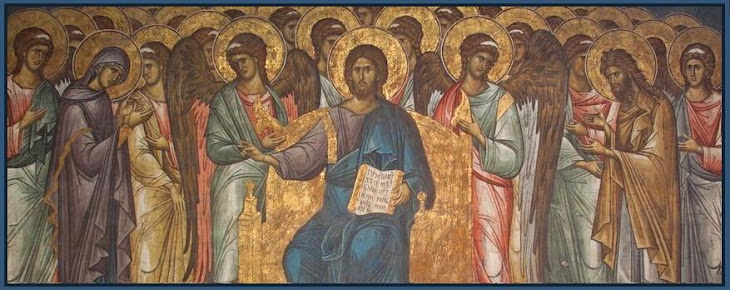
The Nativity of Christ, detail (source)
The very incarnation of the Son of God
and His coming into the world strongly encourages sinners to
repentance. For whose sake did Christ come into the world? For the
sake of sinners. To what end? For the sake of their salvation. O how
dear to God was our salvation! He Himself came into the world, O
sinners, for the sake of our salvation.
Listen, sinners, and understand! God
Himself came into the world for the sake of our salvation, and He
came in our image. O truly great is the mystery of piety! God
appeared in the flesh. "Lord, what is man, that Thou art made
known unto him? Or the son of man, that Thou takest account of him?"
(LXX-Ps. 143:3 [KJV-Ps. 144:3]).
Truly wonderful is the grace of God
toward man, wonderful also is this work of His. Foreseeing this the
prophet cried out to Him with fear and terror, "Lord, I have
heard Thy report, and I was afraid; O Lord, I considered Thy works,
and I was amazed" (Abbac. 3:1-2). Sinners, let us call to mind
this great work of God, which He wrought for our sake, and let us
repent. Let us remember how for our sake He was born of a Virgin and
became a child, and was nourished on His mother's milk. The Invisible
became manifest, and He that was without beginning had a beginning,
and He that was intangible became tangible and was wrapped as an
infant in swaddling bands: "And the Word was made flesh"
(Jn. 1:14).
Let us recall how while yet a child He
fled from the murderers of Herod the King. Let us recall how He lived
on earth and was a stranger, how He went from place to place, and
labored for the sake of our salvation. Let us recall how He Who is
unapproachable to the Cherubim and Seraphim kept company with
sinners; How He who has Heaven as His throne and the earth as the
footstool of His feet and Who abides in light unapproachable, had
nowhere to lay His head; How He who was rich became poor, that by His
poverty we may become rich.
Let us recall how He who clothes
Himself with light as with a garment, put on the garment of
corruption. How He Who gives food to all flesh ate earthly bread. How
the Almighty became weak, and He that gives strength to all did
labor.
Let us recall how He Who is above all
honor and glory, was blasphemed, cursed, and mocked by the lips of
transgressors.
Let us recall how He ailed, suffered,
sorrowed, wept, and was filled with horror. Let us recall how He was
sold and betrayed by an ungrateful disciple and was forsaken by the
rest of the disciples; how He was bound and brought to trial; how He
was judged by transgressors. He was reviled. He was scourged. He was
clad in the robe of mockery, He was mockingly hailed as King, "Hail,
King of the Jews!" (Jn. 19:3). He was crowned with a crown of
thorns, beaten on the head with a reed, He heard from His lawless
people, "Away with Him, away with Him, crucify Him" (Jn.
19:15). He was led to crucifixion between two evildoers and died on
the Cross.
All these things the Son of God did for
the sake of our salvation. O sinners, in Adam we lost our salvation
and all our blessedness, but Christ, the Son of God, by the good will
of His Heavenly Father, has brought it all back to us. Let us, then,
consider, O sinners, whether the very Blood of Christ, shed for the
sake of our salvation, and all His Suffering do not cry out to us.
Let us repent and so let us not be deprived of eternal salvation, for
without repentance there is no salvation for anyone, but nevertheless
the wretched sinner still does not understand.
God loves man so much that He revealed
His wonderful providence for him that he should repent and so be
saved, but the sinner still does not understand.
Christ the Son of God shows him His
coming into the world for his sake, in the Gospel. He presents to him
His willing self-emptying, His willing poverty, His willing and deep
humility, His labors, pains, tribulations, sorrows, sufferings and
death, and even a death on the Cross. And He says to him, "Man,
I took all this on Myself and endured it for your sake and for your
salvation. But you neglect your salvation, and take no thought that
you should repent and cease from your sins, to make use of My Blood
and live."
But the sinner, even though he hears
this so plaintive and sweet voice of Christ in the Gospel,
nevertheless still does not understand. Christ promises not to
remember his sins and transgressions when he turns to Him, but the
sinner still does not understand. Christ calls him to Himself and
promises him rest, but the sinner does not understand. He remains
uncorrected as he was and transgresses as he transgressed before. He
commits evil deeds, as he did before; he loves darkness as he loved
it before; he hates the light as he hated it before; and for this
reason he does not come to the Light, but remains with the devil, the
prince of darkness.
O poor sinner, awaken and come to your
senses. If you do not, the very Blood of Christ shed for your sake
will cry out against you for retribution. Listen to what the prophet
of God sings to you in the person of God, "I will reprove thee,
and bring thy sins before thy face" (LXX-Ps. 49:21 [KJV-Ps.
50:21]); that is, all your evil deeds, words, thoughts, intentions
and undertakings will follow you into the next world and will appear
at the universal Judgment of Christ, and you shall receive your just
reward for them. You do not wish now to repent to your benefit, and
so be saved by the grace of Christ; then you shall repent, but too
late and in vain. "Awake thou that sleepest, and arise from the
dead, and Christ shall give thee light" (Eph. 5:14). Blessed be
God above all forever.
Set your salvation on nothing else but
on Christ Jesus alone, the Saviour of the world. If you truly believe
that He suffered and died for you and is your Saviour, then love him
with all your heart, obey Him and please Him, as your Saviour, and
lay and confirm all your hope of salvation on Him alone. We must
unfailingly do good works as Christians, but we must ask and await
salvation from Christ alone.
from: Journey to Heaven Counsels On the
Particular Duties of Every Christian Our Father Among the Saints,
Tikhon of Zadonsk, Bishop of Voronezh and Elets Jordanville, NY: Holy
Trinity Monastery, 2004. (source)
Through the prayers of our Holy Fathers, Lord Jesus Christ our God, have mercy on us and save us! Amen!
Saturday, October 4, 2014
St. Tikhon of Zadonsk on the Contemplation of Eternity
The Last Judgment of Christ (source)
"Nothing so moves a sinner to repentance as eternity, and nothing is so useful to every Christian as remembrance and contemplation of eternity. Eternity restrains a man from sin, calms his passions, turns him from the world and all its vanity, makes his heart contrite, gives birth to tears of repentance, incites him to prayer, and works true sighing of the heart. Contemplation and remembrance of eternity can correct even the most depraved man. Contemplation of eternity filled dwellers of the desert, caves, mountains and clefts of the earth. By contemplating eternity the holy martyrs willed to endure torments rather than submit to the will of ungodly kings and deny Christ."
-St. Tikhon of Zadonsk, "Journey to Heaven"
"Nothing so moves a sinner to repentance as eternity, and nothing is so useful to every Christian as remembrance and contemplation of eternity. Eternity restrains a man from sin, calms his passions, turns him from the world and all its vanity, makes his heart contrite, gives birth to tears of repentance, incites him to prayer, and works true sighing of the heart. Contemplation and remembrance of eternity can correct even the most depraved man. Contemplation of eternity filled dwellers of the desert, caves, mountains and clefts of the earth. By contemplating eternity the holy martyrs willed to endure torments rather than submit to the will of ungodly kings and deny Christ."
-St. Tikhon of Zadonsk, "Journey to Heaven"
(source)
Through the prayers of our Holy Fathers, Lord Jesus Christ our God, have mercy on us and save us! Amen!
Sunday, June 16, 2013
St. Tikhon of Zadonsk on the Love for God
Jesus Christ, the Son of God, the Savior of the world (source)
St. Tikhon of Zadonsk on the Love for God
But let us see what the signs of love for God are, so that we may not have a false dream of love instead of love itself. In nothing does a man deceive himself so much as in love. The signs of this love are:
1. God Himself indicates this, saying, "He that hath My commandments and keepeth them, he it is that loveth Me" (Jn. 14:21). For the true lover of God will preserve himself from everything that is repugnant to God, and hastens to fulfil everything that is pleasing to God. Wherefore he keeps His holy commandments. From this it follows that those Christians that neglect the commandments have no love for God. Such are the malicious and those that harm others in any way. Such are the profligate, adulterers and all defilers. Such are robbers, bandits, thieves, and all those that unjustly appropriate the goods of others. Such are slanderers and those that curse others. Such are the sly, the crooked, the guileful, deceivers and hypocrites. Such are sorcerers and those that call on them. Such are all evildoers. All such love neither the Law of God nor God himself. They love themselves and their own appetites, but not God or His holy Law.
2. A manifest sign of love for God is a heartfelt gladness in God, for we rejoice in what we love. Likewise love of God cannot exist without joy, and whenever a man feels the sweetness of the love of God within his heart, he rejoices in God. For so sweet a virtue as love cannot be felt without joy. As honey sweetens our throat when we taste of it, so the love of God makes our heart glad when we taste and see that the Lord is good (LXX-Ps. 33:9 [KJV-Ps. 34:8]). Such joy in God is found in many places in Holy Scriptures, and is portrayed most of all in the holy Psalms. This joy is spiritual and heavenly, and is a foretaste of the sweetness of eternal life.
3. The true lover of God disdains the world and all that is in the world, and strives toward God, his most beloved. He counts honor, glory, riches, and all the comforts of this world which the sons of this age seek, as nothing. For him only God, the uncreated and most beloved good, suffices. In Him alone he finds perfect honor, glory, riches and comfort. For him God alone is the pearl without price, for the sake of which he holds everything else as little. Such a one desires nothing in heaven or on earth besides God. Such love is portrayed in the very words of the Psalter, "For what have I in heaven? And besides Thee what have I desired upon earth? My heart and my flesh have failed, O God of my heart, and God is my portion forever" (LXX-Ps. 72:25 [KJV-Ps. 73:25]). He uses food, drink, clothing, and everything else only as needful, and not for sensual pleasure.
From this it follows that whoever loves the world does not love God. According to the witness of the Apostle, "If any man love the world, the love of the Father is not in him" (1 Jn. 2:15). Such are those that find pleasure only in the pride and pomp of this world, in rich homes, in rich carriages, in rich tables, in dressing in rich clothing, to be glorified and admired by all, and so on. Such people love the "lust of the flesh, the lust of the eyes, and the pride of life" (1 Jn. 2:16) which are all repugnant to God, but they do not love God.
4. The true lover of God keeps God ever in mind, and His love toward us and His benefactions. We see this even in human love, for we often remember the one we love. So whoever loves God remembers Him, thinks of Him, and finds consolation in Him, and is enrapt in Him. For wherever his treasure is, there his heart is also (Mt. 6:21). To him the priceless and most beloved treasury is God. Therefore his heart also holds itself inseparably before Him. Whence it is that he also remembers His holy name often and with love. For the heart filled with the love of God reveals outward signs of love. From this we see that those who forget God do not love Him, for forgetfulness is a manifest sign of no love for God. The lover can never forget his beloved.
5. One who loves, desires never to be separated from the one he loves. Many Christians desire to be with Christ the Lord when He is glorified, but they do not wish to be with Him in dishonor and reproach, nor to carry their cross. They entreat Him that they may come into His Kingdom, but they do not wish to suffer in the world, and thereby they show that their heart is not right and that they do not truly love Christ. And to tell the truth, they love themselves more than Christ. For this reason the Lord says, "He that taketh not his cross, and followeth after Me, is not worthy of Me" (Mt. 10:38). A true friend is known in misfortune. He is our true friend and one who loves us who does not forsake us in misfortune. Likewise the true lover of Christ is he who abides with Christ in this world, and cleaves to Him in his heart, and uncomplainingly endures the cross with Him, and desires to be with Him inseparably in the age to come. Such a one says unto Christ, "It is good for me to cleave unto God" (LXX-Ps. 72:28 [KJV-Ps. 73:28]).
6. A sign of the love of God is love for neighbor. He who truly loves God also loves his neighbor. He who loves the lover loves what is loved by him. The source of love for neighbor is love for God, but the love of God is known from love for neighbor. Hence it is apparent that he who does not love his neighbor does not love God either. As the Apostle teaches, "If a man say, I love God, and hateth his brother, he is a liar; for he that loveth not his brother whom he hath seen, how can he love God Whom he hath not seen? And this commandment have we from Him, That he who loveth God love his brother also" (1 Jn. 4:20-21). These are the signs of love for God hidden in the heart of a man.
Dear Christians, let us repent and turn away from the vanity of the world, and cleanse our hearts with repentance and contrition, that the love of God may abide in us. "God is love; and he that dwelleth in love dwelleth in God, and God in him" (1 Jn. 4:16).
Why Should we Love God?
God is the supreme good from Whom every good thing flows, and all blessing that is and ever shall be.
Without God all blessedness is cursedness and woe, life is death, joy and sweetness are bitterness. To live with God is happiness in misfortune, riches in poverty, glory in dishonor, and consolation in sorrow. Without God there cannot be true repose, peace and consolation.
Therefore love Him as your supreme good and blessedness, love Him above every creature, above father and mother, above wife and children, and above your own self. Cleave to Him alone in your heart, and above all, desire Him alone because He is your eternal good and blessedness without Whom there is neither life or blessedness in this age or the next.
Every creature of God is good, but their Creator is incomparably better. Love, then, and desire that good as it is existent, without beginning, without end, everexistent, and without change, from Whom all creatures are created good.
From: Journey to Heaven Counsels On the Particular Duties of Every Christian Our Father Among the Saints, Tikhon of Zadonsk, Bishop of Voronezh and Elets Jordanville, NY: Holy Trinity Monastery, 2004. (Source)
2. A manifest sign of love for God is a heartfelt gladness in God, for we rejoice in what we love. Likewise love of God cannot exist without joy, and whenever a man feels the sweetness of the love of God within his heart, he rejoices in God. For so sweet a virtue as love cannot be felt without joy. As honey sweetens our throat when we taste of it, so the love of God makes our heart glad when we taste and see that the Lord is good (LXX-Ps. 33:9 [KJV-Ps. 34:8]). Such joy in God is found in many places in Holy Scriptures, and is portrayed most of all in the holy Psalms. This joy is spiritual and heavenly, and is a foretaste of the sweetness of eternal life.
3. The true lover of God disdains the world and all that is in the world, and strives toward God, his most beloved. He counts honor, glory, riches, and all the comforts of this world which the sons of this age seek, as nothing. For him only God, the uncreated and most beloved good, suffices. In Him alone he finds perfect honor, glory, riches and comfort. For him God alone is the pearl without price, for the sake of which he holds everything else as little. Such a one desires nothing in heaven or on earth besides God. Such love is portrayed in the very words of the Psalter, "For what have I in heaven? And besides Thee what have I desired upon earth? My heart and my flesh have failed, O God of my heart, and God is my portion forever" (LXX-Ps. 72:25 [KJV-Ps. 73:25]). He uses food, drink, clothing, and everything else only as needful, and not for sensual pleasure.
From this it follows that whoever loves the world does not love God. According to the witness of the Apostle, "If any man love the world, the love of the Father is not in him" (1 Jn. 2:15). Such are those that find pleasure only in the pride and pomp of this world, in rich homes, in rich carriages, in rich tables, in dressing in rich clothing, to be glorified and admired by all, and so on. Such people love the "lust of the flesh, the lust of the eyes, and the pride of life" (1 Jn. 2:16) which are all repugnant to God, but they do not love God.
4. The true lover of God keeps God ever in mind, and His love toward us and His benefactions. We see this even in human love, for we often remember the one we love. So whoever loves God remembers Him, thinks of Him, and finds consolation in Him, and is enrapt in Him. For wherever his treasure is, there his heart is also (Mt. 6:21). To him the priceless and most beloved treasury is God. Therefore his heart also holds itself inseparably before Him. Whence it is that he also remembers His holy name often and with love. For the heart filled with the love of God reveals outward signs of love. From this we see that those who forget God do not love Him, for forgetfulness is a manifest sign of no love for God. The lover can never forget his beloved.
5. One who loves, desires never to be separated from the one he loves. Many Christians desire to be with Christ the Lord when He is glorified, but they do not wish to be with Him in dishonor and reproach, nor to carry their cross. They entreat Him that they may come into His Kingdom, but they do not wish to suffer in the world, and thereby they show that their heart is not right and that they do not truly love Christ. And to tell the truth, they love themselves more than Christ. For this reason the Lord says, "He that taketh not his cross, and followeth after Me, is not worthy of Me" (Mt. 10:38). A true friend is known in misfortune. He is our true friend and one who loves us who does not forsake us in misfortune. Likewise the true lover of Christ is he who abides with Christ in this world, and cleaves to Him in his heart, and uncomplainingly endures the cross with Him, and desires to be with Him inseparably in the age to come. Such a one says unto Christ, "It is good for me to cleave unto God" (LXX-Ps. 72:28 [KJV-Ps. 73:28]).
6. A sign of the love of God is love for neighbor. He who truly loves God also loves his neighbor. He who loves the lover loves what is loved by him. The source of love for neighbor is love for God, but the love of God is known from love for neighbor. Hence it is apparent that he who does not love his neighbor does not love God either. As the Apostle teaches, "If a man say, I love God, and hateth his brother, he is a liar; for he that loveth not his brother whom he hath seen, how can he love God Whom he hath not seen? And this commandment have we from Him, That he who loveth God love his brother also" (1 Jn. 4:20-21). These are the signs of love for God hidden in the heart of a man.
Dear Christians, let us repent and turn away from the vanity of the world, and cleanse our hearts with repentance and contrition, that the love of God may abide in us. "God is love; and he that dwelleth in love dwelleth in God, and God in him" (1 Jn. 4:16).
Why Should we Love God?
God is the supreme good from Whom every good thing flows, and all blessing that is and ever shall be.
Without God all blessedness is cursedness and woe, life is death, joy and sweetness are bitterness. To live with God is happiness in misfortune, riches in poverty, glory in dishonor, and consolation in sorrow. Without God there cannot be true repose, peace and consolation.
Therefore love Him as your supreme good and blessedness, love Him above every creature, above father and mother, above wife and children, and above your own self. Cleave to Him alone in your heart, and above all, desire Him alone because He is your eternal good and blessedness without Whom there is neither life or blessedness in this age or the next.
Every creature of God is good, but their Creator is incomparably better. Love, then, and desire that good as it is existent, without beginning, without end, everexistent, and without change, from Whom all creatures are created good.
From: Journey to Heaven Counsels On the Particular Duties of Every Christian Our Father Among the Saints, Tikhon of Zadonsk, Bishop of Voronezh and Elets Jordanville, NY: Holy Trinity Monastery, 2004. (Source)
Through the prayers of our Holy Fathers, Lord Jesus Christ our God, have mercy on us and save us! Amen!
Labels:
Love,
St. Tikhon of Zadonsk,
Writings of the Saints
Monday, March 15, 2010
Selected Quotes of the Fathers on Vainglory, Pride, and Humility
Christ the Bridegroom (Icon courtesy of www.eikonografos.com used with permission)
Selected Quotes of the Fathers on Vainglory, Pride, and Humility
"Adam became so proud that he wished to become God and died for his pride; the Son of God humbled Himself unto death, and gave life to the fallen. O abyss of humility! Adam and Eve lost themselves through gluttony, the Lord fasted and died for them, in order to give them life. They were disobedlient, Christ fulfilled obedience."
St. John of Kronstadt - My Life in Christ
"Flee vainglory, and you will be glorified; fear pride, and you will be magnified."
St. Isaac the Syrian - "Ascetical Homilies" (Homily Five)
"Pride does not perceive that it walks in darkness and, as being darkened, it does not know the insight of wisdom. For this reason in its own murky thoughts it elevates itself above all, whereas it is more vile and more feeble than any, and it is incapable of learning the ways of the Lord. And the Lord conceals His will from it, because it did not choose to walk in the path of the humble."
St. Isaac the Syrian - "Ascetical Homilies" (Homily Nineteen)
(http://scienceofsalvation.blogspot.com/)
“The sun shines on all alike, and vainglory beams on all activities. For instance, I am vainglorious when I fast; and when I relax the fast in order to be unnoticed, I am again vainglorious over my prudence. When well-dressed I am quite overcome by vainglory, and when I put on poor clothes I am vainglorious again. When I talk I am defeated, and when I am silent I am again defeated by it. However I throw this prickly-pear, a spike stands upright.”
St. John Climacus - The Ladder of Divine Ascent (Step 22, Section 5)
“An angel fell from Heaven without any other passion except pride, and so we may ask whether it is possible to ascend to Heaven by humility alone, without any other of the virtues.”
St. John Climacus - The Ladder of Divine Ascent (Step 23, Section 12)
(http://www.hchc.edu/hellenic/campus_life/vocation/OCTEV_Resources/quotes/johnclimacus.html)
"When pride retreats from a man, humility begins to dwell in him, and the more pride is diminished, so much more does humility grow. The one gives way to the other as to its opposite. Darkness departs and light appears. Pride is darkness, but humility is light."
St. Tikhon of Zadonsk - "Journey to Heaven"
"Pride prevents the soul from setting on the path of faith."
Staretz Silouan - "Wisdom from Mount Athos"
"Humility is a Heavenly siphon which from the abyss of sins can raise the soul to Heaven."
St. John Climacus - The Ladder of Divine Ascent (Step 25)
"When blessed Anthony saw all the snares of the devil spread out everywhere, he sighed, and asked God how anyone could ever avoid them. God answered him, 'Humility. It is humility that enables you to escape them all!' And what is more astonishing, He added, 'They cannot even touch you'."
St. Dorotheos of Gaza - "Discourses and Sayings" (On Humility)
"...The work of fulfilling the Commandments generates a state of humility."
Abba Dorotheos of Gaza - "Discourses amd Sayings"
"Let us humble ourselves and the Spirit of God Himself will instruct the soul."
Staretz Silouan - "Wisdom from Mount Athos"
(http://scienceofsalvation.blogspot.com/)
Through the prayers of our Holy Fathers, Lord Jesus Christ our God, have mercy on us and save us! Amen!
Subscribe to:
Posts (Atom)


