Showing posts with label Traditions. Show all posts

Friday, January 10, 2020

St. Gregory of Nyssa: "Which faith we guard as we received it, word for word, in purity..."

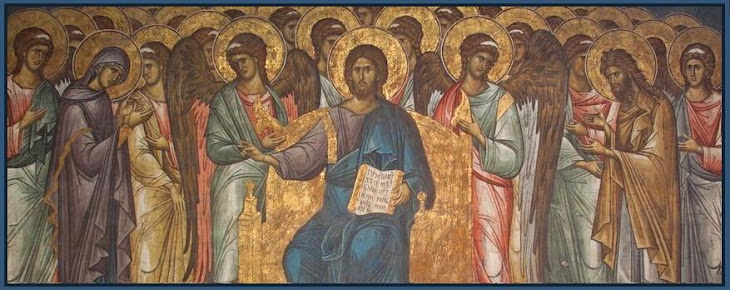
Christ Pantocrator (source)
  
” …and that we might receive the teaching concerning the transcendent nature of the Deity which is given to us, as it were, ‘through a glass darkly’ from the older Scriptures,—from the Law, and the Prophets, and the Sapiential Books, as an evidence of the truth fully revealed to us, reverently accepting the meaning of the things which have been spoken, so as to accord in the faith set forth by the Lord of the whole Scripture, which faith we guard as we received it, word for word, in purity, without falsification, judging even a slight divergence from the words delivered to us an extreme blasphemy and impiety.”
— St. Gregory of Nyssa, Against Eunomius
  
(source)
  
Through the prayers of our Holy Fathers, Lord Jesus Christ our God, have mercy on us and save us! Amen!
Friday, July 12, 2019

Photios Kontoglou (+ July 13, 1965): The Greatest Icon Painter of 20th Century Greece

Photios Kontoglou of Blessed Memory (November 8th, 1895 - July 13th, 1965), a self-portrait (source)

Photios Kontoglou: The Greatest Icon Painter of 20th Century Greece

by Dr. Constantine Cavarnos (of blessed memory)

19 February 2017
            Photios Kontoglou, the greatest icon painter of modern Greece and one of her most important theologians and literary writers, died in Athens on July 13, 1965. His death, during surgery, passed almost entirely unnoticed in America, even among Greek-Americans, but he was deeply mourned throughout Greece.
            I was in Greece when he died and had the good fortune of seeing and talking with this great and holy man just five days before his “falling asleep.” The editor of an Athenian religious monthly asked me to write an obituary . . .  I have undertaken to write this brief biography.
 
Archangel Gabriel, by Photios Kontoglou (source)
  
            Photios Kontoglou was born on November 8, 1895, at Kydoniai (Aivali), on the west coast of Asia Minor, across from Mytilene. Kydoniai was a city consisting of about 30,000 Greeks and three persons—the district governor, the judge, and the tax collector—who were Turks.
            Kontoglou came from a devout family, which had its own chapel containing precious articles including a carved ancient crucifix and a large panel icon depicting Saint Paraskevi. Many of his ancestors were monks, and an uncle, Stephanos Kontoglou, was abbot of the Monastery of Saint Paraskevi near Kydoniai. Stephanos was an important influence in Photios’s life. In his book Vasanta (1923), Kontoglou dedicates the chapter of translations from the Psalms of David “to the austere soul of the Hieromonk Stephanos Kontoglou, my uncle, whose virtue I perpetually have before me as a model and rule.”
 
Photios Kontoglou (right) and his friend Yiannis Tsarouchis (left), dressed as novice monks at Meteora in 1932 (source)
  
             The young Kontoglou was extremely fond of the sea, sailing, and the solitude of the deserted neighboring islets. He liked to live alone, like Robinson Crusoe. Daniel Defoe’s hero fascinated Kontoglou; he mentions him in many of his writings.
            After graduating from the famous Academy of Gymnasium of Kydoniai, Kontoglou spent several years in Europe, especially in France, studying art and acquiring painting techniques. He lived in Paris during the First World War, where he first gained attention, winning prizes for his paintings and his writings. His first book, a novel entitled Pedro Cazas, was written and published there in 1919.
            After the armistice, Kontoglou returned to Kydoniai. In 1920 he wrote a remarkable prologue for the second edition of Pedro Cazas which was published in Athens in 1922. In this prologue he set forth some of the basic ideas by which he abided ever after.
 
Archangel Michael, by Photios Kontoglou (source)
  
            Persecuted by the Turks, he and his family went to Thermi, Mytilene, in 1922. Later he resided in Athens, but always lived on the outskirts, as he disliked the distractions of cities. When the Kontoglou family left Kydoniai, they took only the sacred articles mentioned above and a few Church books. These were his most cherished possessions. After his death his wife, Maria, fulfilling his wish, gave them to the Monastery of Saint Paraskevi at Nea Makri in Attica.
            In Athens Kontoglou soon became well-known in literary circles as a result of his highly-praised book, Pedro Cazas. His reputation as a writer grew with the appearance of two additional books: Vasanta (a Sanskrit word meaning “springtime”) in 1923, and Taxidia (“Travels”) in 1928, and the literary and art periodical Filikh Etairia (“Friendly Society”) which he founded in 1925. Within a few years, Kontoglou had won an enviable place in the Greek world of letters, admired for his style—which is characterized by clarity, simplicity, vigor and warmth—as well as his remarkable observations and profound thoughts.
 
The Holy Apostle Paul, by Photios Kontoglou (source)
  
            As a painter, Kontoglou was slow in winning recognition. He had to overcome difficult obstacles. After leaving Europe, he became increasingly impressed by the Byzantine traditions of painting and decided to master this style of painting. But he had to become his own teacher and learn the secrets of Byzantine art. He did this by reading old manuscripts and visiting Byzantine monuments, patiently studying the works of the old masters.
            Further, Kontoglou had to overcome strong prejudice on the part of the public against Byzantine art. Having won their liberation from the Turks, the Greeks began to turn the West for prototypes in art, especially the adoption of European (particularly Italian Renaissance) models and techniques. According to the European view at that time, Byzantine civilization was a lower civilization, not worthy of serious study, and Byzantine art especially was lower, almost barbaric art. Kontoglou succeeded magnificently in overcoming both obstacles, but it took time.
 
The Holy Mandylion, by Photios Kontoglou (source)
  
            The first obstacle was by far easier to overcome. He learned his most important lessons about Byzantine art at the Holy Mountain of Athos and at Mystra. It is significant that while at Athos, he wrote several chapters, the preface and profound concluding chapter on the fine arts of his second book, Vasanta. It was also at Athos that one of his three poems in this book was inspired by a Byzantine painting in a very old chapel there. His debt to Athos in his development as an iconographer is evinced by a volume published in 1925 containing photographs of copies, executed by him, of Byzantine frescoes at Athos; and also by the illustrations in two issues of Filikh Etairia that year showing panel icons of the Monastery of Iviron rendered by him.
            Kontoglou visited Mystra not long after. He made copies of some of the wall paintings in the Byzantine churches at Mystra. He later worked there for a long time cleaning wall paintings in the Church of Peribleptos.
 
Photios Kontoglou before his icon of the Precious Forerunner (Source)
  
            Comparing Byzantine and European religious art, Kontoglou says in his book Taxidia, “In the countries of Europe there are churches with paintings that are famous for their artistic merit; yet they do not have the mystery and the power of evoking contrition (katanyxis) possessed by the icons that were done by some unlettered and simple Byzantine painters.”
            Around 1930, Kontoglou was appointed technical supervisor at the Byzantine Museum in Athens. He possessed both great love for the works in the museum, and technical knowledge for cleaning and preserving them.
 
Panagia and Christ "Sweet-kissing", by Photios Kontoglou (source)
  
            In 1932, Kontoglou published a slender volume entitled Icones et Fresques d’Art Byzantine, with twenty plates of Byzantine panel icons and frescoes he copied. He continued to paint panel icons during this period.
            During the later thirties, Kontoglou decorated three large rooms of the City Hall of Athens with historical frescoes. This was his first large scale work as a fresco painter, and his only extensive secular one. His next major achievement as a fresco painter was the iconographic decoration of the large Church Zoodochos Peghi at Liopesi (Paiania), a town near Athens. He began the work in 1939, but could not resume it until after the Second World War. When I met Kontoglou in 1952, he showed me the beautiful Byzantine murals he had painted at Liopesi.
 
Kontoglou's famous frescos in the City Hall of Athens, depicting Saints and historical figures in the history of the Greek Nation (source)
  
            Kontoglou wrote at least eight books between 1942 and 1945, during the war. Most are rather short. The longest and important is Mystikos Kepos (“Mystical Garden”) in 1944. His chapters on Piety (Theosveia) and Saint Isaac the Syrian are masterpieces, full of deep religious feeling. He speaks of other remarkable ascetics of Syria and Mesopotamia, and stresses the virtues of faith, humility and purity.

One of the first icons of Sts. Raphael and Nicholas of Thermi, Lesvos, painted by Photios Kontoglou and treasured by the Monastery of St. Raphael to this day (source)
  
            The most fruitful period for Kontoglou, as both painter and writer, was the last twenty years of his life. Assisted by several of his talented pupils, he painted numerous panel icons in churches in many parts of Greece, as well as in the United States and other countries, and many thousands of square yards of wall paintings. After the church at Liopesi, mentioned above, Kontoglou frescoed the entire interior of the Church of Saint Andrew off Patission Street at Athens. He did wall paintings for the new Metropolitan Church of Evangelismos in Rhodes and the Church of Saint George at Stemnitsa, Arcadia. Finally, he decorated with fresco icons the eastern apse, central dome, pendentives and barrel vaults below the dome, and other surfaces of the following Athenian churches: Kapnikarea, Saint George at Kypseli, Saint Haralambos in the park Pedion tou Areos, Saint Nicholas at Kato Patissia, and others.
 
Self-portrait of Photios Kontoglou with his wife and daughter (source)
  
            Through these works, through the training of many gifted young artists in the techniques of Byzantine iconography, and through his long, luminous and spirited defense of Byzantine art which culminated in 1961 in the monumental two-volume work entitled Ekphrasis (“Expression”) in which he teaches the theory and practice of Byzantine iconography, Kontoglou succeeded in making this art prevail in Greece. His influence spread to America, where many churches have been decorated with panel icons, frescoes and mosaics by his pupils.
            During the same period, he wrote such edifying books as  A Great Sign (1945), with accounts of many extraordinary recent miracles at Thermi, Mytilene; The Life and Conduct of Blaise Pascal (1947); The Life and Ascesis of Our Holy Father Saint Mark the Anchorite  (1947, translated in The Orthodox Word, no. 1, Sept.-Oct., 1966, with illustrations by Kontoglou); Fount of Life (1951), presenting brief descriptions of the lives and selections from the teachings of some of the great Saints of the Orthodox Church; The Holy Gospel According to Matthew, Interpreted (1952); Expression (1961); and What Orthodoxy Is and What Papism Is (1964). Kontoglou also translated into Greek Leonid Ouspensky’s L’Icone: Quelques Mots sur son Sens Dogmatique, and published it with a preface and notes of his own. Together with the young theologian Basil Moustakis, Kontoglou founded and edited Kivotos (1952–1955), a religious periodical concerned especially with Orthodox spirituality.
 
Jesus Christ the Merciful, by Photios Kontoglou (source)
  
            Kontoglou contributed many articles to various other periodicals and encyclopedias. His articles in the Athenian daily Elephtheria are so numerous that they would fill several volumes. Many of them are among the most profound written by a Greek. Most are concerned with religious themes, such as faith and reason, religion and philosophy, religious versus secular art, Byzantine iconography and music, the lives of Martyrs and other Saints, and so on.
            Kontoglou won the Academy of Athens Prize for his book Ekphrasis, in 1961, and the Purfina Prize for his book Aivali; My Native Place, in 1963. The latter is the first volume of his Erga (“Works”) which began to be published by Astir Publishing Company at Athens in 1962.
            In recognition of his great achievements as an author, the Academy of Athens, the highest cultural institution in Greece, awarded him on March 24, 1965, its Aristeion Grammaton, its highest prize in letters.
            Kontoglou also carried on an enormous correspondence. He once told me that he wrote about fifty letters a month, corresponding not only with Greeks, but also Americans, Finns, Frenchmen, Germans, Russians, Ugandans and others. He had countless friends and admirers throughout the world who sought his guidance on iconography, and on Orthodox doctrine and living.
 
St. Charalampos the Hieromartyr, by Photios Kontoglou (source)
  
            In Kontoglou’s writings, we encounter a man who has unshakable religious faith, free from all skepticism and metaphysical anguish. We encounter a man who is steeped in the Holy Scriptures and writings of the Eastern Church Fathers, particularly the great mystics such as Saint Macarios the Egyptian, Saint John Climacos, Saint Isaac the Syrian, Saint Symeon the New Theologian, and Saint Gregory the Sinaite. We find a man who has the profoundest respect for the Sacred Tradition of Eastern Orthodoxy, including all its dogmas, canons and sacred arts (architecture, iconography, music), tolerating no deviations. Orthodoxy was for him the sacred Kivotos, the sacred Ark, and these its precious contents, which must be carefully guarded and not cast away, or exchanged for counterfeits.
            Kontoglou was strongly opposed to the participation of Orthodoxy in “ecumenism,” seeing in such participation the dangers of compromise on matters which admit of no compromise. He was especially critical of the maneuvers of Patriarch Athenagoras, in whom he saw an apostate . . . a betrayer of Greece and Orthodoxy. In his last book, entitled Ti Einai he Orthodoxia kai ti Einai ho Papismos (“What Orthodoxy Is and What Papsim Is”) Kontoglou stressed the abyss that separates Orthodoxy from Roman Catholicism, which renders utterly absurd Athenagoras’s assertions that there are no real differences between the two.
 
The Holy Prophet Elias, by Photios Kontoglou (source)
  
            Kontoglou was a man of adamantine Orthodox faith and impeccable character, adorned with the virtues of great humility, long-suffering, courage, wisdom, purity, hope and love. He was a devout man, a holy man, a man of God. All that he did bears the impress of these qualities.
 
The grave of Photios Kontoglou of Blessed Memory, in the Holy Monastery of the Annunciation - St. Ephraim in Nea Makri. For more on his relationship with St. Ephraim, see here. (source)
  
            As during his life, so at his death, it was evident that Kontoglou was free from worldly attachments, a citizen of the City of God, not of the earthly city, whose glory is temporary and whose power is doomed to pass away. He died poor, ignored by the State. His body was not accompanied to the grave by any State dignitaries, but only by friends and admirers, who loved him deeply.
This article was originally published by the Monastery of St. John, www.monasteryofstjohn.org, in The Divine Ascent Vol. 3/4.  This and other publications can be found on their bookstore website, www.stjohnsbookstore.com.  (source)
  
See the following sites for Photios Kontoglou on Orthodox Iconography and Byzantine Music. May his memory be eternal!
  
Christ Pantocrator, by Photios Kontoglou (source)
  
Through the prayers of our Holy Fathers, Lord Jesus Christ our God, have mercy on us and save us! Amen!

Tuesday, August 14, 2018

Elder Nikon on the Theotokos

This is a beautiful talk on the Theotokos by Elder Nikon of New Skete. May Panagia help all those who need her comforting embrace throughout the world!
   
Most-holy Theotokos, save us!

Saturday, January 6, 2018

Pontian Carols of Theophany

The Baptism of Christ, Holy Theophany (source)
 
The following is a translation of a beautiful and theological Greek carol (i.e. non-liturgical) from Pontos in Asia Minor, that was sung around the feast of Epiphany or Theophany on January 6th. It matches in its poetic pattern the famous Byzantine Christmas Carol "The Beginningless God descended...", and is sung with a similar melody. May our Lord grant us all an illumined and blessed new year!
 
Κάλαντα για τα Θεοφάνεια 
Από της ερήμου ο Πρόδρομος ήλθε να βαπτίσει τον Κύριον.
Βέβαιον Βασιλέα εβάπτισε, Υιόν και Θεόν ομολόγησε.
Γηγενείς, σκιρτάτε και χαίρεσθε, τάξεις των Αγγέλων, ευφραίνεσθε.
Δόξα εν υψίστοις εκραύγαζον, Κύριον και Θεόν ομολόγησαν.
Έλεγεν ο κόσμος τον κύριον να αναγεννήσει τον άνθρωπον.
Ζήτησον και σώσον το πρόβατον, το απολωλός, ω Θεάνθρωπε.
Ήλθε, κηρυττόμενον έβλεπε, απορών εφάνει ο Πρόδρομος.
Θες μοι την παλάμην σου, Πρόδρομε, βάπτισον ευθύς τον Δεσπότην σου.
Ιορδάνη ρεύσε τα νάματα, ιν’ ανασκιρτήσει τα ύδατα.
Κεφαλάς δρακόντων συνέθλασε των κακοφρονούντων ο Κύριος.
Λέγουσιν οι Άγγελοι σήμερον, ο Χριστός τον κόσμον εφώτισεν.
Μέγα και φρικτόν το μυστήριον, δούλος τον Δεσπότη εβάπτισε.
Νους ο Ιωάννης ο Πρόδρομος μέγας, να βαπτίσει τον Κύριον.
Ξένος ο προφήτης ο Πρόδρομος, μέγας, να βαπτίσει τον Κύριον.
Όλον τον Αδάμ ανεκάλεσε ο των όλων κτίστης και Κύριος.
Παναγία, Δέσποινα του παντός, σώσον τους εις Σε προσκυνούντας νυν.
Ρείθρα Ιορδάνη, αγάλλεσθε, την πορείαν άλλως λαμβάνετε.
Σήμερον ο κτίστης δεδόξασται δι’ αυτό το μέγα μυστήριον.
Τρεις γαρ υποστάσεις εγνώκαμεν, Πατρός και Υιού και του Πνεύματος.
Υπό Αρχαγγέλων υμνούμενον, υπό Σεραφείμ δοξαζόμενον.
Φως γαρ τοις σκότει επέλαμψε, όταν ο Χριστός εβαπτίζετο.
Χαίροντες και χείρας προσάγοντες και λαμπράν πανήγυριν άδοντες.
Ψάλλοντες Χριστόν τον Θεόν ημών, δέξασθε λουτήρα βαπτίσματος.
Ο Θεός των όλων και Κύριος δώη σας υγείαν και χαίρετε.

 
Holy Theophany (source)
 
Pontian Carols of Theophany
From the desert, the Forerunner came to baptize the Lord
(The phrase: "Holy, Holy Holy, are You, O Lord", is repeated in some traditions after every line)
In truth, he baptized the King, and confessed Him to be the Son of God.
Those upon the earth, dance and be glad, rejoice, O ranks of the Angels.
"Glory in the highest", they cried, confessing the Lord and God.
The world asked the Lord to give rebirth to man.
"Seek out and save the sheep that was lost, O God-man."
He came, secretly, and saw, and appeared to the homeless Forerunner.
"Give me your hand, O Forerunner, straightaway baptize your Master."
O Jordan, pour forth your streams, that the waters might dance and turn back.
The Lord crushed the heads of the dragons and those of evil mind.
The Angels say today, "Christ has enlightened the world.
O great and awesome mystery, That the servant baptized the Master."
John the Forerunner, the great nous, is here to baptize the Lord.
A strange and great prophet is the Forerunner, who is here to baptize the Lord.
All those of Adam He has called back, the Creator of all and the Lord.
O Panagia, Lady of all, save those who ever venerate you.
O streams of the Jordan, rejoice, but receive a new course.
Today the Creator is glorified through His great mystery.
We have come to know three hypostases: Father and Son and Spirit,
Hymned by the Archangels, and glorified by the Seraphim.
Light has shown forth for those in darkness, when Christ was baptized.
Let us rejoice and lift up our hands, and celebrate this radiant feast.
Chanting unto Christ our God, receiving the cleansing of baptism.
May the God of all and Lord, grant unto you health and joy.
(source)
 
The blessing of the local waters and the diving for the cross, among the beautiful traditions of Theophany throughout the world (source)
 
Through the prayers of our Holy Fathers, Lord Jesus Christ our God, have mercy on us and save us! Amen!

Sunday, February 15, 2015

The Significance of the "Six Psalms" of the Orthodox Matins Service

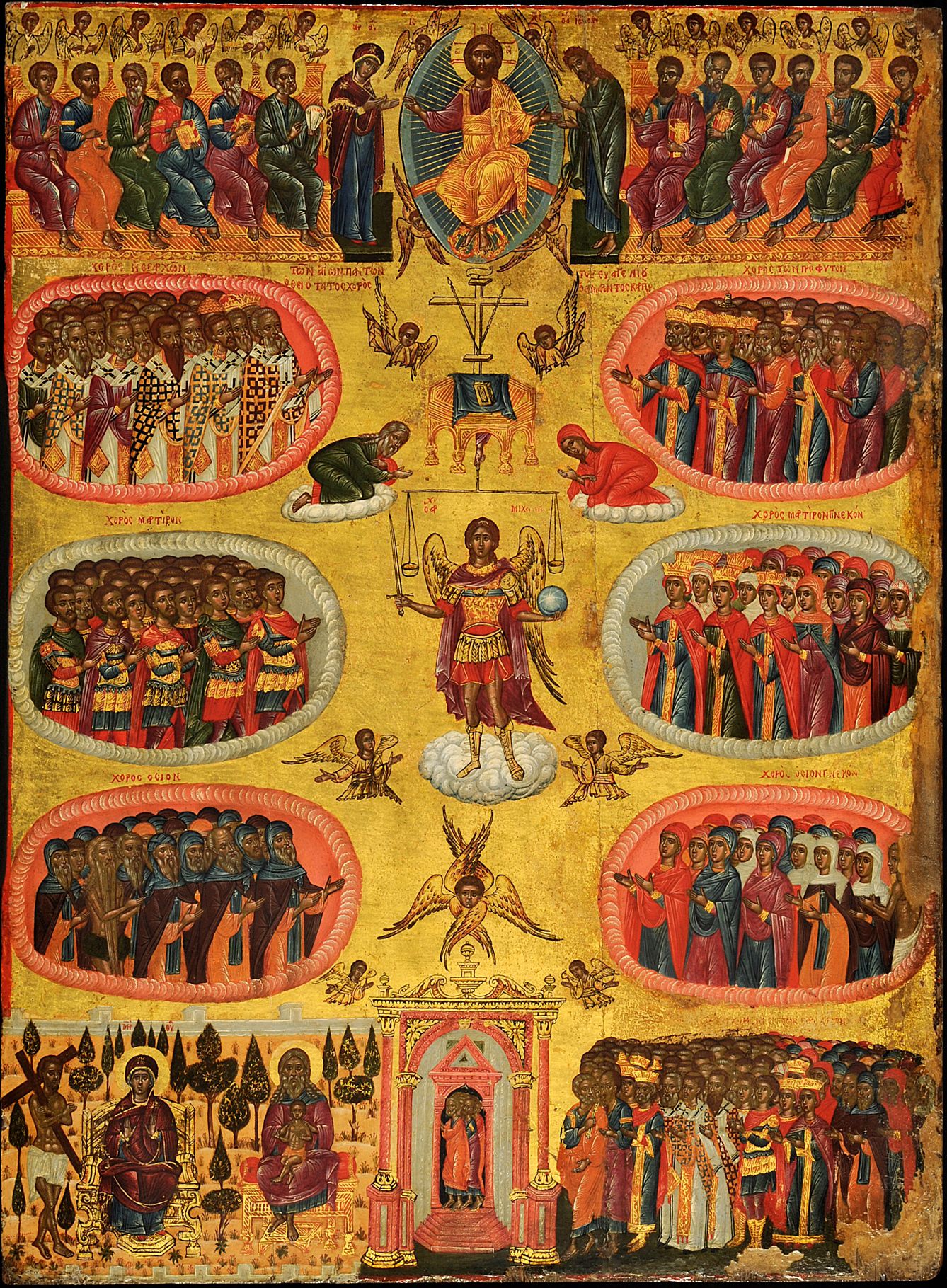
Icon of the Second Coming of Christ (source)

The Six Psalms

by Tyler Dykstra
The Six Psalms (Psalms 3, 37, 62, 87, 102, and 142) are a regular part of nearly every Orthros (Matins) service in the Church. Taken as a single unit, they are never omitted, except during Paschaltide (the 39 days after Pascha) [Or in other traditions, during Bright Week.]
  
The Six Psalms (in Greek, Hexapsalmos) is one of the most important parts of Orthros. It is “a time when all should put aside other thoughts, stand quietly, and concentrate on these penitential prayers.”1 Truly, it is one of the holiest moments in the Orthros service.
These Psalms are a summary of the Christian life, highlighting the sorrow that we so often meet along the way to our eternal joy.
In some traditions, all the candles or lights in the church are extinguished while these Psalms are read. This, along with the phrase “Glory to God in the highest,” calls to mind the dark night when Christ was born. It also affords us concentration on the Psalms’ words. According to Archbishop Benjamin of Nizhegorod and Arzamas:
This is done so that we, able to see nothing with our eyes, might listen to the Six Psalms attentively and with fear [of God] and so that everyone standing in the dark might shed a tear and release a tender sigh. For at night, and if there is no lighted candle nearby, it is difficult for people to see one another. It is for this reason that the ustav (rubric) directs: thus we pronounce the Six Psalms with all attentiveness and fear of God, as conversing with our invisible Christ God Himself, and praying over our sins.2
During the reading of the most bitter of the Psalms, Psalm 87, the priest leaves the altar to read his twelve morning prayers, which include intercessions for those standing in the church and for the forgiveness of their sins. This act symbolizes Christ, who heard the mourning of mankind and left his heavenly throne to rescue us, and ultimately shared in the suffering that Psalm 87 describes:
Wherefore, O Lord, dost Thou cast off my soul and turnest Thy face away from me? A poor man am I, and in troubles from my youth; yea, having been exalted, I was humbled and brought to distress. Thy furies have passed upon me, and Thy terrors have sorely troubled me. They came round about me like water, all the day long they compassed me about together. Thou hast removed afar from me friend and neighbour, and mine acquaintances because of my misery.3
There is also a tradition in the Church which says the Six Psalms will be read to each of us by our guardian angels at the Last Judgment, and during the time of the reading the whole world will be judged.
 
[St. Paisios the Athonite on the Six Psalms
Once, we were housing a priest at Stavronikita Monastery, and at the Six Psalms he lowered the stasidi (stall) and sat down!

"Father," I told him, "They are saying the Six Psalms."

"This way I will enjoy them better!" he replied.

What I told him seemed strange about the Six Psalms. And there were other Fathers who were old that were standing. They were holding onto the stasidi and didn't rock at all.

It is one thing to be tired, to be sick, for your feet to shake and for you to sit--Christ will not condemn him--but it is another thing to think that it is better to say: "I enjoy it better sitting." How will he justify this? The spiritual life is not enjoyment. If you feel pain, sit, Christ is not a tyrant. And Abba Isaac says: "If you can't stand, sit." He doesn't say: "If you can, sit!"

-Elder, why don't we sit at the Six Psalms?
-Because it symbolizes the Judgment.
Because of this, when the Six Psalms are read, it is good for our nous to go to the hour of Judgment.
The Six Psalms last 6-7 minutes. In the first stasis we don't even do our cross, because Christ will not come to be crucified, but He will come as Judge.
-St. Paisios the Athonite
(source)]
     
While it is a lengthy part of the Orthros service that can become tedious, we should try our best to stand and listen “with compunction and complete silence”4, meditating on the words of these Psalms:

The Six Psalms from Orthros5

Glory to God in the highest, and on earth peace, good will among men. Thrice, with the sign of the Cross and a bow from the waist each time.
O Lord, Thou shalt open my lips, and my mouth shall declare Thy praise. Twice.

Psalm 3

O Lord, why are they multiplied that afflict me? Many rise up against me. Many say unto my soul: There is no salvation for him in his God. But Thou, O Lord, art my helper, my glory, and the lifter up of my head. I cried unto the Lord with my voice, and He heard me out of His holy mountain. I laid me down and slept; I awoke, for the Lord will help me. I will not be afraid of ten thousands of people that set themselves against me round about. Arise, O Lord, save me, O my God, for Thou hast smitten all who without cause are mine enemies; the teeth of sinners hast Thou broken. Salvation is of the Lord, and Thy blessing is upon Thy people.
I laid me down and slept; I awoke, for the Lord will help me.

Psalm 37

O Lord, rebuke me not in Thine anger, nor chasten me in Thy wrath. For Thine arrows are fastened in me, and Thou hast laid Thy hand heavily upon me. There is no healing in my flesh in the face of Thy wrath; and there is no peace in my bones in the face of my sins. For mine iniquities are risen higher than my head; as a heavy burden have they pressed heavily upon me. My bruises are become noisome and corrupt in the face of my folly. I have been wretched and utterly bowed down until the end; all the day long I went with downcast face. For my loins are filled with mockings, and there is no healing in my flesh. I am afflicted and humbled exceedingly, I have roared from the groaning of my heart. O Lord, before Thee is all my desire, and my groaning is not hid from Thee. My heart is troubled, my strength hath failed me; and the light of mine eyes, even this is not with me. My friends and my neighbors drew nigh over against me and stood, and my nearest of kin stood afar off. And they that sought after my soul used violence; and they that sought evils for me spake vain things, and craftinesses all the day long did they meditate. But as for me, like a deaf man I heard them not, and was as a speechless man that openeth not his mouth. And I became as a man that heareth not, and that hath in his mouth no reproofs. For in Thee have I hoped, O Lord; Thou wilt hearken unto me, O Lord my God. For I said: Let never mine enemies rejoice over me; yea, when my feet were shaken, those men spake boastful words against me. For I am ready for scourges, and my sorrow is continually before me. For I will declare mine iniquity, and I will take heed concerning my sin. But mine enemies live and are made stronger than I, and they that hated me unjustly are multiplied. They that render me evil for good slandered me, because I pursued goodness. Forsake me not, O Lord my God, depart not from me. Be attentive unto my help, O Lord of my salvation.
Forsake me not, O Lord my God, depart not from me. Be attentive unto my help, O Lord of my salvation.

Psalm 62

O God, my God, unto Thee I rise early at dawn. My soul hath thirsted for Thee; how often hath my flesh longed after Thee in a land barren and untrodden and unwatered. So in the sanctuary have I appeared before Thee to see Thy power and Thy glory. For Thy mercy is better than lives; my lips shall praise Thee. So shall I bless Thee in my life, and in Thy name will I lift up my hands. As with marrow and fatness let my soul be filled, and with lips of rejoicing shall my mouth praise Thee. If I remembered Thee on my bed, at the dawn I meditated on Thee. For Thou art become my helper; in the shelter of Thy wings will I rejoice. My soul hath cleaved after Thee, Thy right hand hath been quick to help me. But as for these, in vain have they sought after my soul; they shall go into the nethermost parts of the earth, they shall be surrendered unto the edge of the sword; portions for foxes shall they be. But the king shall be glad in God, everyone shall be praised that sweareth by Him; for the mouth of them is stopped that speak unjust things.
At the dawn I meditated on Thee. For Thou art become my helper; in the shelter of Thy wings will I rejoice. My soul hath cleaved after Thee, Thy right hand hath been quick to help me.
  
Glory to the Father, and to the Son, and to the Holy Spirit, both now and ever, and unto the ages of ages. Amen.
Alleluia, alleluia, alleluia. Glory to Thee, O God.
Thrice, with the sign of the Cross, but without bows***.
  
[***Other traditions hold that one does not even make the sign of the Cross at this point, as this period is one in which we stand in utter silence and stillness before the face of the Lord, as we will on Judgment Day.]
  
Lord. have mercy. Thrice.
Glory to the Father, and to the Son, and to the Holy Spirit, both now and ever, and unto the ages of ages. Amen.

Psalm 87

O Lord God of my salvation, by day have I cried and by night before Thee. Let my prayer come before Thee, bow down Thine ear unto my supplication. For filled with evils is my soul, and my life unto hades hath drawn nigh. I am counted with them that go down into the pit; I am become as a man without help, free among the dead. Like the bodies of the slain that sleep in the grave, whom Thou rememberest no more, and they are cut off from Thy hand. They laid me in the lowest pit, in darkness and in the shadow of death. Against me is Thine anger made strong, and all Thy billows hast Thou brought upon me. Thou hast removed my friends afar from me; they have made me an abomination unto themselves. I have been delivered up, and have not come forth; mine eyes are grown weak from poverty. I have cried unto Thee, O Lord, the whole day long; I have stretched out my hands unto Thee. Nay, for the dead wilt Thou work wonders? Or shall physicians raise them up that they may give thanks unto Thee? Nay, shall any in the grave tell of Thy mercy, and of Thy truth in Thy destruction? Nay, shall Thy wonders be known in that darkness, and Thy righteousness in that land that is forgotten? But as for me, unto Thee, O Lord, have I cried; and in the morning shall my prayer come before Thee. Wherefore, O Lord, dost Thou cast off my soul and turnest Thy face away from me? A poor man am I, and in troubles from my youth; yea, having been exalted, I was humbled and brought to distress. Thy furies have passed upon me, and Thy terrors have sorely troubled me. They came round about me like water, all the day long they compassed me about together. Thou hast removed afar from me friend and neighbor, and mine acquaintances because of my misery.
O Lord God of my salvation, by day have I cried and by night before Thee. Let my prayer come before Thee, bow down Thine ear unto my supplication.

Psalm 102

Bless the Lord, O my soul, and all that is within me bless His holy name. Bless the Lord, O my soul, and forget not all that He hath done for thee, Who is gracious unto all thine iniquities, Who healeth all thine infirmities, Who redeemeth thy life from corruption, Who crowneth thee with mercy and compassion, Who fulfilleth thy desire with good things; thy youth shall be renewed as the eagle’s. The Lord performeth deeds of mercy, and executeth judgment for all them that are wronged. He hath made His ways known unto Moses, unto the sons of Israel the things that He hath willed. Compassionate and merciful is the Lord, longsuffering and plenteous in mercy; not unto the end will He be angered, neither unto eternity will He be wroth. Not according to our iniquities hath He dealt with us, neither according to our sins hath He rewarded us. For according to the height of heaven from the earth, the Lord hath made His mercy to prevail over them that fear Him. As far as the east is from the west, so far hath He removed our iniquities from us. Like as a father hath compassion upon his sons, so hath the Lord had compassion upon them that fear Him; for He knoweth whereof we are made, He hath remembered that we are dust. As for man, his days are as the grass; as a flower of the field, so shall he blossom forth. For when the wind is passed over it, then it shall be gone, and no longer will it know the place thereof. But the mercy of the Lord is from eternity, even unto eternity, upon them that fear Him. And His righteousness is upon sons of sons, upon them that keep His testament and remember His commandments to do them. The Lord in heaven hath prepared His throne, and His kingdom ruleth over all. Bless the Lord, all ye His angels, mighty in strength, that perform His word, to hear the voice of His words. Bless the Lord, all ye His hosts, His ministers that do His will. Bless the Lord, all ye His works, in every place of His dominion. Bless the Lord, O my soul.
In every place of His dominion, bless the Lord, O my soul.

Psalm 142

O Lord, hear my prayer, give ear unto my supplication in Thy truth; hearken unto me in Thy righteousness. And enter not into judgment with Thy servant, for in Thy sight shall no man living be justified. For the enemy hath persecuted my soul; he hath humbled my life down to the earth. He hath sat me in darkness as those that have been long dead, and my spirit within me is become despondent; within me my heart is troubled. I remembered days of old, I meditated on all Thy works, I pondered on the creations of Thy hands. I stretched forth my hands unto Thee; my soul thirsteth after thee like a waterless land. Quickly hear me, O Lord; my spirit hath fainted away. Turn not Thy face away from me, lest I be like unto them that go down into the pit. Cause me to hear Thy mercy in the morning; for in Thee have I put my hope. cause me to know, O Lord, the way wherein I should walk; for unto Thee have I lifted up my soul. Rescue me from mine enemies, O Lord; unto Thee have I fled for refuge. Teach me to do Thy will, for Thou art my God. Thy good Spirit shall lead me in the land of uprightness; for Thy name’s sake, O Lord, shalt Thou quicken me. In Thy righteousness shalt Thou bring my soul out of affliction, and in Thy mercy shalt Thou utterly destroy mine enemies. And Thou shalt cut off all them that afflict my soul, for I am Thy servant.
Hearken unto me, O Lord, in Thy righteousness, and enter not into judgment with Thy servant. Twice.
Thy good Spirit shall lead me in the land of uprightness.
Glory to the Father, and to the Son, and to the Holy Spirit, both now and ever and unto the ages of ages. Amen.
Alleluia, alleluia, alleluia. Glory to Thee, O God. Thrice, with the sign of the Cross and a bow each time.
Lord, have mercy. Twelve times.
Glory to the Father, and to the Son, and to the Holy Spirit, both now and ever, and unto the ages of ages. Amen.

Works Cited

1. V. Potapov. The Six Psalms and the Extinguishing of Candles. 2001.
2. Abp Benjamin of Nizhegorod and Arzamas. The New Testament, or Explanations of the Church, the Liturgy, and of all Church Services and Furnishings. St Petersburg, 1908.
3. Holy Transfiguration Monastery. The Psalter According to the Seventy. Boston, 1974.
4. Protopsaltes Georgios Biolakes. “The Daily Diataxis.” The Protheoria of the Typikon of the Great Church of Christ. 1888. Trans. Fr Konstantinos Terzopoulos, 2008.
5. Fr John Whiteford. “Daily Matins (Outside of Lent) As a Reader Service.” The Online Reader Service Horologion. 2002.
  
For a prophecy by Elder Ambrose of Dadiou that corroborates the Church tradition linking the Six Psalms with the Last Judgment, see here.
  
The Second Coming of Christ, and the Last Judgment (source)
  
Through the prayers of our Holy Fathers, Lord Jesus Christ our God, have mercy on us and save us! Amen!

Wednesday, November 12, 2014

A Byzantine Christmas Carol: "The Beginningless God descended..."

The Nativity of Christ (source)
  
Greetings!

As we are beginning the Advent season, I pray that this may be a time when we might all draw closer to the Lord, Who is coming to save us.

I came across this Byzantine Christmas carol, originally from Pontos of Asia Minor, "Anarchos Theos Kataveviken" ("The Beginningless God descended..."), and I thought to share a translation of such a beautiful and theological and moving carol (sung with Byzantine chant and instruments, but not at all used liturgically). May the Lord, Who is coming to be born in the flesh for our salvation, have mercy on us all and save us!

(Greek text)
Άναρχος Θεός καταβέβηκεν και εν τη Παρθένω κατώκησεν
Βασιλεύς των όλων και Κύριος, ήλθε τον Αδάμ αναπλάσασθαί
Γηγενείς σκιρτάτε και χαίρεσθε, τάξεις των αγγέλων ευφραίνεσθε
Δέξαι Βηθλεεμ τον Δεσπότην σου, Βασιλέα πάντω και Κύριον
Εξ ανατολών Μάγοι έρχονται, δώρα προσκομίζοντες άξια
Ζητούν προσκυνήσαι τον Κύριον, τον εν τω σπηλαίω τικτόμενον
Ήνεγγεν αστήρν μάγους οδηγών, ένδον του σπηλαίου εκόμισεν
Θεός, βασιλεύς προαιώνιος, τίκτεται εκ κόρης Θεόπαιδος
Ιδών ο Ηρώδης ως έμαθεν, όλω εξεπλάγη ο δείλαιος
Κράζει και βοά προς τους ιερείς, τους δοξολογούντας τον Κύριον
Λέγετε σοφοί και διδάκαλοι άρα που γεννάται ο Κύριος;
Μέγα και φρικτόν το τεράστιον, ο εν ουρανοίς επεδήμησεν
Νύκτα Ιωσήφ ρήμα ήκουσε, άγγελος Κυρίου ελάλησεν
Ξένον και παράδοξον άκουσμα και η συγκατάβασις άρρητος
Ο μακροθυμίσας και εύσπλαχνος, πάντων υπομένει τα πταίσματα
Πάλιν ουρανοί ανεώχθησαν άγγλοι αυτού ανυμνήτωσαν
Ρήτορες ελθόντες προσέπεσον βασιλέα μέγαν και ένδοξον
Σήμερον η κτίσις αγάλλεται και πανηγύρίζει κι ευφραίνεται
Τάξεις των αγγέλων εξέστησαν επί το παράδοξον θέαμα
Ύμνους και δεήσεις ανέμελπον των πάντων δεσπότην και άνακτα
Φως εν τω σπηλαίω ανέτειλε και τοις εν τω σκότει επέλαμψε
Χαίρουσα η φύσις αγάλλεται και πανηγυρίζει κι ευφραίνεται
Ψάλλοντες Χριστόν, τον Θεόν ημών, τον εν τω σπηλαίω τικτόμενον
Ω Παρθενομήτορ και Δέσποινα, σώζε του εις Σε καταφεύγοντας.
(source)
  
(amateur translation of the above text)
The Beginningless God descended, and dwelt in the Virgin.
 
Erouem, erouem, erou erou erouem.
Hail, O Spotless One.
(repeated after each verse)
  
The King and Lord of all, came to refashion Adam.
O men of earth, dance and rejoice, and you ranks of the Angels be glad.
Receive, O Bethlehem, your Master, the King and Lord of all.
Magi are coming from the east, to offer Him worthy gifts.
They seek to worship the Lord, Who is born in the cave.
God, the King before the ages, is carried within the cave.
Behold, Herod having learned of this, was utterly astonished, the wretched man.
He cries out and screams towards the priests, who are glorifying the Lord:
“Say, O you wise ones and teachers, where is the Lord being born?”
O great and awesome wonder, for He Who is in the heavens, departs them.
At night, Joseph heard the angel of the Lord speak.
O strange and paradoxical hearing, and unspeakable condescension.
He Who is forbearing and compassionate, endures the offenses of all.
Again, the heavens are opened, and angels hymn Him.
Rhetors have come, and fell down before the great and glorious King.
Today, creation exalts and celebrates and rejoices.
The ranks of the angels are astonished at the paradoxical sight.
Hymns and entreaties they offer to the Master and Ruler of all.
A Light has dawned in the cave, enlightening those in darkness.
Nature rejoices and exalts, and celebrates and is glad.
Let us chant unto Christ our God, Who is born in the cave.
O Virgin-Mother and Lady, save those who have taken refuge in you.
 
Children depicted singing Greek folk songs door to door (source)
     
Through the prayers of our Holy Fathers, Lord Jesus Christ our God, have mercy on us and save us! Amen!

Wednesday, May 1, 2013

The Ceremony of the Washing of the Feet on the Holy Island of Patmos


Christ washing the feet of the Disciples: "I came not to be served, but to serve..." (source)
   
The Ceremony of the Washing of the Feet (The Niptir) on the Holy Island of Patmos
For the text of this beautiful service in English, see here.
For four hundred years now, on the pleasantly cool island of divine visions, holy little Patmos, on Great Thursday every year, there’s been a tradition of re-enacting the drama of the Last Supper, which neither time nor the years of subjugation to the Turks, Italians and Germans were able to expunge. 
This re-enactment, a symbolic scene, is a celebration which involves a great deal of grandeur, religious feeling and picturesqueness. It takes place to this day in other places as well, including, in the Orthodox world, Jerusalem and Antioch.
It’s an important event in the holy days of Great Week, not only for the island of Patmos, but for the other islands in the area: Samos, Ikaria, Leros, Kalymnos, and, in former times, for the  coastal towns and cities of Asia Minor on the opposite shore.
At the time of the Italian occupation, the number of pilgrims who came to the island to attend this wonderful ceremony was considerably fewer, but since the liberation, the ceremony of the Washing of the Feet has regained its former eminence so that, in the peaceful life of the island, it is, once more, a religious event of great significance.
There is evidence for this religious ceremony of the Washing of the Feet from the 4thcentury, to be precise after the synod of Elvira in about 300 A. D. It was performed in very many monasteries and bishoprics in the middle years. In particular, the Byzantine emperors in their palace, in imitation of the gentle Nazarene, washed the feet of twelve of the poor among their subjects and afterwards presented them with gifts.
The whole ceremony, or rather its symbolic re-enactment, is nothing more nor less than a recollection and replication of the practical teaching of the Lord, who wished simply, by His example of washing the feet of his disciples, to teach stark humility towards the other people who share the planet with us.
On Great Wednesday, in one of the two large squares in Hora (those of Xanthou and Patriarch Theofilos II) alternately, towards the evening, a large, wooden, squarish platform is erected by a construction team of the elders of the town. Around it, the child play wild games of hide and seek. Decorating begins in the very early hours of Great Thursday. Liturgical fans and silver crosses, at intervals, with arches of palms and myrtles and with valuable carpets on the ground make for a grand sight.
The entrance, the central arch, is made of the fragrant spring flowers of the island, dominated by the blossoms on the twigs of spikenard, with its faintest of scents. On the platform, twelve seats have been placed. Six on the right and six on the left. And in the centre, opposite the entrance a chair for the Abbot. In the centre, there’s a little table with a silver bowl on it.
The tall trees surrounding the square- Xanthou, that is- with their verdant foliage cast their protective shade on the congregation of the faithful, beneath the burning spring sun. In complete silence, with moving compunction, they follow the swift development of this religious performance by the monks, brothers of the monastery, who perform the role of the disciples in this re-enactment of the divine drama of the Last Supper.
Great Thursday. The time is eleven in the morning. In the monastery, the Divine Liturgy of Saint Basil the Great has ended, with the handing out of the antidoro, the blessed bread, the “pearl” which people on the island keep for difficult times, especially someone’s last moments. With the Abbot at their head, the monks of the monastery move down to the church of the community, that of the Great Mother of God, as if by ancient custom. All the priests are attired in the same, precious, purple and gold, Byzantine vestments, gifts to the monastery from the Byzantine era, which have survived wonderfully to this day, untouched by time.
Priests and Deacons proceeding to the town square for the service (source)
   
The great bells of the monastery toll gravely and slowly. The whole atmosphere of the island resounds sweetly to their deep peals. In the delighful natural environment of spring, everything is charming. With heightened religious emotions, with deep compunction, the island lives the holy Passion of Christ for the whole of this week in a unique way and with a special tone.
From the Great Mother of God, the priests, each one with the name of one of Jesus’ disciples, proceed in twos to the appointed square. Behind them comes the abbot in a purple robe, holding his staff- since he’s a Patriarchal Exarch- and a small, gilded Bible, flanked by four deacons. All of them, priests and Abbot, wear their monastic cowls, which lend gravity and a graphic tone to the measured proceedings. Before them walks an ordinary monk, holding a huge basin and the “water of the bowl” in a silver pot. The ecclesiarch brings up the rear. As the best chanter in the monastery, it’s his job to sing psalm 50, “Have mercy on me, God”. The disciples and the Teacher arrive at one of the two chapels- Saint Foteini or Saint George, depending on the square- where the ceremony will take place. The ecclesiarch takes his position first, opposite the platform, at a prominent point, from where he will read the appointed excerpts from the four Gospels.
The four deacons cense the approach and escort the priest-disciples, two by two, onto the platform, where they bow deeply to each other and then take their seats, beginning from the outside and working inwards. They follow that order as given in the Gospels, starting with the sons of Zebedee. And thus they continue until all twelve are seated. The last one is Judas. In former days, his role was assigned to an ordinary layman, who was rewarded with 50 small coins and a cottage cheese. Later, however, the role was given to a monk. Last comes the Abbot and the four deacons escort him onto the platform, standing at his side. In the meantime, the ecclesiarch chants the beautiful Byzantine melodies for “When the glorious disciples were enlightened at the washing of the feet at the supper” (dismissal hymn) and “United in the bond of love, the Apostles…” (katavasia, canticle five).
Once everyone is seated on the platform the whole drama of the Holy Last Supper begins to unfold.
The Abbot of the Monastery of St. John the Theologian in the role of Christ, before 12 Priests in the roles of the Disciples (source)
   
It has been divided into three parts and in the first there is a wide-ranging lesson from the great teacher of love, concerning the phrase “love one another”, which is full of incident and divinely-inspired significance. After this, there follows the second part, which is the washing of the disciples’ feet as a practical demonstration of Christ’s humility. The third part is a reconstruction of Christ’s anguish at prayer on the Mount of Olives, when He’s tested as a person, finally triumphing as God.
From his prominent position, the reader, methodically and slowly reads excerpts from the Gospels of Matthew, Mark and John, referring to the dialogue conducted between the Teacher and His disciples. The first to be read is from Saint Mark: “At that time, Jesus took his twelve disciples and began to tell them what would happen to him”. Then follows a dialogue taken from John (4, 10-11), Mathew (20, 22-9) and Mark (10, 32-45), explaining to them what was to happen and urging them warmly to love one another.
Then, after this dialogue, comes the second part, the washing of the disciples’ feet: The reader’s text is from Saint John: “Knowing that the Father had given everything into his hands, Jesus arose from the supper and removed his outer garment. He took a towel and fastened it around his waist. Then he poured water into a basin and began to wash the disciples’ feet…”. At that moment, the Abbot ties a dark red, square, velvet vestment, the “towel”, round his waist and begins to pour water from the pot into the bowl. Beginning with Judas, he washes the disciples’ feet, in fact sprinkling them on their shins with rose water through an aspergillum. This is the most impressive part of the scene, together with the role of Saint Peter, who is rebuked for his initial refusal and then goes on to request that the Lord wash “not only my feet, but also my hands and head”.
“Then Jesus came with them to a place called Gethsemane, and said to the disciples, Sit here, while I go and pray over there. And he took with him Peter and the two sons of Zebedee, and began to be sorrowful and very troubled”. At this point, the Abbot, together with the three disciples mentioned, descends from the platform and proceeds towards the edge of the square, while the disciples kneel on cushions in front of the platform, obeying His command to “wait here and keep watch”.
This is when the third part of the Last Supper is played out. It is when Christ’s soul is sick unto death and when He cries aloud “not as I wish, but you”. But at the same time, the disciples’ devotion to their teacher is also tested, at the most difficult part of the drama. At the edge of the square, the Abbot prays before the icon of “The Coming One”, a large, very old icon from an iconostas, of rare Byzantine craftsmanship, one of the treasures of the monastery. It’s a symbolic depiction of the prayer of Christ on the Mount of Olives.
A photograph of the procession in prior years. The monks are carrying the historic icon of Christ "The Coming One" (source)
   
“Father, if it is possible, let this cup pass”. And again: “Nevertheless, not as I wish, but you” (Math. 26, 40-42). Apprehension and sorrow weigh heavily on Him. And He repeats: “Is it not possible for this cup to pass?” When he turns to His disciples, He find then with drooping eyelids. He turns back to pray to His heavenly Father, strengthened now in the role He’s been ordered to shoulder for the salvation of the human race. He shouts to His disciples: “Let’s go. It’s time for the Son of Man to be betrayed in order that he may be glorified”, rousing them from their deep sleep when He approaches them for the third time.
The three get up from their knees and go back to the platform, together with the Abbot. The symbolic re-enactment of the Last Supper ends here. The Abbot takes up position near the platform and holds the Gospel and a small bunch of marjoram with which he will sprinkle the crowd with the blessed water from the basin. The laity kiss the Gospel and embrace, wishing each other “Many years”.
Finally, with the same good order and with the monastery bells tolling, the monks return to their place of abode, the grey Byzantine fortress which has been a sacred ark over many centuries.
And the people, inducted into divine matters and with souls exalted, disperse to their homes, in order to continue the rest of Great Week with the same depth of compunction, on the island of Patmos where Saint John the Evangelist had his divinely-inspired visions.
(source)
   
The Monastery of St. John the Theologian, Patmos (source)
   
Through the prayers of our Holy Fathers, Lord Jesus Christ our God, have mercy on us and save us! Amen!