Saturday, June 22, 2013

Kontakion on Pentecost by St. Romanos the Melodist

The Descent of the Holy Spirit at Pentecost, depicted in one of the domes of St. Mark's in Venice (source)
 
Kontakion on Pentecost by St. Romanos the Melodist
When the Most High came down and confused the tongues,
he parted the nations.
When he divided out the tongues of fire, he called all to unity;
and with one voice we glorify
the All-Holy Spirit.

Give swift and stable comfort to your servants, Jesus,
when our spirits are despondent.
Do not part from our souls in afflictions,
do not be far from our minds in perils, be ever before us.
Be near us, be near, you who are everywhere.
As you are also always with your apostles,
so too unite yourself with those who long for you,
O Compassionate One,
that united to you, we may praise and glorify
the All-Holy Spirit.

You were not parted from your disciples, Saviour, when you took
The road to heaven,
For having reached the things on high, you still hold those below,
for not one place is separate from you, O Uncontainable;
and were there such a place, it perishes and vanishes and becomes like Sodom.
For you establish the universe, filling all things.
The apostles there had you in their souls.
And so, when you had been taken up from the Mount of Olives,
they came down dancing and singing and glorifying
the All-Holy Spirit.

The eleven disciples returned with joy from the Mount of Olives.
For Luke, the revealer of sacred mysteries, writes this.
they returned to Jerusalem,
ascended to the upper room, where they were staying. They entered
and sat down -
Peter and the rest of the disciples.
Kephas, as their leader, said to them,
“Sharers of the Kingdom, let our hearts be on high
with the One who made the promise and said, `I will send you
the All-Holy Spirit.’”

When he had spoken like this to the apostles, Peter roused them to prayer,
and standing in their midst, cried out,
“Let us pray, let us bend the knee, let us ask,
let us make this room a church. For so it is and so it has become.
Let us sing and cry aloud to God,
`Send us your good Spirit
that he may guide us all into your upright land
which you have prepared for those who honor and who glorify
the All-Holy Spirit.’”

On hearing this, those who had been called with him gathered
themselves at once
like lambs to a shepherd, charmed by his word,
and silently they articulated what they longed for
and made intense supplications to the Almighty,
which contained these words,
“To you the Governor and King of the angels,
to the Suzerain and Creator of mortals,
to you, the One who by his mere nod holds sway
over things on earth and sea,
your friends and servants cry aloud, `Swiftly send us
the All-Holy Spirit.’”

As soon as they had completed their supplications, they signed them,
having sealed them with faith and sent them on high.
Their Teacher read them and said,
“Of your own free will, O Paraclete, under no order, but as you wish,
descend.
For the disciples, whom I gathered
for you and the Father, await you,
the ones whom I instructed when I said, `Make disciples of the nations
proclaiming the Father, honoring the Son and praising
the All-Holy Spirit.’”

Then God the Paraclete heeded those who implored him
and took hold of them as they prayed.
Yet the ineffable in no way changed his place,
for condescension did not become alteration,
nor did he suffer diminution,
for he was on high and he was below and everywhere.
For divine nature is ineffable and intangible.
He is not seen with the eyes, but he is known by faith.
He is not grasped by hands, but he is handled
by the hearts of believers,
the All-Holy Spirit.

When the divine Pentecost had been completed, [i.e., 50 days]
the eleven initiates
stood together, persevering in prayers,
and, as the reading from Acts says,
there came a sudden sound, as of a mighty wind,
resounding from heaven,
while it filled the whole room with fire,
but even more, it also struck the loved ones with amazement.
And so, seeing the house tossed about like a skiff,
they cried out, “Master, still the storm and send
the All-Holy Spirit.”

The wise apostles, thinking the whole upper room
was collapsing under the wind,
all shut their eyes in fear.
And then, something more fearful came to pass
and wonder succeeding wonder
added to the first alarm a second terror.
For fiery tongues were touching them again,
and lighting on the head of the beloved,
tongues that were not burning their hair,
but enlightening their minds;
for to purify and cleanse he had sent them on before him,
the All-Holy Spirit.

When Peter saw all that had taken place, he cried out, “Brothers,
let us honor what we see, do not let us pry into it.
Let no one say, `What is this that is being done?’
For what has been accomplished surpasses understanding and vanquishes reasoning.
Spirit and fire are yoked together – certain wonder.
Breeze and flame are linked together – awesome spectacle.
Torches with winds, and sparks with drops of dew.
Who has seen? Who has heard? Who can say what he grants,
the All-Holy Spirit.

“You then, beloved, stand your ground and quietly contemplate the fire
that He who Is in the highest has sent from on high.
Do not be afraid, for the coals do not burn.
Do not be amazed, for this fire does not consume,
but as prudent men remember
how of old the three youths received fire,
how their bodies were not burned, nor a single hair,
how that which received the three showed them to be four,
for it gave up with interest those it had received, because it feared
the All-Holy Spirit.

“So, brothers, let each of you now cast away the fear from his soul
and let him show his longing for the One who was taken up.
For this is how he loved those whom he called:
everything that he foretold he has fulfilled, as he said,
so he has done.
Why then should we be afraid of a flame that does not burn?
Let us think that the fire is a rose, as indeed it is,
for it has been placed on our heads like flowers
with which he has crowned us, adorned us, made us resplendent,
the All-Holy Spirit.”

When Kephas had said this to all the apostles, he became still
along with them
and with them received the Holy Spirit,
for the latter had come after this, as it is written.
He had used as forerunners the two wonders of fire and wind,
because it was necessary that a wonder run before the Spirit,
necessary that a flame precede the Enlightener
and inform the world beforehand like a sounding trumpet
that, as he knows how and as he wills, he comes upon the earth,
the All-Holy Spirit.

Great and fearful were all the things that happened
and they held the minds of all,
for suddenly, being filled with the Spirit, they all
spoke with those who heard them just as they heard them,
to the Romans not as foreigners, to the Parthians like themselves
and to the Medes as their own.
To the Elamites they appeared to be speaking well and clearly,
to the Arabs they were immediately their kin.
To Asians and Phrygians they spoke clearly and distinctly
and to all the nations they were speaking as he gave them power,
the All-Holy Spirit.

But when those who were there from every land saw them all
speaking in tongues,
they were amazed and cried out, What does this mean?
The apostles are Galileans;
how then, as we now see, have they become fellow countrymen
of all the nations?
When did Peter Kephas ever see Egypt?
When did Andrew ever dwell in Mesopotamia?
How did the sons of Zebedee see Pamphylia?
How can we understand these things? What are we to say?
It was entirely as he willed it,
the All-Holy Spirit.

Now those who before were fishermen have become skilled speakers.
Now those who once
stood by the shores of lakes are orators, and clear ones.
Those who previously used to mend their nets
now unravel the webs of orators
and make them worthless with simpler utterances.
For they speak one Word, instead of many,
they proclaim one God, not one of many.
The One as one they worship, a Father beyond understanding,
a Son consubstantial and inseparable, and like to them
the All-Holy Spirit.

Was it not then given them to overcome all
through the tongues they speak?
And why do the fools outside strive for victory?
Why do the Greeks puff and buzz?
Why are they deceived by Aratos the thrice accursed?
Why err like wandering planets to Plato?
Why do they love debilitated Demosthenes?
Why do they not consider Homer a chimera?
Why do they go on about Pythagoras,
who were better muzzled?
Why do they not run believing to those to whom has appeared
the All-Holy Spirit.

Brothers, let us sing the praise of the tongues of the disciples
because, not with elegant words,
but with divine power they caught all mortals in their nets,
because they took up His Cross like a rod,
because they used words again as lines and fished the world,
because they had the Word as a sharp hook,
because the flesh of the Master of all things became for them
a bait, not hunting to bring death,
but drawing out to life those who honor and glorify
the All-Holy Spirit.
(source)
 
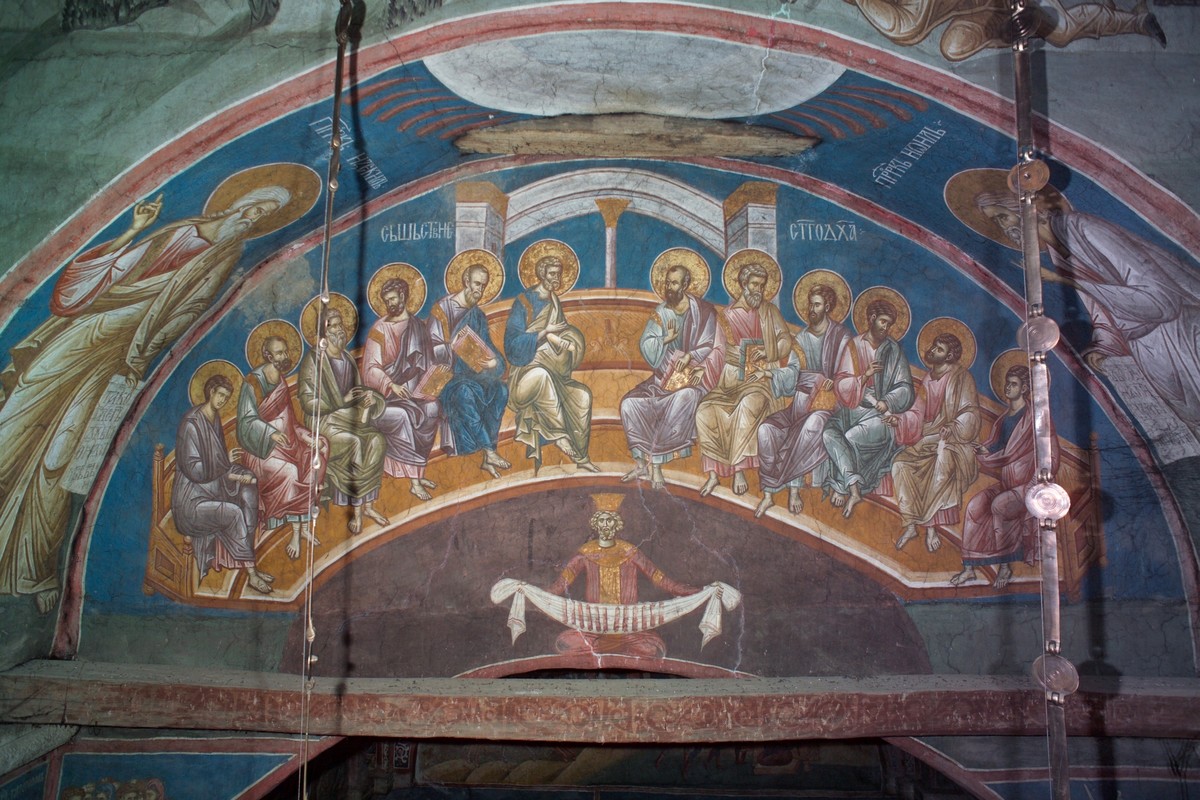
The descent of the Holy Spirit at Pentecost, fresco from the Monastery of Decani (source)
 
Through the prayers of our Holy Fathers, Lord Jesus Christ our God, have mercy on us and save us! Amen!

Homily on Pentecost by St. John Chrysostom

The Great and Holy Feast of Pentecost (source)
 
Homily on Pentecost by St. John Chrysostom
Let us spiritually extol the grace of the Holy Spirit in spiritual hymns, since spiritual grace has on this day shown upon us from heaven. Though our words are too weak to express adequately the greatness of this grace, we shall praise its power and activity to the extent of our abilities; for the Holy Spirit probes all things, even the depths of divinity.

We are celebrating the day of Pentecost, the day of the Descent of the Holy Spirit to the Apostles, the day of the hope of perfection, the end of expectation, the longing for salvation, the fulfillment of prayer and the image of patience. Today the Spirit Who acted to scatter the nations in the time of Heber has formed tongues of fire among the Apostles. His action of old led to the confusion of the nations, in order to restrain the will of man from its brazenness and consequent chastisement; on this occasion, however, amidst fiery tongues, the deeds wrought by the activity of the Holy Spirit served to preserve us as recipients of preaching, in fulfillment of the will of God.

In the beginning the Spirit of God moved over the water, and later, in the time of Christ, the same Holy Spirit of God rested upon him . Then He moved, and now He rested, as being one in essence, equal in honor, ever-existent and unoriginate together with the Father and the Son.

He Who by the flight of a dove over the waters of the Flood heralded fair weather to Noah, the same Holy Spirit, by the sight of a dove at the waters of the Jordan, showed the world the Sonship of Him Who was baptized. Moreover, the Lord had a terrifying answer for those who dared to utter blasphemy against the Holy Spirit:

“Whoever speaks blasphemy against the Holy Spirit, it shall not be forgiven him, neither in this world, neither in the world to come.”

David, declaring his desire for this Holy Spirit, prayed to God, saying: “Cast me not away from Thy presence, O Lord; and take not Thy Holy Spirit from me.”

As is well known, where He is absent, every sort of corruption sets in. Thus, the Spirit of the Lord departed from Saul, and an evil spirit entered into him, wherefore David said,

“Take not Thy Holy Spirit from me.”

This same Holy Spirit sanctified the prophets, instructed the apostles and empowered the mar­tyrs. This same Holy Spirit consecrated Isaiah, taught Ezekiel and revealed the resurrection of the dead. As he says,

“The hand of the Lord was upon me, and carried me out in the spirit of the Lord.”

This same Holy Spirit chose Jeremiah from his mother’s womb, and raised up Daniel to deliver Susanna. As it is written,

“God raised up by the Holy Spirit a young youth, whose name was Daniel.”

David so loved the presence of this same Holy Spirit that he prayed to God, saving,

“Thy Holy Spirit shall lead me in the land of uprightness.”

This same Holy Spirit of God came to dwell in the holy Virgin Mary, embracing her with the communion of the Divine Word at the good pleasure of the Father, and making her the Theotokos. Elizabeth, being filled with this same Holy Spirit, understood that the Lord had come to her by means of the Virgin; wherefore she said,

“And whence is this to me, that the Mother of my Lord should come to me?”

Zachariah, the father of John, was filled with the same Holy Spirit, whereby he declared that the son born to him would be the prophet and forerunner of the King Who was to come. John himself was also filled with the same Holy Spirit; the eyes of his intellect were given light, and he beheld the heavens opened, and the Holy Spirit hovering over Him Who was being bap­tized, Him Who baptized with the Spirit and fire.

By the action of the same Holy Spirit, the Lord Himself, when He was giving His Apostles His teaching in detail and strength­ening their minds for the time of His Passion, said to them:

“If I go not away, the Com­forter will not come unto you.”

Moreover, revealing to them the Spirit’s consubstantial power, He said:

“When the Holy Spirit is come, Which proceedeth from the Father, He will guide you into all truth.”

The holy Apostles waited expectantly for the coming of the power of this same Holy Spirit; they waited together to be clothed with power from on high, according to the commandment of the Lord, Who had said:

“Tarry ye in the city of Jerusalem, until ye be endued with power from on high; for, behold, I shall send the promise of My Father upon you.”

And, as it is written,

“when the day of Pentecost was fully come, all the holy Apostles were assembled with one accord in one place, and the Paraclete was sent to them under the appearance of tongues of fire.”

Having received the abundant promise of the Father and the Holy Spirit, they were strengthened, and they manifested Him Who was sent to them, His grace and His power. The martyr and protodeacon Stephen, filled with the same Holy Spirit, Whom he received by the laying-on of hands of the Apostles, did great wonders and miracles among the people. Being full of the Holy Spirit, he saw the doors of heaven opened and the Only-begotten Son and Word of God standing in the flesh at the right hand of the power of God. Filled with this same Holy Spirit, Paul became the preacher of divine mysteries. As Ananias said to him:

“The Lord, even the Savior, hath sent me to thee, that thou mightest receive thy sight, and be filled with the Holy Spirit.”

And Paul afterwards said with assurance:

“And I think also that I have the Spirit of God.”

The same Holy Spirit came to Cornelius and those that were to be baptized with him, and each of them spoke in his own tongue and magnified God. This same Holy Spirit came upon the Ethiopian eunuch after he went down into the water [of baptism], and he was filled with joy, and he went on his way rejoicing.

This is the same Holy Spirit Who preached by the prophets, Who gave understanding to the apostles, Who spoke to men. He was given to them by the Lord, and all their adversaries were not able to gainsay or resist Him. For, as the Lord said,

“It is not ye that speak, but the Spirit of your Father Which speaketh in you.”

This Holy Spirit also or­dains priests, consecrates churches, purifies altars, perfects sacrifices and cleanses people of their sins. This Holy Spirit abides with the godly, refines the righteous and guides kings. This same Holy Spirit preserved the soul of Simeon, lengthening the time of his life and re­versing the rules of death, until the day when he beheld Him Who is the Redeemer of life and death; for it had been promised unto him by the Holy Spirit, that he should not see death before he had seen the Lord’s Christ.

It was the same Holy Spirit Who gave strength to Elijah, and Whose power Elisha desired when he asked of Elijah:

“Let there be, I pray thee, a double portion of thy spirit upon me.”

This Holy Spirit enlightens souls and sanctifies bodies. It was the same Holy Spirit Who descended upon the Apostles and filled them with divine wisdom. Having received His gifts, they were all filled with the knowledge of God; not only were they given divine knowledge, but also spiritual gifts.

Simon Magus, being a stranger to the Holy Spirit, fell to his perdition. As Peter said to Simon:

“Thy money perish with thee, because thou hast desired to purchase the priceless grace of the Holy Spirit with money.”

Therefore, beloved, let us strive to keep our bodies uncorrupted; for one who has acquired a new body, which is a temple of the Holy Spirit, has become a true victor over the devil. What the Spirit of God has said, may it be done unto me.

Moreover, Joseph, strength­ened by this same Holy Spirit, desired not that his body be defiled by the vile deeds of this life; for he knew that the Spirit does not abide in a body that has commerce with sin; there­fore, he attained a royal rank. This Spirit enlightened Bezaleel, so that he fashioned the tabernacle with all beauty and skill. Joshua the son of Nun, possessing the same Spirit, be­came a faithful heir to Moses and obtained the inheritance of the Promised Land for his people. As God said to Moses:

“Take to thyself Joshua the son of Nun, a man who has the Spirit of God in him.”

This is the Spirit of Whom the Lord, when He breathed upon His disciples after His Resurrection from the dead on the third day, said:

“Receive ye the Holy Spirit.”

And again, it is the same Spirit Who has vouchsafed to give eternal life to the faithful after the general resurrection from the dead. As it is written:

“Thou wilt send forth Thy Spirit, and they shall be created; and Thou shalt renew the face of the earth.”

Many are the gifts of the Holy Spirit; many and all-powerful are His gifts.

As it says in a certain place: By the Word of the Lord were the heavens established, and all the might of them by the Spirit of His mouth. And Isaiah says:

“The Spirit of God shall rest upon him, the spirit of wisdom and understanding, the spirit of counsel and strength, the spirit of knowledge and godliness.”

And Paul adds,

“The Spirit of adoption and of grace.”

He Who is equally ever-existent, and equally unoriginate, and Who shares the throne and the honor of God, His Son and Word, called this Spirit the Spirit Who is our Comforter. David calls Him the Holy Spirit, since the Holy Spirit is sent by holiness; the governing Spirit, since He has dominion over all, be­cause all things came from Him and are kept in existence by Him; and the good Spirit, since salvation and all kinds of goodness are from Him.

And what does Isaiah call Him? The Spirit of God, because He proceeds from God the Father; thus does God Himself speak of the Spirit of God as proceeding, in the words, Which proceedeth from the Father. Isaiah further calls Him the Spirit of wisdom and understanding, because all wisdom and good understanding have been given through Him; and the Spirit of counsel and strength, because He is able to bring to pass that which is desired; and also the Spirit of knowledge and godliness. Ezekiel, a man of the spirit, says:

“And I will give you a new heart and a new Spirit.”

He is one in essence, one in principle and one in counsel with the Father and the Son. Wouldst thou believe? Listen to what the Scriptures say of Him:

“When He prepared the heaven, I was present with Him.”

The prophet further says:

“The Lord, and His Spirit hath sent me.”

Lest anyone think, from what was said, that this new Spirit would come from any creatures living or yet to come, or from any other person, He says:

“And I will put My Spirit in you;”

inasmuch as He said,

“A new Spirit.”

In the Acts of the holy Apostles, this was ex­pressed in commandments:

“The Holy Spirit said, ‘Separate me Barnabas and Saul for the work whereunto I have called them.’”

And again,

“It seemed good to the Holy Spirit, and to us;”

even as it had been said,

“I will put My Spirit in you.”

Would you demonstrate that this was indeed His coming, as was foretold in parables, and that it was His grace acting upon the holy Apostles? Will you believe what was said? Listen to St. John the Evangelist, who says:

“The Holy Spirit was not yet given, because that Jesus was not yet glorified.”

Paul called this Spirit the Spirit of adoption and the Spirit of grace, inasmuch as in the waters of the baptismal font men are born again of water and the Spirit, and we receive the adoption of sons. In the same way, the Lord said to Nicodemus:

“Except a man be born of water and of the Spirit, he cannot enter into the kingdom of God.”

Thus, the Holy Spirit is the Spirit of sonship and the Spirit of grace; for grace and truth came by Jesus Christ, through the Holy Spirit, for those who have been born by the power of God.

Moreover, the Spirit is called the Comforter, because He is also our advocate with the Father. And not only is He with the Father, but He is always with us also as a gift.

“And I will pray the Father, and He shall give you another Comforter, that He may abide with you forever,”

comforting your hearts and making them steadfast in divine patience and trust in Christ. Whereas the holy Apostles re­ceived this testament after Christ’s holy Rising from the dead, and were sent forth to teach and to baptize in the name of the Father and of the Son and of the Holy Spirit, and whereas we have already been vouchsafed this true washing by the Holy Spirit, let us strive to keep our souls and our bodies undefiled as we glorify the Most holy and consubstantial Trinity, the Father and the Son and the Holy Spirit, now and ever and unto the ages of ages. Amen
(source)
  
Through the prayers of our Holy Fathers, Lord Jesus Christ our God, have mercy on us and save us! Amen!

Sunday, June 16, 2013

St. Tikhon of Zadonsk on the Love for God

Jesus Christ, the Son of God, the Savior of the world (source)
 
St. Tikhon of Zadonsk on the Love for God

But let us see what the signs of love for God are, so that we may not have a false dream of love instead of love itself. In nothing does a man deceive himself so much as in love. The signs of this love are: 

 1. God Himself indicates this, saying, "He that hath My commandments and keepeth them, he it is that loveth Me" (Jn. 14:21). For the true lover of God will preserve himself from everything that is repugnant to God, and hastens to fulfil everything that is pleasing to God. Wherefore he keeps His holy commandments. From this it follows that those Christians that neglect the commandments have no love for God. Such are the malicious and those that harm others in any way. Such are the profligate, adulterers and all defilers. Such are robbers, bandits, thieves, and all those that unjustly appropriate the goods of others. Such are slanderers and those that curse others. Such are the sly, the crooked, the guileful, deceivers and hypocrites. Such are sorcerers and those that call on them. Such are all evildoers. All such love neither the Law of God nor God himself. They love themselves and their own appetites, but not God or His holy Law.

2. A manifest sign of love for God is a heartfelt gladness in God, for we rejoice in what we love. Likewise love of God cannot exist without joy, and whenever a man feels the sweetness of the love of God within his heart, he rejoices in God. For so sweet a virtue as love cannot be felt without joy. As honey sweetens our throat when we taste of it, so the love of God makes our heart glad when we taste and see that the Lord is good (LXX-Ps. 33:9 [KJV-Ps. 34:8]). Such joy in God is found in many places in Holy Scriptures, and is portrayed most of all in the holy Psalms. This joy is spiritual and heavenly, and is a foretaste of the sweetness of eternal life.

3. The true lover of God disdains the world and all that is in the world, and strives toward God, his most beloved. He counts honor, glory, riches, and all the comforts of this world which the sons of this age seek, as nothing. For him only God, the uncreated and most beloved good, suffices. In Him alone he finds perfect honor, glory, riches and comfort. For him God alone is the pearl without price, for the sake of which he holds everything else as little. Such a one desires nothing in heaven or on earth besides God. Such love is portrayed in the very words of the Psalter, "For what have I in heaven? And besides Thee what have I desired upon earth? My heart and my flesh have failed, O God of my heart, and God is my portion forever" (LXX-Ps. 72:25 [KJV-Ps. 73:25]). He uses food, drink, clothing, and everything else only as needful, and not for sensual pleasure.

From this it follows that whoever loves the world does not love God. According to the witness of the Apostle, "If any man love the world, the love of the Father is not in him" (1 Jn. 2:15). Such are those that find pleasure only in the pride and pomp of this world, in rich homes, in rich carriages, in rich tables, in dressing in rich clothing, to be glorified and admired by all, and so on. Such people love the "lust of the flesh, the lust of the eyes, and the pride of life" (1 Jn. 2:16) which are all repugnant to God, but they do not love God.

4. The true lover of God keeps God ever in mind, and His love toward us and His benefactions. We see this even in human love, for we often remember the one we love. So whoever loves God remembers Him, thinks of Him, and finds consolation in Him, and is enrapt in Him. For wherever his treasure is, there his heart is also (Mt. 6:21). To him the priceless and most beloved treasury is God. Therefore his heart also holds itself inseparably before Him. Whence it is that he also remembers His holy name often and with love. For the heart filled with the love of God reveals outward signs of love. From this we see that those who forget God do not love Him, for forgetfulness is a manifest sign of no love for God. The lover can never forget his beloved.

5. One who loves, desires never to be separated from the one he loves. Many Christians desire to be with Christ the Lord when He is glorified, but they do not wish to be with Him in dishonor and reproach, nor to carry their cross. They entreat Him that they may come into His Kingdom, but they do not wish to suffer in the world, and thereby they show that their heart is not right and that they do not truly love Christ. And to tell the truth, they love themselves more than Christ. For this reason the Lord says, "He that taketh not his cross, and followeth after Me, is not worthy of Me" (Mt. 10:38). A true friend is known in misfortune. He is our true friend and one who loves us who does not forsake us in misfortune. Likewise the true lover of Christ is he who abides with Christ in this world, and cleaves to Him in his heart, and uncomplainingly endures the cross with Him, and desires to be with Him inseparably in the age to come. Such a one says unto Christ, "It is good for me to cleave unto God" (LXX-Ps. 72:28 [KJV-Ps. 73:28]).

6. A sign of the love of God is love for neighbor. He who truly loves God also loves his neighbor. He who loves the lover loves what is loved by him. The source of love for neighbor is love for God, but the love of God is known from love for neighbor. Hence it is apparent that he who does not love his neighbor does not love God either. As the Apostle teaches, "If a man say, I love God, and hateth his brother, he is a liar; for he that loveth not his brother whom he hath seen, how can he love God Whom he hath not seen? And this commandment have we from Him, That he who loveth God love his brother also" (1 Jn. 4:20-21). These are the signs of love for God hidden in the heart of a man.

Dear Christians, let us repent and turn away from the vanity of the world, and cleanse our hearts with repentance and contrition, that the love of God may abide in us. "God is love; and he that dwelleth in love dwelleth in God, and God in him" (1 Jn. 4:16).

Why Should we Love God?
God is the supreme good from Whom every good thing flows, and all blessing that is and ever shall be.

Without God all blessedness is cursedness and woe, life is death, joy and sweetness are bitterness. To live with God is happiness in misfortune, riches in poverty, glory in dishonor, and consolation in sorrow. Without God there cannot be true repose, peace and consolation.

Therefore love Him as your supreme good and blessedness, love Him above every creature, above father and mother, above wife and children, and above your own self. Cleave to Him alone in your heart, and above all, desire Him alone because He is your eternal good and blessedness without Whom there is neither life or blessedness in this age or the next.

Every creature of God is good, but their Creator is incomparably better. Love, then, and desire that good as it is existent, without beginning, without end, everexistent, and without change, from Whom all creatures are created good.
From: Journey to Heaven Counsels On the Particular Duties of Every Christian Our Father Among the Saints, Tikhon of Zadonsk, Bishop of Voronezh and Elets Jordanville, NY: Holy Trinity Monastery, 2004. (Source)
   
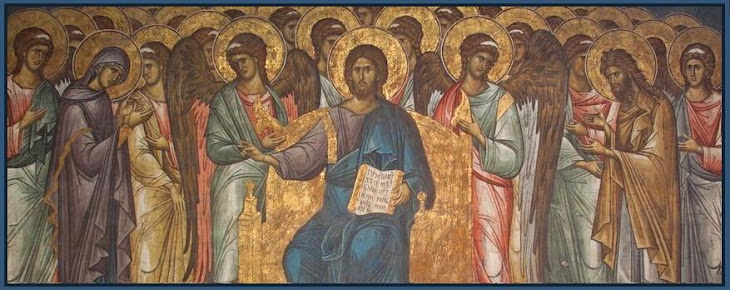
Jesus Christ "O Yperagathos" (The Surpassing-Good One) (source)
   
Through the prayers of our Holy Fathers, Lord Jesus Christ our God, have mercy on us and save us! Amen!

Thursday, June 13, 2013

St. Silouan the Athonite on the Joy of the Ascension of Christ

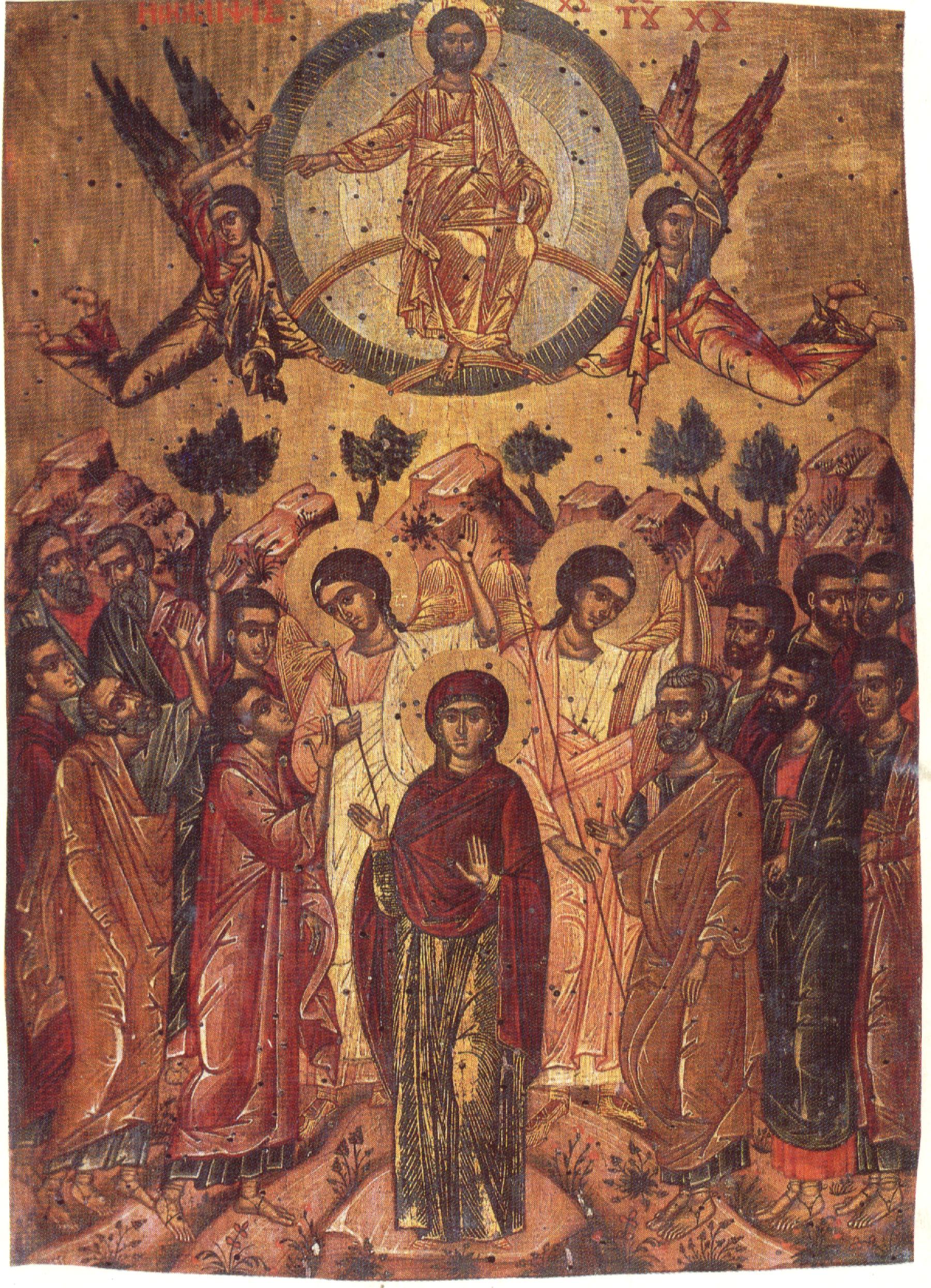
The Ascension of Christ (source)
 
St. Silouan the Athonite on the Joy of the Ascension of Christ (amateur translation)
After the Ascension of the Lord, the Apostles returned to Jerusalem with great joy, as the Gospel says (Luke 24:52).

The Lord knows what joy He gave them, and their souls experienced this joy.

Their first joy was that they came to know the true Lord Jesus Christ.

Their second joy was how He loved them.

Third, how they came to know eternal, heavenly joy.

And their fourth joy, how they yearned for the salvation of the world, as their own.

And finally, they rejoiced, because they came to know the Holy Spirit, and saw how He worked within them.

The Apostles went throughout the earth and preached to the people the good news regarding the Lord and the Kingdom of Heaven. Their souls, however, yearned and thirsted to behold the beloved Lord, and because of this, they did not fear death, but they met it with joy. And if they desired to live on the earth, this was only for the joy of the faithful, who loved them.

The Apostles loved the Lord, and because of this they did not fear any suffering. They loved the Lord, and they loved the people, and this love casted out every fear from among them. They did not fear martyrdom, nor death, and because of this the Lord sent them into the world to enlighten the people.
Through the prayers of our Holy Fathers, Lord Jesus Christ our God, have mercy on us and save us! Amen!

Wednesday, June 12, 2013

Our Ascended Lord: The Saving Swallow Who Opened the Way to the Eternal Spring

Christ is risen! Truly He is risen!
When the Disciples made haste and went to the mountain for His elevation from the ground, the Lord appeared unto them. And when they saw Him they worshipped Him. And they were told of the omnipresent authority He was given. Then they were sent abroad to preach in all the earth under heaven the resurrection from the dead and the restoration in the heavens. And He, being truthful, promised that He is with them eternally, as Christ our God and the Savior of our souls.
Eothinon Doxastikon of the First Tone
(sources 1, 2)
   
Our Ascended Lord: The Saving Swallow Who Opened the Way to the Eternal Spring.
by the Blessed Bishop Nikolai (Velimirovich) (†1956)
"When swallows run short of food and the cold weather is coming, they set off to warm climes, where there is plenty of sun and food. One swallow flies ahead, testing the air and showing the way, while the rest of the flock follows after.

When our souls run short of food in the material world, and when the cold of death draws near—ah, is there a swallow like that one, to take us to a warm place, where there is plenty of spiritual warmth and food? Is there such a place? Is there, oh, is there such a swallow?

Outside the Christian Church, there is no one who can give any sort of reliable answer to this. The Church alone knows, and knows with certainty.

It has seen that part of Paradise for which our souls yearn in the frozen twilight of this earthly existence. It has also seen this blessed swallow, the first to fly to that yearned-for place, dispersing the darkness and cutting through the heavy atmosphere between earth and Heaven with its powerful wings,opening the way to the flock behind it. Apart from this, the Church on earth can tell one of innumerable flocks of swallows that have followed the first Swallow and flown off with it to that blessed land, a land abounding with all good things—the land of eternal Spring.

You will see from this that, by this saving Swallow, I am thinking of the ascended Lord Jesus Christ.

Has He not said of Himself that He is theWay? Did He not Himself say to His Apostles:“I go to prepare a place for you...and if I go...I will receive you unto Myself”(St. John 14:2–3)? And did He not say to them before this:

“And I, if I be lifted up from the earth, will draw all men unto Me”

(St. John 12:32)? This that He Himself said began to be fulfilled a few weeks later, and has continued to be fulfilled right down to our own day, and shall be to the end of time. That is, being the beginning of the first creation of the world, He became also the beginning of the second creation, or the blessed renewing of the old. Sin clipped Adamʼs wings and those of all his descendants, and they all fell away from God, went off, and were blinded with the dust from which their bodies were created. Christ, as the New Adam, the first Man, the Firstborn among men, was the first to rise up to Heaven on spiritual wings, to the throne of Eternal Glory and power,thus cleaving the way to Heaven and opening all Heavenʼs gates to His followers, with their spiritual wings—as an eagle cleaves the way for its eaglets,as the swallow which goes ahead, showing the flock the way and breaking the airʼs heavy resistance.

“O that I had wings like a dove; for then would I flee away and be at rest”(Psalm 54 [55]:6), the Psalmist cried in distress before Christʼs coming.

Why? He himself explains:“My heart is disquieted within me, and the fear of death is fallen upon me. Fearfulness and trembling are come upon me, and an horrible dread hath overwhelmed me”(vv. 4–5). Such a terrible sense of deathly fear and of the horror of existence in the wastes of this life must,

like a heavy nightmare, have weighed on the whole rational, honest world before Christ. “Who would give me wings, to fly away from this life?”: this must be a question asked by many noble and sensitive souls. But whither will you fly, O sinful human soul? Can you still, as in a dream, feel that place of warmth and light from which you have been driven out? Lo, the gates were closed behind you, and Cherubim with flaming swords were placed there, to forbid your approach. Lo, sin has clipped your wings—not birdʼs wings but Divine wings—and has forced you firmly down to the ground.

Someone is needed, first to free you from the weight of sin, to wash you and make you stand erect. And then someone is needed to implant and nourish new wings in you, so that you can fly. Then you need someone, someone very strong, for

whom the Cherubim with flaming swords will stand aside, to let you through to your glorious homeland. Lastly, you need someone who will find mercy for you from your grieved Creator, so that He will receive you once more into the lands of His immortal country. This “someone” was unknown to the pre-Christian world. He revealed Himself as our Lord and Savior Jesus Christ,the Son of the living God. From love for you, He bowed down from Heaven to earth and came down on earth, clothed Himself in flesh, became a prisoner for the sake of you prisoners, suffered sweat and frost, endured hunger and thirst, gave His face to spitting and His body to be nailed to the Cross, lay in the tomb as a corpse, went down to Hades to destroy a prison worse than this life, that was intended for you after your parting from the body—and all this in order to save you from the mire of sin, and set you on your feet. He then rose from the dead, by this means to give you wings for flight to Heaven, and finally ascended into Heaven to open the way to you and bring you into the Angelsʼ abode. You do not now have to sigh in fear, trembling and horror as King David did, nor to desire wings like a dove,for the Eagle has appeared,and has shown and cloven a road through. You have only to nurture the spiritual wings that you were given at your Baptism in His name, and to desire with all your strength to climb up there where He ascended. He has done ninety-nine percent of all that is needed for your salvation; will you not striveto do that one remaining percentage point for your own salvation, and this when, for you, an entrance shall be ministered...abundantly into the everlasting Kingdom of our Lord and Savior Jesus Christ(II St. Peter 1:11)?


The Lordʼs Ascension from earth to Heaven is as unexpected to men as His coming down from Heaven to earth and His birth in the flesh was to

the Angels. What event in His life does not represent something unique and uniquely unexpected to the world? As the Angels watched with wonder how God, at the first creation, separated light from darkness and water from dry

land, how He placed the stars in the heavenly vault, and how He brought forth plants and animals from the dust and finally formed man, giving him a living soul, so each one of us must look with wonder at the events of the Saviorʼs life, beginning with the wondrous Annunciation to the most holy Virgin by the Archangel Gabriel in Nazareth, and then through in order to His mighty Ascension on the Mount of Olives. It is all, at first sight, unexpected, but, when they are made aware of the plan for the dispensation of our salvation, all rational men must shout for joy and glorify Godʼs power, His wisdom, and His love for mankind. You can take no single great event out of

Christʼs life and not disfigure the whole, as you cannot cut off a living manʼs arm or leg and not disfigure him, or remove the moon from the heavenly vault or blot out a part of the starry myriads, and not disfigure the order and beauty of the heavens. So do not think of saying: “It was unnecessary for the Lord to ascend!” When some of the Jews were constrained to acknowledge and cry out:“He hath done all things well!” (Mark 7:37), how can we, who are Baptized in His name, not believe that all He did, He did well: devising

and ordering with great wisdom.

And His Ascension is therefore also good,devised and ordered with great wisdom, as are also His Incarnation, Baptism, Transfiguration and Resurrection.

“It is expedient for you that I go away”(St. John 16:7), said the Lord to His disciples. Do you see how He disposes and does everything as is best for me? Every word and act of His have our good as their aim. His Ascension is of boundless good for us all. Were it not so, He would not have ascended..."
   
(Source: [St.] Nikolai (Velimirovich), Bishop of Ohrid, “Homily 27. The Ascension of the Lord,” in Homilies (Birmingham: Lazarica Press, 1996), Vol. I, pp. 296-299. Source)
  
The Ascension of Christ (source)
  
Christ has risen from the dead, by death he has trampled on death, and to those in the graves given life!
Truly the Lord is risen!


Monday, June 10, 2013

A miracle of Sts. Luke of Simferopol and Panteleimon


Christ is risen! Truly He is risen!
 
Sts. Luke the Surgeon and Panteleimon the Great Martyr (Source: www.eikonografos.com)
   
A miracle of Sts. Luke of Simferopol and Panteleimon (amateur translation)
A young girl was going for surgery to a hospital in Simferopol. Her situation was very serious, and the surgery was difficult and dangerous.

The physician that was operating on her called the mother of the patient and told her: “The surgery is very difficult and dangerous. I can't guarantee anything. I don't know if your girl will come out alive.”

There was no other choice. The young girl was brought to the operating room.

Throughout the duration of the surgery, the mother was sitting in the yard of the hospital, and with tears in her eyes she prayed to St. Luke the Surgeon and to St. Panteleimon to help.

At one instant, before the mother's eyes, an astonishing event occurred: the wall of the hospital became invisible, like a pane of glass. The operating room appeared. In the hospital bed was her daughter, and around her were the surgeon and his helpers. Next to her was the surgical nurse who was holding the surgical instruments.

And more wondrously: Next to the surgeon she saw the Holy Physicians to whom she was praying. To the left was St. Panteleimon with a lit lamp. To the right was St. Luke, who every so often would take the tools from the nurse and give them to the surgeon!

The mother was struck with astonishment and amazement. She felt that her prayer had been answered. When the operation was finished, the surgeon exited full of joy and enthusiasm.

He called the mother and told her: “Things went very well, unbelievably well!”

Then, the mother related to him the wondrous event that she experienced. The surgeon was stunned. He did his cross and confessed: “Now I understand. During the operation, when I would want some surgeon's tool, I didn't even get to tell the nurse. As soon as I thought that I wanted some tool, I had it in my hands.”
   
From the book “Tachys eis Voetheian...” (“Speedy to help...”) (A 200 page book filled with new miracles of St. Luke the Surgeon),
by Fr. Nektarios Antonopoulos, Abbot of the Holy Monastery of Sagmata, Thebes 
(Source)
   
Christ has risen from the dead, by death he has trampled on death, and to those in the graves given life!
Truly the Lord is risen!

Sunday, June 9, 2013

Excerpt from St. John Chrysostom on the healing of the Blind Man

Christ is risen! Truly He is risen!
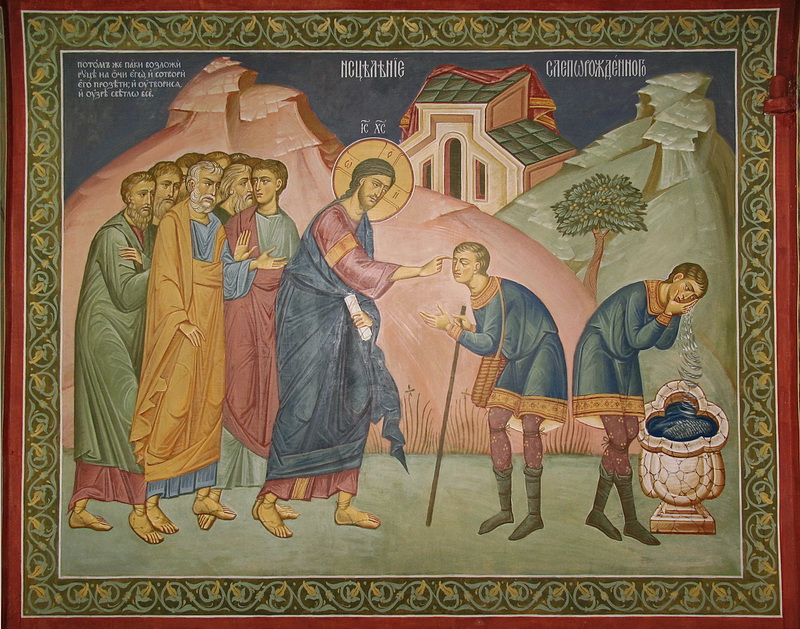
Christ healing the man born blind - Commemorated the Sixth Sunday of Pascha (source)
  
Excerpt from St. John Chrysostom's homily: "On zeal and piety, and on the man born blind" (amateur translation)
The word of God is a spring of light. The light therefore fills, and the light shines, and illumines the senses of the faithful. For from Him and in Him shines, and those who partake of Him shine. And He does not only enlighten the minds of the faithful, but grants the name of light. For the divine Scripture, for those who dwell with the ignorant and who live in disbelief, rightly calls them darkness, not receiving the lamp of truth, that they might be sons of light. Therefore, the divine Apostle Paul writes: "We were not sons of the night, nor of the darkness, but sons of the light and day." And regarding the sons of light was the evangelical word spoken from the mouth of God: "I am," as Christ said, "the light of the world. He who follows me will not walk in darkness, but will have the light of life."

His word is light, that if any of us might believe in him, that they might be made to be born as a son of light. Therefore the Savior said: "As long as you have the light, believe in the light, that you be born sons of the light." For as this sensible light is for the body, thus noetically is the word of God for souls. And as there is the darkness at night, thus is there delusion in ignorant souls. Because of this, the blessed David writes of this, saying: "They did not know, nor did they perceive that they were walking in darkness..."

It is right therefore for good students to imitate the teacher, as Paul says: "Be imitators of me, as I am of Christ." Do you wish to learn how the simple student can benefit from the zeal of piety? Hearken to how Christ healed the man born blind. Likely you have heard this story from the beginning. Among other things, the evangelical word says: "As Jesus was passing by, He saw a man blind from birth. And His disciples asked Him..." "And he spat, and made clay, and anointed his eyes and told him: 'Go, wash in the pool of Siloam.' And having washed, he began to see. The Judeans recognized him and said: 'Was not this the man who was sitting blind and receiving alms?' Some said yes, others said no, but he is like him. He said: 'It is me.'"

The Pharisees therfore and the rulers of the Judeans, beholding that this wonder was drawing many to Christ, overcome with the zeal of impiety, and struck by the sting of the truth, asked him how long he was blind. And behold this evil theater that has gathered to try piety, and the evil judges who judge, and the great gathering that has gathered, to look into and study God. They called him who was once blind, and when the children of the Judeans saw him in the council, they asked him: "How did you see, and who opened your eyes, and who accomplished it?" This they said not that they might learn, but that the form of the question might give way to fear. For many times, by the form of the question, the teacher who is asking [seeks] an answer, or silence. But he told them that he might bear witness to the reality. "Did you see this deed? Were you there? How did you see the reality?" The form of this teaches denial. Therfore they asked: "How did you see? Who opened your eyes?" But he, having cultivated fearlessness, or more so the truth, said: "A man named Jesus took clay and anointed my eyes and told me: 'Go, wash at Siloam.' And I went and washed, and I began to see..."

Because they could not deny [the miracle], they hastened to cover it, saying: "Give glory to God. We know that that man is a sinner." The Son is the glory of the Father, and His glory is inseparable. And he fought the good fight against the Judeans [to defend Christ]...

Though they spoke with him till now, they then commanded that he be cast out. And they cast him out, as the Evangelist said. Blessed is he who hastens from the council of evil men. And behold what happened. Because he fought the good fight, and gave glory to God, and confessed the Savior gloriously with much boldness, and completed the battle in the stadium, being cast out as a wrestler, without receiving the crown, the Referee called to him outside. Jesus, hearing therefore that they cast him out, found him and spoke to him. The Word found him who spoke of Him, whom He delivered from delusion, and found the Truth...

For when He sent him to the pool of Siloam to wash, He sent him blind. And when he began to see, he did not see the Savior among the multitude that had gathered around him, but immediately, before he saw the Master, he was called to struggle in the contest. For the Master put clay on his eyes before this, that the following might be fulfilled. For when they cast him out, Christ found him and said to him: "Do you believe in the Son of God?" For he did not see him as a prophet and struggle, but as the Son of God. He did not recognize His face, but he recognized His voice. "Do you believe," He said, "in the Son of God?"

He hearkened to the voice, and with joy he said: "And who is He, O Lord, that I might believe in Him?" Why did He ask "Do you believe" of him? "Do you believe in the Son of God?" I see that Your word is truth. However, if you give me the knowledge, I will not neglect to believe You. "And who is He, O Lord, that I might believe in Him?" And the Foreseer was before him. And he looked upon Him, Who spoke to you previously. He Who was with you within the council, and outside speaks with you. "Do you believe in the Son of God?" He who was enlightened in body and in mind said: "And who is He, O Lord, that I might believe in Him?" He replied to him: "You have seen Him, and it is He Who is speaking to you." He, therefore, said: "I believe, O Lord," And he worshipped Him.

I said these things, that all of you might learn, and that I might call all to fall before the teacher, and to imitate the Good Shepherd, and to struggle on behalf of the Truth..."
(source)
  
Christ healing the man born blind (source)
  
Christ has risen from the dead, by death he has trampled on death, and to those in the graves given life!
Truly the Lord is risen!