Friday, April 19, 2013

Homily on the Annunciation by St. Proclus Patriarch of Constantinople


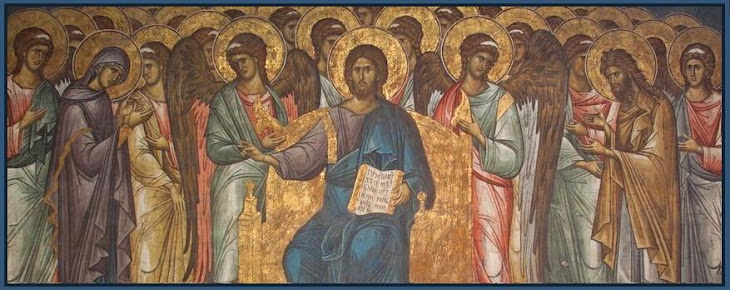
The Most-holy Theotokos and Christ (source)
   
Homily on the Annunciation by St. Proclus Patriarch of Constantinople
Our present gathering in honor of the Most Holy Virgin inspires me, brethren, to say of Her a word of praise, of benefit also for those come unto this churchly solemnity.
   
It comprises a praise of women, a glorying of their gender, which (glory) is brought it by Her, She Who is at one same time both Mother, and Virgin. O desired and wondrous gathering! Celebrate, O nature, that wherein honor be rendered to Woman; rejoice, O human race, that wherein the Virgin be glorified. "For when sin did abound, grace did superabound" (Rom 5:20). The Holy Mother of God and Virgin Mary hath gathered us here, She the pure treasure of virginity, the intended paradise of Second Adam -- the locus, wherein was accomplished the co-uniting of natures, wherein was affirmed the Counsel of salvific reconciliation.
   
Whoever is it that ever saw, whoever heard, that within a womb the Limitless God would make habitation, Whom the Heavens cannot circumscribe, Whom the womb of a Virgin limiteth not!?
   
He born of woman is not only God and He is not only Man: This One born made woman, being the ancient gateway of sin, into the gateway of salvation: where evil poured forth its poison, bringing on disobedience, there the Word made for Himself a living temple, bringing in thither obedience; from whence the arch-sinner Cain sprang forth, there without seed was born Christ the Redeemer of the human race.
   
The Lover-of-Mankind did not disdain to be born of woman, since this bestowed His life. He was not subject to impurity, being settled within the womb, which He Himself arrayed free from all harm. If perchance this Mother did not remain a Virgin, then that born of Her might be a mere man, and the birth would be no wise miraculous; but since she after birth remained a Virgin, then how is He Who is born indeed -- not God? It is an inexplicable mystery, since in an inexplicable manner was born He Who without hindrance went through doors when they were locked. When confessing in Him the co-uniting of two natures, Thomas cried out: "My Lord, and my God!" (Jn 20:28).
   
The Apostle Paul says, that Christ is "to the Jews indeed scandal, and to the Gentiles yet folly" (1 Cor 1:23): they did not perceive the power of the mystery, since it was incomprehensible to the mind: "for had they understood, they would not have crucified the Lord of Glory" (1 Cor 2:8). If the Word had not settled within the womb, then the flesh would not have ascended with Him onto the Divine Throne; if for God it were disdainful to enter into the womb, which He created, then the Angels too would have disdained service to mankind.
   
That One, Who by His nature was not subject to sufferings, through His love for us subjected Himself to many a suffering. We believe, that Christ not through some gradual ascent towards the Divine nature was made God, but being God, through His mercy He was made Man. We do not say: "a man made God"; but we confess, that God was incarnated and made Man.
   
His Servant was chosen for Himself as Mother by That One Who, in His essence did not have mother, and Who, through Divine foresight having appeared upon the earth in the image of man, does not have here father. How one and the same is He both without father, and without mother, in accord with the words of the Apostle (Heb 7:3)? If He -- be only a man, then He cannot be without mother -- but actually He had a Mother. If He -- be God only, then He cannot be without Father -- but in fact He has the Father. And yet as God the Creator He has not mother, and as Man He has not father.
   
We can be persuaded in this by the very name of the Archangel, making annunciation to Mary: his name -- is Gabriel. What does this name mean? -- it means: "God and man." Since That One about Whom he announced is God and Man, then his very name points beforehand to this miracle, so that with faith be accepted the deed of the Divine dispensation.
   
To save people would be impossible for a mere man, since every man has need in the Saviour: "for all, -- says Saint Paul, -- have sinned, and come short the Glory of God" (Rom 3:23). Since sin subjects the sinner to the power of the devil, and the devil subjects him to death, then our condition did become extremely hapless: there was no sort of way to be delivered from death.
   
There were sent physicians, i.e. the prophets, but they could only the more clearly point out the malady. What did they do? When they saw, that the illness was beyond human skill, they summoned from Heaven the Physician; one of them said "Lord, bend the heavens, and come down" (Ps 143[144]:5); others cried out: "Heal me, O Lord, and I shalt be healed" (Jer 17:14); "restore Thine power, and come yet to save us" (Ps 79[80]:3). And yet others: "For if God truly be settled with man upon the earth" (3[1] Kg 8:27); "speedily send before Thine tender mercy, O Lord, for we are brought very low" (Ps 78[79]:8).
   
Others said: "O woe to me, my soul! For the pious art perished from the earth, and of the upright amongst men there is none" (Mich 7:2). "O God, in help attend to me, O Lord, shield me with Thine help" (Ps 69[70]:1). "If there be delay, endure it, for He that cometh shalt come, and not tarry" (Hab 2:3). "Perishing like a lost sheep: seek out Thine servant, who doth hope on Thee" (Ps 118[119]:176). "For God wilt come, our God, and wilt not keep silence" (Ps. 49[50]:3).
   
That One, Who by nature is Lord, did not disdain human nature, enslaved by the sinister power of the devil, the merciful God would not accede for it to be forever under the power of the devil, the Ever-Existing One came and gave in ransom His Blood; for the redemption of the race of man from death He gave up His Body, which He had accepted of the Virgin, He delivered the world from the curse of the law, annihilating death by His death. "Christ hath redeemed us from the curse of the law" -- exclaims Saint Paul (Gal 3:13).
   
Thus know, that our Redeemer is not simply a mere man, since all the human race was enslaved to sin. But He likewise is not God only, non-partaking of human nature. He had body, since if He had not clothed Himself in me, He then likewise should not have saved me. But, having settled within the womb of the Virgin, He clothed Himself in my fate, and within this womb He perfected a miraculous change: He bestowed the Spirit and received a body, That One only indeed (dwelling) with the Virgin and (born) of the Virgin. And so, Who is He, made manifest to us? The Prophet David doth point it out for thee in these words: "Blessed is He that cometh in the Name of the Lord" (Ps 117[118]:26).
   
But tell us even more clearly, O prophet, Who is He? The Lord is the God of Hosts, says the prophet: "God is the Lord, and hath revealed Himself unto us" (Ps 117[118]:27). "The Word was made flesh" (Jn 1:14): there were co-united the two natures, and the union remained without mingling.
    
He came to save, but had also to suffer. What has the one in common with the other? A mere man cannot save; and God in only His nature cannot suffer. By what means was done the one and the other? Wherein that He, Emmanuel, being God, was made also Man; both this, that what He was, He saved by -- and this, that what He was made, He suffered as. Wherefore, when the Church beheld that the Jewish throng had crowned Him with thorns, bewailing the violence of the throng, it said: "Daughters of Zion, go forth and behold the crown, of which is crowned He of His mother" (Sng 3:11).
   
He wore the crown of thorns and destroyed the judgement to suffering from the thorns. He Only is That One both in the bosom of the Father and in the womb of the Virgin; He Only is That One -- in the arms of His Mother and in the wings of the winds (Ps. 103[104]:3); He, to Whom the Angels bowed down in worship, at that same time reclined at table with publicans.
   
Upon Him the Seraphim dared not to gaze, and at the same time Pilate pronounced sentence upon Him. He is That One and Same, Whom the servant did smite and before whom did tremble all creation.
   
He was nailed to the Cross and ascended to the Throne of Glory -- He was placed in the tomb and He stretched out the heavens like a skin (Ps. 103[104]:2) -- He was numbered amidst the dead and He emptied hell; here upon the earth, they cursed at Him as a transgressor -- there in Heaven, they exclaimed Him glory as the All-Holy.
   
What an incomprehensible mystery! I see the miracles, and I confess, that He is God; I see the sufferings, and I cannot deny, that He is Man. Emmanuel opened up the doors of nature, as man, and preserved unharmed the seal of virginity, as God: He emerged from the womb thus as He entered through the announcing; the same wondrously was He both born and conceived: without passion He entered, and without impairment He emerged, as concerning this doth say the Prophet Ezekiel: "He returned me back the way of the gates of the outer sanctuaries, looking upon the east: and these had been shut. And saith the Lord to me: son of man, these gates shalt be closed, and not open, and no one go through them: for the Lord God of Israel, He Only, shalt enter and come forth, and they wilt be shut" (Ez 44:1-2). Here it clearly indicates the Holy Virgin and Mother of God Mary.
   
Let cease all contention, and let the Holy Scripture enlighten our reason, so that we too receive the Heavenly Kingdom unto all eternity. Amen.
   
Through the prayers of our Holy Fathers, Lord Jesus Christ our God, have mercy on us and save us! Amen!

Catechesis on the Annunciation by St. Theodore the Studite

The Most-holy Theotokos and Christ (source)
 

CATECHESIS 64
On the incarnate dispensation of our Lord Jesus Christ, and that we should celebrate spiritually. It was spoken on the day of the Annunciation.
Brethren and fathers, the Annunciation is here and it is the first of the Feasts of the Lord, and we should not simply celebrate as most do, but with understanding and with reverence for the mystery. What is the mystery? That the Son of God becomes son of man, using the holy Virgin as the means, dwelling in her and from her fashioning for himself a temple and becoming perfect man. Why so? That he might ransom those under the law, as it is written, and that we might receive sonship[Gal. 4,5.]; that we may no longer be slaves, but free; no longer subject to the passions, but free of passions; no longer friends of the world, but friends of God; no longer walking according to the flesh, but according to the spirit. Those who walk according to the flesh, think the things of the flesh; those who walk according to the spirit, the things of the spirit; for the thought of the flesh is death; but the thought of the spirit, life and peace. And so the thought of the flesh is hostile to God, for it is not subject to the law of God. Indeed it cannot be. Those who are in the flesh cannot please God [Rom. 8,5-8.]. In brief this is the power of the mystery, and this is why we should celebrate spiritually and behave spiritually, with holiness and justice, with love, with gentleness, with peace, with forbearance, with goodness, with the Holy Spirit [2 Cor. 6,6.], so that as far as we ourselves are concerned we do not render the dispensation of our Lord Jesus Christ empty and ineffectual. Not only that, but we should both pray and grieve for the world. Why so? Because the Son of God came to save the world, and the world rejects him. Tribes and languages reject him; the barbarian nations reject him, those who have had his holy name invoked upon them reject him, some through abandoning the faith, others through their evil lives. What should he have done and did not do? Being God he became man, he humbled himself, becoming obedient unto death, the death of the cross [Phil. 2,8.]; he gave us his body to eat and his blood to drink; he allowed us to call him Father, Brother, Head, Teacher, Bridegroom, Fellow-heir and all the other titles which there is no time to mention now. And still he is rejected, and still he bears it. For, he says, I have not come to judge the world, but to save the world [John 12,47.]. What then is there to say, brethren? That the genuine disciples are grieved by the rejections of their fellow-disciples, thus showing love both for the teacher and for the disciples. So too, genuine servants suffer in the same way from the desertions of their fellow-servants. This is why the great Apostle orders that we should offer supplications, prayers, entreaties, thanksgivings on behalf of all mankind, for kings and for all in high positions [1 Tim. 2,1-2.]; and elsewhere he says this on the subject, I speak the truth in Christ, I do not lie, my conscience bears witness with me in the Holy Spirit, that I have a great grief and unceasing anguish in my heart; for I have prayed that I might be anathema to Christ for the sake of my brethren, my kinsmen according to the flesh [Rom. 9,1-3.]. You see the power of love? You see the height of friendship? Moses shows it too when he says to God, If you will forgive them their sin, forgive; if not, wipe me out of the book which you have written [Exodus 32,32]. So we too, as genuine and not counterfeit disciples, should not only look to what concerns ourselves, but we should grieve and pray for our brothers and for the whole world; for by so doing what is pleasing to the Lord we shall become inheritors of eternal life, in Christ Jesus our Lord, to whom be the glory and the might with the Father and the Holy Spirit, now and for ever, and to the ages of ages. Amen.
Texts and translation copyright to Archimandrite Ephrem © (source)
   
Through the prayers of our Holy Fathers, Lord Jesus Christ our God, have mercy on us and save us! Amen!

Tuesday, April 16, 2013

St. Nektarios saves the Metropolitan of Kydonies

St. Nektarios the Wonderworker (source)
 
St. Nektarios saves the Metropolitan of Kydonies (amateur translation/summary)

From the Chancellor of the Holy Metropolis of Kydonies, Archimandrite Damaskenos Lionake
Early on December 28th, we reached the Navy Hospital of Athens together with fellow workers from the Metropolis, where his Eminence Metropolitan Damaskenos was sick in critical condition.
It suffices to say that he was suffering from dysfunction of his vital organs, sepsis, icterus, pancreatitis, and many other organ complications! The vital placement of a stent, which was decided ultimately by Dr. Gerasimos Stephanides, was not at all an easy one. The prolonged suffering of our Shepherd impressed on us that his health was even more fragile.
At the “Evangelismos” Hospital, Drs. Evangelos Kokkinakes and Soterios Prigoures spoke of the last moments of his Eminence. Human medicine had reached its end, and around us there was utter speechlessness...Instants of great agony and “unity of heart”...
With faith we took refuge in the help of our great God, and the intercessions of the wonderworker St. Nektarios, whose relic we had taken with us from the Monastery of the Holy Trinity.
We approached the sick Bishop and placed the grace-flowing relic on him, and read prayers and prayed “within our strength”. He did not show any sign of communication with the outside world. He only clutched the reliquary, and took deep breaths due to aspiration.
In a short time they took him to the operating room. Those near him, about twenty people, waited outside the operating room in agony.
Two hours later, having waited with agony, the door to the operating room opened. The doctor called us, and told us: “Listen. I struggled greatly. A divine hand led me, because I was lost. I had never before met such a complex situation”... Immediately we were “born with rejoicing”!
Agony had given way to relief. Our hearts were sure that St. Nektarios had helped the doctor during the surgery, and contributed to its wondrous success! It was St. Nektarios!
It was he who, for so many years, supported his Eminence, who helped him in his life and his work, who blessed him “from on high” and guided him in his difficulties, in temptations and trials, he who is “speedy to help” and the “free physician”, who “pours forth healing of all kinds”, the new boast of the inhabitans of Chanion, who had confirmed his holiness even before his canonization!
Things that are impossible for men are possible for God” (Luke 18:27), as the unlying mouth of the Lord bears witness, and “nothing is impossible for St. Nektarios”, as was preached by the blessed Demetrios Panagopoulos, the grace-bearing lay preacher and man of God. Another page had been added to the many pages of wonders of St. Nektarios.
May the name of God be glorified, through the intercessions of St. Nektarios, Whose “mercy surrounded us like a fortified city” (Psalms 30:22).
His Eminence our Metropolitan grants to us “the grace of God” in the place of his pastoral service, in the blessed city of Chanion. We judge it necessary to thank those who worked towards his healing and therapy, those medical doctors who served him with consistency and humanity, those who with hope served vigil near his pillow, those who prayed for the improvement of his health, those who supported and strengthened him in his trial, those who served the wonder of his healing in many ways!
“May the mercy of the Lord be with them all. Amen”
   
Through the prayers of our Holy Fathers, Lord Jesus Christ our God, have mercy on us and save us! Amen!

Saturday, April 13, 2013

The Vigil Lamp of the Skete of St. Anna, Mount Athos

The icon of St. Anna and the Theotokos, the Skete of St. Anna, Mount Athos (source)
 
The Vigil Lamp of the Skete of St. Anna, Mount Athos (amateur translation)
As was mentioned by a priest who is related spiritually to the monks of the Skete of St. Anna, Mount Athos, during the sermon after the service of the Salutations to the Theotokos, at a monastery in the area of Akaramaga, he informed those present that for the past three days, the vigil lamp before the icon of St. Anna in her holy skete, has been moving in a miraculous way (in the shape of the Cross).

The Athonite monks, and the holy priest mentioned, are disquieted and troubled by this occurrence, and they believe that this foretells negative events.

However, irrespective of what this wondrous event means, it is sure that this is a further opportunity for us to be moved towards greater care and repentance.
(sources: http://anavaseis.blogspot.gr/2013/04/blog-post_3776.html, http://www.romfea.gr/ektakta-nea-2/16452-2013-04-12-18-36-21)
 
Through the prayers of our Holy Fathers, Lord Jesus Christ our God, have mercy on us and save us! Amen!

St. Peter the Merciful

St. Peter the Merciful, whose life was first related by St. John the Merciful - Commemorated September 22 (Icon from the Skete of St. Anna, Mount Athos) (source)
   
When a man clearly senses God's mercy toward him, he is startled, as from a dull and senseless dream, and becomes ashamed of his long blindness to God's unceasing compassion.

In the time of Emperor Justinian (527-565), the chief imperial tax collector in Africa was a certain Peter, a very wealthy but very hard and merciless man. The beggars grumbled among themselves, that not one of them had ever received alms from Peter. Then, one of them bet that he would succeed in getting alms from Peter. He persistently begged alms of the miser until Peter, in a rage, hit him with a loaf of bread, since he had nothing else close at hand. Joyfully the beggar took the bread and fled.

Immediately after this Peter became seriously ill and had this vision: He was being interrogated by demons in the other world. There was a scale, and on one side of it, the demons heaped Peter's sins, making that side extremely heavy. On the other side - which was empty - angels stood, sorrowing that they had not even one good deed in Peter's life to help balance the scale. One of them said: "We have nothing to place on the scale except one loaf of bread, with which he struck a beggar the day before yesterday." The angels placed this one loaf of bread on the empty side of the scale, and that loaf of bread outweighed the other side of the scale, laden with all of Peter's sins.

When the vision was over Peter said to himself: "Indeed, this was not an apparition but the living truth, for I saw all my sins from my youth. And when I can be helped so much by one loaf of bread that I threw at a beggar, how much help would I receive from many deeds of almsgiving, performed from the heart and with humility?"

And from that time, Peter became the most compassionate man in his town. He distributed all of his possessions to the poor, and when he had finished distributing his possessions, he sold himself into slavery for thirty gold pieces and distributed even his own price as a slave to the poor as alms in the name of Christ. He was, thereafter, called Peter the Merciful.


He who gives to the poor, gives to Christ. This is the meaning of the Gospel teaching, and it has been confirmed in the experience of the saints.

Upon his repentance, Peter the Merciful gave alms to the poor wherever the opportunity presented itself. On one occasion Peter encountered a shipwrecked man who had barely managed to save his naked body from the wreck. The man begged him for some clothing. Peter removed his costly cloak and clothed the naked man with it. Shortly afterward, Peter saw his cloak in the shop of a merchant, who had it displayed for sale. Peter was very saddened that the shipwrecked man had sold his cloak instead of using it for himself. Peter thought: "I am not worthy; the Lord does not accept my alms."

But later, the Lord appeared to him in a dream. He appeared as a handsome man, brighter than the sun, with a cross on His head, wearing Peter's cloak. "Peter, why art thou sad?" asked the Lord. "My Lord, why would I not be sad, when I see that which I gave to the poor being sold at the market?" Then the Lord asked him: "Dost thou recognize this garment on Me?" Peter replied: "I recognize it, Lord; that is my garment with which I clothed the naked man." Then the Lord spoke to him again: "Therefore do not be sad; thou gavest it to the poor man, and I received it, and I praise thy deed."

(sources: http://www.johnsanidopoulos.com/2010/09/st-peter-merciful-by-giving-to-poor-he.htmlhttp://www.johnsanidopoulos.com/2010/09/saint-peter-merciful-prototype-of.html)

Through the prayers of our Holy Fathers, Lord Jesus Christ our God, have mercy on us and save us! Amen!

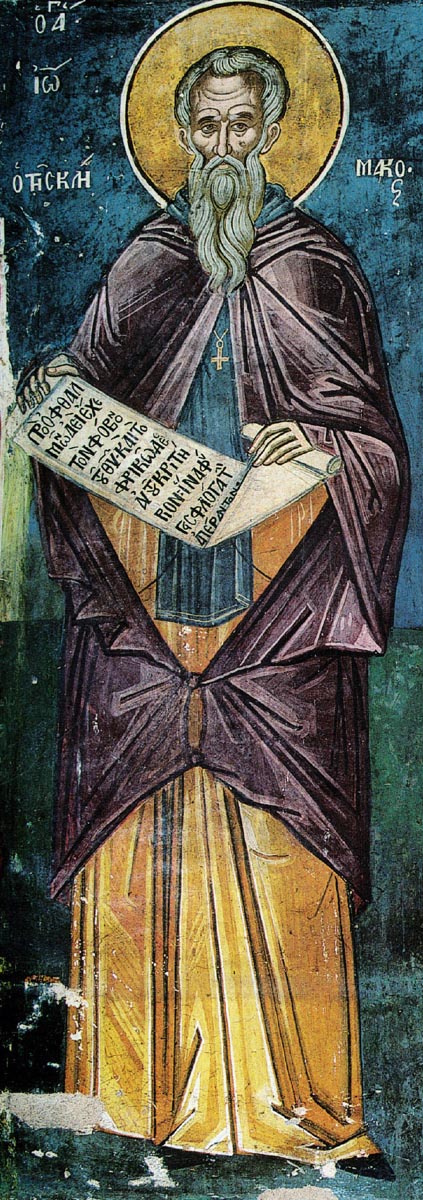
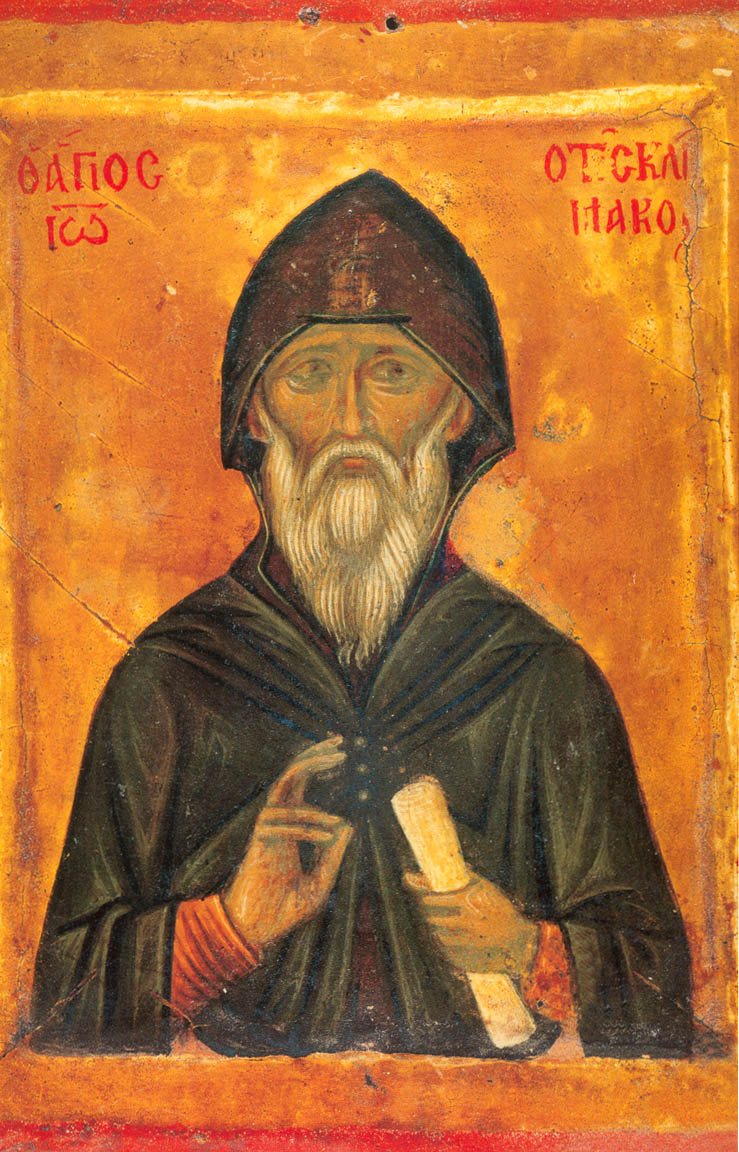
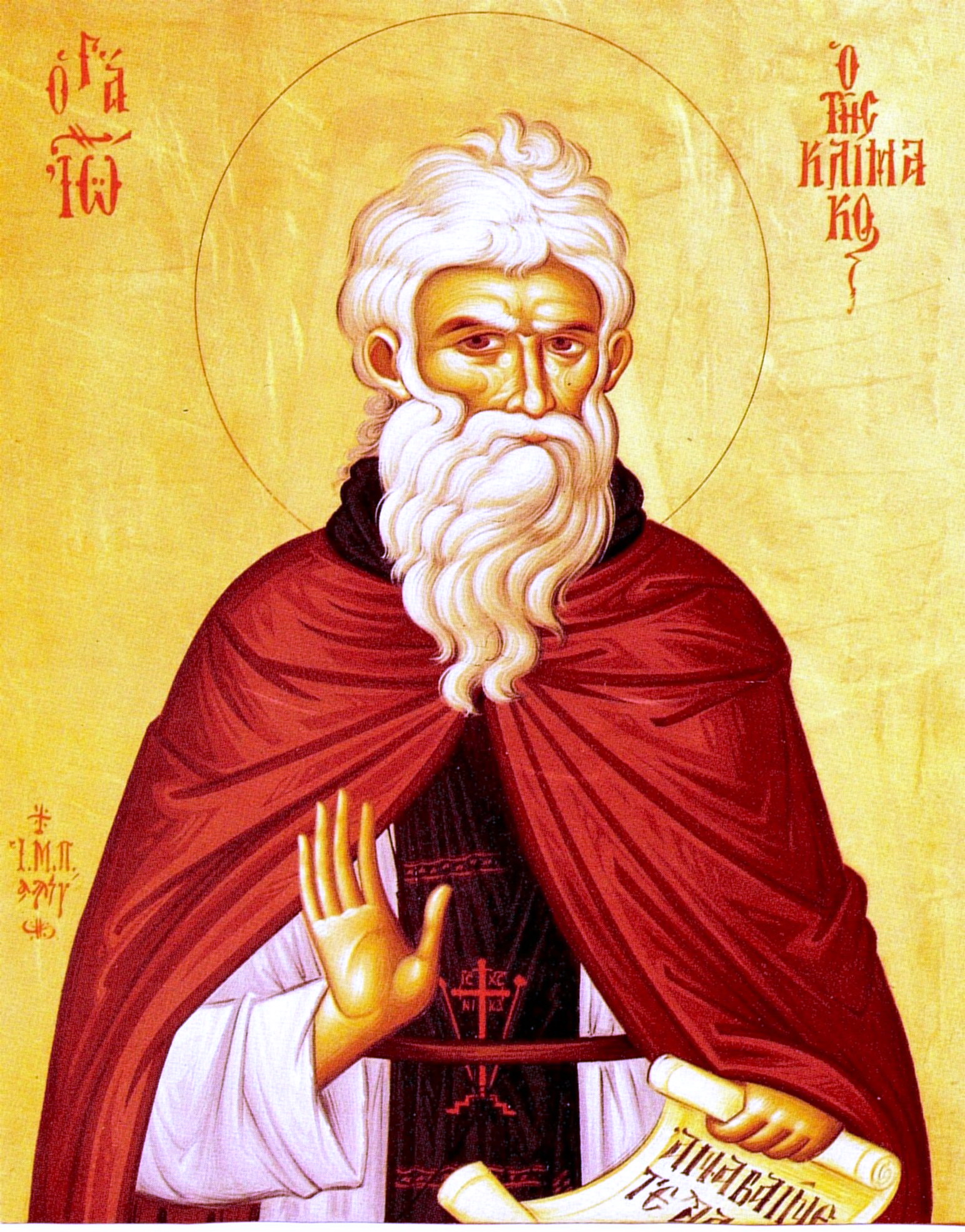
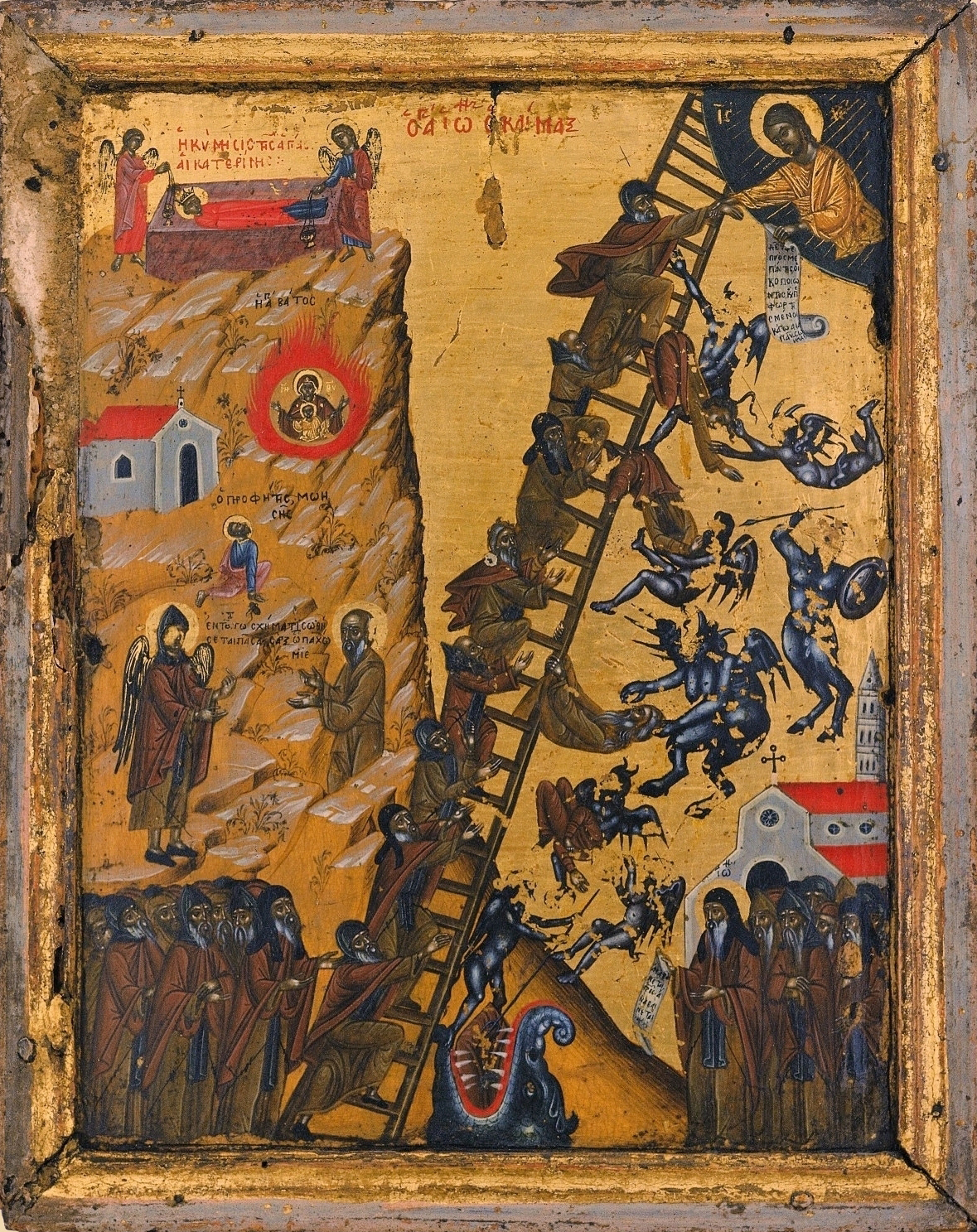
St. John Klimakos (of the Ladder), the Abbot of Mount Sinai

St. John Klimakos (of the Ladder), the Abbot of Mount Sinai - Commemorated March 30 and the Fourth Sunday of Great Lent (source)
   

By St. Nikolai Velimirovich

John Klimakos (Climacus) is the author of "The Ladder of Divine Ascent."

John came to Mt. Sinai as a sixteen year old youth and remained there, first as a novice under obedience, and afterwards as a recluse, and finally as abbot of Sinai until his eightieth year. He died around the year 563 A.D.

His biographer, the monk Daniel, says about him: "His body ascended the heights of Sinai, while his soul ascended the heights of heaven." He remained under obedience with his spiritual father, Martyrius, for nineteen years. Anastasius of Sinai, seeing the young John, prophesied that he would become the abbot of Sinai. After the death of his spiritual father, John withdrew into a cave [at Thola], where he lived a difficult life of asceticism for [forty] years.

St. John of the Ladder (source)
   
His disciple, Moses, fell asleep one day under the shade of a large stone. John, in prayer in his cell, saw that his disciple was in danger and prayed to God for him. Later on, when Moses returned, he fell on his knees and gave thanks to his spiritual father for saving him from certain death. He related how, in a dream, he heard John calling him and he jumped up and, at that moment, the stone tumbled. Had he not jumped, the stone would have crushed him.

At the insistence of the brotherhood, John agreed to become abbot and directed the salvation of the souls of men with zeal and love. From someone John heard a reproach that he talked too much. Not being angered by this, John however remained silent for an entire year and did not utter a word until the brothers implored him to speak and to continue to teach them his God-given wisdom.
   
St. John Klimakos (source)
   
On one occasion, when six-hundred pilgrims came to the Monastery of Sinai, everyone saw an agile youth in Jewish attire serving at a table and giving orders to other servants and assigning them. All at once, this young man disappeared. When everyone noticed this and began to question it, John said to them, "Do not seek him, for that was Moses the Prophet serving in my place."

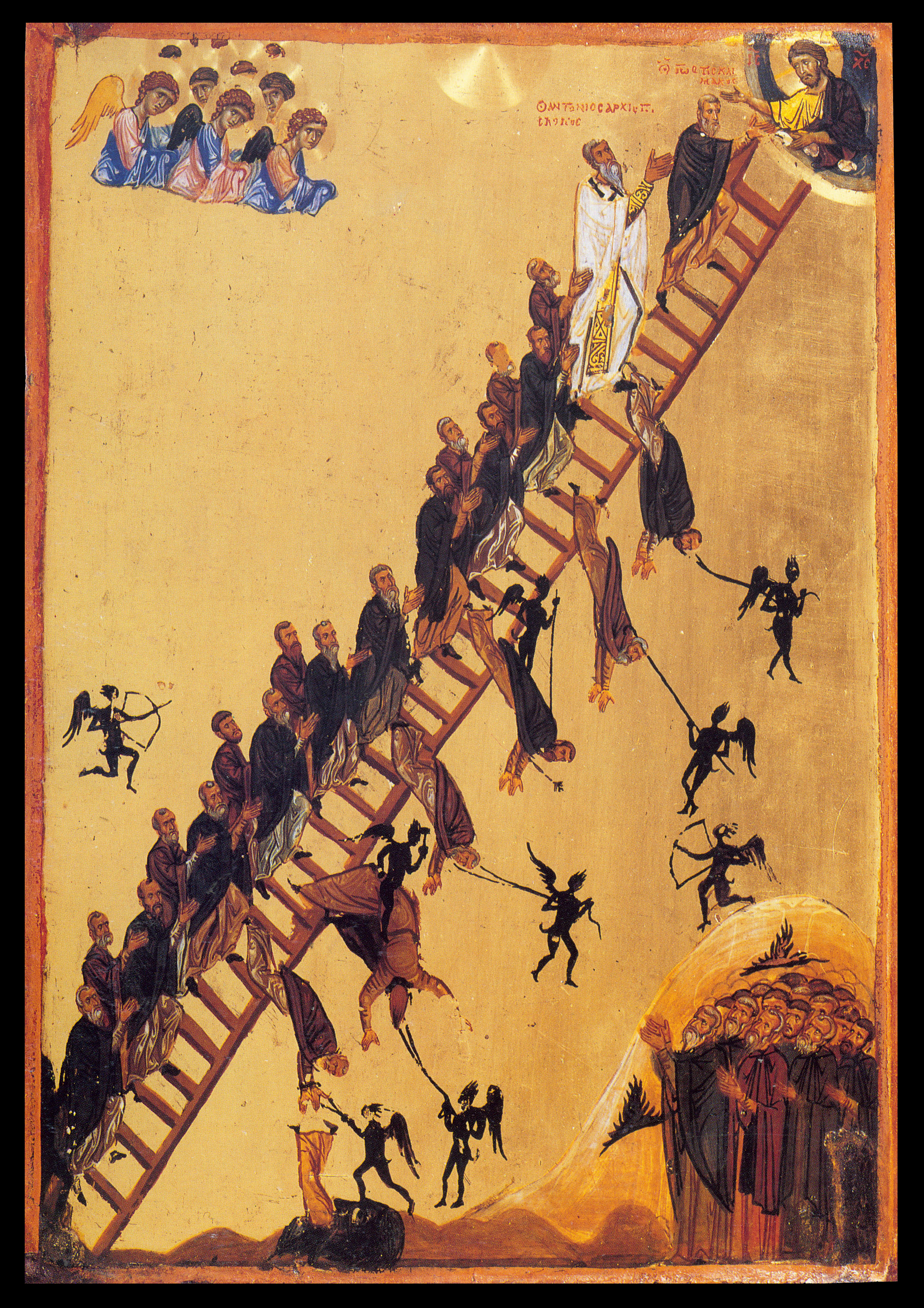
During the time of his silence in the cave, John wrote many worthwhile books, of which the most glorious is "The Ladder". This book is still read by many, even today. In this book, John describes the method of elevating the soul to God, as ascending a ladder.
  
The Ladder of Divine Ascent by St. John of Sinai (source)
  
Before his death, John designated George, his brother in the flesh, as abbot. George grieved much because of his separation from John. Then John said to him, that, if he [John] were found worthy to be near God in the other world, he would pray to Him, that, he, [George], would be taken to heaven that same year. And, so it was. After ten months George succeeded and settled among the citizens of heaven as did his great brother, John.
 (source)
   

"Ascend, brothers, ascend eagerly, and be resolved in your hearts to ascend and hear him who says: Come and let us go up to the mountain of the Lord, and to the house of our God, who makes our feet like hind's feet, and sets us upon high places, that we might be victors with His song."

- St. John Climacus, The Ladder of Divine Ascent, 30.36.


Iconographic depiction of The Ladder of Divine Ascent, written by St. John of the Ladder (source)
   
Apolytikion in the Fourth Tone
With the rivers of your tears, you have made the barren desert fertile. Through sighs of sorrow from deep within you, your labors have borne fruit a hundred-fold. By your miracles you have become a light, shining upon the world. O John, our Holy Father, pray to Christ our God, to save our souls.

Kontakion in the First Tone
As ever-blooming fruits, thou dost offer the teachings of thy God-given book, O wise John, thou most blessed, while sweet'ning the hearts of all them that heed it with vigilance; for it is a ladder from the earth unto Heaven that conferreth glory on the souls that ascend it and honour thee faithfully.
 (source)
   
The Ladder of Divine Ascent (source)
   
Through the prayers of our Holy Fathers, Lord Jesus Christ our God, have mercy on us and save us! Amen!

Saturday, April 6, 2013

Excerpt from the Homily on the Veneration of the Cross, by St. John Chrysostom

The Precious Cross of Christ (Source: www.eikonografos.com)
 

"On the veneration of the Precious and Life-giving Cross, at the middle week of the Fast", by St. John Chrysostom (amateur translation)
The auspicious and all-honored and light-bearing day has come to us, at the middle week of the Fast, as the thrice-joyous and life-giving Cross of our Savior Jesus Christ is taken up, and placed for veneration, and those who venerate it with earnestness of heart and pure lips are sanctified, and therefore proceed on the road with greater care and more vigorously through the stadium of the Holy Fast. Today has been placed the day of the veneration of the Precious Cross, and come, O friends, let us kiss it with fear and fervor. For it reflects the rays of Christ's arising, enlightening all, and sanctifying through His grace. Therefore, let us embrace it and rejoice spiritually. Today there is joy in heaven and on earth, for the radiant and life-bearing Cross of Christ appears to the world, through which the demons flee, and illnesses are cast out, and the clouds of darkness are dissolved, and all the ends of the earth are enlightened. Today the Church of Christ is shown to be another Paradise, as the All-holy tree of the Precious Cross is placed within the center, and it celebrates the preceding pomp of the passion of Christ through the Cross, and the forefeast of His Resurrection. Today, the prophetic word is fulfilled, which says: “For behold, let us worship at the place where were the feet of our God.” Rejoice, therefore and exalt, O Church of Christ, and offer your children, controlling the passions and purified by fasting, and shining with divinely-shining virtues, and dance the inexpressible dance. For as those who formerly in the desert, who were bitten by serpents, were healed by gazing upon the bronze serpent, now, those who have passed halfway through the stadium of the Fast, who had been shown dead from the noetic serpent, have themselves been made immortal, and sharers of the passions of Christ through self-control, and sharers of His Resurrection. And not just this, but they go forth renewed, ascribing to God the victory. For the trophy-bearing and victorious weapon of the Cross of the Lord has been placed, an inconquerable weapon of Kings, and the boast of the Church, and the deposer of enemies, and the salvation of the faithful. And truly blessed are those and thrice-blessed are those who are made worthy to kiss it with pure lips and clean mouths. For it is truly a work to fulfill the word of the Lord: “Whoever would come after me, let him deny himself, and take up his cross, and follow me.” And see how He unnecessarily says this, for He did not say: “Whether or not you wish, you will suffer,” but how? “If you wish to follow me...I do not force, I do not compel, but I make each person the lord over his conscience. For I say: if you wish to follow me. For therefore I call well, not towards evil, nor towards temptation or torture, but towards the heavenly kingdom and the heavenly life. And therefore these things are sufficient to compel creation. If you would follow me, whether you be a man, a woman, a prince, a ruler, and wish to be saved, then follow the path. Three things are said: to deny yourself, to take up the cross, and to follow.” But as we saw before, what is it to deny one's self? Let us learn what it is do deny someone else, and then we shall know what it is to deny one's self. What is it to deny someone else? He who denies someone else, be it a brother, a friend, a neighbor, a passerby, would not be scourged for him, nor be imprisoned for him, nor suffer anything for him. He would not bestow his possessions on him, nor help him, nor be broken for him, nor suffer for him. He is in all things a stranger to him. In the same way God desires the body to be treated by us, that we be not scourged on behalf of it, nor be tempted, nor be driven by it, nor do anything else; let us not spare it. This is to deny one's self: to not permit it, but to give it up towards danger, and struggles, as if another were suffering, nor to serve it...


Therefore I hymn Your forbearance and the incomparable economy of Your mystery, O Lord. I venerate Your precious and life-giving Cross, O Master. I embrace Your passion, I kiss the nails, and I embrace the piercings of Your members. With the Reed, the Spear, and the Sponge I am filled with thanksgiving. As a royal diadem, the Crown of Thorns is put forth, and as if adorned with shining gems, it shines throughout the world from the beatings You endured. And I confess You the true God, one of the Holy Trinity, Christ Jesus, Who suffered the passion for me, and was wrapped in a shroud, and became a reproach to the lawless Judeans, and in the end was buried, and arose on the third day, and will come again to judge the living and the dead. To You belongs the glory and the kingdom, together with the Father and the Your All-holy and life-giving Spirit, now and ever, and to the ages of ages. Amen.
   
Through the prayers of our Holy Fathers, Lord Jesus Christ our God, have mercy on us and save us! Amen!