Thursday, January 19, 2012

St. Basil the Martyr of Mangazeya

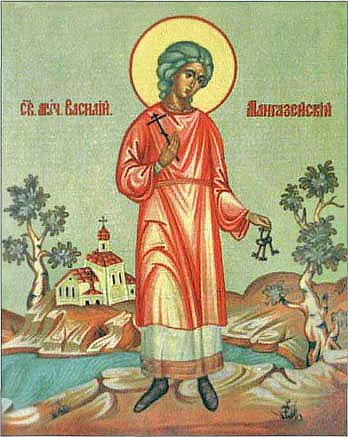
St. Basil the Martyr of Mangazeya - Commemorated March 23 (his martyrdom) and May 10 (the translation of his relics) (http://www.ihtus.ru/092007/st05_01.jpg)
  
Saint Basil was born in 1587 in the very old town of Yaroslavl. Yaroslavl was an important port on the Volga River. Basil's father Theodore was a poor merchant and his family often had very little food.

Even when he was a very small boy, Saint Basil used to go to the church every time he could. He loved God's house and wanted to be there more than any place else.

In those days, when a boy was twelve years old, he could become an apprentice. An apprentice is someone who works for a company without pay just to learn the business. The boss pays the boy's father a certain ammount and then gives the boy food and a place to live.

Because Basil's family was very poor, he agreed to become an apprentice too. The saint became an apprentice for a merchant in the Siberian town of Mangazeya.

St. Basil of Mangazeya (http://cr-sobor.narod.ru/icon9.htm)
  
Sibera was a very dangerous place, full of wild animals, war-like native tribes and lawless men. The journey to Mangazeya was long, difficult and full of danger. When Saint Basil arrived there safely, he hurried to the church to give thanks to God for protection on the road. Then he went to the merchant's office where he was given the job of clerk. Saint Basil was a very good and careful worker. Soon he was given a more responsible job in the company.

Unfortunately, at that time Siberia was a frontier area, and there were almost no women there. Because of this, some men who had beastial passions used to commit homosexual acts with young men and boys. Saint Basil's boss was one of these perverse men. Soon after Saint Basil had arrived in Mangazeya, the boss tried to entice the youth into homosexual relations. He tried flattery, he offered Basil money and finally, he tried threats and punishments.

Saint Basil only continued to fast and pray and ask God to help him remain pure.

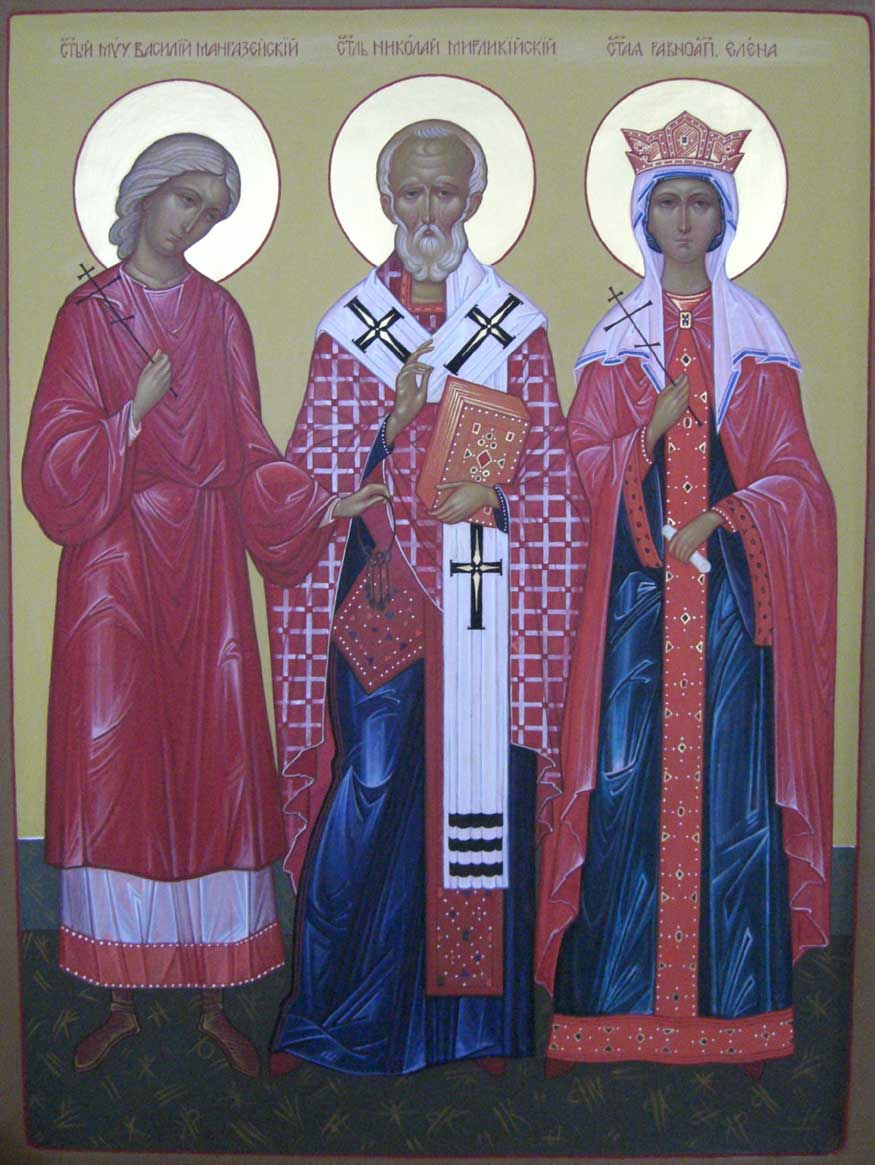
St. Basil of Mangazeya, St. Nicholas the Wonderworker, and St. Helen the Equal-to-the-Apostles (http://www.divinum.ru/images/nikolai-vasily-elena-big.jpg)
  
The boss began to hate Basil. He was angry that he would not submit to his evil lust, and he hated Basil's prayerful, religious life. He especially hated Basil for his meek and humble personality. But no matter how much he persecuted and mistreated the innocent lad, Saint Basil continued to faithfully and honestly perform all his duties and responsibilities.

Finally, the persecutions and slanders reached a terrible point. During the Paschal Matins, theives robbed the merchandise house in which Basil worked. The boss, discovering the theft, went to the governor and reported the theft. But then a terrible deed occured: the merchant hated Basil so much and the evil in him was so strong that he formally accused the innocent of being the robber.

Thus, on the day of Christ's Bright Pascha, when the Holy Church calls all people to peace and love, this inocent, God-fearing boy was betrayed by a false witness, just as Christ had been betrayed by false witnesses. The governor did not even investigate the charges. He sent officers to arrest Saint Basil and drag him right out of the church. The governor and Basils boss began to torture the boy in order to force a confession out of him. In spite of all the fierce tortures, the blessed one would only reply meekly: "I am innocent."

The pain of the torture became so unbearable that the youth fainted, but when he came to, he again quietly repeated, "I am innocent."

The meek, humble, Christ-like endurance and peaceful reply of the young saint enraged the evil merchant even more. Finally, he flew into a demonic rage and struck the innocent virgin on the head with a heavy chain of keys. Saint Basil fell to the floor, sighed heavily and gave up his pure soul into the hands of the Lord, on the day of Christ's Radiant Pascha, 1600.

In order to hide this foul crime, the Governor, Mr. Pushkin, and the passion-crazed merchant, placed the body of the holy martyr into a rough coffin and lowered it into a nearby marsh, weighed down with stones.

Rumors of the brutal murder circulated around the town of Mangazeya almost immediately after the incident, but God chose to conceal the sacred relics of His saint for fifty-two years.

St. Basil of Mangazeya, with the implement of his martyrdom (http://norilsk-sobor.ru/files/attaches/1172137201_vasiliymangazeyskiy.jpg)
  
In 1652, during the tenure of the military governor Ignaty Stepanovich Korsakov, God willed to reveal the glory of His Virgin Martyr. In that year, many wonderous events began to occur in the area around Mangazeya. Many pious people had dreams in which a beardless youth appeared to them and many ill people were healed by this holy boy. A strange light was seen over the marsh and unseen voices were heard chanting nearby.

Then, the coffin of the saint rose slowly to the top of the mud. A pious archer, Steven Shiryaev, noticed the coffin, but did nothing about it. Saint Basil appeared to him in a dream and told him to open the the coffin. The whole story of Saint Basil's martyrdom became known.

The coffin was brought out of the swamp and opened. Inside they found the sacred relics of the saint, whole and incorrupt. A chapel was built over the relics and many people received healing through the prayers of the young martyr.

  
[A chapel was built over his grave, and in 1670 the relics were placed in the church of Holy Trinity Monastery near Turakhanov.

In 1719 the holy Metropolitan Philotheus of Siberia (May 31) sent a carved reliquary to the monastery. Many miracles took place there, and St Basil helped Metropolitan Philotheus on many occasions

The Holy Relics of St. Basil of Mangazeya (I believe they remain to this day in the Holy Trinity Monastery, Turukhansk). In 1997, the Saint's Relics were found for the third time (after they had been lost under the Communists), and have been associated with many miracles since then (source 1, source 2)
  
A new stone church was built at Holy Trinity Monastery in 1787, and the relics were transferred there.

In iconography, St Basil is portrayed as a young man with light brown hair, bare-footed and wearing only a shirt. He is also depicted on the Abaletsk Icon "Of the Sign" (July 20, November 27). (http://ocafs.oca.org/FeastSaintsViewer.asp?SID=4&ID=1&FSID=100874)]

Holy Virgin Martyr Basil of Mangazeya, pray to God for us!
(http://www.johnsanidopoulos.com/2010/03/saint-basil-of-mangazeya-12-year-old.html)

  
For another account with more miracles of the Saint (in Russian), see: http://www.ihtus.ru/092007/st05.shtml.
     
  
Apolytikion in the First Tone
Thou O Basil didst witness unto death to the glory of virginity, and having been cast into the darkness of a swamp by thy cruel tormentors, thou didst ascend to the heights and shine forth with the glory of the Eternal Light, wherefore we cry to thee rejoicing, glory to Christ Who has glorified thee, glory to Him Who has made thee wondrous, glory to Him Who worketh healings for all through thee.

Kontakion in the Plagal of the Fourth Tone
Chosen Martyr of Christ, patron of missionaries, protector of those who struggle for chastity, we see thee as a radiant lamp in the darkness of a wicked and perverse generation. And since thou hast been thrice-crowned by our Saviour, free us from passions, who cry to thee: Rejoice Holy Martyr Basil, radiant light of virginity.
(
http://www.johnsanidopoulos.com/2010/03/saint-basil-of-mangazeya-12-year-old.html)
  
  
Selected hymns to St. Basil of Mangazeya (in Russian)

Тропа́́рь, глас 8:
Бога́тство ви́дев чи́стыя души́ твоея́, Васи́лие, / укра́сти тща́шеся пра́ведных враг, / подусти́ господи́на твоего́, / и́же покра́денного ра́ди бога́тства своего́ преда́в тя судии́, / и от того́ непови́нне мно́гия претерпе́л еси́ му́ки, / непобеди́м пребы́в до сме́рти. / Тем, я́ко прие́мый вене́ц страда́ния от всех Влады́ки, / моли́ всем от напа́стей свобо́дным бы́ти, / чту́щим любо́вию святу́ю па́мять твою́.
Ин тропа́рь, глас 8:
Я́ко пресве́тлое со́лнце, / возсия́л еси́ чудесы́ свои́ми в Сиби́рстей стране́, / в Мангазе́йских преде́лех, / но́вый му́чениче, непови́нный страда́льче, свя́те Васи́лие! / За чистоту́ душе́вную и теле́сную пострада́л еси́ от лю́таго врага́ / распале́нием и немилосе́рдием господи́на своего́ / и от нача́льствующаго бо ту градска́го непра́веднаго судии́, / и му́ки непови́нно претерпе́л еси́, / и кровь свою́ святу́ю пролия́л еси́, / жела́я ве́чнаго Ца́рствия Небе́снаго. / Сего́ ра́ди Христо́с Бог венча́ тя му́ченическими венцы́ на Небеси́, / и на земли́ просла́ви, / и Свои́м Бо́жиим про́мыслом повеле́ земли́ само́й от недр свои́х / гроб, и те́ло твое́, и сра́чицу, обагре́нную кро́вию твоею́, израсти́ нетле́нно. / И ны́не притека́ющим к тебе с ве́рою и везде́ призыва́ющим свято́е и́мя твое́ / поле́зная вся, и грехо́в оставле́ние, и телесе́м здра́вие подава́й, / чту́щим ве́рою святу́ю па́мять твою́, / и моли́ Христа́ Бо́́га спасти́ся душа́м на́шим.
Ин тропа́рь, глас 8:
От гра́да Яросла́вля Бо́жиим смотре́нием / в страну́ Сиби́рскую прише́дшаго / и за целому́дрие от господи́на своего́ / в Мангазе́и пострада́вшаго, / блаже́нного Васи́лия почти́м, / его́же Христо́с Бог му́ченическим венце́м венча́ на Небеси́, / нетле́нием и чудесы́ просла́ви на земли́. / Ты же, честны́й страда́льче, / предста́тельством свои́м страну́ на́шу в ми́ре сохрани́ / и моли́ся о спасе́нии душ на́ших.

  
НА У́ТРЕНИ
На Бог Госпо́дь: тропа́рь свята́го, два́жды. Сла́ва, и ны́не, Богоро́дичен.
По 1-м стихосло́вии седа́лен глас 1:
Наста́ всечестны́й день пра́зднества / пренесе́ния моще́й твои́х, прехва́льне му́чениче Васи́лие, / от Тазу́ реки́ в Туруха́нск, в оби́тель Святы́я Тро́ицы. / Ра́дуются сердца́ ве́рных, красу́ется Це́рковь с вопию́щими: / его́же уби́сте и вмени́сте безче́стна, / сей ны́не на тве́рди Небе́сней изоби́лует сла́вою благода́ти, / в сы́нех Бо́жиих яви́ся. / Ди́вен еси́, Го́споди, не зри́ши лица́, но изволе́ния душе́вного. / Сла́ва венча́вшему Ти в ко́емждо ро́де му́ченики Твоя́, / сла́ва де́йствующему Ти си́лою во святы́х Твои́х.
Сла́ва, и ны́не, Богоро́дичен:
Ма́терь Тя Бо́жию и Де́ву мо́лим вси вои́стину, / в щедро́ты Твоя́ вопие́м, любо́вию прибега́юще к Твое́й бла́гости: / Тя бо и́мамы, гре́шнии, Засту́пницу / и Тебе́ стяжа́хом в напа́стех спасе́ние, еди́ну Пречи́стую.
По 2-м стихосло́вии седа́лен, глас 4:
Не ктому́ держа́ва го́рдых челове́к / возмо́жет по убие́нии над непови́нными мучи́тельство име́ти, / но па́че са́ми уразуме́ют, коль подвиза́вшееся окая́нне уби́йством, / и́бо мня́щиися пораже́ннии коль све́тлии душе́ю горе́ со А́нгелы ны́не торжеству́ют, / на земли́ же священносло́вятся Це́рковию страда́ния их в ро́де и ро́де. / Го́споди, му́ченика Твоего́ моли́твами изле́й на нас ве́лию Твою́ ми́лость.
Сла́ва, и ны́не, Богоро́дичен:
Сло́во О́тчее, Христа́, Бо́га на́шего, / от Тебе́ воплоти́вшагося, позна́хом, Богоро́дице Де́во, / еди́на Чи́стая, еди́на Благослове́нная, / тем непреста́нно Тя воспева́ющее, велича́ем.
По полиеле́и седа́лен, глас 8:
Прехва́льне му́чениче Госпо́день Васи́лие, / целому́дрия был еси зерца́ло, друг Христо́вы кро́тости, / исто́чник ми́лости, презира́тель тле́ннаго бога́тства, / в нищете́ су́щим обогати́тель. / и́стины яви́ся почита́тель, доброде́тели и благоче́стия о́браз, / над страстьми́ влады́ка, духо́в лука́вых прогони́тель, / боле́зней и нечисто́т цели́тель гото́внейший, / раздая́тель от Бо́га прося́щим ми́лости. / Умири́ жи́тельство в днех на́ших, приснопа́мятне, мо́лимся.
Сла́ва, и ны́не, Богоро́дичен:
Стена́ непобеди́мая нам, христиа́ном, еси́, Богоро́дице Де́во, / к Тебе бо прибега́ющее, невреди́ми пребыва́ем / и, па́ки согреша́ющее, и́мамы Тя Моли́твенницу. / Тем, благодаря́щее, вопие́м Ти: / ра́дуйся, Благода́тная, Госпо́дь с Тобо́ю.
Степе́нна, 1-й антифо́н 4-го гла́са. Проки́мен, глас 4: Возвесели́ться пра́ведник о Го́споде / и упова́ет на Него́. Стих: Услы́ши, Бо́же, глас мой, внегда́ моли́тимися к Тебе́. Вся́кое дыха́ние: Ева́нгелие от Луки́, зача́ло 63.
По 50-м псалме́ стихи́ра, глас 6:
Досто́йный ублаже́ния, му́чениче Васи́лие, / егда́, боле́знуя непови́нно, / в му́ках свои́х глаго́лал еси́: / лю́ты у́бо настоя́щия му́ки, / но ра́достна ве́чная жизнь.

  
Конда́к, глас 4:
Страда́ние соверши́в свя́те, / погребе́ния же честна́го не сподо́бився, / в ти́нное ме́сто вве́ржен / и попира́емь был еси́ от мимоходя́щих, / но Бог просла́ви мо́щи твоя́ чуде́сным явле́нием, Васи́лие, / прославля́яйся во святы́х Свои́х, / дая́й страда́льцем вене́ц нетле́нный.
Ин конда́к, глас 4:
Иже но́вый в му́ченицех непови́нный страда́льче, / свя́те Васи́лие, преревнова́л еси́ Ио́сифу Прекра́сному и Моисе́ю У́грину во искуше́ниих, / за чистоту́ душе́вную и теле́сную / му́ки непови́нно претерпе́л еси́. / Сих ра́ди просла́ви тя Бог,/ и святы́я твоя́ мо́щи, по явле́нию твоему́, / от Мангазе́и к Енисе́ю во оби́тель Святы́я Тро́ицы / ту су́щим настоя́телем принесо́шася / и подаю́т исцеле́ния с ве́рою приходя́щим / и везде́ призыва́ющим свято́е и́мя твое́. / Страстоте́рпче святы́й, / моли́ Христа́ Бо́га / о правосла́вном наро́де на́шем / и о всех во́ех на́ших, / побе́ду и одоле́ние нам на всех / непросвеще́нных иноязы́чных лю́дех дарова́ти, спобо́рствуя / ,и от междоусо́бныя бра́ни спасти́ся всем моли́.
Ин конда́к, глас 4:
Просвети́ся Боже́ственною благода́тию, Боголю́бче, / целому́дрием и терпе́нием тече́ние свое́ му́ченически сконча́л еси́, / те́мже и по сме́рти яви́ тя све́тлость жития́ твоего́, / источа́еши бо чудесы́, / с ве́рою приходя́щим к честно́му гро́бу твоему́ и вопию́щим: / ра́дуйся, святы́й Васи́лие, / Мангазе́йский и всея́ Сиби́ри чудотво́рче.
Моли́тва
Святы́й му́чениче Христо́в Васи́лие, ра́дости святы́х единовсе́льниче, на́ших скорбе́й и печа́лей премени́телю и вся́кого зла де́монскаго губи́телю, припа́дая, молю́ ти ся: прииди́ в заступле́ние мое́, я́ко да очи́стится ум мой от дея́ния грехо́внаго, поне́же лиша́юся за сие́ благода́ти Бо́жия; не име́ю тве́рда основа́ния к покая́нию, даждь ми умиле́ние душе́вное и сле́зы грехоомыва́тельныя, воздежи́ ру́це твоя́ святы́я за убо́гую мою́ ду́шу ко Го́споду Иису́су Христу́, не оста́ви мене́, гре́шнаго, ра́ди моего́ невоздержа́ния, укрепи́ мя бе́дсствующаго душе́вными по́мыслы и вне́шними обурева́нии, и́миже сам себе́ вина́ быва́ю, или́ от ненави́дящих мя впра́вду, но вся по грехо́м мои́м пра́ведно бы́ти испове́даю. Бу́ди ми, малоду́шному, покрови́тель и побо́рник благ и ми́лостив, присеща́й мя, гре́шнаго, в ско́рбех и печа́лех и сохраня́й от вся́каго смуще́ния проти́внаго, да не когда́ прогне́ваю Бо́га моего́ и тебе́, смоле́бника моего́ блага́го, но утверди́ мя моли́твами твои́ми в стра́се Бо́жии и досто́йна покажи́ своея́ всегда́ ми́лости. Ами́нь.
(http://hram.sk6.ru/index.php?option=com_content&task=view&id=16&Itemid=39)
  
St. Basil of Mangazeya (http://turuhansk.info/news/pic006.JPG)
  
Through the prayers of our Holy Fathers, Lord Jesus Christ our God, have mercy on us and save us! Amen!

Saturday, January 14, 2012

St. Sebastian the Martyr of Rome, and those with him

St. Sebastian the Martyr of Rome, and those with him - Commemorated on December 18 (http://www.saint.gr/3288/saint.aspx)

The Holy Martyr Sebastian was born in the city of Narbonum in Gaul (modern France), and he received his education at Mediolanum (now Milan). Under the co-reigning emperors Diocletian and Maximian (284-305) he occupied the position of head of the imperial guards. St Sebastian was respected for his authority, and was loved by the soldiers and those at court. He was a brave man filled with wisdom, his word was honest, his judgment just, insightful in advice, faithful in his service and in everything entrusted to him. He was a secret Christian, not out of fear, but so that he could provide help to the brethren in a time of persecution.

The noble Christian brothers Marcellinus and Mark had been locked up in prison, and at first they firmly confessed the true Faith. But under the influence of the tearful entreaties of their pagan parents (Tranquillinus and Marcia), and also their own wives and children, they began to waver in their intent to suffer for Christ. St Sebastian went to the imperial treasurer, at whose house Marcellinus and Mark were held in confinement, and addressed the brothers who were on the verge of yielding to the entreaties of their family.

"O valiant warriors of Christ! Do not cast away your everlasting crowns of victory because of the tears of your relatives. Do not remove your feet from the necks of your enemies who lie prostrate before you, lest they regain their strength and attack you more fiercely than before. Raise your banner high over every earthly attachment. If those whom you see weeping knew that there is another life where there is neither sickness nor death, where there is unceasing gladness and everything is beautiful, then assuredly they would wish to enter it with you. Anyone who fears to exchange this brief earthly life for the unending joys of the heavenly Kingdom is foolish indeed. For he who rejects eternity wastes the brief time of his existence, and will be delivered to everlasting torment in Hades."

Then St Sebastian said that if necessary, he would be willing to endure torment and death in order to show them how to give their lives for Christ.

So St Sebastian persuaded the brothers to go through with their act of martyrdom, and his speech stirred everyone present. They saw how his face shone like that of an angel, and they saw how seven angels clothed him in a radiant garment, and heard a fair Youth say, "You shall be with Me always."


Zoe, the wife of the jailer Nicostratus, had lost her ability to speak six years previously, and she fell down at the feet of St Sebastian, by her gestures imploring him to heal her. The saint made the Sign of the Cross over the woman, and she immediately began to speak and she glorified the Lord Jesus Christ. She said that she had seen an angel holding an open book in which everything St Sebastian said was written. Then all who saw the miracle also came to believe in the Savior of the world. Nicostratus removed the chains from Marcellinus and Mark and offered to hide them, but the brothers refused.

Mark said, "Let them tear the flesh from our bodies with cruel torments. They can kill the body, but they cannot conquer the soul which contends for the Faith." Nicostratus and his wife asked for Baptism, and St Sebastian advised Nicostratus to serve Christ rather than the Eparch. He also told him to assemble the prisoners so that those who believed in Christ could be baptized. Nicostratus then requested his clerk Claudius to send all the prisoners to his house. Sebastian spoke to them of Christ, and became convinced that they were all inclined to be baptized. He summoned the priest Polycarp, who prepared them for the Mystery, instructing them to fast in preparation for Baptism that evening.

Then Claudius informed Nicostratus that the Roman eparch Arestius Chromatus wanted to know why the prisoners were gathered at his house. Nicostratus told Claudius about the healing of his wife, and Claudius brought his own sick sons, Symphorian and Felix to St Sebastian. In the evening the priest Polycarp baptized Tranquillinus with his relatives and friends, and Nicostratus and all his family, Claudius and his sons, and also sixteen condemned prisoners. The newly-baptized numbered 64 in all.

Appearing before the eparch Chromatus, Nicostratus told him how St Sebastian had converted them to Christianity and healed many from sickness. The words of Nicostratus persuaded the eparch. He summoned St Sebastian and the presbyter Polycarp, and was enlightened by them, and became a believer in Christ. Nicostratus and Chromatus, his son Tiburtius and all his household accepted holy Baptism. The number of the newly-enlightened increased to 1400. Upon becoming a Christian, Chromatus resigned his office of eparch.

During this time the Bishop of Rome was St Gaius (August 11). He blessed Chromatus to go to his estates in southern Italy with the priest Polycarp. Christians unable to endure martyrdom also went with them. Father Polycarp went to strengthen the newly-converted in the Faith.

Tiburtius, the son of Chromatus, desired to accept martyrdom and he remained in Rome with St Sebastian. Of those remaining, St Gaius ordained Tranquillinus as a presbyter, and his sons Marcellinus and Mark were ordained deacons. Nicostratus, his wife Zoe and brother Castorius, and Claudius, his son Symphorian and brother Victorinus also remained in Rome. They gathered for divine services at the court of the emperor together with a secret Christian named Castulus, but soon the time came for them to suffer for the Faith.

The pagans arrested St Zoe first, praying at the grave of the Apostle Peter. At the trial she bravely confessed her faith in Christ. She died, hung by her hair over the foul smoke from a great fire of dung. Her body then was thrown into the River Tiber. Appearing in a vision to St Sebastian, she told him about her death.

The priest Tranquillinus was the next to suffer: pagans pelted him with stones at the grave of the holy Apostle Peter, and his body was also thrown into the Tiber.

Sts Nicostratus, Castorius, Claudius, Victorinus ,and Symphorian were seized at the riverbank, when they were searching for the bodies of the martyrs. They were led to the eparch, and the saints refused his command to offer sacrifice to idols. They tied stones to the necks of the martyrs and then drowned them in the sea.

The false Christian Torquatus betrayed St Tiburtius. When the saint refused to sacrifice to the idols, the judge ordered Tiburtius to walk barefoot on red-hot coals, but the Lord preserved him. Tiburtius walked through the burning coals without feeling the heat. The torturers then beheaded St Tiburtius, and his body was buried by unknown Christians.

Torquatus also betrayed the holy Deacons Marcellinus and Mark, and St Castulus (March 26). After torture, they threw Castulus into a pit and buried him alive, but Marcellinus and Mark had their feet nailed to the same tree stump. They stood all night in prayer, and in the morning they were stabbed with spears.

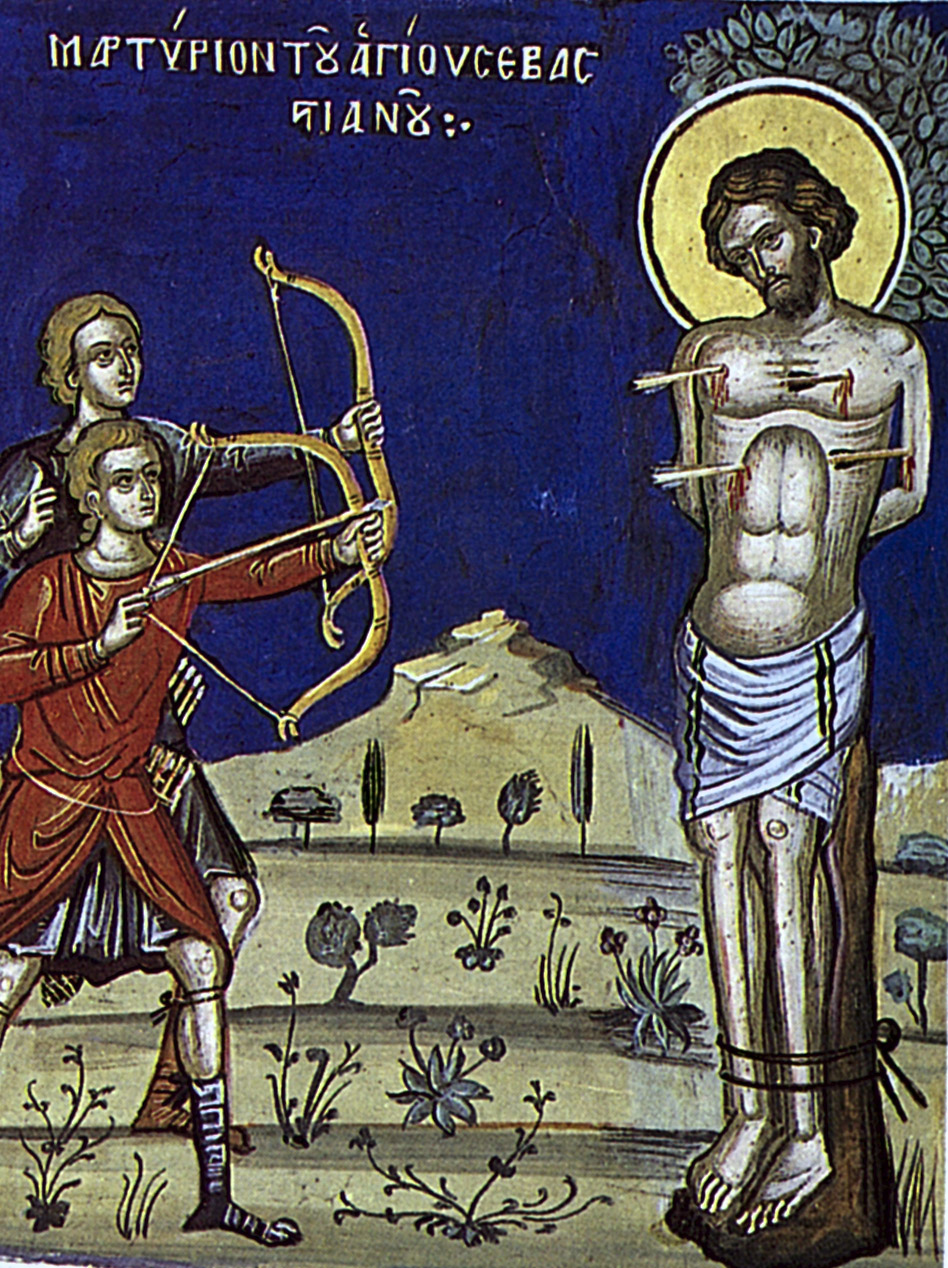
The Martyrdom of St. Sebastian (http://pravicon.com/images/sv/s1841/s1841003.jpg)

St Sebastian was the last one to be tortured. The emperor Diocletian personally interrogated him, and seeing the determination of the holy martyr, he ordered him taken out of the city, tied to a tree and shot with arrows. Irene, the wife of St Castulus, went at night in order to bury St Sebastian, but found him alive and took him to her home.

St Sebastian soon recovered from his wounds. Christians urged him to leave Rome, but he refused. Coming near a pagan temple, the saint saw the emperors approaching and he publicly denounced them for their impiety. Diocletian ordered the holy martyr to be taken to the Circus Maximus to be executed. They clubbed St Sebastian to death, and cast his body into the sewer. The holy martyr appeared to a pious woman named Lucina in a vision, and told her to take his body and bury it in the catacombs. This she did with the help of her slaves. Today his basilica stands on the site of his tomb.
(http://ocafs.oca.org/FeastSaintsViewer.asp?SID=4&ID=1&FSID=103565)

St. Sebastian the Martyr of Rome, pierced with arrows (http://www.aegeanews.gr/images%5Cstories%5Cproducts%5C4d0e3374c209d_pc170896.jpg)

Troparion - Tone 1

O Sebastian, spurning the assemblies of the wicked, you gathered the wise martyrs who with you cast down the enemy; and standing worthily before the throne of God, you gladden those who cry to you: Glory to Him Who has strengthened you! Glory to Him Who has granted you a crown! Glory to Him Who through you works healing for all!

Troparion - Tone 4

Your holy martyrs, O Lord, through their suffering have received incorruptible crowns from You, our God. For having Your strength, they laid low their adversaries, and shattered the powerless boldness of demons. Through their intercessions save our souls!

Kontakion - Tone 4

Excelling in godly zeal, you gathered a band of martyrs from which you shone as a star. The arrows that wounded your body, O Sebastian, pierced the hearts of the enemy. Therefore Christ has glorified you!

The Martyrdom of St. Sebastian (http://days.pravoslavie.ru/jpg/ih3891.jpg)

Through the prayers of our Holy Fathers, Lord Jesus Christ our God, have mercy on us and save us! Amen!

St. Matrona of Moscow on the coming trials

St. Matrona of Moscow (physically blind during her life, but properly depicted here with the eyes of her soul open, and whose physical eyes will also be open in Paradise) (http://pravicon.com/images/sv/s1415/s1415001.jpg)

St. Matrona of Moscow on the coming trials
To those close to her, Matushka said, “I feel so sorry for you, you will live to the last times. Life will be worse and worse. It will be very heavy. There will be a time when they will put before you a cross and bread and say: Choose!”

Those who were close to her answered, “We will choose the Cross, but how will we be able to live then?”

She replied, “We will pray, take earth, make little balls out of it. We will pray to God, we will eat and be satisfied!”

But she also said that those in difficult situations should not be afraid of anything, no matter how terrifying. "Christ has placed us on His sleigh, and He will take us where He wills.”
(http://manastir-lepavina.org/novosti/index.php/engtext/detaljnije/matrona_of_moscow_saint_and_wonderworker/, http://www.antiochian.org/node/18294)

Through the prayers of our Holy Fathers, Lord Jesus Christ our God, have mercy on us and save us! Amen!

Tuesday, January 10, 2012

St. Kyranna the New Martyr of Thessaloniki (+1751)

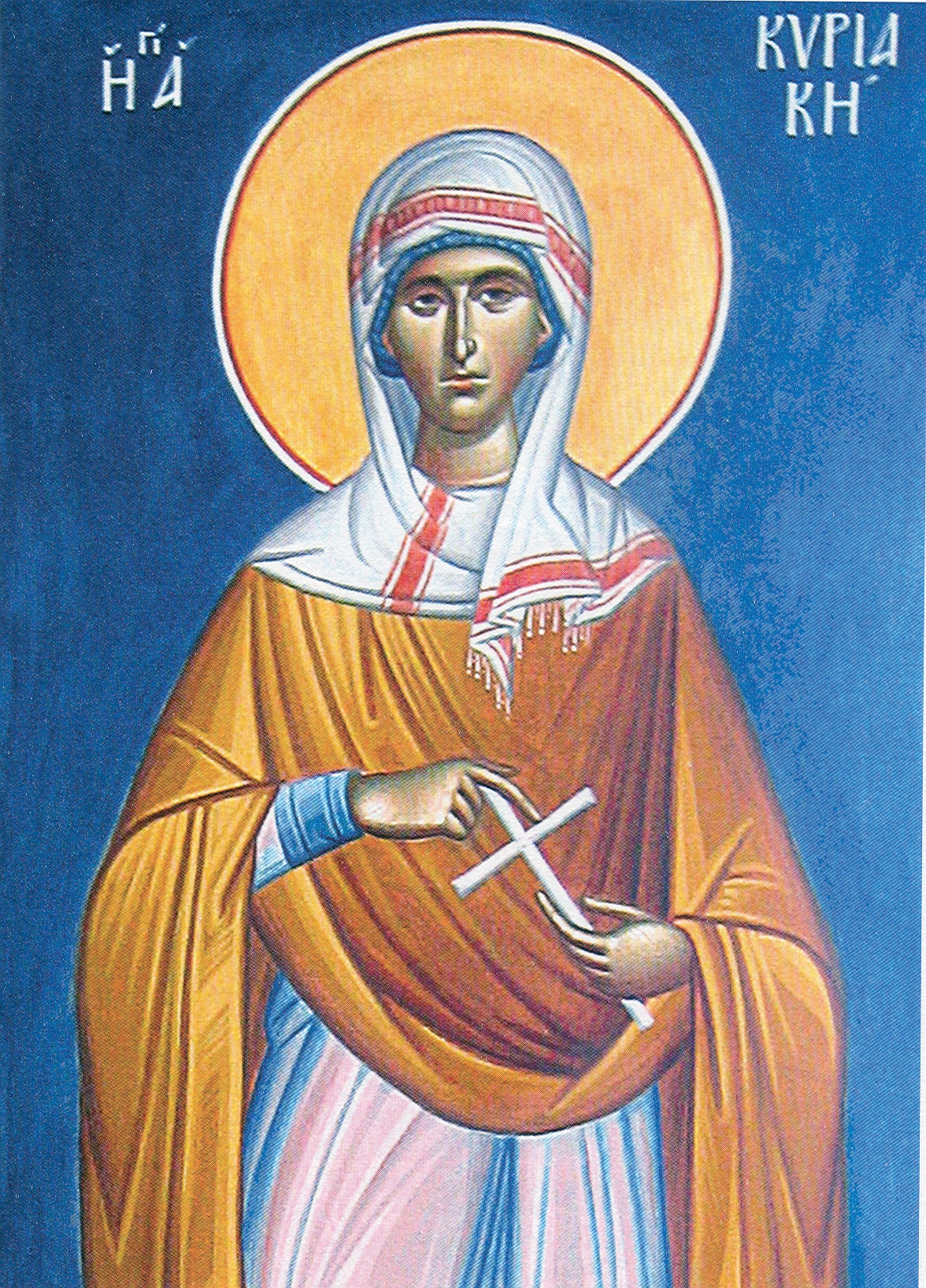
St. Kyranna the New Martyr of Thessaloniki (+1751) - Commemorated January 8 and February 28 (http://www.orthodoxienstasi.com/images/agia_kyranna/psifidoto_agias_kyrannas.jpg)

The Life of St. Kyranna
Our Orthodox Church today celebrates the memory of the New Martyr Kyranni or Kyranna. Saint Kyranna came from the village of Ossa near Thessaloniki. Because she was very beautiful, one a day a certain janissary who came to the New Martyr's village in order to collect taxes, upon seeing her, wanted to make her his wife. Even though he tried to persuade her to change her religion with flatterings and gifts in order for her to marry him, the modest girl stubbornly refused to resign to his flattering. Then he began to bully and to threaten her that if she did not give up her faith, he would torture and kill her.

But the saint did not change her mind, neither with the threats nor his bullying. He therefore captured her and brought her to the Muslim judge in Thessaloniki, where before the judge he lied by saying that Kyranna cheated him by promising him that she would become Muslim in order to marry him, but at the end she refused to do so. When the Saint was asked to defend herself, she confessed before all who were present her faith in Christ, and right after, the Turks imprisoned her.

Inside the prison, the Saint went through daily torture from the janissary and the prison guards. One would hit her with a stick, another with the flat of his sword, and another would kick or punch her. Then when they left, the jailer would come and hang her by her arms and beat her until he was tired out, despite the cries of outrage and rebukes of the common prisoners. Despite these torments, Kyranna would remain strong and courageous, and seemed unaffected by the pain as if someone else were suffering, and she refused the food offered her.


One night, after seven days of such torment, on the 28th of February 1751, Kyranna was severely beaten by the jailer with a piece of wood and he left her hanging dead. This was done because the jailer had illegally allowed others in to beat Kyranna, and one Christian prisoner threatened to reveal this to the pasha. In the morning the body of the Saint was covered by Holy Light and gave off a celestial fragrance, as her soul was delivered to God, and the Christian prisoners upon seeing that, started to glorify the Lord, but the Muslims and Jews were afraid because they thought it was fire. When the Christian prisoner went to bring down the body of the Saint and found out that she was dead, he took care of it, and the next day it was given to the Christians who buried it. This Christian reprimanded the jailer, who came to repent of his evil deed.

Today, in the village of Ossa, a great church exists dedicated to the New Martyr, Saint Kyranna, who is also the patron Saint of the community, and for this reason it is dedicated to her memory, since she was born and lived in Ossa. According to the historian Asterios Thilikos, the church was built in 1840, or according to its foundation date, it was built in 1868. The miraculous icon of Saint Kyranna is kept inside the church, which was painted around 1870, by Christodoulos Ioannou Zografos from the village of Siatista.

The church is a center of reverence for the villagers of Ossa, a place of worship throughout the region and her memory there is celebrated on January 8. In a Codex of Great Lavra her memory is listed for celebration on January 1. Generally her memory is celebrated on February 28th. The reason why her feast is celebrated in January is because it often happens that February 28th lands during the somber season of Great Lent when celebrations are discouraged.
(http://www.johnsanidopoulos.com/2011/02/saint-kyranna-new-martyr-1751.html)


The Uncovering of the Holy Relics of St. Kyranna
Following the heroic and martyric death of the young Saint Kyranna on 28 February 1751, the faithful took her precious relics and had her buried outside the city of Thessaloniki. At the same time portions of her clothes were cut into pieces and given to the faithful as relics for a blessing. The people of the village of Ossa had a church built in the village in her honor a few decades after this event and Christoforos Prodromitis had a Service of Praise written to be chanted on the annual commemoration of her martyrdom. Her life was recorded by St. Nikodemos the Hagiorite in his New Martyrology.

Because St. Kyranna was martyred during the time of Turkish occupation, the only thing that was known about the location of her relics was that they were buried "outside the walls" of Thessaloniki. 260 years later St. Kyranna allowed the location of her relics to be discovered to the people who have honored her memory all this time. This all began when Metropolitan John of Lagada inaugurated 2011 as the year of Saint Kyranna, and he began to research her life in various sources. Thus on 12 September 2011, with the help of a monk from Mount Athos and the assistance of specialists and forensic experts, they confirmed that in the Holy Altar of the Church of the Archangels in Ossa, where St. Kyranna herself attended the Divine Liturgy, beneath the floor slabs a large portion of her relics were discovered.

Any questions generated by the investigation of the remains of the Saint were quickly put aside when a beautiful fragrance filled the church when the relics of the Saint were uncovered. With her bones there were also the leather shoes of the Saint, and forensic experts were able to determine the height, sex, age and year of burial of the Saint. Following this great discovery, Metropolitan John notified Ecumenical Patriarch Bartholomew and Archbishop Ieronymos of Athens and All Greece, then proceeded to have the public informed through a formal statement.

On Friday 23 September 2011 in an atmosphere of emotion and piety, the faithful of Ossa and the surrounding area gathered in the Church of the Archangels to celebrate the first all-night vigil with the presence of the relics of their patron saint. Metropolitan John was the officiant together with Bishop Demetrios of Thermes and a large number of priests from the Metropolis. The celebration will continue until October 10th with daily Supplication Services and all-night vigils, and will culminate on October 11th when Ecumenical Patriarch Bartholomew will visit the village and venerate the relics of St. Kyranna. At that time also the relics of St. Kyranna will be translated from the Church of the Archangels to the newer church dedicated to her honorable memory.

On 11 October 2011 Ecumenical Patriarch Bartholomew visited the Church of the Archangels in the village of Ossa in Lagada to venerate the recently discovered holy relics of the Holy New Martyr Kyranna. He was met by Archbishop Ieronymos of Athens, Metropolitan John of Lagada, many more bishops and priests, and a multitude of people who gathered for the Doxology.

The Reliquary with the newly discovered Holy Relics of St. Kyranna the New Martyr (http://www.orthodoxienstasi.com/images/agia_kyranna/lipsano_agias_kyrannas_01.jpg)

After Metropolitan John spoke about the life and martyrdom of St. Kyranna, as well as the miraculous discovery of her holy relics in recent days, the Ecumenical Patriarch spoke about the mindset of St. Kyranna, and noted that she should be an example and model for our times. He supported this by quoting St. John Chrysostom, who said: "Those who honor the martyrs, should imitate the martyrs."

After this priests bore the relics of St. Kyranna in a larnax and began a procession to transfer the relics from the old church to the new church built in honor of the Saint. Women threw flowers before the relics on the way, while children ran to venerate the relics of the Saint or grab a blessing from a priest. When the relics arrived inside the church, they were placed in front of the Holy Altar where Ecumenical Patriarch Bartholomew venerated them, followed by the Archbishop of Athens, the Bishops and all the people. Shortly afterwards the Ecumenical Patriarch was presented the manuscript of the Service to Saint Kyranna by Tryphon Tsombani, a professor of the Theological School of Aristotle University.
(http://www.johnsanidopoulos.com/2011/09/recent-discovery-of-relics-of-saint.html, http://www.johnsanidopoulos.com/2011/10/on-11-october-2011-ecumenical-patriarch.html)
  
St. Kyranna the New Martyr of Thessaloniki (http://vatopaidi.files.wordpress.com/2009/07/0005_11.jpg)

Apolytikion in the Plagal of the First Tone (amateur translations below)
Hail, offspring and divine root of Ossa, O Virgin-martyr Kyranna, Bride of God, who struggled steadfastly in these latter days, and deposed the enemy through your firm endurance. And now you ceaselessly intercede on behalf of those who faithfully honor your blessed struggle.

Kontakion in the Second Tone
O Virgin-martyr Kyranna who suffered greatly, and true and virginal bride of Christ, those who hasten to your fervant intercessions, deliver from every sickness and trouble, and grant us endless joy.

Megalynarion
Hail, O sacred root of Ossa, O godly Kyranna, spotless bride of Christ, to Whom you offered the struggles of martyrdom, and thus you were shown a partaker in martyrical glory.

For the Paraklesis to St. Kyranna in Greek, see: http://voutsinasilias.blogspot.com/2012/01/8-28.html.
 
Icon depicting Sts. Kyranna and Akylina the New Martyrs, whose Holy Relics the Lord was well-pleased to reveal in our days near the Church of the Holy Taxiarchs, Ossa (source)
 
Sts. Kyranna and Akylina the New Martyrs (source)
  
Through the prayers of our Holy Fathers, Lord Jesus Christ our God, have mercy on us and save us! Amen!

Saturday, January 7, 2012

Akathist to St. John the Forerunner

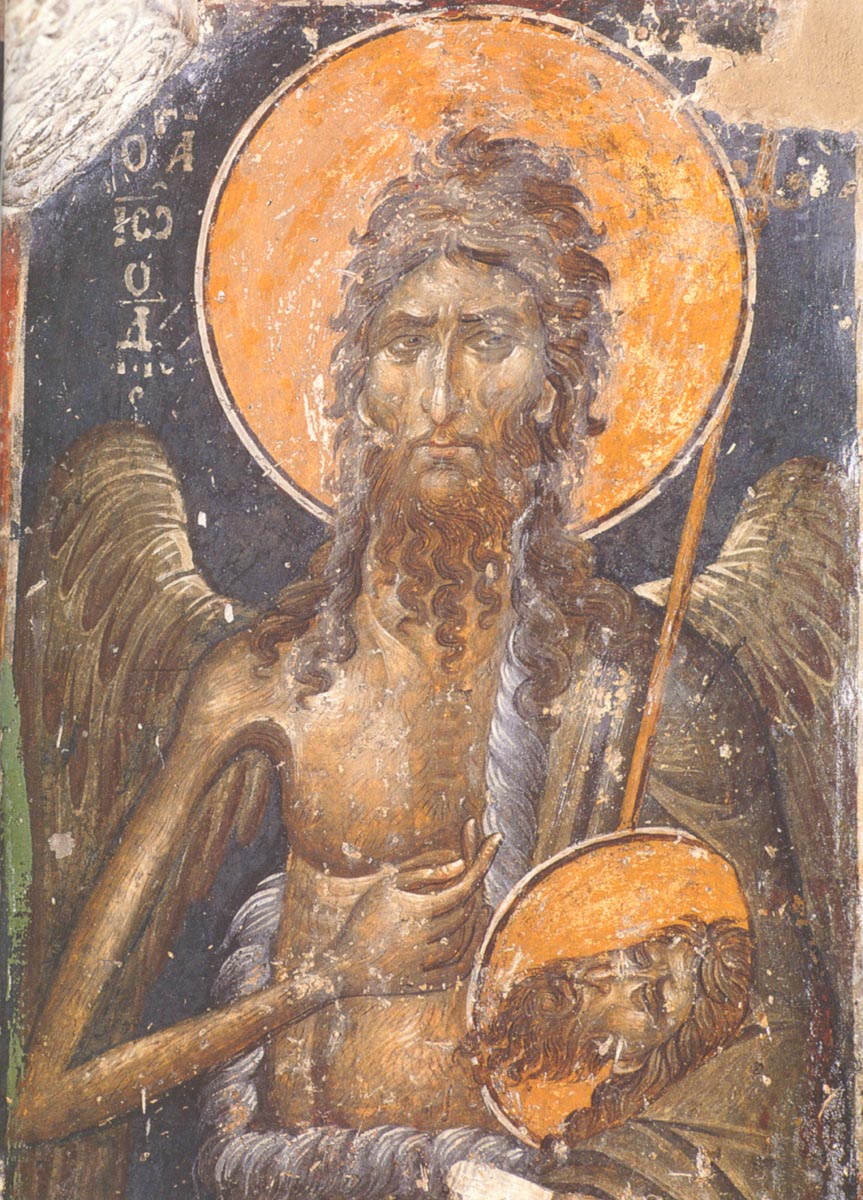
St. John the Forerunner, with scenes from his life (http://pravicon.com/images/sv/s0966/s0966002.jpg)


Akathist to Saint John, the Forerunner and Baptist of the Lord

Kontakion I

Chosen from days of old to be the Forerunner and Baptist of Christ God, the Saviour of the world, Divinely-praised John, while glorifying the Lord Who glorified thee, we sing thee hymns of praise as to the greatest of those born of woman, as to an angel in the flesh and preacher of repentance. For as thou hast great boldness before the Lord, free us from dangers of all kinds and move us to repentance, as we cry to thee with love: Rejoice, great John, Prophet, Forerunner and Baptist of the Lord!


Ikos I

Archangel Gabriel, who stands before God, was sent to the priest Zachariah, when he, serving according to his rank, entered with incense into the Sanctuary of the Lord. Standing to the right of the Altar of Incense, the angel announced to him the good news of thy birth, great John, proclaiming to

Zachariah joy and gladness, as many would rejoice at God’s awesome good will concerning thee, reverently crying out in praise of thee:

Rejoice, ineffable confidant of the counsel of God!

Rejoice, fulfillment of His marvelous dispensation!

Rejoice, thou who wast revealed many years before by the prophecy of Isaiah!

Rejoice, messenger before the face of the Lord, prophesied of old!

Rejoice, thou who wast foreordained to be a great prophet of the Most High!

Rejoice, thou who wast born according to the promise of an angel!

Rejoice, thou who wast filled with the Holy Spirit even in thy mother’s womb!

Rejoice, thou who wast consecrated for a great ministry before thy birth!

Rejoice, release of parents’ barrenness!

Rejoice, joy and gladness of a priest of God!

Rejoice, offspring of a daughter of Aaron!

Rejoice, God-given fruit of prayer!

Rejoice, great John, Prophet, Forerunner, and Baptist of the Lord!


Kontakion II

When Zachariah saw the angel appearing to him, he was disturbed and fear fell upon him, and he did not believe the words of his announcement concerning thy birth; but when he was stricken with dumbness for his disbelief, he marveled at this most glorious wonder, crying to God with all his heart: Alleluia!


Ikos II

Seeking to understand the unfathomable Mind, the people awaited Zachariah, wondering at his tarrying in the Sanctuary; but when he came out and could not speak to them, but only made signs, they all understood that he had beheld a vision in the Sanctuary. And we, glorifying God, the marvelous Creator of miracles, cry unto thee:

Rejoice, good source of thy father’s silence!

Rejoice, change of thy mother’s tears into joy!

Rejoice, removal of her reproach among the people!

Rejoice, great consolation for those who gave thee birth!

Rejoice, for in the sixth month after thy conception, the Most Holy Virgin Mary was visited by an angel in Nazareth!

Rejoice, for many rejoiced over thy birth!

Rejoice, for thou didst receive a Grace-filled name, given by an angel!

Rejoice, for by thy name the silence of thy father Zachariah was ended!

Rejoice, for the name of God was blessed by thy father on account of thee!

Rejoice, for fear and wonder over thy miraculous birth came upon those living round about!

Rejoice, for the news of thy miraculous birth spread over the entire land of Judea!

Rejoice, for by thee salvation appeared to many in this world!

Rejoice, great John, Prophet, Forerunner, and Baptist of the Lord!


Kontakion III

The power of the Most High ended the barrenness of the righteous Elizabeth, who was beyond the natural age for bearing children, for she conceived thee, the glorious Forerunner of the Lord, and keeping this secret for five months, she said: For thus hath the Lord dealt with me in the days wherein He looked on me to take away my reproach among men. But when she received Her Who bore Christ in Her Womb, she was filled with the Holy Spirit and cried with a loud voice: Whence is this to me that the Mother of my Lord should come to me?, and rejoicing with Her, she cried unto God: Alleluia!


Ikos III

Thou who wast to go before the Lord in the spirit and power of Elijah wast filled with the Holy Spirit while still in thy mother’s womb, whence thou didst appear as a marvelous prophet, when thou didst leap with rejoicing at the coming of the Mother of the Lord; for thou didst recognize God borne in the womb of Her Who is full of Grace, and by thy mother’s voice didst preach Him; for it was proper for the beginning of Divine things to be most glorious. Wherefore, reverently marveling at this, with joy we cry to thee:

Rejoice, while still in thy mother’s womb proclaiming with miraculous gladness the Lord Who glorified thee!

Rejoice, for because of thee and thy mother Elizabeth the incarnation of Christ was revealed!

Rejoice, for she also was filled with the Holy Spirit!

Rejoice, for she appeared as a most marvelous prophetess!

Rejoice, for by her the Most Holy Virgin Mary was called blessed among women!

Rejoice, for by her She was also named the Mother of the Lord!

Rejoice, for Her seedless fruit was declared most blessed!

Rejoice, manifestation of divine wisdom!

Rejoice, blessing of a holy marriage!

Rejoice, wonderful offspring of a barren womb!

Rejoice, thou who astonished men by thy birth!

Rejoice, radiant voice of the Word!

Rejoice, great John, Prophet, Forerunner, and Baptist of the Lord!

St. John the Forerunner, with scenes from his life (http://pravicon.com/images/sv/s0966/s0966009.jpg)


Kontakion IV

Disturbed by a storm of doubt, the priest Zachariah was unable to speak, according to the angel’s word. But when after thy birth, O Forerunner of the Lord, he wrote thy Grace-filled name, immediately his lips and tongue were loosened, and he spake, blessing God and prophesying, saying: Blessed by the Lord God of Israel, for He hath visited and redeemed His people, and thou, child, shalt be called the prophet of the Highest, singing unto Him: Alleluia!


Ikos IV

On hearing of thy most glorious and miraculous birth, the people who lived round about said among themselves with amazement: What will this child become? But we unworthily honoring thee, most glorious Forerunner of the Lord, as the greatest of those born of women, glorify thee thus:

Rejoice, thou who wast filled with manifestations of Grace from thy conception!

Rejoice, thou who wast glorified by God in thy birth!

Rejoice, thou who wast in thine infancy called a prophet of the Most High by the father!

Rejoice, thou who wast in thy childhood enlightened and strengthened by the Holy Spirit!

Rejoice, thou who wast a blood relative of God incarnate!

Rejoice, thou who didst receive from God the lofty calling of Forerunner and Baptist!

Rejoice, ray proclaiming New Light to the World!

Rejoice, star illumining the path that leadeth to Christ!

Rejoice, morning star of the unsetting sun!

Rejoice, lamp of the Never-waning Light!

Rejoice, thou who preparest the way for the approaching Christ!

Rejoice, thou who appearest as both angel and man!

Rejoice, great John, Prophet, Forerunner, and Baptist of the Lord!


Kontakion V

The ungodly command of the lawless murderer of children, Herod, drove thee out of thy father’s house into the trackless wilderness, carried by thy mother, O Forerunner of the Lord, and there thou didst abide until the day of thy appearance unto Israel, eating akrida and wild honey, and calling to God: Alleluia!


Ikos V

Beholding God’s wonderful providence concerning thee, O John praised by God, thou didst appear as a lover of a life of fasting from infancy’s swaddling clothes, whence by the will of the Most High thou wast sent to preach the approaching salvation in Christ. For this reason with amazement and love we cry out to thee:

Rejoice, for, while yet an infant, thou didst terrify King Herod!

Rejoice, thou who wast preserved from his vain murdering by the right hand of the Most High!

Rejoice, fragrant rose of the desert!

Rejoice, thou who amazed all by the height of thine ascetic labors!

Rejoice, faithful indicator of the true way!

Rejoice, most wonderful preserver of purity and chastity!

Rejoice, perfect example of the self-denial of the Gospel!

Rejoice, monastics’ protection and security!

Rejoice, enlightenment of theologians’ minds!

Rejoice, thou who dost open the doors of God’s compassion to the sinful!

Rejoice, thou who dost help to bring forth fruits worthy of repentance!

Rejoice, great John, Prophet, Forerunner, and Baptist of the Lord!


Kontakion VI

A glorious preacher, a Divine Forerunner, wast thou shown to be in the desert of Jordan on the day of the appearance of Christ God to the world, for upon His approaching thee, thou didst show Him to the people, saying: Behold, the Lamb of God Who taketh away the sin of the world! And we, having known Him through faith, sing unto Him: Alleluia!


Ikos VI

Thou didst shine as a light of truth, O John, enlightened by God, manifesting unto all the effulgence of the Glory of the Father, appearing in the flesh for our sake. For thou didst cry out to the people in the wilderness: Repent ye; for the kingdom of Heaven is at hand; bring forth fruit worthy of repentance. For behold, there cometh after me, One Who shall baptize you with water and the Spirit. Therefore we cry out to thee with praises:

Rejoice, herald of the coming of the Messiah!

Rejoice, preparer of the paths of the Lord!

Rejoice, intercessor of the old and new Grace!

Rejoice, end of the prophets and beginning of the apostles!

Rejoice, renowned voice of the Word!

Rejoice, thundering preacher of repentance!

Rejoice, thou who didst convert many of the sons of Israel to the Lord!

Rejoice, thou who didst make people perfect for the Lord!

Rejoice, thou who boldly didst expose the Pharisees and Sadducees!

Rejoice, teaching to bear fruit worthy of repentance!

Rejoice, indicator of spiritual enlightenment!

Rejoice, untiring intercessor for those seeking thy protection!

Rejoice, great John, Prophet, Forerunner, and Baptist of the Lord!

St. John the Forerunner (http://pravicon.com/images/sv/s0966/s0966027.jpg)


Kontakion VII

When the Lord Jesus wanted to be baptized, O Divinely blessed John, thou didst say: I have need to be baptized of Thee; however, submitting to Him Who said, Let it be so now! Thou didst raise thy right hand upon His head and having baptized Him Who did not need purification, thou didst cry out: Alleluia!


Ikos VII

Giving thee new Grace, the Lord willed to be baptized by thee, granting thee to behold the coming of the Spirit and to hear the Father’s voice from the heavens testifying to His Sonship. Whenceforth thou didst teach us to worship one God in Three Persons; Whom glorifying with lips of clay, we offer these praises to thee:

Rejoice, first preacher of the Trinity’s Theophany!

Rejoice, true worshipper of the one God in Three Persons!

Rejoice, clear beholder of the Holy Spirit in the form of a dove!

Rejoice, witness to His descent from the Father upon the Son!

Rejoice, hearer of the voice of God the Father from Heaven!

Rejoice, beholder of the revelation of the Father’s love for the Son!

Rejoice, chosen baptist of the Son of God!

Rejoice, fulfiller of His holy will!

Rejoice, zealous struggler in the glorious service for the salvation of the human race!

Rejoice, first celebrant of the great Mystery of Baptism!

Rejoice, herald of divine joy!

Rejoice, first teacher of the New Testament!

Rejoice, great John, Prophet, Forerunner, and Baptist of the Lord!


Kontakion VIII

Having beheld the strange and ineffable humility of the Incarnate God the Word, O Divinely-blessed Baptist, when He bowed His Divine Head to thee and received a servile baptism, thou thyself wast wholly filled with great humility. Entreat therefore this Divinely-loved virtue for us also, who are possessed by pride, that we may cry to Him from a humble heart: Alleluia!


Ikos VIII

Wholly filled with the gifts of Grace, in finishing the course of earthly life, John the Divinely-chosen, thou didst teach all to please God well through fulfillment of the Law and repentance. Therefore, we sing out thankful praises to thee, the great teacher of truth:

Rejoice, planter of the law and statutes of the Lord!

Rejoice, exposer of Herod’s lawlessness!

Rejoice, zealot for his correction!

Rejoice, thou who didst suffer imprisonment and bonds for the sake of righteousness!

Rejoice, thou who wast beheaded for the truth!

Rejoice, for thy body was given an honorable burial by thy disciples!

Rejoice, for by God’s providence thy head was preserved incorrupt!

Rejoice, for it has granted consolation, sanctification, and healing to Christians!

Rejoice, for the faithful piously bow down also before thy right hand which baptized the Lord!

Rejoice, for many miracles are thereby accomplished even to the present day!

Rejoice, for by thee the faithful are delivered from the dishonor of passions!

Rejoice, for by thee the sinful are moved to repentance!

Rejoice, great John, Prophet, Forerunner, and Baptist of the Lord!


Kontakion IX

The angelic realm was amazed at the loftiness of thy ministry, and the Church reverently praiseth thee as the friend of Christ God, coming before Him in the spirit and power of Elijah. For, zealous for truth, thou didst boldly expose the Pharisees and lawless Herod, from whom thou didst receive a martyr’s end. Therefore, we bow down before thy holy head, and pray to thee: deliver us from the dishonor of passions, that with a pure heart and lips we may chant: Alleluia!


Ikos IX

No rhetoric of the earthly-born can suffice worthily to praise thee, John the Divinely-praised; for the lips of Christ praised thee, calling thee higher than the prophets and the greatest of all those born of woman. Wherefore, not knowing how to offer thee worthy praise, we cry to thee such things as these:

Rejoice, great glory of the Church of Christ!

Rejoice, most marvelous wonder of the angels!

Rejoice, joy and glorification of the forefathers!

Rejoice, lofty praise of the prophets!

Rejoice, divinely-illumined crown of the apostles!

Rejoice, magnificent beauty of hierarchs!

Rejoice, beginning of martyrs in the new Grace!

Rejoice, perfection of holy monastics!

Rejoice, adornment of the righteous!

Rejoice, foundation of virgins and fasters!

Rejoice, great consolation of all Christians!

Rejoice, for thy name is glorified by all Christian generations!

Rejoice, great John, Prophet, Forerunner, and Baptist of the Lord!

St. John the Forerunner, with scenes from his life (http://pravicon.com/images/sv/s0966/s0966042.jpg)


Kontakion X

Thou didst proclaim to those in Hades the good news of Christ, come in the flesh to save the world; for like the morning star preceding the sun, thou didst illumine those sitting in the darkness and shadow of death, whence thou wast soon lead forth by the Lord with all the righteous from the beginning of the age, chanting to Him as the Deliverer and Conqueror of death: Alleluia!


Ikos X

Thou art a wall and saving refuge to all who hasten to thee in prayer, Divine John; therefore, we bless thee with hymns of praise thus:

Rejoice, our mighty intercessor and faithful preserver from harm!

Rejoice, quick helper and deliverer of those suffering from the spirits of malice!

Rejoice, thou who dost send down the blessing from God on the barren!

Rejoice, thou who dost deliver those who run to thee with faith from great disturbance of passions!

Rejoice, thou who dost quickly reconcile those who are at enmity!

Rejoice, thou who dost grant speedy help to those who fervently hasten to thee in every need and sorrow!

Rejoice, thou who dost rescue those who are running the good race from self deception and prelest!

Rejoice, thou who dost help those who entrust themselves to thine intercession at the hour of death!

Rejoice, thou who by thine intercession dost deliver those who love thee from the toll-houses of the air!

Rejoice, thou who dost vouchsafe eternal life to those who honor thy glorious memory!

Rejoice, defense of the poor and widows and orphans!

Rejoice, after God and the Theotokos, the refuge and hope of Christians!

Rejoice, great John, Prophet, Forerunner, and Baptist of the Lord!


Kontakion XI

No hymn is sufficient to praise thee according to the legacy of thy great deeds, O Baptist of the Lord. But we, compelled by love, dare to hymn thy greatness. Do thou mercifully accept this from us, O intercessor before the Throne of the Most Holy Trinity, and pray to free us from every sinful corruption, that with pure heart and lips we may chant to God: Alleluia!


Ikos XI

Knowing thee to be a lamp of the Unapproachable Light and entirely filled with the all-radiant gifts of Grace, John the Divinely-enlightened, joyfully we offer thee such words as these:

Rejoice, eyewitness of the Divine Light shining from on high!

Rejoice, thou who dost praise God by the light of thy virtues!

Rejoice, thou who dost reveal the majestic glory of the Most Holy Trinity!

Rejoice, thou who dost point out the correct and marvelous path to Heaven!

Rejoice, harbinger of the good news of God Incarnate for those in Hades!

Rejoice, bearer of glad tidings for the righteous held in the nether regions from the beginning of the age!

Rejoice, sincere friend of the Master, Christ God!

Rejoice, thou who dost reveal to the world the True Light!

Rejoice, radiance of the shining light of the Gospel!

Rejoice, glorification of the Christian race!

Rejoice, fulfillment of the Counsel of God!

Rejoice, for from the rising of the sun unto the going down of the same thy name is to be praised!

Rejoice, great John, Prophet, Forerunner, and Baptist of the Lord!


Kontakion XII

Bearing the name of Grace, O Baptist of the Lord, and enriched thereby, thou didst appear as a most glorious bearer of victory; for thou didst conquer enemies and every malice, and thou didst seal thy ministry with martyrdom. And now, standing before the throne of the King of kings, entreat Him to grant to all the faithful victory over their enemies and Godspeed in all things, and the strengthening of Grace in virtues, as they chant to Him: Alleluia!


Ikos XII

Hymning God, Who was wondrously glorified in thee, we praise thee, Divinely-blessed Baptist, as the sincere friend of Christ; we praise thy great ascetic struggles, we bless thy martyr’s death, and joyfully we cry to thee such things as these:

Rejoice, universal apostle and first martyr of the New Testament!

Rejoice, first preacher of the Kingdom of Heaven manifested by the appearance of Christ on the earth!

Rejoice, foreteller of the divine calling of the gentiles!

Rejoice, thou who didst manifest unto the world the hidden and secret things of the wisdom of God!

Rejoice, thou who wast shown to be more fruitful than others in divine deeds!

Rejoice, for by the light of thy deeds the Heavenly Father was glorified!

Rejoice, for thou dost unspeakably gladden the Church of Christ concerning thy memory!

Rejoice, for now thou dost eternally enjoy abundant gladness!

Rejoice, illuminated by the divine rays of the Light of the Three-sunned Light!

Rejoice, for thou dost unceasingly chant with the bodiless ones the thrice-holy hymn to God!

Rejoice, for now with the mirror removed, thou dost directly behold the Holy Trinity!

Rejoice, great John, Prophet, Forerunner, and Baptist of the Lord!


Kontakion XIII

O great and most glorious John, Forerunner and Baptist of the Lord! Receive from us now this supplication offered to thee, and by thy prayers, which are pleasing to God, deliver us from evil of all kind, and rescue us from eternal torment, and make us heirs of the Kingdom of Heaven, that throughout the ages we may chant unto God: Alleluia!


This Kontakion is recited thrice, whereupon Ikos 1 and Kontakion 1 are repeated.


Prayer to Saint John the Baptist

O Baptist of Christ, Holy Forerunner, last of the prophets, first of the martyrs, instructor of fasters and desert-dwellers, teacher of purity and close friend of Christ! I pray thee; I run to thee. Do not reject me from thy protection, but lift me up who am fallen in many sins; renew my soul by repentance, as by a second Baptism. Purify me, corrupted by sins, and compel me to enter therein where no corruption can enter: into the Kingdom of Heaven. Amen.
(http://www.osjknights.com/3%20Prayers/Akathist%20to%20Saint%20John%20the%20Baptist.pdf)


Through the prayers of our Holy Fathers, Lord Jesus Christ our God, have mercy on us and save us! Amen!