Showing posts with label Hagia Sophia. Show all posts
Tuesday, May 28, 2013
The Wisdom of God, by Metropolitan Ierotheos Vlachos, Part I
Christ is risen! Truly He is risen!
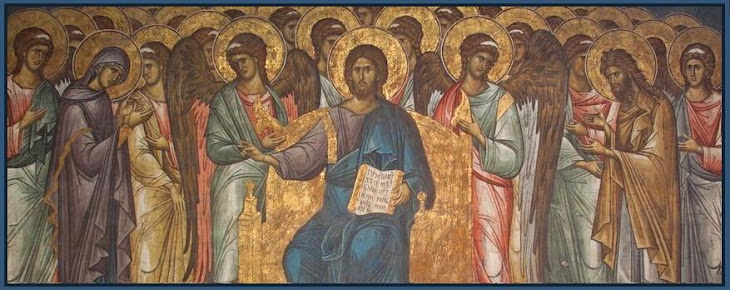
Jesus Christ, the Wisdom of God, the Angel of Great Counsel (source)
The Wisdom of God, by Metropolitan Ierotheos (Vlachos) of Navpaktos and Agiou Vlasiou (amateur translation)
The following speech by Metropolitan Ierotheos Vlachos was offered in Levkosia, on the occation of the celebration of the feast of the new Holy Church of the Wisdom of God, the largest church on the island of Cyprus. In three parts, he discusses the identification of the "Wisdom of God" with Christ, the Churches of "Holy Wisdom", and the Feast of Mid-Pentecost.
I. Christ, the Wisdom of God
It is a fundamental teaching of the Fathers of the Church that the difference between the Old and the New Testament is that, in the Old Testament are recorded the appearances of the bodiless Word, the Angel of Great Counsel, the Wisdom of God, while in the New Testament is recorded the revelation of the incarnate Word. Thus, one of the names of Christ is the Wisdom of God.
According to Fr. George Florovsky “The name of wisdom is a biblical name”, which is used by the Apostle Paul. In reality, the Apostle Paul, speaking to the Jews and the Greeks of his time, says that while the Jews seek a sign, and the Greek-idolaters seek wisdom-philosophy, “we preach Christ crucified, to the Jews scandal, to the Greeks foolishness, but to those chosen, Jews and Greeks, Christ is the power of God and the wisdom of God” (Corinthians I 1:22-24). And later he writes: “It is because of him that you are in Christ Jesus, who has become for us wisdom from God—that is, our righteousness, holiness and redemption.” (Corinthians I 1:30)
Often it is said that in the Old Testament, Christ is characterized as Messiah. But this is not correct, because in the Old Testament, the Messiah was, as the word means, “the anointed one”, and this is offered to the kings and the Prophets, who were called by God and anointed for a special mission to Israel. Thus, the Messiah in the Old Testament was man. However, the Second Person of the Holy Trinity, in the Old Testament is characterized as the Angel of Great Council, the Wisdom of God. Foremost, the name “Wisdom of God” is met in the Proverbs and Wisdom of Solomon, and is attributed to Christ.
Thus, Christ is not the Messiah, in other words, a man who was [solely] born from the Panagia, but was the incarnate Word, Who took on human creation with the incarnation, which was anointed by the divine creation and became the Messiah in order to save the human race, and to deliver from the devil, death and sin. Fr. George Florovsky offers that “the identification of 'Wisdom' as one of the names of the Second Person of the Holy Trinity became a common theme in the homilies and theology of the Fathers. Origen perceived the name 'Wisdom' as the first and primary name of the Son (On John 10:22). And 'Wisdom' and 'Power' were commemorated in the Symbol of St. Gregory of Neo-caesarea. In the 4th century, the Arians and the Orthodox agreed that thee Holy Wisdom that is mentioned in the book of Proverbs was the Son of God”.
The wise Solomon, praying to the God of the Fathers and the Lord of mercy, among other things, says: “Give me wisdom, that sitteth by thy throne; and reject me not from among thy children...And wisdom was with thee: which knoweth thy works, and was present when thou madest the world, and knew what was acceptable in thy sight, and right in thy commandments. O send her out of thy holy heavens, and from the throne of thy glory, that being present she may labour with me, that I may know what is pleasing unto thee. For she knoweth and understandeth all things, and she shall lead me soberly in my doings, and preserve me in her power. So shall my works be acceptable, and then shall I judge thy people righteously, and be worthy to sit in my father's seat.” (Wisdom of Solomon 9:1-12).
It is sure that the wise Solomon here is speaking of the Second Person of the Holy Trinity, which is the Wisdom of God the Father, and Who is beside the throne of the glory of God, and at the creation of the world, and he is asking Him to send Him to him in the direction of his service.
That the Word of God is the Wisdom of God is seen from the word “Wisdom” which is mentioned either by itself or with some other entreaty in the holy Services, such as “arise, let us be attentive” and of course before the phrase, “He Who is blessed, Christ our true God” at the end of Vespers, in addition to following the service of the Artoklasia before the phrase “the blessing of the Lord and His mercy be upon you”. The union is clear between the Wisdom, which is the Word of God, with the phrases that speak of Him. Furthermore, the “Wisdom” is said during the Small Entrance of the Divine Liturgy, when the Deacon or the Priest raises the holy Gospel, because within it are the words of Christ. Thus, the Christians are called to lift up and to show reverence to the Wisdom of God, in other words, the Word of God, Christ. This word (Wisdom) is said also before the Epistle and Gospel readings, because within them are the words of Christ and the Apostles who are the members of the Body of Christ. And the same word, “Wisdom”, is said during the Liturgy of the Presanctified Precious Gifts before “the Light of Christ illumines all”, and during the Vespers before “O gladsome light of the holy glory”, which speaks about Christ...
Christ has risen from the dead, by death he has trampled on death, and to those in the graves given life!
Truly the Lord is risen!
Tuesday, November 17, 2009
St. Gregory the Wonderworker, Bishop of Neocaesarea
St. Gregory the Wonderworker, Bishop of Neocaesarea - Commemorated on November 17 (icon taken from: http://christopherklitou.com/icon_17_nov_gregory_of_neocaesarea_wonderworker.htm)
"Saint Gregory the Wonderworker, Bishop of Neocaesarea, was born in the city of Neocaesarea (northern Asia Minor) into a pagan family. Having received a fine education, from his youth he strived for Truth, but the thinkers of antiquity were not able to quench his thirst for knowledge. Truth was revealed to him only in the Holy Gospel, and the youth became a Christian.
For the continuation of his studies St Gregory went to Alexandria, known then as a center for pagan and Christian learning. The youth, eager for knowledge, went to the Alexandrian Catechetical School, where the presbyter Origen taught. Origen was a famous teacher, possessing a great strength of mind and profound knowledge. St Gregory became a student of Origen. Afterwards, the saint wrote about his mentor: "This man received from God a sublime gift, to be an interpreter of the Word of God for people, to apprehend the Word of God, as God Himself did use it, and to explain it to people, insofar as they were able to understand it." St Gregory studied for eight years with Origen, and was baptized by him.
The ascetic life of St Gregory, his continence, purity and lack of covetousness aroused envy among his conceited and sin-loving peers, pagans that they were, and they decided to slander St Gregory. Once, when he was conversing with philosophers and teachers in the city square, a notorious harlot came up to him and demanded payment for the sin he had supposedly committed with her. At first St Gregory gently remonstrated with her, saying that she perhaps mistook him for someone else. But the profligate woman would not be quieted. He then asked a friend to give her the money. Just as the woman took the unjust payment, she immediately fell to the ground in a demonic fit, and the fraud became evident. St Gregory said a prayer over her, and the devil left her. This was the beginning of St Gregory's miracles.
Having returned to Neocaesarea, the saint fled from the worldly affairs into which influential townsmen persistently sought to push him. He went into the desert, where by fasting and prayer he attained to high spiritual accomplishment and the gifts of clairvoyance and prophecy. St Gregory loved life in the wilderness and wanted to remain in solitude until the end of his days, but the Lord willed otherwise.
The bishop of the Cappadocian city of Amasea, Thedimos, having learned of St Gregory's ascetic life, decided to have him made Bishop of Neocaesarea. But having foreseen in spirit the intent of Bishop Thedimos, the saint hid himself from the messengers of the bishop who were entrusted to find him. Then Bishop Thedimos ordained the absent saint as Bishop of Neocaesarea, beseeching the Lord that He Himself would sanctify the unusual ordination. St Gregory perceived the extraordinary event as a manifestation of the will of God and he did not dare to protest. This episode in the life of St Gregory was recorded by St Gregory of Nyssa (January 10). He relates that St Gregory of Neocaesarea received the episcopal dignity only after Bishop Thedimos of Amasea performed all the canonical rites over him.
Icon of St. Gregory the Wonderworker, Bishop of Neocaesarea (Icon courtesy of www.eikonografos.com used with permission)
During this time, the heresy of Sabellius and Paul of Samosata began to spread. They taught falsely concerning the Holy Trinity. St Gregory prayed fervently and diligently imploring God and His most pure Mother to reveal to him the true faith. The All-Holy Virgin Mary appeared to him, radiant like the sun, and with Her was the Apostle John the Theologian dressed in archepiscopal vestments.
By the command of the Mother of God, the Apostle John taught the saint how to correctly and properly confess the Mystery of the Most Holy Trinity. St Gregory wrote down everything that St John the Theologian revealed to him. The Mystery of the Symbol of the Faith, written down by St Gregory of Neocaesarea, is a great divine revelation in the history of the Church. The teaching about the Holy Trinity in Orthodox Theology is based on it. Subsequently it was used by the holy Fathers of the Church: Basil the Great, Gregory the Theologian, and Gregory of Nyssa. The Symbol of St Gregory of Neocaesarea was later examined and affirmed in the year 325 by the First Ecumenical Council, showing his enduring significance for Orthodoxy. (***see text below)
Having become a bishop, St Gregory set off to Neocaesarea. Along the way from Amasea he expelled devils from a pagan temple, the priest of which he converted to Christ. The convert was witness to still another miracle of the saint, at his word a large stone shifted from its place.
The preaching of the saint was direct, lively and fruitful. He taught and worked miracles in the name of Christ: he healed the sick, he helped the needy, he settled quarrels and complaints. Two brothers sharing an inheritance were not able to agree over the property of their dead father. There was a large lake over which they argued, for each of the brothers wanted the lake for himself. They both gathered their friends together, and were ready to come to blows. St Gregory persuaded them to delay their fight until the following day, and he himself prayed all night long at the shore of the lake which sparked the quarrel. When dawn broke, everyone saw that the lake had dried up or gone underground. Through the intense prayer of the saint, now there was only a stream, and its course defined the boundary line. Another time, during the construction of a church, he commanded a hill to move and make room at the place of the foundation.
When a persecution against Christians began under the emperor Decius (249-251), St Gregory led his flock to a faraway mountain. A certain pagan, knowing about the hiding place of the Christians, informed the persecutors. Soldiers surrounded the mountain. The saint went out into an open place, raised up his hands to heaven and ordered to his deacon to do the same. The soldiers searched the whole mountain, and they went several times right past those praying, but not seeing them, they gave up and went away. In the city they reported that there was nowhere to hide on the mountain: no one was there, and only two trees stood beside each other. The informer was struck with amazement, he repented of his ways and became a fervent Christian.
St Gregory returned to Neocaesarea after the end of the persecution. By his blessing church Feasts were established in honor of the martyrs who had suffered for Christ.
By his saintly life, his effective preaching, working of miracles and graced guiding of his flock, the saint steadily increased the number of converts to Christ. When St Gregory first ascended his cathedra, there were only seventeen Christians in Neocaesarea. At his death, only seventeen pagans remained in the city."
(taken from: http://ocafs.oca.org/FeastSaintsViewer.asp?SID=4&ID=1&FSID=103315)
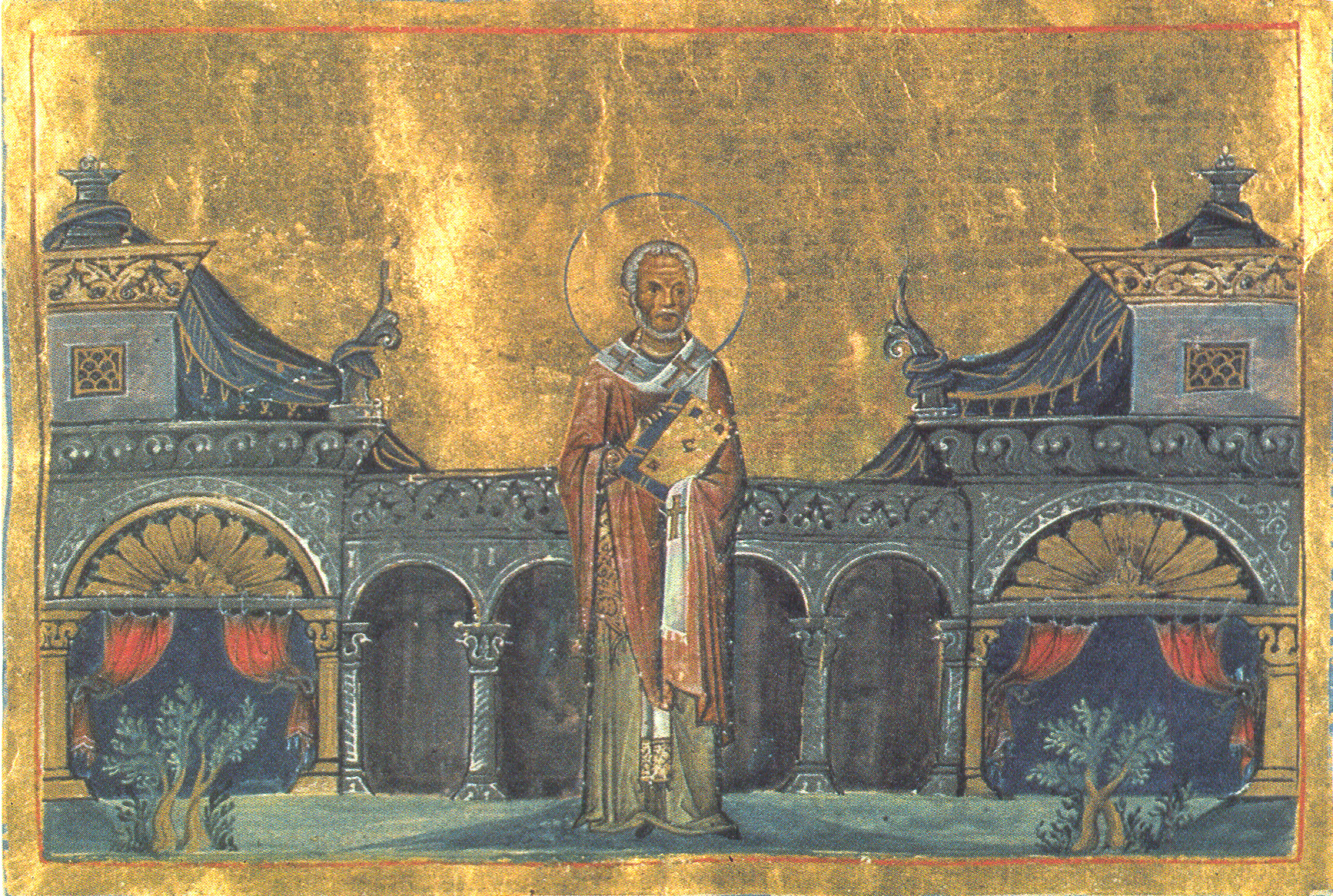
St. Gregory the Wonderworker, Bishop of Neocaesarea (taken from the Menologion of Basileiou, from: http://vatopaidi.files.wordpress.com/2009/11/st-gregory-of-neocaesarea.jpg)
***A DECLARATION OF FAITH
by St. Gregory the Wonderworker, Bishop of Neocaesarea"There is one God, the Father of the living Word, who is His subsistent Wisdom and Power and Eternal Image: perfect Begetter of the perfect Begotten, Father of the only-begotten Son. There is one Lord, Only of the Only, God of God, Image and Likeness of Deity, Efficient Word, Wisdom comprehensive of the constitution of all things, and Power formative of the whole creation, true Son of true Father, Invisible of Invisible, and Incorruptible of Incorruptible, and Immortal of Immortal and Eternal of Eternal. And there is One Holy Spirit, having His subsistence from God, and being made manifest by the Son, to wit to men: Image of the Son, Perfect Image of the Perfect; Life, the Cause of the living; Holy Fount; Sanctity, the Supplier, or Leader, of Sanctification; in whom is manifested God the Father, who is above all and in all, and God the Son, who is through all. There is a perfect Trinity, in glory and eternity and sovereignty, neither divided nor estranged. Wherefore there is nothing either created or in servitude in the Trinity; nor anything superinduced, as if at some former period it was non-existent, and at some later period it was introduced. And thus neither was the Son ever wanting to the Father, nor the Spirit to the Son; but without variation and without change, the same Trinity abideth ever."
(taken from: http://www.voskrese.info/spl/thaumcreed.html; the following link has the same text with some additional notes and some of the original Greek: http://www.documentacatholicaomnia.eu/04z/z_0213-0270__Gregorius_Thaumaturgus__A_Declaration_of_Faith_[Schaff]__EN.pdf.html)
May St. Gregory the Wonderworker intercede for us and help us!
Picture of the Pillar of St. Gregory the Wonderworker in Hagia Sophia, Constantinople. This pillar, which contains the Relics of St. Gregory, continues to miraculously weep water that works healings. (taken from: http://www.sacred-destinations.com/turkey/hagia-sophia-photos/hole-cc-khoogheem.jpg.html)
Icon of St. Gregory the Wonderworker, Bishop of Neocaesarea (Icon courtesy of www.eikonografos.com used with permission)
Apolytikion in the Plagal of the Fourth Tone
By vigilance in prayer, and continuance in the working of wonders, thou didst acquire thine achievements as a surname; wherefore, intercede with Christ our God, O Father Gregory, to enlighten our souls, lest we sleep in sin unto death.
Kontakion in the Second Tone
Since thou hadst received the power to work miracles, thou dravest from men diseases, O wise Gregory, and with fearful signs thou madest the demons tremble; hence, thou art called Wonderworker, O man of God; for thou hast received thy surname from thy works.
(taken from: http://goarch.org/chapel/saints_view?contentid=295)
Through the prayers of our Holy Fathers, Lord Jesus Christ our God, have mercy on us and save us! Amen!
Wednesday, May 13, 2009
The Feast of Mid-Pentecost
Christ is risen! Truly He is risen!
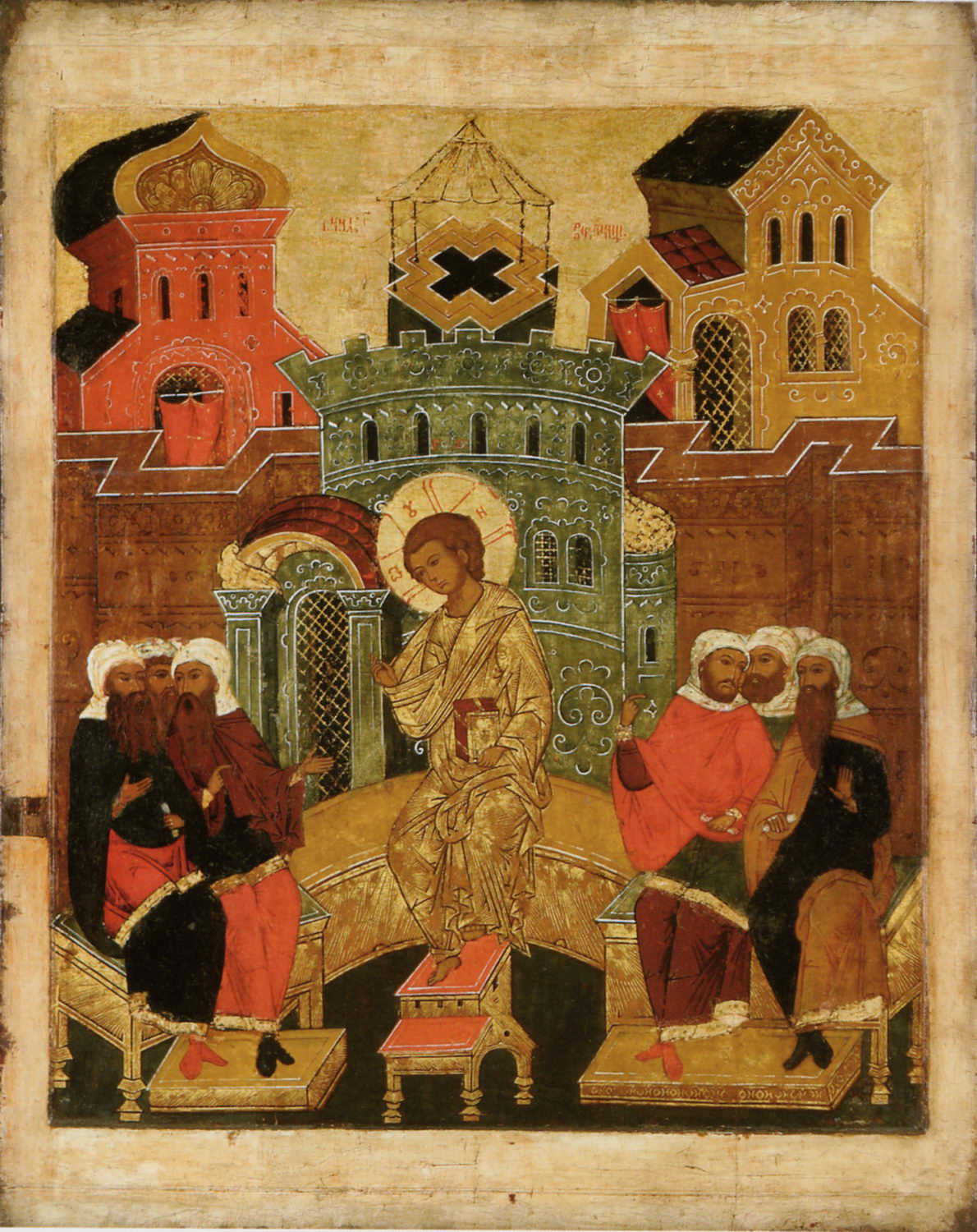
Icon of Christ preaching in the Temple: the Feast of Mid-Pentecost, from Decani Monastery (taken from: http://www.srpskoblago.org/Archives/Decani/exhibits/Collections/PublicMinistry/CX4K3103_l.html)
Reading (taken from: http://goarch.org/chapel/saints_view?contentid=893&type=saints)
"After the Saviour had miraculously healed the paralytic, the Jews, especially the Pharisees and Scribes, were moved with envy and persecuted Him, and sought to slay Him, using the excuse that He did not keep the Sabbath, since He worked miracles on that day. Jesus then departed to Galilee. About the middle of the Feast of Tabernacles, He went up again to the Temple and taught. The Jews, marvelling at the wisdom of His words, said, "How knoweth this man letters, having never learned?" But Christ first reproached their unbelief and lawlessness, then proved to them by the Law that they sought to slay Him unjustly, supposedly as a despiser of the Law, since He had healed the paralytic on the Sabbath. Therefore, since the things spoken by Christ in the middle of the Feast of Tabernacles are related to the Sunday of the Paralytic that is just passed, and since we have already reached the midpoint of the fifty days between Pascha and Pentecost, the Church has appointed this present feast as a bond between the two great feasts, thereby uniting, as it were, the two into one, and partaking of the grace of them both. Therefore today's feast is called Mid-Pentecost, and the Gospel Reading, "At Mid-feast"--though it refers to the Feast of Tabernacles--is used.
It should be noted that there were three great Jewish feasts: the Passover, Pentecost, and the Feast of Tabernacles. Passover was celebrated on the 15th of Nisan, the first month of the Jewish calendar, which coincides roughly with our March. This feast commemorated that day on which the Hebrews were commanded to eat the lamb in the evening and anoint the doors of their houses with its blood. Then, having escaped bondage and death at the hands of the Egyptians, they passed through the Red Sea to come to the Promised Land. It is also called "the Feast of Unleavened Bread," because they ate unleavened bread for seven days. Pentecost was celebrated fifty days after the Passover, first of all, because the Hebrew tribes had reached Mount Sinai after leaving Egypt, and there received the Law from God; secondly, it was celebrated to commemorate their entry into the Promised Land, where also they ate bread, after having been fed with manna forty years in the desert. Therefore, on this day they offered to God a sacrifice of bread prepared with new wheat. Finally, they also celebrated the Feast of Tabernacles from the 15th to the 22nd of "the seventh month," which corresponds roughly to our September. During this time, they live in booths made of branches in commemoration of the forty years they spent in the desert, living in tabernacles, that is, tents (Ex. 12:10-20; Lev. 23)."
Finally, it is worth noting that the Great Church of Hagia Sophia (The Church of the Holy Wisdom) in Constantinople celebrated its feast on the feast of Mid-Pentecost. (http://www.johnsanidopoulos.com/2011/05/mid-pentecost-and-hagia-sophia.html)
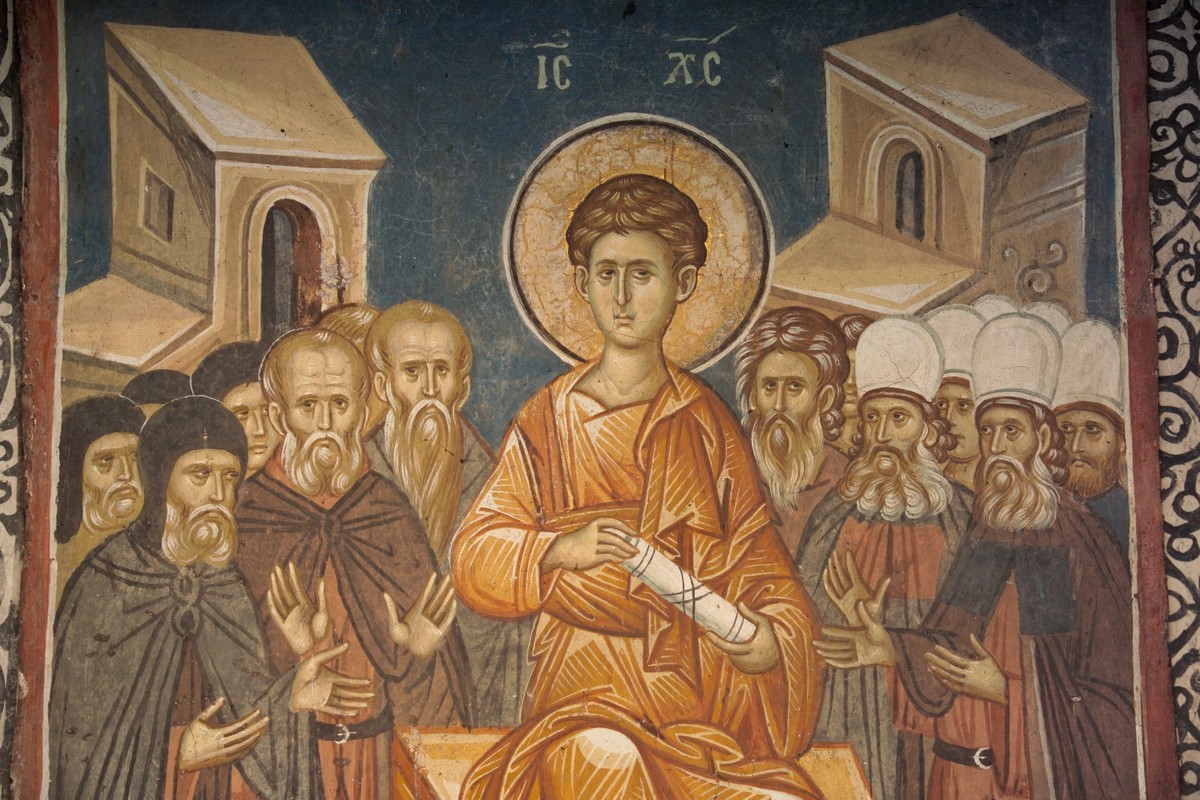
Christ, the Holy Wisdom, teaching in the Temple (http://www.ruicon.ru/images/iconografy/fresco/Serbia-Dechani/2868.jpg)
Apolytikion of Mid-Pentecost in the Plagal of the Fourth Tone
Mid-way in the feast, refresh my thirsty soul with the flowing waters of piety. For You cried out to all, O Savior, "Let him who thirsts come to me and drink." You, O Christ our God, are the Fountain of Life, glory to You.
Kontakion. Mode 4. You who were lifted.
The feast according to the Law at its midpoint, O Christ our God, as the Creator and Master of everything, You said to all those who were present there, ʺCome that you might draw from Me the water of immortality. ʺ Hence with faith we cry to You as we prostrate before You. Your tender mercies grant to us, we pray. You are the fountain and source of our life, O Lord.
OEkos
With the streams of Your blood water my soul parched by unlawful offences, and show it to be fruitful in virtue. For You have said to all, to approach You, all-holy Word of God, and to draw the water of incorruption, which is alive and washes away the sins of those who extol Your glorious and divine Resurrection. O Good One, You grant those who know You to be God the power of the Spirit that truly came down from on high to Your Disciples. You are the fountain and source of our life, O Lord.
Christ is risen from the dead, by death, trampling down upon death, and to those in the tombs, bestowing life!
Truly the Lord is risen!
Subscribe to:
Posts (Atom)