Showing posts with label Reveling. Show all posts

Tuesday, December 19, 2017

Metropolitan Avgoustinos Kantiotes: Are we ready for Christmas?

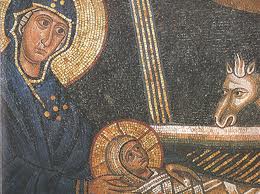
The Nativity of Christ (source)
  
Metropolitan Avgoustinos Kantiotes: Are we ready for Christmas?
Beloved in Christ, I would like to ask you a question; I ask it of myself and I ask it of you. Are we prepared to celebrate the great feast of Christmas?
  
There are two kinds of preparation; material and spiritual. Our material preparation is more or less finished. Housewives have cleaned their houses, husbands have finished – or have almost finished – their shopping, and children await their presents. Everyone has written their Christmas cards, signing them with the customary, ‘Merry Christmas’ and ‘Happy New Year’. This is worldly preparation; I am not interested in this. What I am interested in is spiritual preparation, the kind of preparation which makes us ready to celebrate the great event of the Incarnation of the Divine Word as is proper. Only a small number have properly prepared themselves. Of a thousand Christians, I doubt if even one celebrates Christmas truly. Does my estimate seem exaggerated? Let us see.
  
How is Christmas celebrated today? A portion of Christians will celebrate it ‘typically’, let us say. Hearing the bells on Christmas Eve, they will go and take part in the service out of habit. This is certainly better than being absent altogether; it is something at least.
  
Others will imitate foreign customs and practices, forgetting the ecclesiastical celebration altogether; in other words, they will pass Christmas Eve without the scent of Christ. For Orthodox Christians, Christmas is meaningless if it is celebrated without church services, without prayer, without confession, without Holy Communion, without forgiveness, without almsgiving. Indeed, the devil has sown a new seed in our homeland, and it is sprouting up everywhere like mushrooms grow in manure. On Christmas Eve people put on these reveillon – a foreign custom and a foreign word – they put on parties in luxurious hotels and other such places, far from the Church, far from hymns, far from the Divine Liturgy, where people gather and amuse themselves with worldly music, with food, with drink and whatever follows from these things. Such a practice is a thorn in the field of our homeland. If it continues to spread, the spirit of secularization will overtake the Christian feast altogether.
  
Some, then, celebrate Christmas ‘typically’, others put on these reveillon and trade in the Church feast for something altogether worldly. And still others, what do they do? They leave. They are not satisfied here. Greece is not enough for them. They have money to spare so they take trips and go on tours. On Christmas Eve when the bells are ringing, these people will be far from their homes in different places, and not only in our country. They aren’t satisfied here, so they hop on an airplane and go celebrate Christmas in Rome, in London, in Paris, in different places.
  
These, beloved, and anyone else who has openly denied the faith, have cast Christmas out of their hearts. For a large number of people, then, Christmas is nothing but another chance to dull their boredom; the actual content of the feast holds no appeal for them. Yes! That day you will have it all! You will have your great salons, your ornate rugs, your curtains, your fancy cutlery, your drinks, your meals, your music, your trips. You will have everything! You will be missing one thing, however. Your will be missing the most valuable thing; the thing which gives the feast meaning! Lacking this thing, what kind of Christmas can you expect to have? Your Christmas will be a Christmas without Christ!
  
But why? How did this happen? How did things get to this point? This is the age which the Prophet Isaiah foresaw. There will come a day, he said, when men will be drunk without wine. This day has arrived. Contemporary man is, “…drunk, but not with wine.” (Isaiah 29:9) For one to be drunk with wine during these days in undoubtedly a sin, for, drunkards shall not inherit the kingdom of God. (1 Cor 6:10) There is, however, a worse kind of drunkenness: woe to those who are drunk without wine, says Isaiah.
  
What, then, is contemporary man drunk on? One is drunk on the love of glory. Another is drunk on the love of money; another is drunk on women and indecent sights; another is drunk on card playing, on games of chance; another on an obsession with sports teams; another on plays and films; another on enjoyments and luxuries. I have particularly noticed that a good many are drunk on politics, something which has become a passion only for us in Greece alone. I say this as one who keeps himself out of party politics. Were you to open my heart you would find nothing but my homeland and my Christ. Here in Greece there is a pathological attachment to politics. Even on Christmas Eve, the feast will be overshadowed by discussions of politics. Nowhere else can one find such a phenomenon.
  
I have also noticed of late that many have become drunk on that strong wine described in the Apocalypse; that wine which the noetic Babylon will give the rulers and the people to drink. This wine, the commentators say, is the pagan spirit, the moral depravity of the world. This wine is so strong that if you were to drink just a few drops, it will cause you to lose your faith, you will forget everything. The strongest wine, then, is not money, or women, or shameful lusts, or other sensual pleasures; it is the cosmopolitan spirit of modern life, it is the emancipation from devotion, knowledge infused with pride, the science of the atheist, the atheistic rebellion, the denial of God and the divinization of man. It is this wine which has made many in our age drunk.
  
Men are drunk, then, on various wines offered to him by the ruler of this age in his golden cup. Do you know what these men are like? I will show you by means of an example.
  
I try, with God’s help, to be a teacher. So I travel to a village where I find someone and try to teach him something about Christ, about the faith, about the mysteries. He listens, but the others tell me, “Don’t waste your time, he’s drunk! Don’t bother sitting with him and taking to him!” This is how the world is today…it is drunk without wine! Is it worth speaking to such men?
  
But I appeal to you, my brothers. I am not speaking to drunks, to those made dizzy by the idols. It is my hope that I speak to the faithful who know but one kind of drunkenness, that holy drunkenness described by the Psalmist who exhorts us to, “…taste and see that the Lord is good.” (Psalm 33:8) I hope that you have you ears open for, “Blessed is he that speaketh in the ears of them that will hear.” (Sirach 25:9)
by Metropolitan Avgoustinos (Kantiotes) of Florina,
Translated by fr. John Palmer (source)
  
Through the prayers of our Holy Fathers, Lord Jesus Christ our God, have mercy on us and save us! Amen! 

Sunday, May 31, 2015

Homily on the Feast of Pentecost, by Metropolitan Avgoustinos Kantiotes

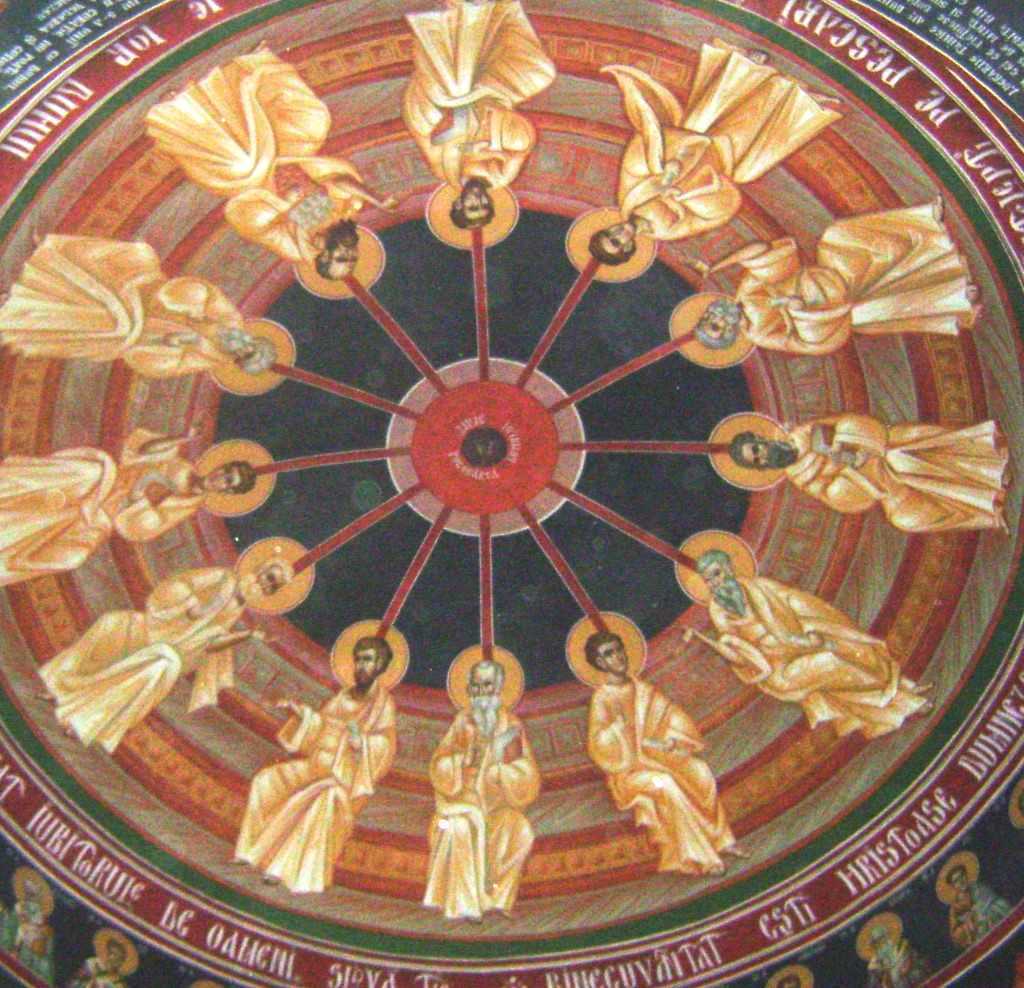
The Great and Holy Feast of Pentecost (source)
  
Homily on the Feast of Pentecost, by Metropolitan Avgoustinos Kantiotes
By the mercy of God, my beloved, we have reached the end of the feasts of Pentecostarion. The first feast is the Resurrection of the Lord, which is the greatest in the Orthodox Church. And in this way we differ from the [West], which celebrates Christmas with more grandeur. The Orthodox of the East, as the Queen of Feasts have Pascha. For forty days we hear “Christ is risen”. After the Resurrection, is the Ascension of the Lord, which we celebrated ten days ago. What meaning do these feasts have? In the Resurrection: Christ lives and reigns. In the Ascension: “Let us lift up our hearts.”
  
And today, my beloved, we have Pentecost, the great feast which is the fulfillment of the work of the divine economy, and signified the descent of the Holy Spirit. If you go to Mount Athos, in the Byzantine churches, you will see how Pentecost is depicted.
  
Byzantine iconographers, not like those today who are merchants of Christ, were artists who painted with faith and mixed their paints with their tears, and fasted in order to depict the icon of Christ and the Panagia, creating wonderworking icons. Out of ten-thousand icons today, I doubt if we would find one which is wonderworking. Every icon of course has its worth, due to whom it depicts, but another grace comes from the eye and hand of a sanctified iconographer.
  
Therefore, in the Byzantine icon of Pentecost, you will see that in the center is depicted a prophet, the Prophet Joel. He is depicted holding a scroll, on which is written the phrase: “I will pour out my Spirit upon all flesh...” (Joel 3:1-2)
  
I wish to speak, but I hesitate. For what benefit is there from the feasts? For many now, a feast is a party, a gathering, a dance... We do not lessen our sins, but increase them. And for the Church a feast is joy and spiritual exaltation, while we celebrate according to a Judean or idolatrous manner. That terrible prophecy of God is fitting for us, when He says: “Your feasts, my soul hates.” (Isaiah 1:14)
  
I hesitate furthermore, for Pentecost is a feast which is the most difficult for a preacher among all the other topics. For what are we? Nature, worms, unclean animals, lowly-people, sinners, “having unclean lips among a people of unclean lips.” (Isaiah 6:5) How can we speak today regarding the Holy Spirit, in an age which is known for its atheistic speeches, heresies, and generalized corruption?
  
In my place should be one of the Holy Fathers, whose spirits were intangible, and had not a molecule of carnality, and who, when they were praying, did not walk on the earth. And you, my listeners, should be purified, so that our spirits would be in harmony, and so that we be exalted above the heavens, like the Holy Apostles, so that the Holy Spirit would come upon us as well.
  
Behold why I hesitate to speak. But one phrase from today's prayers from the Kneeling Vespers helps to remove my hesitation. Believe me, I would not have even broached the topic, unless those words had strengthened me: “For in fear I stand before You, casting my soul's despair into the sea of Your mercy.” (From the Third Prayer of the Kneeling Vespers) I stand, it says, with fear before you, O Lord, and I the sinner, throw my soul's despair into the abyss of Your mercy.
  
I therefore throw myself into the incomparable mercy of God, and calling upon the grace of the Holy Spirit, I dare to utter a few words. For more properly, I don't speak myself; I become a microphone so that the opinions of the Fathers of our Church can be heard.
  
Pentecost! “I will pour out my Spirit upon all flesh...” The pouring out of the grace of the Holy Spirit, my beloved, in the Holy Scriptures and according to the Fathers of the Church, is characterized by many names. From all of this, I will take one alone, the name “gift”. Why is it called this? Because it is the culmination of everything that God has granted and continues to grant to us.
  
The grace of the Holy Spirit is not the only good thing which mankind has received from God. “In Him we live and move and have our being”, says the Apostle Paul (Acts 17:28), borrowing a phrase from the ancient poet (Aratos). We swim within the abyss of the energies and the gifts of God. What is there that we don't have as a gift from God!
  
I leave the gifts of the earth and the sea. I bring to mind the greatest gifts which come from on high, from heaven.
  
The first [great gift] is light, those countless rays of the sun, which travel at breakneck speeds, covering unimaginable distances. As one Saint said, every ray of the sun which shines upon a flower, a child, an old man, a beggar, a condemned man, upon the face of every person, what is it? It is an embrace by the heavenly Father. The hour when you sense the ray of the sun enlighten and warm you, it is as if God is saying: “O man, I love you.” How much would we pay for how many millions of kilowatts of energy from the sun? And instead of saying thank you, instead of “Glory to You Who has shown forth the light” (The Doxology), God receives blasphemies! And regardless, He sends His light “upon the thankless and sinners” (Luke 6:35).
  
Another [gift] is water, the rain which comes from the clouds, and falls upon the soil and makes it to grow all those things which nourish us. Every corner is a field. What could we pay for, and what does God receive for all of this water? The hen, when she drinks a sip of water, lifts up her head to heaven, as if to say: “Thank you, O Lord.”
  
Another is the air. Like the fish which swim in the water, and couldn't live outside of it, thus does man life within the ocean of the air. And only Earth has this atmospheric air. If we removed the atmosphere, we would die of asphyxia. Because of this, the astronauts carry with them Oxygen tanks. And think of how much it would cost if the Oxygen were sold by pharmacists. Only a few rich people could afford it. And for this, again there is thanklessness and ingratitude that our good God receives.
  
Besides these ordinary gifts of God, however, there are also extraordinary gifts, such as in the Old Testament, the manna, that sweet water, which was received by the mouths of the Jews who desired them. And those thankless ones watered the Son of the Virgin “with gall instead of mana” (hymn from Holy Friday). This is what man is.
  
Listen, my beloved, that up till now all of these gifts benefit me here. I told you understandable and simple things that we all know and can experience, and which penetrate our lives.
  
But man is not designed for here alone, for only this natural sphere, for the life of the body. He is not just a body. He is also a spirit, and primarily a spirit. He therefore, has another life, a life in the sphere of the spirit. And there, in the sphere of the spirit, he has need of other provisions. How can I make you understand? I seek the grace and the power of God.
  
Above all physical gifts which we sense, because we live with them and depend on them, is another great and uplifted gift. All of those gifts, ordinary and extraordinary, are small. Today's great gift is the Holy Spirit. “Taste of the gift of the Holy Spirit” (Acts 2:38) Great and necessary for our life is the light, the water, the air, but all of these are simply icons and symbols of that great gift, which is called the Holy Spirit.
  
The Holy Spirit has come! God has fulfilled His promises. It was prophesied of in the Old Testament by the Prophet Joel. It was the promise of Christ to His disciples, before He ascended into the Heavens. It was the completion of the work of the divine economy, the grand work of God for the salvation and glory of fallen man. Without the gift of the Holy Spirit, the work of the divine economy would be imperfect and incomplete. Today, this work is completed. Glory to the Father and to the Son and to the Holy Spirit!
  
+Bishop Avgoustinos
On the Monday of the Holy Spirit, 1961.
  
(amateur translation of text from source)
  
The Holy Spirit descending upon the Disciple at Pentecost (source)
  
Through the prayers of our Holy Fathers, Lord Jesus Christ our God, have mercy on us and save us! Amen!
Friday, August 29, 2014

Encomium on the Beheading of the Precious Forerunner, by St. Theodore the Studite

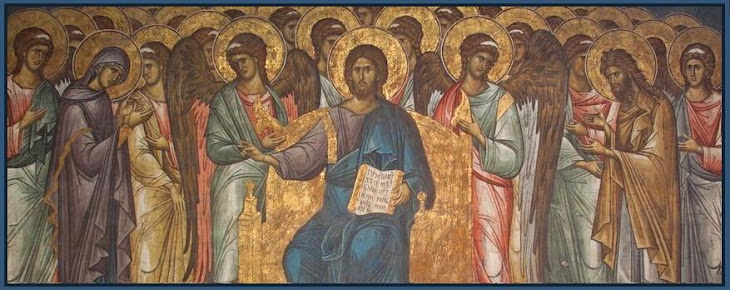
St. John, the Precious Forerunner and Baptist of Christ (source)
  
Encomium on the Beheading of the Precious Forerunner, by St. Theodore the Studite
Dear God-fearing Christians, the feast which we have gathered here to celebrate together today is radiant and filled with divine joy. It is rightly called radiant because it shines from the very name of him whom we are honouring today, since he is called the lamp of the light. He is not, of course, a lamp who illumines us with material light, because then his radiance would not be enduring and constant and would be lost every time some obstacle moved in front of it. But it is light that shows the brilliant radiance of divine grace in the depths of the hearts of those who have gathered to celebrate his memory and who elevate their minds to think upon the sufferings of the righteous man, so that gazing with the eyes of our souls upon his blessed martyrdom, we shall be filled with spiritual joy.
  
But our eyes rejoice at the sight of the blood of every saint, our ears delight to hear their messages of salvation and our lips reverence them. Because their loss grants perfect participation in the immortal and true life. I do not, of course, mean merely a drop of blood, but anything at all from their holy members- a single hair or anything they wore or touched with their hands- is desirable and valuable for those who have decided to believe and to worship God in the proper manner. This is why people who have something like this in their homes or church- that is a complete relic or a part thereof, even a very small piece- consider it a special honour and are proud of it, as if it were a treasure which advances their sanctification and ensures their salvation. And so they approach the reliquary containing the sacred dust with great reverence and touch with awe the sacred relics which are untouchable because of their sanctity.
  
What more do I need to say than to refer generally to the blood of all the apostles, the martyrs and prophets, which various gory murderers shed in many different ways and which now circles the earth like a rich river and extinguishes impiety?
  
Such was the blood of the Forerunner and Baptist of Christ, of whom we are speaking today, which he shed from his sacred neck like precious myrrh, which perfumes the whole world. This blood was not engendered by hedonistic gluttony, nor by wine, nor by any of the other foods which fatten the greedy and give them pleasure.
  
It was created by the grace of abstinence, which the saint practised from his infancy until his martyr’s death. And as the Lord said, John neither ate nor drank (Matth. 11, 18-19).
  
This blood was shed before the blood of the Lord, the immortal chalice. Because it was needful that the Forerunner of the Light, who with his radiant birth from a barren mother illumined everyone on earth, should become an effulgent herald also to those who were below the earth, that is in Hell.
  
This blood has boldness before the Almighty Lord, more than the blood of the righteous Abel. Because every action has within it a mystical voice, which is not produced by the vocal chords but which becomes evident from the power invested in it by the person who performs the action.
  
This blood is more deserving than that of the Patriarchs (Abraham, Isaac and so on), more valuable than the blood of the prophets and more sanctified than the blood of all the righteous. Because it is more wonderful even than the blood of the apostles and of the martyrs. Now these words are not mine; they’re from the Great Word, Jesus Christ, Who gave this testimony concerning the Honourable Forerunner.
  
It is blood which adorns the Church more beautifully than any decoration with variegated and rare flowers. It was shed for justice at the end of the era when the old law was in force, and became a flower which stands at the entrance of the presence of Christ.
  
But let us continue now to tell, on the basis of the Holy Gospels, how this blood was shed, by whom and for what cause. According to the Gospel, Herod arrested John, bound him and cast him into prison, because of Herodias, the wife of his brother, Philip. Because John had told him: “You’re not allowed to live with her”. So he wanted to put John to death but was afraid to do so, because all the people considered him a prophet (Matth, 14, 2-5).
  
Let’s see first who this Herod was, because there are two people with the same name, which is confusing, and we have to be clear who we’re talking about. This one is Herod the Tetrarch. His father, also Herod and the murderer of the Innocents, had died long before [In 4 B. C. Herod I actually had four sons named Herod].
  
But why did John upbraid him? Because he had abandoned his lawful wife, the daughter of King Aretas, and was living, illicitly, with the wife of his brother Philip. He could, of course, have married her legally, if she hadn’t already had children by his brother, because Mosaic law allowed this in order to provide heirs. But since she wasn’t childless, he couldn’t. She had a daughter who was also called Herodias, the offspring of a viper, the devil’s tool in her perdition. This is why John, quite rightly, rebuked him. This castigation, however, was not hubristic and was not spoken in order to wound Herod’s soul and dignity, but it was more of a reminder, the aim of which was to bring him to his senses.
 
So what did he say to Herod? “You’re not allowed to live with her”. He reminded him of the divine law, as if saying to him: “Look and see what the Law orders you to do. If there are two brothers and one of them dies without issue, the widow is not allowed to marry a stranger. The brother of the deceased shall marry her and the child who is born will take the name of the deceased, and thus his name will not be lost in Israel (Deut. 15, 5). That’s what the law says. But you’ve taken the wife of your brother and she already has a child. Don’t transgress against the ordinance put in place by the legislator. And don’t soil your royal purple with inadmissible incest. Don’t be seen to be doing something illegal when you should be giving your subjects an example of willing and glad observance of the law. And if you do fall into this error, you’ll be punished, because those in high office are punished more severely”.
  
But since he’d only recently come to power, Herod forgot about God. He was furious, boiling with rage, and would not accept the rebuke. He did not imitate David, who, when he was chastised by the prophet Nathan for the sin of adultery, said: “I have sinned before you, Lord” (II Kings 12-13). And the Lord forgave him, because of his humility. Herod, on the other hand, had John arrested, bound and cast into prison (Matth. 14, 3). So the one who was a prisoner of the passion of lewdness arrested him who lived in the most sublime freedom, because of his holy life. He who was bound by the magical cords of debauchery, put bonds on him who was liberated from all things, living as he did outside any binding relationship. He who was, in practice, sinking deep into the mire, put in prison him who was the guard and herald of the Church.
  
For the sake of Herodias, the wife of his brother, Philip (Matth. 14, 9). For the sake of Herodias, who shared the morals of Delilah, a true tool of the devil. Because it was she who encouraged him who shared her bed- or illicit love we should really say- and made him furious with John. She told him: “I’m a queen and I can’t be made a laughing-stock by the son of Zachariah. Imprison the tongue that’s breaking my bones. Stab, at once, him whose words are wounding my soul like arrows”. And although he wanted to put him to death, he didn’t do so because he was afraid of the people, who considered John a prophet and respected him as such (Matth. 14, 5). Because if people in power want to do something illegal, they can’t execute it as soon as they’ve thought of it, for two reasons: first because they’re ashamed and fear their subjects; and second because they wait until the opportunity arises to put into effect the hatred in their souls without risk to themselves.
  
So while they were celebrating Herod’s birthday, Herodias’ daughter came out in front of them and danced. She pleased Herod very much and he swore to grant her anything she wanted (Matth. 14, 6).
On the day when he ought to have been thanking God for bringing him into the light of this life, he chose the works of darkness.. This was a day meant for spiritual joy, not for dancing, and certainly not for women dancing in front of men. What did this dance produce? The oath. And from that? Murder. Root out evil and lawlessness will not flourish. But if evil does take root, it’ll bear fruit, that is, it’ll be put into effect. Herodias’ daughter danced in the midst of the guests and pleased Herod. What else would the harlot-trained girl have learned from her mother, other than to dance provocatively and with such skill as to please Herod greatly. This is why he swore an oath to grant her whatever she wished. This is how rashly the tongues of people run away with them when they lose themselves in the passions of degradation: they blurt out in front of everyone, without thinking, whatever comes into their mind. The girl, schooled by her mother, brought about the hideous decapitation of Saint John, which the venomous Herodias had been wanting to achieve for a long time. I imagine she would have said: “This is the chance we’ve been looking for, my child. You’ve managed, with your dancing feet, to get him to offer me what I wanted. You’ve ended my pain with your skilful song. Let’s bury the man who’s rebuking us. Go quickly and tell Herod: ‘Give me John the Baptist’s head on a platter’ (Matth. 14, 8). What a ferocious and murderous demand! Even though she didn’t have the right to think and enjoy the spectacle of the murder, she outdid everyone in cruelty. What a crazed murderess! Not content with decapitation, you arranged for the head to be brought to you on a platter. What a depraved and debauched woman! Your brutality outstrips even that of blood-stained Jezebel.
  
The Gospel tells us that the king was saddened. But because he had sworn an oath and had promised in front of his guests, he ordered that she be given the head. He sent to the prison and had John beheaded. Then they set the head on a platter and brought it to the girl and her mother (Matth. 14, 11).
  
What an evil end to a diabolical coil! Who aimed the stroke of the deathly sword at the saintly head? A lawless servant, who like another Doeg, did not imitate those Jews who with circumspection and bravery stood up to King Saul when he ordered them to murder God’s prophets. “And they brought the head of John on a platter”. What should we call this revel? A banquet or the scene of a murder? What should we call the addle-pated guests? Fellow diners or blood-stained participants?
  
What an unprecedented sight! What a sinful sight! On the one hand, they were offering chicken and, on the other, a platter with the head of a prophet. From one side, rich clear wine was flowing and from the other the blood of a righteous man was gushing.
  
How terrible it is for me to say it and dreadful to express!
  
“And they gave it to the girl and she took it to her mother”. What a sinful sight! Alas! How utterly macabre! The invaluable head was exchanged for a worthless action; the pure and inviolate head, worthy of respect even from the angels, was given for an accursed and impious act. And she handed it to her mother as if she were giving her well-cooked food. To her who in her manic fury had directed the death, as if the child were saying: “Here you are, mother, meat of the flesh of him who lived on earth as if fleshless. Drink the blood of the faster. Once and for all we’ve now shut the mouth of him who rebuked us”.
 
According to the Gospel, his disciples then came, took away his body and buried it (Matth. 14, 13). Those of you who love history, look at how the burial of this righteous man is depicted and gives the lie to those enemies of the holy icons, who are also enemies of the truth. Fix the story in your minds and draw useful conclusions. How they took the saint, bound in heavy chains, from the prison How the executioner, like a wild animal, raised the sword against the holy head. How, after the beheading, the myrrh-exuding head was offered to the raving Herodias. And also how the sacred body was buried by the hands of his disciples, who all stood there, in tears, with a pain that tore at their souls. How one embraced the feet of the saint, another tried to fit the head back on to the motionless body and another sang funeral hymns while censing the body.

Now I’m there in my mind’s eye and can see the funeral of the righteous man taking place in an atmosphere of peace, as is mentioned in the Prophet Isaiah [57, 1-2: “See how the just man has perished and no one takes it to heart, and righteous men are taken away and no-one considers it. For the righteous man has been removed by injustice. His burial shall be in peace”]. I envision that angelic face, whose eyes have set like two shining suns and on which all the beauty of his soul has been imprinted. Without any fleeting and earthly breath, but full of the overpowering fragrance of divine grace. I kiss those holy hands, which never touched sin and the finger that pointed people to Christ, Who took upon Himself the sin of the whole world. I fall down before those beautiful feet, which told the good news to people and through which the way of the presence of the Lord was prepared. Bring me, so that I may reverence it, the honourable chain with which the most precious and angel-like of men was bound. Bring me the venerable platter on which the revered head- more precious than gold and jewels- was placed. Had I been there, I wouldn’t have omitted to pay my respects to the murderous sword which sliced through the holy neck, nor would I have hesitated to cover with kisses the ground where the treasure was laid, in the certainty that this, too, would bring me divine grace. Blessed grave and joyous tomb-stone, that cover the thrice-blessed corpse and wrap the body more precious than a mass of emeralds and pearls.
  
So at this scene there were the visible company of his disciples and an invisible host of angels, praising, glorifying and hymning John, bearing to eternal joy him who lived as a bodiless angel and foretold the coming of the Messiah. He who was a genuine friend of the Lord, who guided the Church to the celestial Bridegroom, the undimmed lamp of the ineffable light, the living voice of God the Word, who was superior to the prophets, greater than any man ever born of woman. The burial of this righteous man, then, was peaceful, as we’ve described it, a harbinger of joy and salvation to the whole world.
  
So did the insane Herod manage to escape punishment for his profanity for the rest of his life on earth? Of course not. On the contrary, because of this misdeed, all his subjects rose up against him and he was deposed. In this way, God wanted to frighten and admonish later kings, to prevent them committing similar crimes. But to return to our theme, let us acclaim this day as is proper.
  
Today, John the Forerunner is praised because he sacrifices his head for the truth, and Herod the transgressor is ridiculed and mocked. Today, John the Forerunner is lauded by all for his stern rebuke, and the insane Herod is dishonoured through his adultery. Today, the head of John the Forerunner is offered as a sacred sacrifice on a platter, and the adulteress Herodias, against her will, receives eternal condemnation. Today, the blood of John the Forerunner is shed because he observed the divine law and he who opposed the Baptist by breaking the law is rightly driven out. Today, because of forthrightness towards Herod, John the Forerunner is beheaded for upholding righteousness.
  
This is the way the kings of the earth learn not to put away their lawful wives and they condemn him who did so. Today, John the Baptist plants a landmark in the ground and urges all men to be satisfied with their lawful wife and to go no further than that. Today, John the Forerunner descends into Hell and the dead receive the glad tidings of the presence of Christ. Today, the heavens rejoice over the decapitation of John the Forerunner, who was sacrificed for God’s justice; while people on earth celebrate with hymns of thanksgiving. And in my view, the Honourable Forerunner is watching us from the heavens and rewarding with divine gifts those who praise him with hymns. Among the choir of the prophets, like the morning star, he rises and illumines the firmament of the Church. Among the apostles, before them and more than them he shines as a sun among suns. Among the martyrs, he is distinguished for his miracles, like a star-decked sky. Among the righteous he stands out for the many trials he suffered, for the sake of justice, and he who spread joy throughout the world is elevated higher than the cedars of Lebanon.
  
Because if, according to Saint Luke (2, 10) many people rejoiced at his birth, the joy on this the day of his martyr’s death should be equivalent. We have been found worthy to celebrate it, all of us, priests, hermits, coenobites and lay people, because everyone has a share in the joy his message provides. And may his intercessions be even more with us, who live in this holy monastery, in the name of Jesus Christ, our Lord.
  
To Whom is due glory and power, together with the Father and the All-Holy and Life-Giving Spirit, now and ever and unto the unending ages of ages. Amen.
  
The Beheading of St. John the Forerunner (Source)
  
Through the prayers of our Holy Fathers, Lord Jesus Christ our God, have mercy on us and save us! Amen!

Sunday, August 29, 2010

Commentary of St. John Chrysostom on the Beheading of the Precious Forerunner

Salome holding the plate with the Precious Head of the Forerunner of Christ (http://www.srpskoblago.org/Archives/Pec/exhibits/ChurchoftheVirginHodegetria/Altar/Diaconicon/Vault/282N2103_l.html)
  
Commentary of St. John Chrysostom on the Beheading of the Precious Forerunner (Matthew 14:1-12)
2. “At that time Herod the tetrarch heard of the fame of Jesus.” (Matt. xiv. 1). For Herod the king, this man’s father, he that slew the children, was dead.

But not without a purpose doth the evangelist signify the time, but to make thee observe also the haughtiness of the tyrant, and his thoughtlessness, in that not at the beginning did he inform himself about Christ, but after a very long time. For such are they that are in places of power, and are encompassed with much pomp, they learn these things late, because they do not make much account of them.

But mark thou, I pray thee, how great a thing virtue is, that he was afraid of him even when dead, and out of his fear he speaks wisely even concerning a resurrection.

“For he said,” it is mentioned, “unto his servants, This is John, whom I slew, he is risen from the dead, and therefore the mighty powers do work in him.” (Matt. xiii. 2). Seest thou the intensity of his fear? for neither then did he dare to publish it abroad, but he still speaks but to his own servants.

But yet even this opinion savored of the soldier, and was absurd. For many besides had risen from the dead, and no one had wrought anything of the kind. And his words seem to me to be the language both of vanity, and of fear. For such is the nature of unreasonable souls, they admit often a mixture of opposite passions.

But Luke affirms that the multitudes said, “This is Elias, or Jeremias, or one of the old prophets,” (Luke ix.) but he, as uttering forsooth something wiser than the rest, made this assertion.

But it is probable that before this, in answer to them that said He was John (for many had said this too), he had denied it, and said, “I slew him,” priding himself and glorying in it. For this both Mark and Luke report that he said, “John I beheaded.” (Mark vi. 16). But when the rumor prevailed, then he too saith the same as the people.

Then the evangelist relates to us also the history. And what might his reason be for not introducing it as a subject by itself? Because all their labor entirely was to tell what related to Christ, and they made themselves no secondary work besides this, except it were again to contribute to the same end. Therefore neither now would they have mentioned the history were it not on Christ’s account, and because Herod said, “John is risen again.”

But Mark saith, that Herod exceedingly honored the man, and this, when reproved. (Mark vi. 20.) So great a thing is virtue.

Then his narrative proceeds thus: “For Herod had laid hold on John, and bound him, and put him in prison, for Herodias’ sake, his brother Philip’s wife. For John said unto him, It is not lawful for thee to have her. And when he would have put him to death, he feared the people, because they counted him as a prophet.” (Matt. xiii. 3–5.)

And wherefore doth he not address his discourse at all to her, but to the man? Because it depended more on him.

But see how inoffensive he makes his accusation, as relating a history rather than bringing a charge.

4. “But when Herod’s birth-day was kept,” saith he, “the daughter of Herodias danced before them, and pleased Herod.” (Matt. xiii. 6). O diabolical revel! O satanic spectacle! O lawless dancing! and more lawless reward for the dancing. For a murder more impious than all murders was perpetrated, and he that was worthy to be crowned and publicly honored, was slain in the midst, and the trophy of the devils was set on the table.

And the means too of the victory were worthy of the deeds done. For, “The daughter of Herodias,” it is said, “danced in the midst, and pleased Herod. Whereupon he swore with an oath to give her whatsoever she would ask. And she being before instructed of her mother, said, Give me here John Baptist’s head in a charger.” (Matt. xiii. 6–8.)

Her reproach is twofold; first, that she danced, then that she pleased him, and so pleased him, as to obtain even murder for her reward.

Seest thou how savage he was? how senseless? how foolish? in putting himself under the obligation of an oath, while to her he gives full power over her request. But when he saw the evil actually ensuing, “he was sorry,” (Matt. Xiii. 9.) it is said; and yet in the first instance he had put him in bonds. Wherefore then is he sorry? Such is the nature of virtue, even amongst the wicked admiration and praises are its due. But alas for her madness! When she too ought to admire, yea, to bow down to him, for trying to redress her wrong, she on the contrary even helps to arrange the plot, and lays a snare, and asks a diabolical favor.

But he was afraid “for the oath’s sake,” it is said, “and them that sat at meat with him.” And how didst thou not fear that which is more grievous? Surely if thou wast afraid to have witnesses of thy perjury, much more oughtest thou to fear having so many witnesses of a murder so lawless.

But as I think many are ignorant of the grievance itself, whence the murder had its origin, I must declare this too, that ye may learn the wisdom of the lawgiver. What then was the ancient law, which Herod indeed trampled on, but John vindicated? The wife of him that died childless was to be given to his brother. (Deut. xxv. 5.) For since death was an incurable ill, and all was contrived for life’s sake; He makes a law that the living brother should marry her, and should call the child that is born by the name of the dead, so that his house should not utterly perish. For if the dead were not so much as to leave children, which is the greatest mitigation of death, the sorrow would be without remedy. Therefore you see, the lawgiver devised this refreshment for those who were by nature deprived of children, and commanded the issue to be reckoned as belonging to the other.

But when there was a child, this marriage was no longer permitted. “And wherefore?” one may say, “for if it was lawful for another, much more for the brother.” By no means. For He will have men’s consanguinity extended, and the sources multiplied of our interest in each other.

Why then, in the case also of death without offspring, did not another marry her? Because it would not so be accounted the child of the departed; but now his brother begetting it, the fiction became probable. And besides, any other man had no constraining call to build up the house of the dead, but this had incurred the claim by relationship.

Forasmuch then as Herod had married his brother’s wife, when she had a child, therefore John blames him, and blames him with moderation, showing together with his boldness, his consideration also.

But mark thou, I pray thee, how the whole theatre was devilish. For first, it was made up of drunkenness and luxury, whence nothing healthful could come. Secondly, the spectators in it were depraved, and he that gave the banquet the worst transgressor of all. Thirdly, there was the irrational pleasure. Fourthly, the damsel, because of whom the marriage was illegal, who ought even to have hid herself, as though her mother were dishonored by her, comes making a show, and throwing into the shade all harlots, virgin as she was.

And the time again contributes no little to the reproof of this enormity. For when he ought to be thanking God, that on that day He had brought him to light, then he ventures upon those lawless acts. When one in chains ought to have been freed by him, then he adds slaughter to bonds.

Hearken, ye virgins, or rather ye wives also, as many as consent to such unseemliness at other person’s weddings, leaping, and bounding, and disgracing our common nature. Hearken, ye men too, as many as follow after those banquets, full of expense and drunkenness, and fear ye the gulf of the evil one. For indeed so mightily did he seize upon that wretched person just then, that he sware even to give the half of his kingdom: this being Mark’s statement, “He sware unto her, Whatsoever thou shalt ask of me, I will give it thee, unto the half of my kingdom.” (Mark vi. 23.)

Such was the value he set upon his royal power; so was he once for all made captive by his passion, as to give up his kingdom for a dance. vilifying, reviling, insulting. But not so the saints; they on the contrary mourn for such as sin, rather than curse them.

8. This then let us also do, and let us weep for Herodias, and for them that imitate her. For many such revels now also take place, and though John be not slain, yet the members of Christ are, and in a far more grievous way. For it is not a head in a charger that the dancers of our time ask, but the souls of them that sit at the feast. For in making them slaves, and leading them to unlawful loves, and besetting them with harlots, they do not take off the head, but slay the soul, making them adulterers, and effeminate, and whoremongers.

For thou wilt not surely tell me, that when full of wine, and drunken, and looking at a woman who is dancing and uttering base words, thou dost not feel anything towards her, neither art hurried on to profligacy, overcome by thy lust. Nay, that awful thing befalls thee, that thou “makest the members of Christ members of an harlot.” (1 Cor. vi. 15.)

For though the daughter of Herodias be not present, yet the devil, who then danced in her person, in theirs also holds his choirs now, and departs with the souls of those guests taken captive.

But if ye are able to keep clear of drunkenness, yet are ye partakers of another most grievous sin; such revels being also full of much rapine. For look not, I pray thee, on the meats that are set before them, nor on the cakes; but consider whence they are gathered, and thou wilt see that it is of vexation, and covetousness, and violence, and rapine.

“Nay, ours are not from such sources,” one may say. God forbid they should be: for neither do I desire it. Nevertheless, although they be clear of these, not even so are our costly feasts freed from blame. Hear, at all events, how even apart from these things the prophet finds fault with them, thus speaking, “Woe to them that drink wine racked off, and anoint themselves with the chief ointments.” (Amos vi. 6, LXX.) Seest thou how He censures luxury too? For it is not covetousness which He here lays to their charge, but prodigality only.

And thou eatest to excess, Christ not even for need; thou various cakes, He not so much as dry bread; thou drinkest Thasian wine, but on Him thou hast not bestowed so much as a cup of cold water in His thirst. Thou art on a soft and embroidered bed, but He is perishing with the cold.

Wherefore, though the banquets be clear from covetousness, yet even so are they accursed, because, while for thy part thou doest all in excess, to Him thou givest not even His need; and that, living in luxury upon things that belong to Him. Why, if thou wert guardian to a child, and having taken possession of his goods, were to neglect him in extremities, thou wouldest have ten thousand accusers, and wouldest suffer the punishment appointed by the laws; and now having taken possession of the goods of Christ, and thus consuming them for no purpose, dost thou not think thou wilt have to give account?

9. And these things I say not of those who introduce harlots to their tables (for to them I have nothing to say, even as neither have I to the dogs), nor of those who cheat some, and pamper others (for neither with them have I anything to do, even as I have not with the swine and with the wolves); but of those who enjoy indeed their own property, but do not impart thereof to others; of those who spend their patrimony at random. For neither are these clear from reprehension. For how, tell me, wilt thou escape reproving and blame, while thy parasite is pampered, and the dog that stands by thee, but Christ’s worth appears to thee even not equal to theirs? when the one receives so much for laughter’s sake, but the other for the Kingdom of Heaven not so much as the smallest fraction thereof. And while the parasite, on saying something witty, goes away filled; this Man, who hath taught us, what if we had not learnt we should have been no better than the dogs,—is He counted unworthy of even the same treatment with such an one?

Dost thou shudder at being told it? Shudder then at the realities. Cast out the parasites, and make Christ to sit down to meat with thee. If He partake of thy salt, and of thy table, He will be mild in judging thee: He knows how to respect a man’s table. Yea, if robbers know this, much more the Lord. Think, for instance, of that harlot, how at a table He justified her, and upbraids Simon, saying, “Thou gavest me no kiss.” (Luke vii. 54.) I say, if He feed thee, not doing these things, much more will He reward thee, doing them. Look not at the poor man, that he comes to thee filthy and squalid, but consider that Christ by him is setting foot in thine house, and cease from thy fierceness, and thy relentless words, with which thou art even aspersing such as come to thee, calling them impostors, idle, and other names more grievous than these.

And think, when thou art talking so, of the parasites; what kind of works do they accomplish? in what respect do they profit thine house? Do they really make thy dinner pleasant to thee? pleasant, by their being beaten and saying foul words? Nay, what can be more unpleasing than this, when thou smitest him that is made after God’s likeness, and from thine insolence to him gatherest enjoyment for thyself, making thine house a theatre, and filling thy banquet with stage-players, thou who art well born and free imitating the actors with their heads shaven?

These things then dost thou call pleasure, I pray thee, which are deserving of many tears, of much mourning and lamentation? And when it were fit to urge them to a good life, to give timely advice, dost thou lead them on to perjuries, and disorderly language, and call the thing a delight? and that which procures hell, dost thou account a subject of pleasure? Yea, and when they are at a loss for witty sayings, they pay the whole reckoning with oaths and false swearing. Are these things then worthy of laughter, and not of lamentations and tears? Nay, who would say so, that hath understanding?

And this I say, not forbidding them to be fed, but not for such a purpose. Nay, let their maintenance have the motive of kindness, not of cruelty; let it be compassion, not insolence. Because he is a poor man, feed him; because Christ is fed, feed him; not for introducing satanical sayings, and disgracing his own life. Look not at him outwardly laughing, but examine his conscience, and then thou wilt see him uttering ten thousand imprecations against himself, and groaning, and wailing. And if he do not show it, this also is due to thee.

10. Let the companions of thy meals then be men that are poor and free, not perjured persons, nor stage-players. And if thou must needs ask of them a requital for their food, enjoin them, should they see anything done that is amiss, to rebuke, to admonish, to help thee in thy care over thine household, in the government of thy servants. Hast thou children? Let these be joint fathers to them, let them divide thy charge with thee, let them yield thee such profits as God loveth. Engage them in a spiritual traffic. And if thou see one needing protection, bid them succor, command them to minister. By these do thou track the strangers out, by these clothe the naked, by these send to the prison, put an end to the distresses of others.

Let them give thee, for their food, this requital, which profits both thee and them, and carries with it no condemnation.

Hereby friendship also is more closely riveted. For now, though they seem to be loved, yet for all that they are ashamed, as living without object in thy house; but if they accomplish these purposes, both they will be more pleasantly situated, and thou wilt have more satisfaction in maintaining them, as not spending thy money without fruit; and they again will dwell with thee in boldness and due freedom, and thy house, instead of a theatre, will become to thee a church, and the devil will be put to flight, and Christ will enter, and the choir of the angels. For where Christ is, there are the angels too, and where Christ and the angels are, there is Heaven, there is a light more cheerful than this of the sun.

And if thou wouldest reap yet another consolation through their means, command them, when thou art at leisure, to take their books and read the divine law. They will have more pleasure in so ministering to you, than in the other way. For these things add respect both to thee and to them, but those bring disgrace upon all together; upon thee as an insolent person and a drunkard, upon them as wretched and gluttonous. For if thou feed in order to insult them, it is worse than if thou hadst put them to death; but if for their good and profit, it is more useful again than if thou hadst brought them back from their way to execution. And now indeed thou dost disgrace them more than thy servants, and thy servants enjoy more liberty of speech, and freedom of conscience, than they do; but then thou wilt make them equal to the angels.

Set free therefore both them and thine own self, and take away the name of parasite, and call them companions of thy meals; cast away the appellation of flatterers, and bestow on them that of friends. With this intent indeed did God make our friendships, not for evil to the beloved and loving, but for their good and profit.

But these friendships are more grievous than any enmity. For by our enemies, if we will, we are even profited; but by these we must needs be harmed, no question of it. Keep not then friends to teach thee harm; keep not friends who are enamored rather of thy table than of thy friendship. For all such persons, if thou retrench thy good living, retrench their friendship too; but they that associate with thee for virtue’s sake, remain continually, enduring every change.

And besides, the race of the parasites doth often take revenge upon thee, and bring upon thee an ill fame. Hence at least I know many respectable persons to have got bad characters, and some have been evil reported of for sorceries, some for adulteries and corrupting of youths. For whereas they have no work to do, but spend their own life unprofitably; their ministry is suspected by the multitude as being the same with that of corrupt youths.

Therefore, delivering ourselves both from evil report, and above all from the hell that is to come, and doing the things that are well-pleasing to God, let us put an end to this devilish custom, that “both eating and drinking we may do all things to the glory of God,” (1 Cor. x. 31) and enjoy the glory that cometh from Him; unto which may we all attain, by the grace and love towards man of our Lord Jesus Christ, to whom be glory and might, now and ever, and world without end. Amen.
(http://www.ccel.org/ccel/schaff/npnf110.iii.XLVIII.html)
  
For more on the Beheading of the Precious Forerunner, see: http://full-of-grace-and-truth.blogspot.com/2009/08/beheading-of-holy-glorious-prophet.html.
  
For a homily by St. Justin Popovitch on this feast, see: http://www.johnsanidopoulos.com/2010/08/beheading-of-john-prophet-and.html.
  
The Holy, Glorious Prophet and Forerunner, John the Baptist (http://ia301508.us.archive.org/3/items/Icoane/0829TaiereaCapuluiSfIoanBotezatorul10.jpg)
  
Apolytikion of St. John the Forerunner in the Second Tone
The memory of the just is observed with hymns of praise; for you suffices the testimony of the Lord, O Forerunner. You have proved to be truly more venʹrable than the Prophets, since you were granted to baptize in the river the One whom they proclaimed. Therefore, when for the truth you had contested, rejoicing, to those in Hades you preached the Gospel, that God was manifested in the flesh, and takes away the sin of the world, and grants to us the great mercy.
  
Through the prayers of our Holy Fathers, Lord Jesus Christ our God, have mercy on us and save us! Amen!