Showing posts with label On prayer. Show all posts

Monday, October 12, 2020

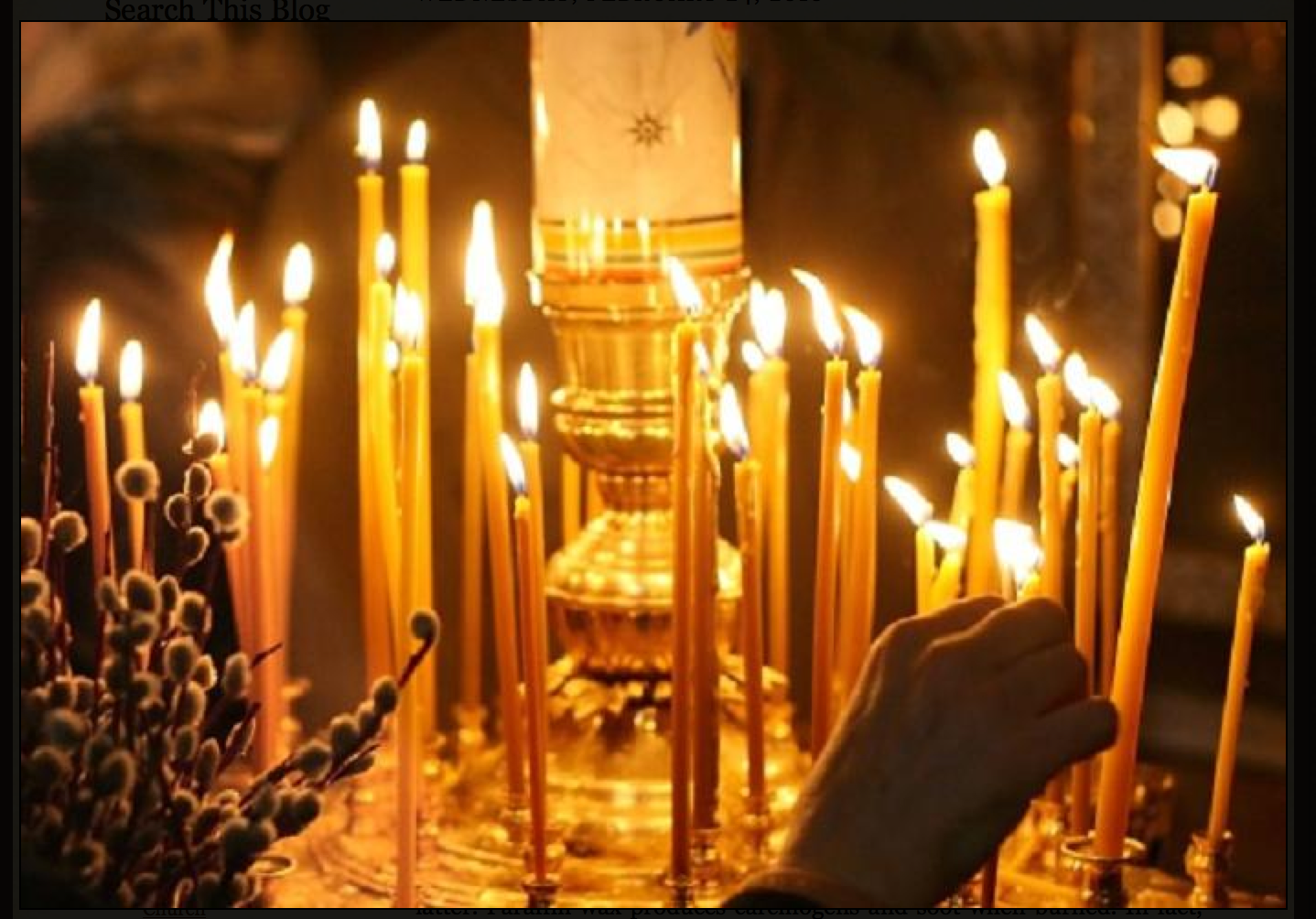
St. Paisios on Prayer and Lighting Candles

Lighting candles (source)

St. Paisios the Athonite on Prayer and Lighting Candles

Elder, when we light a candle, do we say that it is for some purpose?

-You are lighting it, but where do you send it? Aren't you sending it somewhere?

With a candle, we are seeking something from God. When you light it, you should say: "For those who are suffering in body and soul", "for those who have the greatest need", and among them is also the living and the reposed.

Do you know how much rest the departed sense when we light a candle for them? Thus, one has spiritual communication with the living and with the reposed.

The candle, in a few words, is an antenna*** that brings us into communication with God, with the sick, with the departed, etc.

***Note: St. Paisios is cleverly showing the resemblance of the words "κεράκι" and "κεραία" ("Candle" and "antenna") in Greek.

  
Through the prayers of our Holy Fathers, Lord Jesus Christ our God, have mercy on us and save us! Amen!
Tuesday, September 8, 2020

"I am praying to God to place you in Paradise."

An Orthodox Monk at Prayer (source)
  
They asked an Abbess:
"What are you doing here, locked up in the Monastery for so many years?"

She replied: "I am praying to God to place you in Paradise."
(source)
  
Through the prayers of our Holy Fathers, Lord Jesus Christ our God, have mercy on us and save us! Amen!

Tuesday, August 11, 2020

"The virus is not a blow to the Church, but is a blow to the selfishness and arrogance of man."

Archbishop Irenaeus (Athanasiades) of Crete (source)
  
"The coronavirus pandemic has revealed how small man is, and has overthrown his apparent omnipotence. I would like to see the positives throughout this whole trial: the need to re-assess the value of the human person, to seek again for true communion with others, to thirst heartily for what we were deprived of and continue to be deprived of during this period, and to turn our hands towards Heaven in prayer, with a prayer of the heart. I would say that the virus is not a blow to the Church, but is a blow to the selfishness and arrogance of man."
-Archbishop Irenaeus of Crete
  
(source)
  
Through the prayers of our Holy Fathers, Lord Jesus Christ our God, have mercy on us and save us! Amen!

Friday, July 31, 2020

Homily on the Holy Maccabees by Metropolitan Avgoustinos Kantiotes

Icon of the Holy Maccabees with their Mother St. Solomone, and their teacher Eleazar (source)
  
Homily on the Holy Maccabees by Metropolitan Avgoustinos Kantiotes: "Our Faith is True"
We will speak, my beloved, on the Holy Maccabees. They are a star cluster of nine stars, one being their teacher Eleazar, the second was their mother Solomone, and the other seven are her distinguished children of this large family.

These heroes lived in the 2nd century before Christ, during the reign of the King of Syria and Judea of one of the successors of Alexander the Great, Antiochos the Epiphanes (175-163BC). This man, a fanatical idolater, had endless hatred of the Jews, who were the only ones who believed in the true God. He tried with his whole being to uproot from their hearts their faith which had been given to them by Moses. And he slaughtered, slaughtering like a wild beast, more wild than a tiger or a lion. A beast might eat three or four people, but can't eat more. He, however, slaughtered 80,000 Jews, and blood poured through the streets of Jerusalem like a river. And in order to put an end to their religion, he organized an idol-worshiping feast. In the center of the city, he placed a great and large altar, and there sacrificed sheep and goats and bulls and rams, like the Jews would do typically, but--in order to corrupt them--he also sacrificed pigs, hundreds of pigs, to the gods of the idols. And in order to defile the Jews and to strike their religious consciences, he forced them to consume the meat. We must know that the Jews never ate pork. To this day, if you go to a Jewish home, they never eat pork. I won't go into the reasons that they do it, but in any case they continue to keep this.

The Jews fast. Do we? We also need to fast. And here I will make an aside. Are you a Christian, are you Orthodox? I'm not sure. If you were Orthodox, if you firmly believed in our Orthodoxy, you must keep the fasts. Which fasts? You should fast on Wednesday and Friday: Wednesday because on that day was our Lord Jesus Christ betrayed, and Friday, because on that day He was crucified. If you were Orthodox, you would fast during holy and Great Lent, and the other fasting periods, including January 5th, the day before Theophany, August 29th, the day of the Beheading of the Forerunner, and the Exaltation of the Precious Cross.

Do Christians fast today? Unfortunately, this holy practice seems to be going by the wayside. You can break whatever you wish, and you see people even breaking the fast on Holy Friday. During fasting periods, the meat markets are full and the restaurants at night dish out tons of meat. We [Greeks] have become among the largest meat-eaters in the Balkans. We even buy and ship in meat from Bulgaria and Serbia. All of this eating of meat is very serious for our health as well.

So the Jews therefore fasted, and to mock their fasting, Antiochos forced them to eat pork that had been sacrificed to the idols. First, he called the teacher Eleazar, who was an honorable priest. He told him: "I am 90 years old. Until now I have kept the fast according to the divine law, and I cannot even begin to think about abandoning our holy tradition..." He was seized by the soldiers of Antiochos, bound, and thrown into the fine. Thus, he gave up his soul to God.

After this, one by one he called the seven brothers, the Maccabees. He hold them: "Take pity on your youth." He told the first: "I will give you honor, glories, respect." "Keep your honors, I will remain in the home of my fathers/ I will never taste pork sacrificed to the idols..." Thus, the first said not. The same occurred with the second, the third, the fourth, the fifth, the sixth and the seventh. And after they all denied, each began their terrible martyrdom, which one shudders to even think about. Open the Old Testament to the end and turn to the book of Fourth Maccabees (5-12). Don't just read magazines and newspapers. If you are a Christian, read the holy Scriptures. You will say, I don't have time, or I'm tired...Good try!

Let me make another aside. I tell you to fast, but you don't fast. I tell you to read the Holy Scriptures, but you don't read them. The one you don't do, neither do you do the other. What Christian are you, can you tell me? I tell you to pray, but you don't pray. I tell you to confess, but you don't confess. I tell you to commune, but you don't commune. I tell you to go to church, but you don't go. You only go to church when you're invited to a sacrament [i.e. a baptism or a wedding]. Many go for a memorial service. But this is a sin. Because every church every Sunday is a memorial service. What memorial?  Not of our father or our mother. Every Sunday, we serve a memorial for the Lord. And if you go to the memorial of your father or mother, even more so should you go to the memorial of our Lord Jesus Christ. What does faith cost you? To the martyrs it cost terrible pains and death.

The Maccabees therefore said no, and began their martyrdom. A martyrdom that makes man shudder to read it, as is described in the Holy Scriptures. They put a trident between their eyes. Another they cut off his right hand. Another they cut off the left with a saw. Another they cut off his fingers. Another, they pulled off his nails. Another they raked his flesh with iron nails. Another they skinned him alive, like the butcher skins an animal... But it was as if nothing to them! They remained steadfast.

And in front of all of this, in the presence of the martyrdom of the seven children, who was there, I ask? Their mother, St. Solomone. O, what a mother! She was not at all like some mothers today who would say: "Eat, my child, a little meat, it's nothing..." Today, many mothers are only thinking of their children's bodies, their flesh, in other words. Above the body, they don't see anything else. St. Solomone was a unique mother, a historic mother, a rare example throughout the ages. "No, my children!" she said, "Do not pollute our religion, do not loose the crown of glory!" And their mother prepared them, her seven children, for a terrible martyrdom. It was their faith in God, and this faith showed her to be a heroine, a unique and grand and lady of a woman. How did she find the strength to support all her children to be sacrificed? Don't you think that she felt pain? Of course she felt pain. As her children were being martyred, and she saw them one by one being put to death in the most terrible manner, she suffered. She was pained for each separately, and for them all together. Her pain was greatly multiplied. Mothers, when their children get sick with a fever, they entreat God for the fever to flee from their children and to come to them instead. If, therefore, each child of St. Solomone was martyred once, then she was pained for each, and it was as if she was martyred seven times, multiplied by seven. And, having endured steadfastly and unshaken throughout this trial, in the end, she herself fell into the fire (IV Maccabees 17:1). Thus, they were all burned and became a sacrifice for the love of God, martyrs before Christ.

This, my brethren, in a few words, is the martyrdom of the seven Maccabee children, of their mother Solomone, and their teacher Eleazar. What does it teach us?

One lesson comes forth today. Our faith is not a myth. It is living and wondrous. We have the most true religion, the only truth in the world. Because of this, the Prophets prophesied and gave their lives, including the Maccabees in the Old Testament, and because of this, the Apostles and Martyrs were sacrificed in the New Testament, and because of this, the Fathers and the Teachers of the Church lived in asceticism, and preached theology, and confessed the faith.

Let us as well honor and imitate their struggles out of love, that we might, together with them, become partakers in the glory of the Kingdom of God, to Whom be glory and might unto the ages of ages. Amen.
(+) Bishop Avgoustinos
(Delivered in the Church of the Holy Trinity, Ptolmaidos, on Sunday August 2nd, 1987)
(source)
  
The Holy Maccabee Martyrs (source)  
Through the prayers of our Holy Fathers, Lord Jesus Christ our God, have mercy in us and save us! Amen!

Saturday, May 9, 2020

Elder Symeon on Healing and God's Providence

Christ is risen! Truly He is risen!
Christ healing the Paralytic (source)
   
"The sacrament of the Anointing of the Sick is for the healing of our illnesses. If we are not healed, we don't need to be healed. This is why we were not healed. If you comprehend this lack of healing, you already healed. You know already that an illness, which lingers and does not leave, is precious.

"Whatever needs to go, God will remove. Whatever doesn't need to stay, God removes, whether it is an illness or a demonic influence. And for whatever things that continue on and hurt us, we should pray to God. We should pray multiple times, again and again we should pray, not only for deliverance from our soul's illnesses and the demonic influences, but also for deliverance from bodily illnesses, as well.

"Let us pray to God for everything again and again. Not because God needs to hear our prayers repetitiously, but because we need to demonstrate by our seeking of Him, our faith. For modern man such lessons are learned from repetition.

"If you pray again and again and you will need to do this, and God does not answer your prayer or remove your illnesses, realize this: either you have not shown as much faith as He wants and expects from you, or the illness should not go because it is necessary for you.

"If you understand your illness from God's perspective, then, when it remains, you will feel twice healed. If He heals you, you are healed once. If the illness lingers, you will feel healed twice. Both when the time comes to be healed from your illness and at the right time your soul will experience healing also. When this occurs your inner person will be healed, this is the person who suffers from illness, from the leprosy of sin.

"The same goes for all mental illness and whatever else hurts us.

"If man sees all his issues within the providence of God, he will feel such a relief, as if all his problems are solved.

"Because in God all is resolved!"
-Elder Symeon Kragiopoulos (+2015),
Excerpt from the Book: Are You in Pain? Looking deeply into the mystery of pain
(source)
 
Christ is risen from the dead, by death, trampling down upon death, and to those in the tombs, He has granted life!
Truly, the Lord is risen!

Tuesday, April 7, 2020

Bishop Alexis of Bethesda on the Current Crisis

An ascetic in private prayer for the world (source)
  
3/25/2020 - "Some Thoughts on the Crisis and the Call of the Corona Virus"
by Bishop Alexis of Bethesda (OCA)
The Bishops of the Holy Orthodox Church love their flocks and ever strive to lead them to well-watered and rich pastures. They care for them, body and soul. In so doing, they are following their Master Christ who not only “cast out unclean spirits,” but also healed “all manner of sickness and all manner of disease among the people.” (Matthew 10:1). In the Gospels, we see that Christ sometimes treated the soul first and the body second; at other times, the body first and the soul second. In the presence of the highly contagious and potentially lethal corona virus, the Bishops’ concern is for the bodily welfare of their people lest even a single lamb be needlessly lost. This is not from a lack of faith or dearth of compassion, but from unwavering faith and an abundance of compassion.
  
Compassion is expressed in giving each sinner the time necessary to repent, for in “hell there is no repentance” (Saint John of Damascus). Faith is expressed in the certainty that our Lord can always be in our midst, that He can always be by our side, for the Psalmist proclaims, “If I ascend up into heaven, Thou art there: if I make my bed in hell, behold, Thou art there” (Psalm 139:8). And if I am shut up in my home away from Church, “Thou art there,” even as the Lord was there for and with the Apostle Peter when he was locked up in prison, so He is there for and with us.
  
During times of uncertainty, anxiety, and fear, we naturally turn to God for refuge, peace, and courage. This is our birthright as baptized Orthodox Christians. Indeed, “God is our refuge and strength, a very present help in trouble. Therefore, we will not fear though the earth should change” (Psalm 46:1-2). With the corona virus, the earth has changed, but we do not fear. The faithful are isolated in their homes, physically separated from loved ones, and even unable to gather together as the Church for the celebration of the mysteries, but we do not fear, for God remains our refuge, our peace, and source of courage. Many are understandably discouraged and downcast about the decision to ban eucharistic gatherings in Church for the sake of the health of our neighbor whom we love. Yet, God remains our refuge, our peace, and our source of courage. Within this trial, this threat to so much that we hold so very dear, there is a call that is given and a promise that beckons. But to hear that call and see the fulfilment of that promise, we need to approach our Savior as His faithful children have always approached Him, not with self-righteous indignation or self-pitying despondency, but with humble, patient hope.
  
The call is to prayer of the heart. The promise is the purifying and illumining grace of the Holy Spirit. In the emphasis on more frequent communion over the past forty years, we might be tempted to neglect the necessary ongoing moment-to-moment inner communion with Christ by prayer, that talking with Him and walking with Him that characterized most of the lives of the Apostles before and after the institution of the Mystical Supper. Many of our greatest saints were deprived of Holy Communion for periods of time that for us would be unbearable to contemplate, but that for them were periods of continued growth from glory to glory, because they were never without Holy Communion with Christ through prayer. Prayer is not easy; it requires concentration, dedication, and love, but through the gates of prayer, we can touch Christ, Christ can touch us, and we can be healed. It is imperative for us all to learn to serve Liturgy at the Altar of the heart and the time is now at hand.
  
During this crisis of the corona virus, we are given the opportunity to become men and women of deep prayer. We are given the occasion to “enter into our closet, and when we have shut the door, pray to our Father which is in secret” (Matthew 6:6), offering Him our repentance, our gratitude, and our love. We can come to understand that “prayer is a safe fortress, a sheltered harbor, a protector of the virtues, a destroyer of passions. It brings vigor to the soul, purifies the mind, gives rest to those who suffer, consoles those who mourn. Prayer is converse with God, contemplation of the invisible, the angelic mode of life, a stimulus towards the divine, the assurance of things longed for, ‘making real the things for which we hope’” (Theodore, the Great Ascetic, Century 1:61).  As Saint Sophrony of Essex puts it, “prayer is infinite creation, far superior to any form of art or science. Through prayer we enter into communion with Him that was before all worlds…Prayer is delight for the Spirit.” (On Prayer, 9).
  
The Elder Aimlianos whose love for the Divine Liturgy was incomparable once said, “It is pointless to go to Church, unnecessary to attend Liturgy, and useless to commune, when I am not constantly praying” (The Church at Prayer, 14).  A spiritual life of private prayer is not a monastic prerogative, but the common inheritance of all the faithful. The saintly elder further notes, “The harm that befalls us if we do not know how to pray is incalculable. Incalculable? It is the only harm from which we suffer. There is no catastrophe that can compare to it. If all the stars and all the planets were to collide with one another, and the universe to shatter into smithereens, the damage would be far less than that which befalls us if we don’t know how to pray”  (The Church at Prayer, 10). The threat of the virus perhaps can open our eyes to the threat of not knowing how to pray to God in our heart. The threat of the virus may turn into a blessing that can enliven our spiritual life.
  
The temptation before us is to deafen our ears to this call to active, arduous prayer to approach God and instead to prefer more passive, easier ways for God to approach us. Now is not the time to try to devise any means to avoid this prayer in private, but it is the time to heed the call to prayer in our heart to the God of our heart. There is a rich, inner world beckoning to us, a world where God is all in God. Let’s take the gift of this time to enter into that world.  And if we do so, when we come together for the Divine Liturgy with a yearning magnified by distance apart, that Liturgy will be more radiant and more angelic than anything we have known before. Through a deep life of inner prayer, we will indeed learn how to set aside all earthly cares, that we may receive the King of all.
(source)
  
The Holy Prophet Jonah (source)
  
4/3/2020 - "The Sign of the Prophet Jonah in our days"
by Bishop Alexis of Bethesda (OCA)
“For those with eyes to see and ears to hear,” these days of being in the belly of the whale, physically separated not only from one another, but also from our beloved Churches and places of prayer, we have a rare opportunity for spiritual growth. In this crisis that has overcome the entire inhabited world, we are given the sign of Jonah that calls forth a response from us all. Saint Ephraim the Syrian writes, “the sign of Jonah served the Ninevites in two ways. If they would have rejected it, they would have gone down to Sheol alive like Jonah, but they were raised from the dead like him because they repented.” The sign of Jonah that is given to us in our forced isolation out of love for our neighbor is a call to repentance, a call to change the way we look at the world around us, the world within us, and the world beyond us. As I suggested in an earlier reflection, it is an opportunity to become men and women of deep prayer who have learned to serve the Divine Liturgy on the altar of their hearts.
  
There are many books about how to pray from which believers can learn the art of prayer. There are many prayer books that have morning prayers, evening prayers, services of supplication, and akathists that the faithful can read on a daily basis. There are the Psalms of David that we can chant throughout the day enabling us to pour out our entire heart before God. And of course, there is the Jesus Prayer, “Lord Jesus Christ have mercy on me,” that every God-loving soul can say, again and again and again, so that it falls like a droplet of pure water upon our stony hearts refashioning them into hearts of flesh that can welcome the King of glory. But all these beautiful, holy words will enable us to touch the hem of Christ’s garment and to become more Christlike in the process only if we say them with the proper disposition of the heart, a heart that is humble, a heart that yields, a heart that can effortlessly utter the words of the Most Pure Virgin, “Behold the handmaid of the Lord; be it unto me according to thy word” (Luke 1:38).
  
This Holy Week and Pascha, the Covid-19 pandemic has given the faithful a hard saying. They will be deprived of celebrating these high and holy days in their parishes. They will be deprived of receiving holy communion. Nevertheless, they need not, now or ever, be deprived of Christ, for nothing, neither death nor life, neither things present nor things to come, can ever “separate us from the love of God, which is in Christ Jesus our Lord” (Romans 8:39). It may be tempting to become angry or despondent, but neither of these states will enable us to pray to God or permit God to approach us. Neither of these responses will help us to receive the sign of Jonah given to our generation. What will enable us to pray is a humble acceptance of our condition in which we make peace with this world as it is, a willingness to yield before that which we cannot control, and then even further to give thanks for the fact that our own will, no matter how good and holy it may seem to us, is being cut off by the severe sanctions now in place. This may sound strange to those unfamiliar with our monastic tradition, but truly when the will is cut off, “the holy soul steadily ascends to heaven as upon golden wings” (Saint John of the Ladder) by virtue of holy obedience. In other words, gently, graciously, and gratefully yielding to this situation with humble acceptance will enable us to pray as we have never prayed before.
  
Obedience is not easy. It is “the tomb of the will,” but it is also “the resurrection of humility,” (Saint John of the Ladder), humility, which is “the very raiment of the Godhead” (Saint Isaac the Syrian). In humble obedience, we are following not only the path of the holy fathers of old, we are walking not only in the footsteps of the Apostles who strove to be obedient to every commandment of their beloved Lord, but we are also imitating our Lord Himself, who “as a man, he humbled himself, and became obedient unto death, even the death of the cross” (Phillipians 2:8). But death is never the last word with respect to obedience, the final word is always life, abundant life, life everlasting. “Wherefore God also hath highly exalted him, and given him a name which is above every name:  That at the name of Jesus every knee should bow, of things in heaven, and things in earth, and things under the earth; And that every tongue should confess that Jesus Christ is Lord, to the glory of God the Father” (Phillipians 2:9-11).
  
Let us receive humbly the sign of the Prophet Jonah in a way that leads to the light and life that are ours in Christ Jesus. This Pascha, let’s sanctify our homes and lives in wonderful ways. Let’s humbly do whatever is necessary to make one room in our home into a Church. If we don’t have an oil lamp burning before the icon of the Most Pure Virgin Theotokos, let’s try to acquire one. If we don’t have a hand censer, charcoal, and incense, let’s decide to order them. And then with a humble, but grateful heart, let’s worship the holy Lord Jesus Christ, the only sinless One. Let’s venerate the icons in our homes, let’s light our vigil light, let’s cense our icons, let’s make our prostrations, and let’s make the words of whatever prayers we offer our own. Let’s mean what we say. Let’s trust in the Lord. Saint Isaac the Syrian once wrote, “The prayer of a humble man is like a word spoken from the mouth into an ear.” Let’s speak to God now as his humbled children, for in this time of trial, He will surely “hearken unto the voice of our cry” (Psalm 5:2) and in turn make our peace as a river and our righteousness as the waves of the sea (Isaiah 48:18).
(source)
  
Christ in prayer in the Garden of Gethsemane before His Passion (source)
  
Through the prayers of our Holy Fathers, Lord Jesus Christ our God, have mercy on us and save us! Amen!

Thursday, April 2, 2020

St. Porphyrios: "Vigils are a great thing..."

A faithful Orthodox Christian, praying in vigil at home (source)
  
"Love vigils. Vigils are a great thing. Heaven opens. We speak with God. In our vigils up there***, until midnight, I got a little tired and I would close my eyes. Afterwards, my nous with open, and I experienced prayer until morning. When it would finish, I had such a disposition that I was ready to begin again from the beginning."
-St. Porphyrios of Kavsokalyvia

(source)
  
***Note: St. Porphyrios is referring here to vigils in their small hut on Mount Athos.
  
Through the prayers of our Holy Fathers, Lord Jesus Christ our God, have mercy on and save us! Amen!

St. Porphyrios: "Your house can be a monastery, if you wish..."

An Orthodox Family that gathers in prayer and love at home (source)
  
"Your house can be a monastery, if you wish. There is no difference in this. It is sufficient for you to do what I am saying. It is not the place that makes the Monastery. It is the way of life. Go, pray, and have patience in everything...One can be in Omonia Square***, and there have a concentrated nous like he on Mount Athos. And one can be on Athos, and not have a concentrated nous, like he is in Omonia."
-St. Porphyrios of Kavsokalyvia
  
(source)
  
***Note: Omonia Square in Athens is a busy and distracted square in Athens. Compare to Times Square in New York City. Of note, St. Porphyrios worked for many years in the Polyclinic of Athens right here, and proves that one can become a Saint anywhere.
  
Through the prayers of our Holy Fathers, Lord Jesus Christ our God, have mercy on us and save us! Amen!

Thursday, March 26, 2020

An Athonite Vigil for the Whole World

The Holy Belt of the Theotokos, Vatopedi Monastery, Mount Athos (source)
  
This Friday evening, March 27th, 2020, all the Athonite Fathers of the Holy Mountain will be serving vigil in prayer for the whole world, that we might be delivered from the threat of Coronavirus. Besides fervent prayer to Christ and His Mother, they will also be seeking the intercessions of St. Charalampos the Hieromartyr, who has throughout history helped deliver many from plagues and infectious diseases (similar to how many are praying to St. Nikephoros the Leper  along with the Holy Unmercenaries for help during this pandemic). May we pray for the Athonite Fathers out of thanksgiving for their unending prayer for the whole world, and may we join them, according to our ability, entreating our Lord to deliver us all.
 
Through the prayers of our Holy Fathers, Lord Jesus Christ our God, have mercy on us and save us! Amen!

Friday, March 20, 2020

Elder Zacharias of Essex on the Coronavirus

The Desert Father in prayer (source)
  
Elder Zacharias of Essex on the Coronavirus
Many people are in confusion and others panic because of the threat of the Coronavirus epidemic that spread in the whole world. I think, however, that this should not happen, for whatever God does with us, He does it out of love. The God of Christians is a good God, a God of mercy and loving kindness, ‘Who loveth mankind’. God created us out of His goodness in order to share His life and even His glory with us. When we fell into sin, He allowed death to enter our life again out of goodness, so that we may not become immortal in our wickedness, but to seek for a way of salvation. Although we have fallen, God has never stopped to provide for us, not only material goods in order to sustain our race, but He also sent prophets and righteous, preparing His way so that He might come and solve our tragedy, and bring eternal salvation through the Cross and Resurrection of His inconceivable love. He came and took upon Himself the curse of sin, and He showed His love to the end: ‘Having loved His own which were in the world, He loved them unto the end’ (John 13:1). All the things that God did when He created us, when He provided goods in order to sustain the world, when He prepared His way for Him to come on earth, when He came Himself in person and wrought our salvation in such an awesome way, all these things He did out of goodness. His goodness is boundless. He saves us and is so longsuffering towards us, waiting until we ‘come to the knowledge of the truth’ (1 Tim. 2:4) and bring true repentance, so that we may be with Him for all eternity. Thus, at every stage of His relationship with man, our God shows only His goodness and mercy, ‘which is better than life’ (Ps. 63:3); goodness is His Nature and He does all things for the benefit and salvation of man.
 
Consequently, when He shall come again to judge the world, will a different God judge it? Will it not be the same good God, the God of mercy and loving kindness, Who loves mankind? Let us be certain that we shall not appear before any other God than Him Who created us and saved us. And so, it is again with the same mercy and love that He will judge us. For this reason, we should neither panic nor waver, for it will be the same God that will receive us in the other life and will judge us with the same kindness and compassion. Some fear that the hour of their end has come. This plague of Coronavirus has also a positive aspect, because we have a few weeks from the moment it will assail us until our end. Therefore, we can dedicate this time to prepare ourselves for our meeting with God, so that our departure may not occur unexpectedly and without preparation, but after we have run through our whole life each time we stand in prayer before God, at times with thanksgiving unto the end for all the things God has done for us and at other times with repentance, seeking the forgiveness of our transgressions. Nothing can harm us with such a God, Who allows all things out of His goodness. We must simply keep thanksgiving unto the end and the humble prayer of repentance for the forgiveness of our sins.
 
As for myself, this plague is helping me. I longed to find again the prayer I had before, with which I can run through my whole life from my birth until now, thanking God for all His benefits ‘whereof I know and whereof I know not’; and also, with which I can run through my whole life repenting for all my sins and transgressions. It is wonderful to be able to run through your life praying, bringing all things before God with persistence in prayer. Then you feel that your life is redeemed. This is why this situation is truly helping me. I am not panicking but ‘I will be sorry for my sin’ (Ps. 38:18).
 
We must see the goodness of God in all the things that are happening now. The Holy Fathers did see His loving kindness. A similar epidemic occurred in the 4th century in the Egyptian desert, which harvested more than a third of the monks, and the Fathers were saying with great inspiration that, ‘God is harvesting souls of saints for His Kingdom,’ and they did not waver. The Lord Himself speaks in the Gospel about the last days, about the trials and afflictions which the world will go through before His Second Coming. However, we discern neither morbid sadness nor despair in His words. The Lord Who prayed in the garden of Gethsemane with a sweat of blood for the salvation of the whole world, says that when we see the terrible things that precede His Second Coming, we should lift up our heads with inspiration, for our redemption draws nigh (cf. Luke 21:28). Some tell me, ‘May God extend His helping hand.’ But this is precisely the hand of God. He desires and works our salvation ‘at sundry times and in divers manners’ (Heb. 1:1): ‘My Father worketh hitherto, and I work’ (John 5:17). This virus may be a means that God uses in order to bring many to themselves and to repentance, and to harvest many ready souls for His eternal Kingdom. Therefore, for those who surrender and entrust themselves to the Providence of God all will contribute for their good: ‘All things work together for good to them that love God’ (Rom. 8:28).
 
Thus, there is no room for morbid dismay. Neither should we resist the measures that the government is taking in order to diminish the spreading of the afflictions we see in the lives of so many people. It is wrong to go against the authorities. We should do whatever the Government says, because they are not asking for us to deny our faith, they are only asking us to take a few measures for the common wellfare of all people, so that this trial may pass, and this is not at all unreasonable. Some people take it too confessionally, they raise flags and play the martyrs and the confessors. For us there is no doubt: we shall show pure submission to the orders of the Government. It is unfair to disobey the Government since, when we fall ill, it is to their hospitals that we run and they are the ones who undertake all the expenses and our care.
 
This is the ethos of Christ that God showed in His life on earth and this is the apostolic commandment that we have received: ‘...be subject to principalities and powers, obey magistrates, be ready to every good work, speak evil of no man, be no brawlers, but gentle, shewing all meekness unto all men’ (cf. Tit. 3: 1-2); and ‘Submit yourselves to every ordinance of man for the Lord’s sake: whether it be to the king, as supreme...’ (see 1 Pet. 2:13-17). If we do not obey our governors who are not asking much, how will we obey God, Who gives us a divine law, which is far more sublime than any human law? If we keep the law of God we are above human laws, as the apologists of the 2nd century said during the Roman Empire which was persecuting the Christians. It is surprising to see in the country where we live, in the United Kingdom, that the footballers show such understanding and discernment so as to be the first to withdraw from their activities with docility towards the indications of the Government to take prophylactic measures. It would be sad for us, people of faith, to fail reaching the measure of the footballers and showing the same docility towards the authorities for which our Church prays.
 
If they ask us to stop our Church services, let us simply surrender and bless the Providence of God. Besides, this reminds us of an old tradition that the Fathers had in Palestine: in Great Lent, on the Sunday of Cheese fare, after the mutual forgiveness, they would go out in the desert for forty days without Liturgy; they would only continue in fasting and prayer so as to prepare and return on Palm Sunday to celebrate in a godly way the Passion and the Resurrection of the Lord. And so, our present circumstances force us to live again that which existed of old in the bosom of the Church. That is to say, they force us to live a more hesychastic life, with more prayer, which will however make up for the lack of the Divine Liturgy and will prepare us to celebrate with greater desire and inspiration the Passion and Resurrection of the Lord Jesus. Thus, we will turn this plague into a triumph of hesychasm. In any case, whatever God allows in our life is out of His goodness for the well-being of man, for He never wants His creature to be harmed in any way.
Certainly, if we will be deprived of the Divine Liturgy for a longer period of time, we can endure it. What do we receive in the Liturgy? We partake of the Body and Blood of Christ, which are filled with His grace. This is a great honour and benefit for us, but we also receive the grace of God in many other ways. When we practice hesychastic prayer, we abide in the Presence of God with the mind in the heart calling upon the holy Name of Christ. The Divine Name brings us the grace of Christ because it is inseparable from His Person and leads us into His Presence. This Presence of Christ which is purifying, cleanses us from our transgressions and sins, it renews and illumines our heart so that the image of God our Saviour, Christ, may be formed therein.
 
If we shall not have Easter in the Church, let us remember that every contact with Christ is Easter. We receive grace in the Divine Liturgy because the Lord Jesus is present in it, He performs the sacrament and He is the One imparted to the faithful. However, when we invoke His Name, we enter the same Presence of Christ and receive the same grace. Therefore, if we are deprived of the Liturgy, we always have His Name, we are not deprived of the Lord. Moreover, we also have His word, especially His Gospel. If His word dwells continually in our heart, if we study it and pray it, if it becomes our language with which we speak to God as He spoke to us, then we shall have again the grace of the Lord. For His words are words of eternal life (John 6:68), and the same mystery is performed, we receive His grace and are sanctified.
 
Furthermore, each time we show kindness to our brethren the Lord is well-pleased, He considers that we did it in His Name and He rewards us. We show kindness to our brethren and the Lord rewards us with His grace. This is another way in which we can live in the Presence of the Lord. We can have the grace of the Lord through fasting, alms giving and every good deed. So, if we are forced to avoid gathering in Church, we can also be united in spirit in these holy virtues which are known within the Body of Christ, the holy Church, and which preserve the unity of the faithful with Christ and with the other members of His Body. All the things we do for God is a Liturgy, for they minister unto our salvation. The Liturgy is the great event of the life of the Church, wherein the faithful have the possibility to exchange their little life with the boundless life of God. However, the power of this event depends on the preparation we perform before, through all the things we have mentioned, through prayer, good deeds, fasting, love for neighbour, repentance.
 
Therefore, my dear brethren, it is not necessary to make heroic confessions against the Government for the prophylactic measures that it takes for the good of all people. Neither should we despair, but only wisely machinate ways so as not to lose our living communication with the Person of Christ. Nothing can harm us, we must simply be patient for a certain period of time and God will see our patience, take away every obstacle, every temptation and we shall again see the dawn of joyful days, and we shall celebrate our common hope and love that we have in Christ Jesus.
  
Through the prayers of our Holy Fathers, Lord Jesus Christ our God, have mercy on us and save us! Amen!

Thursday, March 12, 2020

St. Gregory Palamas: "For He is the jubilation of the righteous, the joy of the upright, the gladness of the humble..."

St. Gregory Palamas (source)
  
“Prayer changes from entreaty to thanksgiving, and meditation on the divine truths of faith fills the heart with a sense of jubilation and unimpeachable hope. This hope is a foretaste of future blessings, of which the soul even now receives direct experience, and so it comes to know in part the surpassing richness of God’s bounty, in accordance with the Psalmist’s words, ‘Taste and know that the Lord is bountiful’ (Ps. 34:8). For He is the jubilation of the righteous, the joy of the upright, the gladness of the humble, and the solace of those who grieve because of Him.”
–St. Gregory Palamas, The Philokalia Vol. 4

(source)
  
Through the prayers of our Holy Fathers, Lord Jesus Christ our God, have mercy on us and save us! Amen!

Tuesday, February 4, 2020

Selected quotes from Sts. Barsanouphios and John

Jesus Christ the Son of God the Savior (source)
  
"Having God, fear nothing, but cast all of your care upon Him, and He will take care of you. Believe undoubtingly, and God will help you according to His mercy."
  
"Don't be deceived regarding the knowledge of what will be after your death: what you sow here, you will reap there. After leaving here, no one can make progress. Here is the work, there the reward; here the struggle, there the crowns."
  

"No one ever accomplishes good by means of evil, because they are themselves conquered by the evil. On the contrary, evil is corrected by good."

"In times of affliction, unceasingly call out to the merciful God in prayer. The unceasing invocation of the name of God in prayer is a treatment for the soul which kills not only the passions, but even their very operation. As a doctor finds the necessary medicine, and it works in such a way that the sick person does not understand, in just the same way the name of God, when you call upon it, kills all the passions, although we don't know how this happens."

"Here is the luminous teaching of our Savior: Thy will be done. (Matt. 6:10). Whoever sincerely pronounces this prayer leaves his own will and puts all things in the will of God. But the will inspired by the demons consists in self-justification and trust in ourselves, and then they easily subject a man who receives this sort of thought."
-Sts. Barsanouphios and John
(
source)
  
Sts. Barsanouphios and John (source)
  
Through the prayers of our Holy Fathers, Lord Jesus Christ our God, have mercy on us and save us! Amen!

Thursday, January 30, 2020

St. Nikodemos: "Let Jesus be your breath..."

Jesus Christ the Son of God the Savior of the world (source)
  
"Let Jesus be the sweetest meditation of your heart.
Let Jesus be the nourishment of your tongue.
Let Jesus be your breath.
And never get your fill of calling upon Jesus!"
-St. Nikodemos of the Holy Mountain

(source)
  
Through the prayers of our Holy Fathers, Lord Jesus Christ our God, have mercy on us and save us! Amen!

Tuesday, January 28, 2020

St. Ephraim the Syrian: "Virtues are formed by prayer..."

St. Ephraim the Syrian (source)
  
"Virtues are formed by prayer. Prayer preserves temperance. Prayer suppresses anger. Prayer prevents emotions of pride and envy. Prayer draws into the soul the Holy Spirit, and raises man to Heaven.”
-St. Ephraim the Syrian

(source)
  
Through the prayers of our Holy Fathers, Lord Jesus Christ our God, have mercy on us and save us! Amen!

Friday, January 17, 2020

St. Sophrony of Essex on the Building of Churches

Cathedral of Christ the Savior in Moscow (source)
  
"It is difficult to built a church today. It will rouse up all the demons," said St. Sophrony of Essex, as he proceeded to tell a parable that he had heard in Russia: "Once, someone went to Hell, but there, he wanted a church so he could pray. Despite his sinfulness, he loved God and wanted to pray. He began to measure the space to lay the foundations. A demon asked him what he was doing, and he replied: 'I want to build a holy church in order to pray.' The demon responded that it was impossible to build a church in Hell, and he tried to hinder him. He then called other demons, and they were unable as well. They mentioned it to their leader, and then they gathered many demons and threw him out of Hell so that he might not build the church." And St. Sophrony continued: "Thus, we as well build churches in order to transform Hell into Paradise, and even if we are unsuccessful with this, we will succeed in the devil not accepting us in Hell."
(source)
  
Through the prayers of our Holy Fathers, Lord Jesus Christ our God, have mercy on us and save us! Amen!

St. Theophan the Recluse on Humility, Fear of God, Repentance and Love

Jesus Christ the Son of God the Savior (source)
  
God is everywhere. And when He finds a heart that isn’t opposed to Him, a humble heart, He enters it and fills it with joy. The joy of the heart which has God within it is so great that it attaches itself to Him and never wants to separate from Him. The Lord doesn’t approach a heart puffed up with egotism. Such a heart is deeply sad, shrivels and slowly dissolves. It wallows in ignorance, sorrow and darkness.
 
No matter how sinful we are, as soon as we turn to the Lord in repentance and desire, the door of the heart opens to Him. Our inner uncleanness drains out and makes way for purity, virtue, the Savior Himself, the great Visitor of the soul, the Bringer of joy, light and mercy. This blessed state is a gift of God, not something we ourselves have achieved. And since it’s a gift, we ought, in humility, to thank the giver.
 
Humility! The basis of all the virtues and the fundamental requirement for spiritual fruition. Do you have humility? You have God, You have everything! You don’t have humility? You lose everything! So retain the feeling of humility in your heart. Our natural and normal relationship with God requires a heart which is impassioned, contrite and entirely devoted to Him, a heart which cries mystically at every moment: ‘Lord, You know all things; save me!’ If we surrender ourselves into His hands, He’ll do with and for us whatever’s best for our salvation, according to His wise and holy will.
 
The task of unceasing prayer is not only for hesychasts, but also for all Christians, whom the Lord enjoins, through His holy apostle, to ‘Pray without ceasing’. There are various stages of prayer before it becomes unceasing. They’re all the work of God, Who watches over the hearts of all of us to the same degree, be we monastics or lay people. And whenever a heart, whoever’s it may be, turns to Him, He approaches it with love and unites with it.
 
Icon of the Great New Ascetic Russian Fathers: Sts. Theophan the Recluse, Tikhon of Zadonsk, and Ignatios Branchaninov (source)
   
How fear of God is retained in the heart.
The fear of God is begotten from faith and is a requirement for spiritual progress. When it settles in the heart, then, like a good householder, it puts everything to rights. Do we have fear of God? If so, let us thank the Lord Who gave it to us and let us guard it as we would a valuable treasure. And if we don’t have it, let us do whatever we can to acquire it, in the knowledge that the reason for our lack is our own inattention and negligence.
 
From fear of God are begotten repentance, contrition, and lamentation over our sins. May this feeling, the precursor of salvation, never be absent from our heart. If we’re to retain the fear of God within us, we must keep in mind the whole time the remembrance of death and of the judgment, along with a sense of the presence of the Lord: God is always with us and in us, seeing, listening and knowing everything, even our most hidden thoughts.
 
When this triad- fear of God, remembrance of death and a sense of the divine presence- settles within us, then prayer surges from the heart spontaneously- then the hope of salvation becomes firm. It’s not so much the fear of God that preserves it; more the memory of the dread judgment. This remembrance, however, mustn’t produce dejection, but should rather inspire combativeness and repentance.
 
Let us try to remain unsullied by the filth of sin. And if, on occasion, we do sin, let us purify ourselves through confession. Trusting in God’s mercy in this way, we won’t lose heart. In any case, our Judge is merciful and loves us. He won’t be looking for something to condemn us for. On the contrary, he’ll try to find even the slightest reason to exonerate us.
 
God and the conscience.
If you decide, with all your heart, to always submit to the Lord and to please Him alone through the whole of your way of life, and if, in every predicament and need you turn to Him alone, in faith and devotion, then you can be sure that everything in your life, things spiritual and secular, will turn out successfully. It’s a great thing to realize that, without God, there’s nothing you can do about anything and, having come to understand this, to then have recourse to His assistance in full confidence. The conscience must direct the soul properly and inform it infallibly as to what is the right thing in every situation. It can’t do this, however, if it’s not pure and illumined.
 
So let’s clean it through ascetic efforts and observation of the Lord’s commandments, which liberate the heart from the passions, and let’s illumine it with the divine light by studying the Gospel. From there we’ll draw wise rules by which we will guide our conscience in the holy will of God.
  
St. Theophan the Recluse (source)
 
Through the prayers of our Holy Fathers, Lord Jesus Christ our God, have mercy on us and save us! Amen!

Tuesday, January 14, 2020

St. Porphyrios: "There is no such thing as distances for Christians..."

St. Porphyrios of Kavsokalyvia (source)
  
"There is no such thing as distances for Christians," said St. Porphyrios.
(source)
  
"I want to speak with people, even if they come out of curiosity. I want to listen to them, for as they are speaking, I see into their souls, and as I am praying, the Grace of God affects them."
(source)
  
"Say the Jesus Prayer continuously, and you will not find the Gate of Paradise closed. I greet you all with love in the Lord."
(source)
  
-Excerpts from a recent Greek book on St. Porphyrios: "It is difficult to live with a Saint"

Through the prayers of our Holy Fathers, Lord Jesus Christ our God, have mercy on us and save us! Amen!

St. Porphyrios: "You should speak to your soul..."

St. Ephraim the Syrian prostrating in prayer (source)
  
"You should speak to your soul," said St. Porphyrios once.
"And how should I speak to her?" He was asked by a spiritual child.
"With prayer! We direct it to God, but the words return again to our soul and influence her. God knows what we are thinking. We have need to learn them, however."
(source)
  
Through the prayers of our Holy Fathers, Lord Jesus Christ our God, have mercy on us and save us! Amen!

Tuesday, December 3, 2019

St. Porphyrios bringing young people to the Church

St. Porphyrios of Kavsokalyvia (source)
  
One Sunday morning, St. Porphyrios of Kavsokalyvia was traveling together with a well-known older villager towards the village church. On the road, they met a group of six or seven young people traveling in the opposite direction. The villager asked the young people:
"Where are you going guys?"
What did they respond? "To the coffee shop."
Then, the villager (who was very austere) told them:
"Aren't you ashamed, today on Sunday morning, of going to the coffee shop instead of church? Are you Christians?"
And he pelted them with a zealous sermon. The young people cursed at him and continued on their way. St. Porphyrios was silent. The villager, full of excitement and self-assurance, said to the Elder:
"Did I speak well to those brats?"
And St. Porphyrios responded: "No, you did not speak well..."
The villager, who was expecting congratulations, was embittered by the response of the Saint. They reached the church and St. Porphyrios went to the Holy Altar and the villager took a seat in church.
Not even a half hour passed, until all of the young people of that group entered the church! The villager was rubbing his hands out of satisfaction. As soon as the Divine Liturgy was finished, St. Porphyrios left the Holy Altar, and the villager hastened to meet him and pointed to the young people, saying to him:
"You said that I didn't speak well? They thought of my words and came to church."
And St. Porphyrios smiled, and explained to him that they came because he was praying silently for them and not that they were moved by the villager's stance....
In reality, prayer moves and transforms other people, not our words... Because of this we should not [primarily] speak to others about God, but speak to God about others.
(source)

Through the prayers of our Holy Fathers, Lord Jesus Christ our God, have mercy on us and save us! Amen!

Friday, November 22, 2019

St. Iakovos of Evia on Temptations and Marriage

St. Iakovos of Evia (source)
  
"Do not hope in the world. Be careful in your social interactions. Never listen to what the world is telling you. Temptations come; we're human. The devil has many feet, altars and traps. Everything will be faced during marriage with love, meekness and patience. Have faith in God and prayer and everything will go according to the will of God."
-St. Iakovos of Evia

(source)
 
Through the prayers of our Holy Fathers, Lord Jesus Christ our God, have mercy on us and save us! Amen!