Showing posts with label Athens. Show all posts

Tuesday, January 7, 2020

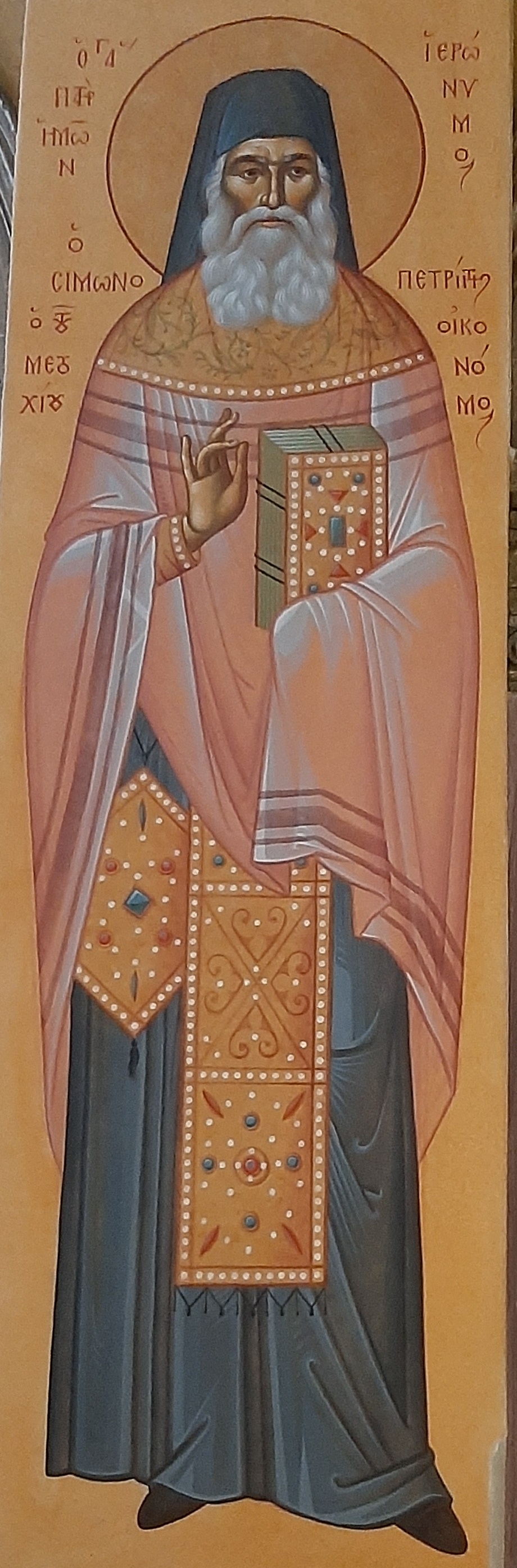
Selected hymns to St. Ieronymos of Simonopetra

St. Ieronymos of Simonopetra (Source)
  
Selected hymns to St. Ieronymos of Simonopetra,
translated from the Greek service in his honor, written by Metropolitan Joel of Edessa
(note, hymns not set to match the meter)
  
Apolytikion in the Plagal of the First Tone.
The adornment of the Athonite Fathers, and the root of the Sacred Cenobium of Simonopetra, you have been shown to be in these latter days, O Ieronymos, for you have risen as a light in the city of Athens, illumining the multitudes of the faithful, and do not cease to intercede on behalf of us who hymn you.

St. Ieronymos of Simonopetra (source)
  
Kontakion in the Plagal of the Fourth Tone.
As a most exact imitator of the Venerable Saints, and Abbot of Athos, Ieronymos, the faithful praise you from their heart, for you lived in Athens like an angel, and guided many to the Savior. Therefore, we cry out to you: Rejoice, O all-famed Father.
   
St. Ieronymos of Simonopetra (source)
     
Oikos.
You shown as an angel on Athos, O Ieronymos, in the latter days, O God-bearer, as the Abbot of the Monastery of our Blessed and Venerable Father Simon, and you illumined both monastics and those in the world, who cry out to you:
Rejoice, the vessel of many graces,
Rejoice, member of the choir of the Saints.
Rejoice, boast of the Cenobium of Simon,
Rejoice, hymn of praise of the whole of Athos.
Rejoice, for you humbled yourself for Christ,
Rejoice, for you conquered the unseen enemy.
Rejoice, for you shown forth amidst the Athenians,
Rejoice, for manfully you ruled over your passions.
Rejoice, the boast of unmarried men,
Rejoice, boldness for chaste married people.
Rejoice, staff for many living in the world,
Rejoice, healing of the afflictions of mortals.
Rejoice, O all-famed Father.
  
Illumination from the official manuscript of the Patriarchal Proclamation of the Canonization of St. Ieronymos of Simonopetra, depicting the Saint confessing pilgrims at Holy Ascension (source)


Synaxarion
On the 9th of this month (May), the memory of our Venerable Father Ieronymos of Simonopetra, who reposed in Athens on the 6th of January, and as this day is the glorious feast of Theophany, his feast is transferred to this day [the translation of his Holy Relics.]
  
St. Ieronymos of Simonopetra (source)
     
Verses
O Ieronymos, remember all of those,
Who praise your memory in hymns.
  
Illumination from the official manuscript of the Patriarchal Proclamation of the Canonization of St. Ieronymos of Simonopetra, depicting The Dormition of St. Ieronymos of Simonopetra (source)
  
This, our new Venerable Father Ieronymos of Simonopetra, was born in 1871 in Reis-Dere of Asia Minor to pious parents  Nicholas and Maria, who raised him, teaching him the law of the Lord. At a young age, he entered the cenobium of Simonopetra on Mount Athos, and was discerned there for his humility, his prayer and his obedience. He was made Abbot of this uplifted Monastery of the Venerable Simon. 

St. Ieronymos of Simonopetra (source)

He was known for his asceticism and his virtue of discernment. When he later resigned the Abbacy, he was placed at the Metochion of the Divine Ascension in Vyrona of Athens. He was a man of prayer, worship and almsgiving. He showed signs of the prophetic charism. He reposed in the Lord venerably in Athens on December 24th of the Old Calendar, and January 6th of the New Calendar in 1957. He showed forth many signs of holiness, both to those asleep and awake. His feast is translated to the 9th of May, which was the day of the translation of his Holy Relics.

St. Ieronymos of Simonopetra (Source)
  
Megalynarion
Rejoice, you who underscored asceticism, the pride of Athos, the joy of the Athenians. Rejoice, the radiant vessel of the Venerable, and the Abbot of the Monastery of Simon, O Ieronymos.
(source)
  
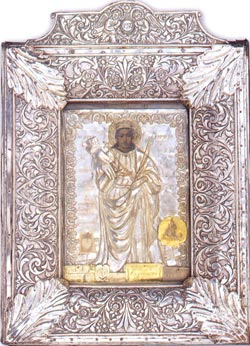
The Sacred Icon and Relics of St. Ieronymos of Simonopetra, treasured by the Holy Dependency of the Ascension of Christ, Vyrona, Athens, where the Saint served for many years and later reposed (source)
  
Through the prayers of our Holy Fathers, Lord Jesus Christ our God, have mercy on us and save us! Amen!

Tuesday, October 22, 2019

The Athonite Metochi (Dependency) of the Ascension of Christ, Vyrona, Attica

The Metochi of Simonopetra of the Ascension of Christ, Vyrona, as it appeared in 1924 (source)
  
An Athonite Metochi (Dependency) in Athens: The Metochi of Simonopetra of the Ascension of Christ, Vyrona, Attica
by Monk Moses the Athonite (+2014)
The only Athonite dependency in the capital city of Athens today is the beautiful church of the Ascension of Christ in the area of Pankratiou-Vyrona, a metochi of Simonopetra Monastery of Mount Athos. Holy Ascension was the most important spiritual centers. Regarding this, Monk Moses writes in his book of "Ieronymos of Simonopetra, the Elder of Holy Ascension", in Athens in 1982:

"Holy Ascension and Prophet Elisseus (Elisha) are the two deepest and refreshing centers in the center of Athens at that time (1931). There were constantly gathered Kollyvades, lovers of monasticism and Athonites, lovers of vigils, services and feasts, and humble lovers of virtue. Holy Ascension was frequented by St. Nicholas Planas, St. Savas of Kalymnos, Elder Philotheos Zervakos, St. Amphilochios Makris, Athanasios of Neratziotissas, and many Athonite Fathers, who show all together that holiness lives even to our days.

The history of the Church of Holy Ascension begins at the begin of our century. The Elder Levite Ignatios, the uncle of the learned Monk Neilos of Simonopetra, with his will "unto memory of his parents and his" left that piece of property to the Monastery. Then, the area around was totally uninhabited and a lot of time was needed before a road could be built to reach the area.
  
Blessed Elder Ieronymos of Simonopetra, who was the caretaker and spiritual father of the Metochi in Vyrona for 26 years (source)
  
From then on, good Athonite Spiritual Fathers and stewards of the Metochi, with vigils, holy confessions and sermons made this place known to the thirsting Athenians. The forebearers of Elder Ieronymos, Panaretos and John, spiritual fathers from Katounakia, Methodios of Kavsokalyvia, the great cave-dweller Panaretos and Matthew the spiritual father left many examples of the spiritual life for their church-goers..."

Elder Ieronymos's time served as a major period in the history of the Metochi with his virtuous life, his sermons, holy confessions, his almsgiving and his many gifts.

To this day, daily services occur there according to the Athonite typikon, and there are frequent vigils. The Metochi serves as a good witness of Mount Athos to the capital city. Besides those who live there, who love it greatly, there are many lovers of Mount Athos who travel their to participate in services.
(source)
  
The Holy Icon and Relics of St. Ieronymos of Simonopetra (Source)
  
Announcement at the Recent Canonization of Elder Ieronymos of Simonopetra
With feelings of holy contrition and joy, it was made known the recent canonical decision of our Sacred Ecumenical Patriarchate regarding the numbering among the Saints of our Orthodox Church of our greatly-honored St. Ieronymos of Simonopetra, who was known as "Elder of the Ascension."
His holy memory is ordained to be served yearly on May 9th [the day of the Uncovering of his Relics, as the Saint reposed on the great feast of Theophany].
The Holy Dependency has the special blessing to have the grave of the Saint, along with a portion of his Holy Relics.
According to the request of the faithful, they are put forward for veneration daily from:
6-11:30am,
and 5:30-8:30pm.
Services during the winter hours take place according to the following schedule:
Daily Orthros and Divine Liturgy 6-8:30am.
Sunday Liturgies and Feast Days 6-10:30am.
Daily Vespers 5:30pm-6:30pm.
Vigils 8pm-1am, such as upcoming for the feast of St. Nicholas on December 6th and December 13th (with the service of St. Ieronymos).
(source)
  
The Metochi of the Ascension as it appears today (Source)
     
Through the prayers of our Holy Fathers, Lord Jesus Christ our God, have mercy on us and save us! Amen!

Thursday, November 29, 2018

Holy Transfiguration Monastery, Milesi, Attica, built by St. Porphyrios

Monastery of the Transfiguration of Christ built by St. Porphyrios in Milesi, Attica (source)
  
Brief history of the Monastery
The Holy Monastery of the Transfiguration of Christ (celebrated August 6th), though technically a dependency, was founded by St. Porphyrios of Kavsokalyvia in Milesi, Attica, geographically between Oropos and Malakassa in the northern suburbs of Athens.

From one's first step as a pilgrim in the area, one encounters the sanctity of the place and the total silence. One is struck by the astonishing Holy Church and the beautiful green surroundings.

A multitude of people hasten to the holy Hesychasterion which honors the memory of the Venerable Porphyrios on December 2nd, the day of his repose, in order to partake in the grace of this Saintly Elder.

The building of the monastery began in 1981, and the building occurred in stages, with the Katholikon being founded in 1990, with permission of Archbishop Seraphim of Athens. The walls of the church were completed in the spring of 1992, a few months after the repose of St. Porphyrios.
  
St. Porphyrios on his bed at the monastery near the end of his life (source)
  
After St. Porphyrios retired from the chaplaincy at the Polyclinic of Athens (St. Gerasimos near Omonoia), he lived a few years at St. Nicholas in Kalisia, Penteli, but ultimately moved to Milesi of Malakassa, where he continued to live humbly, struggling with his illnesses.

That place became a true pilgrimage. The Elder chose obscurity, but God glorified him. "The world," as he wrote later, "took me from my good place, and everyone calls me a saint. However, I feel that I am the greatest sinner of the world...and I entreat all those who knew me to pray for me."
  
The interior of the Katholikon (source
  
His last breath was humble and far from the world in Kavsokalyvia of Mount Athos, on December 2nd, 1991, as he had been informed by God that his end was near. His repose was known only by his fellow cell-mates in Kavsokalyvia, and so his funeral was humble in the Garden of the Panagia.
(source)
  
Information and Hours of Operation
Ιερόν Γυναικείον Ησυχαστήριον Αγίου Πορφυρίου Μεταμορφώσεως του Σωτήρος
Milesi, Malakasa, Greece 190 11
+30 2295 098261
  
The Monastery is open from sunrise to sunset, except for being closed from 2-4PM daily. Vespers is served daily at either 5PM (winter hours) or 6PM (summer hours). Orthros and Divine Liturgy are served every Sunday from 7-10AM.
(source)
  
Pilgrims to the monastery can venerate the bed and personal articles of St. Porphyrios, a place full of grace (source)
  
Through the prayers of our Holy Fathers, Lord Jesus Christ our God, have mercy on us and save us! Amen!

Monday, March 16, 2015

The Relic of St. Barbara to visit Athens

St. Barbara the Great Martyr (source)
  
Apostoliki Diakonia, the publishing and missionary arm of the Church of Greece, celebrates its 80th year of existence. Their headquarters are in Athens, and are centered around the shrine of St. Barbara in the Athens, where they treasure a wondrous icon and a portion of the Holy Relics of the Saint (see here for more details about that pilgrimage).
  
The wondrous icon of St. Barbara, treasured by the Holy Pilgrimage of Apostoliki Diakonia in Athens (source)
  
According to this new announcement, in honor of the anniversary of their founding, Apostoliki Diakonia will host the large portion of the Relics of St. Barbara (currently treasured in the Church of San Martino in Venice) at the church of St. Barbara from May 10th to May 24th. They will be greeted by the Archbishop of Greece Ieronymos on May 10th. The body of the Saint was transferred from Constantinople to Venice in 1003 AD.

If you are able to, I encourage you to take advantage of the opportunity to venerate a great martyr, Christian example, and wonderworker of the Church, who has helped so many through her intercessions.
     
The Church of San Martino in Venice (source)
  
Through the prayers of our Holy Fathers, Lord Jesus Christ our God, have mercy on us and save us! Amen!

Thursday, March 5, 2015

The wondrous Icon of Panagia "Ierosolymitissa" ("Lady of Jerusalem") to visit Greece

The wondrous icon of Panagia "Ierosolymitissa" ("Lady of Jerusalem"), enthroned in the Holy Tomb of the Theotokos, Gethsemane (source)
  
The wondrous icon of the Theotokos "Ierosolymitissa" ("Lady of Jerusalem"), a wonderworking and acheiropoietos icon (i.e. not made by human hands), of which St. Paisios of Mount Athos commented that it most-closely resembled the appearance of the Theotokos as she appeared to him, will soon visit Greece.

The icon, which rests in the All-sacred Tomb of the Theotokos at Gethsemane, will be taken on March 24th, 2015 by the Exarch of the All-holy Tomb of Christ in Greece, Archimandrite Damianos, to the Holy Church of the Anargyioi (Holy Unmercenaries) in the Plaka, Athens. It will remain there throughout the rest of Great Lent, Holy Week and through Friday of Bright Week (The Feast of the Life-giving Spring of the Theotokos.

Throughout this time (with the exception of the Sunday and Monday of Pascha), the Holy Church of the Unmercenaries will remain open from 7AM (on days when there is Divine Liturgy) or 8AM (on days when there is not Divine Liturgy), until 7PM for veneration. This site lists the schedule of services, including nearly daily supplication services to the Theotokos. This is a great blessing for the people of Greece, and I recommend any who are able to go and venerate this truly wondrous icon (only otherwise available with a pilgrimage to the Holy Land) and ask for Panagia's help.
  
Panagia "Ierosolymitissa" ("Lady of Jerusalem"), detail (source)
  
Most-holy Theotokos, save us!

Tuesday, April 29, 2014

The Holy Monastery of St. Panteleimon, Kokkinara, and St. Matrona of Moscow

Christ is risen! Truly He is risen!
 The Holy Monastery of St. Panteleimon, Kokkinara, Penteli (source)
   
The Holy Monastery of St. Panteleimon, Kokkinara, Penteli (amateur translations below)
The Holy Monastery of the glorious Great Martyr and Healer St. Panteleimon is found on the north limit of a property of the founding and historic Holy Monastery of the Bodiless Powers, named "Petraki", which is in the area of Kokkinara of Mount Penteli, a short distance below the peak of St. Panteleimon (870 meters).

This property (6,000 stremata then), as it appears in the Great Codex of the Kyriarchou of the Holy Monastery, on March 29th 1837, was purchased (as also its whole property and not from gifts) from those who were then living there in asceticism for their benefit and relief, because after the armed and glorious revolution of [Greece] in 1821, the Holy Monastery was stripped of many of its properties, which it gave to the then newly-organized State, for the creation of a series of common works.

Within the scope of the Monastery were built the Hospital Artetaion, Evangelismos, N.I.M.T.S., The Children's Hospital, etc. the Academy, the National Library, Alse Sygrou, and Pangratiou, City Schools and Parks, the Workhouse of the Merciful for the Poor, the Marasleios, the Gennadeios, and other important buildings of the capital.

 Mosaic of St. Panteleimon outside the Katholikon of the Monastery (source)
 
In the property of Kokkinara, therefore, there was a church in the name of the Holy Great Martyr Panteleimon, along with some cells, which were used at times by some Fathers visiting the Holy Metochion (Dependency).

It should be noted that the area was inhabited from before then. The Abbot of the Monastery of Penteli, Kyrillos Degleres, in his Apomnemoneumata mentions that "he (the founder of the Monastery of Penteli, St. Timothy, before 1578) went from end to end of the Penteli mountain, finding there various learned clerics inhabiting it, wherever on the mountain there was water and a church, including St. George Kokkinara, St. John, St. Panteleimon, St. Luke, St. Chrysostom, St. Nicholas in the Cave, the Taxiarchs in Kamari, the Frankish church at Boyiate, and St. Peter. All of these places were on Penteli Mountain, and those who dwelt on it were marked with gardens, for in all these areas there was water." (V. D. Kampouroglou, History of Athens) These learned monks, with their meager belongings and their small synodeies, descended from their cells to the Monastery which was founded by St. Timothy for Liturgy, and eventually joined the Monastery of Penteli.

 The Monastery of St. Panteleimon, Kokkinara, Penteli (source)
 
This property was noted in the codex of Petraki Monastery as "a marble-bearing area". Truly, the whole Mount of Penteli was known since antiquity as the most ancient marble mine, of an exceptional amount, the white marble of with which was used to construct many ancient and newer monuments of Athens, such as the Parthenon, the Erectheion, the Propylaia, the Theseion, the Temple of the Olympian Dios, the Academy of Athens, the Palace of Otto (today the Greek Parliment), etc. Three were the most significant mines that functioned on Mount Penteli: "Raikou", "Maltezou", and "Kokkinara".

With the State law (669/77), however, the uses of the southwest mountain for mining marble were  stopped. Because of this, however, Mount Penteli was then proclaimed a "place of special natural beauty". The recent fires and the former mining of marble had destroyed much of its natural beauty, despite the activities to fill the area with material from the construction of the Attica highway.

Elder Simon Arvanitis (+1989) (source)
 
In 1965, the ever-memorable Elder Simon Arvanitis, the then Priest of the parish Church of St. Barbara Lykovrysi of the Metropolis of Attica, requested and received the Dependency of St. Panteleimon with the desire to render it a workshop for souls. And this granting of rest through the Mystery of Repentance on the one hand was through the asceticism of the Fathers that had come to dwell with him, and on the other hand, for the many multitudes of pilgrims and spiritual children of his. He built a new Church, cells, supporting areas and reception spaces for the many pilgrims, who began to flood the Dependency.

In the place of the ailing Elder Simon (+1988) was placed in 1984 Archimandrite Joseph Manettas, and in 2007, at the decision of the Abbot's Council of the Monastery, the Metochiares (Head of the Dependency) was made Archimandrite Onouphrios Kostopoulos.

 Bishop and Abbot of Petraki Monastery Iakovos (right) and Elder Onouphrios (left), with many pilgrims, at a recent feast of St. Panteleimon at the Dependency (source)
   
Today, at the Holy Dependency of St. Panteleimon, there are nine monks and hieromonks living under Elder Onouphrios, taking up the struggle to remodel and beautify it. Besides the former Fathers of the Dependency, since 2007 six new Fathers have been tonsured by [now Bishop] Iakovos Mpizaourte, taking up the "good fight".

Outside of the Katholikon of the Dependency are Chapels dedicated to St. Nikodemos of the Holy Mountain, the Transfiguration of the Savior, the Holy Apostles (where are preserved many holy relics of various Saints), of St. Nektarios, and of the Akathist hymn.
(source)
 
 Wondrous icon of St. Matrona of Moscow, treasured by the Monastery of St. Panteleimon, Kokkinara, Penteli, with many offerings and flowers given out of love and thanks to the Saint (source)
 
In the Holy Dependency is preserved a portion of the Precious Relic, and also the Holy and Honored Icon of the Wonderworking St. Matrona of Russia, the Blind, through which countless miracles have taken place, and which have become a wonderworking spring of healings for all those who hasten to venerate the Saint with reverence. Witnesses to the incomparable miracles that are worked are the countless offerings placed upon the icon by the faithful, along with the many fragrant flowers which they offer in her honor, as she had great love for them during her earthly life.

Her memory is honored with a festal holy Vigil from May 1st - 2nd every year, during which a multitude of the Faithful approach this place to honor this great and wonderworking Saint of our Church.
(source)
 
 The Holy Relic of St. Matrona of Moscow, treasured by the Monastery of St. Panteleimon, Kokkinara, Penteli (source)
 
The Holy Dependency of St. Panteleimon, Kokkinara, Penteli,
in the Holy Archdiocese of Athens,
under the Holy Monastery of the Bodiless Powers, Petraki

Visiting Hours
The Holy Dependency receives pious pilgrims daily according to the following schedule:
-Tuesday to Friday - 9AM-1PM, and 4PM until the end of the service.
-Saturday - 9AM-1PM, and 4-6:30PM (winter hours) vs. 5-7:30PM (summer hours)
-Sunday - 7AM-1PM, and 4-6:30PM (winter hours) vs. 5-7:30PM (summer hours)
-Every Monday the Dependency is closed to pilgrims.
(source)

 The icon of St. Panteleimon the Great Martyr in the monastery that bears his name, Kokkinara (source)
   
Schedule of Services
Daily services (Vespers, Orthros and Divine Liturgy) are celebrated in the evening (beginning at 8:30PM).

The morning of the following day there is no Divine Liturgy, and the gate of the Monastery opens at 9AM.

Saturday and Sunday Vespers are celebrated at 6PM, and the Sunday Divine Liturgy is at 7AM. And the rest confirms the canonical program of the Holy Dependency.
(source)
 
 The Holy Monastery of St. Panteleimon, Kokkinara, Penteli (source)
 
Christ is risen from the dead, by dead, trampling down upon death, and to those in the tombs, He has granted life! Truly the Lord is risen!