Tuesday, November 13, 2012

Excerpt from the encomium on St. John Chrysostom by St. Nikodemos of the Holy Mountain

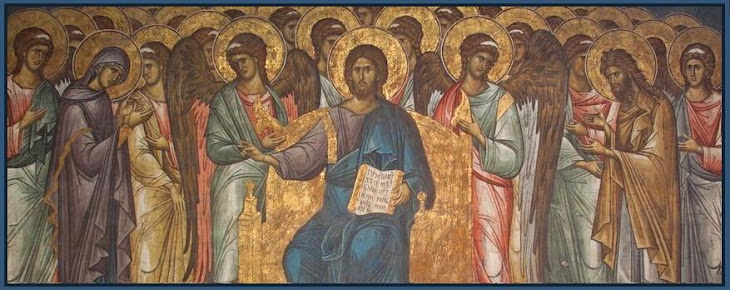
St. John Chrysostom, Patriarch of Constantinople (source)
 
Excerpt from the encomium on St. John Chrysostom by St. Nikodemos of the Holy Mountain (amateur translation)
By which sacred and holy name shall I call Chrysostom, and which would be befitting of him? Shall I call him an angel? It befits him, because he truly lived a life equal to the angels, full of self-denials, vigils, prayers and ascesis surpassing nature...

Before his death, for three whole months he ate no human food, being as one without flesh and immaterial until he was perfected. He was sustained on that incorruptible food which was given to him by and was eaten by the holy Apostles, as all of his biographers bear witness...

Shall we call him an Apostle? Of course, for he, with his all-golden teaching netted many nations and brought them to the faith of Christ. Because of this, the divine Apostles appeared to him visibly, as one equal to the Apostles, many times, Peter and John twice...Paul in Constantinope, when he spoke mystical words in his ears, explaining his epistles, and when he sensed that he kissed him, he gave thanks to him, having explained them to him...

Shall we call him a Prophet? Yes, and he inherited this name through his works...He foretold to St. Epiphanios how he would not return to his throne...and when he was exiled, passing by Nicea, he prophesied to the father of king Maurikios, who was without child, that he would have a son who later would become king, and that he had sinned, and that he needed further repentance and that he wished him to be made worthy of salvation, as these things occurred in reality.

Shall we call him a Martyr? Yes, and this befits him, because beyond his infirmities of edema and fevers and constant stomach aches which the thrice-blessed one suffered, he suffered many tortures and martyrdoms during his exiles...

Because of this, at the time of his death, the holy martyrs Vasiliskos and the hieromartyr Loukianos came to him, and called him to come to the heavens to dwell with them as a fellow athlete.

Shall we name him a Hierarch, and teacher of the Church? Yes, with certainty! Do you wish to understand? Listen to the awesome vision which the bishop of Aravissou Adelphios saw. He, having much love to learn of the holy Chrysostom what glory he was made worthy to receive from God in heaven, and entreated the Lord continuously for this, entered into ecstasy, and beheld a handsome man who showed him in radiant place all the fathers and teachers, but he did not see John among them! And he was saddened in heart. Then he heard the voice of an angel tell him: “Do you speak of John of repentance? O man, where he is in body, none can behold! For he is standing there where is the throne of the Master.” The same vision St. Mark the ascetic saw.

Shall we call him a rhetor and explainer of the Divine Scriptures? ...The rhetor Livanios, before Julian the apostate, later an enemy of the faith, preached that John surpassed the rhetoric and wisdom of Demosthenes and Plato.

In the explaining of the Scriptures, furthermore, he surpassed even the great Theologian Gregory. King Theodosios the great entreated Gregory the Theologian to explain the holy Gospel, which he attempted. Entreating God to inform him if his explanation was correct, he heard a voice from God tell him: “Neither to you, nor to anyone else has been given this gift, except to John of Antioch”. St. Proklos the Patriarch said: “Thus am I before the blessed John, exactly as a spring before the sea, and a stream before a river.”

Because of this, in every teaching of the Saint, the men who heard him, not being able to withhold their joy, often times clapped their hands below the ambo all together. At one point, when there was a litany in Constantinople, he spoke 18 sermons off-the-cuff on the road from his all-golden mouth, so easy it was for him to preach!

Shall we call Chrysostom a close friend of the Theotokos? Yes, and even this he was made worthy of! When the Saint was sick outside of Constantinople, where he was praying at midnight, he beheld the Lady Theotokos while awake, who came to him with an incomparable light, and having around her a multitude of men and women, and said the following with a most-graceful voice: “John, healer of my Son and God, you fought the fight of ascesis well, you shepherded the rational sheep well, but be be manly furthermore, and be strong. For behold the road of martyrdom awaits you, and the athletic stadium through various pains and temptations, that your trial might be revealed on earth and in heaven...Let your soul rejoice and be glad, for joy has been laid up for you in the heavens corresponding to your trials.”

Furthermore there is the wondrous vision which St. Cyril of Alexandia saw:
The uncle of the Patriarch of Alexandria Theophilos had St. Chrysostom as his enemy...Once he saw the Lady Theotokos together with St. Chrysostom, speaking together in an all-radiant and most-beautiful place. Beholding them, however, he desired to, and asked to go near them, but the divine Chrysostom rebuked them and hindered him. Then, he heard the Theotokos tell Chrysostom: Forgive him, according to my grace, for he suffered much, was tried on behalf of me, shaming the blasphemer Nestorius, and proclaimed me Theotokos. Out of ignorance, he has a bad perception of you—an acquaintance formed an opinion and revealed it, which he accepted with awareness.

After this vision, St. Cyril became a great friend of Chrysostom, praising him and helping to write on his life.

What else shall we name Chrysostom? Wonderworker? Yes, for very richly was he granted the grace of working wonders, such that all name him: “John the Wonderworker”.

Shall we name him merciful? Of course, for his surpassing compassion for the poor, all name him: “John of Charity”.

Shall we name him a preacher of repentance? And who could deny it? Such strength did his word have that he would pull sinners towards repentance, such that, solely by hearing his teaching to repent, they would change their life!...Rightly therefore, do all name him: “John of Repentance”...

Brethren, the feasts of the saints do not occur other than to gather the Christians in them, to hear of the feats of the Saints that celebrate, and to imitate them also, as much as possible, and thus to receive piety in their soul and correction and precision in life. Thus the all-golden tongue of Chrysostom teaches: “A feast is a sign of good works, a pious soul, and a life of precision.”
   
Through the prayers of our Holy Fathers, Lord Jesus Christ our God, have mercy on us and save us! Amen!

Thursday, November 8, 2012

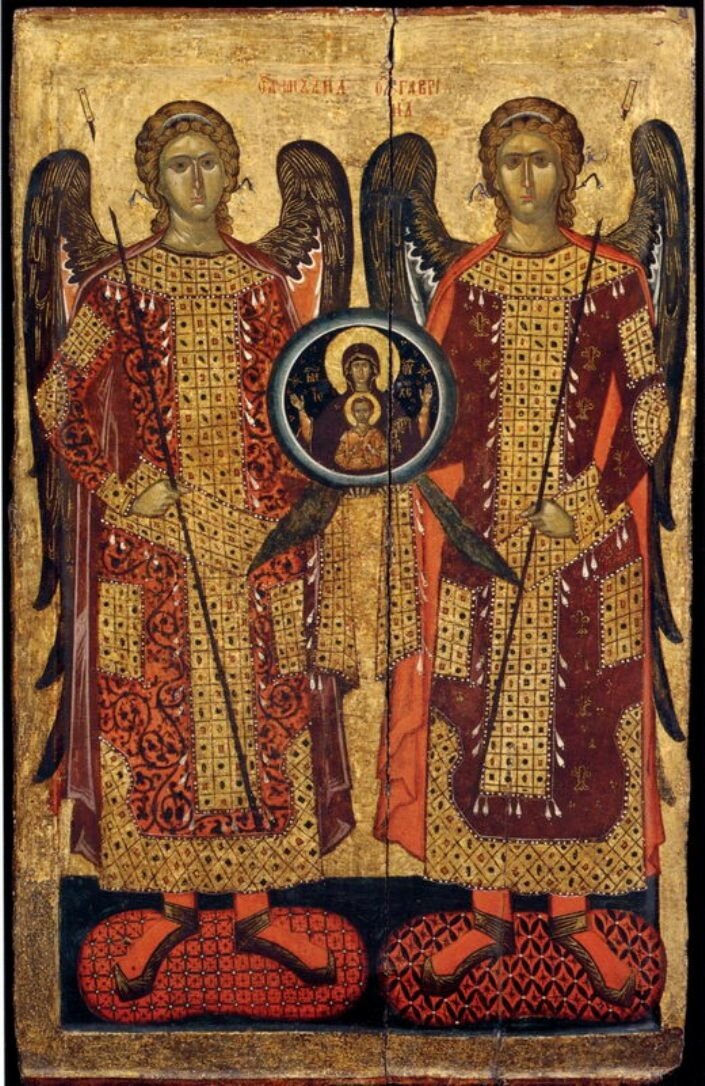
Excerpt from the Homily on the Archangels Michael and Gabriel by St. Nikodemos of the Holy Mountain


The Holy Taxiarchs and Archangels Michael and Gabriel (source)
   
Excerpt from the Homily on the Archangels Michael and Gabriel by St. Nikodemos of the Holy Mountain (amateur translation)
...According to the Theologians, there are two foremost powers and special qualities and idioms of the holy God: the one being Righteousness, also called conferment and judgment, and the other is Goodness, also called faithfulness and compassion and mercy, as David says: “I will sing of Your mercy and judgment, O Lord.” With righteousness God judges and chastens men, when they sin, and do not keep His commandments, and with goodness He again shows mercy and compassion.

Now the Archangel Michel appears as the special Angel of the righteousness of God, for we see him utilized as a servant in order to chasten and to make continent the evil, and to protect those who take refuge in the good. This is clear from the many parts of the divine Scripture, and of course from the death of the first-born of the Egyptians worked by Michael, while the life of the first-born of the Hebrews was preserved.

The Archangel Gabriel appears as a special Angel of the goodness and compassion of God, for we see him utilized as a servant when there must be special compassion and mercy. This we also see many times, and of course from the good news which Gabriel offered to the world, of the great mercy by the coming of Christ.

Three are the special and greatest works which God performed: first, the creation of the noetic world, second, the creation of the sensible world, and third, the incarnate economy of God the Word. And in all three of these, first and foremost He utilizes Michael and Gabriel...

And therefore, Michael and Gabriel are the two brightest eyes of the all-perceiving God, with which He beholds and enlightens all of the visible and invisible world. Michael and Gabriel are the two strongest hands of the All-Governing One, with which He works all on heaven and earth. Michael and Gabriel are the two swiftest and thousand-winged feet of the Lord Who is everywhere present, with which He hastens everywhere and passes through not only the whole world, but even to the bodiless souls of men, even into the darkest abysses. Because of this in one instant you behold them to be found at one end of the earth and at the next instant to be found at the other end, here healing a barren woman, and there seizing one drowning in the abyss.

Michael, the Angel of divine fear; Gabriel, the Angel of divine grace. Michael, the chastening right hand of the Righteous One; Gabriel, the merciful right hand of the Lover-of-Man. Michael, who rests upon the strongest; Gabriel, who speaks from the ineffable. Michael, the stern eye of the Judge; Gabriel, the peaceful gaze of the Foreseer. Michael, the fearful voices and thunder and lightning and trumpets of the descent of God on Mount Sinai; Gabriel, the peaceful dawn, the calm embraces, the gladsome light and soft voice of He Who comes upon an ass [i.e. Christ's humble coming to Jerusalem] proclaiming the descent of God the Word to the womb of Mariam. Michael, the supreme servant of the Old Testament; Gabriel, the chosen servant of the new grace of the Gospel.

Michael had as a purpose the entrance of praxis, for he served the Law, as Paul said that we were under a custodian until Christ, while Gabriel has as a purpose the perfection of theoria, for he served the mystery of Christ, as he was the completion of the Law and the surpassing. Michael was the beginning and Gabriel the end. Michael was the fore-chastening, Gabriel the perfecting. Michael the Alpha and Gabriel the Omega. But they were not against each other or spoke against each other, of course not. But just as there is no praxis without theoria, neither is their theoria without praxis, according to the Fathers, in the same way, there is neither Michael without Gabriel, nor Gabriel without Michael. For as the Law springs the Gospels and the Gospel from the Law, in the same way, in Michael is found Gabriel and in Gabriel is found Michael, and the one and the other are united more than is the soul and the body. Because of this, wherever is Michael there is Gabriel, and wherever is Gabriel there is Michael. The two are always and everywhere inseparable. They are inseparable in Heaven, inseparable in the Old Testament, inseparable in the New. And in working wonders they are inseparable. And if Michael chastens the evil, he chastens towards continence, that they might fear the power and greatness of God and not neglect them due to His great goodness. And if Gabriel again shows them mercy, he does this that they might have hope and not come to despair from their great fear. And the two therefore have the same goal: the salvation of men and the fulfilling of the all-good will of God, as His good Gracious Angels...

But O most-glorious Michael and Gabriel, the sweetest among all the angels and men in reality and names, the Angels of the righteousness and goodness of God, the special servants of the special works of God, the two silver and golden-winged eagles, the two great Arch-soldiers of the life-creating Trinity, who with unflinching eyes behold the uncreated light of the three-sunned Godhead, the two arch-satraps and of the King of kings and Lord of lords, and first consultans and bodily protectors of the God-man Jesus Christ, the archangelic pair and beloved dyad desired-of to the world and by all, the adornment of all the Angels, the boasts of Christians, the excellent and special guides and protectors of the Monastic rank, who imitate your angelic way of life as much as possible: receive this offering which we all who have gathered today offer to doxology of the All-governing God Who loves man in honor of your holy gathering. Accept this as a gift and a smallest sign of thanksgiving for all that you continuously work for each of us, for you care for us, and in many ways save us from every evil. And we entreat you humbly to not abandon us of your fatherly providence, but, O most-sympathetic and most-compassionate, you approach us always and surround us, in order to fill us with holy theoria and spiritual minds, and to deliver us, by virtue of your approach, from all evil and obscene thoughts, and simply, all invisible and visible enemies which tempt us, because with grace like this, they are estranged if and when they approach. For St. Mark the Ascetic says: “When the holy Angels approach us, they fill us with spiritual theoria.” Similarly, Abba Issac says: “When the holy Angels approach you to surround you, all temptations hold back.” And because those who theologize say that to each man is granted one of the Angels in this preset life, you do not neglect, O divine Archangels, to grant to us this from you: first, to drive from our bodies and souls all those dangers which could accompany us externally or internally; and second, in order to compel us always towards the good, enlightening our nous with divine illumination, sweetening our desire and our heats with divine grace; third, to hinder from us the wiles and schemes of the demons; fourth, in order to offer our prayers to God, as the Angel Raphael offered the prayer of Tobit, and as the Angels in the Apocalypse offered the prayers of the Saints; fifth, to ever intercede to God on behalf of us; and sixth, to chasten us in a fatherly manner sometimes, when we stumble, not through vengeance, like the evil demons chasten us, but through correction and chastity, for this gift is granted to us.

And straightaway we entreat you: hearken unto our entreaties, O most-philanthropic Arch-soldiers of God, do not cease with your ineffable intercessions for us to to calm God's indignation, and to overlook, as the All-Compassionate One, all of our sins, whether committed in deed or in word or in thought, with which we embitter Him each day. Yea, we are sinners—we confess this—and have transgressed His holy commandments, but we know no other God but Him. Make us worthy, O Virgins and guardians of virgins, O Archangels, to pass through this life of ours in chastity and virginity, as we have planned, when we wear this Angelic Schema. Be for us protectors and sleepless guardians, for all of us who celebrate your all-holy Synaxis. And throughout this passing life, drive away from us the scandals, and machinations of all visible and invisible enemies, and at the hour of death, stand by us sinners as helpers, from the right and the other from the left, covering us with your golden wings, that our soul not behold the terrible sight of the evil demons. And taking us up, lead us unto the eternal and bright dwelling-place of the heavenly Kingdom, that we might ever glorify with you one Godhead in Trinity, to Whom belong all glory, honor and worship unto the ages of ages. Amen.
   
The Holy Archangels Michael and Gabriel (source)
   
Through the prayers of our Holy Fathers, Lord Jesus Christ our God, have mercy on us and save us! Amen!

Tuesday, November 6, 2012

Homily on the Holy Angels by St. John of Kronstadt

The Holy Archangels and Taxiarchs Michael and Gabriel (http://michaelhdj.files.wordpress.com/2012/03/arch2bangels2bmichael2bgabriel.jpg)
 
"As One Cannot Count the Stars in the Heavens, So Can One Not Count the Holy Angels." 
(Sermon on the Synaxis of Archangel Michael)
by St. John of Kronstadt
"Who maketh his angels spirits; his ministers a flaming fire" (Ps. 104:4).
These are the words of the King and Prophet David. With these words, he said that God created the wisest minds, the fleshless spirits, servants loyal to Him, who burn with eternal love for God, fulfill God's will and abide in the unapproachable light of the Throne of Glory. The Lord created the angels as wise, powerful, eternally holy, purity and within Divine truth. Ponder this, dear brothers and sisters, delve into this with your minds. The Lord divided all the angels into nine orders, or ranks: the thrones, the dominions, principalities, powers, authorities and others; they all obey each other—the lower orders obey the higher orders. In the likeness of the heavenly hierarchy, the Lord established three ranks in the Church Militant: the bishops, priests and deacons, who also obey each other.
   
God created an innumerable multitude of angels. When you came to liturgy this morning, maybe someone among you looked into the sky and saw how many stars fill the heavens. There are so many stars that it seems that the sky is filled with poppy seeds. No mortal can count them all. As one cannot count the stars in the heavens, so can one not count the number of holy angels. One star shines brighter, another less so, but each of them is greater than our world, larger than the Earth, this is known and has been proven.
   
The countless multitude of angels abide in the heavens, in the presence of God, fulfill God's will and eternally glorify God. Some of them are appointed by God to humans, these are our guardian angels who protect people throughout their lives, from baptism until death, keep evil away from them and direct them to all truth and goodness. If a person lives righteously, lives well, he will feel this himself. Think, dear brothers and sisters, how close angels are to us!
   
Today we celebrate the Synaxis of Archangel Michael and the Bodiless Powers. You probably know or have heard of the miracle performed by Archangel Michael. A few impious people had decided to kill Saint Archippus and the destroy the church he built; they channeled a great river towards the church, but Archangel Michael appeared to Archippus, consoled him, split a cliff asunder, and directed the river towards the rocky chasm, so that the water did not flood the church, and the church and Archippus were saved.
   
Angels are not prone to sin, they cannot even think sinful thoughts—their notions and desires are pure. They are imparted with all perfection, they are always wise, always strong, always good. They firmly established themselves in love for God, in holiness and truth and do not fall into sin, only some of them, a third overall, saddened the Lord with their disobedience and could no longer be citizens of the heavens; they were cast down by God. And you, my friends, should emulate the angels loyal to God, and after being citizens of the earthly fatherland, you will become co-citizens with them of the heavenly fatherland. Emulate the angles, especially since you are created in the image of God; this gift is common to angels and men. Honor the angels, my friends, imitate their holiness, their love and devotion to God, and you will be worthy of the blessed live in heaven together with them. Amen.
   
Through the prayers of our Holy Fathers, Lord Jesus Christ our God, have mercy on us and save us! Amen!

Monday, November 5, 2012

A sign at the gathering of the myrrh of St. Demetrios in 2012?

 
About a week after the feast of St. Demetrios the Great Martyr and Myrrhstreamer, the Metropolitan of Thessaloniki, the Clergy and the Faithful hasten to the Saint's Church to gather the Myrrh of the Saint to distribute to the world for the healing and sanctification of all.
 
This was written of this service in November 2011:
"This afternoon, the copy of the icon of Panagia Tricherousa left from the Church of St. Demetrios to return to the Metropolis of Thessaloniki, where it belongs. After the Paraklesis to Panagia followed the "sanctification" [more properly "gathering"] of the Holy Myrrh from the reliquary of the Saint. At the time when Metropolitan Anthimos read the prayers and made supplications to the Saint, I saw with my own eyes, along with everyone else, that the reliquary opened by itself, in order that myrrh might overflow and that the fragrance might reach the second floor of the whole church from the myrrh of our Saint. In reality, it was something which I had not experienced before, and once again I wondered at the power of our faith. May the Saint be protection for all of us"

The following was written of the service in 2012:
"Today, November 4th 2012, in the Church of St. Demetrios, we again had the annual "sanctification" of the Myrrh of the Saint.

With one exception.

This year, the reliquary, despite all the prayers that they read, did not open.

They were forced to open it by hand, and the myrrh was a much lesser amount than it previous years.

There are sources which say that in olden days, the Myrrh from the reliquary of the Saint reached the sea shore. In reality, the people couldn't even gather it all. In 2011, the Saint filled roughly a baptismal font with his Holy Myrrh."
(http://www.proskynitis.blogspot.gr/2012/11/blog-post_8046.html)

Here is another source:
"Yesterday afternoon, God made me worthy to be, for the first time, in the Holy Church of St. Demetrios in Thessaloniki, where they were performing the gathering of the holy myrrh. A multitude of people were there from the whole country, however, the reliquary with the bones of the Saint did not open. Even though the priests and the Archbishop [of Thessaloniki] tried, and even though they continued to chant, in the end, they were unable to open it. Some spoke of a "bad sign", others explained it as a technical problem with the lock on the reliquary. The side portions of the reliquary they were able to open and the priests took the holy myrrh, but the center place where the holy relics of the Saint are found, was not able to be opened. Perhaps St. Demetrios wants to send a message of repentance."
(http://www.agiooros.net/forum/viewtopic.php?f=79&t=17639&sid=ae7a42396f4155c6201ea4dba3e4a10f)
 
I should say that this does not seem to be an official position of the Metropolitan of Thessaloniki. Whether this is something significant or not, I cannot say. But let us take advantage of every opportunity to compel ourselves to repent of our many sins before the All-Merciful God, before it is too late for us to do so.
 
Through the prayers of our Holy Fathers, Lord Jesus Christ our God, have mercy on us and save us! Amen!

Saturday, November 3, 2012

Selected hymns to St. George Karslides

St. George Karslides, the New Righteous Confessor of Drama (+1959) - Commemorated November 4th (source)
   
Idiomelon of the Liti in the Fourth Tone. Glory. (amateur translations below)
He who kept his mind in Hades, and was made worthy of receiving the uncreated light, as an illumined father of the light of Tabor, George, the ascetic of Drama, let us praise, and cry out in faith: you who wisely guided those who hastened to the unsetting moon [of your grace], dissolve from them the darkness of ignorance, through the fire of your ascetical boldness, enlighten our fathers towards the increase of virtue and theosis.

   
Doxastikon of the Aposticha in the Plagal of the Fourth Tone
He who hid a most-healthy heart in a sickly body, and had continuous memory of death, O George, surnamed Karslides, the ever-memorable, let us sweetly praise him with hymns, for he took up the Cross of the Lord upon his shoulders unflinchingly, and passed through the stadium of asceticism, founding the Monastery of His Ascension in Drama, which was shown forth as a workshop of prayer and righteousness. Within her, he completed the struggle well, and from death proceeded towards life to be united with Christ, Who bestows upon the world the great and rich mercy.

St. George Karslides (source)
  
Apolytikion of St. George Karslides the Righteous of Drama
O river of Divine Grace, O God-bearing George, and vessel of miracles of all kinds, we praise him crying out, Ascension, Holy Monastery's Founder, and Drama's protector and shelterer, do not despise those who entreat you, and magnify you, O Righteous Father. Glory to Christ Who glorified you. Glory to Him who sanctified you, Glory to Him who showed forth this new ascetic fruitful.

   
Kontakion in the Plagal of the Fourth Tone
The indomitable sower of virtue, who sowed with piety and love as a plow in the souls [of the faithful], let us hymn in a befitting manner him who founded the Monastery of the Ascension in Drama in the latter days, crying out with proper hymns: Hail, of blessed George.
   
Synaxarion
On the fourth of this month (November), the memory of our righteous and God-bearing father George, surnamed Karslides, the spiritual father of Drama, and founder of the Holy Monastery of the Ascension of Christ.

   
Doxastikon of the Praises in the Plagal of the First Tone
Come, O band who loves the righteous ones, let us praise the Righteous one among confessors, and spirit-bearing teacher of piety, George, the founder of the Monastery of the Ascension, and cry out with joyous souls: he who endured hardship and troubles in humility as an all-radiant lamp in years trying for the ranks of the Orthodox, enlighten my mind to meditate on the law of the Lord, and to confess the name of the Lord in every instance, Who grants to us through your prayers the great mercy.
   
St. George Karslides (source)
   
Through the prayers of our Holy Fathers, Lord Jesus Christ our God, have mercy on us and save us! Amen!

Sunday, October 28, 2012

St. John of Kronstadt on Love


Christ voluntarily approaching the Cross, in His love for humanity (source)
   
Excerpts from the diary of St. John of Kronstadt on Love
Be zealous after love: all things shall pass away, but love shall eternally remain, as God Himself, who is Love.

Love calms and agreeably expands the heart and vivifies it, whilst hatred painfully contracts and disturbs it. Those who hate others torture and tyrannise themselves

What is sweeter than love? And yet there is not much love in us! Wherefore? We love our flesh exceedingly, and with it everything carnal, material and earthly! Let us, therefore, despise the flesh and walk by the spirit, mortifying the works of the flesh by the spirit.

Lord! Thou, Whose love to us infinitely surpasses the love of every father, of every mother, of the tenderest wife, have mercy upon us!

Looking upon the Saviour's cross, contemplate Love, crucified upon it for our salvation; and think, for what blessedness He has saved us, and from what torments He has redeemed us! He has snatched us from the jaws of the beast and has brought us to the Father! O love! O redemption! O terrors of everlasting torments! O indescribable, endless blessedness!

The most abominable enemy [the devil] endeavours to destroy love by love itself: love for God and our neighbour — by love for the world, for its fleeting blessings and its corrupt, impious habits, by carnal love, by the love of riches, of honours, of pleasure, of various amusements. Therefore let us extinguish every love for this world in ourselves, and let us kindle in ourselves, by self-denial, love for God and our neighbour. Every beauty in this world (personal beauty) is only a faint, insignificant shadow of the uncreated beauty, of the unspeakable goodness of God's face; every earthly enjoyment is nothing in comparison to future delights. I pray, Lord, that the faith of Christ may penetrate into the depths of my heart, that Christ's Gospel may penetrate all my thoughts, feelings, words, and deeds, into all my bones and my brains, and not me only, but all men, as the universal truth, the highest wisdom, and the life eternal. " And this is life eternal, that they might know Thee, the only true God, and Jesus Christ, Whom Thou hast sent."[806]

The heart that loves carnal delights is unfaithful to the Lord. "Ye cannot serve God and Mammon."[509]

What is mercy? Mercy is to love our enemies, to bless those who curse us, to do good to those who hate us, who do us harm, who drive us away, to defend those who are persecuted, and so on.

What is the name of our God? Love, Mercy, Compassion, Bountifulness. When you pray, contemplate with the eyes of your heart Love and Mercy standing before you — the Lover of men listening to you.

God is love, and I am an image of God; therefore I ought to be all love. God is the most perfect good, free from the least shadow of evil; I am an image of God; therefore I ought also to be perfectly good, without even a shadow of evil.

Love does not suffer self-justification, does not exalt itself, is not puffed up.

In order to test yourself, whether you love your neighbour in accordance with the Gospel, pay attention to yourself at the time when others offend you, abuse you, mock at you, or do not render you the respect due to you, and which is customary in social intercourse, or when your subordinates err against the rules of the service, and are negligent. If you remain calm on such occasions, are not filled with the spirit of enmity, hatred, impatience — if you continue to love these persons as much as previously, before their offences or negligence, then you do love your neighbour in accordance with the Gospel; but if you become irritable, angry, agitated, then you do not do so. "If ye salute your brethren only, what do ye more than others?"[792]

The purer the heart is, the larger it is, and the more able it is to find room within it for a greater number of beloved ones; whilst the more sinful it is, the more contracted it becomes, and the less number of beloved can it find room for, because it is limited by self-love, and that love is a false one; we love ourselves in objects unworthy of the immortal soul — in silver and gold, in adultery, in drunkenness, and such like.

We stand before the altar of love in the presence of Incarnate Love Itself, but we have no love to each other. How strange it is! And we do not even care about this. But love will not come of itself without our zeal, efforts and activity.

Up till now you have not learned to love your neighbour. You answer men's dislike towards you by dislike on your part. But do the contrary; answer others' dislike by heartfelt goodwill and love; the more dislike you see towards you, the more you should love. Dislike is a malady, and a sick person should be more pitied, should be shown greater care and greater love, exactly because he is ill. Do you not know that the bodiless enemy uses his craftiness against all, infects all with the poison of his hatred? And you, too, are not exempt from his craftiness. Do not serve him, then, the spirit of enmity, but serve the God of love with the utmost zeal. Remember that God the Word died for your brethren.

The Lord is my life, my breath, my strength, my light, peace and joy, my food and drink; what shall I bring to such a Benefactor, or what shall I render unto Him? I will render unto Him, with His help, obedience to His Will, the fulfilment of His commandments. "If ye love Me," says He Himself, "keep My commandments."[1227] I will endeavour to please Him by seeking the Kingdom of God and His righteousness, and by counting earthly blessings as naught in comparison to heavenly ones; I will not let my heart cleave to anything earthly. O, Lord! grant me strength to accomplish this. Strengthen me Thyself by Thy right hand. My Strength, do not forsake me! Grant that I may put my trust in Thee alone, my Nourisher — in Thee, Who hast never forsaken me!
   
Through the prayers of our Holy Fathers, Lord Jesus Christ our God, have mercy on us and save us! Amen!

Thursday, October 25, 2012

Excerpts from two encomiums to St. Demetrios the Great Martyr

St. Demetrios the Great Martyr and Myrrhstreamer (source)
  
Excerpts from two encomiums on St. Demetrios the Great Martyr (amateur translations)
  
"Hail, O fellow-struggling soldier of Christ, O thrice-blessed Demetrios, because you, together with Paul, fought the good fight, you have run the race to its end, you have kept the faith, and you have been crowned worthily by God with the crown of righteousness.
  
Hail, O martyr Demetrios, for though you received wounds on your body which Christ received, you ascended to Him with joy and rejoicing.
  
Hail, O martyr Demetrios, for you became a true imitator of Christ. For us all He accepted the spear from the impious soldier in His spotless side, while you, His pious solider, for His love, accepted the spear in prison from impious soldiers.
  
Sts. George and Demetrios the Great Martyrs and Wonderworkers of Christ, painted by the Fathers of Vatopedi Monastery (source)
 
Hail, O martyr Demetrios, for you have been enriched with angelic grace, and are shown forth as an angel on earth, and a heavenly man, full of glory.
   
Hail, O martyr Demetrios, for you are an initiate of grace and a deliverer of prisoners, and a very speedy physician of various infirmities.
  
Hail, O martyr Demetrios, together with George and Theodore, your fellow strugglers and partakers, the thrice-blessed weapon of our pious rulers, the three-bladed sword against the godless barbarians, the tripartite wall of the royal garden, the three-pronged spear in the heart of the harsh enemies, the thrice-adorned crown of our rulers, the triple light of their path by day and night, the triple weapon of their intimidation and the greatly-beloved, and equal-in-number to the Trinity.

Hail, for you have been made worthy of endless joy, and are a fellow-traveler of pious rulers..."
-St. Neophytos the Priest and Monk and Enclosed
  
St. Demetrios the Great Martyr, and St. Nestor (source)
  
"Therefore in accordance with poetry, even if I had ten tongues, and ten mouths, and if I further had ten hands, I would not even in this manner be able to properly record the wonderworking deeds of the wonderworker Demetrios.
  
It is better, however, to give this word, for the Lord will bring to reality the desire of those who honor Him. And to His Saints that are on the earth, He made them wondrous through all His will in them. How good was he in life and deed, what struggle and what prudence! With a little blood, in return he receives the heavenly kingdom. With temporary pains, he receives endless joy. And with his short life, he receives the blessed and endless life.
  
Let us imitate the fervor of Demetrios, therefore, in the same manner, all of us who have gathered to honor his struggles, and let us celebrate for them in a radiant manner. Let us hasten to theoria and praxis, even if we will not achieve the same glory as he has. It is certainly an exaggeration to say this, but at least it is less. And if we do not even achieve this, because of our great sluggishness, at least, because we sense that we celebrate unworthily for all that God has granted us together with the martyr, and that we celebrate in a godly way, let us not desire further pleasures without understanding that, through them, we will give much more joy to the demons, and we will suffer the same thing as those who are in danger in the port, or who incur incurable illnesses in the hospital.
  
We have God as our fellow-worker in good deeds, through the intercessions of the Theotokos, the heavenly powers, the apostles, and the prophets, and the martyrs, and the ages of saints, along with him whose memory we entreat continuously for our benefit. The world of the Saints rejoices in every manner and in every era and in every age and rank, for they see their multitude is made stronger and continues to increase, as if they understand that the greatly-enlarged portion to the left of God is further dismal.

But, O Demetrios, the adornment and beauty of athletes, I return again to you, and turn my word towards the things above, because I buckle more from my love for you than the others, and I desire much more to breath of you than fragrant ointments, O pious and good-sprung vine from a pious and good-sprung root, which is heavy-laden with the fruits of virtues and struggles, radiant from both, and most-glorious in all, and all-bright lamp of Christians, destruction of the impiety of Maximian, teacher and fellow-soldier of Nestor, and harbinger of struggle and most-strong conqueror of Lyaios, you who depicted the passion of the Master, and were wounded with spears in the side as He was, and for the blood that you shed then pour forth now as a river the most-fragrant and healing myrrh, you who dwell with your spirit in the heavens together with the angels, and are found together with them before the immovable throne of God, and grant to us and to your city your most-martyrical body as an unemptying treasure, the uncountable abyss of uncomparable deeds, and much moreso of wonders, you who rightly broke apart your body on earth, and in heaven are not absent at all, but from above look down and care for your city below, O lover of the city, and lover of man, who speedily brings about the compassion of God, when we are burdened sometimes by the multitude of our sins, may you receive these words and praises that we offer to the radiant memory of your struggles, as Christ, Who sets the contests, received the praises of the children, and though they do not reach your proper honor, however, they are not hindered by our good intentions. Therefore, cast a gaze from heaven, descend for a short time here with us, and behold the love of your city for you. Follow the melodies of those gathered, of your most-holy flock, to partake of the spiritual gathering, together with the hierarch, in your memory. Enlighten all those gathered throughout your church by your unsoiled light-source, and fill the air with the fragrance of your incense, and let every age and rank clap their hands in great joy for your struggles. Earth today imitates heaven, and the radiance laid out in the temple of your all-victorious body reveals fully the radiance of light which was granted to you by God..."
-Symeon the Monk and Philosopher
(source)
  
St. Demetrios the Great Martyr (source)
  
Through the prayers of our Holy Fathers, Lord Jesus Christ our God, have mercy on us and save us! Amen!