Showing posts with label Poverty. Show all posts

Thursday, August 13, 2020

Homily II on the Dormition of the Theotokos by Metropolitan Avgoustinos

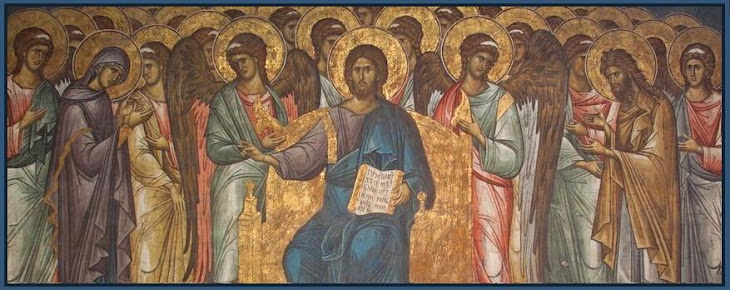
The Dormition of the Theotokos (source)
  
Homily II on the Dormition of the Theotokos by Metropolitan Avgoustinos Kantiotes (+2010): "The Glorious Dormition"

"Your glorious Dormition caused the Heavens to rejoice, along with the ranks of the Angels, while the whole earth is glad..." (Sticheron from the Praises of the Feast of the Dormition of the Theotokos

Panagia was a poor girl from Nazareth, from unassuming parents. She did not have anything that would bespeak of glory. Her nativity passed by unnoticed [by the world]. Humble was her entrance into the world, and humble was her life.

But while her entrance was humble, her exit was glorious, and righteous. For she passed throughout her whole life in purity, humility, and utter obedience to the will of God. Which other woman has a calling that could be reckoned with hers? Every [woman] gives birth to mortals, but she was made worthy to become the Mother of the Son of God. As St. Kosmas Aitolos preached: "There were thousands of thousands of women in the world, but none could be found to fill the side of Adam, except our Lady the Theotokos."

When Panagia gave up her spirit to her Son and God, the earth and Heaven were astonished. The burial of her sacred body had a unique grandeur. The Apostles were brought from the ends of the earth to Gethsemane upon the clouds. Myrrh-bearing women and the faithful people followed. An impious Judean tried to defile the sacred body, but was repulsed...

The earth, with her most chosen children gathered to bury the King's Mother. But what were the honors of the earth before the honors of Heaven? As she ascended to the Kingdom on high, she was given an exceptional reception.

The leaders of the Angels knelt to venerate. The Son received the Mother. And she stood and continues to remain at His right hand, interceding on behalf of sinners.

Humble was her entrance, glorious, all-glorious, was her exit. Are these a phantasy, are these a myth? No, a thousand times, no. Our holy Church confirms this, who ordained that today the Dormition of the Most-Holy Theotokos be celebrated. Today, most-beautiful hymns are chanted, with which the greatness of Panagia is praised, and especially, the event of her repose, of her Dormition.
  
Detail from the icon of the Dormition of the Theotokos (source)
  
Many, my beloved, are the lessons of this feast. We will limit ourselves to one thing only, one lesson, which is contained in the word which the Church uses to characterize the event of the repose of the Virgin. Her repose is not called "death", but "dormition". Why? Please pay attention.

In the language of the Holy Scriptures, death does not mean the disappearance of the human existence. No. At death there is a separation. The soul is separated from the body. The soul leaves towards the things above, towards the heavenly world of the spirits. This path is not fantastical, but is a reality, which is confirmed by the word of God. Then, what does the soul meet, how many tollhouses does it pass through, what censures does it undergo, we do not know in detail. The words of holy people, who saw the souls of the reposed pass towards the verdant meadows of Paradise, or towards the dark places of hell, shine some light on this, but this light is dim, and unable to satisfy people's curiosity. To man, through the Scriptures, it has been revealed that the soul that leaves the body does not die (see Luke 12:20, 16:23-26, 23:42-43). This is a fact and the Christian cannot deny this.

But while the soul of man, which has finished this station of his life, ascends as a spirit to the other world, the body, as physical creation is given away to corruption, to temporary corruption. For from this corrupted body, during the universal Resurrection [at the Last Judgment], there will come a renewed and incorrupt body, which will be united with the soul and they will live together unto the ages of ages.

Yes! The body will be raised. In anticipation of the Resurrection, death according to the Scriptures is called "dormition". The Prophet David "slept" (Acts 13:36). The Protomartyr Stephen "slept" (Acts 7:60). The Apostle Paul, when he speaks of those who have left for the other life, does not say that they "died", but he calls them "those who are sleep". "I do not want you to be ignorant, my brethren, concerning those who are asleep, that you might not grieve as the others do who have no hope." (I Thessalonians 4:13). Our Lord Jesus Himself called death "sleep". When He entered the house of Jairus and saw them weeping for the dead girl, He told them: "Do not weep. She has not died, but is only sleeping." (Luke 8:52, Mark 5:39) And regarding Lazarus He said that he had "fallen asleep" (John 11:11-15). And He proceeded to resurrect him, with such ease as if he were waking him from sleep.

Dormition! This word of the Scriptures should be sufficient to teach, console and strengthen Christians, at least those who hasten to churches to celebrate and feast at the "glorious", "all-sacred", and "dormition transcending death", of the Most-Holy Theotokos. Do you hear this, O you who celebrate? Panagia has not died, but has fallen asleep! Her body was buried, placed within the grave, but as the Church chants: "the grave and death could not hold her, for as the Mother of Life, she has proceeded to Life, Who dwelt within the womb of the Ever-Virgin." (Kontakion of the Feast of the Dormition) Panagia, shining forth with all the light of the virtues, "as arrayed in gold" (Psalm 44:10) has proceeded towards the Heavens. "Who", cry out the Angels, "is this that appears like the dawn, fair as the moon, bright as the sun, majestic as the stars in procession?" (Song of Songs 6:10)
  
The Dormition of the Theotokos (source)
  
Panagia, from the height of her glory, is heard to say to all Christians who are tempted here: "Faithful children of the heavenly Father, have strength. What do you fear? Death? But death is the gateway to the new life. Here on high where I am there is a new life, which no one on earth could even begin to imagine. This life is preordained for those who will live with faith and virtue. Here there is no partiality. My Son is the just Judge. When I was below on the earth, I heard voices that blessed me, for I was made worthy to become His Mother, and He said that, in the cycle of blessedness, it would not be me alone who gives Him birth, but for all those who hear Him and keep His word. For Christ is born spiritually in every soul who believes in Him and worships Him as the only Savior. 'Yea of a truth, blessed are those who hear the word of God and keep it.' (Luke 11:28) Therefore, I invite you all to the glory of Heaven."

As the Church chants, truly glorious was the Dormition of the Most-Holy Theotokos. Glorious was also the dormition of all the Righteous, who faithfully completed their missions. Each of them, as they left from this world, could say like the Psalm: "In peace I will lie down and sleep, and I awoke, for You, O Lord, have made me to dwell in hope." (Psalm 4:9) The antithesis occurs with those who did not love God and their neighbor, and did not fulfill their holy duties, and did not complete their mission, but were conquered by evils and passions, and trampled upon divine gifts, walling themselves off and making themselves unworthy of their holy calling, betraying the faith. Their dormition was not radiant, but dark, not glorious, but inglorious. Not radiant Angels, but dark demons were their fellow travelers during the exodus of their souls to the other world. For mourning and cutting are heard during the exodus of the unrepentant sinner. Who would not weep?

O Christians! Panagia had a glorious dormition. But we also must have a glorious dormition. Glorious through faith and virtue. May we receive even one laurel leaf from that glory! May the Lord, through the intercessions of the Most-Holy Theotokos, who proceeds to the Heavens, grant us an end like this. May the prayer of the Church be fulfilled for each of us: "For a Christian ending to our life: painless, blameless, peaceful, and a good defense before the dread Judgment Seat of Christ, let us pray."
(+) Bishop Avgoustinos 
(source)
  
The Dormition of the Theotokos (source)
  
Most-Holy Theotokos, save us!

Tuesday, June 9, 2020

"And He opened His mouth and taught them..."

Icon of the Hospitality of Abraham, and type the Holy Trinity (source)
  
Seeing the crowds, he went up on the mountain, and when he sat down his disciples came to him. And he opened his mouth and taught them, saying:
"Blessed are the poor in spirit, for theirs is the kingdom of heaven.
"Blessed are those who mourn, for they shall be comforted.
"Blessed are the meek, for they shall inherit the earth.
"Blessed are those who hunger and thirst for righteousness, for they shall be satisfied.
"Blessed are the merciful, for they shall obtain mercy.
"Blessed are the pure in heart, for they shall see God.
"Blessed are the peacemakers, for they shall be called sons of God.
"Blessed are those who are persecuted for righteousness' sake, for theirs is the kingdom of heaven.
"Blessed are you when men revile you and persecute you and utter all kinds of evil against you falsely on my account. Rejoice and be glad, for your reward is great in heaven, for so men persecuted the prophets who were before you.
-Matthew 5:1-12
 
Through the prayers of our Holy Fathers, Lord Jesus Christ our God, have mercy on us and save us! Amen!

Friday, April 10, 2020

Photios Kontoglou: "Blessed is He Who comes in the name of the Lord"

Christ raising Lazarus, by Photios Kontoglou (source)
  
Photios Kontoglou: "Blessed is He Who comes in the name of the Lord"
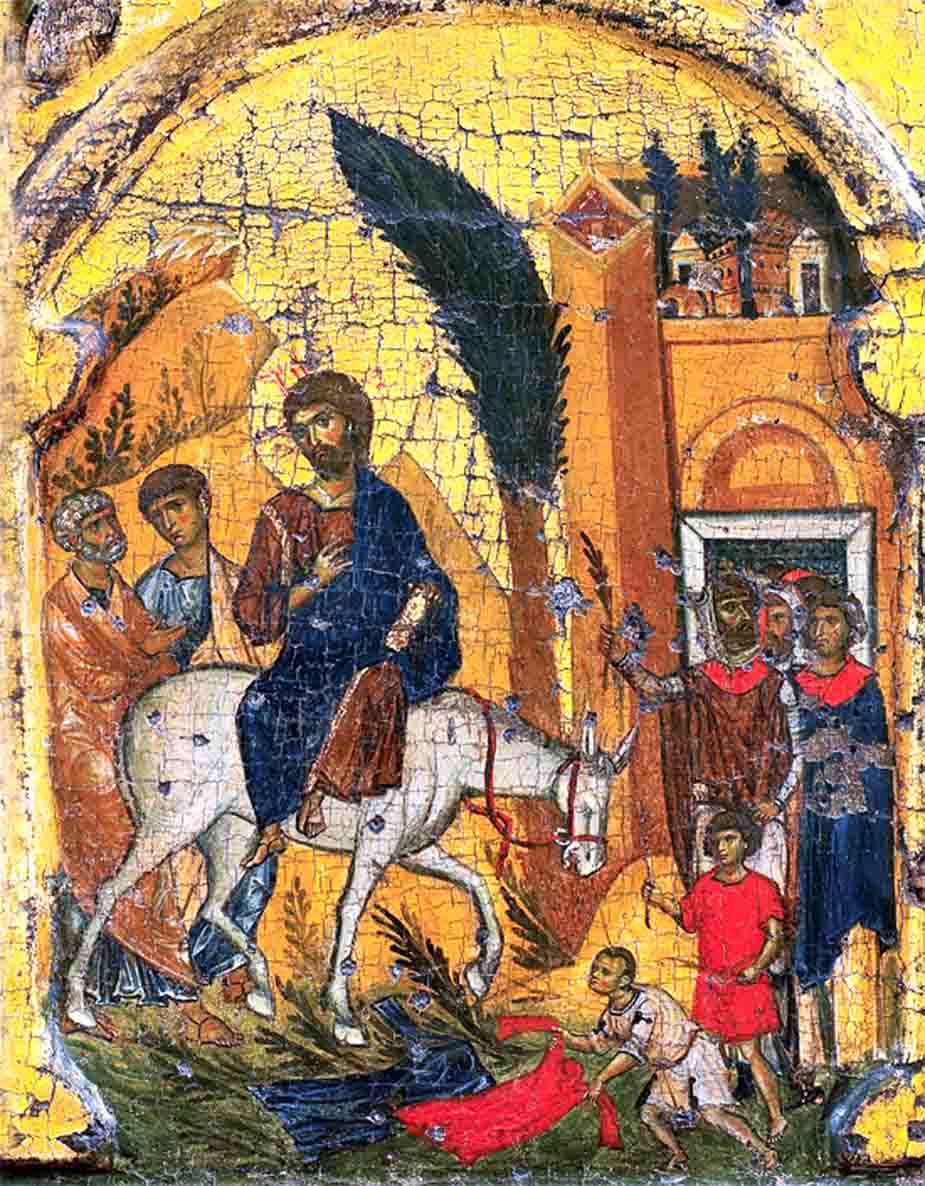
He Whose throne is heaven, and Whose footstool is the earth, the Son of God and His Logos, Who is eternal with Him, today humbles Himself, and comes to Bethany on a little donkey.

And the children of the Hebrews received Him, crying out: "Hosanna in the highest, blessed is He Who comes, the King of Israel."

The warlords of the world, when they would finish a war and threw down their enemies, they would return glorified, and sitting on golden chariots to enter their city. Before them would go the trumpets and flags and brave generals and a multitude of soldiers, covered with iron armor and bearing weapons around a chariot that was filled with many pieces of armor and swords and spears that remained from the conquered nation.

Similar things like these were the great nails that they used in the Crucifixion of our Savior Jesus Christ!

All of these warriors were iron-clad like wild beasts, their heads locked within fearsome helmets, their spears and hairy hands were bloodied from war, their strong legs walked proudly and stretched, like a lion that tore apart a deer with its claws and stretches with roars and frightens the world.

Later would come the golden chariot of the warlord, where he would sit on a throne, adorned with precious stones, proud, haughty, fearsome, who could not be looked upon in the eye without averting one's gaze, carrying his terrible scepter, whose every movement of his command was an order, without opening the mouth of the one holding it.

Horses on that day, were harnessed to that chariot, with gold-embroidered straps with carousels and they also walked pompously and proudly like the humans. A beautiful girl, like a fairy, was decorated, holding a golden crown above the head of the champion, and other girls and boys tossed incense and other spices in great censers shaped like candelabras.

Behind them came the men and women who were taken as slaves, who were sick and wounded, and they were being dragged by the soldiers who struck them.

As much glory as the people had in front, so much disdain and misfortune had those who followed behind. They were bound with ropes and chains, many were pierced, tattered, wounded, jaundiced and half-dead, from their martyrdoms and from their vigils. Many were half-naked and their backs were darkened from the whips. Among them were women, ashamed virgins, stolen mothers with their innocent children in their hands, elderly who were holding on to their grandchildren by the hand, all traumatized like lamps going to the marketplace. Around them, the world grew insane and cried out, glorifying the victor, with many mouths foaming. A cry rose like smoke above the whole city. This scene, they called a "triumph."

One such triumph is performed today by Christ, the Price of Peace and of Love. However, He has changed all the rest and turned it upside down from what men were used to, and thus, His triumph is the triumph of poverty and humility.

The Roman ruler was seated upon a throne and golden chariot, but Christ is seated on a little donkey, possibly among the most humble and disdained among the animals.

And He Himself was humble, meek, silent, poorly-dressed, as the Prophecy which says: "Say to the daughter of Zion: Behold your King is coming, meek and having salvation is He, humble and mounted on a donkey, on a colt, the foal of a donkey." (Zachariah 9:9) His hand had never held a scepter, but blessed the world. He Himself is returning from war, but a war much more difficult to win, a war against evil and falsehood and hypocrisy and love of money.

And He was not going to rest from that war, but was going to begin another, even harder, to be crowned with a crown of thorns, and to be beaten and to mocked, and in the end, to be nailed upon a Cross like an evil-doer.

He was not surrounded by wild servants, but by innocent fishermen, who were disdained like Him. And He neither carried behind Him slaves that He tyrannized, but men whom He freed from the slavery of the Devil, and the dead whom He had raised through His voice.

They did not blare trumpets and drums to glorify Him, but innocent children, which symbolized the simplicity which Christians have, cried out: "Blessed is He Who comes", and instead of holding flags waved the green branches of trees. Verdant branches and clothes strewn on the road for the donkey to walk over.

And this blessed donkey, with a bowed head, humble, ignorant, bore Christ Who was sitting on its back, Whom the fiery six-winged Seraphim stand about with fear. He was not carried by a golden chariot, nor a prized stallion, nor even a seat held by others, but by a little donkey. What eye does not shed a tear and is not astonished by this mystery!

Christ overturned what sinful man saw regarding what is right and true. Who, however, is in the position to sense the freedom which He brings us, and would follow the donkey, and not the fine horses that glow proudly, which enter Rome with many idols, instead of entering together into the kingdom of Peace, the Jerusalem on high?

Many "serious" people, one could say, did not understand this, saying that the children where childish, and the men were manly. The same was said by the high priests, men of authority: But when the chief priests and the scribes saw the wonderful things that he did, and the children crying out in the temple, “Hosanna to the Son of David!” they were indignant;  and they said to him, “Do you hear what these are saying?” And Jesus said to them, “Yes; have you never read, ‘Out of the mouth of babes and sucklings thou hast brought perfect praise’?” And leaving them, he went out of the city to Bethany and lodged there." (Matthew 21:15-17)

The chief priests and the scribes had read the Psalm of David which said how the Christ would be met by the babes and they did not believe Him Whom they hymned. And if we have read today's Gospel and the Psalm and what Christ said to the Hebrews, would we not be judged more strictly than if we had not believed Him? Our vanity and our pride prevent us from going along His poor path, and we are ashamed to follow a leader Who is riding upon a donkey. We don't want the humble, the poor. Can one become a Christian who does not love that which Christ loved?

Yesterday, Saturday, He raised a dead man, Lazaros. Who was this Lazaros? Was he a notable, famous person? Lazaros was a poor villager, but as the Gospel says, he was a friend of Christ, Who would have all men as His friends.

The Gospel notes that Christ had a friend in the world, and that he was poor and unlearned. But who among us loves this rich poverty of Christ? Where Christ is missing, there is the true poverty, because where Christ is missing, there is also missing true life and death rules. This you would understand well if you look around you and ponder. Where are those almighty Roman leaders who made their triumphant entry, as we described above?  What happened to them, and the myriads that worshiped them and knelt before them like the reeds before the north wind? Who brings to mind those who wrote the history of that time?


Bodies, souls, thrones, diamonds, horses, pride, horrors, voices, all fell into a pit and were lost and extinguished as if they had never been drunk. And what is left of all this in people's hearts? Nothing and even less than nothing.
But man is unfaithful even to what he sees and what he grasps with his hands, and he pulls the path that they have taken, and he happily drags Nero's chariot, because "his neck is iron." His ears are pricked by Him Who says: "I am God, the first and the last, I am. I nourish my sheep and I will give them rest." He Who was sitting upon the donkey, it is He Who remains alive within simple souls unto the ages, and is for them a source of nourishment, a source of immortality, joy and delight, according to the words that say: "The heart of those who seek the Lord shall rejoice."

Yes, whoever senses the joy of Christ, is like that dead man [Lazaros] who was raised. There are many kinds of pain in the world. Those who suffer in body and soul, their pain cleanses them and takes them to God, and these are the beloved ones of Christ and walk in His army with His consoling light. The others suffer futily. That is why the Apostle Paul wrote to the Corinthians: "Now I rejoice, not because you were grieved, but because you were grieved into repenting; for you felt a godly grief, so that you suffered no loss through us.  For godly grief produces a repentance that leads to salvation and brings no regret, but worldly grief produces death." (2 Corinthians 7:9-10).

For those who hope in God, Christ transforms their futile sweat into sweat of salvation "a refreshing sweat", but we mourn and are pained in every way like the idolaters, slaughtered by the knives of fate. They did not allow their sweat of agony to become transformed into sweat of prayer and hope.

Whoever does not believe in Christ and in the Gospel is dead, as no true life exists within him. Because life does not mean to breath and to walk and to eat and drink, but to sense the grace of immortality. Then, one can chant together with that exceptional hymn that is the Apolytikion:

"By raising Lazarus from the dead before Your passion, You did confirm the universal Resurrection, O Christ God! Like the children with the palms of victory,  we cry out to You, O Vanquisher of death; Hosanna in the Highest! Blessed is He that comes in the Name of the Lord!
(source)
  
Christ entering Jerusalem on Palm Sunday (source)
  
Through the prayers of our Holy Fathers, Lord Jesus Christ our God, have mercy on us and save us! Amen!

Thursday, April 9, 2020

St. John Chrysostom on Job's Suffering as Consolation

Holy Prophet Job (source)
  
St. John Chrysostom on Job's Suffering as Consolation
On both sides, beloved, reap the utmost gain, and avoid the imitation of Adam knowing how many ills are begotten of laziness and imitate the piety of Job, learning how many glorious things spring from earnestness. Consider him, the conqueror throughout, and you shall have much consolation in all pain and peril. For as it were in the common theatre of the world that blessed and noble man stands forth, and by means of the sufferings which happened to him, discourses to all to bear all things which befall them nobly and never give in to the troubles which come upon them. For verily, there is no human suffering which cannot receive consolation as a result. For the sufferings which are scattered over the whole world, these came together, and bore down upon one body, that of Job. What pardon then shall there be for him who is unable to bear with thankfulness his share of the troubles which are brought upon him? Since he appears not bearing a part only, but the entire ills of all men, and in order that you may not condemn the extravagance of my words, come, and let us take in hand severally the ills that came upon him, and bring forward this fulfillment of them.
  
And if you wish, let us first bring forward that which seems to be the most unendurable of all, I mean poverty, and the pain which arises from it. For everywhere all men bewail this. Who was poorer, then, than Job, who was poorer than the outcasts at the baths and those who sleep in the ashes of the furnace, poorer in fact than all men? For these, indeed, have one ragged garment, but he sat naked, and had only the garment which nature supplies, the clothing of the flesh, and this the Devil destroyed on all sides with a distressing kind of decay. Again, these poor folk are at least under the roof of the porches at the baths and are covered with a shelter, but he continued always to pass his nights in the open air, not having even the consolation of a bare roof. And what is still greater, the fact that these are conscious of many terrible evils within themselves, but he was conscious of nothing against himself. For this is to be noticed in each of the things which happened to him, a thing which caused him greater pain, and produced more perplexity; the ignorance of the reason of what took place. These persons, then, as I said, would have many things with which to reproach themselves. And this contributes much to consolation in calamity; to be conscious in oneself of being punished justly. But he was deprived of this consolation, and while exhibiting a conversation full of virtue, endured the fate of those who had dared to do extreme wickedness. And these folk who are with us, are poor from the outset, and from the beginning are experienced in calamity. But he endured calamity in which he was unexperienced, undergoing the immense change from wealth. As then the knowledge of the cause of what takes place, is the greatest consolation; so it is not less than this, to have been experienced in poverty from the beginning and so to continue in it. Of both these consolations that man was deprived, and not even then, did he fall away. Do you see him indeed come to extreme poverty, even in comparison with which it is impossible to find a fellow? For what could be poorer than the naked who has not even a roof over him? Yes rather not even was it in his power to enjoy the bare ground, but he sat upon the dunghill. Therefore whenever you see yourself come to poverty, consider the suffering of the just one, and straightway you shall rise up, and shake off every thought of despondency. This one calamity therefore seems to men to be the groundwork of all sufferings together.
  
And the second after it, yes rather before it, is the affliction of the body. Who then was even so disabled? Who endured such disease? Who received or saw any one else receive so great an affliction? No one. Little by little, his body was wasted, and a stream of worms on every side issued from his limbs; the running was constant; the evil smell which surrounded him was strong, the body being destroyed little by little, and decaying with such putrefaction, used to make food distasteful; and hunger was to him strange and unusual. For not even was he able to enjoy the nourishment which was given to him. For he says, “I see my food to be loathsome” (Job 6:7). Whenever, then, you fall into weakness, O man, remember that body and that saintly flesh, for it was saintly and pure, even when it had so many wounds. And if any one belong to the army, and then unjustly and without any reasonable pretext, be hanged upon the pillory2, and has his sides rasped to pieces, let him not think the matter to be a reproach, nor let him give way to the pain when he thinks upon this saint. But this man, says one, has much comfort and consolation in knowing that God was bringing these sufferings upon him. This indeed especially troubled and disturbed him, to think that the just God Who had in every way been served by him was at war with him. And he was not able to find any reasonable pretext for what took place, since, when at least he afterwards learned the cause, see what piety he showed, for when God said to him “Do you think that I have had dealings with you in order that you might appear righteous?” (Job 40:8), he says while conscious-stricken, “I will lay my hand upon my mouth, once have I spoken but to a second word I will not proceed,” (Job 40:4, 5), and again “as far as the hearing of the ear I have heard you before, but now mine eye has seen you, wherefore I have held myself to be vile, and am wasted away, and I consider myself to be earth and ashes” (Job 42:5, 6).
  
But if you think that this is sufficient for consolation, you will yourself also be able to experience this comfort. And even if you do not suffer any of these misfortunes at the hands of God, but owing to the insolence of men — and yet give thanks and do not blaspheme Him Who is able to prevent them indeed, but Who permits them for the sake of testing you — just as they who suffer at the hands of God are crowned, so also you shall obtain the same reward, because you have borne nobly the calamities which were brought upon you from men and did give thanks to Him Who was able indeed to hinder them, but not willing.
  
Behold, then! You have seen poverty and disease, and both in the extremest degree brought upon this just man. Do you wish that I should show you the warfare at nature’s hands, in such excessive degree waged then against this noble man? He lost ten children, the ten at one fell swoop, the ten in the very bloom of youth, ten who displayed much virtue, and that not by the common law of nature, but by a violent and pitiable death. Who could be able to recount so great a calamity? No one. Whenever, therefore, you lose son and daughter together, have recourse to this just man, and you shall find altogether much comfort for yourself. Were these, then, the only misfortunes which happened to him? The desertion and treachery of his friends, the gibes, raillery, mockery and derision, and the tearing in pieces by all was something intolerable. For the character of calamities is not of such a kind, that they who reproach us about our calamities are inclined to vex our soul. Not only was there no one to soothe him, but many from all sides troubled him with taunts. And you see him lamenting this bitterly and saying, “but even you, too, fell upon me” (Job 19:5). He calls them pitiless and says, “My neighbors have rejected me, and my servants spoke against me, and I called the sons of my concubines, and they turned away from me” (Job 19:14, 16). “And others,” he says, “sport upon me, and I became the common talk of all (Job 19:9, 10). And my very raiment,” he says, “abhorred me” (Job 9:31). These things at least are unbearable to hear, still more to endure in their reality, extreme poverty, and intolerable disease new and strange, the loss of children so many and so good, and in such a manner, reproaches and gibes, and insults from men. Some indeed mocked, some reproached, and others despised; not only enemies, but even friends; not only friends, but even servants, and they not only mock and reproach, but even abhorred him, and this not for two or three, or ten days, but for many months; and (a circumstance which happened in that man’s case alone) not even did he have comfort by night, but the delusions of terrors by night were a greater aggravation of his misfortunes by day. For that he endured more grievous things in his sleep, hear what he says “why do you frighten me in sleep, and terrify me in visions?” (Job 7:14). What man of iron, what heart of steel could have endured so many misfortunes? For if each of these was unbearable in itself, consider what a tumult their simultaneous approach excited. But nevertheless he bore all these, and in all that happened to him he sinned not, nor was there guile in his lips.
  
Let the sufferings of that man then be the medicines for our ills, and his grievous surging sea the harbor of our sufferings, and in each of the accidents which befall us, let us consider this saint, and seeing one person exhausting the misfortunes of the universe, we shall conduct ourselves bravely in those which fall to our share, and as to some affectionate mother, stretching forth her hands on all sides, and receiving and reviving her terrified children, so let us always flee to this book, and even if the pitiable troubles of all men assail us, let us take sufficient comfort for all and so depart. And if you sayest, he was Job, and for this reason bore all this, but I am not like him; you supply me with a greater accusation against yourself and fresh praise of him. For it is more likely that you should be able to bear all this than he. Why, you ask? Because he indeed was before the day of grace and of the law, when there was not much strictness of life, when the grace of the Spirit was not so great, when sin was hard to fight against, when the curse prevailed and when death was terrible. But now our wrestlings have become easier, all these things being removed after the coming of Christ; so that we have no excuse, when we are unable to reach the same standard as he, after so long a time, and such advantage, and so many gifts given to us by God. Considering therefore all these things, that misfortunes were greater for him, and that when the conflict was more grievous, then he stripped for the contest; let us bear all that comes upon us nobly, and with much thankfulness, in order that we may be able to obtain the same crown as he, by the grace and lovingkindness of Jesus Christ our Lord, with whom be glory to the Father together with the Holy Spirit, now and always and for ever and ever. Amen.
(source)
  
Excerpt from a 12th century illuminated manuscript of the Book of Job from Great Lavra, Mount Athos, depicting the Pre-incarnate Logos speaking to Job "through the whirlwind and clouds" (Job 38:1), coming to console and vindicate him (source)
  
Through the prayers of our Holy Fathers, Lord Jesus Christ our God, have mercy on us and save us! Amen!

Wednesday, February 12, 2020

St. Silouan: "Many rich and powerful men would pay dearly to see the Lord..."

The Most-holy Theotokos holding Christ the Lord (source)
  
"Many rich and powerful men would pay dearly to see the Lord or His Most Pure Mother, but God does not appear in riches, but in the humble heart... Every one of the poorest men can be humbled and come to know God. It need neither money nor reputation to come to know God, but only humility."
-St. Silouan the Athonite, Writings, I.11,21

  
(source)
  
Through the prayers of our Holy Fathers, Lord Jesus Christ our God, have mercy on us and save us! Amen!

Thursday, January 9, 2020

Metropolitan Pavlos of Siatista: "What does Christmas mean to us?"

This is a beautiful recording of a Greek talk with English subtitles from Metropolitan Pavlos of Siatista of blessed memory (who reposed almost a year ago exactly, on January 13th, 2019) on the meaning of Christmas and on finding Christ in the feast as the source of our true joy. May he have a blessed Paradise, may we have his blessing, and may our newly-born and baptized Lord save His children! Amen! (source)
  
Through the prayers of our Holy Fathers, Lord Jesus Christ our God, have mercy on us and save us! Amen!

Thursday, July 18, 2019

Metropolitan Avgoustinos Kantiotes: On the Prophet Elias and the Wonders of Prayer

The Holy Prophet Elias (source)
  
Metropolitan Avgoustinos Kantiotes of Florina: On the Prophet Elias and the Wonders of Prayer
Today, my beloved, we celebrate one of the greatest Saints of our faith, the glorious Prophet Elias. He lived before Christ, but he is also "the second forerunner of the coming of Christ" (from the Apolytikion of the Saint). He is one of the most beloved Saints, and many bear his name, and on many hills there are built chapels in his name, and many villages celebrate his name.

Should we tell of his life? It would take much time and you don't have much stamina. So that I might not tire you, I will tell of a few essential things from the life of the Prophet Elias. I will mention three of the wonders out of the many that he had done.

The one was that once, with his prayer, there was a drought that hit along with a famine in Judea. He also was hungry, because the Saints suffer hunger. He went to a village and everyone closed their doors to him. Only one house, a hut, opened their door. And who lived there, a rich man? It was a poor widow with her children. She received him. She had nothing to offer him hospitality, only a handful of flour and a little oil. And these she did not hold back. As soon as she saw him, even though she didn't know who this old man was, she said: "Come in, Elder." She immediately took the flour, made bread and gave him to eat, because he was tired from his journey. This occurred in Zarepta of Sidonia. And then--let the faithless disbelieve; it is their right, but we believe--from that hour on, the widow's house was never lacking in flour and oil. (Third Kings 17:8-16).

What does this mean?  Where there is the blessing of God, everything is riches. One can have incomparable fields, vineyards and olive groves, one can have sacks of gold and silver, one can have it all, but die from hunger. And one can have a handful of flour, a little piece of earth, a bucket of soil, and this will sustain you, as long as one blesses the Lord. These are not just words, they are reality. Because of this our Church chants: "The rick have become poor and hungry, but those who seek the Lord shall not lack any good thing." (Psalm 33:11) Everything, therefore, is a blessing. Some place too high an emphasis of work alone, because above work is the blessing of our Lord Jesus Christ.

Another miracle: While the house of the widow had flour and oil, the rest of the village was suffering hunger, for it had not rained for three and a half years. The impious King Ahab gathered the people of Israel on Mount Carmel, and there, the Prophet Elias censured them for their lack of steadfastness. Until when, he said, will you stand limping with your two feet? If our God is true, then follow Him. If Baal (the idol) is true, then follow him. They heard him without speaking, how would they be justified? Then he told them, I will only preach the true God, while the priests of the idols were about 1000. Today, therefore, we will test who is the true God. Bring two calves, and you will choose whichever you wish, and let us prepare a sacrifice with wood, but we will not light them on fire. And I will prepare the other for sacrifice and will not light it on fire. And you will entreat your god, and I will call upon the Lord my God. And He will hear me and will light and burn the calf of sacrifice, because He is the true God.

They agreed. The priests of shame placed their altar, and their calf upon it, and began to entreat, calling out: "Hear us, Baal". Noon passed, evening came, nothing. Their god was shown to be false. Afterwards, Elias places the clean altar, places wood and the calf upon it in pieces, and tells the others to sprinkle it three times with water (in order that there not be any possibility of fire). And as soon as he prayed, fire descended from heaven and consumed the whole calf, and the wood and the stones and even the water! Nothing remained. Then everyone believed that the only true God is the Lord. Immediately, the Prophet Elias commanded: cease all of the priests of shame, the priests of idolatry. And he took them to the brook of Kisson, and there--terribly--he slaughtered them all (ibid 18:19-40).
  
The Holy Prophet Elias (source)
  
Let us now return again to the house of the widow. What happened there? One day her child fell deathly ill and died. The mother said to the Prophet Elias: "Come to my house to explain to me for which of my sins my son was put to death." "Give me your son." he told her. He took him to the upper room, laid him in his bed, and having prayed to the Lord, breathed three times on the child, and then--let the faithless disbelieve, we believe that there is a God Who works wonders through the Panagia and the Saints--the child was resurrected. "I see that you are a man of God", the widow said. (ibid 17:17-24)

I told you a few things, my beloved, about the Prophet Elias. One more thing I will mention. When it came the time for him to flee from the world, he did not die like we do. As he was walking, a fiery chariot took him and lifted him high. The Prophet Elias still lives. He is hidden somewhere, in one corner of the universe. And we expect him to come again. You don't fear the Prophet Elias, because it seems that you are Saints? I am afraid of him. He is a thunderbolt against sinners, prostitutes, adulterers, blasphemers, atheists, shameful people and all who remain unrepentant. His word is burning. He is the "second forerunner of the coming of Christ", the forerunner of the Second Coming of the Lord. And the Second Coming of the Lord is approaching, it is coming! The signs are many. There are signs which will precede the end of the world, and one of them is the appearing of the Prophet Elias.

One sign of the end of the ages is, as Christ Himself said, that there will be earthquakes, terrible earthquakes (Matthew 24:7). And continuous earthquakes are occurring. Another sign was mentioned by St. Kosmas Aitolos. When they asked him when the end of the world was coming, he replied: "When you see women walking naked in the street." And we see this in reality. Women walking around [naked], corrupting the world*, and even in the church they dare to enter naked. Another sign is the divorces that are increasing, while formerly divorce was unknown and only the shovel of the undertaker separated couples. Another sign that will appear is the 666. The devil will come out and begin to seal people, all, small and great will take this identification. These are the signs of the times. Go and sell your shirt and buy the Book of Revelation and read it, it is all written in there, what will occur.**

Within your houses, have fear of God. How will we be saved? With prayer. With what prayer? Not dead prayer, but living prayer which comes through tears. In the old blessed days the Christians listened in the Church of Christ with contrition. Today, we find the church dead. In the old days, in the crags of our homeland dwelt holy people. And what did they do? Were they partying at night? Before they would go to sleep, the father and mother, along with their seven or eight children would kneel in prayer to God. Show me today a family that prayers together! We have lost the mind of God. Where is prayer, family prayer? Where are the tears, the contrition? Where is Confession and Holy Communion? Where is almsgiving? Where are the wonders of our people?

Because of this, I advise you to take the Gospel and the Revelations and all of you read them, men and women. Pray night and day, at noon and in the evening. And if you can't say many prayers, say only one prayer: "Lord, have mercy", "Lord, have mercy", "Lord, have mercy". And if you say it with your whole heart, you will be heard, and you will work wonders, and the stars will descend to earth.

Let us live like this, therefore, my beloved and blessed ones, with Christ, awaiting the return of the Prophet Elias, and entreating God to save the world. Amen.

(+) Bishop Avgoustinos, recorded from a homily given in the Holy Church of the Prophet Elias, Xanthogeion, Amyntaiou, on July 20th, 1987) (Source)

*Note I: This described lack of modesty, and lust in general is of course not only seen in women, but in men as well, as day by day, filth of body, mind and soul is growing and is being exhibited more externally, in society, TV, the internet, etc.
  
**Note II: Thankfully, there are many good Orthodox guides to reading the Book of Revelation, including the most famous commentary by St. Andrew of Caesarea (translated here), published talks by Fr. Athanasios Mitilinaios, a series by Fr. Thomas Hopko, the series of talks by Fr. Josiah Trenham, etc. Metropolitan Avgoustinos ends this sermon very poignantly, focusing not on fear of the 666 or the Antichrist, but on fear of the Lord, and emphasizing the need for prayer, repentance, contrition, the Holy Scriptures and the Holy Mysteries of our Church.
  
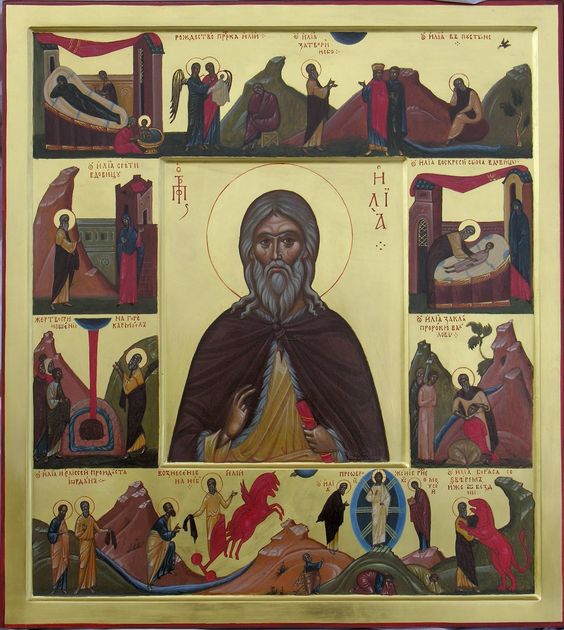
The Holy Prophet Elias, with scenes from his life (Source)
  
Through the prayers of our Holy Fathers, Lord Jesus Christ our God, have mercy on us and save us! Amen!

Tuesday, March 5, 2019

Elder Aimilianos: Fasting and Prayer as a Longing for God

Jesus Christ, detail (source)
  
"Longing for God is expressed with fasting, with an empty stomach... Fasting has a unique meaning by expressing the longing for God... The same occurs for prayer. If prayer to myself had meaning, then my prayer life would be a human endeavor, a tendency and revival, it wouldn't be God. My prayer has meaning because it exactly expresses my longing: 'Come and abide in us...', the: 'Where are you, my God?'

"With fasting, vigil, and prayer, chaos and malaise are shown to be our rags before God, as the poor man shows his rags to his fellow man in order for him to have pity on him to help him, or like the blind man cried out to Christ to give him light. Thus, we show our poverty and he ask that He open our eyes in order to understand that we are sinners, that we might repent and so He can forgive us...

"The approach therefore is an uncreated energy, a true projection of His being. Because of this, my life as well is a true communion with the true God. While God acts, I commune with Him. While God is unapproachable, I partake of Him...

"Only the: 'Where are you, my God?', can make visible the invisible presence of God...We give Him our consent, our being, and He directs everything, He kneads us..."
-Elder Aimilianos of Simonopetra
(source)
  
Through the prayers of our Holy Fathers, Lord Jesus Christ our God, have mercy on us and save us! Amen!

Monday, April 9, 2018

A Paschal Epistle of St. John Maximovitch

Christ is risen! Truly He is risen!

The Resurrection of Christ (source)
 

PASCHAL EPISTLE OF ST. JOHN MAXIMOVITCH, 1940

St. John Maximovitch

Pascha, 1940, Shanghai. A large Russian diaspora, forced to leave behind their homeland; many had lost their dear ones, and everything they owned, and now lived in want, in a foreign land. But God gave them a saintly bishop to comfort them, and keep them in remembrance of the grace and strength of Holy Orthodoxy.
A member of St. John’s Shanghai flock, Nicholas Feodorovich Tsepitov, of Revda, Russia, preserved this Pascal Epistle all his life, even after his return to the Soviet Union in 1947. It gave him comfort there also, where more trials awaited him. He gave this epistle for publication to the Fund for the Canonization of St. John Maximovitch in Russia, and we present it here, in English translation, as a comfort to all.
Christ is Risen!
Let us arise in the deep dawn,
And instead of myrrh offer a hymn to the Lord.
We forestall the rising of the sun, and hasten in the depth of night to meet the Sun of Righteousness. 
The present night is not an ordinary night! Brighter than day, it fills our souls with light! 
The rays of the Sun of the world illumine us and the whole universe, enlightening all who come to His light. 
The warmth poured out through His rays penetrates all our members, filling our souls with deep peace, even healing our bodily illnesses. 
This warmth melts away our sorrows, and our passions are burned away as by fire. 
Enmity and hatred disappear from us, we forget our bitterness, and we do not feel our impoverishment. 
The whole world becomes different in this holy and only night! 
All nature is changed, and everything is filled with warmth and light. 
Just as birds of prey hide at the rising of the sun, and wild beasts disappear into their dens, so does evil flee from every heart illumined today by the Light which radiates from the tomb. 
Like the morning dew, now are our tears dried away! 
As blossoms unfold at the onset of day, enlivened by the sun’s rays, so do virtues return to us as the Sun rises upon us this morning. 
Let us strive to be wholly illuminated by this wondrous light! 
When spring comes, we open all the windows and doors of our homes, that the warmth may enter and dry the dankness within. 
Now the Divine Light can also enter; but it cannot shine within souls that have closed themselves, and do not want to be illumined by that Light. 
Let us open our souls and hearts! Let us hasten with the myrrh-bearers, let us come bearing our lamps to Christ, Who has come forth from the tomb!
Even if you are burdened by sins, do not turn away; for today even those in the bonds of hell hasten to the Light with joyful feet.
Even if you are poor and haven’t the means to buy candles and myrrh, do not turn away. Let our hearts and souls burn in place of candles. There is no impoverishment in the world! 
In these past days, we were all called to bring our material offerings and bodily ascetic labors as myrrh. 
Now we all are called to partake of spiritual joy. This is the day which the Lord has made, let us rejoice and be glad in it!
Instead of myrrh and material offerings, let us bring a hymn to the Lord. Let us sing the praise of the Father, Son, and Holy Spirit, God! 
Let us open now the doors and windows of our souls and hearts, that they might be warmed by the rays of the Sun of Righteousness! 
From the outermost border of heaven is His going forth, and His goal is unto the outermost part of heaven, and there shall no man hide himself from His heat (Ps. 18:6). Now all things are filled with light: heaven and earth and the nether regions (Ode 3 of the Paschal Canon). Only we are impenetrable if we do not want Him! 
If you do not feel this radiant joy today, seek the reason within yourself only. 
It would be insane for a man to claim that the sun does not exist, only because he does not see it from within his tightly closed and shuttered dwelling. Pitiable is the blind man who keeps telling everyone that there is no such thing as light, only because he does not see it! It would look very foolish for a man to insist that spring has not come, only because no warmth has penetrated into his locked cellar! 
We praise the gentle light, the holy glory of the immortal Heavenly Father—the Resurrected Lord, crying out to Him from the depth of our souls, MEET IT IS FOR THEE AT ALL TIMES TO BE HYMNED! 
Then the light of Christ that enlightens all will enlighten even us, and we shall behold Christ the Sun of Righteousness, Who shines upon all life! 
Christ is Risen! 
The Bright Resurrection of Christ, 
1940, Shanghai 
Translated by Nun Cornelia (Rees)
4/4/2010
   
The wonderworking and incorrupt Holy Body of St. John Maximovitch in San Francisco, a vivid icon of the reality of the Resurrection of Christ (source)
   
Christ is risen from the dead, by death, trampling down upon death, and to those in the tombs, He has granted life!
Truly the Lord is risen!

Saturday, November 1, 2014

Homily on the Parable of the Rich Man and Lazarus, by Metropolitan Avgoustinos Kantiotes


The Parable of the Rich Man and Lazarus (source)

Homily on the Fifth Sunday of Luke (The Parable of the Rich Man and Lazarus - Luke 16: 19-31), by Metropolitan Avgoustinos Kantiotes of Florina (+2010)
"Life beyond the Tomb"
Many things, my beloved, make man afraid. But that which frightens him more than anything is death. Even the word “death” alone brings trembling. Death is a great mystery!

Everyone, more or less, has the question: what happens after death? Is there anything beyond the tomb, or does life end there, and man is extinguished?
The question is an important one. If we believed that life ends in the tomb, then man would be free to do whatever he wishes: to sin, to fornicate, to commit adultery, to break the greatest rules, as long as he evades the eyes of the police and justice. If, however, there is life beyond the tomb, then man must count how he lives in this life, according to the voice of his conscience and the will of God.

To the question as to what is there after death, the answer is given us by today’s Gospel, the beautiful Parable of the Rich Man and Lazarus, which you just heard. What does it tell us?
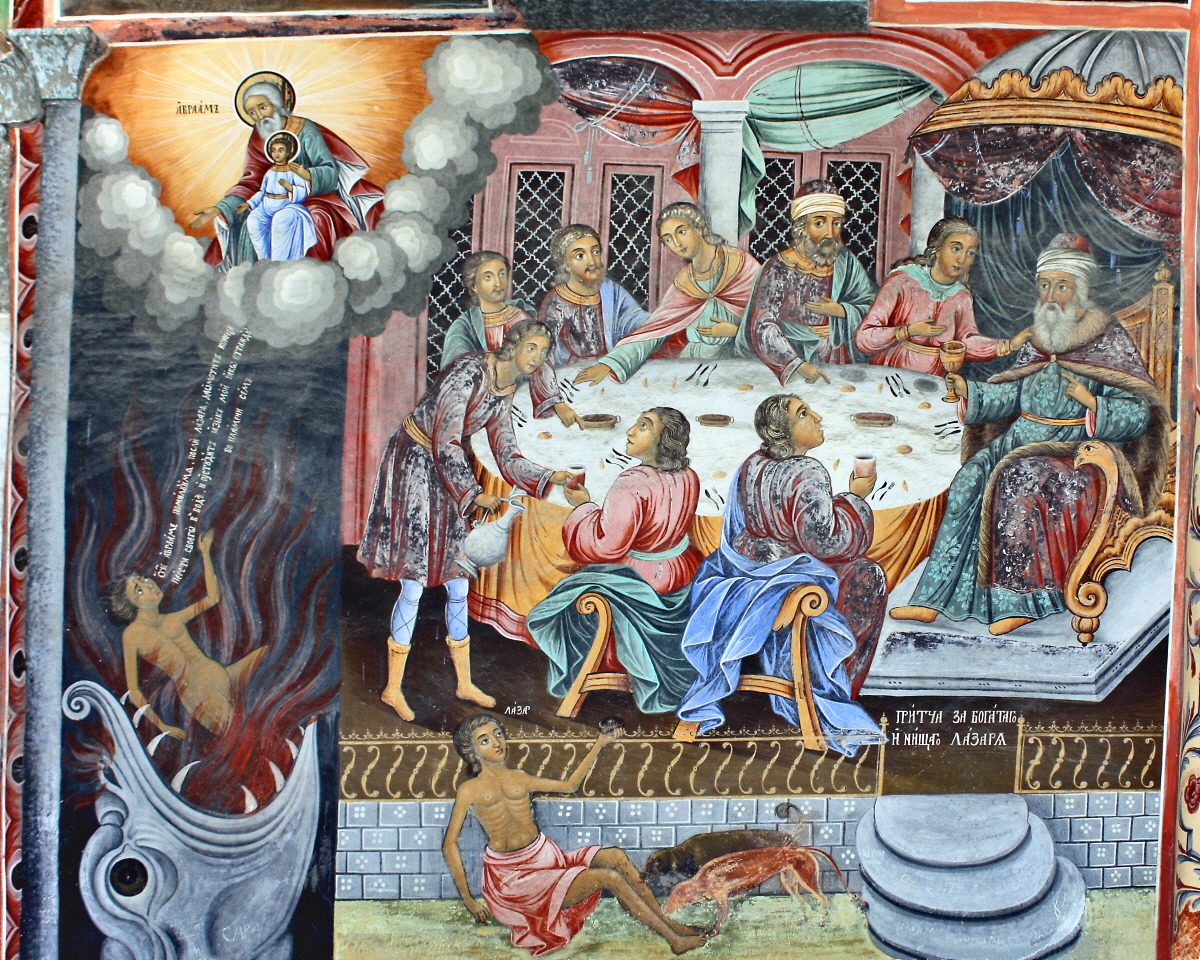
There was a rich man, who had all of the good things from God. But all of these (houses, fields, everything else), he used for himself alone. He was a selfish self-seeker, and a worshipper of the flesh. He had the best clothes, wore expensive outfits, which only kings would wear, and ate the best food and drank the best wine, and spend his days in his great home. There were people playing music every night there, and sinful women danced unethical dances. Thus he spent his life, “rejoicing radiantly every day” (Luke 16:19). He did not give meaning to anything else.

At his door lay Lazarus, a poor and sick man, alone and abandoned, whom no one gave even the shelter of a roof, or medicine, or any other human help. The rich man never opened his door to show him hospitality, and he tried to survive on the crumbs that fell from the table of the rich man. He was full of wounds, and the dogs licked his wounds. Thus he lived.
But one day, the rich man, who thought that he would live as long as the mountains, heard a knock at the door. Who was it? Death! This is the dark visitor, who comes at an hour that we do not expect him, and seizes old and young, rich and poor, and leads them to the other world. He died, therefore. And his body became the food for worms and odor, and his soul went to Hades, where he sensed the reproaches of his conscience. And he would have preferred, as the Blessed Chrysostom says, to be stung by a scorpion, rather than experience the sting of the conscience. This he learned, when he was in the other world.

Where he was, the rich man sensed a far away other place, a place of light and beauty and joy: Paradise. And he sees in the heart of Paradise, in the bosom of Abraham, whom? Lazarus, the poor man, together with the righteous. Then his soul cried out and said: What did I suffer, why did I believe that there was not another world? And he entreated Abraham for two things. One, to send Lazarus to refresh him with one drop of water, for as he said, he was burning in that abyss. And the other, for Lazarus to go to the world below, to inform his five brothers, that they should remember their ends. But Abraham did not answer his entreaties. He said that there was a chasm between them: “between you and us there is a great chasm that was set” (Luke 16:26). There is no bridge to join the abyss with Paradise, and furthermore, there is no need for anyone to go to the world below, because they have the Scriptures, which bear witness to the other world.
Therefore, my brethren, there is another life. If someone would ask this today, he would find that the majority of so-called Christians do not believe these. What years we are living in! In years past, there were no radios or televisions, and people lived in huts. But within these huts they lived like angels, like holy men, like Lazaruses. Now, God has given them money. Those blessed years, each would wish each other “Good Paradise”. Today, does anyone hear anyone say to another “Good Paradise”? Now, we don’t believe. Children get such an education from schools. In one village, there was a 90 year old woman, who was in danger of dying. Her good spiritual father went to her and told her: “My good Lady, have you ever confessed?” “Never,” she replied. “Have you communed?” “A few times.” “Do you go to church?” “Not much.” “Why, because you are getting ready to go to the other world.” “Bah,” the woman said, “these are myths.” “My Lady, who told you that these are myths?” “My one grandson, who went to university in Thessaloniki, came and told me that there is nothing after death, that man is just physical, flesh and bones…”

Thus faith in the other world is uprooted. To such, the Gospel confirms that that world exists. “And who saw it?” you might say. But have you seen America? Have you seen Australia? Have you seen Canada? Someone else told you that they exist, and you believe. If someone then told you that they did not exist, you would laugh. Thus, as surely as there is an Australia, as there are stars, as this place exists, there is surely the other life, for which man was fashioned. Who confirmed this for us? Christ Himself. And if we do not believe in Christ, who should we believe, the devil?
Therefore, as it is certain—utterly certain that there is another life, what should we do?

First, we should think that the souls will continue to live on there, and that there will come the day when the Lord will stand in judgment inexorably of all, and “those who have done evil” will go to the eternal abyss, but “those who have done good”, to eternal Paradise (John 5:29). You should believe this. You don’t believe this? You are not a Christian, you are a naturalist. You only speak of physical things, and that there is only matter that exists. But man, however, is not just matter.

Second, we should prepare ourselves, we should be ready. We do not know the hour of our death. As the thief does not inform when he will come to break in, it is unknown when death will take us. And when it is time to travel, it is important to have prepared beforehand, and have your ticket in your pocket for when they ask it of you, for without a ticket, you are going nowhere. Our ticket is what? Faith in Christ, our good works, love, philanthropy, showing compassion, whatever is good and beautiful.
I will end with a story. Once, there was a king who had the mindset of the Rich Man in today’s parable. He did not believe in the other world, he partied, wasted time, participated in orgies. In that palace, there was a court jester. What does this mean? They did not have theaters and movies back then, so they had jesters for entertainment. He made the king laugh with the jokes that he said. And he was part of his personal entourage. One day, the king told him: “Take this cane, and I give it to you like a prize. If you ever find someone more senseless, more ridiculous, more wretched than you, give it to him…” He kept the cane. After some years, the king got sick, and was bedridden. He called the doctors, nothing. He took medicine, nothing. He was approaching death. Then, the jester came to him for the last time. “King, what is going on?” he asked. “I am not well. I am leaving for a great journey,” he replied. “And when will you return? he asked.  “I will never return again.” “Have you made any plans, have you prepared?” “No.” “Then, I have found the most wretched one in the world. Take the cane!”
Because of this, my beloved, let us close our ears to the faithless, and let us believe what our Church tells us: “I look for the resurrection of the dead, and the life of the age to come. Amen” (The Creed) Let us be ready, wherever we are, for death, that we might go to the other world, where are the saints and the angels, and where is Christ, the King of the Ages. Amen.
+Bishop Avgoustinos
(preached in the Church of Sts. Peter and Paul, Petron-Amyntaios, 10/30/1983; amateur translation of text from source)
  
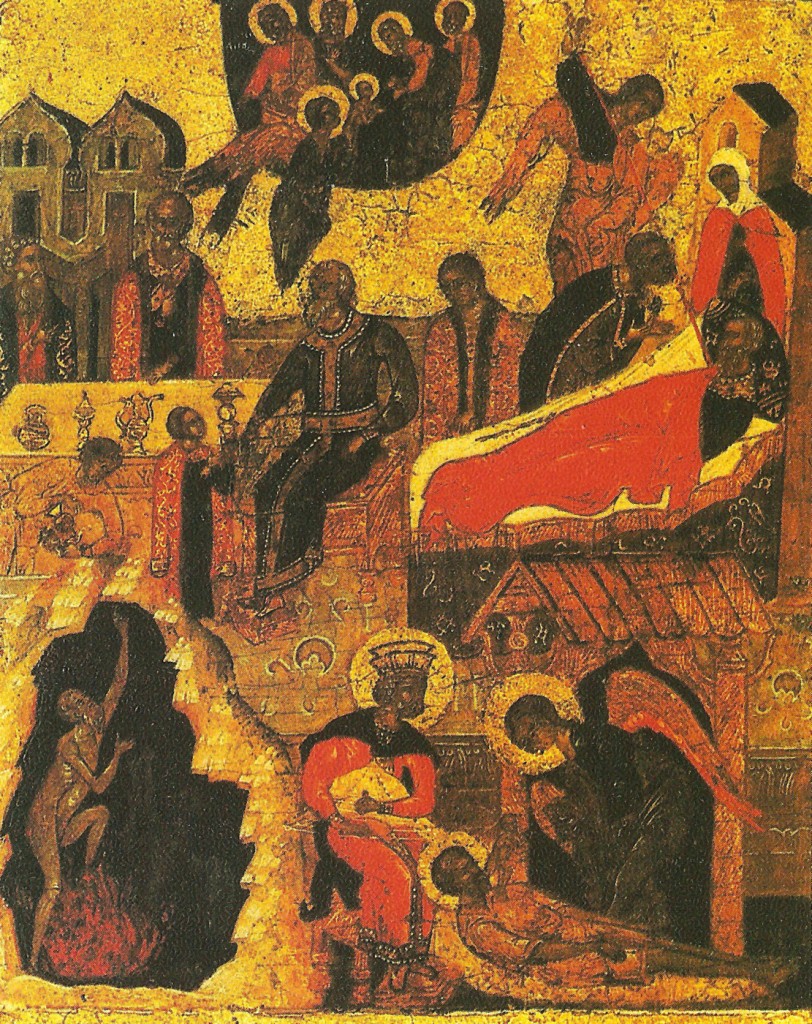
Icon depicting the Parable of the Rich Man and Lazarus (source)
  
Through the prayers of our Holy Fathers, Lord Jesus Christ our God, have mercy on us and save us! Amen!

Saturday, June 28, 2014

St. Isaac the Syrian: The commandments of God are greater than all the treasures of the world

Jesus Christ, the "Pearl of Great Price" (source)
 
The commandments of God are greater than all the treasures of the world, and for whoever keeps them, God is found within them. To men, poverty is abominable, but to God, the prideful soul and the high-minded and conceited nous is more abominable. Wealth is honored by men, but God honors the humbled soul!
-St. Isaac the Syrian
   
(amateur translation of text from source)
 
Through the prayers of our Holy Fathers, Lord Jesus Christ our God, have mercy on us and save us! Amen!