Showing posts with label The Holy Mandylion. Show all posts

Wednesday, August 26, 2020

Encomium on the Lord, and on that Cloth that touched His Immaculate Body

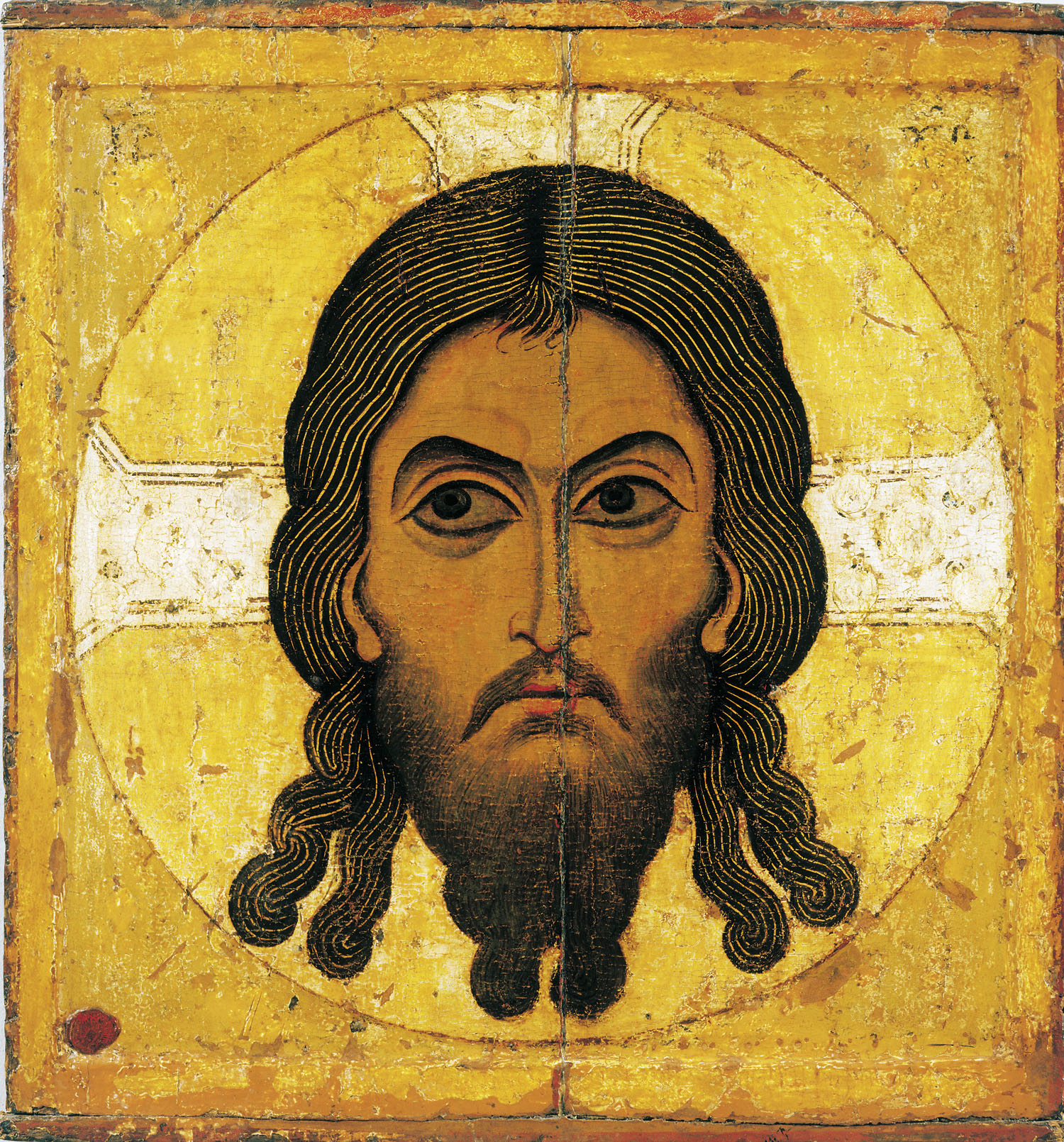
Icon depicting the Mandylion of Christ and His Passion (source)
 
Note: Elsewhere, the possibility that the famed Mandylion of Edessa (the original now seemingly lost to history) is one and the same as the Shroud of Turin, has been discussed (for example, see here for a talk by an Orthodox presenter on the subject). There are many places where the history and science that supports this are discussed and disputed at length. In this post, however, I humbly aim to use the style of the Byzantine Encomium to accomplish several things. First, may we ever give thanks to our Lord and Master for all His many blessings to us, and especially for enduring His Passion for our salvation. Also, I intend this to prayerfully contemplate the Cloth (or Cloths) that touched His Immaculate Body, and both the immense theological implications of this, and the many wonders that He worked and continues to work throughout the world for those simple and humble of heart, who are seeking His face. Finally, I aim to marvel at even the possibility that the Lord, in His love for man, could have somehow left us a vivid Icon of His Passion and Resurrection, and allowed this to pass throughout the world and the centuries, healing the sick, warding off enemies and overcoming nations, and, seemingly more impossible, how He could have allowed this Cloth to even reach our days of hardened hearts and little faith, where scientists continue to be astonished at this Relic. Many are struck to the heart with contrition, humility and repentance, and some are even being brought to faith in Him through this. "Thus shall many nations wonder at him; and kings shall keep their mouths shut: for they to whom no report was brought concerning him, shall see; and they who have not heard, shall consider." (Isaiah 52:15)
    
Encomium on the Lord, Who suffered, slept, and arose in the flesh for our salvation,
And on that Cloth that touched His Immaculate Body
“Let the light of Your countenance be signed upon us, O Lord” (Psalm 4:6), for to us who dwell in darkness and the shadow of death (Luke 1:79), the Lord has appeared, to bring light to those in darkness. His uncreated light shines upon all creation as the true radiance of the Father (Kontakion of the Transfiguation), though we sinners, filled with countless sins and passions and weakness, cannot bear to behold His glory.
  
For, if the God-seer was told by the Almighty “You shall not be able to see my face; for no man shall see my face, and live.” (Exodus 33:20), how might we dare to behold the radiance of His face, before which tremble Angels, Archangels, the Cherubim and Seraphim. The Great Moses could scarcely bear to behold His back, bowing to the earth to worship Him, proclaiming: “The Lord God, pitiful and merciful, long-suffering and very compassionate, and true.” (Exodus 33-34).
  
And His Prophet Isaiah, gazing upon the Lord of hosts in His glorious temple, cried out: “Woe is me, for I am pricked to the heart; for being a man, and having unclean lips, I dwell in the midst of a people having unclean lips; and I have seen with mine eyes the King, the Lord of hosts.” (Isaiah 6:5)
  
For when the Prophet Ezekiel beheld the vision of His glory, he exclaimed “This was the appearance of the likeness of the glory of the Lord. And I saw and fell upon my face.” (Ezekiel 2:1)
  
Truly, His glory brings fear and trembling with great awe upon Heaven and earth and the things below the earth, as Prophet Habakkuk sang in prayer: “O Lord, I have heard your report, and was afraid: I considered your works, and was amazed. “(Habakkuk 3:2) It is He “Whose glance dries up the deep, and Whose threatenings melt the mountains” (Prayer from the service of Baptism).
  
But, despite His endless might and glory and radiance, He, in a manner surpassing understanding, deigns to reveal Himself and to come to us in all humility, in gentleness and simplicity, “the voice of a gentle breeze”, as He appeared to the Zealot Elias (I Kings 19:12). Or as Psalmist chants: “He shall come down as rain upon a fleece; and as drops falling upon the earth.” (Psalm 72:6)
  
O, Your wonders, surpassing all wonders, O Lord! “Who is like to thee among the gods, O Lord? who is like to thee? glorified in holiness, marvelous in glories, doing wonders.” (Exodus 15:11) For the Son of the Father, “Light of Light, true God of true God, begotten, not created, of one essence with the Father, through Whom all things were made. For us men and for our salvation, came down from heaven, and was incarnate of the Holy Spirit, and the Virgin Mary, and became man.” (The Symbol of Faith) “This is our God, and there shall none other be accounted of in comparison of him. He hath found out all the way of knowledge, and hath given it unto Jacob his servant, and to Israel his beloved. Afterward did he shew himself upon earth, and conversed with men.” (Baruch 3:35-37).
  
The Lord did deign to come to us, humbling Himself, becoming conceived within the Spotless womb of the Virgin. He was born as a babe into a cave most cold and dark, He Who is the Light of the universe. He nursed milk from His creature, He Who nourishes all creation. He shows obedience, He to Whom every knee bows in heaven and earth and under the earth (Philippians 2:10). He puts off His garments, He Who clothes the Heavens with clouds. He is submerged in the waters of the Jordan, Who drowns error and disperses the hordes of the demons. He preaches, and heals both bodies and souls, that in every way, He might lead us back to the Father.
  
And He does not stop at this, but gives us His own Body and Blood, before His life-giving Passion. Behold! With the eyes of the soul, behold  “the true light that enlightens every man was coming into the world.” (John 1:9) Behold the Man of Sorrows, Who bends His knee in prayer to His Father, giving us a type of fervent prayer. He pours forth sweat as drops of blood, earnestly seeking to deliver the world from death. He endures the kiss of betrayal from one of His Disciples, and suffers buffetings, and scorn, and slander. The Judge of the living and the dead, the Judge most just, stands condemned as a criminal before Pilate. The Creator is bound by His creation, and bitterly flogged. His flesh is torn apart, Who wove garments of skin for the first-formed. He receives a Crown of Thorns, He Who is the King of Angels, Whose glory cannot be fathomed. He receives spitting, Who formed eyes for the blind man with His spittle, and the Purple Robe of mockery, Who adorned the vault of the Heavens, and Who holds the universe in His palm. He carries His Cross, Who carries time and space upon His shoulders, and stretches out His hands, uniting things that were once sundered.
  
One of the very early depictions of the Holy Mandylion of Christ, dated likely to the 12th Century (source)
   
“Let the light of Your countenance be signed upon us, O Lord.” Behold, behold the marks of the nails, the wounds on His precious head, the blood and water pouring from His life-giving side! Behold! The glory that surpasses all things humbles Himself, and endures everything, becoming “obedient unto death, even death on a cross.” (Philippians 2:8) He breathes His last, and gives up His spirit, leaving us His life-giving Body, and the Instruments of His Passion for our consolation, our boast and our healing, for “by his bruises we were healed.” (Isaiah 53:5)
  
Come, O noble Joseph and Nicodemus, gather your boldness to bury the Body of God. Bring your shroud, and your precious myrrh to bury this Stranger in a new Tomb (Homily of St. Epiphanios on Great Saturday), hewn from the rock, Who was hewn from the Virginal Mountain without the hand of man (Daniel 2:45). Cover the face that is the glorious radiance of the Father, soak up the Blood which re-creates all things. Guard with a Stone the Supernatural Stone, from Which our Fathers drank. (I Corinthians 10:4)
  
And after He dwelt bodily in the grave, and His Soul freed the prisoners in Hades, while dwelling in Paradise with the Thief, and never departing the Throne of the Father (Hymn of Proskomede), He Who is uncircumscribable, arose on the third day. He passes unhindered through the stone, Who traversed the portal of the Virgin (from the Praises of Sunday Matins from Plagal of the First Tone) leaving her unharmed. He sends His Archangels to roll away the stone from His life-giving Tomb, at whose appearance, the guard of soldiers became as dead men. He brings joy to His Mother and her fellow Myrrhbearers, making them the Apostles to the Apostles, to tell of the Resurrection.
  
Run, O beloved Disciple, and outrun Cephas, and together behold the Tomb, the sudarium that was upon His head, and the grave-clothes that covered the Immaculate Body of the Master. Behold! He is not here! And with panting, and fear and exhilaration, behold the signs of your risen Lord! The Tomb is empty, the Angel sits upon the stone, and the shroud is left behind, bearing the marks of His Passion. “Hear, O heaven, and hearken, O earth: for the Lord has spoken!” (Isaiah 1:2)
  
Behold the Wisdom of God has built His house, He has been slain (and is alive again), and has poured His Blood, and prepared His table, and calls His servants with a loud proclamation to a feast! “Come, eat of my bread, and drink wine which I have mingled for you.” (Proverbs 9:1-5) He does not leave us orphans (John 14:18), but leaves us another Comforter (John 14:16) to ever abide with us. He leaves us His Divine Mysteries, and leaves us His Image, and the tokens of His Passion, in remembrance of Him. (Luke 22:19)
  
O Lord, “You did not cease doing everything until You led us to heaven and granted us Your kingdom to come.” (Anaphora of St. John Chrysostom) You use every part of creation, visible and invisible, to lead us to Yourself. After Your face was washed and Your Precious Icon was imprinted upon the Cloth, You sent it for healing and protection through Your Apostle, Thaddeus, to the ailing King Apgar. By grasping in faith and love, he received release from his bodily infirmity. Though beforehand he sought that You might visit his kingdom in life, through his repentance and baptism, You were truly brought to Him together with Your Icon, and he was brought to Your Kingdom.
  
The king and the people who beheld Your image cried out to Him, as in the words of the Greatly-suffering Job, to Him Who once appeared "through the whirlwind and clouds" (Job 38:1): "I have heard the report of thee by the ear before; but now mine eye has seen thee. Wherefore I have counted myself vile, and have fainted: and I esteem myself dust and ashes." (Job 42:5-6) Your presence remained hidden for many years, while persecutions raged among Judeans, pagan rulers, and apostates, but was later brought to light again to save the city of Edessa.
  
Suddenly, the divine imprint of Your face, (both, not fashioned by the hand of man) brought joy and consolation and inspiration to Christian peoples. They began to properly depict Your immaculate Icon, as another remembrance of You that strikes fear in the hearts of sinners, and bears hope for those repentant, and brings joy to Your faithful servants. Your face was processed and supplicated by the rich among the people (Psalm 45:12), and soon proceeded to the Queen of Cities, which was greatly enriched by Your presence. “Myrrh, and stacte, and cassia are exhaled from your garments, and out of the ivory palaces” (Psalm 45:8) The king boasted in the King of Kings, and humbly bowed to venerate the Immaculate Icon not made by the hands of man, as He once told His friends: “Blessed are the eyes which see what you see! For I tell you that many prophets and kings desired to see what you see, and did not see it, and to hear what you hear, and did not hear it.” (Luke 10-23-24)
  
Though the City fell into the hands of her enemies, the glory of Your face proceeds forth unto Athens and Paris, unto Glastonbury and Torino and all the lands of the West. The humble and burdened among them take courage in You, as you spoke through Your Prophet: “Fear not; for I am with thee: I will bring thy seed from the east, and will gather thee from the west. I will say to the north, Bring; and to the south, Keep not back; bring my sons from the land afar off, and my daughters from the ends of the earth; even all who are called by my name: for I have prepared him for my glory (Isaiah 43:5-6)
  
The astonishing photographic negative of the Shroud of Turin, depicting a moving icon of Christ's Passion (source)
   
Some deny You and are unable to gaze upon Your face, You before Whom tremble things above and below. But You, O Lord Almighty, the God of Abraham and Isaac and Jacob, Judge of the living and the dead, You do not cease doing all things and using every tool of creation to reach me, the sinner. You broadly cast out the seed of Your Word unto the ends of the universe, and Your wonders are read, and spoken of, and beheld in all places and in every hour. Technologies and science, though offspring of this fallen world, proclaim and cry out Your miracles, Your life, Your painful endurance of suffering unimaginable, and Your wounds that pour out not just Blood and Water, but forgiveness for mankind. And most of all, Your Resurrection is marveled at, and is praised and glorified unto the ages of ages. Your Icon remains, and becomes more astonishing day by day, for those who would wish to see. You speak to our hearts in a land of death and destruction, and You continue to stand, calling us day by day to return to the Father.
  
And now I turn to Your immaculate Icon, O Christ God, and the Cloth that depicts for us Your incarnation and Your Passion and Resurrection:
  
Rejoice, O Cloth, humble working of the hand of man, which was glorified so greatly to touch the Master Himself, He Who bowed the Heavens to embrace the earth in His love for man, and Who, with His hand, wove together all creation, both visible and invisible!
  
Rejoice, O Cloth, which dried the water and perspiration from Him Whose glance dries up the abyss! You encircled to embrace the Body of God that was dejected and cast off from men!
  
Rejoice, O Cloth, that gathered the Precious Blood and Water that flowed from the side of the Master, which He continues to pour forth for His servants daily! This is the Lamb of God "broken and distributed, but not divided; always eaten, yet never consumed, but sanctifying those who partake." (Divine Liturgy)
   
Rejoice, O Cloth, imprinted with the Icon of the Master without the hand of man! You became a teacher and archetype for us that our Lord should be depicted, and showing us how we are to properly paint the Image of God, Who became flesh for our salvation.
     
Rejoice, O Cloth, for you embraced Him Who is carried by the Cherubim and Seraphim, who cover their faces in fear before His awesome countenance!
     
Rejoice, O Cloth, which served as another sign of His Resurrection on the third day, both perplexing and bringing joy to the Apostles Peter and John, and later to all the servants of the Master!
     
Rejoice, O Cloth, which traveled as another Apostle throughout the world, proclaiming the Master's coming in the flesh, His many wonders, and His bodily Passion and Resurrection!
     
Rejoice, O Cloth, which brought healing to Apgar, and was at the same time, both glorious and humble like your Lord! Through you were enemies driven off and awesome and terrible wonders wrought, while you humbly endured to be hidden for many years.
     
Rejoice, O Cloth, which brought unending joy to the Queen of Cities! She, and all her faithful continue to depict your icon and chant in praise of the Lord, entreating for forgiveness of offenses.
     
Rejoice, O Cloth, which was humbly taken as a prisoner like the Redeemer, and brought throughout many lands of the West! You endured marks like the Master, being burnt and cut and put to doubt and scrutiny by men! But these have not diminished the glory of the One you depict. Not at all! But you continue to cry out and proclaim His wonders, bringing more to Him every day.
     
Rejoice, O Cloth, depicted in Churches throughout the world, in icons of wood and stone and cloth, in mosaics and frescoes, depicting the Christ Who put on flesh out of love for man, and Who endured His Passion, while arising on the third day!
     
Rejoice, O Cloth, becoming an Icon of what I must become! For the Lord calls me to become washed and pure likely fine linen, and to embrace Him, and to have Him alone marked upon me indelibly, to ever carry within me His Spotless Blood, and to keep His Icon unfaded unto the ages! For "all who have been baptized into Christ, have put on Christ." (Galatians 3:27)
  
O Lord God Almighty, "Who robes Yourself with light as with a garment; spreading out the heaven as a curtain" (Psalm 104), receive this humble prayer offered to You in thanksgiving and repentance and supplication. You Who are the Light unapproachable, come and clothe us with Yourself, for You are the protection of the naked, and light for those in darkness (Kontakion of Theophany). Grant speedy consolation to Your servants, O Jesus. Come, draw near to us, draw near, You Who are everywhere (Kontakion of Pentecost), that You might fill all things with Yourself (Ephesians 4:10). Grant us mourning for our sins and weaknesses, repentance and confession, and amendment of our lives, that through Your Passion, You might bring to us victory over our Passions. Grant peace to Your Church, to civil authorities, to all Your people. Unite to Your Church those who have fallen from her and bring to her Your sheep not yet of this fold. Protect the poor, the sick, and those suffering in any way, along with those who travel and those tempted. And let the light of Your countenance ever be signed upon us, O Lord, that we might be made worthy to ever behold Your glorious face in Your Kingdom, "for You, O Christ our God, are the illumination of our souls and bodies, and to You we offer up glory, together with Your Father, Who is without beginning, and Your all-holy, good, and life-creating Spirit, now and forever and to the ages of ages. Amen." (Prayer from the Liturgy of St. John Chrysostom)
      
A famous Russian Icon (this version from the 14th Century from the State Museum of Arkhangelsk): "Do not weep for me, O Mother", which often depicts the Holy Mandylion together with Christ, "Extreme Humility" (source)
    
Through the prayers of our Holy Fathers, Lord Jesus Christ our God, have mercy on us and save us! Amen!

Thursday, August 16, 2018

"You shine with eyes sweet as the sun..."

The Holy Mandylion of Christ (source)
  
You shine with eyes sweet as the sun, and Your appearance is even sweeter still, O Christ***, for You enlighten both the physical and the noetic senses.
  
You Who created all things by Your word, and took on the form that was not Your own, you left to us Your appearance which we have received and rejoice in gladness.
-from the Canon for the Holy Mandylion
  
(amateur translation of text from source)
  
***See the Psalmic prophecy of David: "Thou art more beautiful than the sons of men: grace has been shed forth on thy lips" (Psalm 45:2)
  
The story of the Holy Mandylion (source)
  
Through the prayers of our Holy Fathers, Lord Jesus Christ our God, have mercy on us and save us! Amen!

Saturday, August 16, 2014

Akathist to our Sweetest Lord Jesus Christ


The Holy Mandylion (source)
 
The following is a well-known and beautiful akathist in praise of our Lord Jesus Christ. It was originally written in Greek, attributed to various monastic writers, and probably written between the 9th to the 11th centuries. In a publication of the service in praise of the Holy Mandylion published in 1745, this akathist is prescribed to be chanted interspersed with the Orthros on the feast of the Holy Mandylion (August 16) (similar to the famous Akathist to the Theotokos, prescribed to be chanted on the Fifth Saturday of Great Lent). Though this Akathist can be chanted at any time, I think that this is a perfectly fitting feast to do so, as we worship our Lord Jesus, our true God, Who truly put on flesh to save us all.  May He have mercy on us all and save us!
   
Jesus Christ the Son of God the Savior (source)

The Akathist hymn to
our sweetest Lord Jesus Christ

KONTAKION
Plagal of Fourth Tone
To You, the Champion Leader and Lord, the Vanquisher of Hades, I, Your creature and servant, offer a song of praise, for You have delivered me from eternal death. But as You have ineffable loving-kindness, deliver me from all dangers, that I may cry to You:
Jesus, Son of God, have mercy on me. 
 
A
Creator of Angels and Lord of Hosts, as of old You opened the ear and tongue of him that was deaf and dumb, so now open my perplexed mind and tongue to praise You most holy Name, that I may cry to You:
Jesus, most wonderful, Astonishment of Angels.
Jesus, most powerful, Deliverance of Forefathers.
Jesus, most sweet, Exultation of Patriarchs.
Jesus, most glorious, Dominion of kings.
Jesus, most desired, Fulfillment of Prophets.
Jesus, most praised, Steadfastness of Martyrs.
Jesus, most gladsome, Comfort of monastics.
Jesus, most compassionate, Sweetness of presbyters.
Jesus, most merciful, Abstinence of fasters.
Jesus, most tender, joy of the righteous.
Jesus, most pure, Sobriety of virgins.
Jesus, pre-eternal, Salvation of sinners.
Jesus, Son of God, have mercy on me. 
 
B
Seeing the widow weeping bitterly, O Lord, You were moved with compassion, and raised up her son as he was being carried to burial; likewise have compassion on me, O Friend of man, and raise up my soul which has been slain by sins, as I cry aloud:
Alleluia. 
 
C
Seeking to know knowledge unknown Philip asked: Lord, show us the Father; and You answered him: Have I been with you so long, and yet you have not known that I am in the Father, and the Father in Me? Therefore, O Unsearchable One, with fear I cry to You:
Jesus, God before the ages.
Jesus, King almighty.
Jesus, Master long-suffering.
Jesus, Saviour most merciful.
Jesus, my Guardian most kind.
Jesus, be gracious unto my sins.
Jesus, take away my iniquities.
Jesus, pardon my unrighteousness.
Jesus, my Hope, forsake me not.
Jesus, my Helper, reject me not.
Jesus, my Creator, forget me not.
Jesus, my Shepherd, lose me not.
Jesus, Son of God, have mercy on me. 
 
D
You endued with power from on high Your Apostles who tarried in Jerusalem, O Jesus. Clothe also me also, who am stripped bare of every good work, with the warmth of You Holy Spirit, and grant that with love I may chant to You:
Alleluia. 
 
E
In the abundance of Your mercy, O compassionate Jesus, You have called publicans and sinners and unbelievers. Now despise not me who am like them, but accept this hymn as precious myrrh:
Jesus, invincible Power.
Jesus, unending Mercy.
Jesus, radiant Beauty.
Jesus, unspeakable Love.
Jesus, Son of the living God.
Jesus, have mercy on me, a sinner.
Jesus, hear me who was conceived in iniquity.
Jesus, cleanse me who was born in sin.
Jesus, teach me who am foolish.
Jesus, enlighten me who am darkened.
Jesus, purify me who am defiled.
Jesus, restore me, the prodigal.
Jesus, Son of God, have mercy on me. 
 
F
Having a tempest of doubting thoughts within, Peter was sinking. But beholding You, O Jesus, bearing flesh and walking on the waters, he knew You to be the true God; and receiving the hand of salvation, he cried:
Alleluia. 
 
The Holy Mandylion (source)
   
G
When the blind man heard You, O Lord, passing by, he cried: Jesus, Son of David, have mercy on me! And You called him and open his eyes. Therefore, by Your mercy enlighten the spiritual eyes of my heart as I cry to You and say:
Jesus, Creator of those on high.
Jesus, Redeemer of those below.
Jesus, Vanquisher of the nethermost powers.
Jesus, Adorner of every creature.
Jesus, Comforter of my soul.
Jesus, Enlightener of my mind.
Jesus, Gladness of my heart.
Jesus, Health of my body.
Jesus, my Saviour, save me.
Jesus, my Light, enlighten me.
Jesus, from all torment deliver me.
Jesus, save me who am unworthy.
Jesus, Son of God, have mercy on me. 
 
H
As of old You redeemed us from the curse of the law by You divinely shed blood, O Jesus, likewise rescue us from the snares that the serpent has entangled us through the passions of the flesh, through lustful incitement and perilous lethargy, as we cry to You:
Alleluia. 
 
I
Beholding in human form Him Who by His hand fashioned man, and understanding Him to be their Master, the children of the Hebrews hurried with boughs to do homage, crying: Hosanna! But we offer You a hymn of praise, saying:
Jesus, true God.
Jesus, Son of David.
Jesus, glorious King.
Jesus, innocent Lamb.
Jesus, Shepherd most marvellous.
Jesus, Protector of mine infancy.
Jesus, Guide of my youth.
Jesus, Boast of mine old age.
Jesus, my Hope at death.
Jesus, my Life after death.
Jesus, my Comfort at Your judgment.
Jesus, my Desire, let me not then be ashamed.
Jesus, Son of God, have mercy on me. 
 
J
Fulfilling the words and proclamations of the God-bearing Prophets, O Jesus, You appeared on earth, and You Who are uncontainable dwelled among men. Therefore, being healed by Your wounds, we learned to chant:
Alleluia. 
 
K
When the light of Your truth shone in the world, devilish delusion was driven away; for the idols, O our Saviour, have fallen, unable to endure Your power. But we who have received salvation cry to You:
Jesus, Truth dispelling falsehood.
Jesus, Light transcending every light.
Jesus, King surpassing all in strength.
Jesus, God constant in mercy.
Jesus, Bread of life, fill me who am hungry.
Jesus, Well-spring of knowledge, refresh me who am thirsty.
Jesus, Garment of gladness, clothe me who am naked.
Jesus, Haven of joy, shelter me who am unworthy.
Jesus, Giver to those who ask, grant me mourning for my sins.
Jesus, Finder of those who seek, find my soul.
Jesus, Opener to those who knock, open my hardened heart.
Jesus, Redeemer of sinners, wash away my sins.
Jesus, Son of God, have mercy on me. 
 
L
Desiring to unveil the mystery hidden from all ages, You were led as a sheep to the slaughter, O Jesus, and as a voiceless lamb before its shearer. But as God, You rose from the dead and ascended with glory to Heaven, and together with Yourself, raise us up who cry:
Alleluia. 
   
The Holy Mandylion (source)
 
M
New was the creation which the Creator revealed to us when He appeared, for without seed He took flesh of a Virgin and rose from the tomb without breaking the seal of either, and bodily entered to the Apostles whilst the doors were shut. Therefore, marvelling at this we chant:
Jesus, Word uncontainable.
Jesus, Intelligence unfathomed.
Jesus, Power incomprehensible.
Jesus, Wisdom immeasurable.
Jesus, Divinity undepictable.
Jesus, Dominion unbounded.
Jesus, Kingdom invincible.
Jesus, Sovereignty unending.
Jesus, Strength sublime.
Jesus, Authority everlasting.
Jesus, my Creator, fashion me anew.
Jesus, my Saviour, save me.
Jesus, Son of God, have mercy on me. 
 
N
Seeing the strange Incarnation of God, let us alienate ourselves from this vain world and raise our mind to things divine. To this end God descended to earth, that He might raise to Heaven us who cry to Him:
Alleluia. 
 
O
Wholly present with those below, yet in no way separated from those above, was the Uncircumscribed One, when of His own will He suffered for us; by His death, our death He put to death, and by His Resurrection, He granted life to us who chant to Him such words as these:
Jesus, Sweetness of my heart.
Jesus, Strength of my body.
Jesus, Light of my soul.
Jesus, Liveliness of my mind.
Jesus, Gladness of my conscience.
Jesus, Hope unexcelled.
Jesus, Remembrance everlasting.
Jesus, Praise most exalted.
Jesus, my Glory most sublime.
Jesus, my Desire, reject me not.
Jesus, my Shepherd, seek me out.
Jesus, my Saviour, save me.
Jesus, Son of God, have mercy on me. 
 
P
All the orders of Angels in Heaven unceasingly glorify Your most holy Name, O
Jesus, crying: Holy, Holy, Holy! But we sinners on earth, with our tongues of clay, chant:
Alleluia. 
 
Q
We behold the most eloquent orators mute as fish before You, O Jesus our Saviour, for they are at a loss to explain how You are both perfect man and immutable God. But as for us, marvelling at this mystery, we cry with faith:
Jesus, God of gods.
Jesus, King of kings.
Jesus, Lord of lords.
Jesus, judge of the living and the dead.
Jesus, Hope of the despairing.
Jesus, Comfort of the mourning.
Jesus, Provision of the poor.
Jesus, condemn me not according to my deeds.
Jesus, cleanse me according to Your mercy.
Jesus, dispel my despondency.
Jesus, enlighten the thoughts of my heart.
Jesus, make me ever mindful of death.
Jesus. Son of God, have mercy on me. 
 
R
Wishing to save the world, O Dayspring of the Orient, You came to the dark Occident of our nature and humbled Yourself even to death. Therefore, Your Name is exalted above every name, and from all created beings of Heaven and earth, You heard:
Alleluia. 
   
The Holy Mandylion (source)
 
S
Make Your holy Angels a rampart for us, O Christ, Father of the age to come, and cleanse us from every stain, as You cleansed the ten lepers; and heal us, as Your healed the covetous soul of Zacchaeus the publican, that we may cry to You with compunction and say:
Jesus, Treasure unfailing.
Jesus, Wealth inexpendable.
Jesus, Food most substantial.
Jesus, Drink inexhaustible.
Jesus, Raiment of the poor.
Jesus, Defender of widows.
Jesus, Protector of orphans.
Jesus, Champion of those in hardships.
Jesus, Companion of those who journey.
Jesus, Pilot of voyagers.
Jesus, Calm Haven of the tempest-tossed.
Jesus, raise me who am fallen.
Jesus, Son of God, have mercy on me. 
 
T
A most contrite hymn do I, the unworthy one, offer You, and like the Canaanite woman, I cry to You: O Jesus, have mercy on me! For not a daughter, but a flesh have I which is violently possessed by the passions and troubled with anger. Grant healing to me, who cries aloud to You:
Alleluia. 
 
U
You, the brilliant Beacon-light shining to those in the darkness of ignorance, did Paul once persecute; but, illumined by Your light and perceiving the power of Your divinely wise voice, the fury of his soul was eased. In like manner, enlighten the eyes of my darkened soul as I cry such things as these:
Jesus, my King supremely powerful.
Jesus, my God omnipotent.
Jesus, my Lord immortal.
Jesus, my Creator most glorious.
Jesus, my Guide supreme in goodness.
Jesus, my Shepherd most compassionate.
Jesus, my Master rich in mercy.
Jesus, my Saviour, Friend of man.
Jesus, enlighten my senses, darkened by passions.
Jesus, heal my body, wounded by sins.
Jesus, cleanse my mind from vain thoughts.
Jesus, preserve my heart from evil desires.
Jesus, Son of God, have mercy on me. 
 
V
Grant me Your grace, O Jesus, Forgiver of every debt, and receive me who repents, as You received Peter who denied You; and call me who am downcast, as of old You called Paul who persecuted You; and hear me as I cry to You:
Alleluia. 
 
W
Whilst hymning Your Incarnation, we all praise You, and with Thomas we believe that You are our Lord and God, Who sits with the Father, and shall come to judge the living and the dead. Grant that I may then stand at Your right hand, who now cry:
Jesus, King of peace, bestow Your peace upon me.
Jesus, sweet-scented Flower, make me fragrant.
Jesus, longed for Warmth, warm me.
Jesus, eternal Temple, shelter me.
Jesus, splendid Garment, adorn me.
Jesus, Pearl of great price, enrich me.
Jesus, precious Stone, illumine me.
Jesus, Sun of Righteousness, shine on me.
Jesus, holy Light, make me radiant.
Jesus, deliver me from infirmity of soul and body.
Jesus, rescue me from the hands of the adversary.
Jesus, save me from the everlasting torments.
Jesus, Son of God, have mercy on me. 
 
X
O most sweet and tender-loving Jesus, receive this our small supplication, as You received the widow's mite; and preserve Your inheritance from all enemies, visible and invisible, from invasion of aliens, from disease and famine, from all tribulations and mortal wounds, and deliver from future torments all who cry to You:
Alleluia.
 
Again, the Kontakion
Plagal of Fourth Tone
To You, the Champion Leader and Lord, the Conqueror of Hades, I, Your creature and servant, offer a song of praise, for You have delivered me from eternal death. But as You have ineffable loving-kindness, deliver me from all dangers that can be, that I may cry to You:
Jesus, Son of God, have mercy on me.
(source)
   
This beautiful 18th Century icon at the center includes the Holy Mandylion of Christ, and surrounding it, scenes depicting the stanzas of the Akathist to the Sweetest Lord Jesus Christ included above (source). Compare to similar icons depicting the stanzas of the Akathist to the Theotokos.
   
Through the prayers of our Holy Fathers, Lord Jesus Christ our God, have mercy on us and save us! Amen!

Monday, August 16, 2010

The Holy Mandylion (Napkin) of Christ (Not-made-by-hands)


The Holy Mandylion of Christ - Commemorated on August 16 (Icon courtesy of www.eikonografos.com used with permission)
  
"The Transfer from Edessa to Constantinople of the Icon of our Lord Jesus Christ Not-Made-by-Hands occurred in the year 944. Eusebius, in his HISTORY OF THE CHURCH (I:13), relates that when the Savior was preaching, Abgar ruled in Edessa. He was stricken all over his body with leprosy. Reports of the great miracles worked by the Lord spread throughout Syria (Mt.4:24) and reached even Abgar. Without having seen the Savior, Abgar believed in Him as the Son of God. He wrote a letter requesting Him to come and heal him. He sent with this letter to Palestine his own portrait-painter Ananias, and commissioned him to paint a likeness of the Divine Teacher.
  
[Eusebius does not mention the Mandylion directly, but he does include the letters exchanged between Christ and Abgar, which have come down from us through tradition (the following is the translation from the Menaia (translation by Fr. Ephraim Lash); for the Eusebius' quote on Abgar and Christ, see previous post on St. Thaddeus (link below):
  
Agbar, Ruler of the city of Edessa, to Jesus Saviour, the good physician, who has appeared in Jerusalem, greeting!
I have heard about you and about your cures, which are done by you without drugs; for example you make the blind see again; you make the lame walk; you cleanse lepers; you drive out unclean spirits; you heal those who have been tormented by disease over long periods. Having heard all this of you I had one of two ideas: either that you are Son of God, who do these things, or that you are God. So then I write to you and ask you to and to come to me to cure the suffering I have, and then to be with me; for I have also heard that the Jews murmur against you and wish to do you ill. My city is very small but distinguished and adequate for both of us to live here in peace. (http://anastasis.org.uk/16august.htm)]
  
Ananias arrived in Jerusalem and saw the Lord surrounded by people. He was not able to get close to Him because of the large throng of people listening to the preaching of the Savior. Then he stood on a high rock and attempted to paint the portrait of the Lord Jesus Christ from afar, but this effort was not successful. The Savior saw him, called to him by name and gave him a short letter for Abgar in which He praised the faith of this ruler. He also promised to send His disciple to heal him of his leprosy and guide him to salvation.
  
Letter of Christ to Abgar
[Blessed are you, Agbar, who have believed in me, though you have not seen me. For it is written of me that those who have seen me do not believe in me so that those who have not seen me may believe and live. As to what you wrote about my coming to you, it is necessary that I accomplish all that I was sent out to do and, after I have accomplished it, to be taken up to the Father who sent me. And when I have been taken up I will send you one of my Disciples, named Thaddaios, he will heal your disease and grant you and those with you eternal life and peace, and he will make your city such that no enemy can prevail against it.
(http://anastasis.org.uk/16august.htm)]

Icon depicting Christ washing His face with the Mandylion (http://pravicon.com/images/icon/0429/0429021.jpg)

Then the Lord asked that water and a cloth be brought to Him. He washed His Face, drying it with the cloth, and His Divine Countenance was imprinted upon it. Ananias took the cloth and the letter of the Savior to Edessa. Reverently, Abgar pressed the holy object to his face and he received partial healing. Only a small trace of the terrible affliction remained until the arrival of the disciple promised by the Lord. He was St Thaddeus, Apostle of the Seventy (August 21) (see:
http://full-of-grace-and-truth.blogspot.com/2009/08/st-thaddeus-holy-apostle-of-seventy-and.html), who preached the Gospel and baptized Abgar and all the people of Edessa.
  
[At the end he fixed seven seals in Hebrew letters, which when translated mean, Vision of God Divine wonder. [In Greek a play on words: "Θεού θέα θείον θαυμα" (Theou thea theion thavma) (http://anastasis.org.uk/16august.htm)]
  
Abgar put the Holy Napkin in a gold frame adorned with pearls, and placed it in a niche over the city gates. On the gateway above the icon he inscribed the words, "Χριστὲ ὁ θεός, ὁ εἰς σὲ ἐλπίζων οὐκ ἀποτυγχάνει." ("O Christ God, let no one who hopes on Thee be put to shame.")


Fresco depicting the Holy Mandylion of Christ, Visoki Dečani monastery, Kosovo, Serbia (ca. 1335).  (http://www.srpskoblago.org/Archives/Decani/exhibits/Frescoes/Dome/SecondLevel/CX4K1534_l.html)
  
For many years the inhabitants kept a pious custom to bow down before the Icon Not-Made-by-Hands, when they went forth from the gates. But one of the great-grandsons of Abgar, who later ruled Edessa, fell into idolatry. He decided to take down the icon from the city wall. In a vision the Lord ordered the Bishop of Edessa to hide His icon. The bishop, coming by night with his clergy, lit a lampada before it and walled it up with a board and with bricks.
  
Many years passed, and the people forgot about it. But in the year 545, when the Persian emperor Chozroes I besieged Edessa and the position of the city seemed hopeless, the Most Holy Theotokos appeared to Bishop Eulabius and ordered him to remove the icon from the sealed niche, and it would save the city from the enemy. Having opened the niche, the bishop found the Icon Not-Made-by-Hands: in front of it was burning the lampada, and upon the board closing in the niche, a copy of the icon was reproduced.
  
  
[The Persians had built a huge fire outside the city wall; when the Bishop approached with the Holy Napkin, a violent wind fell upon the fire, turning it back upon the Persians, who fled in defeat. (http://goarch.org/chapel/saints_view?contentid=167)]
  
Fresco depicting the Holy Keramion (Ceramic Tile) which the image of Christ was transferred, Visoki Dečani monastery, Kosovo, Serbia (ca. 1335). (http://www.srpskoblago.org/Archives/Decani/exhibits/Frescoes/Dome/SecondLevel/CX4K1553_l.html)
  
In the year 630 Arabs seized Edessa, but they did not hinder the veneration of the Holy Napkin, the fame of which had spread throughout all the East. In the year 944, the emperor Constantine Porphyrogenitos (912-959) wanted to transfer the icon to the Constantinople, and he paid a ransom for it to the emir of the city. With great reverence the Icon of the Savior Not-Made-by-Hands and the letter which He had written to Abgar, were brought to Constantinople by clergy.
  
On August 16, the icon of the Savior was placed in the [Pharos] church of the Most Holy Theotokos. There are several traditions concerning what happened later to the Icon Not-Made-by-Hands. According to one, crusaders ran off with it duringtheir rule at Constantinople (1204-1261), but the ship on which the sacred object was taken, perished in the waters of the Sea of Marmora.
  
According to another tradition, the Icon Not-Made-by-Hands was transported around 1362 to Genoa, where it is preserved in a monastery in honor of the Apostle Bartholomew. It is known that the Icon Not-Made-by-Hands repeatedly gave from itself exact imprints. One of these, named "On Ceramic," was imprinted when Ananias hid the icon in a wall on his way to Edessa; another, imprinted on a cloak, wound up in Georgia. Possibly, the variance of traditions about the original Icon Not-Made-by-Hands derives from the existence of several exact imprints. [See below for a hypothesis involving the Shroud of Turin***]
  
During the time of the Iconoclast heresy, those who defended the veneration of icons, having their blood spilt for holy icons, sang the Troparion to the Icon Not-Made-by-Hands. In proof of the validity of Icon-Veneration, Pope Gregory II (715-731) sent a letter to the Byzantine emperor, in which he pointed out the healing of King Abgar and the sojourn of the Icon Not-Made-by-Hands at Edessa as a commonly known fact. The Icon Not-Made-by-Hands was put on the standards of the Russian army, defending them from the enemy. In the Russian Orthodox Church it is a pious custom for a believer, before entering the temple, to read the Troparion of the Not-Made-by-Hand icon of the Savior, together with other prayers...

The Feast of the Transfer of the Icon Not-Made-by-Hands, made together with the Afterfeast of the Dormition, they call the third-above Savior Icon, the "Savior on Linen Cloth." The particular reverence of this Feast in the Russian Orthodox Church is also expressed in iconography, and the Icon Not-Made-by-Hands was one of the most widely distributed."
(http://ocafs.oca.org/FeastSaintsViewer.asp?SID=4&ID=1&FSID=102304)
  
For the original Greek text by Emperor Constantinos Porphyrogenitos on the Holy Mandylion (Narratio de imagine Edessena), see here. 
  
The Holy Mandylion of Christ, depiction from Cyprus from the 12th Century from Lavkara (source)
  
A full English translation of this account by Emperor Constantinos Porphyrogenitos (944AD) is available in the dissertation by Mark Guscin
Of note, as alluded to, the Emperor discusses the commonly-held story about the origin of the Holy Mandylion, but also discusses an alternative having to do with the Passion of Christ:

"This is the story according to most sources, regarding the image of our Saviour on the cloth not painted by hand. However, there is another version, which is not improbable and does not lack reliable witnesses. For this reason I shall present this second version so that nobody assumes I gave preference to the first one out of ignorance of the second. It would not be at all strange if confusion has arisen in the story over such a long time. All the sources agree on the main fact, that the form on the cloth was miraculously transferred from the Lord’s face. They disagree on some of the details, such as when this took place. Whether it happened earlier or later does not alter the truth of the matter. The other version is as follows. It is said that when Christ was about to willingly undergo suffering, he displayed human weakness and prayed in anguish. The gospel tells us that his sweat fell like drops of blood and then it is said that he took this piece of cloth, which can still be seen, from one of his disciples, and wiped off the streams of sweat on it. The figure of his divine face, which is still visible, was immediately transferred onto it. He gave it to Thomas and told him to send it to Abgar with Thaddaeus after his ascension into heaven, thus fulfilling what he had promised in the letter."
  
And and additional translation of other original source documents.
  
12th Century icon of the Holy Mandylion of Christ (http://www.belygorod.ru/img2/Ikona/Used/038SPAS.jpg)
  
The Holy Mandylion and the Shroud of Turin***
Orthodox tradition has long seen the Mandylion (the cloth that Christ imprinted His image on in life) as distinct from the burial cloths of Christ. A few modern researchers (heterodox and some Orthodox) however have proposed that the Mandylion of Orthodox tradition is in fact the burial shroud of Christ (i.e. the Shroud of Turin) upon which His image was imprinted.
  
One of many very similar early depictions of the Holy Mandylion, with a central image of the head of Christ surrounded by a lattice (this one from the 12th Century, currently kept in Laon France) (source)
  
(Of course this isn't the juncture to fully discuss the authenticity of the Shroud of Turin from a scientific perspective. See the link below the quote for a full article about it, or pictures here from an Orthodox service before the Shroud this past year: http://www.mospat.ru/en/2010/05/18/news18357/)
  
One of many very similar depictions early depictions of the Holy Mandylion, with a central image of the head of Christ, on a large rectangular reliquary surrounded by a lattice (this version from Transfiguration Cathedral, Mirozh Monastery, Pskov, Russia (ca. 1140).
  
The following is an excerpt from an article by an Orthodox source on the Shroud of Turin:
"A 6th century text refers to the Mandylion as a "tetradiplon'--"doubled in four." A most curious choice of word, according to Cambridge University's Professor Lampe, editor of the 'Lexicon of Patristic Greek'; in all literature it occurs only in association with the image of Edessa, being scarcely, therefore, an idle turn of phrase." [50] As Wilson convincingly suggests, if the Shroud of Turin were folded in this manner, i.e., doubled four times, the viewer would see nothing but the head. And if this folded cloth were attached to a board (as the Mandylion is said to have been), those who venerated the holy image could well have been ignorant of the fact that they were looking at but a portion of what was actually a full-length image, particularly if this image had been sealed up for so many years.
  
Another early and very similar depiction of the Holy Mandylion (this from 12th century fresco from the Church of the Annunciation, Gradac, Serbia) (source)
  
This theory is strengthened by the distinct crease marks photographically discerned on the Shroud in the very locations suggested by the "doubled in four." And although the evidence of pollen is by no means conclusive (it can be blown hundreds of miles), Dr. Frei identified on the Shroud pollen not only from the Constantinople and Jerusalem areas, but also from the Anatolian steppes where Edessa is located...
  
Originally proposed by Ian Wilson, this is a modern visual experiment of how "tetradiplon", or "folding four times" the Shroud of Turin would look, and when put in a reliquary with a lattice, it seems potentially very similar to early depictions of the Holy Mandylion (source)
     
But none of this, as fascinating as it is, has been conclusively proven. We can only say that the historical evidence thus far uncovered, and the scientific evidence of the Shroud of Turin itself, does indeed suggest this explanation, But the point is that if the Shroud is also the Mandylion, not only does it have an Orthodox history, but it also explains why it seems to have no separate feast or service."
(http://www.roca.org/OA/65/65m.htm)
  
Another excerpt to summarize some of the historical documents from Constantinople:
"To sum up the points made in this paper: a linen cloth or cloths described as the burial wrappings of Jesus are attested in many Constantinople documents from 944 to 1203, twice with his image if one counts Mesarites (Doc. XI), and several times described as bloodied. No record exists of the arrival of Jesus’ burial cloth in the capital, and no celebration such as accompanied the Edessa cloth in 944. [Note: This is a very important point from the Byzantine perspective, as the Church of Constantinople preserves feasts for the finding and translation of almost all the Holy Relics treasured in the City, such as the Finding of the Precious Cross and Holy Nails on March 6th, the Exaltation of the Cross on September 14th, the translation of the Robes of the Theotokos on July 2nd and August 31st, etc. It seems unlikely that the Burial Shroud of Christ (arguably one of the most precious spiritual treasures, similar to the Holy Cross) could have made it to Constantinople without having been noticed, and without a feast or record. However, the Holy Mandylion is widely documented to have come to the City in 944 to great fanfare, and continues to be festally celebrated on August 16th annually.] Yet it was there. Judging from copious documents and artistic representations made in Constantinople and elsewhere from 944 to 1150, the Edessa towel always with the image of Jesus’ face may be identical with Jesus’ Shroud in folded form, enclosed in a case with face exposed. Before that, from at latest 544 to 944, this cloth was certainly in Edessa. If the Edessa cloth and Jesus’ purported shroud are indeed one and the same object, that assumed burial cloth may have a pedigree back at least to 544, and if the Abgar legend has any historical worth, to the 4th c. and even, accepting the descriptive evidence, to the very time of Christ. If the pieces of this elaborate puzzle truly fit as they seem to, the blood-stained burial cloth with faint unpainted image would have a documented history back to palaeochristianity and may in fact be the actual tomb wrapping of Jesus."(source)
  
For more information, here is another presentation by an Orthodox physician on the subject.
  
And another article from Orthodox sources, that reviews many of the scientific analyses and also the historical record from an Orthodox perspective.
   
Another early and very similar depiction of the Holy Mandylion (this from Boyana Church, Sofia, Bulgaria (1259) (source)

And an excerpt from Metropolitan Hilarion's homily at Divine Liturgy before the Shroud of Turin during one of the Expositions:
"There are many proofs of this shrine’s authenticity. But what is the most important thing for us is the church Tradition which testifies that this relic has been preserved from the earliest centuries of Christianity. The Shroud, in which the body of our Lord Jesus Christ was wrapped during the burial, is mentioned in all the four Gospels. Certainly, the Evangelists would not have mentioned this cover if it had not been kept by the faithful as a great shrine from the earliest Christian times. Later we heard a story of our Saviour’s image not made with hands. It used to hang over the church gates in Edessus and later was brought to Constantinople. It disappeared subsequently without trace in the era of crusades. And some time later, already in the West, this Shroud reappeared.
"We will never know whether the Shroud of Turin is that Not-Made-With-Hands Image Christ. It is known however that for centuries the Shroud was kept folded in such a way that people could see only the face of our Saviour, not his whole body impressed on the Shroud. So quite probably the Not-Made-With-Hands Image from Edessus is that same Shroud at which we are praying today. Even if it is a different image, we know from the Gospel According to St. John, which you have heard just now, that along with the Shroud there was also a Veil, which was put on Jesus’ face during the burial.
"Standing before this shrine, we remember first of all the suffering and death of our Lord Jesus Christ. We have come here today from different countries – Russia, Ukraine, Moldova, Belarus, from all over Italy, from France, Great Britain, Spain, Portugal. One can innumerate many countries from which Orthodox pilgrims have flocked over here. What moved us when we were coming here, taking upon ourselves the burdens of journey? – The love of Christ. We have come here to worship our divine Saviour and to pray at this great shrine for ourselves and for our loved ones, to ask blessing from our Lord Jesus Christ who ascended the Cross for the sake of each of us, suffered, died and rose from the dead.
"Today we have heard the Gospel telling us about the death and resurrection of our Saviour. We have heard the words from the divine service of the Great Saturday when the Church praises our Saviour who died for us and descended into hell for our sake. Every human word becomes silent at this great shrine; here every human vanity stops. All our problems, concerns and passions go to the background because here we stand before our Lord Jesus Christ Himself, who was crucified and who died for people. We feel his presence among us and ask him not to deprive us of his grace."
  
We can benefit spiritually from both the Shroud and the Mandylion, regardless of whether not they are one and the same. They are both tangible signs that Christ our God, the eternal Word of the Father, really took on flesh for our salvation. By approaching them (or any icons of Christ for that matter) and showing them veneration, we show Christ love and worship, and we can receive grace and healing from Him as did the woman with an issue of blood, who was healed by grasping the fringe of Christ's garment. (Luke 8:43-48) Gazing on Christ's sacred image, we can remember His words from the Gospel of Luke (used on the feast of the Holy Mandylion): "Blessed are the eyes which see what you see! For I tell you that many prophets and kings desired to see what you see, and did not see it, and to hear what you hear, and did not hear it." (Luke 10:23-24)
  
The Holy Mandylion of Christ (Icon courtesy of www.eikonografos.com used with permission)
  
Apolytikion of the Holy Icon. Tone 2.
We venerate your most pure icon, loving Lord, as we ask pardon of our offences, Christ God. For by your own choice you were well-pleased to ascend the Cross in the flesh, to deliver from the slavery of the enemy those whom you had fashioned; therefore with thanksgiving we cry to you: You have filled all things with joy, our Saviour, by coming to save the world.
  
Stichera Prosomia of the Holy Icon. Tone 2. With that garlands of praise.
With what eyes shall we who are born of earth look upon your image, which the armies of the Angels cannot look at without fear as it blazes with divine light? For it departs to-day from the land of unbelievers and by divine decree comes to dwell in the Queen of cities and among a people of true religion. At its entry Kings rejoice, O Christ, falling down before it with fear and faith.
  
With what hands shall we creatures of dust touch your Image, O Word? We who are stained by faults touch you, our sinless God? We who live in filth touch you the unapproachable? The Cherubim tremble and hide their gaze; the Seraphim cannot bear to see your glory; creation serves you with fear. Do not then condemn us, O Christ, who unworthily greet from faith your dread appearance.
  
Once again the godlike day of the Master’s festival is here; for he who is seated in the highest has now clearly visited us through his honoured Image; he who is unseen by the Cherubim above appears through painting to those to whom he has become like, formed ineffably by the immaculate finger of the Father according to his likeness. As we worship it with faith and love we are sanctified.
  
The Holy Mandylion (Icon courtesy of www.eikonografos.com used with permission)
  
The Canon of the Holy Icon, of which the Acrostic is:
I honour the imprint of your face, O Saviour.
By Patriarch Germanos.
Ode 1. Tone 6.
The One who before was without a body, by the Father’s good pleasure did not refuse to be formed with a body like ours, and has granted us the grace of a divine representation.
  
The unchanging nature, the most precise definition of the Father, having entered mortal flesh, left behind for us on earth his characteristics when he went back to heaven.
  
By your revered sufferings, O Christ, you justified your inheritance, which had been shaken by the deception of the Enemy, making it stable by the representation of your form.
  
Theotokion.
Taking flesh from your pure loins in a manner above nature, O all-blameless, the One who gives being to all mortals became visible, yet not abandoning what he was before.
  
Synaxarion
On the same day [August 16] memorial of the entry of the Image Not Made By Hand of our Lord and God and Saviour Jesus Christ, brought from the city of the Edessenes to this god-protected Queen of cities.
  
Verses
Alive you wiped your face upon a cloth,
A final burial cloth you wore when dead.
  
For the Tile
Maker of all, my Christ, a tile once made
By hand now bears your form not made by hand.

(http://anastasis.org.uk/16august.htm)
     
Icon of the Holy Mandylion of Christ (1st half of 13th century) (http://pravicon.com/images/icon/0429/0429014.jpg)
  
Through the prayers of our Holy Fathers, Lord Jesus Christ our God, have mercy on us and save us! Amen!