Showing posts with label The Kollyvades Fathers. Show all posts

Tuesday, October 3, 2023

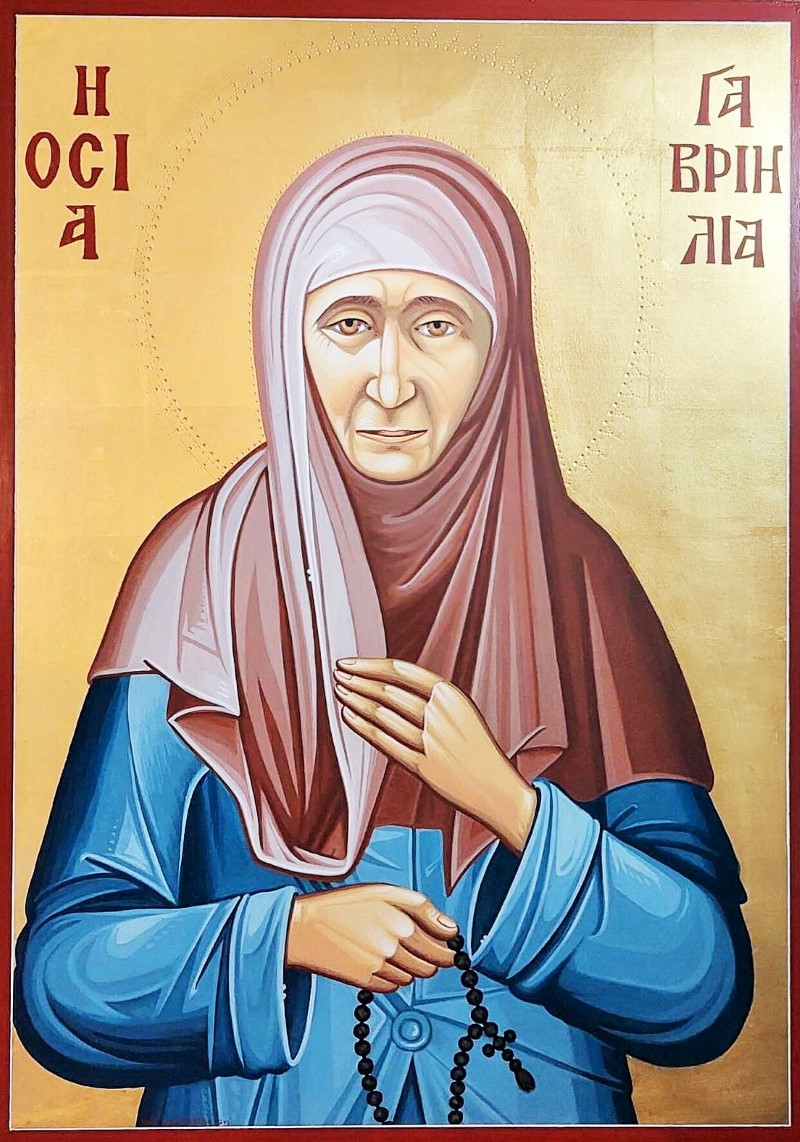
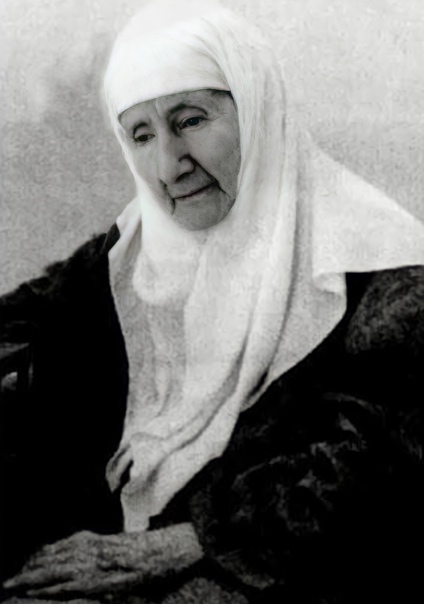
Mother Gabriela, the Ascetic of Love, is canonized (Gerontissa Gavrielia Papagiane +1992)


St. Gabriela, the Ascetic of Love - Commemorated on March 28th (the day of her repose), and July 18th (the day of the translation of her relics) (source)

Gerontissa Gabrielia (Gavrielia) was born in Constantinople more than a hundred years ago on October 15, 1897 to Helias and Victoria Papayanni and was the fourth and last child of the family.

Gerontissa means further than an older nun, supervising the youngers, a spiritual person, who guides others with wise advice and knowledge given from God, in prayers. Her life is a trail of wonders.

She grew up in Constantinople until her family moved to Thessaloniki in 1923. She went to England in 1938 and stayed there throughout the Second World War. She trained as a chiropodist and physiotherapist. In England they honored her for her services during the war and after.

In 1945, she returned to Greece. In 1954, March, her mother died and it changed her life. Sister Gabrielia left Greece and traveled overland to India, where she worked with the poorest of the poor, even the lepers, for five years. She worked with Baba Amte and his family, who built and organised village-communities for the lepers of India. She kept no penny in her pocket. Just trusted herself in His hands.

In 1959, she went to the Monastery of Mary and Martha in Bethany, Palestine, to become a nun. When she arrived, she asked Fr. Theodosius the chaplain for a rule of prayer. Fr. Theodosius was somewhat surprised to find that she could read even ancient Byzantine Greek. Therefore, for her first year in the monastery he set her to reading only the Gospels and St. John Climacus.

She was three years in Bethany. In April 1962, Patriarch Athenagoras of Constantinople sought to send an Orthodox monastic to Taize in France. Sister Gabrielia went from Taize to America.

In 1963, she was back in Greece. The Gerontissa was tonsured to the Small Schema by Abbot Amphilochios (Makris) on Patmos in the Cave of St. Anthony under the Monastery of Evangelismos just before she and the nun Tomasina left again for India. Elder Amphilochios was enthusiastic at the idea of a nun, who would be open to the active outreach in the world. In India, she was for three years in Nani Tal in Uttar Pradesh, where Fr. Lazarus (Moore) was the priest and where he consulted the Gerontissa in his translations of the Psalter and the Fathers. Between 1967 and 1977, Gerontissa traveled in the Mission field of East Africa, in Europe, including visiting old friends and spiritual fathers Lev Gillet and Sophrony of Essex, again to America, and briefly in Sinai, where Archbishop Damianos was attempting to reintroduce women's monasticism.

She traveled extensively, with much concern and broad love for the people of God. Some of her spiritual children found her in Jerusalem beside the Tomb of Christ; others found her on the mission field of East Africa. In the 50s and 60s, she used to have a few thousands of spiritual friends from all over the world! She used to pray for everybody day and night!

In the year 1977, she lived hidden in a little apartment, the "House of the Angels" in Patissia, Athens, in the midst of the noise and smog and confusion of central Athens. In 1989, she moved to Holy Protection hermitage on the island of Aegina, close by the shrine of St. Nectarios. There she called the last two of her spiritual children to become monastics near her, and there she continued to receive many visitors. At the start of Great Lent in 1990, she was hospitalized for lymphatic cancer. She was forty days in the hospital, leaving during Holy Week and receiving communion on Pascha. And to the puzzlement of the doctors, the cancer disappeared. It was not yet her time.

Gerontissa finally withdrew to quiet. With only one last nun, she moved for the last time in this life, to the island of Leros. There they established the hesychastarion of the Holy Archangels. Only in this last year of her life did she accept the Great Schema at the hands of Fr. Dionysious from Little St. Anne's Skete on Mount Athos. He came to give her the Schema in the Chapel of the Panaghia in the Kastro on the top of Leros.

Gerontissa Gabrielia reposed on March 28, 1992, having never built a monastery. Her biography and collected writings were published in Greek in 1996, through the work of her last monastic daughter and the contribution of many, many others, who held the Gerontissa dear.

Anyone, who knew the Gerontissa realized that God has not left us without His saints, even down to the present day. The few words recorded here scarcely suggest the clarity and love of her soul. Words are only the tools of this world; the wonder of Gerontissa was wrapped in the mystery of the silence of the world to come. She was humility and love incarnate.

(source)


See here for a recent feast on the 22nd anniversary of the translation of her holy relics.


St. Gabriela, the Ascetic of Love (source)


On October 3rd, 2023, she was canonized by the Ecumenical Patriarchate (source)


Selected Quotes

Two things are very important… “Love one another,” and “Fear not, only believe.”

We become a reflection of Heaven by saying: ‘Thy will be done on Earth as it is in Heaven’.

 If you have love for all the world, the whole world is beautiful.

If you do not get rid of “No” and “Tomorrow” from your life, you will never get to where the Lord wants you, Who grants you everything. He will give you the bodily strength when you answer “Yes” and “Now”. The prophets, the angels and the saints all said, “Behold here I am… Let it be according to Your word.”

Truth and light are synonymous.When you follow the truth you are in the light, you are with Christ.

True prayer always reaches heaven. The angels carry it to the right place and the answer comes. Its basis is Truth, and “Not My will, but that of the Father Who sent me.”

Say prayer-ropes also just with “Thank you”. 
 The angels always come. You should have continual conversation with your guardian angel. About everything. Especially in difficulties and when you cannot get across to someone. He always helps.

 When it is in God’s programme for you to go somewhere, you will go. That is why I am generally quiet in life. I have observed that even if a person does not want to, God moves him.

Never expect anybody to understand you. Only God.

When one is alone with God, the time passes unimaginably quickly. More quickly than when you have companionship… And yet even within the world one can remain united with God. How? When whatever he is doing he directs his thoughts to Him… when whatever good comes his way he gives Him glory… and whatever testing he meets, he gives Him thanks.

Love means to respect the freedom of the other.

You must not talk about persons who are absent.

 Love is always on the cross. Because Christ is on the cross.

If coal is not “beaten”, can it become diamond?

The Lord allows those who love Him to be tested, first, so that their faith in Him may grow stronger, and second, to set an example for those around.

Some people want to go to the Resurrection without passing by way of Gologatha.

The sermon on the mount and the epistle of Saint James. Every day! What a pity that we do not hear them more often…

My wishes: may the grace of our Christ, the love of the omnipotent Father and the inspiration of the Holy Spirit be with you! May your example be the life of the Mother of God, who will lead you at every step with her archangels and angels as your heavenly mother; that you love your mother who brought you into life and brought you up, and may you give love and joy first to her, and then to all who come near you.

Nun Gavrilia (1999). Mother Gavrilia: The Ascetic of Love. Athens: Ekdoseis K. Papagiannoulis Tertios & Sia. (source)
Another interview on the Saint here, and writing here.
St. Gabriela, the Ascetic of Love (source)

Apolytikion (Plagal of the Fourth Tone)

In thee the image was preserved with exactness, O Mother; for taking up thy cross, thou didst follow Christ,and by thy deeds thou didst teach us to overlookthe flesh,for it passeth away, but to attend to the soul since it is immortal.Wherefore, O righteous Gavrilia, thy spirit rejoiceth with the Angels.

(source)

"My heart will burst from Love" - About Mother Gavrilia - Orthodox Christian Talk (Nov 30 2019), Speaker: Heiromonk Michael of St. Gregory Palamas Monastery in Perrysville, Ohio - Recorded Nov 30 2019, In this presentation Fr Michael will offer reminiscences of Mother Gavrilia of Leros, "The Ascetic of Love," and her five languages of Christian living. Given at the St John the Baptist  Ukrainian Orthodox Church Oshawa Spiritual Retreat (Evangelismos Greek Orthodox Church Oshawa) (source)

The first liturgy celebrated in her honor at the Metropolis Chapel of St. Sophrony on Leros, before her Holy Skull, celebrated October 4th, 2023 (source)


The Metropolitan of Leros chanting her Megalynarion for the first time during liturgy on October 4th, 2023 (source)
   
Icon depicting Sts. Maria of Paris, Matrona of Moscow and Gavrilia (source)

Through the prayers of our Holy Fathers, Lord Jesus Christ our God, have mercy on us and save us! Amen!

Saturday, December 8, 2012

St. Parthenios of Chios (+1883)

St. Parthenios of Chios (+ December 8th, 1883) (source)
   
Brief life of the Saint (amateur translation)
Desiring to behold his dead fiancee with his own eyes (when he was a young man), he went to the tomb at night, uncovered her, and took her in his arms. He philosophized, as is said in the hymns from the Funeral Service: “We went out and saw in the tombs that the naked bones of man are worms and filth and stench”, and without telling anyone, he left the cares of this vain world, and became a monk in Nea Moni of Chios, and was noted for his ascetical feats.

With the blessing of his elder, he ascended the peak of Mount Penthodous, and lit the vigil lamp, and cared in general for the abandoned church there of the Holy Apostle and Evangelist Mark. At one point, at the will of God, he uncovered a cave at the Southeast side of the mountain, where he decided to live in asceticism. There he lived with fasting, vigil and prayer day and night.

The Lord, beholding his spiritual feats, bestowed on him many spiritual gifts, among which was clairvoyance. He foretold the great and terrible earthquake of Chios in 1881. Soon, his fame grew, and the abandoned church of St. Mark was transformed into a Skete, where St. Parthenios and his disciples performed their monastic duties.

All the people gathered from the various parts of the island to hear his sweet word and to seek his prayer and his blessing. Lazarios Zanaras the teacher relates that, without the will of the Saint, St. Parthenios performed many miracles in his life.

He reposed in faith on December 8th 1883.
   
St. Parthenios of Chios on the Spiritual Struggle
This is how it is, brother of Christ by adoption: We step on earth and we look towards heaven. This will be repeated till the grace of God covers you and you come out as victor. Nevertheless, know the voice of God which says: "Did you fall? Arise." To fall is human. To remain fallen is satanic.

Our life is a battle, a struggle, and do not despair, no one comes out a victor if the struggle does not finish. The believer's despair is the demon's joy, and repentance is the angel's joy. Struggle as much as you can to gain the crown of life. Do not give up the weapons when you fall; attack again. Struggle to make the angels joyous. 

(http://frbenedict.blogspot.com/2011/03/st-parthenios-of-chios-on-spiritual.html)
   
Note: St. Parthenios is missing from many Synaxaria, and I have been unable to officially confirm if he has been canonized, but may we all have his blessing, and may we emulate his example!
   
St. Parthenios of Chios (source)
   
Through the prayers of our Holy Fathers, Lord Jesus Christ our God, have mercy on us and save us! Amen!

Wednesday, July 13, 2011

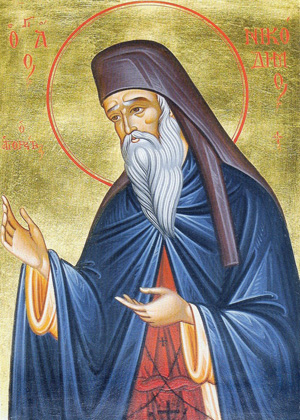
Selected hymns for St. Nikodemos of the Holy Mountain

  
Selected hymns for St. Nikodemos of the Holy Mountain (all hymns below, except for the Apolytikion, are amateur translations from the full service to the Saint in Greek here: http://analogion.gr/glt/texts/Jul/14b.uni.htm)
  

Doxastikon of the Stichera in the Plagal of the Second Tone
Glory to the Father and to the Son and to the Holy Spirit.
Today has dawned for us as the morning star, the memory of the Righteous teacher, Nikodemos the heavenly-minded one, enlightening the Church. Come, therefore, those who love his words, let us celebrate in spirit and truth, and cry to him: hail, who through your virtuous life was made a dwelling-place of the Holy Spirit, working your mind. Hail, spiritual treasure-house, in which the many-varied treasures of wisdom are boundless. Hail, the divine root of Naxos, the adornment of the Holy Mountain, and the godly-wise teacher of the whole Church. Intercede, we pray, O Father, on behalf of our souls.
  
Doxastikon of the Aposticha in the Plagal of the Fourth Tone
Glory to the Father and to the Son and to the Holy Spirit.
Through the word of your teaching, you cultivated well the fruits of eternal life, which you bore forth for the Church, O divine Nikodemos. As an ever-green tree planted by the streams of the waters of grace, through your God-inscribed tablets, you offered to us for all, the knowledge of salvation, as heavenly sweetness, through which we are delivered from the bitterness of the passions, as we partake of peace and great mercy from Christ.
  
Apolytikion of St. Nikodemos of the Holy Mountain - Third Tone
Thou hast been shown to be a godly clarion of holy oracles, teaching us righteousness. Thou wast adorned with wisdom's grace, O Father, Saint Nicodemus For thou didst present to all thy pure life as a paradigm, pouring forth enlightenment by the wealth of thy godly words. Thy teachings of salvation illumined as light the whole world, O righteous Father.
(taken from Holy Trasfiguration Monastery's translation in St. Anthony's music: http://www.stanthonysmonastery.org/music/Menaion/Finale%202003%20-%20%5B5814b%5D.pdf)

Kontakion
As a perfect mystic of the virtuous life, and God-bearing teacher of piety, the Orthodox Church praises you. For having received heavenly grace, you shine with your writings upon those who cry to you:
hail O father Nikodemos.

Oikos
An angel in ways, and much so in knowledge, Nikodemos you were shown to be on Athos. For having the angelic life, your angelic voice resounded from the writings of the fathers, through which you enlighten those who cry out:
Hail, adornment of Naxos, hail, torch-bearer of Athos.
Hail, product of the dogmas of the fathers, hail analysis of the words of the saints.
Hail, height of discernment and river of wisdom, hail, depth of divine knowledge and treasury of love.
Hail, for you were shown forth a God-bearing writer, hail, for you were shown a godly studier.
Hail, radiant ethic of prudence, hail, radiance of the fire above.
Hail through whom the faithful are confirmed, hail, through whom the enemies are defeated.
Hail, O father Nikodemos.

Synaxarion.
On the 14th day of this month (July), the memory of our Righteous and God-bearing father Nikodemos of the Holy Mountain, the most-wise teacher of the Church.

Doxastikon of the Praises in the Plagal of the First Tone
Glory to the Father and to the Son and to the Holy Spirit.
Let us sing with the trumpet of songs, and dance festally, and skip for joy, at the light-bearing memory of our teacher. Priests and monks gathered, to applaud the God-bearer in hymns, who poured out for the world the streams of holy teachings, as that which from Eden watered all. O ranks of the Orthodox, let us together hymn the newly-radiant star of Orthodoxy, the treasury of wisdom, the container of virtues, the mouth of the Comforter, the pillar of prudent ethics, the godly-voiced tongue of theologians, the godly-shining lamp of chastity, the lyre of true dogmas, the godly guide of the faithful, let us therefore honor him with godly songs: O godly-wise Nikodemos, enlighten us by your teaching, and ever intercede to the Trinity, for those who honor you.

Megalynarion
Hail new star of the Church, and holy adornment of the Orthodox, hail. O light-bearing lamp of monastics, O Nikodemos most-blessed, the boast of Athos.


Through the prayers of our Holy Fathers, Lord Jesus Christ our God, have mercy on us and save us! Amen!

Thursday, April 15, 2010

St. Makarios of Corinth, the island of Patmos, and his miraculous Icon

Christ is risen! Truly He is risen!

St. Makarios Archbishop of Corinth - Commemorated on April 17th (http://www.chiosnews.com/cn1542010648330.asp)

In a few days is the feast of St. Makarios Notaras, Archbishop of Corinth, and he is greatly honored throughout the world. His virtuous life is very instructive and moving (see the following link for a good overview of his life: http://logismoitouaaron.blogspot.com/2009/05/shepherd-of-corinth-really-blessed.html). His role as one of the leaders of the famed "Kollyvades" movement that has involved so many contemporary Saints is also honorable (see: http://full-of-grace-and-truth.blogspot.com/2009/04/synaxis-of-holy-kollyvades-fathers.html). His work with St. Nikodemos of compiling the Philokalia is awe-inspiring, as it has helped thousands spiritually throught the world. And his spiritual guidance of no less than three Neomartyr Saints of our Church (St. Polydoros (http://full-of-grace-and-truth.blogspot.com/2009/09/st-polydoros-new-martyr-of-cyprus-and.html), St. Theodore the Byzantine (http://full-of-grace-and-truth.blogspot.com/2009/02/holy-neomartyr-st-theodore-byzantine.html), and St. Demetrios of Peloponnesos (http://full-of-grace-and-truth.blogspot.com/2010/04/st-demetrios-new-martyr-of-peloponnesus.html)) reveals to us what a virtuous, humble and loving person he was, and how he has and continues to guide many to Christ. And he and his Holy Relics continue to work many miracles, as he is honored by the Church in Chios (the place of his repose), Corinth (his former see), Patmos, and many other places.

The following is an amateur translation and summary from an interesting page about St. Makarios and the island of Patmos, including a miraculous icon of him. May we all have his blessing!


St. Makarios and the Island of Patmos
On the Holy island of the Apocalypse St. Makarios remained a total of ten years, from 1782-1793 (with short trips to Corinth, Ikaria, the Holy Mountain, etc.) and lived in asceticism without his Hierarchical duties.

During the period which St. Makarios was on the island, the Ecumenical Patriarch Neophytos VII, with a Patriarchal sigil of 1793, removed the then Abbot and Patriarchal Ecarch of Patmos, and until his replacement was elected, installed Hieromonk Daniel (friend and fellow ascetic of Gregorios Gravano, to whom the Patriarch Neophytos himself confessed).

He visited Smyrna, Chios, and later the monasteries founded by the Kollyvades on Ikaria. He then returned to Patmos, and after the election of the new Abbot-Exarch, he left satisfied for Chios, where he remained until his death.

In the treasury of the Holy Monastery is preserved (in excellent condition) his Hierarchical robe, one of his pastoral staffs, a red phelonion, a censer with bells, an antimension, along with many codeces in the Monastery library. During the first months of his stay on Patmos, the Saint inhabited a small ascetic hut at the foot of the Aipos mountain, in the area of Vrontades, today called Agiasma.


The history of the miraculous icon of the Saint
In 1922, George Photeinos and his family were among the many Greeks forced to flee their home in Kokkinia of Asia Minor. He set off with whatever belongings and people he could loaded into his cart. However, after a few meters, the horse pulling the cart began to bray and pull back, risking overturning the cart. George tried without success to pull it along with the help of others, but it continued in the same way. After enough time in this situation, the horse began to walk with his foot in a hidden place and after a short time it appeared to uncover a rectangular object from the water. At this point, the horse neighed, and having lifted its foot, it began to move as normal as if nothing had happened.

All the people ran to see what this rectangular piece of wood was that was uncovered, and they found that it wasn't a simple board, but it was painted on top. George took it and tried to clean it with whatever he could find. Slowly he cleaned the face and revealed that it was an icon of a monastic priest, and he read the epigraph which said: St. Makarios of Corinth, with the date written as November 10th 1850.

Immediately everyone crossed themselves and venerated the holy icon with faith, amazed by the miracle of its finding and being saved from the rainstorm. Then George asked those standing around if anyone had had this icon (thinking that it fell from one of their carts), but no one had seen it before. Thus, with fear of God he took it to his home and placed it in his icon corner. He tried for many days to find someone who had lost it, but he was unable. Thus, according to everyone's suggestions (clergy and people) he decided to keep it.

The years passed until 1940, when World War II left many sick and hungry, with many selling all that they had for a bit of bread. George and his wife faced the same problem. They sold almost everything they had to survive, with the exception of their icons. Unfortunately they did not survive this tribulations, and passed away in 1942. Their few belongings the left to their relatives, with the icon of St. Makarios being taken by George's sister.

After years it passed to the hands of her daughter, Despina Delle, who after a trip to Patmos between 1988 and 1990, visited the Monastery, and there came to know the former Abbot of the Holy Monastery of St. John and Exarch of Patmos (1961-1963) and head of the Patmias School Fr. Paul Niketara (+1999) (the uncle of the current God-protected Abbot and Patriarchal Exarch of Patmos, Fr. Antipas Niketara), and on her next trip, she brought with her the icon which from that point on was treasured by the Monastery, where it is especially honored.

The year 2005 completed 200 years since the death of the Saint, and the Exarchy of Patmos (with the blessing of the Ecumenical Patriarch), decided to dedicate its calendar to St. Makarios Archbishop of Corinth.
(amateur translation of Greek text from: http://syndesmosklchi.blogspot.com/2009/04/blog-post_25.html)


Apolytikion of St. Makarios of Corinth in the First Tone
Let us faithful praise the shepherd of Corinth, the really Blessed one, who by God’s providence, for reasons ineffable became Chios’ great spiritual leader—him who shone through deeds, words, and prayers; for truly he received from God grace for healing the sick and driving away unclean spirits. Glory to the Father Who destined him, glory to the Son Who elevated him, glory to the Spirit who acts through him.
(http://logismoitouaaron.blogspot.com/2009/05/shepherd-of-corinth-really-blessed.html
)

The full life and service of the Saint (in Greek), respectively, are available here (though I'm not sure if they could be used liturgically or not): http://analogion.net/music/Akolou0iaiAgiwn/0417_BiosAgiouMakariouKorin0ou.pdf, http://analogion.net/music/Akolou0iaiAgiwn/0417_Akolou0iaAgiouMakariouKorin0ou.pdf.
  

Christ is risen from the dead, by death, trampling down upon death, and to those in the tombs, bestowing life!
Truly the Lord is risen!

St. Demetrios the New Martyr of Peloponnesus (+1803)

Christ is risen! Truly He is risen!

St. Demetrios the New Martyr of Peloponnesos - Martyred in Tripoli on April 14th 1803 (and also commemorated on May 22nd) (http://vatopaidi.files.wordpress.com/2010/04/ceacceb3ceb9cebfcf82-cebdceb5cebfcebcceaccf81cf84cf85cf82-ceb4ceb7cebcceaecf84cf81ceb9cebfcf821-e1271194579161.jpg)
Life and Martyrdom of the Saint (amateur translation)


The Saint was from the town of Ligouditsa of Arkadia. When he was still a child he was orphaned with another brother, and his father, Elias, married a second woman. Their step mother treated the two brothers poorly, and therefore as soon as they were older they left home. The older brother went to Tripolitsa and became a servant in a Turkish house, the younger brother, Demetrios, became affiliated with some builders who took him from place to place to build things. One time they went to Tripolo and there Demetrios consorted with a Turkish boy. One day, because of a disagreement over money, he left the builders and went to be a servant in a Turkish house. Slowly, however, childhood attachments convinced him to abandon his people and to embrace islam. When his older brother learned this, he went to meet with him, and tried to convince him of the great evil which he suffered, for he had also converted to islam.

As soon as their father learned this, he came to Tripoli to find them. What happened to the older brother, we do not know. The younger boy, Demetrios, as soon as he heard that his father was coming, did not dare appear before him, either from shame or fear. Thus the father left without seeing his son. However, his presence had an effect, because Demetrios began to think how he saddened his father and what a great evil he committed, that his father would go to such an effort to come from his town to meet him. He began to regret his decision, and to berate himself, and within him was born words of repentance and return to Christ.

At the first opportunity, he left the Turk's house with goal of returning to his hom. However, he did not know the way, so he managed to each Stemnitsa. There a Christian woman housed him, who told him that he took the wrong road and that he would have to return and set-off with a guide. He returned and waited for a chance to leave. In the meantime, he tried learning the skill of hair-cutting, as the master of his house was a barber, but he was not content in his efforts.

One day he met some Christians, who were going to Smyrna. Thus he decided to change plans and to follow them. From Smyrna he headed to Magnesia of Asia Minor, where he knew some people. There he confessed to a spiritual father, however, because of the presence of many Turks, his spiritual father wanted to send him to a safer place. There was also a plague in that region, so he decided to leave.

With God's illumination and the help of some Christians, he traveled to the Monastery of the Precious Forerunner, which was on a small island of the gulf between Aivali and Moschonisia. There in the safe environment of the Monastery, he confessed to the Abbot and returned to the Church, together with Church order by the Mystery of Holy Chrismation.

Because his conscience calmed, he left the Monastery and worked in Moschonisia for a year in a coffee shop and then in Kydonies as a barber, and made a lot of money. He also donated a beautiful vigil lamp to the icon of the Precious Forerunner in the Monastery.

With the passage of time, however, the love of Christ and the desire for martyrdom was lit within his heart. Then he of course heard of the New Martyrologion by St. Nikodemos, and learned about the Neomartyrs, and the desire for confession and martyrdom grew within him. He went therefore to the Abbot of the Precious Forerunner and confessed his desire, and asked him to guide him, that his desire might come to pass.

The Abbot sent him with a letter to Chios, where St. Makarios Notaras (http://logismoitouaaron.blogspot.com/2009/05/shepherd-of-corinth-really-blessed.html), the former Metropolitan of Corinth (and trainer of other Neomartyrs: Sts. Polydoros (http://full-of-grace-and-truth.blogspot.com/2009/09/st-polydoros-new-martyr-of-cyprus-and.html) and Theodore of Byzantium (http://full-of-grace-and-truth.blogspot.com/2009/02/holy-neomartyr-st-theodore-byzantine.html)), was living. The Saint received him with much love, consoled him, and praised his love for Christ and his desire for confession. He stressed to him, however, that with repentance man can be saved from whatever great sins he had committed. He urged him to abandon the idea of martyrdom, because of his young age in case he would not be able to bear the tortures and fall into the same serious sin and deny Christ a second time. With many arguments he tried to dissuade him from martyrdom. The Saint listened to what St. Makarios told him without responding, however within his heart the love for Christ was like a fire. Thus he began to struggle spiritually with unceasing prayer, vigil roughly the whole night, countless prostrations, Parakleses to the Most-Holy Theotokos and continuous tears. He cried bitterly as another Apostle Peter for his denial, as if all of these did very little to redeem him. For further ascesis, he went to a narrow cave, despite the cold of winter, where there was a spring, and continued his ascesis, as much as he could.

As he prepared spiritually according to the judgment of his trainer, St. Makarios, and having confessed cleanly all of his sins that he could remember, his spiritual father again counseled him to abandon his goal of martyrdom. Though he was silent externally, his heart however skipped at the idea of confessing his Faith. Thus, not being able to restrain it any longer, he sought permission of his Elder to go to the place where he had denied Christ, to find his brother, to teach him about his fall and also to confess and suffer for Christ. St. Makarios, seeing his steadfastness, having admonished him, prayed and let him go with his blessing, giving him a letter to give to a certain learned spiritual father in Argos, to support him. Traveling to Argos, he did not find this spiritual father, for he was absent. He stayed therefore near a virtuous Christian, waiting the return of the teacher, continuing his spiritual struggle with prayer, vigil, fasting and tears. As the days passed and the teacher was delayed, Demetrios, unable to hold back the flame in his heart, left for Tripoli with a God-fearing Christian. The priests who had learned of the reason of his traveling to Tripoli, because of fear of reprisals by the Turks, tried to convince him to return. The Saint, however, with great humility, calmed their fears.

Having communed the Immaculate Mysteries, he went to the agora of Tripolitsa to see if anyone recognized him, but no one did. In the end, with the blessing of the most-pious priest Anthony he went to his former master's barber ship, and greeted him with: “Christ is risen!”. It was the week after the Sunday of St. Thomas. When he asked him who he was, he answered:

“I am the Demetrios, who in this wretched work place denied Christ, and I have come now to shed my blood for Him”

The Christians, as soon as they heard this, left immediately.

A helper of the master who was a Turk, told tim:

“What's this, Mehmet, come to your senses, don't you pity your life? The Turks will kill you.”

“I've come because of this” the Saint said.

“Eh, come in the yard, I'll cut your throat with the razor.”

Immediately the Saint ran and put forth his neck, but the Turk, however, went outside, telling him to find someone else.

In the meantime, his former master began to try to get him to return with threats and flatteries, but to no avail. He offered him money to go far away and live as a Christian. But he did not even give in to this.

He only said: “I am a Christian, I'm not leaving. I have come to confess my Faith and to shed my blood for my Christ.”

In the meantime, these events were becoming known, and the Christians, wherever they were, prayed for the grace of God to strengthen him, that he complete his struggle in a God-pleasing way, while the Turks seized him and took him initially to the commissioner of the pasha. He asked him who he was and why he left his faith.

The Saint responded in Greek: “I was and am a Christian and I worship my Christ as true God.”

Because the judge didn't speak Greek, he asked what he was saying, and some Turk told him: “I was a and am a Turk” in order for the Saint to avoid martyrdom.

Then the Saint responded in Turkish with his correct homily. The judge ordered him to be imprisoned until he could be seen by the pasha. When he later appeared before the pasha and many high-profile Turks, the pasha tempted him with flatteries, the others with positions, and then terrible threats of tortures.

The Saint again confessed his faith in Christ, at which point the pasha ordered him to be beheaded. The saint was led joyfully bound to the center of the agora There having stood and prayed, thanking God Who made him worthy of martyrdom, he knelt willingly, however the executioner got him up and led him to his master's barber shop, where he did the same to scare him.

He lifted him up again and hit him and led him to the fish marked, where he beheaded him with three strokes, while the Saint said: Remember me, O Lord, when You come into Your Kingdom.:

And though he was turned towards the west, his body turned towards the east after it was beheaded. After a short time later, the martyrs eyes opened and the separated head appeared as if it were alive, to the amazement of the faithful and the shame of the faithless.

The Saints hastened with gladness to take from his blood, his clothes, or from his martyred relic, which bore an incredible fragrance.

After three days the decision was made to burn the holy relic. However, in the end, with a lot of money, they threw it outside of the walls, from it was gathered by the Christians and buried with reverence. Many miracles followed and many miraculous cures were worked with the grace which was granted to the blessed Demetrios by the Lord Who grants struggles.

The precious relic is today found in the Holy Monastery of St. Nicholas Varson, and his holy skull in the Holy Church of St. Basil in Tripoli.
(amateur translation of Greek text from: http://vatopaidi.wordpress.com/2010/04/14/%ce%bf-%ce%ac%ce%b3%ce%b9%ce%bf%cf%82-%ce%bd%ce%b5%ce%bf%ce%bc%ce%ac%cf%81%cf%84%cf%85%cf%82-%ce%b4%ce%b7%ce%bc%ce%ae%cf%84%cf%81%ce%b9%ce%bf%cf%82-%ce%bf-%cf%80%ce%b5%ce%bb%ce%bf%cf%80%ce%bf%ce%bd/)
 
  
St. Demetrios is honored along with St. Paul the New Martyr as a Patron Saint of the city of Tripoli in the Peloponnese. On May 22nd (the day of St. Paul's martyrdom), both of their Holy Relics are processed through the city and are honored in various Church services. See the following Greek site for more information and pictures: http://www.inarcadia.gr/culture/ekd/ekd-padim.htm. May Sts. Paul and Demetrios the New Martyrs intercede for us all and help us! Amen!

Sts. Paul and Demetrios the New Martyrs, Patron Saints of Tripoli (http://www.inarcadia.gr/culture/ekd/padim/neom1-500.htm)

Απολυτίκιον - Ήχος α'
Της Τριπόλεως δόξα και θερμοί αντιλήπτορες, αθλήσαντες εν ταύτη Νεομάρτυρες ώφθητε, Δημήτριε γενναίε αθλητά και Παύλε των Μαρτύρων μιμητά δια τούτο την αγίαν μνήμην υμών τιμώντες, ανακράζομεν. Δόξα τω ενισχύσαντι υμάς, δόξα τω στεφανώσαντι, δόξα τω ενεργούντι δι' υμών πάσιν ιάματα.

Apolytikion of Sts. Demetrios and Paul the New Martyrs in the First Tone (amateur translation)
The glory and fervent protectors of Tripoli, you were shone to be Neomartyrs by struggling in her, Demetrios O brave champion and Paul the imitator of the Martyrs, because of this we honor your holy memory, crying out: Glory to Him Who strengthened you, glory to Him Who crowned you, glory to Him Who grants healings of all through you.


Christ is risen from the dead, by death, trampling down upon death, and to those in the tombs, bestowing life!
Truly the Lord is risen!