Showing posts with label Cyprus. Show all posts

Saturday, March 27, 2010

Greek Traditions for the Saturday of St. Lazarus

Icon of Christ raising St. Lazarus from the dead (http://vatopaidi.files.wordpress.com/2010/03/egersi-tou-lazarou.jpg)

For hymns and readings from the Saturday of St. Lazarus, see: http://full-of-grace-and-truth.blogspot.com/2009/04/saturday-of-st-lazarus.html.

For St. John Chrysostom's Commentary on the raising of St. Lazarus, from the Gospel of St. John, see: http://www.ccel.org/ccel/schaff/npnf114.iv.lxiv.html, http://www.ccel.org/ccel/schaff/npnf114.iv.lxv.html, and http://www.ccel.org/ccel/schaff/npnf114.iv.lxvi.html.

For more on the tradition of St. Lazarus and Cyprus, see: http://www.serfes.org/lives/stlazarus.htm.

Though this is a departure from the normal content of this blog, I feel the need to reiterate my respect for many of the traditions from the various Orthodox countries. In the hearts of many simple Orthodox villagers, the light of Christ shines through, and leaves an imprint on every aspect of daily life. They pass through Great Lent in fasting, prayer and repentance to approach the Passion of Christ, and they celebrate spiritually and physically in His triumph over death: most especially on Great and Holy Pascha, but also on the Saturday when Christ raises his beloved friend St. Lazarus, the Four-days-dead, from the tomb, along with Palm Sunday.

In Cyprus (where St. Lazarus was a Bishop and where is second tomb is) and Greece, the celebration of the Saturday of St. Lazarus (following the Divine Liturgy) takes the form of chanting and singing of religious hymns and folk songs and the baking of the traditional "Lazarakia" breads in honor of St. Lazarus, among many others things.

"In the old days the children would go door to door to sing special songs for the Lazarus resurrection. This tradition also comes from the gospel saying:

"While Jesus was entering into Jerusalem the Jewish children were singing 'Osannah blessed is the one who come in the name of the Lord. Osannah to the Son of God'."
(http://www.stdgocunion.org/holyweek.html)

"In old times the following custom existed in Larnaca [Cyprus]: on St. Lazarus day, which is on Saturday, on the eve of Palm Sunday, various children, holding branches of palters and headed by a boy representing Lazarus, been decorated with red poppies and yellow wild daisies bearing in Cyprus the name of "Lazarus", went round the houses of the parish, where the priests, on one hand, chanted hymns about the raising of the Saint, and the children, on the other hand, sang the "son of Lazarus" (popular song in various versions). On the same day, in the year of the church, in the presence of all the parishioners, took place a representation of the raising of Lazarus. Both the priests and the children participated in the ceremony."
(http://www.serfes.org/lives/stlazarus.htm)

The following is one of the many beautiful Greek folk songs that relates the story of the raising of St. Lazarus (along with my amateur translation):

Σήμερον έρχεται ο Χριστός,
ο επουράνιος Θεός,
εν τη πόλει Βιθανία.
Μάρθα κλαίει και η Μαρία
Λάζαρο τον αδερφό τους,
τον γλυκό και καρδιακό τους.
Τον μοιρολογούν και λέουν,
τον μοιρολογούν και κλαίουν
τρεις ημέρες τον θρηνούσαν
και τον εμοιρολογούσαν.
Την ημέρα την τετάρτη
κίνησε ο Χριστός για να `ρτει
και εβγήκεν η Μαρία
έξω από τη Βιθανία
και εμπρός του γόνυ κλει
και τους πόδας του φιλεί.
<<Αν εδώ ήσουν, Χριστέ μου,
δεν θ` απέθνησκε ο αδελφός μου
Πλην! Και τώρα ‘γω πιστεύω
και καλότατα ηξεύρω
ότι δύνασ’ αν θελήσεις
και νεκρούς να αναστήσεις.
Τον τάφο να μου δείξετε
και ‘γω τον ανασταίνω.
Τραπέζι να ‘τοιμάσετε
και ‘γω θε να πηγαίνω.
Και παρευθύς επήγαν
και τον τάφο του εδείξαν.
Επήγαν και του έδειξαν
τον τάφο του Λαζάρου
Τους είπε και εκύλησαν
τον λίθο, που ‘χε απάνου.
Τότε ο Χριστός δακρύζει
και τον Άδη φοβερίζει:
<<Άδη, Τάρταρε και Χάρο,
Λάζαρο θα σου τον πάρω>>.
Δεύρο έξω Λάζαρέ μου
φίλε και αγαπητέ μου.
Παρευθύς από τον Άδη
ως εξαίσιο σημάδι
Λάζαρος απελυτρώθη,
ανεστήθη και εσηκώθη,
Λάζαρος σαβανωμένος
και με το κερί ζωσμένος.
Εκεί Μάρθα και Μαρία
εκεί κι όλη Βηθανία.
Μαθητές και Αποστόλοι
τότε ευρεθήκαν όλοι
Δόξα το Θεώ φωνάζουν
και το Λάζαρο ξετάζουν
<<Πες μας, Λάζαρε, τι είδες
εις τον Άδη, όπου πήγες;>>
<<Είδα φόβους, είδα ΄τρόμους,
είδα βάσανα και πόνους.
Δώστε μου λίγο νεράκι,
να ξεπλύνω το φαρμάκι
της καρδιάς, των χειλέων
και μη με ρωτάτε πλέον>>.
Του χρόνου πάλι νιορτάσωμε
με υγεία να σας βρούμε,
στον οίκο σας χαρούμενοι
τον Λάζαρο να πούμε.
Ή τους ήχους μας χαρούμενους πάλι να τραγουδούμε.

Today Christ is coming,
The heavenly God,
In the city of Bethany
Martha and Mary are crying
Lazarus their brother,
Their sweet and beloved.
They mourned him and were speaking
They mourned him and were weeping
Three days they wept for him
And mourned him.
The fourth day
Christ moved to come
And Mary left
Outside of Bethany
And knelt before Him crying
And embraced His feet.
“If You were here, my Christ,
My brother would not have died
But! Even now I believe
And fully I know
That You can do whatever You want
And You can raise the dead."
"Show me the tomb
And I will raise him.
Prepare the table
And I will go there."
And straightaway they went
And showed Him the tomb.
They went and showed Him
The tomb of Lazarus
He told them to roll away
The stone, which was above
Then Christ sheds a tear
And Hades is afraid:
"Hades, Tartarus and Charo,
I will take Lazarus from you”.
Come out my Lazarus
My friend and beloved one.
Straightaway from Hades
As an incredible sign
Lazarus was freed,
Raised up and lifted up,
Lazarus wrapped in a shroud
And belted with waz.
There Martha and Mary
And there all of Bethany.
Disciples and Apostles
Were all found there
"Glory to God", they cried
And greeted Lazarus
“Tell us, Lazarus, what did you see
In Hades, where you went?”
“I saw fears, I saw terrors,
I saw tortures and pains.
Give me a little water,
To wash away the poison
Of my heart, of my lips
And don’t ask me any more.”
Next year may we again celebrate
And find you in health,
And joyfully in your home,
Say “the Lazarus”.
In our joyful tones again let us sing.

A CD "Σήμερον έρχετ' ο Χριστός...: Κάλαντα του Λαζάρου" has been published with many of the folk songs of St. Lazarus from Greece and Cyprus (see: http://www.stamoulis.gr/ViewShopProduct.aspx?ProductId=378395)

See the following link for a recipe for Lazarakia: http://www.orthodoxmom.com/2009/04/lazarakia-recipe.html.

But among these celebrations, we must not forget the central message of the feast as pertaining to our spiritual lives, as characterized in the following hymn from the "Praises" of the Matins of the Saturday of St. Lazarus:


O Lord, even as You said to Martha: I am the Resurrection; so You fulfilled Your word in action by calling back Lazarus from Hades. Resurrect me, also, for I am dead through passions. I beseech You, compassionate One who love mankind.


May we all be made worthy to see the Holy Passion of Christ and His Glorious Resurrection!

Thursday, October 15, 2009

St. John Lampadistis the Wonderworker of Cyprus

Icon of All Saints of Cyprus (taken from: http://www.rel.gr/photo/displayimage.php?album=26&pos=136)

Lampadistis, the Saint of three churches
Written by Philip Stylianou
"Cyprus is often referred to as the island of saints, having since the advent of Christianity attracted many locals and strangers to seek God in the seclusion of it mountains and steep rocks. The youngest of them all is probably Agios loannis Lampadistis – St. John of Lampadis who, since the 10th century, has been venerated m a monastery bearing his name in the Marathasa valley, by the village of Kablanayiotis. His is one of the first Byzantine churches in Cyprus to be put on the Unesco list of protected World Heritage monuments. In fact, it is not one church but three, spanning many centuries of the island's religious history and art, all richly decorated with perfectly preserved frescoes, old icons and other pious relies.

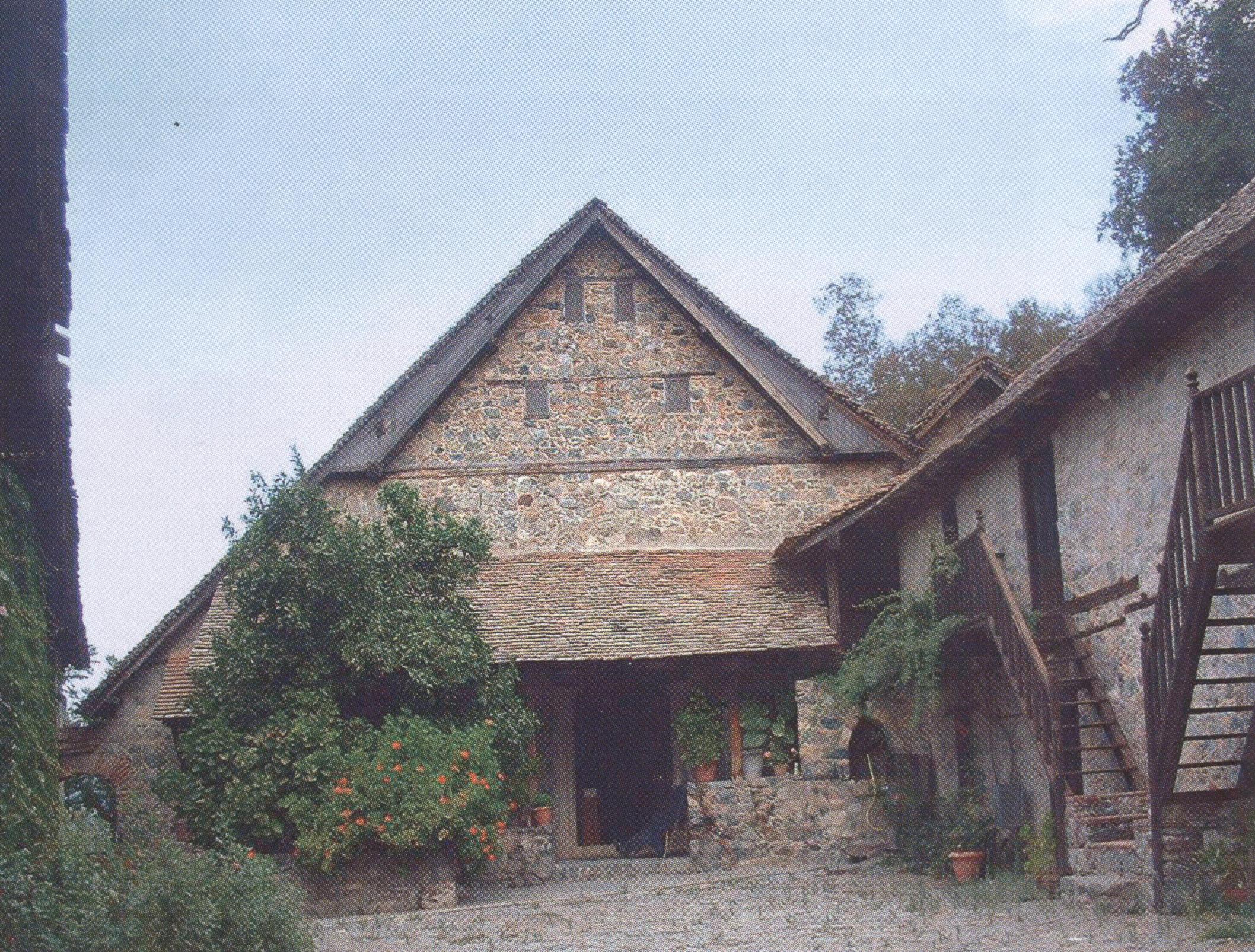
Having three churches under one roof is unique for Cyprus, as is the rectangular courtyard paved with the same local stone used to build the churches and the monastery. Although the monastery has long ceased to function, the monks' cells and auxiliary buildings, including a stone oil-press, survive intact.

 The only modern feature, though hardly distinguishable from the ancient complex, is the iconofylakio, an icon museum, built just outside the south eastern side of the monastery with a generous donation from the late benefactor Constantinos Leventis. It houses a treasure of Byzantine icons and other religious objects which were thought too precious to leave in surrounding unattended chapels.

Icon of St. John Lampadistis the Wonderworker of Cyprus - Commemorated on October 4th (taken from: http://christopherklitou.com/icon_4_oct_john_lampadistis_of_cyprus.htm)

 St. John Lampadistis
St. John's story is a very personal and sad one. What we know of him comes from a now lost 1640 manuscript written by a priest named Savvas from the village of Agios Theodoros Agrou. The work was copied by monk Kirililos of Stavrovouni Monastery in 1903. The manuscript comprised the life of Lampadistis and the prayer said in church on his feast day on 4 October. It was published for the first time in 2003 by the Morphou Bishopric in the jurisdiction of which the Lampadistis monastery is situated and is used here as the main historical source, along with the testimony of the Kalopanayiotis priest Father Andreas.

John took his sanctified name from his birthplace Lampadis, a now extinct village somewhere between the mountain resorts of Galata and Kakopetria. He was the last offspring of Papa-Kyriakos, the priest of the village, and his wife Anna who lived in the time of Archbishop Nicephorus. When John was a child, his father sent him to learn how to read and write through study of the Holy Scriptures, and the amazing aptitude he had shown was an early indication of what his true vocation would be.

When he became a young man, his parents decided it was time to find him a nice girl from a nearby village to settle down with. Not much is known about John's fiancée***, but his future in-laws turned out to be an evil lot! For reasons not recorded in the manuscript, they served the promising lad poisoned fish, causing him to lose his eyesight. They then sent for his father to come and take his son away because he was no longer suitable marriage potential. One can well understand the pain and suffering of the poor village folk upon seeing their brilliant son in such a sorry state. But John didn't seem to share their grief. His physical blindness had opened wide his spiritual vision and he spent his days in prayer. He even gave most of the food provided by his parents to the poor, keeping barely enough to sustain himself.

[***In another source in Greek, St. John and his fiancee are described in greater detail. St. John (who was 18 years old at the time), upon being pressured to marry, but also drawn to serve Christ was unsure about what to do, knelt and prayed for divine illumination. At this point, he heard a voice within him saying: "He that loveth father or mother more than me is not worthy of me: and he that loveth son or daughter more than me is not worthy of me. And he that taketh not his cross, and followeth after me, is not worthy of me."  (Matthew 10:37-38) He hastened to share his desire to live in virginity with the girl with whom he was engaged. She however, did not wish to share in this life, so their engagement was dissolved. This enraged the girl's parents, and they turned to satanism, poisoning St. John, who then lost his sight. (http://www.pigizois.net/kiprioi_agioi/ioannis_o_lampadistis.htm)]

He lived like this for twelve years, until the day he saw his end approaching and summoned his household servant, also named John. He told John that he would be surrendering his soul to the Lord the next day at noon, and asked for a bunch of grapes from his father's new crop. The servant found himself in a difficult position. It was unthinkable for anyone to cut even a single grape from the vineyard before Papa-Kyriakos had been there to bless it. But John insisted, telling his namesake not to fear. The latter gave in and brought a succulent bunch of fresh grapes to John, who said a prayer and started to eat.

When his father saw him, he was furious at what he regarded as irreverence and slapped his blind son across the face. John quietly handed the bunch back to the servant and told him to return it where he had taken it from. The servant again obeyed and, to his amazement, the bunch of grapes rejoined the vine at exactly the spot from where it was cut. (Since that day, bunches of grape have a sensitive knotty spot at which they snap easily away from the plant). By the time the servant returned to tell him about it, John Lampadistis had died.***

[***The Greek source places this story in St. John's youth. St. John picked the grapes to show his father the divine blessing of the harvest, but his father thought that he meant to eat them before they had been blessed on August 6th (the Transfiguration of Christ) and punished and slapped him unjustly. St. John then went and put the grapes back, which were miraculously rejoined to the vine. (http://www.pigizois.net/kiprioi_agioi/ioannis_o_lampadistis.htm)]

 After John was buried, people saw light beaming from his grave. They informed his father, who disregarded it as light from candles. But word spread and individuals who were known to be possessed came to the village, saying they were seeking John's body in order to pray to it and be cured. When Papa-Kyriakos saw that nothing could dissuade them, he agreed to open his son's grave. They found his relics, but his heart was preserved "like a dry fig". The possessed were indeed cured and it was then decided to deposit John's remains in the existing church of Agios Herakleidios at Kalopanayiotis.

The Holy Monastery of St. John Lampadistis, Cyprus (taken from: http://vatopaidi.files.wordpress.com/2009/09/iera_moni_agiou_ioanni_lampadisti_2.jpg)

 The churches
Agios Herakleidios was the island's very first prelate, also from Lampadis, who followed the Apostles Paul, Mark and Barnabas (the latter was the founder of the Cyprus church) when they were journeying through the Troodos Mountains during their visit here in 45 A.D. The church was built in the early 10th century to commemorate Agios Herakleidios’ baptism here, in addition to another one at Politiko, his place of martyrdom near ancient Tamassos.

Icon of St. Herakleidios (and Sts. Paul and Barnabas) from the Monastery of the same name, painted by the fathers of Vatopaidi Monastery (taken from: http://vatopaidi.files.wordpress.com/2009/09/agios-hrakleidios-nea-efestios-eikona-monis.jpg)

The many miracles soon earned John a reputation as a saint. One day, as Papa-Kynakos was standing close to his son's remains in St. Herakleidios' church, he heard a voice telling him to build a church dedicated to John. The priest wasted no time and, in the late 10th century the Church of St. John Lampadistis went up adjacent to that of St. Herakleidios. The miracles attributed to St. John Lampadistis were so frequent and so impressive, that the inhabitants of the area soon came to regard him as their guardian saint.

The third church on the site was added much later, in the 14th century. Unlike the other two which each feature a unique altar screen, this one had none. This was due to the fact that it was not built as an Orthodox church, but as a Latin chapel by the Frankish rulers of the island in their drive to westernize the religious dogma of the Cypriots. The chapel was later dedicated to the Virgin Mary, with a 14th century copy of her famous icon that can be found in the Kykko Monastery.


Father Andreas and Basil Barsky
Father Andreas has been a permanent figure of Agios Lampadastis monastery for the past 45 years. According to him the last monk, Hariton, died in 1926, to be followed by a resident priest who died in 1945. After this, the place remained empty, although the two parishes of Kalopanayiotis alternated holding church services there.

Further information about the history of the monastery has come down to us from the Russian monk and scholarly pilgrim Basil Barsky, who toured the island in 1735. Barsky stayed in the monastery for three days, out of religious curiosity as he said, but also because "of the beauty of the landscape". He counted about 12 monks, noting that they did not strictly observe the monastic rules due to "repeated violent acts by the Ottoman.”
 
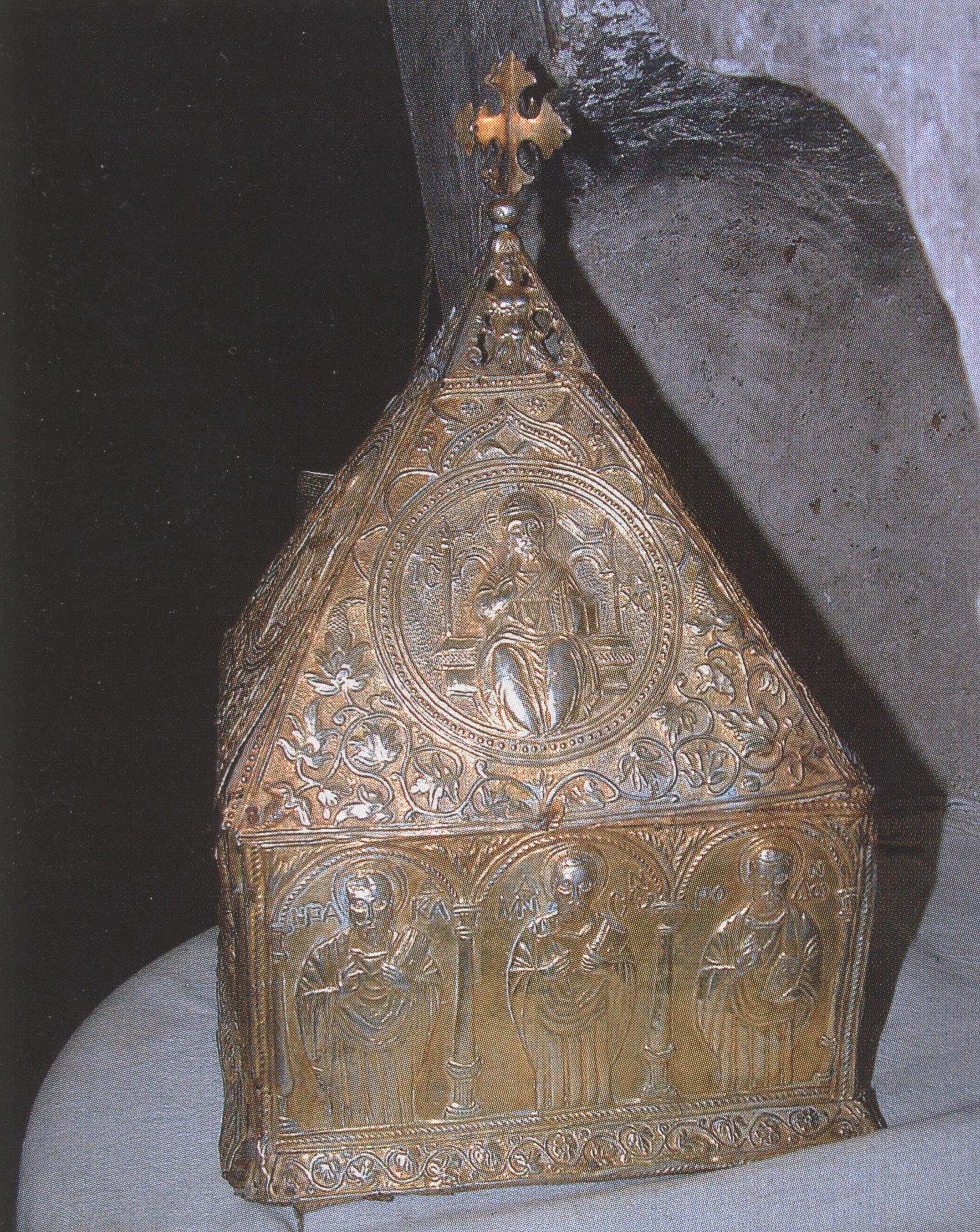
Indeed, Barsky's is the most famous signature on the stone niche containing Saint John Lampadastis' sacred skull. This is kept in a pyramid-shaped case, gilded in gold and silver, which dates back to 1641. The collection of autographs engraved or hand-written around the saint's reliquary is a signed testimony to the repute of the monastery as a pilgrimage through the ages. Most of the signatures belong to Orthodox Greeks who in older times inhabited the southern coast of Asia Minor and took religious excursions to Cyprus by boat. Father Andreas noted that the signatures have been preserved as part of the religious monument, although present-day pilgrims are not allowed to imitate the example of their predecessors.
 

16th Century iconostasis inside the church of St. John Lampadistis (taken from: http://www.chain.to/?t3=9338)

One roof and many icons
The three churches were brought under a tiled roof in the middle of the 18th century, according to Father Andreas, and there are no walls or other partitions separating one from the other. Visitors enter through St. Herakleidios' church, which is cross-shaped with a painted dome, and simply walk through to the other two.
 
The silver reliquary holding the holy and wonderworking Skull of St. John Lampadistis (taken from: http://vatopaidi.files.wordpress.com/2009/09/kara_agiou_ioanni_lampadisti.jpg)
 
Once inside, the most impressive element is probably the image of a youthful, clean-shaven Lampadistis. He is set apart facing the entrance from a gilded icon dated 1776. He is portrayed full size, holding a scroll in his right hand and a cross in his left surrounded by Orthodox prelates and other saints. A small opening is left on the exquisite relief cover for pilgrims to kiss the icon in the Orthodox fashion. A much smaller and older icon, from which the gilded one was probably copied, can be seen close by. Right next to it, resting against a supporting column, is the niche holding the gilded case with the saint's skull. Behind the column there is an upright rectangular ossuary with a pyramidal top, strongly reminiscent of the skull reliquary. According to Father Andreas, this is known as the tomb of St. loannis Lampadistis, which has remained sealed ever since its discovery." (taken from: http://www.chain.to/?t3=9338)
 
13th Century icon of St. John Lampadistis of Cyprus, with scenes from his life (taken from: http://vatopaidi.files.wordpress.com/2009/09/agios-ioannis-lampadistis.jpg)
 
Απολυτίκιο Ήχος α'. Της ερήμου πολίτης...
Της Λαμπάδος το κλέος και Κυπρίων αγλάϊσμα και θαυματουργός όντως ώφθης, Ιωάννη Πατήρ ημών Όσιε. Νηστεία κατατήξας της σαρκός, άλόγους ενθυμήσεις πανσθενώς, όθεν χάριν ίαμάτων εξ ουρανού εδέξω, θεόπνευστε. Δόξα τω δεδωκότι σοι ίσχύν, δόξα τω σε στεφανώσαντι δόξα τω ένεργούντι δια σου πάσιν ιάματα.
 
Apolytikion in the First Tone (amateur translation of the above hymn)
The boast of Lampados and the pride of Cyprus who was shown forth as a wonderworker, John our Righteous Father, By fasting you conquered the irrational thoughts of the flesh utterly, therefore you grant the grace of healing from heaven, O Godly-inspired one. Glory to Him Who gave you strength, glory to Him Whom crowned you, glory to Him who works healing for all through you.

Apolytikion in the Plagal of the Fourth Tone
The image of God, was faithfully preserved in you, O Father. For you took up the Cross and followed Christ. By Your actions you taught us to look beyond the flesh for it passes, rather to be concerned about the soul which is immortal. Wherefore, O Holy John, your soul rejoices with the angels.

Through the prayers of our Holy Fathers, Lord Jesus Christ our God, have mercy on us and save us! Amen!

Wednesday, September 2, 2009

St. Mamas the Great Martyr

St. Mamas the Great Martyr - Commemorated on September 2nd (Icon courtesy of www.eikonografos.com used with permission)

The Holy Great Martyr Mamas was born in Paphlagonia, Asia Minor in the third century of pious and illustrious parents, the Christians Theodotus and Rufina. The parents of the saint were arrested by the pagans for their open confession of their faith and locked up in prison in Caesarea in Cappadocia.

Knowing his own bodily weakness, Theodotus prayed that the Lord would take him before being subjected to tortures. The Lord heard his prayer and he died in prison. St Rufina died also after him, after giving birth to a premature son. She entrusted him to God, beseeching Him to be the Protector and Defender of the orphaned infant.

St. Mamas milking deer to make cheese to feed the poor (source)
   
God heard the dying prayer of St Rufina: a rich Christian widow named Ammia reverently buried the bodies of Sts Theodotus and Rufina, and she took the boy into her own home and raised him as her own son. [He was named Mamas because, after he had long remained without speaking, he addressed his foster mother Ammia as "mama." (http://goarch.org/chapel/saints_view?contentid=190)] St Mamas grew up in the Christian Faith. His foster mother concerned herself with the developing of his natural abilities, and early on she sent him off to study his grammar.

The boy learned easily and willingly. He was not of an age of mature judgment but distinguished himself by maturity of mind and of heart. By means of prudent conversations and personal example young Mamas converted many of his own peers to Christianity.

The governor, Democritus, was informed of this, and the fifteen-year-old Mamas was arrested and brought to trial. In deference to his illustrious parentage, Democritus decided not to subject him to torture, but instead sent him off to the emperor Aurelian (270-275). The emperor tried at first kindly, but then with threats to turn St Mamas back to the pagan faith, but all in vain. The saint bravely confessed himself a Christian and pointed out the madness of the pagans in their worship of lifeless idols.

   
Infuriated, the emperor subjected the youth to cruel tortures. They tried to drown the saint, but an angel of the Lord saved St Mamas and bade him live on a high mountain in the wilderness, not far from Caesarea. Bowing to the will of God, the saint built a small church there and began to lead a life of strict temperance, in exploits of fasting and prayer.

Soon he received a remarkable power over the forces of nature: wild beasts inhabiting the surrounding wilderness gathered at his abode and listened to the reading of the Holy Gospel. St Mamas nourished himself on the milk of wild goats and deer.

The saint did not ignore the needs of his neighbors. Preparing cheese from this milk, he gave it away freely to the poor. Soon the fame of St Mamas's life spread throughout all of Caesarea.

St. Mamas the Great Martyr depicted riding a lion (taken from: http://ocafs.oca.org/FeastSaintsViewer.asp?SID=4&ID=1&FSID=102459)

The governor sent a detachment of soldiers to arrest him. When they encountered St Mamas on the mountain, the soldiers did not recognize him, and mistook him for a simple shepherd. The saint then invited them to his dwelling, gave them a drink of milk and then told them his name, knowing that death for Christ awaited him. The servant of God told the servant of the Emperor to go on ahead of him into Caesaria, promising that he would soon follow. The soldiers waited for him at the gates of the city, and St Mamas, accompanied by a lion, met them there.

Surrendering himself into the hands of the torturers, St Mamas was brought to trial under a deputy governor named Alexander, who subjected him to intense and prolonged tortures. They did not break the saint's will, however. He was strengthened by the words addressed to him from above: "Be strong and take courage, Mamas."
  
St. Mamas being thrown into the flames (source)
  
When they threw St Mamas to the wild beasts, these creatures would not touch him. Finally, one of the pagan priests struck him with a trident. Mortally wounded, St Mamas went out beyond the city limits. There, in a small stone cave, he gave up his spirit to God, Who in the hearing of all summoned the holy Martyr Mamas into His heavenly habitation [In the year 275]. He was buried by believers at the place of his death.

The Martyrdom of St. Mamas (Icon courtesy of www.eikonografos.com used with permission)

The Martyrdom of St. Mamas the Great Martyr (http://pravicon.com/images/sv/s1350/s1350005.jpg)
   
Christians soon began to receive help from him in their afflictions and sorrows. St Basil the Great speaks thus about the holy Martyr Mamas in a sermon to the people: "Remember the holy martyr, you who live here and have him as a helper. You who call on his name have been helped by him. Those in error he has guided into life. Those whom he has healed of infirmity, those whose children were dead he has restored to life, those whose life he has prolonged: let us all come together as one, and praise the martyr!" (taken from: http://ocafs.oca.org/FeastSaintsViewer.asp?SID=4&ID=1&FSID=102459)
  
For the full text in the original Greek of St. Basil's Encomium to St. Mamas the Great Martyr, see: http://khazarzar.skeptik.net/pgm/PG_Migne/Basilius%20Caesariensis_PG%2029-32/In%20Mamantem%20martyrem.pdf.
  
The Monastery of St. Mamas, Morphou, Cyprus (taken from: http://www.whatson-northcyprus.com/interest/guzelyurt/mamas.htm)
   
St. Mamas honored throughout the Orthodox world, but he is especially dear to the Christians of Cyprus. According to one source, all of the churches and chapels named after him in Cyprus total 66. (http://www.synaxaristis.googlepages.com/2σεπτεμβριου) Additional traditions hold that St. Mamas was either from Cyprus, or that his relics and coffin were moved there later. In any case, his Monastery and tomb on Cyprus is a great pilgrimage of the Saint (supposedly the third most sacred pilgrimage in North Cyprus, after St. Barnabas' tomb at Famagusta and Apostolos Andreas Monastery at Karpaz (http://northerncyprus.cc/default.asp?iID=LIDFJ)), and many people there and throughout the world are healed by this great Saint. May he intercede for all of us!

Icons and tomb of St. Mamas, Morphou, Cyprus (taken from: http://www.whatson-northcyprus.com/interest/guzelyurt/mamas.htm)
   
Note: The following prayer (similar to those of St. Modestos (also for animals) and St. Tryphon (for gardens) are said by the Priest following the Blessing of the Water service, specifically for those whose animals are sick or in any kind of danger. It is a beautiful prayer, and as I had mentioned previously, we can see the humility, faith and love of the Fathers, who would always take refuge in the Lord in every need or trial in their lives (and if livestock were one's means of sustenance, as was demonstrated above, then this truly becomes a great need indeed). May Christ heal all of His creation that suffer throughout the world, through the prayers of His Saints. Amen.
   
The Prayer of St. Mamas the Great Martyr (amateur translation)
Behold, I, the sinner and lowest one, Mamas, dwelling in the mountains, and through the power of our Lord Jesus Christ milked deer and made cheese, distributing to the poor, and walking through the mountains and caves until my dead. There when I was passing through, approached John and Philotheos, who entreated me saying: "The wrath of the devil has fallen upon our flocks and herdsmen, and are dying terribly. We pray you, O Saint of God, pray for them, that they might be healed from every evil, in memory of the age to come, and to the glory of God. I then said to them: "My spiritual brothers, I am a sinner, and God does not listen to sinners." But they persisted in entreating me. Hearkening, then, to their prayers, I pray to the Lord, saying:

I call upon You, our Lord Jesus Christ, the true God, Who descended from the Father's bosom, and was incarnate of the holy Theotokos, and Ever-virgin Mary, willingly enduring the Cross and death, and rose on the third day, and granting life to the race of mortals: hearken to me the sinner, and your unworthy servant Mamas, and all those whose spirits are spent and who are in great trouble, and who call upon Your name, O Lord our God, and remember the name of Your servant Mamas, do not allow their flocks or the herds of their animals to be afflicted by diabolical influence or any other sickness.

Yes, O Lord our God, Who made the heaven and the earth, and Whose word grants all things towards salvation to our people, do not neglect this my prayer, from Your humble and lowest servant, but hearken to me, O Lord Who loves mankind, and this my prayer is read, whether at a flock, or oxen, or mules, and do not let sickness or other temptation come close to these animals, that being always guarded by You, we might offer up glory and worship to the Father and to the Son and to the Holy Spirit, now and ever and unto the ages of ages. Amen.
(http://analogion.com/forum/showthread.php?t=13881)


HYMN OF PRAISE to The Holy Martyr Mamas
(by St. Nikolai Velimirovich)
Mamas the pious was born in prison,
And was kindred with Christ from his first day;
His father and mother, martyrs for God,
Birthed their only child in prison darkness.
For fifteen years, orphaned Mamas
Was alone in the prison of the world.
His only comfort and his only light
Shone upon him from the countenance of the Son of God:
This was his fulfillment and his wealth.
Mamas glorified Christ his God,
He glorified Him in word and in deed
By his prayerful soul and innocent body.
His friendship with God was more dear to him
Than the devious world that torments and lies.
He loved God and His pure Christ
And he became a friend to pure nature-
To the wilderness and forest and wild beasts,
To wild goats and fierce lions.
And God endowed his friend
With wondrous gifts of the Holy Spirit.
And Mamas shamed his persecutors,
And turned many torturers to Christ.
The emperor and the empire were against this boy,
But the right hand of God sustained him-
And, enduring torments, Mamas glorified the Savior.
The emperor and the empire collapsed to nothing,
While Mamas reigns, even now, with Christ,
And rejoices with the angels of God in heaven.
Another icon of St. Mamas depicted riding a lion (taken from: http://christopherklitou.com/icon_2_sept_mamas.htm)
   
Apolytikion in the Fourth Tone
Thy Martyr, O Lord, in his courageous contest for Thee received the prize of the crowns of incorruption and life from Thee, our immortal God. For since he possessed Thy strength, he cast down the tyrants and wholly destroyed the demons' strengthless presumption. O Christ God, by his prayers, save our souls, since Thou art merciful.

Kontakion in the Third Tone
With the staff bestowed on thee by God, O holy Great Martyr, shepherd us thy people now in green and life-giving pastures; swiftly crush with godly power unseen and wild beasts underneath the feet of them that praise thee with longing; for in dangers we all have thee, O Mamas, as our fervent protector and help.
(taken from: http://goarch.org/chapel/saints_view?contentid=190)
   
Sts. Tryphon and Mamas the Great Martyrs (source)
   
Additional Apolytikion of the Saint in the Third Tone (amateur translation)
Divine offspring of martyrs, whose godly teachings you in truth followed with incomparable longing, and you preached the name of the Savior, and were shown wondrous, O wise one, through your struggle. O glorious Mamas, entreat Christ God to grant us great mercy.
(http://synaxarion.gr/gr/sid/524/sxsaintinfo.aspx)


Through the prayers of our Holy Fathers, Lord Jesus Christ our God, have mercy on us and save us! Amen!

Sunday, June 21, 2009

Sts. Reginus and Orestes the Great Martyrs

Sts. Reginus and Orestes the Great Martyrs, who are celebrated on August 20th (taken from: http://www.pigizois.net/agiologio/pdf/riginos.pdf)

The saints were from the city of Chalcedon in Asia Minor. St. Reginus was a Christian and a soldier in the Roman army, where his Roman name was Vonomelix, which means Reginus, or Riginos in Greek. When he left to join the army, he sold all of his possessions and gave charity to the poor. In the army he lived an ascetical life to conquer his flesh, including strict fasting, eating dry bread only once a day.

Soon his fellow soldiers took notice of his piety, and reported him to the local government leader, Prezentinus the Commander. “Reginus,” he said, “sacrifice to the gods to save your life and be delivered from torture.” St. Reginus immediately responded resolutely “I don’t sacrifice to your false gods, but only to my God I offer a sacrifice of praise, because He is the true God who made heaven and earth, the sea and everything else that exists in it. I sacrifice to my God, who from the beginning created everything and man, and only to This God will I sacrifice. The gods you worship are deaf and speechless idols without breath and life.”


Hearing this strong response of St. Reginus, Prezentinos was filled with anger and with rage he ordered nine soldiers to lay the martyr on the ground and beat him. Lying on the ground, the brave martyr imitated the passion of Christ with patience and steadfastness by enduring the harsh and merciless beating of his fellow soldiers, until his flesh and the ground were made red from the blood of the Christian athlete. The soldiers tired, but the manliness of the struggler of Christ glorified the Lord Who made him worthy to be tortured for His name.

St. Reginus’ tortures did not cease, but the tyrant tried more perilous [ἐπώδυνες] methods. He sent for a brass pan, below which was lit a fire that was left to get very high, and then they laid St. Reginus in naked to be burned. However, the Lord, Who knows how to deliver His servants from the devil’s evil, heard the prayer of the righteous struggler and transformed the fire into dew, while St. Reginus remained unharmed without the smallest mark, like the Three Youths in the Furnace of fire.

This miracle amazed those who were found near that leader. Seeing that he was shamed and defeated by the Saint, Prezentinos began to tempt him, saying “Reginus, sacrifice to the gods and honor them, and I will give you greater honors than before. But if you don’t listen to me, I will throw you into the sea to become food for the fish.” St. Reginus then responded to the tyrant with these words: “Take the honors that you would grant me and the gifts given to you with you to the fires of hell. However much you hope to scare me with the depth of the sea, I don’t count it as anything, because God who preserved Jonah inside the belly of the great fish, He will preserve me too today from the sea. As for your wicked gods, o most-wicked one, I tell you that all of the gods of the nations are demons, which the Lord of the heavens made. ”

Then, the governor was greatly angered, and ordered that a great sack be brought to him, into which they put St. Reginus and they beat him with a lead rod, handed him over to sailors and asked them to go far into the sea and to throw him out of the boat, to become food for the fish. The sailors took their very precious load, proceeded 40 miles into the sea, threw in the sack with St. Reginus and left.


Listen my Christians and be amazed at the great protection which the Lord provides for His own who keep His holy commandments. As soon as the soldiers threw the Saint into the deep ocean, two dolphins came close, raised their fins and took him out safely. When the Saint appeared from afar on the back of a dolphin, this occurrence spread throughout the city like lightening, and a lot of people, including St. Orestes, went to the shore to see the miracle that took place, and they cried out “great is the God of the Christians”. The impious idolater governor, seeing the Saint coming out alive from the sea, thought that he had been saved by magic. The friend of St. Reginus, St. Orestes, preached Christ with boldness, and many from those idolaters believed in Christ. Prezentinos ordered that Sts. Reginus and Orestes be captured, along with many of those who became Christians, and put them in prison until the next day in order to think about which manner of a death sentence he would give them.

In prison, St. Reginus taught the new Christians the truths of the Gospel and strengthened them in the faith and to death, and also for grace of the name of Christ. In this joyous and spiritual gathering in the prison, guided by courage and fervent faith towards the true God, the captives raised fervent prayer to heaven, from which they waited divine strengthening which did not tarry. At dawn when their prayer reached its height, an angel of the Lord came and opened the doors of the prison. The prisoners were freed, and each left for wherever God led him. Sts. Reginus and Orestes and a few others were led by the grace of God to Cyprus, where idolatry was still the governing power, therefore it must have been the 3rd or 4th centuries when these events took place.

When they arrived in Cyprus, this band of faithful servants of Christ visited various places and lived in asceticism far from the world, however whoever would meet with the idolators would be killed by them [ὅσους συναντοῦσαν οἱ εἰδωλολάτρες τοὺς σκότωναν] The brave St. Reginus and his friend St. Orestes chose continue missionary work. They came to the area of Neapolis near Lemesos, and with great boldness preached Christ. Sometime later, they traveled to the village of Fasoula, eight kilometers from Lemesos. In the village was a center of idolatry, as it appears from the old ruins. There the inhabitants of the area tortured them and beheaded them. Some pious Christians who secretly followed what was taking place, went and took the relics of the Martyrs and buried them. Many years passed from then, and idolatry gave up its place to the holy faith of Christ. Then, as presented in the old Synaxarion, the holy Saints appeared in a dream to a pious priest, and showed him the place where their tomb was found. This pious priest searched in the place where the Saints showed him, and found the coffin which housed their remains. On the coffin was engraved the names of the Saints, along with the Synaxarion. This faithful priest, in honor of these Martyrs built an auspicious church in the name of the Saints, and painted the icon which was found in the church.

Today this magnificent church is ruined, but based on the foundations of the ancient church, a two meter wall was built. In this place, every year on the anniversary of the martyrdom of these Saints (August 20th) the community of Fasoulas festally liturgizes , and many faithful attend to honor the memory of the Saints, to thanks them for their wondrous powers which God granted them and which they use to heal the world. Under the edifice of the ancient church exists an unmarked [θολωτὸ] cave where the coffin which housed the relics of the Saints for so long still exists. There are a few stones in the tomb of Saints. These are wonderworking, and when someone places his afflicted limb on the tomb, it is healed.

The Church of Sts. Reginus and Orestes in Apliki Pitsilias, Cyprus (taken from: http://www.pigizois.net/agiologio/pdf/riginos.pdf)
The wonderworking renown of the Saints has passed beyond our island [Cyprus] and has reached England, as we will see in the account of the miracles. Sts. Reginus and Orestes received great honor from the community of Fasoulas, and also from our whole island. This we can see at the gathering of Christians in the Church on the day of their feast. Outside of Fasoulas, the Saints are honored in Apliki of Levkosias and Trimithousa of Pafos where exists a church dedicated to their memory.

With the intercessions of Your Saints Reginus and Orestes, Christ God, have mercy and save our souls. Amen.

(The life above and the hymns below are preliminary, amateur translations, summarized from: http://www.pigizois.net/agiologio/pdf/riginos.pdf; more to come)


Icon of Sts. Reginus & Orestes the Great Martyrs of Cyprus - 20th of August (Icon by Rev. Christopher Klitou, taken from: http://www.christopherklitou.com/icon_20_aug_reginus_orestes_of_cyprus.htm)

ΑΠΟΛΥΤΙΚΙΟΝ - Ήχος δ’ - Ταχύ προκατάλαβεΜαρτύρων σύλλογος νῦν εὐφραίνεται, ἀγγέλων ἄσμα, μεγαλύνομεν τὴν μνήμην ὑμῶν ἅγιοι, ἅπαντες μελωδοῦντες καὶ πιστῶς ἐκβοῶντες, χαίροντες τῆς Τριάδος, Δυὰς μαρτύρων καὶ κλέος Ρηγίνε καὶ Ὀρέστα, ὑπὲρ ὑμῶν ἀεῖ πρεσβεύετε.
Apolytikion of Sts. Reginus and Orestes – 4th ToneThe choir of Martyrs now rejoices, and with angels’ hymns, we magnify your memory O saints, all who sing and faithfully cry out, praising the Trinity, o Dyad of martyrs and boast Reginus and Orestes, ever intercede for us.

ΚΟΝΤΑΚΙΟΝ - Ήχος δ’ - Ο υψωθείς εν τώ ΣταυρώὩς θησαυρὸν πολυτελὴ ὁ Δεσπότης, καὶ κρήνην βρύουσα κρουνοὺς ἰαμάτων, τοὶς ἐπὶ γῆς παρέσχετο τὰ λείψανα ὑμῶν νόσους μὲν καθαίροντα, πάθημάτων ποικίλων χάριν βραβεύοντα, ταῖς ψυχαῖς ἀεννάως, διὸ συμφώνως Ρηγίνε τὴν ὑμῶν, Ὀρέστα πόθω τελοῦμεν πανήγυριν.

ΜΕΓΑΛΥΝΑΡΙΟΝΧαίροις ἀθλοφόρων ἡ ξυνωρίς, οἱ ἐκ Χαλκηδόνα ἀριστεύσαντες ἱερῶς, Ρηγίνε καὶ Ὀρέστα, ἐχθροῦ τὰς παρατάξεις κατενικήσατε.

Ἕτερον τοῦ Ἁγίου ΡηγίνουἜχων παρρησία πρὸς τὸν Θεὸν τῶν σοὶ πρόστρεχόντων, τί αἰτήματα συμπαθῶς τὰ πρὸς σωτηρία, δίδου τοῖς πρεσβεῖαι Ρηγίνε τῶν Μαρτύρων τὸ ἐγκαλλώπισμα.

Megalynarion of St. ReginusHaving boldness towards God, to those who flee to you, with sympathy, grant their requests towards salvation and your intercessions, O Reginus the boast of Martyrs.
Through the prayers of our Holy Fathers, Lord Jesus Christ our God, have mercy on us and save us! Amen!

Monday, June 8, 2009

A paraplegic walks at the Tomb of St. Barnabus, and the life of the Apostle

The Monastery of St. Barnabus the Apostle near Salamis, Famagusta, North Cyprus (taken from: http://www.whatson-northcyprus.com/interest/famagusta/salamis/barnabas.htm)
  
"He Walked Having Venerated the Tomb of the Apostle Barnabus a paraplegic lived the miracle
The man himself, the Church and also his doctor attribute the cure to a miracle.

The hopes had been extinguished from the person of the paraplegic Marios and his doctors in Cyprus and Germany said the worst: that he would not be able to walk again. However, the "resurrection" came a few months earlier for this forty-year-old man, who lives after the miracle yesterday. He rose from his wheelchair and walked after venerating the tomb of the Apostle Barnabus, the founder of the Church of Cyprus.

Marios Stylianos, forty years old, from the occupied Ammochosto and who currently lives in Levkosias, was left a paraplegic after surgery on his neck, for which he traveled abroad. He related himself that he had seen in a dream the Apostle Barnabus, who told him to write a book about his life and as soon as it was finished, to go to his tomb and he would walk. Marios, following his dream, went to the tomb of the Apostle Barnabus in the occupied Monastery of the same name near Ammochosto, and after the liturgy was finished at the tomb, said that he saw the Apostle Barnabus approach him holding the Gospel and extending him his right hand. Then he made a cry and felt something like an electric current flowing through him, and he continued to get up from his wheelchair and walked, supported.

The neurologist Michael Protopapas, who was watching the paraplegic, related that both he and the German doctors who referred him to surgery, believed with certainty the clinical picture which Marios Stylianos presented, and that he would not walk again. To the question if Marios Stylianos' paralysis could be attributed to psychosomatic causes, he said that all of the specific tests had showed that the spiral cord did not send any "signal" to Marios' foot. Having been asked whether he believes that his is a mirace, he replied: "Above everything is God. This I believe personally."

Moreover, the Church spokesman related that there was great concern whether the event should be disclosed. Eventually, he said, the view prevailed that this fact should be the property of the people."

(Source: the newspaper: Polites (CITIZEN): 15/03/2005 Page: 43, No.. Article: 531508; translated and summarized from: http://www.apostolosvarnavas.org/Miracle.htm)
Picture of Marios Stylianos, walking with the help of Elder Gabriel (the last remaining monk at the Monastery of St. Barnabus), among others (taken from: http://www.apostolosvarnavas.org/Miracle.htm)
  
Of course it is always important to approach these situations with caution:
"However, the Church is being cautious about proclaiming the case a miracle. The Bishop of Arsinoe said the Church did not rule out miracles but would not jump to any immediate conclusions. Echoing his comments, Bishop Chrysostomos of Paphos, who is acting head of the Church, told the Cyprus Mail yesterday he would prefer not to make any judgments, saying it had not happened on his “territory”. If he had, he said he would be more than willing to give a lengthy statement. “I believe in miracles but we should not accept them at a glance,” he said. “It needs analysis.” (http://www.mixedmartialarts.com/?go=forum.posts&thread=571709&forum=71)
  
While always maintaining caution, it is perfecly clear that the continuous blessings and miracles of God continue to flow to us sinners in these latter days. And as the Apostles and all the Saints worked great miracles in life by the Grace of the Holy Spirit, they continue to do so after their earthly deaths. May St. Barnabas the Apostle intercede for all of us and help us!
  

Icon of Sts. Barnabas and Paul the Holy Apostles (Icon courtesy of www.eikonografos.com used with permission)
  
A reading from the Acts of the Apostles, when Sts. Paul and Barnabas visited Lycaonia (Acts 14:8-17)
"In Lystra there sat a man crippled in his feet, who was lame from birth and had never walked. He listened to Paul as he was speaking. Paul looked directly at him, saw that he had faith to be healed and called out, "Stand up on your feet!" At that, the man jumped up and began to walk. When the crowd saw what Paul had done, they shouted in the Lycaonian language, "The gods have come down to us in human form!" Barnabas they called Zeus, and Paul they called Hermes because he was the chief speaker. The priest of Zeus, whose temple was just outside the city, brought bulls and wreaths to the city gates because he and the crowd wanted to offer sacrifices to them. But when the apostles Barnabas and Paul heard of this, they tore their clothes and rushed out into the crowd, shouting: "Men, why are you doing this? We too are only men, human like you. We are bringing you good news, telling you to turn from these worthless things to the living God, who made heaven and earth and sea and everything in them. In the past, he let all nations go their own way. Yet he has not left himself without testimony: He has shown kindness by giving you rain from heaven and crops in their seasons; he provides you with plenty of food and fills your hearts with joy."
(taken from: http://www.biblegateway.com/passage/?book_id=51&chapter=14&version=31)
  

The Holy Tomb of St. Barnabus the Apostle, Cyprus (taken from: http://www.whatson-northcyprus.com/interest/famagusta/salamis/barnabas.htm)
  
The life of St. Barnabus the Apostle
"Barnabas was one of the Seventy Apostles. He was born in Cyprus of wealthy parents from the tribe of Levi and studied together with Saul under Gamaliel. At first, he was called Joseph but the apostles then called him Barnabas, Son of Consolation, because he was exceptionally capable of comforting the souls of the people. After Saul's conversion, Barnabas was the first to introduce Saul to the apostles and after that, with Paul [Saul] and Mark he preached the Gospel in Antioch and throughout other places. In all probability, he was the first to preach in Rome and Milan. He suffered on the island of Cyprus at the hands of the Jews and was buried by Mark beyond the western gate of the town of Salamis with the Gospel of St. Matthew on his chest which he, by his own hand, had copied. His grave remained unknown for several hundred years and since many received healing from sickness on this spot, this place was called: "the place of health." At the time of Emperor Zeno and the Chalcedon Council [451 A.D.], the apostle appeared to Archbishop Anthemius of Cyprus on three successive nights in a dream and revealed to him the location of Barnabas' grave. That appearance of the apostle occurred exactly at the time when Peter, the power-hungry Patriarch of Antioch, sought that the church in Cyprus be under the jurisdiction of the throne of Antioch. After the appearance and discovery of the miraculous relics of the holy Apostle Barnabas, it was established that the church in Cyprus, as an Apostolic Church, should always be independent. Thus, the autocephaly of the Church in Cyprus was established." (taken from the Prologue of St. Nikolai for June 11th, from: http://www.westsrbdio.org/prolog/prolog.htm)
  
Cypriot stamp depicting the finding of the Holy Tomb of St. Barnabas the Apostle (http://www.hellenica.de/Griechenland/Zypern/Biographie/GR/ApostolosVarnavas.html)
  
Another excerpt about the finding of the Holy Tomb of St. Barnabus the Apostle
"During the 6th century the Monastery of the Apostle Barnabas flourished. It was founded at the end of the 5th century by Archbishop Anthemios with the financial assistance of the Emperor Zeno (474-491) and other wealthy men, about 3km. west of Salaminia.
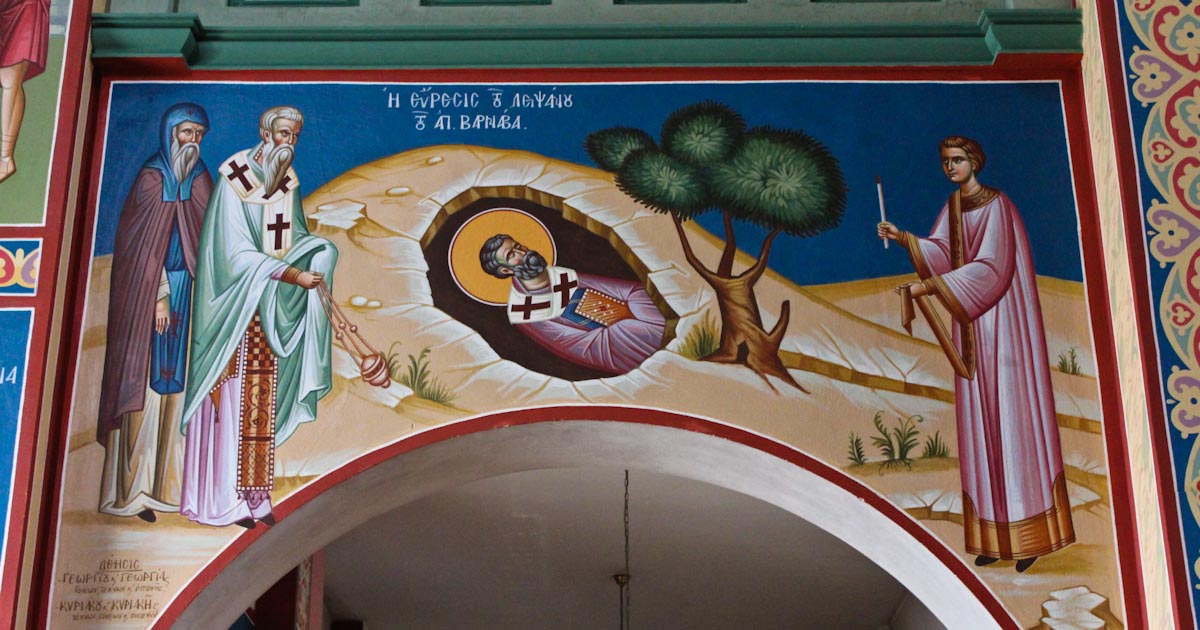
According to tradition which was recorded by the monk Alexandros, who lived in this monastery in the half of the 6th century, the Apostle Barnabas appeared thrice in a vision to Archbishop Anthemios revealing the place of his sepulchre. Accompanied by his clergy Anthemios went in procession to the place which had been so miraculously indicated and found a chest containing the remains of the saint, with a copy of St. Matthew Gospel in Barnabas' own handwriting upon his chest.
 
Fresco depicting the finding of the Holy Relics of St. Barnabas the Apostle (source)
 
Anthemios set off at once withe the precious relics for Constantinople where he reported the marvellous occurrence. Emperor Zeno, as a mark of the importance he attached to the discovery, confirmed the autonomy of the Autocephalus Church of Cyprus and conferred upon the Cypriot primates certain privileges which they have guarded ever since. The received the right of signing in red ink, a mark of distinction only otherwise enjoyed by emperors, of wearing a purple cloak on feast days and of carrying an imperial sceptre in place of the ordinary pastoral staff.
The copy of St. Matthew's Gospel, presented to the Emperor by Anthemios, was conveyed to the chapel of St. Stephen in the imperial palace in Constantinople, where it was read annually on Good Friday." (taken from: http://www.serfes.org/orthodox/cyprus.htm)
  

Icon of St. Barnabus the Apostle, enthroned (taken from: http://www.christopherklitou.com/icon_11_june_barnabas_apostle.htm)
  
Apolytikion of Sts. Bartholomew and Barnabas the Apostles (June 11) in the Third Tone
O Holy Apostles, intercede to our merciful God, that He may grant our souls forgiveness of sins.

  
Kontakion of St. Barnabas in the Fourth Tone
To thy Lord, O Barnabas, thou wast a genuine servant; and among the Seventy Apostles, thou wast the foremost; and with Paul, thou shonest brightly in thy wise preaching, making known unto all men Christ Jesus, the Saviour. For this cause, we celebrate thy divine memorial with hymns and spiritual songs.