Showing posts with label Vigilance. Show all posts

Tuesday, October 15, 2019

St. Porphyrios on the Expectation of God

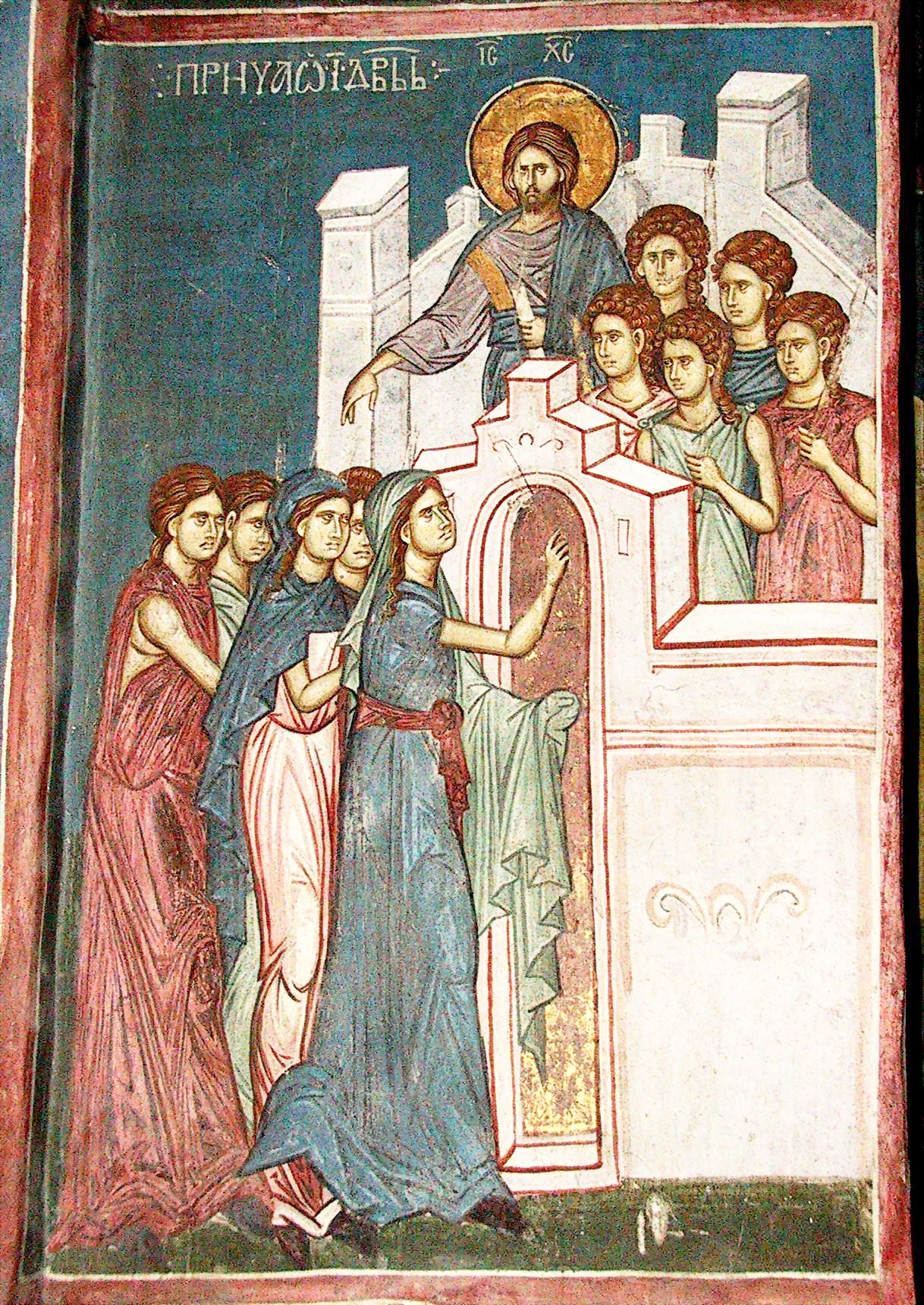
Icon of the Parable of the Ten Virgins (source)
  
When you desire and wait to be united with God, when you force God, He does not come. But He comes "at a day that is not expected, and at the hour that you do not know." It is a most-holy way, but you cannot learn it from outside.
-St. Porphyrios of Kavsokalyvia
  
(source)
  
Through the prayers of our Holy Fathers, Lord Jesus Christ our God, have mercy on us and save us! Amen!
Tuesday, March 5, 2019

Elder Aimilianos: Fasting and Prayer as a Longing for God

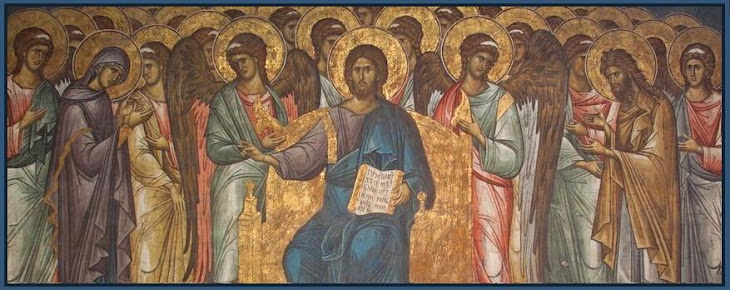
Jesus Christ, detail (source)
  
"Longing for God is expressed with fasting, with an empty stomach... Fasting has a unique meaning by expressing the longing for God... The same occurs for prayer. If prayer to myself had meaning, then my prayer life would be a human endeavor, a tendency and revival, it wouldn't be God. My prayer has meaning because it exactly expresses my longing: 'Come and abide in us...', the: 'Where are you, my God?'

"With fasting, vigil, and prayer, chaos and malaise are shown to be our rags before God, as the poor man shows his rags to his fellow man in order for him to have pity on him to help him, or like the blind man cried out to Christ to give him light. Thus, we show our poverty and he ask that He open our eyes in order to understand that we are sinners, that we might repent and so He can forgive us...

"The approach therefore is an uncreated energy, a true projection of His being. Because of this, my life as well is a true communion with the true God. While God acts, I commune with Him. While God is unapproachable, I partake of Him...

"Only the: 'Where are you, my God?', can make visible the invisible presence of God...We give Him our consent, our being, and He directs everything, He kneads us..."
-Elder Aimilianos of Simonopetra
(source)
  
Through the prayers of our Holy Fathers, Lord Jesus Christ our God, have mercy on us and save us! Amen!

Tuesday, January 22, 2019

Eldress Makrina: "When we make our nous a Heaven..."

Jesus Christ Pantocrator, the Son of God, the Savior of the World (source)
  
When we make our nous a Heaven and our mouth a Church and we are patient, God will number us with the monastics of the end times, whom a saint has said will have greater glory than any monastics from any other age. This is because today there are no virtuous guides as examples and everyone struggles alone as he is able. We need to protect our eyes and our ears and ceaselessly pray in order to have the grace of God.
-Gerondissa Makrina Vassopoulos of Portaria
  
(source)
  
Through the prayers of our Holy Fathers, Lord Jesus Christ our God, have mercy on us and save us! Amen!

Wednesday, February 21, 2018

Elder Ephraim of Arizona on Great Lent

Jesus Christ, "Extreme Humility" (source)
  
At this time we’re entering the great spiritual arena of the blessed Great Lent. Holy and Great Lent is a time of compunction, for repentance, for tears, for a change in ourselves, for a new stage in the spiritual life. Like an affectionate mother caring for her children, us Christians, the Church has designated this time of Lent as dedicated to the struggle, in order to help its children fight harder, to purify themselves, draw closer to God and to be counted worthy of celebrating the great day of the radiant Resurrection.
  

Christians, especially monks, have always paid particular attention to this spiritual arena and have thought it especially sacred, because it’s a period which envisages both spiritual and bodily struggles. There’s the struggle of fasting, the struggle of vigils, the struggle of purification and the struggle to fulfill one’s spiritual duties which are many more than at other times of the year. There’s a spiritual “defragmentation” and people pay greater attention to the voice of their conscience in order to correct what they’ve maybe neglected and to improve spiritually.
   
The Church assists us but with penitential hymns and services, as well as with teachings, to oil us up for the fight for the purification of our souls.
  
We have the penitential evening Divine Liturgies of the Presanctified Gifts. The Presanctified is extremely beneficial. It’s Cherubic Hymn is full of spirituality, contemplation, angelic presence. That’s why we should come to these liturgies during Great Lent with even greater compunction. We who consume the Body and Blood of Christ must be so pure and clean, so straight in body and soul for divine grace to have its effect. For this reason we must lead very careful lives. Both in our cells and in church we must wet our face with tears so as to wash our souls and be worthy to take communion. Of course, the devil often makes us wanting in compunction, me more than anyone. Which means we can’t have tears and we often have bad thoughts. Bad thoughts and the sinful images that accompany them must be rejected as soon as they make their appearance. And when we have wicked thoughts or our soul is cold towards one of the brethren, let’s not approach the God of love, Who is so pure and holy.
  
Throughout this period, at every service in Great Lent, we say the prayer of Saint Efraim the Syrian, which is as follows: “Lord and Master of my life, do not give me the spirit of sloth, inquisitiveness, lust for power or idle talk, but give rather the spirit of sobriety, humility, patience and love to me, your servant. Indeed, Lord King, grant me to see my own errors and not to judge my brother, for you are blessed to the ages of ages. Amen”.
  
With these words, the saint wishes to make us understand very clearly, that, apart from other virtues we need to take special care with the last case, that of self-censure and of criticism of our bothers and that without love for our fellow human beings there’s no chance of making even the slightest progress towards our spiritual purification. If we don’t pay attention to our thoughts, our words and our heart, there’s no benefit in fasting. Fasting is of benefit when it’s combines with love for our neighbour and when we don’t criticize others. When we don’t criticize our fellows and instead criticize ourselves, then we’re marked by love for others and love for our soul, concern for purification and the fulfillment of the great commandment, that of love of God and one’s neighbour. Love for God and for our fellows  are the two great virtues which support the whole of the spiritual structure, because if they are absent, they others cannot take form. “God is love and those who live in God in love have God living in them, too” (I. Jn. 4, 16).
  
Another issue which demands that we push ourselves as hard as possible is prayer We should pray in the name of Christ, without neglecting any opportunity and without any waste of time. In the personal vigil in our cell, we should push ourselves, shouldn’t let sleep overcome us, nor neglect nor idleness; we should engage willingly I spiritual matters. As soon as we wake up, prayer should take first place then our rule, our prayer-rope, study and the contemplation of God. We should go to church with great readiness and so get the best results from our presence in the arena.
  
Apart from this, fasting together with bodily exertion helps as regards the forgiveness of sins. “Behold my humility and my efforts and forgive all my sins”. When we labour with the fast, with kneeling, with prayers, with an effort from our heart and mind, this Godly exertion is holy and is richly rewarded by God, because it make people worthy of the crown of glory and honour. The demons fear the fast greatly, because it lays them low. “This kind [of demon] will not depart other than with prayer and fasting”, said the Lord (Math. 17, 21). This is why the holy fathers always began any Godly task with a fast. They considered a fast to be very powerful and that the Holy Spirit does nor overshadow people when they’re replete with food and their stomachs are full. And any Christian who desires purification has to start from this foundation which is fasting, prayer and vigilance. When these three are combined, then people have acquired great stature.
  
In olden times, the fathers had a holy custom. On the eve of Lent, they would leave the monasteries and go deeper into the desert, where they lived in great asceticism until Lazarus Saturday, when they returned in order to celebrate Palm Sunday all together. Some would take a few of the basic essentials as far as food was concerned, others would eat only green plants, in order to struggle more fiercely in the desert. Thereafter they would spend all the days on Great Week together in church, existing on a piece of dried rusk and a few nuts a day. We were given the blessing and the grace of knowing ascetic people who spent not only Great Lent in fasting and spiritual struggle.
  
Our departed elder, Elder Iosif the Cave-Dweller (he used to live in caves, which is where I met him), kept a very strict fast during Great Lent. And, of course, he imposed it on us, too. From Monday to Friday, five days of the week there was no food, except a handful of flour, from which we made a batter with just water. That was it. A little plate every twenty-four hours. And, at the same time, hard work lifting loads on our back during the day and the whole night hundreds of prostrations and hours of prayer. And all of this in order to purify the inner person, to make it cleaner, more honourable in the eyes of God, in order to acquire boldness before God and be able to pray for the whole world. Because the world, people everywhere, needs the prayers of the saints, particularly those of ascetics. Saint Anthony the Great supported the whole world with his prayers.
  
 Of course, we must keep the fast only as far as we’re able, with discretion, because we’re not all the same. “Unless the good be done well, it is not good”. In other words, unless good is done in a good way, method, time and amount, but instead is done without discretion, then it’ll do more harm than good. Fasting is certainly extremely necessary, it’s good, but it’s a means rather than an end The means has an end and that is humility. This is why we need to arrange everything in accordance with the discretion of a spiritual father, someone illumined by the Holy Spirit. Your spiritual father will tell you  how much to fast, how often to receive communion, where to strike at the enemy, what you should do here and what there. And then, through the discretion of your spiritual father, you can put your house in order. We shouldn’t do more than is appropriate, we need moderation in all things, because immoderation cancels out any benefit. So fasting is holy, but it’s a means. We should adjust it according to what our spiritual father says and what out psychosomatic powers allow. As long as there’s good will. Basil the Great says there’s as much difference in resilience between people as there is between iron and grass.
  
Saint Synklitiki fell ill towards the end of her life with a throat disease. Her blessed throat, which had always spoken the word of God, festered on the inside. Her mouth had saved countless people. The devil had asked permission to test her and God had granted it. The stench from her rotting flesh became so bad that the nuns had the greatest difficulty in seeing to her needs. They used the most pungent perfumes to try and bring her a little respite in her sickness. When her mouth had been healthy, it had spoken and brought benefit to many, but when she fell ill, she was able to preach even more strongly. How could a silent and rotting mouth preach? She noiselessly declared her great patience and endurance in God’s trial. She made a titanic effort to deal with the devil of impatience, of complaint, of the labour and toil of sickness. What did she need with fasting? This is why illness is regarded as involuntary asceticism. One person has cancer, another diabetes, somebody else has lots of troublesome health problems. How will these people purify themselves? How will they see God’s light?
  
Through patience and giving thanks to Him. These make up for the fast which, because of their illness, they’re unable to keep, and, in fact, often struggle ten times harder than if they were fasting.
  
During this period, we really have to struggle to purify ourselves. From the ascetic tradition we have hermits who spent the whole of their lives in the desert, with labours, toil, fasts, tears, sleeping on the ground and deprivation of every other kind of pleasure. And all this effort, together with the struggle of the soul against all kinds of thoughts concerning the rebellions of the flesh, engendered sanctity.
  
So every Christian who’s a monk and wants to experience purification has the right to labour and not be deprived of his reward. Purity brings great boldness towards God, because He Himself is pure, the Mother of God is most pure and Saint John the Theologian lived his life as a virgin, as did so many other saints. The whole beauty of the Church is founded on purity and spotlessness. When our heart is pure and beautiful it will exude fragrance and loveliness. But if people have filth in their hearts, that’s what they’ll expel. Let’s struggle to cleanse the inside of our glass, our heart, so that we’ll be pure and pleasing in God’s eyes.

  
We have instances from Church history of many people “in the world” (not monastics, that is), who pleased God and became great. Abba Paphnuti [from Ancient Egyptian = “man of God”], an ascetic of great gifts, once prayed to God and said: “God, who have You placed me with. With whom do I share the same measure of virtue?”. And he heard a voice, saying to him: “Down in Alexandria there’s a poor man, a cobbler, down in a basement. You have the same amount of virtue as he does”. “But I’ve been a hermit in the desert from childhood and I’m equal in virtue with a lay person, a married man?”. “Yes, you’re equal to him”. The next day, the saint picked up his staff and his bag, put in some dry rusks and set off for Alexandria. He went down into the city, found the layman and said to him: “What do you do here, friend?”. “What should I do, father? I’m a sinner, the worst person in the world”. “Can we talk?”. “Certainly”. “What’s the virtue that you’re working on acquiring?”. “Virtue, me? I live ‘in the world’ and am completely mixed up. Now you, you’ve got virtues”. “No, you’re doing something”. “I’m not doing anything”. “God showed me, so you can’t tell me lies. I prayed and He told me that we share the same measure of virtue. There must be something about you”. “Sorry, Father. If what I do can be considered something, I’ll tell you. I married, and from the moment I put on the crown, I said to my wife: ‘If you love me, we’ll live apart, like brother and sister and work for the sanctification of our souls. Do you agree’. ‘I agree’. And since then we’ve lived in purity and virginity”.*
  
[*Note: This marital chastity described is similar to that experienced by other saints, for example, St. John of Kronstadt. St. Paphnoutios is not at all implying that sex and childbearing in marriage are evil or impure. But all married Christians are called to some degree of self-control and purity, (as is prayed for in every wedding service) according to their strength, according to their mutual consent and the guidance of their spiritual fathers, not all to a life of virginity.]
  
In the desert, Blessed Paphnuti tried to cleanse himself through the ascetic life, and restraint, in which he was greatly assisted by the condition of his way of life. The other man lived “in the world”, with a wife, with all the challenges of secular life and, with God’s help had reached the stature of a saint. And his struggle was greater than that of the hermit. Proof that he was great in the eyes of God.
  
After that, something else happened which has to do with this cobbler. One day a Christian went to the Blessed Paphnuti and said:
  
“Father, I quarrelled with a priest and I don’t know how he reacted, whether he cursed me or swore at me, but he’s now departed this life and we weren’t reconciled. What do I do now?”.
  
“There’s nothing I can do in this case, but there’s a holy man who I’ll send you to and he’ll help. Go down to Alexandria, to a basement where there’s this cobbler. Tell him I sent you, mention the problem and he’ll help”.
  
The Christian said to himself: “For goodness’ sake. A hermit can’t help and a layman can?”. Nevertheless, out of obedience to the hermit, he did as he was told. The cobbler told him to wait until night fell and then took him to a church in the city. After again telling him to wait, the cobbler went up to the large door made the sign of the cross and it opened. The inside of the church was bathed in light and there was heavenly music. The cobbler told the man:
  
“Go in there and look at the choirs on the left and right. You’ll see the priest there”.
  
The man went in, saw the priest in the left choir and received his forgiveness.
   
You see what ascetic effort can achieve? What the soul’s struggle can do? What did that layman do to purify his soul. When he told the girl he’d married  that they should live like brother and sister, was that an end to it? No, they fasted and kept vigil together, they made prostrations and read the Gospel. They read Patristic books, went to church, confessed, took communion, chased  away evil thoughts and struggled assiduously. And that’s how they became saints “in the world”.
  
So here is proof that even “in the world”, when Christians take on the struggle with good will, the Grace of God does not exclude anyone. But we make excuse for ourselves and say that because we’re “in the world”, we can’t. Desire gets the better of us. What do we need to do? Fight in the body and in the soul. In other words, control our thoughts. Thoughts come, sinful fantasies, images, faces, idols and scenes. We must get rid of them immediately with “Lord Jesus Christ, have mercy upon me”. When the mind is careful not to accept all of that and has the divine weapon, the Name of Christ, then every enemy of our soul is slain, whether it be the devil, sordid fantasies or repulsive thoughts. Then, if we guard our soul, mind and heart in this way, our inner self will remain clean and pure.
  
Let’s struggle really hard now, and the rewards will be very great. Nobody finds grace unless they make the effort. If a farmer doesn’t tend his crops, he won’t see any yield. When our fast is accompanied, reinforced and flanked by prayer, study, vigilance, church attendance, confession, Holy Communion, good works- especially almsgiving- then the beauty of the preparation of the soul for the reception of Great Week is complete. Then we’ll experience the Holy and Sacred Passion of Christ  more intensely, because our heart will soften, it’ll alter and it’ll realize how great God’s love for humankind is. Then, within us, we’ll experience very forcibly the Holy Resurrection, we’ll celebrate it in a way befitting to God and we’ll celebrate Holy Easter together with the angels. Amen.
  
Brethren, may we all have a blessed and spiritually-profitable Lent, and be made worthy of partaking in Christ's Passion and Resurrection! Please forgive me, and may God forgive us all!
  
Through the prayers of our Holy Fathers, Lord Jesus Christ our God, have mercy on us and save us! Amen!

Saturday, July 8, 2017

Twenty Practical Suggestions for Humility, by Fr. Stephanos Anagnostopoulos

Jesus Christ the Son of God, the Savior (source)
   
Note: These succinct, practical examples of the Beatitudes or the Lives of the Saints, are wonderful reminders of the love, humility and repentance that Christ calls us to. However, please always make sure that you are under the guidance of your spiritual father to prevent any delusion or damage to yourself or your family.
   
Twenty Practical Suggestions for Humility, by Fr. Stephanos Anagnostopoulos (amateur translation)
   
Did they forget you? They don’t even pick up the phone? It doesn’t matter.

Were they unjust to you? Forget about it.

Do they despise you? Rejoice.

Do they condemn you? Don’t fight back.

Do they ridicule you? Don’t respond.

Do they curse you? Be silent and pray.

Do they not let you speak? Do they cut you off? Don’t be sad.

Do they speak evil of you? Don’t fight back.

Do your children, your relatives and your own people take away your rights? Don’t complain.

Do they get angry with you? Remain peaceful.

Do they rob you openly? Be blind to it.

Do they mock you? Forbear it.

Do they not listen to your advice, especially your children? Fall to your knees and pray.

Are you upset with your spouse? You are to blame, not the other.

Were you to blame? Ask forgiveness.

You weren’t to blame? Again ask forgiveness.

Do you have health? Glorify God.

Do you have sickness? Do you have cancer, depression? Are you suffering, tortured, in pain? Glorify God.

Complaining, unemployment, poverty in the house? Fasting. Vigil. Prayer.

For everyone and for everything, prayer. Much prayer. Much prayer. Fasting and prayer, for “these kinds of passions and demons do not come out but with fasting and prayer.”

May we all, my brethren, and first of all myself, follow these humble suggestions, that we may be sure that we will be saved.
    
Jesus Christ, the Son of God, the Savior (source)
   
Through the prayers of our Holy Fathers, Lord Jesus Christ our God, have mercy on us and save us! Amen!

Monday, April 29, 2013

Selected Quotes of the Fathers on the Parable of the Ten Virgins

The Parable of the Ten Virgins (source)
    
Selected Quotes of the Fathers on the Parable of the Ten Virgins
The five wise virgins, watchful and alert, had taken oil in the vessels of their heart. That oil, not part of their own nature, means the grace of the Spirit. They were enabled to enter with the Bridegroom into the heavenly bridal chamber. The other five virgins, however, were content with their own nature. They neither watched nor busied themselves to receive the oil of gladness [Ps. 44:6] in their vessels, while they were yet in the flesh. Instead, they sank into sleep through carelessness, slackness, idleness, and ignorance, or even fancied righteousness. Hence, they were shut out of the bridal chamber of the Kingdom, unable to give satisfaction to the heavenly Bridegroom. Held fast by their tie to the world, and by some earthly affection, they did not give their whole love or passionate devotion to the heavenly Bridegroom; thus they were not provided with oil. Souls that seek the sanctification of the Spirit, which is outside of nature, fasten all their affection upon the Lord. It is in the Lord that they walk, pray, and employ their thoughts, turning away from all else. For this cause, they are priviledged to receive the oil of heavenly grace. This enables them to succeed in coming through without falling, giving perfect satisfaction to the spiritual Bridegroom. Those souls, however, content with what belongs to their own nature, creep upon the earth in their thoughts. Not only do they employ their thoughts upon earth, but their minds have their whole existence upon earth. In their own estimation, they appear to belong to the Bridegroom, and to be adorned with the ordinances of the flesh. Nonetheless, they have not been born of the Spirit; and they have not received the oil of gladness.
-Saint Macarios the Great (Fifty Spiritual Homilies, Homily IV)


This parable admonishes us to remain diligent in almsgiving. It counsels us to help our neighbor by every means available to us, since it is impossible to be saved in any other way....For nothing is more sullied than virginity without mercy ... What was the profit of virginity, when they saw not the Bridegroom? Even when they knocked at the door, they did not obtain; instead, they heard the fearful saying, "Depart, I know you not". When he said this, nothing else but hell is left, and that intolerable punishment....This parable was spoken with respect to mercy in almsgiving ... It is also that we might learn how close Christ is joined unto virgins that strip themselves of their possessions; for this indeed is virginity.
-Saint John Chrysostom (Homilies on the Gospel of Matthew, Homily LXXVII)


As it is written: "The day of the Lord shall come as a thief in the night" (1 Thess. 5:2). Then the virgins shall awake, because both good and wicked are roused from the sleep of death. They shall trim their lamps, that is, they shall count the number of their good works for which they hope to receive the reward of eternal happiness. However, the lamps of the foolish virgins shall fail. This is because their works, seen so clearly by men, shall wane and vanish at the coming of the Judge. From God, they shall receive no recompense, for men gave them the praise they esteemed so highly. The blessed will rejoice in their recompense, when they enjoy that vision of Him in Whose presence the elements tremble. They will then go in with Him to the marriage. As they rejoice in the nuptials of the Bridegroom, they themselves will be the bride; for in the bridal chamber of the eternal Kingdom, they are united forever to their God. Thenceforth, that vision can never be snatched from them. The door of the Kingdom will close forever upon those left outside, who then will weep. However, that same door is now open to all penitents. There will be repentance then, but it will be fruitless. When the Bridegroom comes, those that wasted time that might have be used for repentance shall not find pardon. Thus St. Paul warns us: "Behold, now is the accepted time; behold, now is the day of salvation" (2 Cor. 6:2). The Prophet Isaiah says: "Seek ye the Lord, and when ye find Him, call upon Him" (Is. 55:6).
-Saint Gregory the Great (Parables of the Gospel, "The Ten Virgins")
(source)
   

Some say that the shortage of oil of the foolish virgins signifies their shortage of good works in their lives. Such understanding is not exactly correct. How can they be short of good works if they, though foolish, are still called virgins? Chastity is a supreme virtue, the state of being equal to angels, and could itself serve as a substitute for all other virtues. I humbly think that they were actually short of the grace of God's All-Holy Spirit. These virgins did good, and out of their spiritual foolishness supposed that doing good was exactly the point of Christianity. They did good works and by this obeyed God, but they did not care in the least beforehand whether they had received or reached the grace of God's Spirit. This very gaining of the Holy Spirit is that oil which the foolish virgins lacked. They were called foolish because they forgot about the necessary fruit of virtue, the grace of the Holy Spirit, without which no one is saved and no one can be saved, for: ‘it is by the Holy Spirit that any soul is vitalized and exalted in chastity, and any soul is lit by the Trinitarian unity in holy mysteries’. The Holy Spirit moves into our souls, and this installation of the All-Mighty into our souls, and co-existence of His Trinitarian Unity with our spirit is given only through the gaining by all means, the Holy Spirit, which prepares in our soul and body the throne for God’s creative co-existence with our spirit in strict accordance with the word of God: ‘I will dwell among them and will be their God, and they will be my people’. This is the oil in the lamps of wise virgins, oil that burnt bright and long, so that the virgins with the burning lamps could wait until the Bridegroom who came at midnight, and enter with Him into the house of joy. But the foolish virgins, seeing that their lamps were going out, went to the marketplace to buy oil but would not come back in time, for the doors were already shut. The marketplace is our life; the door of the house of marriage (that was shut and did not lead to the Bridegroom) is our human death; wise and foolish virgins are Christian souls; the oil is not works but the grace of the All-Holy Spirit of God which is received through these works, and which converts things perishable into things imperishable, transforms spiritual death into spiritual life, darkness into light, the manger of our being, with passions tied like cattle and beasts, into the Divine Temple, into the glorious palace of never-ending rejoicing in Christ Jesus.
-St. Seraphim of Sarov (Conversation with Nicholas Motovilov) (source)
   

O brothers, let us love the Bridegroom, Let us make ready our lamps, Shining out with brightness and true faith, So that, like the wise virgins at the Lord's coming, We may arrive with Him at the marriage, For He, the Merciful, since He is God, Offers to all as a gift The incorruptible crown!
Thou, O God, the Bridegroom of salvation, the hope of those who hymn Thee, Grant to us who pray to Thee That we find, without stain, in Thy marriage, Just like the virgins The incorruptible crown.
-St Romanos the Melodist - Vol. II, Kontakion On the Ten Virgins I
   

My soul, now we observe these things. There are doors; let my soul not be at the doors; Let it be ready and at hand. It leaves nothing behind, Just as Christ said. As He foretold, all things will happen Famines and pestilence, And continuous earthquakes, And tribe upon tribe will be raised up. Fearful things within and without, Full of battles. It is not possible to be saved anywhere, For everywhere there is danger. Nowhere is there a refuge; there is flight by all men. The gate has been closed, Mercy has been sealed; For we were not chosen To be within the bridal chamber, we are Crying, 'Open.'
-St Romanos the Melodist - Kontakion On the Ten Virgins II
(source)
   
The Parable of the Ten Virgins (source)
    
Through the prayers of our Holy Fathers, Lord Jesus Christ our God, have mercy on us and save us! Amen!

Tuesday, June 12, 2012

St. Luke of Simferopol on the moment of death

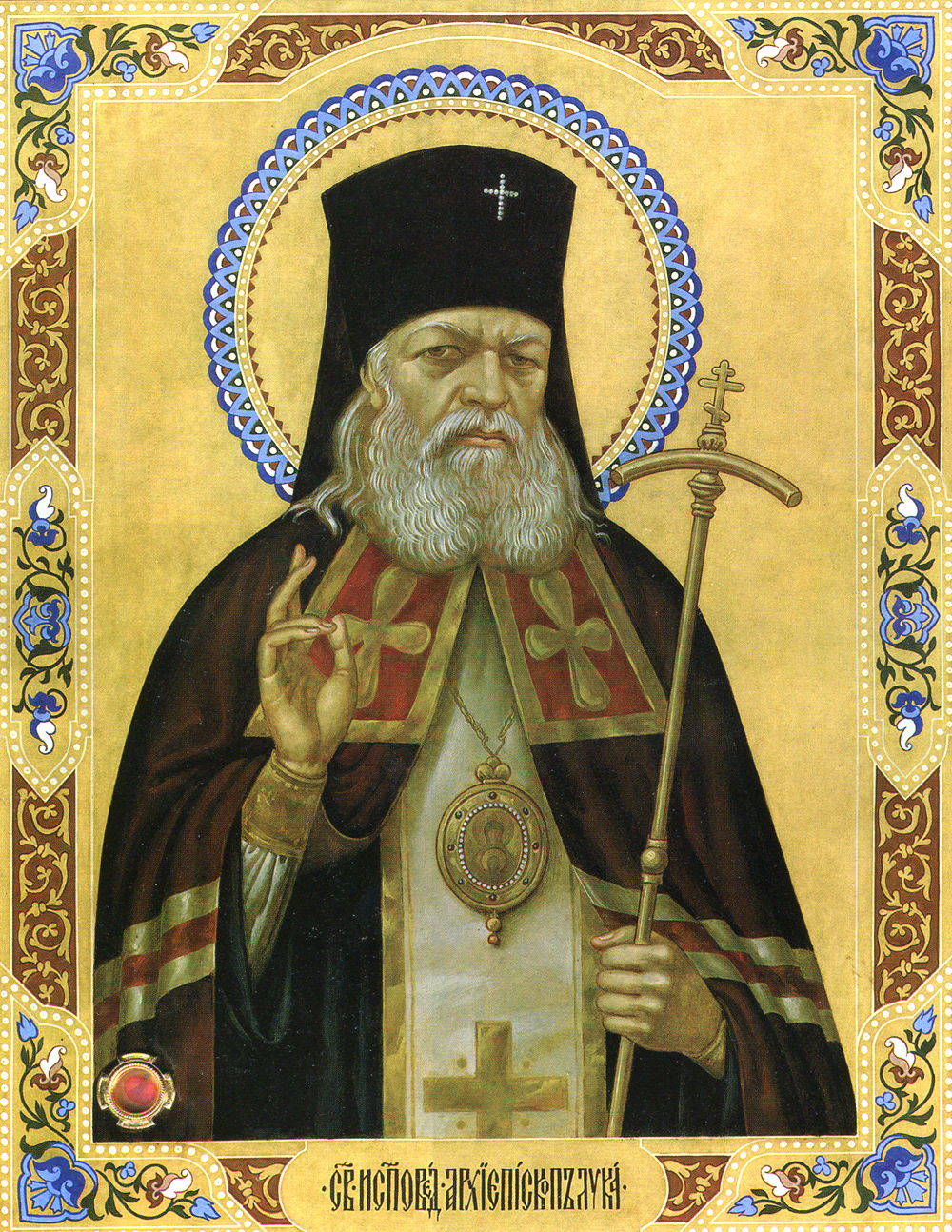
St. Luke Archbishop of Simferopol (http://days.pravoslavie.ru/jpg/ih3441.jpg)
  
St. Luke of Simferopol on the moment of death
Before David became the King of Israel, he was a servant of King Saul. Since Saul knew that David would someday take his throne, he attempted to kill him. Once when his life was in danger, the Prophet David said to those who were his supporters: “I am only one step away from death.At one time I was almost dead.I hardly had a pulse and my heart almost stopped beating.But the Lord was merciful to me and I am still weak and I am able to speak to you only in a seated position.I wish to tell you something very important about this. I want to talk to you about being cognizant of death because it is very close to each one of us, as it was close to me last Saturday.Anyone of us can die suddenly at a time when it is unexpected.You should know that the lives of many people are ended abruptly.”
Remember always—engrave the name of the Lord in your hearts.Always remember this and do not ever forget it.When people prepare to go for a long walk or start a new chore, they gird themselves for the effort.And when they walk in the darkness of night they carry with them a lantern and this is very important because it must always light our way.
The same thing is true about our spiritual lives.We must gird ourselves and keep our lanterns lit.We must be untiring workers of God and we must struggle against Satan who tries at every turn to hinder us from reaching Christ. He tries to kill us with temptations.This is why the Lord Jesus gave us this command: “They encircled us while we had our lanterns burning.”
We must never forget that earthly life has been given to us so that we can prepare for eternal life. Our fate in eternal life will be judged and based on how we have lived our lives in this world.
You should be faithful to Christ.You should be faithful to the way of life He has shown you in the Book of Revelations written by John the Apostle and Evangelist.He tells us in that book: “Become faithful until death and you will be given the crown of life.” (Rev. 2:8).We must be faithful to God.We must serve God tirelessly every day, every hour and every moment of our lives.Our life is short, we cannot waste the few hours, days, and years living our lives aimlessly.We should always think about the hour of our death.
All of the holy ascetics always remembered the hour of their death.It was part of their daily prayer life.They even had human skulls in their cells to remind them of their own death.They would look at them with tears in their eyes knowing that they too would follow in their footsteps.They served God tirelessly and worked for the Lord just like St. Seraphim of Sarov did.They would remember every day the words of the 33rd psalm which is read at the vesper service: “The death of the sinners is evil.”Just like you, they also remember the following words: “Precious in the sight of the Lord is the death of His saints.” (Psalm 16:5).Sinners have a great fear of death and I have seen many examples of this in my life.But there is one particular incident that I witnessed forty years ago that made such a deep impression on me that I will never forget it.
At that time I was a provincial doctor and I was invited to the home of a very evil man.As I entered his house I was startled by the great deal of turmoil that I found there.People in the house were running all over the place.An old man was lying on a bed. His face was very red and as soon as he saw me enter the room he began to yell out at me saying: “Doctor, I beg you to save me.I am dying, I realize now that I will die.”
Where was this man before this moment in life?What was he thinking when he was terrorizing so many people during his life?What was he thinking when he was taking all the people’s money?Now death had arrived.It is here and it is too late now to say: “I am dying, and I realize that I will die.” He should have lived his life knowing someday that he would die so that he would not now be prepared for death.
Who is there in the world that does not fear death?Only he who follows Christ and lives by His commandments does not fear death because he knows the promises made by Jesus Christ in the Beatitudes: “Rejoice and be exceedingly glad, for great is your reward in heaven.” (Mt 5:12).
The deaths of the saints were completely different from those of us who lack faith. St. Seraphim of Sarov died while kneeling in front of an icon of the Holy Mother to whom he always prayed.He fell asleep in the Lord on his knees for precious was his death in the eyes of the Lord.
Our Lord Jesus Christ tells us: “Walk while you have the light, lest darkness overtakes you.”(John 12:35).While you are alive you still have the Light of Jesus Christ. In life you still have the ability to go to Church to hear the commandments of God and to hear the words of Scriptures.You should walk in that Light because when death comes, the Light will go out for you.This is so because beyond the grave, there is no remission of sins and you will receive your reward in accordance to the good deeds that you did in life.
Therefore, walk in the Light while you have the Light so that you will not be overwhelmed by the darkness, the eternal darkness of death.St. Paul the Apostle says: “Behold, now is the accepted time; behold, now is the day of salvation.”
(2 Cor. 6:2).Now that we are living is the acceptable time for our salvation.Now, we should think about our salvation and to prepare ourselves for eternal life.That is what all Christians do, all those who love Christ.
Seventy years ago a doctor lived in St. Petersburg, Russia.His name was Gaaz.He had been assigned to serve the needs of those in jail.He had a very kind heart.He had a heart full of compassion and he loved all people.In his position as a doctor to those in jail, he did everything in his power to help these unfortunate people. He saw the prisoners being sent off to far away prisons in chains.He knew that they would be forced to walk thousands of miles until they reached the jails in Siberia and his compassionate heart went out to them.In order for him to feel their pain, he also wore chains on his feet and walked for hours around the yard of his home.When he was on his death bed, this holy man and physician said to the people around him the following miraculous words, words that all of us should keep in our hearts.“You should make it a priority in your lives to do good deeds for people.It is urgent for you to do this because death awaits all of us.Do not be frivolous in your lives.You should be faithful to Christ until death and God will give you the crown of life.”
The Prophet Isaiah said something which we also should remember andimprint it upon our hearts.“Be troubled you complacent ones; strip your lives bare, and gird sackcloth on your waists.” (Isaiah 32:11).
Tremble and remember death.You should always remember the time when you will leave this life and do not ever forget it.In order for us to have this mindset, and to follow Jesus Christ, we need the help of God.Without this help we will not be able to defeat the temptations of Satan.This is why we should ask God to send us Divine Grace.
Lord, have mercy on us sinners. Lord help us.
We should entreat Jesus like the idol worshipping woman did as you heard today in the Gospel reading.She was a Canaanite woman and when she saw Christ with His disciples she began calling after Him and entreating Him with the following request: “Have mercy on me, O Lord, Son of David, my daughter is severely demon-possessed.” (Mt. 15:20).But the Lord did not pay any attention to her and He silently continued his journey.The woman continued to entreat Him but He would not answer her.Finally His disciples said to Him: “Send her away, for she cries after us.” (Mt. 15:23).And the Lord answered: “I was not sent except to the lost sheep of the House of Israel.” (Mt.15:24).
The woman continued to entreat Him. What did the Lord say to her?“It is not good to take the children’s bread and throw it to the little dogs.” Mt. 15:26.And in response he heard an astounding answer filled with humbleness and compassion.“True Lord, yet even the little dogs eat the crumbs which fall from their master’s table.” (Mt. 15:27), give me a crumb from your mercy.The Lord stopped when He heard this and said to her: “O woman, great is your faith.Let it be to you as you desire and her daughter was healed from that very hour.” (Mt.15:28).
Many of us live a life that is not consistent with the Christian message.Many of us are burdened with various sins.Many of us have forgotten the Word of God which says: “The sting of death is sin.” (1 Cor. 15:56).Death wounds the person who becomes a slave to sin.Then, if we areweak and if the garments of our souls are all black with sins aren’t we like the dogs?Shouldn’t we also shout unto Christ as the Canaanite woman did: “Lord, I am like a dog, have mercy on me!” “You have girded me with strength for battle and the lanterns are lit around me. Amen.”
  
Through the prayers of our Holy Fathers, Lord Jesus Christ our God, have mercy on us and save us! Amen!