Showing posts with label Forgiveness. Show all posts

Wednesday, December 9, 2020

St. Porphyrios on the Condemnation of Bishops

The Holy Fathers (source)

"We should never attack a Bishop with our mouth. He has the episcopacy upon him. Regardless of the mistakes he has done, we must cover him with our prayers. Thus is created around the Bishop a spiritual defense, a spiritual surrounding wall, without him knowing it, which encircles him, and eventually will allow him, as a rule, for God to revive him."***

-St. Porphyrios of Kavsokalyvia

(source)

***Note: St. Porphyrios is not referring to reaching out, in the proper manner and the proper channels, to discuss moral or canonical transgressions by bishops through a Synod or Archbishops above him. He is also not referring to hierarchs canonically deposed by a Synod or church council. He is properly trying to limit the endless gossip, slander, condemnation and judging that gets hurled against hierarchs throughout the world, but even worse now in the age of the internet. May we humbly pray for our bishops before rushing to condemn them, and thus help both of their and our repentance and our souls. 

Through the prayers of our Holy Fathers, Lord Jesus Christ our God, have mercy on us and save us! Amen!
Friday, November 6, 2020

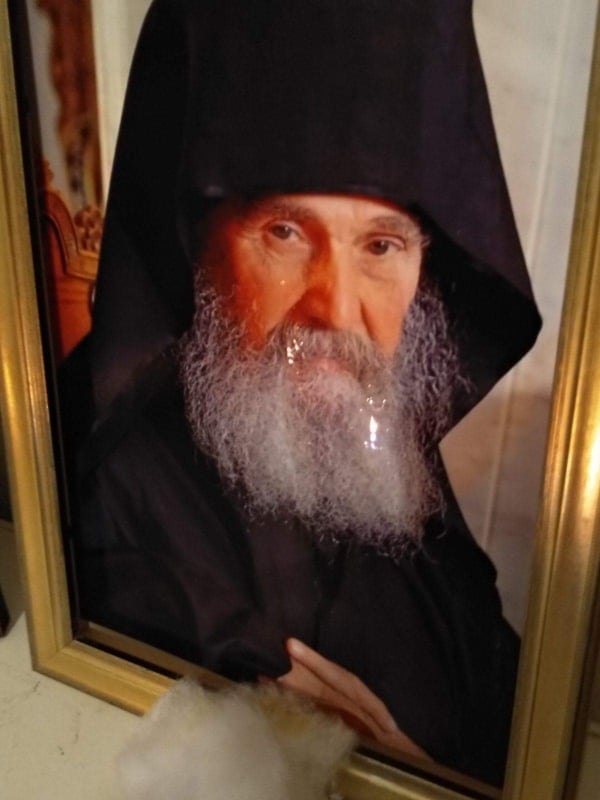
A vision of Elder Ephraim, and a picture of his purported to be weeping

Picture of Elder Ephraim of Arizona purported to be weeping (source)

"I just communicated with Gerontissa Thekla from Montreal, and she told me that our holy Elder appeared to someone living in Crete. He lives ascetically, and would go to visit the Elder at St. Anthony's [in Arizona].

He has this picture of our holy Elder with a constant vigil lamp before it. The Elder told him that God is greatly saddened by the Greeks***, because they are not praying.

On November 3rd, the picture began to weep, not just tears, but it became soaked.

The Elder is praying for all of us."

-Maria

(source)

***Note: By no means are the Greeks the only people that might not be praying as they should, but all people throughout the world, young and old, clergy, laity and monastics, should be repenting and praying as we should, entreating the Lord to save the world.

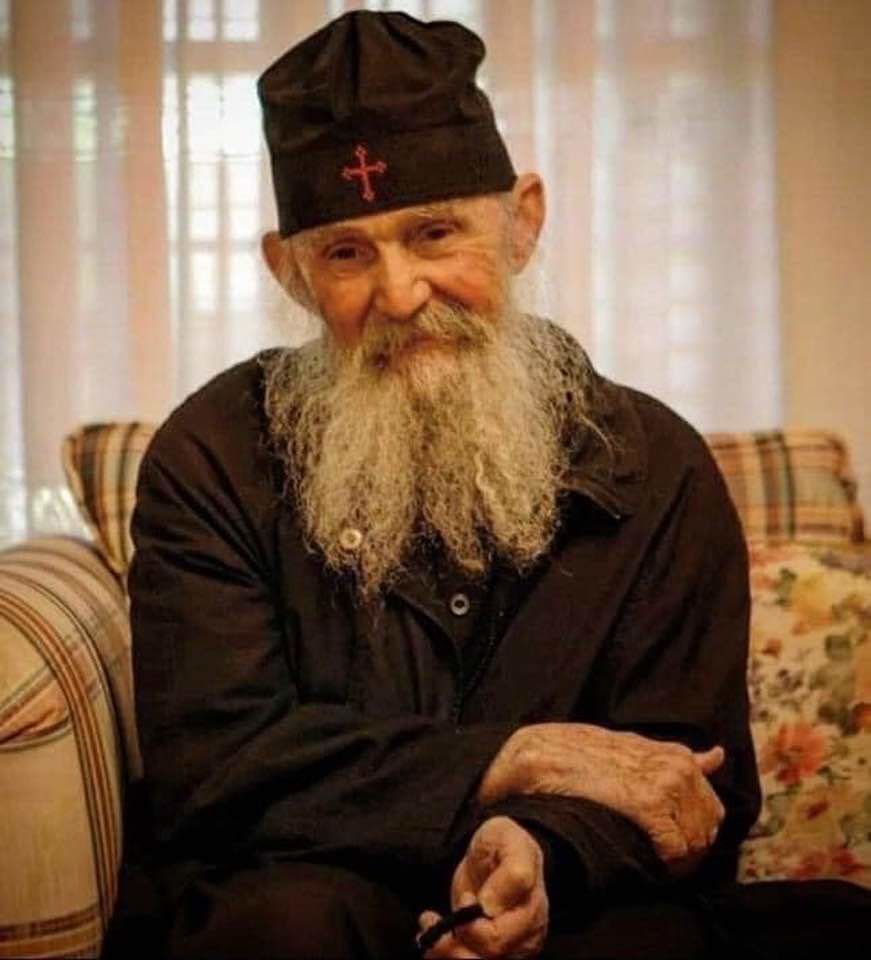
Elder Ephraim of Arizona (source)

“Elder Ephraim of Philotheou, who lived as an ascetic in Arizona, appeared to a woman in Northern Greece, a long-time spiritual daughter of the elder. At the time of the appearance she was with her daughter-in-law; she was not asleep but actually in a state of alertness. At one point the woman was unresponsive, as if in ecstasy,* and this lasted for about 10 minutes, according to her daughter-in-law who was watching her. She did not realize or comprehend the time duration — i.e., for how long the vision lasted. It was something new for her (the content of the conversation) because she has seen the Elder before, after his repose, both in her sleep as well while she was awake. Due to all this (her shock), she contacted her spiritual father and asked whether this experience was real or a deception by the evil one.

She saw Elder Ephraim and he was very sad and was imploring Christ that the ongoing [direction of] events be averted (all this, of course, is in agreement with what the elder said to many while he was alive).

And he told her:

‘Repentance repentance repentance. Christ is very angry...
We people today should not be in this spiritual state we are in...
Huge tribulations are coming, you can not imagine how bad these will be...
Alas to all of you for what awaits you; you must repent as long as there is time...
You need to kneel and cry, to shed tears of repentance, that Christ soften...
This has to do with what is happening in America as well.
Many people will depart through all that is to come, many people will depart (they will die).
You have no mercy among you. You show no mercy to each other.
You are tough towards each other, you stand ready to eat (consume-destroy) each other ....
Tell all of this to your spiritual father and to others ....’

The woman who saw this was a spiritual daughter of Elder Ephraim and was in communication with him often up until his repose.

- f. I.

*Translator’s note: The Greek term here is χάθηκε. It was not immediately clear to us if this meant literally or spiritually. We received clarification that it was the latter and have made the change. We have also made other minor changes to improve the English translation and correct typos in the Greek version.

(source)

Elder Ephraim of Arizona (source)

Through the prayers of our Holy Fathers, Lord Jesus Christ our God, have mercy on us and save us! Amen!

Sunday, September 13, 2020

Homily on the Meaning of the Holy Cross, by Metropolitan Avgoustinos Kantiotes

The Holy Cross of Christ (source)
 
Homily on the Meaning of the Holy Cross, by Metropolitan Avgoustinos Kantiotes
My beloved, what does the Cross teach us? Take a chalk and write, like children do in school, 2+2=4. Thus, the Cross is the "equal sign", but what is it? Do you think that it is simply a piece of wood that we venerate and are saved? You are mistaken, because this is not how it is in reality.

The Cross equals forgiveness.
Because upon the Cross, Christ forgave His murderers. Are there today some here in church who are at odds with each other? Are there women who hate their mothers-in-law? Are there houses where people don't speak with each other? Are there neighbors that don't greet each other? Is there hatred? Well then, the Cross tells us today: "Forgive!" If you don't forgive, then don't approach the Cross, don't venerate it. When, within your heart, you have bitterness, you have this serpent of hatred, you can't approach the Cross. Because the Cross means forgiveness. You must forgive even your greatest enemy.

The Cross equals truth.
Even if they put a knife to your throat, and slaughter you, you should speak the truth. Not in the sense that you go to court and raise your wretched hand upon the Gospel and take a false oath. Not like this. Christ was crucified for the truth. Whoever says lies, whoever goes to court and takes false oaths, he is not worthy to venerate the Cross. The Cross, therefore, equals forgiveness, the Cross equals truth.

The Cross equals humility.
No--even though you might have a very large home, or more money or lands or animals, or if you have children studying in school or if you have a beautiful wife, or whatever else you might do--you should not boast or feel proud. You are not a Christian! Humility! Humble yourself to say: I am nothing, I am a worm, I am nothing in this world. However, when you have pride and you boast and you show off your body and your job and your money, then you are not a Christian.

The Cross equals love.
Is your neighbor hungry? Give him a piece of bread. Is he thirsty? Give him a glass of water. Is he naked? Give him a shirt to wear. Go and console him and wipe away his tears. This is Christianity. Not when you have everything and your neighbor has nothing.

The Cross equals sacrifice.
As Christ sacrificed Himself, thus we must sacrifice ourselves. This is what the Cross means. If you do these things, then you are worthy to be called Christians. But you who dip your hands in blood, you who take false oaths, you who are unjust to the orphan, you cannot approach the Cross. The Cross casts you out.

Read the life of St. Mary of Egypt. On this day, she went to Jerusalem and saw the crowd going into the church and everyone--old, young, women, men--were going to venerate. She herself tried to approach the entrance. But some power pushed her back. She tried and second and a third time, but she was unable. Why? Because she was a sinful woman, and she worked in sin in Alexandria. Only after she repented, then she was able to enter the church and she became a Christian in reality.

The Cross, my beloved, creates presuppositions. We must live corresponding to the teaching of the Cross.

And something else: You should make your Cross properly. Because unfortunately, in our faithless years that we are living through, everything has become fashionable. Fashionable hair, fashionable clothing, fashionable shoes, fashion everywhere. Unfortunately many in Church do it out of fashion. Unfortunately you see scientists, congressmen, ministers, prime ministers, and none are doing their Cross correctly. That which they are doing is not the Cross. It joking and mocking. It is playing with God. Do not play with God. How will they understand that you are a Christian? By your Cross. When you make the sign of the Cross properly, you are doing a whole prayer. Therefore, do your Cross properly.

And when should you do your Cross? When you awake in the morning, do your Cross. Are you going to work? Do your Cross. Are you going to your field? Do your Cross. Are you sowing, returning from your field, entering your home? Do your Cross. Are you sitting at your dinner table? Do your Cross. Are you going to sleep? Do your Cross.

"Though I fall, I make my Cross
And have an Angel by my side."

O woman, are you baking? Make the sign of the Cross in the dough. Wherever you go and whatever you do, make your Cross. The Cross is the "protector of the whole world."
(+) Bishop Avgoustinos
Imera, Kozani, 9/14/1965
(source)
   
Through the prayers of our Holy Fathers, Lord Jesus Christ our God, have mercy on us and save us! Amen!

Thursday, August 20, 2020

A Prayer of Confession, by Blessed Father Nicholas Pekatoros

An Orthodox Priest and Penitent during Holy Confession (source)
  
A Prayer of Confession,
by the Blessed Father Nicholas Pekatoros, for use by his spiritual children:
“I confess to the Lord my God and before you, Holy Father, all my innumerable sins, which I have committed to the present day and hour, in deed, word and thought. Daily and hourly I commit the sin of ingratitude toward the Lord for his great and innumerable blessings and gracious providence toward me, a sinner. These are my sins: empty, foolish words; criticizing and verbally abusing others; defiance; pride; lack of mercy; envy; vengeful anger; slander against others; inattention; neglect where my salvation is concerned; carelessness; a carefree attitude; rudeness; irritability; despondency; returning evil for evil; hardness of heart; disobedience; complaining; self-righteousness; contradictoriness; willfulness; conduct that is blameworthy or disgraceful; speaking evil; lying; excessive laughter; yielding to temptation; love of self; ambition; gluttony; drunkenness; vanity; laziness; thinking impure thoughts; heaping up worldly goods; lusting after others; missing Divine Liturgy and other church services because of laziness and carelessness; wandering of mind during prayer in church and at home; sins of deed; sins of word; sins of thought; and sins of sight, hearing, smell, taste, touch and my other senses, both physical and spiritual. I repent of all my sins and I ask forgiveness. (State here other sins that may be on one’s soul.) I also repent and ask forgiveness for sins I did not confess because of their multitude or because of my forgetfulness. Forgive and release me, Holy Father, and give me your blessing to partake of Christ’s Holy and Life-Giving Mysteries, to the renunciation of sin and the receiving of Life Eternal. Amen.
(source)
  
Through the prayers of our Holy Fathers, Lord Jesus Christ our God, have mercy on us and save us! Amen!

Thursday, April 23, 2020

The Final Prayer of St. George before his Martyrdom

Christ is risen! Truly He is risen!
St. George the Great Martyr and Trophy-bearer, in prayer to Christ (source)
  
The Martyr of Christ, George, when he had reached the place of his execution, entreated the guards to give him a short time to himself. This is the gift that the Saint asked of the enemies of his Faith. They fulfilled his request. Then, the Great Martyr gathered himself together for prayer, and lifted up his eyes to Heaven, and prayed from the depth of his heart:

St. George the Great Martyr and Trophybearer (source)
   
"O Lord my God, to Whom I belong from birth, and to Whom I have placed my hopes, You Who gave me boldness and prepared me for this struggle, You Who are my sweet hope, the unerring promise, the unalterable eros of sacred souls, You Who look down with care upon the intentions of our hearts and fulfill our requests, and to Whom we address our requests in prayer, I ask of You: help me to complete this struggle well, which I have taken on in confession of Your name, and receive my soul, and having preserved my from the evil spirits, do number me with those who have pleased You throughout the ages. Forgive, O Master, the people who out of ignorance have worked this grave things against me, and make them worthy to truly come to know You, for You are blessed unto the ages of ages."
(source)
  
Sts. George and Demetrios the Great Martyrs (source)
  
Christ is risen from the dead, by death, trampling down upon death, and to those in the tombs, He has granted life!
Truly, the Lord has risen!

Friday, March 20, 2020

Elder Zacharias of Essex on the Coronavirus

The Desert Father in prayer (source)
  
Elder Zacharias of Essex on the Coronavirus
Many people are in confusion and others panic because of the threat of the Coronavirus epidemic that spread in the whole world. I think, however, that this should not happen, for whatever God does with us, He does it out of love. The God of Christians is a good God, a God of mercy and loving kindness, ‘Who loveth mankind’. God created us out of His goodness in order to share His life and even His glory with us. When we fell into sin, He allowed death to enter our life again out of goodness, so that we may not become immortal in our wickedness, but to seek for a way of salvation. Although we have fallen, God has never stopped to provide for us, not only material goods in order to sustain our race, but He also sent prophets and righteous, preparing His way so that He might come and solve our tragedy, and bring eternal salvation through the Cross and Resurrection of His inconceivable love. He came and took upon Himself the curse of sin, and He showed His love to the end: ‘Having loved His own which were in the world, He loved them unto the end’ (John 13:1). All the things that God did when He created us, when He provided goods in order to sustain the world, when He prepared His way for Him to come on earth, when He came Himself in person and wrought our salvation in such an awesome way, all these things He did out of goodness. His goodness is boundless. He saves us and is so longsuffering towards us, waiting until we ‘come to the knowledge of the truth’ (1 Tim. 2:4) and bring true repentance, so that we may be with Him for all eternity. Thus, at every stage of His relationship with man, our God shows only His goodness and mercy, ‘which is better than life’ (Ps. 63:3); goodness is His Nature and He does all things for the benefit and salvation of man.
 
Consequently, when He shall come again to judge the world, will a different God judge it? Will it not be the same good God, the God of mercy and loving kindness, Who loves mankind? Let us be certain that we shall not appear before any other God than Him Who created us and saved us. And so, it is again with the same mercy and love that He will judge us. For this reason, we should neither panic nor waver, for it will be the same God that will receive us in the other life and will judge us with the same kindness and compassion. Some fear that the hour of their end has come. This plague of Coronavirus has also a positive aspect, because we have a few weeks from the moment it will assail us until our end. Therefore, we can dedicate this time to prepare ourselves for our meeting with God, so that our departure may not occur unexpectedly and without preparation, but after we have run through our whole life each time we stand in prayer before God, at times with thanksgiving unto the end for all the things God has done for us and at other times with repentance, seeking the forgiveness of our transgressions. Nothing can harm us with such a God, Who allows all things out of His goodness. We must simply keep thanksgiving unto the end and the humble prayer of repentance for the forgiveness of our sins.
 
As for myself, this plague is helping me. I longed to find again the prayer I had before, with which I can run through my whole life from my birth until now, thanking God for all His benefits ‘whereof I know and whereof I know not’; and also, with which I can run through my whole life repenting for all my sins and transgressions. It is wonderful to be able to run through your life praying, bringing all things before God with persistence in prayer. Then you feel that your life is redeemed. This is why this situation is truly helping me. I am not panicking but ‘I will be sorry for my sin’ (Ps. 38:18).
 
We must see the goodness of God in all the things that are happening now. The Holy Fathers did see His loving kindness. A similar epidemic occurred in the 4th century in the Egyptian desert, which harvested more than a third of the monks, and the Fathers were saying with great inspiration that, ‘God is harvesting souls of saints for His Kingdom,’ and they did not waver. The Lord Himself speaks in the Gospel about the last days, about the trials and afflictions which the world will go through before His Second Coming. However, we discern neither morbid sadness nor despair in His words. The Lord Who prayed in the garden of Gethsemane with a sweat of blood for the salvation of the whole world, says that when we see the terrible things that precede His Second Coming, we should lift up our heads with inspiration, for our redemption draws nigh (cf. Luke 21:28). Some tell me, ‘May God extend His helping hand.’ But this is precisely the hand of God. He desires and works our salvation ‘at sundry times and in divers manners’ (Heb. 1:1): ‘My Father worketh hitherto, and I work’ (John 5:17). This virus may be a means that God uses in order to bring many to themselves and to repentance, and to harvest many ready souls for His eternal Kingdom. Therefore, for those who surrender and entrust themselves to the Providence of God all will contribute for their good: ‘All things work together for good to them that love God’ (Rom. 8:28).
 
Thus, there is no room for morbid dismay. Neither should we resist the measures that the government is taking in order to diminish the spreading of the afflictions we see in the lives of so many people. It is wrong to go against the authorities. We should do whatever the Government says, because they are not asking for us to deny our faith, they are only asking us to take a few measures for the common wellfare of all people, so that this trial may pass, and this is not at all unreasonable. Some people take it too confessionally, they raise flags and play the martyrs and the confessors. For us there is no doubt: we shall show pure submission to the orders of the Government. It is unfair to disobey the Government since, when we fall ill, it is to their hospitals that we run and they are the ones who undertake all the expenses and our care.
 
This is the ethos of Christ that God showed in His life on earth and this is the apostolic commandment that we have received: ‘...be subject to principalities and powers, obey magistrates, be ready to every good work, speak evil of no man, be no brawlers, but gentle, shewing all meekness unto all men’ (cf. Tit. 3: 1-2); and ‘Submit yourselves to every ordinance of man for the Lord’s sake: whether it be to the king, as supreme...’ (see 1 Pet. 2:13-17). If we do not obey our governors who are not asking much, how will we obey God, Who gives us a divine law, which is far more sublime than any human law? If we keep the law of God we are above human laws, as the apologists of the 2nd century said during the Roman Empire which was persecuting the Christians. It is surprising to see in the country where we live, in the United Kingdom, that the footballers show such understanding and discernment so as to be the first to withdraw from their activities with docility towards the indications of the Government to take prophylactic measures. It would be sad for us, people of faith, to fail reaching the measure of the footballers and showing the same docility towards the authorities for which our Church prays.
 
If they ask us to stop our Church services, let us simply surrender and bless the Providence of God. Besides, this reminds us of an old tradition that the Fathers had in Palestine: in Great Lent, on the Sunday of Cheese fare, after the mutual forgiveness, they would go out in the desert for forty days without Liturgy; they would only continue in fasting and prayer so as to prepare and return on Palm Sunday to celebrate in a godly way the Passion and the Resurrection of the Lord. And so, our present circumstances force us to live again that which existed of old in the bosom of the Church. That is to say, they force us to live a more hesychastic life, with more prayer, which will however make up for the lack of the Divine Liturgy and will prepare us to celebrate with greater desire and inspiration the Passion and Resurrection of the Lord Jesus. Thus, we will turn this plague into a triumph of hesychasm. In any case, whatever God allows in our life is out of His goodness for the well-being of man, for He never wants His creature to be harmed in any way.
Certainly, if we will be deprived of the Divine Liturgy for a longer period of time, we can endure it. What do we receive in the Liturgy? We partake of the Body and Blood of Christ, which are filled with His grace. This is a great honour and benefit for us, but we also receive the grace of God in many other ways. When we practice hesychastic prayer, we abide in the Presence of God with the mind in the heart calling upon the holy Name of Christ. The Divine Name brings us the grace of Christ because it is inseparable from His Person and leads us into His Presence. This Presence of Christ which is purifying, cleanses us from our transgressions and sins, it renews and illumines our heart so that the image of God our Saviour, Christ, may be formed therein.
 
If we shall not have Easter in the Church, let us remember that every contact with Christ is Easter. We receive grace in the Divine Liturgy because the Lord Jesus is present in it, He performs the sacrament and He is the One imparted to the faithful. However, when we invoke His Name, we enter the same Presence of Christ and receive the same grace. Therefore, if we are deprived of the Liturgy, we always have His Name, we are not deprived of the Lord. Moreover, we also have His word, especially His Gospel. If His word dwells continually in our heart, if we study it and pray it, if it becomes our language with which we speak to God as He spoke to us, then we shall have again the grace of the Lord. For His words are words of eternal life (John 6:68), and the same mystery is performed, we receive His grace and are sanctified.
 
Furthermore, each time we show kindness to our brethren the Lord is well-pleased, He considers that we did it in His Name and He rewards us. We show kindness to our brethren and the Lord rewards us with His grace. This is another way in which we can live in the Presence of the Lord. We can have the grace of the Lord through fasting, alms giving and every good deed. So, if we are forced to avoid gathering in Church, we can also be united in spirit in these holy virtues which are known within the Body of Christ, the holy Church, and which preserve the unity of the faithful with Christ and with the other members of His Body. All the things we do for God is a Liturgy, for they minister unto our salvation. The Liturgy is the great event of the life of the Church, wherein the faithful have the possibility to exchange their little life with the boundless life of God. However, the power of this event depends on the preparation we perform before, through all the things we have mentioned, through prayer, good deeds, fasting, love for neighbour, repentance.
 
Therefore, my dear brethren, it is not necessary to make heroic confessions against the Government for the prophylactic measures that it takes for the good of all people. Neither should we despair, but only wisely machinate ways so as not to lose our living communication with the Person of Christ. Nothing can harm us, we must simply be patient for a certain period of time and God will see our patience, take away every obstacle, every temptation and we shall again see the dawn of joyful days, and we shall celebrate our common hope and love that we have in Christ Jesus.
  
Through the prayers of our Holy Fathers, Lord Jesus Christ our God, have mercy on us and save us! Amen!

Wednesday, March 11, 2020

St. Joseph the Hesychast: "Even though you have fallen again, get up again."

Jesus Christ the Son of God the Savior of the world (source)
  
I received your letter, my child, and I saw your anxiety. But don’t be sad, my child. Don’t worry so much. Even though you have fallen again, get up again. You have been called to a heavenly road. It is not surprising for someone running to stumble. It just takes patience and repentance at every moment.
Therefore, always do a metanoia when you are wrong and don’t lose time, because the longer you wait to seek forgiveness, the more you allow the evil one to spread his roots within you. Don’t let him make roots to your detriment.
  
Therefore, don’t despair when you fall, but get up eagerly and do a metanoia saying, “Forgive me, my dear Christ. I am human and weak.” The Lord has not abandoned you. But since you still have a great deal of worldly pride, a great deal of vainglory, our Christ lets you make mistakes and fall, so that you perceive and come to know your weakness every day, so that you become patient with others who make mistakes, and so that you do not judge the brethren when they make mistakes, but rather put up with them.
  
So every time you fall, get up again and at once seek forgiveness. Don’t hide sorrow in your heart, because sorrow and despondency are the joy of the evil one. They fill one’s soul with bitterness and give birth to many evils. Whereas the frame of mind of someone who repents says, “I have sinned! Forgive me Father!” and he expels the sorrow. He says, “Am I not a weak human? So what do I expect?” Truly, my child this is how it is. So take courage.
  
Only when the grace of God comes does a person stand on his feet. Otherwise, without grace, he always changes and always falls. So be a man and don’t be afraid at all.
  
 Do you see how that brother you wrote about endured the temptation? You, too, should do likewise. Acquire a brave spirit against the temptations that come. In any case, they will come. Forget about what your despondency and indolence tell you. Don’t be afraid of them. Just as the previous temptations passed by the grace of God, these, too, will pass once they do their job.
  
Temptations are medicines and healing herbs that heal our visible passions and our invisible wounds. So have patience in order to profit every day, to store up wages, rest, and joy in the heavenly kingdom. For the night of death is coming when no one will be able to work anymore. Therefore, hurry. Time is short.
  
You should know this too: a victorious life lasting only one day with trophies and crowns is better than a negligent life lasting many years. Because one man’s struggle, with knowledge and spiritual perception that lasts one day, has the same value as another man’s struggle, who struggles negligently without knowledge for fifty years.
  
Without a struggle and shedding your blood, don’t expect freedom from the passions. Our earth produces thorns and thistles after the Fall. We have been ordered to clean it, but only with much pain, bloody hands, and many sighs are the thorns and thistles uprooted. So weep, shed streams of tears, and soften the earth of your heart. Once the ground is wet, you can easily uproot the thorns.
— Saint Joseph the Hesychast
(source)
  
St. Joseph the Hesychast (source)
  
Through the prayers of our Holy Fathers, Lord Jesus Christ our God, have mercy on us and save us! Amen!

Thursday, December 19, 2019

Elder Symeon Kragiopoulos: How to Prepare for Christmas

The Nativity of Christ (source)
  
God the Father gives us His Son for a gift. What shall we offer to God? We think we do something important. We do nothing important. Everything is of God. However, God hasn’t given you sin. You, the man, commit sins. That’s the only thing we have, then: our sins. And still, that’s what God asks of us. God asks of us to give Him our sins, in order for Him to forgive them. You should repent these days and say: “My God, take all the burdens off my soul, take them away from me: my thoughts, my emotions, my experiences, my actions, everything. Take, my God, away all things sinful, in order to forgive them”. This is the way to prepare for Christmas.
-Elder Symeon Kragiopoulos (+2015)
 
 
Through the prayers of our Holy Fathers, Lord Jesus Christ our God, have mercy on us and save us! Amen!

Tuesday, September 17, 2019

Elder Sophrony on Marital Problems

The Wedding at Cana (source)
  
When married couples would visit Elder Sophrony of Essex, and spoke of the problems in their relationship, he typically would hear complaints about one's spouse.
Elder Sophrony would ask: "Who is responsible for the problems in your relationship?"
The reply: "My wife! (or husband)"
Elder Sophrony: "So you aren't responsible at all?"
Response: "I'm also responsible, but the greatest responsibility is with my spouse!"
Elder Sophrony: How much do you think you are responsible, and how much your spouse?"
Response: "90% theirs, 10% mine!"
Elder Sophrony: "You correct the 10% that you say you are responsible for and you will see if the 90% from your spouse remains!"
The holy Elder remarked that the key element in order to maintain a proper relationship between spouses is that everyone should take responsibility for their own mistakes and not shift them all to one another.
(source)
  
Through the prayers of our Holy Fathers, Lord Jesus Christ our God, have mercy on us and save us! Amen!

Wednesday, May 1, 2019

"Behold, the days come, saith the Lord..."

Christ is risen! Truly, He is risen!
The Resurrection of Christ (source)
  
"Behold, the days come, saith the Lord, when I will make a new covenant with the house of Israel, and with the house of Juda: 32not according to the covenant which I made with their fathers in the day when I took hold of their hand to bring them out of the land of Egypt; for they abode not in my covenant, and I disregarded them, saith the Lord. 33For this is my covenant which I will make with the house of Israel; after those days, saith the Lord, I will surely put my laws into their mind, and write them on their hearts; and I will be to them a God, and they shall be to me a people. 34And they shall not at all teach every one his fellow citizen, and every one his brother, saying, Know the Lord: for all shall know me, from the least of them to the greatest of them: for I will be merciful to their iniquities, and their sins I will remember no more."
-Jeremiah 31:31-34,
Read during the Vesperal Liturgy of St. Basil on Great and Holy Saturday
   
(source)
   
Christ is risen from the dead, by death, trampling down upon death, and to those in the tombs, He has granted life!
Truly the Lord is risen!

Thursday, January 17, 2019

38 Beneficial Sayings of St. Anthony the Great

St. Anthony the Great (Source)
  
Thanks to the blog Ora Et Labora for this wonderful post on the famous and spiritually-beneficial 38 sayings of St. Anthony the Great.

"In his 2007 Commencement Address at St Vladimir's Orthodox Seminary, Fr Thomas Hopko had this to say:
I urge you, and, if I could, I would command you, to read St. Anthony’s thirty-eight sayings in the Sayings of the Desert Fathers. Everything we need to know in order to live is there for us in its simplest and clearest form.
Heeding his command, I reproduce below these thirty-eight sayings, as translated by the late Sr Benedicta Ward SLG in her collection The Sayings of the Desert Fathers:
  
St. Anthony the Great (source)
1. When the holy Abba Anthony lived in the desert he was beset by accidie, and attacked by many sinful thoughts. He said to God, "Lord, I wand to be saved but these thoughts do not leave me alone; what shall I do in my affliction? How can I be saved?" A short while afterwards, when he got up to go out, Anthony say a man like himself sitting at his work, getting up from his work to pray, then sitting down again and plaiting a rope, then getting up again to pray. It was an angel of the Lord sent to correct and reassure him. He heard the angel saying to him, "Do this and you will be saved." At these words, Anthony was filled with joy and courage. He did this, and he was saved.

2. When the same Abba Anthony thought about the depth of the judgments of God, he asked, "Lord, how is it that some die when they are young, while others drag on to extreme old age? Why are there those who are poor and those who are rich? Why do wicked men proper and why are the just in need? He heard a voice answering him, "Anthony, keep your attention on yourself; these things are according to the judgment of God, and it is not to your advantage to known anything about them."

3. Someone asked Abba Anthony, "What must one do in order to please God?" The old man replied, "Pay attention to what I tell you: whoever you may be, always have God before your eyes, whatever you do, do it according to the testimony of the holy Scriptures; in whatever place you live, do not easily leave it. Keep these three precepts and you will be saved."

4. Abba Anthony said to Abba Poemen, "This is the great work of man: always to take the blame for his own sins before God and to expect temptation to his last breath.

5. He also said, "Whoever has not experienced temptation cannot enter into the Kingdom of Heaven." He even added, "Without temptations no-one can be saved."

6. Abba Pambo asked Abba Anthony, "What ought I to do?" and the old man said to him, "Do not trust in your own righteousness, do not worry about the past, but control your tongue and your stomach."

7. Abba Anthony said, "I saw the snares that the enemy spreads out over the world and I said groaning, "What can get through from such snares?" Then I heard a voice saying to me, 'Humility.'"

8. He also said, "Some have afflicted their bodies by asceticism, but they lack discernment, and so they are far from God."

9. He said also, "Our life and our death is with our neighbor. If we gain our brother, we have gained God, but if we scandalize our brother, we have sinned against Christ."

10. He also said, "Just as fish die if they stay too long out of water, so the monks who loiter outside their cells or pass their time with men of the world lose the intensity of inner peace. SO like a fish going towards the sea, we must hurry to reach our cell, for fear that if we delay outside we will lost our interior watchfulness."

11. He said also, "He who wishes to live in solitude in the desert is delivered from three conflicts: hearing, speech, and sight; there is only one conflict for him and that is with fornication."

12. Some brothers came to find Abba Anthony to tell him about the visions they were having, and to find out from him if they were true or if they came from the demons. They had a donkey which died on the way. When they reached the place where the old man was, he said to them before they could ask him anything, "How was is that the little donkey died on the way here?" They said, "How do you know about that, Father?" And he told them, "The demons shewed me what happened." So they said, "That was what we came to question you about, for fear we were being deceived, for we have visions which often turn out to be true." Thus the old man convinced them, by the example of the donkey, that their visions came from the demons.

13. A hunter in the desert saw Abba Anthony enjoying himself with the brethren and he was shocked. Wanting to show him that it was necessary sometimes to meet the needs of the brethren, the old man said to him, "Put an arrow in your bow and shoot it." So he did. The old man then said, "Shoot another," and he did so. Then the old man said, 'Shoot yet again," and the hunter replied "If I bend my bow so much I will break it." Then the old man said to him, "It is the same with the work of God. If we stretch the brethren beyond measure they will soon break. Sometimes it is necessary to come down to meet their needs." When he heard these words the hunter was pierced by compunction and, greatly edified by the old man, he went away. As for the brethren, they went home strengthened.

14. Abba Anthony heard of a very young monk who had performed a miracle on the road. Seeing the old man walking with difficulty along the road, he ordered the wild asses to come and carry them until they reached Abba Anthony. He said to them, "This monk seems to me to a ship loaded with goods but I do not know if he will reach harbor." After a while, Anthony suddenly began to weep, to tear his hair and lament. His disciples said to him, "Why are you weeping, Father?" and the old man replied, "A great pillar of the Church has just fallen (he meant the young monk) but go to him and see what has happened." So the disciples went and found the monk sitting on a mat and weeping for the sin he had committed. Seeing the disciples of the old man he said, "Tell the old man to pray that God will give me just ten days and I hope I will have made satisfaction." But in the space of five days he died.

15. The brothers praised a monk before Abba Anthony. When the monk came to see him, Anthony wanted to know how he would bear insults; and seeing that he could not bear them at all, he said to him, "You are like a village magnificently decorated on the outside, but destroyed from within by robbers."

16. A brother said to Abba Anthony, "Pray for me." The old man said to him, " I will have no mercy upon you, nor will God have any, if you yourself do not make an effort and if you do not pray to God.

17. One day some old men came to see Abba Anthony. In the midst of them was Abba Joseph. Wanting to test them, the old man suggested a text from the Scriptures, and, beginning with the youngest, he asked them what it meant. Each gave his opinion as he was able. But to each one the old man said, "You have not understood it." Last of all he said to Abba Joseph, "How would you explain this saying?" and he replied, "I do not know." Then Abba Anthony said, "Indeed, Abba Joseph has found the way, for he has said: 'I do not know.'"

18. Some brothers were coming from Scetis to see Abba Anthony. When they were getting into a boat to go there, they found an old man who also wanted to go there. The brothers did not know him. They sat in the boat, occupied by turns with the words of the Fathers, Scripture and their manual work. As for the old man, he remained silent. When they arrived on shore they found that the old man was going to the cell of Abba Anthony too. When they reached the place, Anthony said to them, "You found this old man a good companion for the journey?" Then he said to the old man, " You have brought many good brethren with you, father." The old man said, "No doubt they are good, but they do not have a door to their house and anyone who wishes can enter the stable and loose the ass." He meant that the brethren said whatever came into their mouths.

19. The brethren came to the Abba Anthony and said to him, "Speak a word; how are we to be saved?" The old man said to them, "You have heard the Scriptures. That should teach you how." But they said, "We want to hear from you too, Father." Then the old man said to them, "The Gospel says, 'if anyone strikes you on one cheek, turn to him the other also.'" (Matt. 5.39) They said, "We cannot do that." The old man said, "If you cannot offer the other cheek, at least allow one cheek to be struck." "We cannot do that either," they said. So he said, "If you are not able to do that, do not return evil for evil," and they said, "We cannot do that either." Then the old man said to his disciples, "Prepare a little brew of corn for these invalids. If you cannot do this, or that, what can I do for you? What you need is prayers."
  
St. Anthony the Great (source)
20. A brother renounced the world and gave his goods to the poor, but he kept back a little for his personal expenses. He went to see Abba Anthony. When he told him this, the old man said to him, "If you want to be a monk, go into the village, buy some meat, cover your naked body with it and come here like that." The brother did so, and the dogs and birds tore at his flesh. When he came back the old man asked him whether he had followed his advice. He showed him his wounded body, and Saint Anthony said, "Those who renounce the world but want to keep something for themselves are torn in this way by the demons who make war on them."

21. It happened one day that one of the brethren in the monastery of Abba Elias was tempted. Cast out of the monastery, he went over the mountain to Abba Anthony. The brother lived hear him for a while and then Anthony sent him back to the monastery from which he had been expelled. When the brothers saw him they cast him out yet again, and he went back to Abba Anthony saying, "My Father, they will not receive me." Then the old man sent them a message saying, "A boat was shipwrecked at sea and lost its cargo; with great difficulty it reached the shore; but you want to throw into the sea that which has found a safe harbor on the shore." When the brothers understood that it was Abba Anthony who had sent them this monk, they received him at once.

22. Abba Anthony said, "I believe that the body possesses a natural movement, to which it is adapted, but which it cannot follow without the consent of the soul; it only signifies in the body a movement without passion. There is another movement, which comes from the nourishment and warming of the body by eating and drinking, and this causes the heat of the blood to stir up the body to work. That is why the apostle said, 'Do not get drunk with win for that is debauchery.' (Ephes. 5.18) And in the Gospel the Lord also recommends this to his disciples: 'Take heed to yourselves lest your hearts be weighed down with dissipation and drunkenness.' (Luke 21.34) But there is yet another movement which afflicts those who fight, and that comes from the wiles and jealousy of the demons. You must understand what these three bodily movements are: one is natural, one comes from too much to eat, the third is caused by the demons."

23. He also said, "God does not allow the same warfare and temptations to this generation as he did formerly, for men are weaker now and cannot bear so much."

24. It was revealed to Abba Anthony in his desert that there was one who was his equal in the city. He was a doctor by profession and whatever he had beyond his needs he gave to the poor, and every day he sang the Sanctus with the angels.

25. Abba Anthony said, "A time is coming when men will go mad, and when they see someone who is not mad, they will attack him saying, 'You are mad, you are not like us.'"

26. The brethren came to Abba Anthony and laid before him a passage from Leviticus. The old man went out into the desert, secretly followed by Abba Ammonas, who knew that this was his custom. Abba Anthony went a long way off and stood there praying, crying in a loud voice, "God, send Moses, to make me understand this saying," Then there came a voice speaking with him. Abba Ammonas said that although he heard the voice speaking with him, he could not understand what it said.

27. Three Fathers used to go and visit blessed Anthony every year and two of them used to discuss their thoughts and the salvation of their souls with him, but the third always remained silent and did not ask him anything. After a long time, Abba Anthony said to him, "You often come here to see me, but you never ask me anything," and the other replied, "It is enough fo rme to see you, Father."

28. They said that a certain old man asked God to let him see the Fathers and he saw them all except Abba Anthony. So he asked his guide, "Where is Abba Anthony?" He told him in reply that in the place where God is, there Anthony would be.

29. A brother in a monastery was falsely accused of fornication and he arose and went to Abba Anthony. The brethren also came from the monastery to correct him and bring him back. They set about proving that he had done this thing, but he defended himself and denied that he had done anything of the kind. Now Abba Paphnutius, who is called Cephalus, happened to be there, and he told them this parable: "I have seen a man on the bank of the river buried up to his knees in mud and some men came to give him a hand to help him out, but they pushed him further in up to his neck." Then Abba Anthony said this about Abba Paphnutius: "Here is a real man, who can care for souls and save them." All those present were pierced to the heart by the words of the old man and they asked forgiveness of the brother. So, admonished by the Fathers, they took the brother back to the monastery.

30. Some say of Saint Anthony that he was "Spirit-borne," that is, carried along by the Holy Spirit, but he would never speak of this to men. Such men see what is happening in the world, as well as knowing what is going to happen.

31. One day Abba Anthony received a letter from the Emperor Constantius, asking him to come to Constantinople and he wondered whether he ought to go. So he said to Abba Paul, his disciple, "Ought I to go?" He replied, "If you go, you will be called Anthony; but if you stay here, you will be called Abba Anthony."

32. Abba Anthony said, "I no longer fear God, but I love Him. For love casts out fear." (John 4.18)

33. He also said, "Always have the fear of God before your eyes. Remember him who gives death and life. Hate the world and all that is in it. Hate all peace that comes from the flesh. Renounce this life, so that you may be alive to God. Remember what you have promised God, for it will be required of you on the day of judgment. Suffer hunger, thirst, nakedness, be watchful and sorrowful; weep, and groan in your heart; test yourselves, to see if you are worthy of God; despise the flesh, so that you may preserve your souls.

34. Abba Anthony once went to visit Abba Amoun in Mount Nitria and when they met, Abba Amoun said, "By your prayers, the number of the brethren increases, and some of them want to build more cells where they may live in peace. How far away from here do you think we should build the cells?" Abba Anthony said, "Let us eat at the ninth hour and then let us go out for a walk in the desert and explore the country." So they went out into the desert and they walked until sunset and then Abba Anthony said, "Let us pray and plant the cross here, so that those who wish to do so may build here. Then when those who remain there want to visit those who have come here, they can take a little food at the ninth hour and then come. If they do this, they will be able to keep in touch with each other without distraction of mind." The distance is twelve miles.

35. Abba Anthony said, "Whoever hammers a lump of iron, first decides what he is going to make of it, a scythe, a sword, or an axe. Even so we ought to make up our minds what kind of virute we want to forge or we labor in vain."

36. He also said, "Obedience with abstinence gives men power over wild beasts."

37. He also said, "Nine monks fell away after many labors and were obsessed with spiritual pride, for they put their trust in their own works and being deceived they did not give due heed to the commandment that says, 'Ask your father and he will tell you.'" (Deut. 32.7)

38. And he said this, "If he is able to, a monk ought to tell his elders confidently how many steps he takes and how many drops of water he drinks in his cell, in case he is in error about it."
(source)
  
St. Anthony the Great (source)
  
Through the prayers of our Holy Fathers, Lord Jesus Christ our God, have mercy on us and save us! Amen! 

Wednesday, December 12, 2018

"With every "Lord Jesus Christ, have mercy on me," it is like casting an atomic bomb in the heart of the devil..."

Jesus Christ enthroned in glory (source)
  
When a man says: "Lord Jesus Christ, have mercy on me," do you know what happens? It brings energy, it brings the Grace of the Holy Spirit puts it in action. He orders this "fire" of Divine Grace, to be worked throughout the earth. And how is this done? It brings joy to the angels, and brings sadness and enflames the demons. It is a further hell for the demons.
  
With every "Lord Jesus Christ, have mercy on me," it is like casting an atomic bomb in the heart of the devil (and because of this, [the devil] fervently puts up roadblocks) and it will be heard unto the ages of ages, not because we ourselves have this Grace, but because the name of Jesus Christ itself carries this energy and Grace and has so much power, as much power and Grace that His Godhead has!
  
For this Grace to be energized in essence in ourselves, we must have the following presuppositions:
A) frequent sacramental life
B) to have been forgiven by all men,
C) to proceed through life with purity in body and soul,
D) to have a spiritual guide, and,
E) to have an order and daily program of spiritual duties in the realm of silence and compunction.
-Elder Ephraim of St Andrew Skete, Mount Athos
  
(source)
  
Through the prayers of our Holy Fathers, Lord Jesus Christ our God, have mercy on us and save us! Amen!

Thursday, February 15, 2018

Elder Symeon Kragiopoulos on Cheesefare Sunday

Icon depicting the Expulsion of Adam and Eve from Paradise (source)
  
Great Lent is a forty-day period for us to return to God. Due to our sins, we find ourselves outside of paradise. Realizing this fact we seek forgiveness of our sins. If God forgives us, He will put us in paradise. For this reason, the Gospel reading for today’s divine liturgy highlights the first thing needed: “For if you forgive men their trespasses, your heavenly Father will also forgive you. But if you do not forgive men their trespasses, neither will your Father forgive your trespasses,” (Matt. 6, 14-15). Run and do whatever you want. Strive according to your desire. But if you do not look after this very first thing, do not expect your sins to be forgiven. And if your sins are not forgiven, you will not enter into paradise. However much we seek forgiveness from God, that much more must we too forgive others.
  
And, now for the second point. It is impossible to conceive of Great Lent without fasting, as this fasting is a law of God and a law of the Church. During this period, our Lord, and our Church, want us to fast from material foods, but also from our passions, and from our weaknesses.
  
The third point that we, during this period, must pay attention to for our return to be true is: “Do not lay up for yourselves treasures on earth … lay up for yourselves treasures in heaven,” (Matt. 6, 19). When you do almsgiving, when you love, forgive others, think of others, think of heavenly things, of spiritual goods, and of all the things the Lord has promised us –not the earthly things down here–then you gain treasure there. Your heart, then, is there in heaven.
  
If your heart truly desires Christ, it will go towards heaven. From that perspective, we can take stock. Since our hearts do not go towards God  –as if difficulties come to us, and like clockwork there are roadblocks– this means that we love other things more deeply than we love our Christ. This is in accordance with that which the Lords says: “For where your treasure is, there your heart will be also, ” (Matt. 6, 21).
  
Holy Hesychasterion “The Nativity of Theotokos” Publications.
Archimandrite Symeon Kragiopoulos
  
Beautiful icon depicting Christ as the Good Samaritan (source)
  
Through the prayers of our Holy Fathers, Lord Jesus Christ our God, have mercy on us and save us! Amen!

Tuesday, December 19, 2017

Metropolitan Avgoustinos Kantiotes: Are we ready for Christmas?

The Nativity of Christ (source)
  
Metropolitan Avgoustinos Kantiotes: Are we ready for Christmas?
Beloved in Christ, I would like to ask you a question; I ask it of myself and I ask it of you. Are we prepared to celebrate the great feast of Christmas?
  
There are two kinds of preparation; material and spiritual. Our material preparation is more or less finished. Housewives have cleaned their houses, husbands have finished – or have almost finished – their shopping, and children await their presents. Everyone has written their Christmas cards, signing them with the customary, ‘Merry Christmas’ and ‘Happy New Year’. This is worldly preparation; I am not interested in this. What I am interested in is spiritual preparation, the kind of preparation which makes us ready to celebrate the great event of the Incarnation of the Divine Word as is proper. Only a small number have properly prepared themselves. Of a thousand Christians, I doubt if even one celebrates Christmas truly. Does my estimate seem exaggerated? Let us see.
  
How is Christmas celebrated today? A portion of Christians will celebrate it ‘typically’, let us say. Hearing the bells on Christmas Eve, they will go and take part in the service out of habit. This is certainly better than being absent altogether; it is something at least.
  
Others will imitate foreign customs and practices, forgetting the ecclesiastical celebration altogether; in other words, they will pass Christmas Eve without the scent of Christ. For Orthodox Christians, Christmas is meaningless if it is celebrated without church services, without prayer, without confession, without Holy Communion, without forgiveness, without almsgiving. Indeed, the devil has sown a new seed in our homeland, and it is sprouting up everywhere like mushrooms grow in manure. On Christmas Eve people put on these reveillon – a foreign custom and a foreign word – they put on parties in luxurious hotels and other such places, far from the Church, far from hymns, far from the Divine Liturgy, where people gather and amuse themselves with worldly music, with food, with drink and whatever follows from these things. Such a practice is a thorn in the field of our homeland. If it continues to spread, the spirit of secularization will overtake the Christian feast altogether.
  
Some, then, celebrate Christmas ‘typically’, others put on these reveillon and trade in the Church feast for something altogether worldly. And still others, what do they do? They leave. They are not satisfied here. Greece is not enough for them. They have money to spare so they take trips and go on tours. On Christmas Eve when the bells are ringing, these people will be far from their homes in different places, and not only in our country. They aren’t satisfied here, so they hop on an airplane and go celebrate Christmas in Rome, in London, in Paris, in different places.
  
These, beloved, and anyone else who has openly denied the faith, have cast Christmas out of their hearts. For a large number of people, then, Christmas is nothing but another chance to dull their boredom; the actual content of the feast holds no appeal for them. Yes! That day you will have it all! You will have your great salons, your ornate rugs, your curtains, your fancy cutlery, your drinks, your meals, your music, your trips. You will have everything! You will be missing one thing, however. Your will be missing the most valuable thing; the thing which gives the feast meaning! Lacking this thing, what kind of Christmas can you expect to have? Your Christmas will be a Christmas without Christ!
  
But why? How did this happen? How did things get to this point? This is the age which the Prophet Isaiah foresaw. There will come a day, he said, when men will be drunk without wine. This day has arrived. Contemporary man is, “…drunk, but not with wine.” (Isaiah 29:9) For one to be drunk with wine during these days in undoubtedly a sin, for, drunkards shall not inherit the kingdom of God. (1 Cor 6:10) There is, however, a worse kind of drunkenness: woe to those who are drunk without wine, says Isaiah.
  
What, then, is contemporary man drunk on? One is drunk on the love of glory. Another is drunk on the love of money; another is drunk on women and indecent sights; another is drunk on card playing, on games of chance; another on an obsession with sports teams; another on plays and films; another on enjoyments and luxuries. I have particularly noticed that a good many are drunk on politics, something which has become a passion only for us in Greece alone. I say this as one who keeps himself out of party politics. Were you to open my heart you would find nothing but my homeland and my Christ. Here in Greece there is a pathological attachment to politics. Even on Christmas Eve, the feast will be overshadowed by discussions of politics. Nowhere else can one find such a phenomenon.
  
I have also noticed of late that many have become drunk on that strong wine described in the Apocalypse; that wine which the noetic Babylon will give the rulers and the people to drink. This wine, the commentators say, is the pagan spirit, the moral depravity of the world. This wine is so strong that if you were to drink just a few drops, it will cause you to lose your faith, you will forget everything. The strongest wine, then, is not money, or women, or shameful lusts, or other sensual pleasures; it is the cosmopolitan spirit of modern life, it is the emancipation from devotion, knowledge infused with pride, the science of the atheist, the atheistic rebellion, the denial of God and the divinization of man. It is this wine which has made many in our age drunk.
  
Men are drunk, then, on various wines offered to him by the ruler of this age in his golden cup. Do you know what these men are like? I will show you by means of an example.
  
I try, with God’s help, to be a teacher. So I travel to a village where I find someone and try to teach him something about Christ, about the faith, about the mysteries. He listens, but the others tell me, “Don’t waste your time, he’s drunk! Don’t bother sitting with him and taking to him!” This is how the world is today…it is drunk without wine! Is it worth speaking to such men?
  
But I appeal to you, my brothers. I am not speaking to drunks, to those made dizzy by the idols. It is my hope that I speak to the faithful who know but one kind of drunkenness, that holy drunkenness described by the Psalmist who exhorts us to, “…taste and see that the Lord is good.” (Psalm 33:8) I hope that you have you ears open for, “Blessed is he that speaketh in the ears of them that will hear.” (Sirach 25:9)
by Metropolitan Avgoustinos (Kantiotes) of Florina,
Translated by fr. John Palmer (source)
  
Through the prayers of our Holy Fathers, Lord Jesus Christ our God, have mercy on us and save us! Amen!