Showing posts with label The Soul. Show all posts

Tuesday, August 18, 2020

"My dear, sweet Mother!"


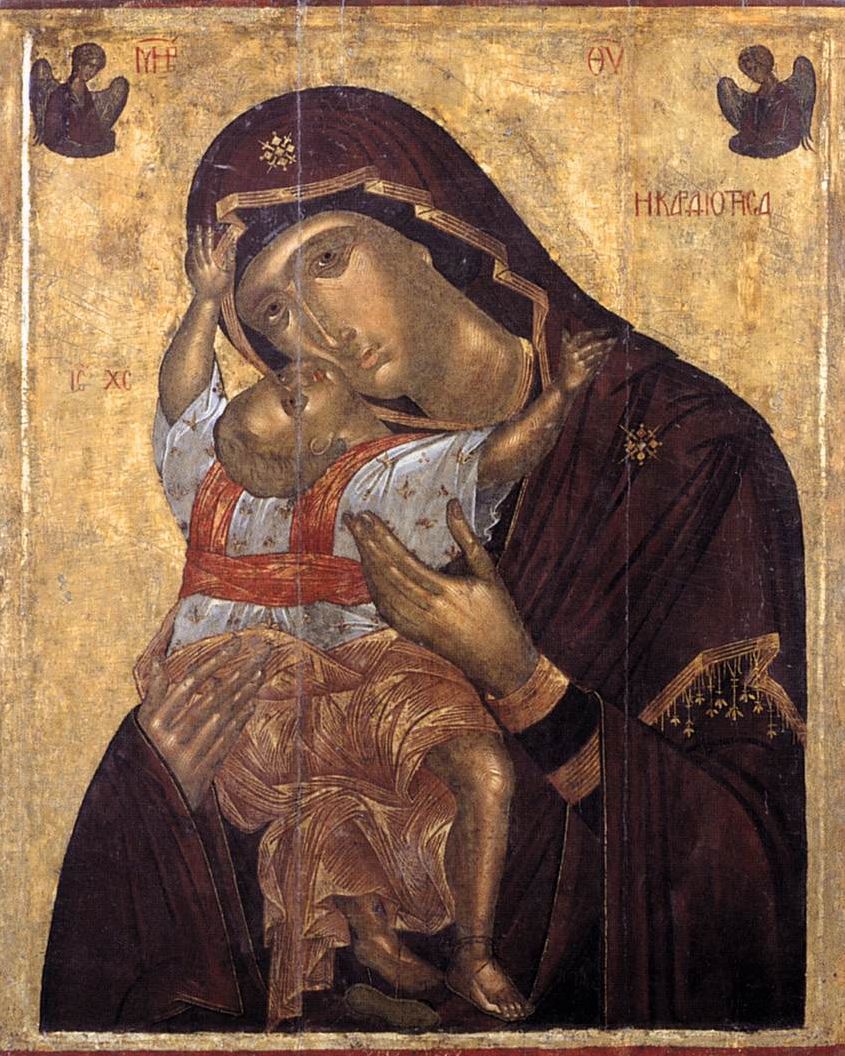
The Most-Holy Theotokos and Christ sweetly kissing (source)
  
"All the saints wrote many praises to our Panagia. But I, the poor one, have found no words more elegant or sweet to describe her, than to cry out to her at every moment: "My dear Mother! My dear, sweet Mother! When my soul departs may it come into your hands, and through them may it be given to its Creator, your Only-begotten Son."
-Saint Joseph the Hesychast
  
(source)
  
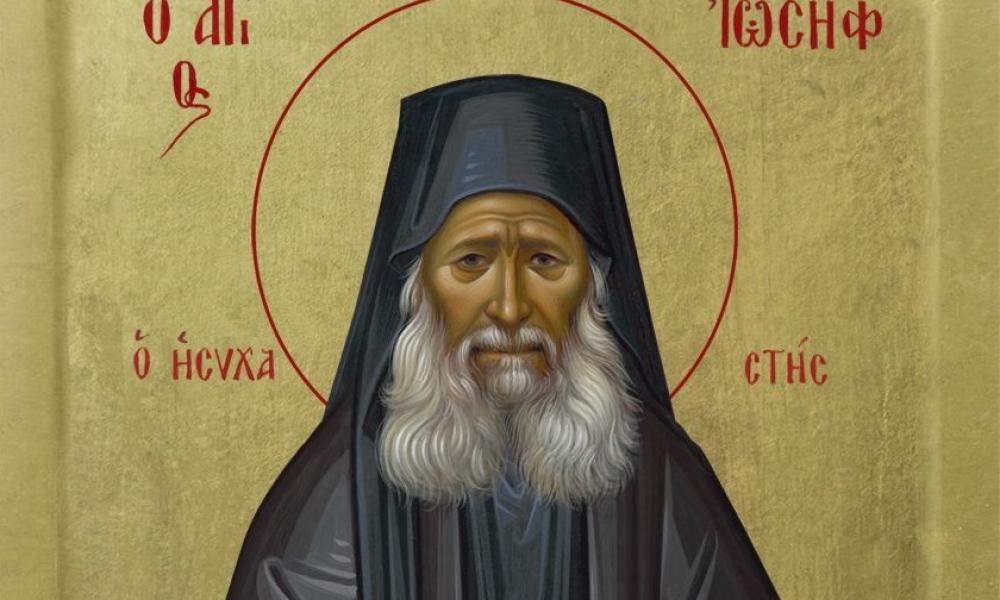
Όσιος Ιωσήφ ο Ησυχαστής
St. Joseph the Hesychast (source)
  
Most-Holy Theotokos, save us!

Tuesday, January 14, 2020

St. Porphyrios: "There is no such thing as distances for Christians..."

St. Porphyrios of Kavsokalyvia (source)
  
"There is no such thing as distances for Christians," said St. Porphyrios.
(source)
  
"I want to speak with people, even if they come out of curiosity. I want to listen to them, for as they are speaking, I see into their souls, and as I am praying, the Grace of God affects them."
(source)
  
"Say the Jesus Prayer continuously, and you will not find the Gate of Paradise closed. I greet you all with love in the Lord."
(source)
  
-Excerpts from a recent Greek book on St. Porphyrios: "It is difficult to live with a Saint"

Through the prayers of our Holy Fathers, Lord Jesus Christ our God, have mercy on us and save us! Amen!
St. Porphyrios: "You should speak to your soul..."

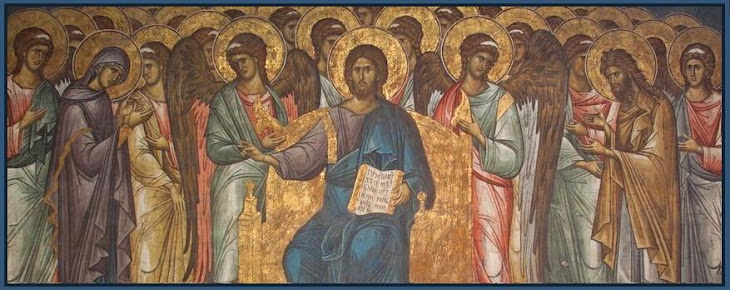
St. Ephraim the Syrian prostrating in prayer (source)
  
"You should speak to your soul," said St. Porphyrios once.
"And how should I speak to her?" He was asked by a spiritual child.
"With prayer! We direct it to God, but the words return again to our soul and influence her. God knows what we are thinking. We have need to learn them, however."
(source)
  
Through the prayers of our Holy Fathers, Lord Jesus Christ our God, have mercy on us and save us! Amen!
St. Porphyrios on Spiritual and Mental Health

St. Porphyrios of Kavsokalyvia (source)
  
"They tell us to work together with Psychiatrists. Psychiatrists accept Confession, but as regards everything else they are deniers. Thus, we can't [fully] work together with them. I am not saying that they have nothing to offer people. They do offer. The medicines that they give sick people, in some manner, calm the sick person so they do not harm themselves or others. The medicines, however, do not approach the passions of the soul. The passions of the soul are very adhesive. And behind every illness of the soul are hidden the demons.***"
-St. Porphyrios of Kavsokalyvia
  
(source)
  
***Note: Of course St. Porphyrios is speaking in very general terms, as there are always a wide spectrum of scenarios and of course believing physicians besides those who do not believe in the soul and its healing through the Lord. St. Porphyrios, however, is beautifully outlining how spiritual healing is just as important as medical or psychiatric care for patients who are suffering in body and soul. And the temptations and influence of the demons can only be remedied with Christ in His Church.
  
Through the prayers of our Holy Fathers, Lord Jesus Christ our God, have mercy on us and save us! Amen!

Friday, November 22, 2019

St. Iakovos of Evia on the Eternal Soul

St. Iakovos of Evia (source)
  
"I have a heart, and I have many afflictions. But "the afflictions of the present time lead to glory in the age to come", and so I don't reckon them as anything. Daily I see my grave, that I am a dead man. But within this dead flesh dwells an eternal soul. I care for my soul which is something eternal. Because of this, my child, you also should care for your soul, near the Fathers of the Church."
-St. Iakovos of Evia

(source)

Through the prayers of our Holy Fathers, Lord Jesus Christ our God, have mercy on us and save us! Amen!

Tuesday, August 6, 2019

Elder Sophrony on the Light of Christ's Transfiguration

The Holy Transfiguration of Christ (source)
  
"Behold, the bright cloud covered them, and behold, a voice from the cloud said: This is my beloved Son, in Whom I am well pleased. Listen to Him." (Matthew 16:5, Mark 9:7, Luke 9:35)

Today, on the occasion of the great festival of our Church, a festival which corresponds with the depth of our approach, as we come close to the end of our earthly life, and is not only not diminished, but ceaselessly increases in power and grandeur within us, forgetting, in some manner, our weakness, we are so bold to speak about the inapproachable and never-setting Light that shown on Mount Tabor.

I entreat you, look away at this hour from my nothingness--close your eyes to my unlettered and ungainly word, and instead, if it were possible, perceive me as one of the protectors of Mount Ephraim, that cried out: "Rise up, and let us ascend to Sion towards our Lord God."

And besides all of these, we are poor in spirit. Within the bounds of the earth there is insatiable hunger and unquenchable thirst for the knowledge of God, for our struggle is to reach the Unapproachable, to behold the Invisible, to come to know Him Who is found beyond any knowledge.

This momentum increases ceaselessly in every man, when the Light of the Godhead is pleased to shine upon him, albeit somewhat dimly in His approach, for therefore to our noetic eyes is revealed in what abyss we remain. This vision astonishes the whole person, and then the soul does not know rest and cannot find it, until it is freed fully from the darkness in which it is held, until it is filled with the Insatiable Food, until that Light increases in the soul and is united together with it, until Light and soul become one, proclaiming beforehand of our vision of Divine glory.

The Transfiguration of the Lord serves as the firm foundation of our hope for the transformation of our whole life--which now is full of struggle, afflictions, fear--into a life that is incorrupt and God-like. In these, this ascent to the high Mountain of the Transfiguration is linked with great struggle."
  
(from a Sermon on the Transfiguration of the Lord and the Taborean Light, by Elder Sophrony Sakarov, (source))
 
Through the prayers of our Holy Fathers, Lord Jesus Christ our God, have mercy on us and save us! Amen!

Wednesday, July 24, 2019

Metropolitan Avgoustinos Kantiotes on St. Panteleimon the Great Martyr

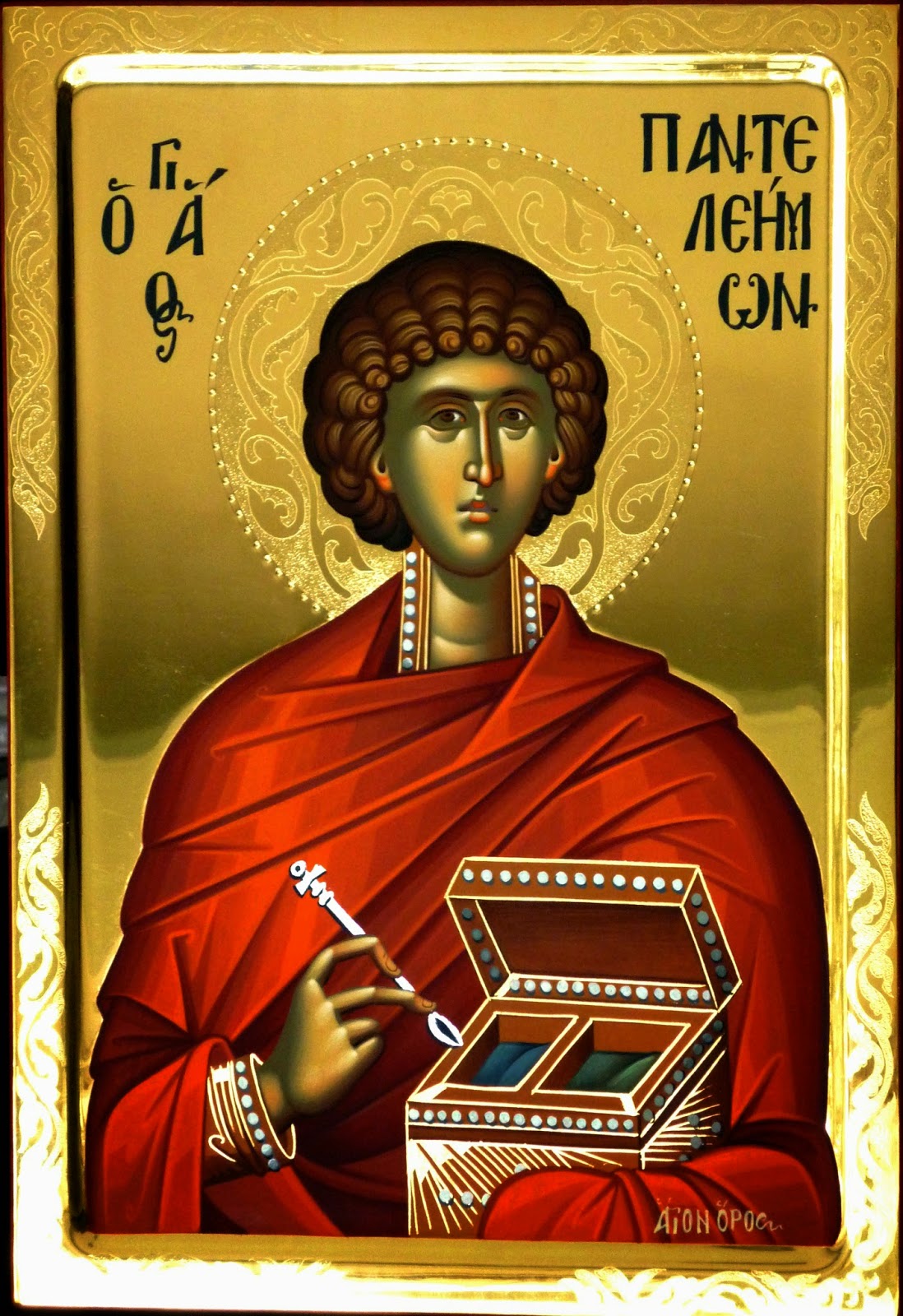
St. Panteleimon the Great Martyr and Unmercenary (source)
  
Metropolitan Avgoustinos Kantiotes on St. Panteleimon the Great Martyr: He was cast out due to jealousy
"For he knew that for envy they had delivered him" (Matthew 27:18)

My beloved, we are honoring the holy memory of the Great Martyr Panteleimon. Our topic will be the question: What was the reason that St. Panteleimon was persecuted? To this we will give a short response.

St. Panteleimon lived and struggled during the era of persecutions, when the Roman Emperor was Diocletian. He was born in Nicomedia of Asia Minor. His father was an idolater, but his mother was from the women who planted deeply into the heart of their children their faith in Christ. Therefore, she taught St. Panteleimon the truths of the faith.

He was well-sown. He had a call towards learning. He studied medicine near noted scientists. He became an exemplary physician. There were many physicians then, like there are today. However, it is rare today to find a Christian physician. The majority are faithless, materialists. And these have no worth; may God protect you from falling into their hands.

St. Panteleimon differed from them. In what way did he differ? He differed in three ways.

First, regarding money. They were lovers of money. They charged their patients a lot and became rich. St. Panteleimon was unique, a man of ideology. He used science as a mission. He was seen at night visiting huts [of the poor and sick] like an angel. While the others went only to the houses of the great ones, he went to the houses of the poor and served the sick.

And a second way in which he differed from the others. As a famous Greek university professor once said, physicians frequently study medicine like veterinary medicine, and many doctors act like veterinarians. They don't see anything else beyond veins, bones, flesh, ribs, hearts and lungs. Man of course is these, but behind this is something invisible. There is a "little motor", which moves the biological body, and there is the existence of man. And the doctor, when he doesn't see this "little motor", is blind, and is not in the position to perform his work. This "little motor" is the spiritual factor, the soul of man. A multitude of experiments and observations have shown that the soul with the passions, feelings, conscience and impulse greatly impacts the body. There is an interconnectedness between body and soul. This is what our Church chants during the 15-days of August, and which is scientifically correct: "From the great multitude of my sins, ill am I in body, ill am I also in soul..." (from the Small Paraklesis to the Theotokos). And both are sick but the root of evil is sin. Therefore, St. Panteleimon made the correct diagnosis. He saw that, when the soul is freed from guilt, the body is given life, and man breathes deeply. Many illnesses (apoplexies, heart attacks, cancer) have as their cause the spiritual world. Some bitterness from remorse or from slander or from divisiveness or from injustice or anxiety waters the body with poison.
  
St. Panteleimon the Great Martyr and Unmercenary (source)
  
So he differed first for not taking money, secondly because he saw man as a psychosomatic whole, and thirdly, for besides the other medicines which the other physicians had, St. Panteleimon had a rare and unique medicine, and this was the faith. He believed deeply. Because of this, together with medicines from herbs from the earth that he gathered, he knelt next to the pillow of the sick, praying, and--let the faithless disbelieve it, we believe it--the sick man was healed. And to this day, we see the sign of the Cross in clinics, hospitals and healing centers. How truly awesome a thing is the power of faith, a medicine of healing for bodily and spiritual illnesses.

This was St. Panteleimon. And because of this, his healing center was marked every day with a line of sick people, while they did not go to the other physicians of Nicomedia anymore. This being passed over, however, enflamed the hearts of his colleagues with the yellow lamp of jealousy. They were jealous of him, they hated him. They saw that, as long as he was a physician in Nicomedia, they would have to change careers because everyone was hastening to St. Panteleimon. And the sick, who themselves were loosing hope, found their healing near him. Behold therefore the cause of jealousy. Because of this they cast him out. They hated him from the beginning. With what slander did they do so? As an unmercenary? As one taking advantage of people? As an adulterer? As a fornicator? As a dangerous person? As a criminal? None of these things. If they condemned him with these during that decadent regime, it wouldn't work. They condemned him with a condemnation that took hold. Isn't that how it is, that the slanders of the faithful change in every age? Sometimes they use slander A, other times B, other times C. I will not dwell on this, I will just mention that, from the time...with various slanders, with foolish things the jealous attack the worthy men to discredit them--though at the heart of the matter, they don't believe the slanders--and people are no longer judged according to proper and steadfast criteria (ethically), but according to other criteria (politics).

They condemned him therefore with the condemnation of that era that was so devastating: that he was a Christian. And this condemnation led man to dash him to pieces. He was seized, led before rulers, confessed his faith with boldness, suffered all kinds of martyrdom, and thus, his holy soul flew to the heavens like a wholly-white dove to dwell in the heavenly mansions, in order to rejoice together with the Holy Angels and Archangels.

Behold, my beloved, the cause of the persecution and the martyrdom of St. Panteleimon: jealousy.

O jealousy, a great and abyss of a passion! It is a worm and viper that consumes the bowels of he who is jealous, but is also the grave of great men. Terrible are its consequences. If we open the holy stories, we will see that, from the beginning, this was the destruction of the human race. "Out of the jealousy of the devil", says Solomon, "death entered into the world" (Wisdom of Solomon 2:24). Satan was jealous of the magnificence of man, and was filled with wrath against him. Because of this was the first blood spilled upon the earth, due to jealousy. Cain was jealous of his brother Abel and he murdered him "in the field" (Genesis 4:8). From jealousy Esau persecuted Jacob (ibid 27:41), the eleven children of Jacob persecuted Joseph the All-comely (ibid 37), King Saul persecuted David (I Kings 19:10), and a long line of holy men were snuffed out.

And we have examples from our own national history. Great men were snuffed out like the righteous Aristides in antiquity, Socrates who drank the poison, and in later years, Harilaos Trikoubes, etc.

But why do we need other examples? Cast your eye on the Praetorium and to Golgotha. "Which of these two do you wish that I release?" asked Pilate, "Barabbas or Jesus?" Everyone cried out together: "Barabbas". And the Evangelist notes psychologically: "This he did", Pilate, in other words, "for they delivered Him up out of envy." (Matthew 27:18) The envy of the Scribes and Pharisees, which were like fireflies quenched before the great sun that is Christ, led our Lord to Golgotha. Therefore, my brethren, it is a general rule. If there ever appears some person, some worthy personality, who would perform their duty, he will elicit envy and rouse up persecution. Meaningless people do not bother, those who offer help and give their lives to those around them, they are the ones persecuted. St. Paul said this: "All those who desire to live piously in Christ Jesus will be persecuted" (II Timothy 3:12). All those who believe in Christ will be persecuted, along with all those seek to live according to His commandments. It is their fate. All those living, either through his word or through his example, bring about an earthquake. However, this is an earthquake of salvation. Blessed are the communities who have such men, either in science or in the military or in politics or in the holy clergy, for they become the agents of the proper way.

Pray, my brethren, that the sickness of envy might be healed, that it might abandon you. And may our Lord, through the intercessions of St. Panteleimon, transform all our hearts, and may we go forth with virtue and love, to the glory of God. Amen.

+Bishop Avgoustinos

(Homily of Metropolitan of Florina Avgoustinos Kantiotes, delivered in the Holy Church of St. Panteleimon, Florina, 7/27/1976) (source)
  
St. Panteleimon the Great Martyr and Unmercenary (source)
  
Through the prayers of our Holy Fathers, Lord Jesus Christ our God, have mercy on us and save us! Amen!

Monday, September 18, 2017

A Doxology by St. Nektarios

The Vision of the Three Angels, symbolizing the Holy, Consubstantial, Life-giving and Undivided Trinity (source)
 
A Doxology by St. Nektarios
"God, to me, is glory and wealth and boast. He is the sweetest and most pleasant thing. He is my care and my nourishment. Me soul is a creation of the breath of God. My body is the fashioning of God. By divine grace, I am one of God's generation. From God I received my being, and also the ability to move and breathe and to speak.

To God I daily entrust my spirit. To God I pray. I live with God, I serve and find myself with God.

I am so happy with the great, mighty and living God, Who is the provider of assistance and the worker of good things. He follows whatever I think, say and do. I receive God as the awesome judge of whatever I have done. I have God Who is calm and forgiving, forbearing and greatly merciful, savior and redeemer.

I know God Who is the beginning of all things, Who gives good things, Who is the fore-knower, overseer, all-wise, all-knowing, Who knows both the future and the present and the past. I hymn, I glorify, I bless and I supremely exalt the good, holy, righteous and true God.

I venerate and worship God Who loves mankind. I believe in God, I hope in God, I love God, Who is the spring of love. My soul and my mind exalt God and find rest. My heart desires God greatly.

I confess one Three-sun and Tri-hypostatic God. I proclaim one God: beginningless, everlasting, simple, surpassing-essence and undivided. This Unity and Trinity. These I confess, believe and proclaim.

The end, and to the Three-sun Godhead, be kingdom, praise and glory unto the ages of ages. Amen."
-St. Nektarios of Pentapolis, the Wonderworker
   
(amateur translation of text from source)
 
Through the prayers of our Holy Fathers, Lord Jesus Christ our God, have mercy on us and save us! Amen!

Friday, June 20, 2014

St. Paisios: When the body is tried, then the soul is sanctified

St. Paisios of the Holy Mountain (source)
 
When the body is tried, then the soul is sanctified. With sickness, our body is pained, this mud-built house of ours, but thus its tenant, our soul, will rejoice eternally in the heavenly palace which Christ will prepare for us. With this spiritual logic, which is irrational to worldly people, I rejoice and I am proud for the bodily harms which I have. The only thing that I don't think about is that I will have a heavenly reward.

I understand that I am redeemed from my thanklessness towards God, as I have not returned His great gifts and benefactions. Because in my life, everything has been a feast: I partake of monasticism and my afflictions. All are benefactions which God has wrought, and all mercies. Pray, however, that I not be satisfied with these in this life, because this would be to my woe! Christ gave me a great honor to suffer even further for His love. It is enough that He strengthens me so that I might bear it, and I don't want any reward.
 
Amateur translation of text from: Elder Paisios of the Holy Mountain, from the book "Passions and Virtues", Volume V. (source)
 
Through the prayers of our Holy Fathers, Lord Jesus Christ our God, have mercy on us and save us! Amen!

Sunday, February 3, 2013

St. Peter of Damascus on Love

Panagia Kardiotissa ("Lady of the Heart") - 15th Century icon written by Angelos Akotantos (source)
 
St. Peter of Damascus on Love

To speak of love is to dare to speak of God, for, according to St John the Theologian, ‘God is love, and he who dwells in love dwells in God’ [1 Jn 4.16]. And the astonishing thing is that this chief of all the virtues is a natural virtue. Thus, in the Law, it is given pride of place: ‘You shall love the Lord your God with all your heart, and with all your soul, and with all your might’ [Deut 6.5]. When I heard the words ‘with all your soul’ I was astounded, and no longer needed to hear the rest. For ‘with all your soul’ means with the intelligent, incensive and desiring powers of the soul, because it is of those three powers that the soul is composed. Thus the intellect should think at all times about divine matters, while desire should long constantly and entirely, as the Law says, for God alone and never for anything else; and the incensive power should actively oppose only what obstructs this longing, and nothing else. St John, consequently, was right in saying that God is love. If God sees that, as He commanded, these three powers of the soul aspire to Him alone, then, since He is good, He will necessarily not only love that soul, but through the inspiration of the Spirit will dwell and move within it [cf 2Cor 6.16; Lev 26.12]; and the body, though reluctant and unwilling–for it lacks intelligence–will end by submitting to the intelligence, while the flesh will no longer rise in protest against the Spirit, as St Paul puts it [cf Gal 5.17].
Just as the sun and moon, at the command of God, travel through the heavens in order to light the world, even though they are soul-less, so the body, at the behest of the soul, will perform works of light. As the sun journeys each day from east to west, thus making one day, while when it disappears night comes, so each virture that a man practices illumines the soul, and when it disappears passion and darkness come until he again acquires that virtue, and light in this way returns to him. As the sun rises in the furthest east and slowly shifts its rays until it reaches the other extreme, thus forming time, so a man slowly grows from the moment he first begins to practice the virtues until he attains the state of dispassion. And just as the moon waxes and wanes every month, so with respect to each particular virtue a man waxes and wanes daily, until this virtue becomes established in him. At times, in accordance with God’s will, he is afflicted, at times he rejoices and gives thanks to God, unworthy as he is to acquire the virtues; and sometimes he is illumined, sometimes filled with darkness, until his course is finished.
All this happens to him by God’s providence: some things are sent to keep him from self-elation, and others to keep him from despair. Just as in this present age the sun creates the solstices and the moon waxes and wanes, whereas in the age to come there will always be light for the righteous and darkness for those who, like me, alas, are sinners, so, before the attainment of perfect love and of vision in God, the soul in the present world has its solstices, and the intellect experiences darkness as well as virtue and spiritual knowledge, and this continues until, through the acquisition of that perfect love to which all our effort is directed, we are found worthy of performing the works that pertain to the world to be. For it is for love’s sake that he who is in a state of obedience obeys what is commanded; and it is for love’s sake that he who is rich and free sheds his possessions and becomes a servant, surrendering both what he has and himself to whoever wishes to possess them. He who fasts likewise does so for love’s sake, so that others may eat what he would otherwise have eaten. In short, every work rightly done is done out of love for God or for one’s neighbor. The things we have spoken of, and others like them, are done out of love for one’s neighbor, while vigils, psalmody and the like are done out of love for God. To Him be glory, honour and dominion through all the ages. Amen.
St Peter of Damaskos (eleventh or twelfth century), Discourse XV, Philokalia, Volume III. (Source)
   
Through the prayers of our Holy Fathers, Lord Jesus Christ our God, have mercy on us and save us! Amen!