Showing posts with label Spiritual Beauty. Show all posts

Sunday, May 2, 2021

Quote from Elder Ephraim of Arizona on Holy Pascha

Christ is risen! Truly He is risen!
The Resurrection of Christ (source)

March 24th, 1980. Holy Pascha.

Today is the Resurrection of Christ.

"Come, receive the light, from the never-setting light..."

O, never-setting, perfect light that never sets, surpassingly bright and surpassingly white, O how you magnetize my nous, my soul, my heart! I desire you endlessly, with love and eros unending. When will I be made worthy of the gift of the compassion of my Most-Holy God the Father, to partake of You unto the ages of ages!

My unworthiness troubles me, that I am not worthy of such a place among the saved, but I am worthy of hell and of eternal punishment.

The Resurrection, the eternal Pascha, attracts me terribly. It draws me above the state of things. Above heaven. Above to the sure desire, which I greatly desire to find. But, when will this occur?

O Pascha, together with the Angels, with the Saints, dressed in white, who so greatly desire me and attract me! New songs and unspeakable words are chanted and praised to God, with an awesome, but also unspeakable peace and serenity.

O Pascha, without end, and transformation of the unspeakable joy and Festival! My Father and my God, preserve me from every evil that I myself might be made worthy, I the refuse, one day to be found at that Pascha which cannot be described in human words, nor expressed and spoken of.

Rejoice and exalt, you to as well, O my Lady Theotokos, at the arising of Your Son and God. In the divine beauty of your Son and God, remember me, the wretched one, that I might be found together with you in the eternal Pascha!

...It is the day of Resurrection, let us brilliantly shine forth, O people, Pascha, the Lord's Pascha.

I greet you this year, my Pascha.

(source)

Elder Ephraim at Pascha at St. Anthony's Monastery, Arizona (source)

Christ is risen from the dead, by death, trampling down upon death, and to those in the tombs, He has granted life!

Truly He is risen!

Wednesday, July 22, 2020

Homily II on St. Paraskevi by Metropolitan Avgoustinos Kantiotes

St. Paraskevi the Great Martyr (source)
   
Homily II on St. Paraskevi by Metropolitan Avgoustinos Kantiotes: "A Sacrifice out of Love"
Who, my beloved, was St. Paraskevi whom we are celebrating? What was her life, her words and her miracles? It is not easy to relate these in detail. But let us reverently approach her sacred face.

St. Paraskevi was born in the capital of the ancient world, in Rome, during the reign of Emperor Antoninus (138-161AD). Her upstanding parents, Agathon and Politia, were Christians, but were childless. They promised, therefore, if they would be granted a child, to dedicate it to the Lord. God in reality granted them this girl, and because she was born on Friday, they gave her the name "Paraskevi" [Greek for "Friday", literally the "Day of Preparation", i.e. for the Sabbath]. They raised her as a Christian. But this girl had the misfortune of losing her two parents while she was still young. She had, however, the great blessing to have had the faith in Christ taken root within her at the proper time. As she grew, her love for the Lord lit a fire within her soul. This holy fire, which is not from the earth, but which is lit from Heaven, was so great, that all the waters could not quench it (Song of Songs 8:7). Blessed are all those who experience this.

She loved Christ with her whole heart. Not simply with words, but with deeds. The sign of this was how she responded to the voice of the Gospel: "Sell your goods and give to the poor..." (Matthew 19:21). If this voice were heard in our community, would there be souls that would thus respond? St. Paraskevi, the orphan who inherited a great fortune, distributed her goods to the poor.

She embraced the monastic life and began to preach Christ in Rome, and the surrounding areas. She founded a convent, in which were gathered girls who loved the Lord, and she made a missionary sisterhood, whose goal was to show mercy on the poor and to teach women. With the good example of this sisterhood, and with the fiery preaching of St. Paraskevi, many women who were idolaters came to believe in Christ.

She shown like a star at dawn, like an Angel. Other women and girls of her time were dressed in silk. The patricians of Rome and the ladies of the great families would be seen with their adornments worth more than their whole fortunes. Vain women like these were like swallows who carried their whole nests on them, and thus they would carry the whole fortunes of their husband.

St. Paraskevi did not wear silk. She had another garment, one incorrupt and eternal. She was adorned with modesty, a garment which is not corrupted by time.

Other women then and today attempted to appear beautiful externally. They would pain with makeup and lipstick on their lips, put on their cheeks, their eyebrows, their eyelashes. But if you were to ask me which woman were more beautiful, I would respond that the more beautiful woman is she who weeps when she hears the name of Christ, when she prayers, when she beholds the Epitaphios and the Holy of Holies. This was the beauty that St. Paraskevi had. She was not adorned with accessories but only with tears, which ran from her eyes, when she arose at midnight and prayed beneath the stars of Heaven. These were her very precious diamonds, which were taken by the Angels and brought to Paradise, to adorn the garment of her virginity.

Other women adorn their ears with earings, very precious and very expensive. But if you were to ask me, which woman were more beautiful, I would say: It is not those ears adorned with that kind of earings, which eventually will be destroyed or stolen. The more beautiful woman is she who readily turns to hear the voice of her husband, and this readiness had the ears of St. Paraskevi, who hearkened to the voice of the Gospel, to the voice of Christ Who said: "Blessed are those who hear the word of God and keep it." (Luke 11:28)

Other women of her time, like the queens of Rome, wore luxurious belts on their waist. For St. Paraskevi, her belt was the self-control which she wore. This was the adornment of St. Paraskevi, and thus all women and girls who desire to be called Orthodox Christians should be adorned.
  
St. Paraskevi the Great Martyr (source)
  
Her activities, however, brought about a backlash; this is the law of life. Whoever is struggling, will be fought against. Only the dead do not fight. Those who struggle in the world "fighting the good fight" (I Timothy 6:12) will face all kinds of backlash from the enemy. Evil children don't throw rocks at fruitless, but at fruitful trees. And St. Paraskevi, who was a tree full of fruit, was next to receive the stones thrown by the instruments of Satan. She was fought first by Hebrews who were fighting Christianity. Two of them condemned her to the King Antoninus, that there was a woman who was stirring up his kingdom, and if she were to continue thus, there would remain no one who would not believe in Christ. According to the command of Antoninus, St. Paraskevi was seized, and led before the Emperor. He remained astonished before her physical beauty, and suggested to her: "Deny Christ and I will make you the Queen." She responded: "I would be very senseless to deny the light and to accept the darkness, to deny Christ and to worship the devil, because the idols are the devil."

He tried again with sweet words and promises to shake her, but she stood immovable. "I will give you three days to think properly and to decide, either to become Queen or to suffer martyrdom."

"O King, do not think that three days, or thirty days or thirty years that you might give me could change my mind. Whatever you have to do, do it immediately."
  
Do you see, my beloved, how this woman stood unshaken? Whoever believes in truth and loves Christ, either a woman or a man, does not fear neither seduction nor threats, neither men nor the devil, nor this whole world. The true Christian is a hero, because the Gospel brings forth heroes. A heroine and an unshakable rock of the faith was St. Paraskevi shown to be.

Her martyrdom is one of the most moving. I will only offer a small detail. Antoninus ordered that she be placed in a large cauldron, in which was boiling pitch. And even though the pitch was boiling over, St. Paraskevi was swimming in the cauldron. Many don't believe this, it is their right. We believe in Christ and in the wonders of the Saints. As soon as the Saint entered the cauldron, she made the sign of the Cross, and boiling was transformed into refreshment, as if in soothing water! Antoninus was astonished. He wondered whether this were a trick: "Throw me some of that", he said. She threw some into his face, and the Emperor was blinded, his whole face was burned, and he began to entreat the Saint. And she, with her prayer, healed him, and all the people cried out: "Great and true is the God of the Christians!" Thousands of people believed on the day of her martyrdom.

Ultimately, Antoninus believed, but his successor continued the persecution against the Christians, and because of this, the Saint was later martyred. A soldier led her to the place of her execution, and with the lightning strike of his sword, her precious head was cut off, but her holy soul flew like a dove to the Heavens, to be together with the Most-Holy Theotokos, the Saints and the Angels, and to pray on behalf of us sinners.

See, my beloved, what one woman accomplished! She astonished the whole world. And what are we doing today, clergy and laity? In comparison to her, we have not accomplished anything. On the occasion, however, of her memory, let us honor her with love, and be taught by her example, and let us live as true Christians, and work in our social circles with philotimo.

Let us entreat St. Paraskevi. And let us light a candle not just for our family and for our children, but for our homeland, that we might continue to walk the path of Christ, because only then there will be blessedness. May the Lord be with us. Amen.
  
(+) Bishop Avgoustinos
(Homily delivered at the Holy Monastery of St. Paraskevi, Milochoriou, Eordaias, on Wednesday July 26th, 1967, Source)
  
St. Paraskevi the Great Martyr (source)
  
Through the prayers of our Holy Fathers, Lord Jesus Christ our God, have mercy on us and save us! Amen!
Thursday, January 30, 2020

St. Nikodemos: "Let Jesus be your breath..."

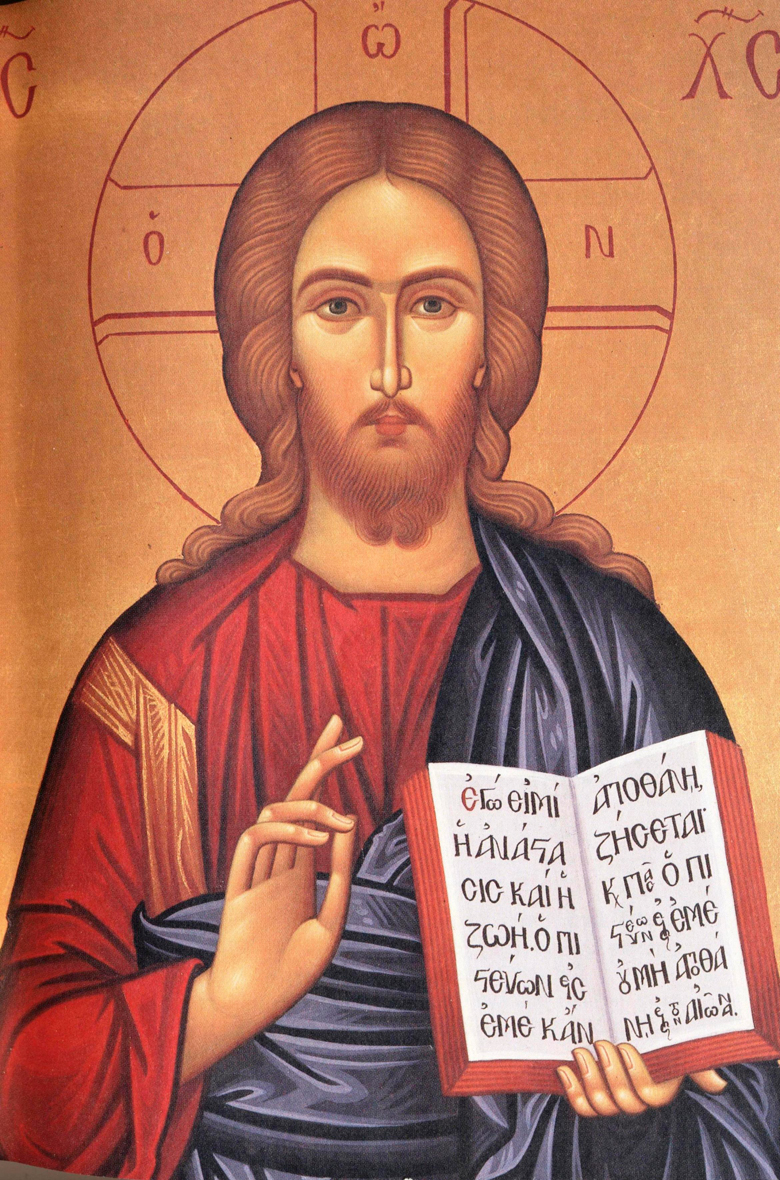
Jesus Christ the Son of God the Savior of the world (source)
  
"Let Jesus be the sweetest meditation of your heart.
Let Jesus be the nourishment of your tongue.
Let Jesus be your breath.
And never get your fill of calling upon Jesus!"
-St. Nikodemos of the Holy Mountain

(source)
  
Through the prayers of our Holy Fathers, Lord Jesus Christ our God, have mercy on us and save us! Amen!

Wednesday, January 29, 2020

St. Amphilochios of Patmos: "It is a beautiful, wondrous thing..."

The Wedding at Cana (source)
  
"It is a beautiful, wondrous thing to behold people united with the love of Christ!"
-St. Amphilochios of Patmos (+1970)

(source)

Through the prayers of our Holy Fathers, Lord Jesus Christ our God, have mercy on us and save us! Amen!

Tuesday, January 14, 2020

St. John the Forerunner: The Wild Flower that adorns the World

St. John the Forerunner (source)
  
Behind the Prophet, see the ascetic.
Behind the Baptist, see the virgin.
Behind the Great, see the humble.
Behind the Saint, see John.
Behind every Saint of the Church, there is a whole life of struggles, efforts, tears. There is hidden a life of prayer and asceticism, simplicity and obscurity.
It is not that which we know of St. John the Baptist and the Forerunner of our Lord. It is that which we do not know about him that contributes to making him Great before men and Saints. It is all that our Triune God knows of him.
This fascinates me about St. John...that he is an incredible wild flower that adorns the world, and that the world does not know...
-by Fr. Pavlos Papadopoulos
  
(source)
  
Through the prayers of our Holy Fathers, Lord Jesus Christ our God, have mercy on us and save us! Amen!
 

Tuesday, December 24, 2019

St. Gregory Palamas: "This is the Festival of the virgin birth!"

Christ is born! Glorify Him!
The Nativity of Christ (source)
  
"This is the Festival of the virgin birth! Our address must be exalted therefore in accordance with the greatness of the feast, and enter into the mystery, as far as this is accessible and permissible, and time allows, that something of its inner power might be revealed even to us. Please strive, brethren, to lift up your minds as well, that they may better perceive the light of divine knowledge, as though brightly illuminated by a holy star. For today I see equality of honour between heaven and earth, and a way up for all those below to things above, matching the condescension of those on high. However great the heaven of heavens may be, or the upper waters which form a roof over the celestial regions, or any heavenly place, state or order, they are no more marvellous or honourable than the cave, the manger, the water sprinkled on the infant and His swaddling clothes. For nothing done by God from the beginning of time was more beneficial to all or more divine than Christ’s nativity, which we celebrate today. The pre-eternal and uncircumscribed and almighty Word is now born according to the flesh, without home, without shelter, without dwelling, and placed as a babe in the manger, seen by men’s eyes, touched by their hands, and wrapped in layers of swaddling bands. He is not a spiritual creature coming into being after previously not existing; nor flesh which is brought to birth but will soon perish; nor flesh and mind united to form a rational creature, but God and flesh mingled unconfusedly by the divine Mind to form the existence of one theandric hypostasis, who entered the Virgin’s womb for a time. By the good pleasure of the Father an the co-operation of the Spirit, the Word who transcends being came into being in this womb and by means of it, and now He is delivered from it and born as an infant, not loosing but preserving the signs of virginity. He is born without suffering, as He was conceived without passion, for as His mother was shown to be above the pleasure of passion when she conceived, so she is above grievous pains when she gives birth. “Before the pain of travail came upon her, she escaped it” as Isaiah says (Isaiah 66.7 LXX), and she brought forth in the flesh the pre-eternal Word. Not only is His divinity inscrutable, but the manner in which He was united with the flesh is past understanding, His condescension unsurpassable, and the human nature He assumed divinely, ineffably sublime, and so far above all thought and speech, that it does not admit of any comparison with creation. Even though you see in the flesh the child born to the Maid who knew no husband, He is still beyond compare. It says, “He is fair in beauty beside the sons of men” (Psalm 45.2 LXX). It does not say “fairer” but simply “fair”, so as not to compare incomparable things: the nature of God Himself to that of mere men..."
-Excerpt from the Homily on the Nativity of Christ by St. Gregory Palamas

(source)
  
The Nativity of Christ (source)
  
Through the prayers of our Holy Fathers, Lord Jesus Christ our God, have mercy on us and save us! Amen!

Tuesday, December 3, 2019

St. Porphyrios: A Gift from God to Humanity

St. Porphyrios of Kavsokalyvia (source)
  
St. Porphyrios: A Gift from God to Humanity
"St. Porphyrios is a gift from God to humanity, to an age very tired and burdened.
We still have not come to understand what Porphyrios means. He was greatly ahead of his time, ahead of the perceptions and attitudes of many within the Church.
In St. Porphyrios, you do not find "do" and "don't"***, forcing and angst, extremes and exaggerations. You will not find cheap and shallow explanations.
There is not shame nor threats, nor fear and misery. His teaching is full of Christ, light, joy and freedom.
  
"An Athonite Abbot told me: "My Father, you find one like Porphyrios every 1000 years or so...a great gift from God..."
Another monk, exhausted and crushed by strict and rigid canons, told me: 'With St. Porphyrios, I found rest. I found Christ, freedom, I found myself...Believe me, Father, for two years I do not allow anything within my nous other than the Gospel, the Gerontikon, and the words of St. Porphyrios. And I am happy..."
However, the great Porphyrios was a simple little Elder. A little priest who wouldn't even catch your attention. You would likely pass by him with indifference. You would not see him "selling" holiness.
  
"Because holiness is simplicity, humility, immediacy, it does not ring bells and does not shine windows, it is not sold in the markets, like another honored Athonite Father says.
Elder Porphyrios did not call anyone to him; he did not burden or force anyone. He let you come to him, to want him and to desire him. He did not have any manic "catechism", no angst to show off something; he was free. He did not preach himself, but his life spoke!!!

"He gave to you when you were ready. He opened your eyes to look on Heaven when you were ready to see, with discernment, simply, beautifully. Together with him was your being, your uniqueness, and thus he helped you to breathe deeply, to become beautiful and magnificent, to become that which you always were but had forgotten."
-Quote of Fr. Livios on St. Porphyrios
(source)
  
***Note: St. Porphyrios did routinely emphasize the need for asceticism (see examples here and here), and did not justify sin. The author however is highlighting how the Saint focused on inspiring the love of Christ within people, and that this would transform the rest, helping to transform their lives.
  
Through the prayers of our Holy Fathers, Lord Jesus Christ our God, have mercy on us and save us! Amen!
 

Wednesday, July 24, 2019

"She who loved Christ, the most beautiful..."

St. Paraskevi the Great Martyr (source)
  
She who loved Christ, the most beautiful, and through purity, was herself made beautiful in soul, and through all kinds of pains and trials approached Him as a spotless bride. Therefore, He made you worthy to dwell within His bridal chamber in the heavens, where you ever entreat Him, O All-praised Paraskevi, on behalf of those who honor you.
-Kathisma from Matins for the feast of St. Paraskevi the Great Martyr

(source)

Through the prayers of our Holy Fathers, Lord Jesus Christ our God, have mercy on us and save us! Amen!

Thursday, July 11, 2019

"Blessed are you, O God-bearer Paisios..."

Icon of Jesus Christ as he was described by St. Paisios to the Nuns of Souroti Monastery after his divine visions of the Lord (source)
  
Blessed are you, O God-bearer Paisios, for you were made worthy to behold the comely beauty of Christ God, He Who is all light, all sweetness, all inexpressible beauty. Therefore in ecstasy you cried out, saying: How could men dare to spit upon Your radiant face, O Lover of mankind? How could I the wretched one be made worthy to behold this sight, of which only some of all of the struggles of the ascetics from the ages were made worthy to behold? Now, therefore, O all-blessed and Venerable One, as you ceaselessly behold Christ the Savior face-to-face, we entreat that you intercede for us on the Day of Judgment that we be made worthy, with an unhindered conscience, to behold His face.
-from the Litia of the Great Vespers for St. Paisios the Athonite

(source)
  
St. Paisios in prayer (source)
  
Through the prayers of our Holy Fathers, Lord Jesus Christ our God, have mercy on us and save us! Amen!

Thursday, May 9, 2019

Elder Aimilianos of Simonopetra (+ May 9th, 2019) on the Lord's Resurrection

The Resurrection of Christ (source)
  
Today, May 9th, 2019, Elder Aimilianos of Simonopetra reposed in the Lord. He was a grace-filled preacher and spiritual guide to many throughout the world.
"Fr Aimilianos was born in 1934, and as a priest and theologian he attracted a following of like-minded men and women, some of whom later joined him in renewing one of the monasteries at Meteora. As a young monk and priest he had a profound vision of the light of God, which enfolded him during the Divine Liturgy. ‘Henceforth every Divine Liturgy, prepared for by a long vigil, was a sublime experience of God’s glory.’ His charism was to be able to attract others to share in this commitment to contemplative worship and to deepen their life in Christ. These addresses are just the tip of the iceberg of a remarkable ministry of teaching and spiritual formation, not least among young people. The monastery attracts many pilgrims to this day.
  
"Early in the 1970s tourism was making such inroads at Meteora, where the monasteries perch on high and hitherto inaccessible rocks, that contemplative monastic life was becoming impossible. So Elder Aimilianos and his companions responded to a call to revitalize the ageing brotherhood of Simonopetra, itself perched on a vast rock nearly 1,000 feet above the sea on the Holy Mountain. On 26 November 1973 Elder Aimilianos was elected abbot of the monastery: this proved to be one of the decisive turning points in the renewal of monastic life on Mount Athos. In 1974 his community of nuns migrated to recreate the monastery of Ormylia in Halkidiki, across the water from the Holy Mountain itself and nearer Thessaloniki. In 1995, however, Elder Aimilianos began to fall ill, and in 2000 he retired from active supervision of the two monasteries.
  
Throughout his abbacy he proved a true spiritual elder to his flock: ‘like an overflowing spring, the elder ceaselessly poured himself out to his disciples, offering his words to them with all the magnificent prodigality of divine love.’ He kindled many vocations to the priesthood and the monastic life, and his spiritual influence was, and is, felt far from the Holy Mountain. In the words of the present abbot...
'Elder Aimilianos was our guide, teacher, and father in Christ, and remains so to this day. We lived with him for many years, travelling together in the way of the Spirit. The discourses collected in this volume give expression to his personal experience of God, which was always real, living and dynamic. We believe that they will fill you with joyful hope.'"
May we have his blessing and may he have a blessed Paradise in our risen Lord!  
  
Elder Aimilianos of Simonopetra bringing out the Holy Light on Pascha (source)
  
Elder Aimilianos of Simonopetra (+ May 9, 2019) on the Lord's Resurrection
Before daybreak, at night, in the innards, in the belly of the grave, the Risen Lord sprang up. ‘From the belly, before the morning-star’, the heavenly Father raised Him and since then He has been our eternal High Priest.
 
Christ’s resurrection is a special gift, the last gift on earth of the Lord Who welled like myrrh from that tomb. There has never been a more beautiful treasure-chamber than the Lord’s tomb. There has never been a more beautiful opening than the opening of Christ’s tomb. The Father agreed to His Son being cast into the tomb by the transgressors precisely because He intended light to rise from the grave.

The Father would have remained unknown, inaccessible, but for the coming of the second, consubstantial and co-eternal light, the light of Christ. And Christ would have remained incomprehensible to us, in the end, but for the revelation by the third light, which is one and the same, the light of the most-holy Spirit, Who came to us when we were deprived of our joy, the Lord Jesus. It was in our interests that He should leave us, so that this new light could emerge from the tomb.
  
The prophet called You ‘the fairest of the sons of men’ and they managed to cast You into a pit, as if prophesying your eternal end. They made a mockery of this pleasure to the eyes and joy to the heart, made it into something hateful which people couldn’t bear to look at. But ‘who shall tell his lineage?’ Who can say how many would be born of this corpse. Who can number His spiritual descendants?
  
For the tomb of Christ, the resurrection of Christ is the beginning of a new generation. A generation which doesn’t come through the flesh of the loins but is born from the grave. From the suffering, the death in Christ, this new life arose.
  
It’s the race of people who are not merely not begotten but whose hearts beget them through the death they undergo. Their life begins with the death of baptism, it proceeds to their tonsure, which is again another perfect death and goes on to the third, the final one, in the grave.
  
So, out of the grave, from the mystical formation which occurred in the womb of Christ’s death, there grew the choicest thing our Church has: its virginal people, this new generation of monastics.

Icon depicting Elder Aimilianos of Simonopetra (though not yet canonized) (source)
  
Who can understand how souls are begotten in a virginal manner? How many were able to understand that the Virgin gave birth to Christ?
  
How many are able to understand that our virginity is a marriage and a birth of the Holy Spirit? How many can understand that not from our loins but from our spirits and our hearts we give birth to Christ and give the world the light of the Holy Spirit?
  
All of this is hidden in Christ’s tomb. Our monastic life is the hidden treasure which cannot be sensed by the eyes of either passionate or merely good people, but is revealed only to infants who have chosen Christ and put Him in their hearts. In a wonderful speech to the sons of Israel, Moses the great once foretold their crossing into the promised land. ‘Don’t forget’, he added, ‘that I won’t be with you. I shall stay here. But the Lord will raise another prophet, like me, from among your brethren and he will take my place. He brought me into the world to be the prototype of Him whom you’re waiting for’.
  
Prophet means teacher, inspirer, someone who brings a message fresh from the Father. He opens his ears to listen to what the Father is saying, then puts it into his own mouth and passes it on to people’s souls.
  
So the prophet will come. He Who will move and astound hearts. He will come Who will inspire your hearts and make them heroic and ready to suffer. This is where we find the land of rest, the land of Canaan, the land of delight. But your rest and your delight is the resurrection which emerges from your suffering. You’ll be led by the first martyr, the great martyr, the great teacher, Him Who inflames people’s souls and spirits, raises them on high and takes them up into the heavens.
  
Therefore, my beloved fathers, the risen Lord is our eternal prophet. He it is Who moves us, Who inspires us, Who teaches us. He it is Who rose from the dead to remind us that our monastic life passes through the grave.
  
He is the risen Christ Who goes ahead so that we can follow. The first monk, the first father, the first ‘Elder’.
  
With Christ’s resurrection, God granted us the unique ‘Elder’, the unique father, in this our eternal course, which is now a resurrected life and an ‘introduction into the good things beyond’.
  
This risen Lord is our very life and the whole of our life is now a ‘rite of passage’. Glory and dominion to Him, the resurrected Christ our God, unto the ages of ages.
  
Elder Aimilianos of Simonopetra (+ May 9th, 2019) (source)
  
Christ is risen from the dead, by death, trampling down upon death, and to those in the tombs, He has granted life!
Truly, the Lord is risen!

Tuesday, April 16, 2019

St. Amphilochios of Patmos: "Your heart must really be aflame..."

Jesus Christ the Bridegroom (source)
   
Please put this commandment into practice:  Cultivate love towards the Person of Christ to such an extent that, when you pronounce His name, tears fall from your eyes. Your heart must really be aflame. Then He will become your teacher. He will be your Guide, your Brother, your Father, and your Geron (Elder).
-St. Amphilochios of Patmos
(source)
   
Sts. George Karslides, Amphilochios of Patmos and Silouan the Athonite (source)
   
Through the prayers of our Holy Fathers, Lord Jesus Christ our God, have mercy on us and save us! Amen!

Thursday, March 14, 2019

Photios Kontoglou on Panagia as the Humble Queen

The Most-holy Theotokos and Christ surrounded with Angels depicted in the wonderworking icon of Panagia Pantanassa (Queen of All) treasured by Vatopedi Monastery, Mount Athos (source)
  
"Panagia is the spiritual adornment of Orthodoxy. For us Greeks [and for all peoples], she is the pained mother, the consolation, the protector, who stands beside us in every circumstance.

"In every part of Greece are built countless churches and monasteries, palaces to this humble Queen, and a multitude of chapels in the mountains, the fields, the islands, that are fragrant from her virginal and spiritual fragrance.

"Within each of these is found her ancient and honored icon with her dark hair and golden face, which receives all of the tears of our tortured faithful, because we have no one else to help us except Panagia: 'we who sin have no one else, who intercedes for us before God, praying endlessly, in ills and all dangers, for us who are laiden with our many sins and mistakes' (Paraklesis to the Theotokos).
  
"The beauty of the Panagia is not a bodily beauty, but spiritual, because where there is pain there is also found holiness, there alone is spiritual beauty. Bodily beauty brings bodily excitement, but spiritual beauty bring contrition, respect and pure love. This is the beauty which our Panagia has.
  
"And this beauty is depicted in her [Byzantine] icons which pious men fashion, who fast and chant and are found with contrite heart and spiritual purity.
  
"In the face of Panagia are depicted this mystical beauty which attracts like a magnet pious souls and brings them silence and consolation."
-Photios Kontoglou (+1965)
  
(source)
  
Forgive me, and may the Lord forgive us all and grant us a blessed Lent!
  
Most-holy Theotokos, save us!

Thursday, August 16, 2018

"You shine with eyes sweet as the sun..."

The Holy Mandylion of Christ (source)
  
You shine with eyes sweet as the sun, and Your appearance is even sweeter still, O Christ***, for You enlighten both the physical and the noetic senses.
  
You Who created all things by Your word, and took on the form that was not Your own, you left to us Your appearance which we have received and rejoice in gladness.
-from the Canon for the Holy Mandylion
  
(amateur translation of text from source)
  
***See the Psalmic prophecy of David: "Thou art more beautiful than the sons of men: grace has been shed forth on thy lips" (Psalm 45:2)
  
The story of the Holy Mandylion (source)
  
Through the prayers of our Holy Fathers, Lord Jesus Christ our God, have mercy on us and save us! Amen!

Saturday, April 28, 2018

St. Porphyrios: "Take delight in all things that surround us..."

Christ is risen! Truly He is risen!
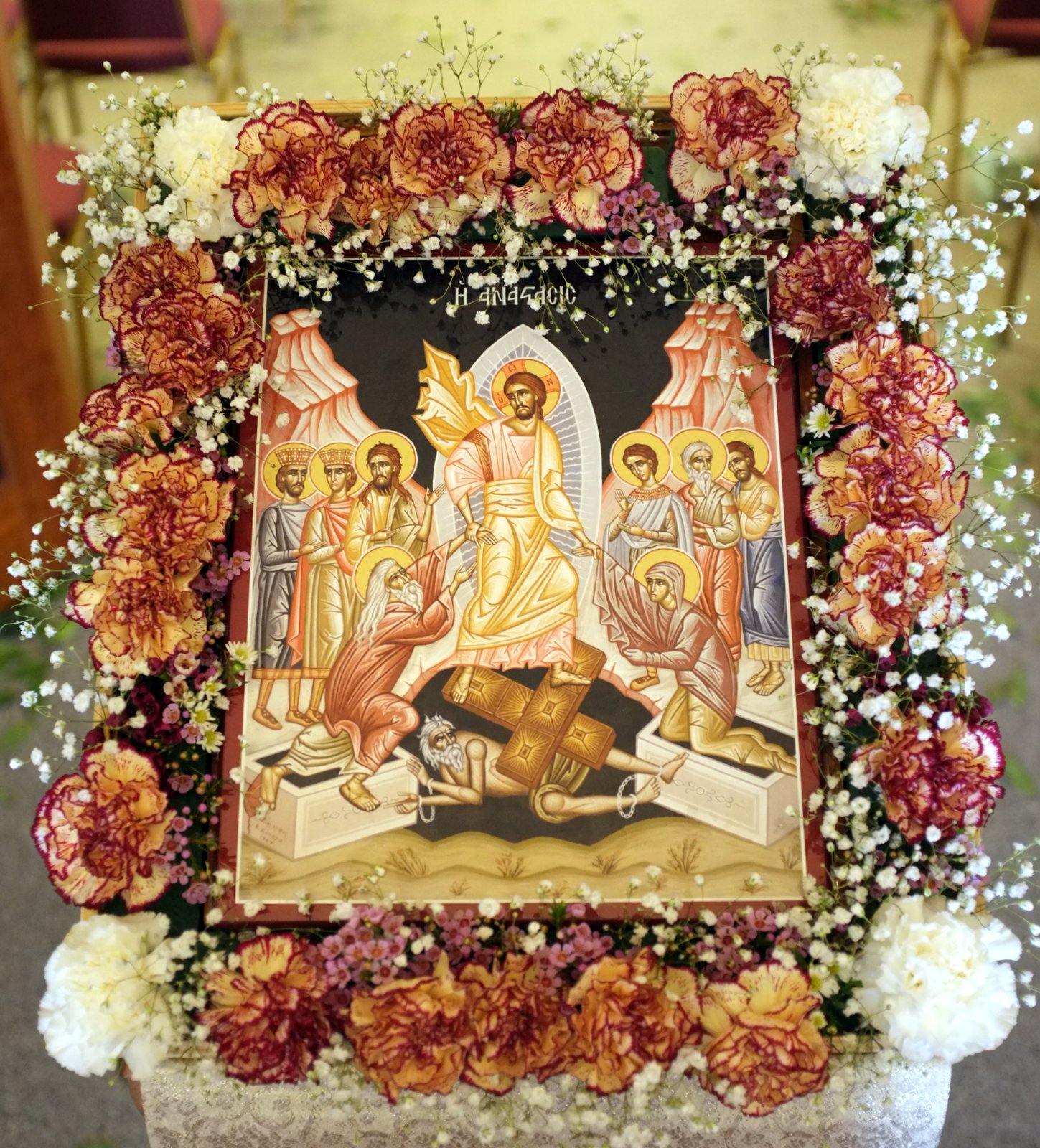
Icon of the Resurrection of Christ decorated with flowers (source)
   
“Take delight in all things that surround us. All things teach us and lead us to God. All things around us are droplets of the love of God — both things animate and inanimate, the plants and the animals, the birds and the mountains, the sea and the sunset and the starry sky. They are little loves through which we attain to the great Love that is Christ. Flowers, for example, have their own grace; they teach us with their fragrance and with their magnificence. They speak to us of the love of God. They scatter their fragrance and their beauty on sinners and on the righteous.”
-St Porphyrios
   
(source)
   
St. Porphtrios of Kavsokalyvia (source)


Christ is risen from the dead, by death, trampling down upon death, and to those in the tombs, He has granted life!
Truly the Lord is risen!

Tuesday, April 17, 2018

Elder Ephraim of Arizona on Pascha, Paradise and Springtime

Christ is risen! Truly He is risen!
The Resurrection of Christ (source)
   
"Now in the springtime, when nature is wearing its most beautiful apparel, one feels inexpressible joy when this natural beauty is accompanied by a sublime spiritual state. Truly, our holy God has made all things in wisdom (Ps. 103:26)! The soul cannot get enough of beholding the beauty of nature. Oh, if man would only lift his mind above this earthly realm to the heavenly Jerusalem, to the inconceivable beauty of paradise where the finite, earthly mind ceases to operate! If here in exile, in this accursed land of weeping, our holy God has given us so much beauty to enjoy, I wonder how much there will be in the place where God Himself dwells! Truly, “the sufferings of this present time are not worthy to be compared with the coming glory and bliss (Rom. 8:18).” Theosis* in the heavens, my child! There the Lord our God will remove every tear from our eyes, and do away with all sorrow and pain and sighing, for there the angelic way of life reigns, and the only work is to chant hymns and spiritual odes! An eternal Sabbath is prepared for us where we shall live in joy with our Father, God, Who is waiting for us to be ready so that He may call us to Him forever! There every saved soul will live in an ocean of love, sweetness, joy, amazement, and wonder!" 
*Theosis: Connected with the theoria of uncreated Light, theosis, or divinization, is a participation in the uncreated grace of God. At this stage of perfection, one has reached dispassion. Through the cooperation of God with man, theosis is attained through the action of the transfigurative grace of God.
   
The Resurrection of Christ (source)
   
"Ah, if you could only see a little bit of paradise, if you could only hear for a few seconds the chanting of the sweet angels who shine with heavenly light and emit paradisiacal fragrance! Oh, what beauty! Unfortunately, we are in the dark about all these things.
There everything shines with limitless bliss. And what does the throne of Christ tell you? Christ the Master sits upon a throne, and due to His light no one can discern His sacred and most sweet face. Oh, what sweetness and beauty! What is more beautiful than this? This is truly paradise: to behold the face of our Jesus! Glory to Thy Cross, O Lord, and to Thy Resurrection!
O depth of the wisdom of God! O mysteries of the three sun Deity! Blessed is he who humbles himself like a child, obeying all commands with a guileless soul for the love of God! And woe to him who will hold on to his egotism, like me; how many divine gifts does he deprive himself of!
My children, run with humility to reach the Lord Who humbled Himself for our sake—our sweetest, beloved Christ, the light of our poor souls.
See what beauty awaits us! If you could only see how beautiful it is! You would disregard everything; you would even become like trash to be stepped on, just as long as you would not be deprived of everything that the sweet love of Jesus has prepared! These are the kinds of things my Elder used to tell me, and I am conveying them to you so that you may be sweetened. I am done—forgive me!
   
Christ, the Good Shepherd, Who came to find the lost sheep (source)
   
From Counsels from the Holy Mountain: Selected from the Letters and Homilies of Elder Ephraim of Arizona (sources 1 and 2)
Christ the Creator blessing creation (source)  
Christ is risen from the dead, by death, trampling down upon death, and to those in the tombs, He has granted life!
Truly the Lord is risen!

Saturday, January 20, 2018

Mother Gavrielia: "If you have love for the whole world..."

Mother Gavriella (+1992) (source)
   
"If you have love for the whole world, the whole world is beautiful."
-Mother Gavriella the Missionary, the "Ascetic of Love" (+1992)
   
   
Through the prayers of our Holy Fathers, Lord Jesus Christ our God, have mercy on us and save us! Amen!

Wednesday, July 12, 2017

The "Beatitudes" of St. Paisios the Athonite

Jesus Christ, the Son of God, the Savior (source)
  
Note: Truly beautiful and astonishing are these "Beatitudes" of St. Paisios the Athonite, modeled after the Beatitudes of Christ and the lives and writings of the Saints. May we be humbled by his love, sacrifice and self-denial, on behalf of God and his fellow man. May we not despair of our weakness and sinfulness, but make a small effort, through the discretion and guidance of our spiritual fathers to make a change for the better, through the intercessions of such a great saint of our century!
   
The "Beatitudes" of St. Paisios the Athonite
1. Blessed are those who love Christ more than all the worldly things and live far from the world and near God, with heavenly joys upon the earth.
  2. Blessed are those who manage to live in obscu­rity and acquired great virtues but did not acquire even a small name for themselves.
  3. Blessed are those who manage to act the fool and, in this way, protected their spiritual wealth 
4. Blessed are those who do not preach the Gospel with words, but live it and preach it with their silence, with the Grace of God, which betrays them.
  5. Blessed are those who rejoice when unjustly ac­cused, rather than when they are justly praised for their virtuous life. Here are the signs of holiness, not in the dry exertion of bodily asceticism and the great number of struggles, which, when not carried out with humility and the aim to take off the old man, create only illusions.


St. Paisios the Athonite (source)
 
  6. Blessed are those who prefer to be wronged rather than to wrong others and accept serenely and silently injustices. In this way, they reveal in practice that they believe in “one God, the Father Almighty” and expect to be vindicated by Him and not by human beings who repay in this life with vanity.
7. Blessed are those who have been born crippled or became so due to their own carelessness, yet do not grumble but glorify God. They will hold the best place in Paradise along with the Confessors and Martyrs, who gave their hands and feet for the love of Christ and now constantly kiss with devoutness the hands and feet of Christ in Paradise.
  8. Blessed are those who were born ugly and are de­spised here on earth, because they are entitled to the most beautiful place in Paradise, provided they glorify God and do not grumble.
  9. Blessed are those widows who wear black in this life, even unwillingly, but live a white spiritual life and glorify God without complaining, rather than the mis­erable ones who wear assorted clothes and live a spot­ted life.
10. Blessed and thrice blessed are the orphans who have been deprived of their parents’ great affection, for they managed to have God as their Father already from this life. At the same time, they have the affection they were deprived of from their parents in God’s savings bank “with interest”.
   
St. Paisios the Athonite (source)
 
  11. Blessed are those parents who avoid the use of the word “don’t” with their children, instead restraining them from evil through their holy life – a life which chil­dren imitate, joyfully following Christ with spiritual bravery.
  12. Blessed are those children who have been born “from their mother’s womb”(Mt. 19:12) holy, but even more blessed are those who were born with all the inherited passions of the world, struggled with sweat and up­rooted them and inherited the Kingdom of God in the sweat of their face (Cf. Gen. 3:19).
13. Blessed are those children who lived from in­fancy in a spiritual environment and, thus, tirelessly ad­vanced in the spiritual life.
Thrice blessed, however, are the mistreated ones who were not helped at all (on the contrary, they were pushed towards evil), but as soon as they heard of Christ, their eyes glistened, and with a one hundred and eighty degree turn they suddenly made their soul to shine as well. They departed from the attraction of earth and moved into the spiritual sphere.
  14. Fortunate, worldly people say, are the astronauts who are able to spin in the air, orbit the moon or even walk on the moon.
Blessed, however, are the immaterial “Paradise-nauts”, who ascend often to God and travel about Paradise, their place of permanent abode, with the quickest of means and without much fuel, besides one crust of bread.
15. Blessed are those who glorify God for the moon that glimmers that they might walk at night.
More blessed, however, are those who have come to understand that neither the light of the moon is of the moon, nor the spiritual light of their soul of them­selves, but both are of God. Whether they can shine like a mirror, a pane of glass or the lid of a tin can, if the rays of the sun do not fall on them, it is impossible for them to shine.
   
St. Paisios the Athonite (source)
 
16. Fortunate, worldly people tell us, are those who live in crystal palaces and have all kinds of conven­iences.
Blessed, however, are those who have managed to sim­plify their life and become liberated from the web of this world’s development of numerous conveniences (i.e. many inconveniences), and were released from the frightening stress of our present age.
 17. Fortunate, worldly people say, are those who can enjoy the goods of the world.
Blessed, however, are those who give away every­thing for Christ and are deprived even of every hu­man consolation for Christ. Thus it is that they man­age to be found night and day near Christ and His di­vine consolation, which many times is so much that they say to God: “My God, Thy love cannot be en­dured, for it is great and cannot be fit within my small heart”.
  18. Fortunate, worldly people say, are those who have the greatest jobs and the largest mansions, since they possess all means and live comfortably.
Blessed, however, according to the divine Paul, are those who have but a nest to perch in, a little food and some coverings99• For, in this way, they’ve managed to become estranged from the vain world, using the earth as a footstool, as children of God, and their mind is con­stantly found close to God, their Good Father.
  
St. Paisios the Athonite (source)
  
  19. Fortunate are those who become generals and government ministers in their head by way of heavy drinking (even if just for a few hours), with the world­ly rejoicing over it.
Blessed, however, are those who have put off the old man and have become incorporeal, managing to be earthly angels with the Holy Spirit. They have found Paradise’s divine faucet and drink from it and are con­tinually inebriated from the heavenly wine.
  20. Blessed are those who were born crazy and will be judged as crazy, and, in this way, will enter Paradise without a passport.
Blessed and thrice blessed, however, are the very wise who feign foolishness for the love of Christ and mock all the vanity of the world. This foolishness for Christ’s sake is worth more than all the knowledge and wisdom of the wise of this world.
I beg all the Sisters to pray for God to give me, or rather take from me my little mind, and, in this way, se­cure Paradise for me by considering me a fool. Or, make me crazy with His love so I go out my self, outside of the earth and its pull, for, otherwise my life as a monk has no meaning. I became externally white as a monk. As I go I become internally black by being a negligent monk, but I justify myself as one unhealthy, when I hap­pen to be so; other times, I excuse myself again for be­ing ill, even though I am well, and so I deserve to be thoroughly thrashed. Pray for me. 
May Christ and Panagia be with you,
With love of Christ, Your Brother, Monk Paisios
(“Timiou Stavrou”, December 2, 1972). (source)
  
St. Paisios the Athonite (source)
  
Through the prayers of our Holy Fathers, Lord Jesus Christ our God, have mercy on us and save us! Amen!

Sunday, August 30, 2015

"You were made beautiful, O Virgin..."

The Most-holy Theotokos, holding her Precious Belt (source)
  
You were made beautiful*, O Virgin, by giving birth to the most-beautiful Word, and you were well-pleased to place within your beautiful house, the beautiful Belt, which you beautifully wore in life, O Theotokos, on your beautiful body.
 -From Ode V of the Second Canon for the Feast of the Deposition of the Belt of the Theotokos
  
 
*Note: First and foremost, when the hymnographer speaks of "beauty", he is speaking of the great spiritual beauty and purity of the Theotokos.
  
Most-holy Theotokos, save us!