Christ is risen! Truly He is risen!

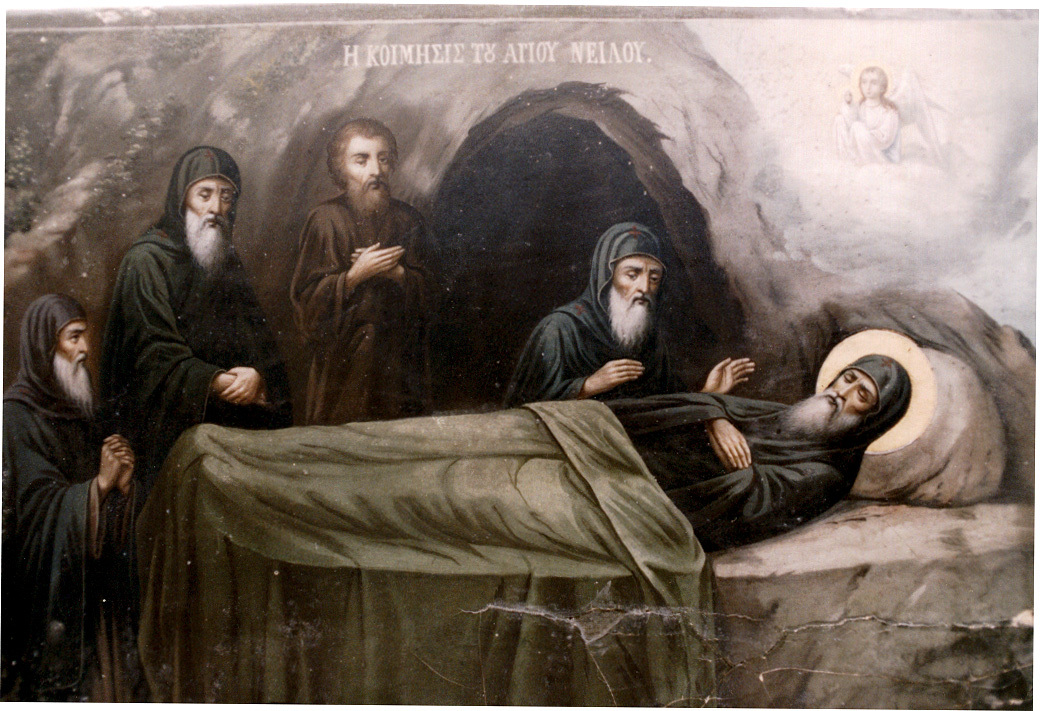
The uncovering of the Holy Relics of St. Neilos the Myrrh-streamer - Commemorated on May 7 (http://vatopaidi.files.wordpress.com/2009/05/cebdceb5ceb9cebbcebfcf83.jpg)
Today we commemorate the uncovering of the relics of St Nilus in 1815.
On his deathbed, St Nilus told his disciples to bury his body in a small cave beneath the cave where he lived, sternly forbidding anyone to disturb his body. Although the saint did not seek human glory during his life or after his death, the Lord glorified him in the following way. From his grave, a fragrant myrrh began to flow through a small opening in the cave and down the side of the cliff into the sea. Soon this miracle became widely known, and ships would come to collect the myrrh. The myrrh had curative properties, and many people were healed of their illnesses.

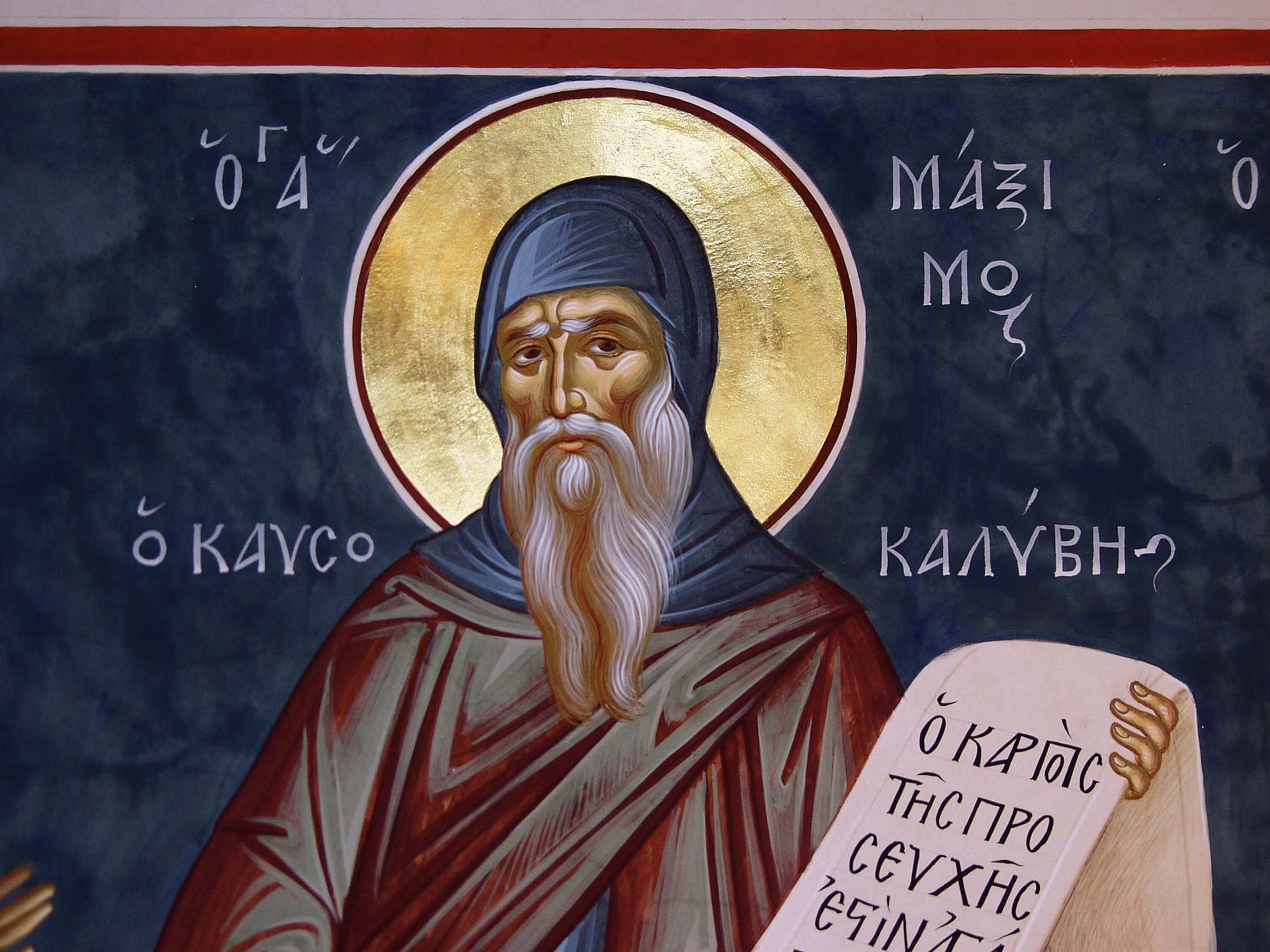
The river of Holy Myrrh that flowed from the Tomb of St. Neilos was so great that it flowed down this great mountain upon which was his cave, and reached the sea below, where soon many from afar gathered to collect it. This created great difficulty for the monks at his cell, so they entreated St. Akakios of Kavsokalyvia (April 12) to help. The Saint came to the Cave of St. Neilos and prayed: "O Saint Neilos, you who were in life so humble and quiet, why do you allow these disorders and abnormalities among the crowd of pious men?" And before St. Akakios finished these words, the flow of myrrh ceased! (https://blogger.googleusercontent.com/img/b/R29vZ2xl/AVvXsEhQtidRDkl3fEIRolQVcNO2E7FKD3zgA1MCN7O0KjjuQm1e8pt6-IMrQO8WHRegQUree7b7mmugMfWgOB0hJyJefYVVcAASVkAUYyoosXinFQ3ECc7O3ZI25SCgE0egfcugJnDd4TFnYNQ/s1600/01.jpg, http://users.uoa.gr/~nektar/orthodoxy/agiologion/osios_neilos_myroblyths.htm)
Once, two monks came to the cave and tried to find the relics of St Nilus. While they were digging, a large rock fell from above, crushing the foot of one monk. Unable to help his companion, the other monk went to get a mule and someone to help him carry the injured brother from that place.
As he lay there in agony, the monk saw St Nilus before him. He asked the monk what was the matter. The monk explained what they intended to do and how he had been injured. The saint said, "How dare you, poor man, attempt something so dangerous without the saint's express wish? Take care in future that you do not attempt a task beyond your ability, and without the will of God."
St Nilus touched the monk's leg, and he was made well. With great joy he started back to his cell. On the way, he met his companion who was leading a mule. The monk who was healed told the other how he had been healed by St Nilus. Then they both glorified God and St Nilus. After this, no one dared to disturb the saint's relics.
In 1815, a certain monk called "Prisoner" was troubled by a demon, and he also had a hernia. St Nilus appeared to him several times and healed him. The saint predicted the Greek Revolution (1821), and many dangers which the Holy Mountain would face from the Turks. Then St Nilus told him he wanted a path made to his cave so that monks could go there to pray. He also wanted the Liturgy to be served in the cave church he himself had built.
.jpg)
The chapel built in the Cave of St. Neilos the Myrrh-streamer (https://blogger.googleusercontent.com/img/b/R29vZ2xl/AVvXsEhHp6Mju8gaMEhD6Q-aqaV7bSN2PaKYd20Ve_Lk4j1B24JNUGgiWeAvCeVdQsotGyHSQ6P2USZB66bwGs6pZeZ75b9xkGZYpdTIt_nuEOo7YkAfNlWPhk8QBJA7wX1v46UXNUnudBSvfnA/s1600/image001%25282%2529.jpg)
When the Fathers heard this, they wished to build a new church in honor of St Nilus. As they were digging the foundation, they found the saint's grave. From his relics an ineffable fragrance came forth. This took place on May 7, 1815.
Then the monks informed the Fathers of the Great Lavra of their discovery. They came and transferred the relics to the Lavra, leaving only a portion of the saint's jaw at the cave to be venerated by those who came there.
See November 12 for the Life of St Nilus.
(http://ocafs.oca.org/FeastSaintsViewer.asp?SID=4&ID=1&FSID=101323)
"Churches in honor of St. Neilos the Myrrh-streamer in Greece exist in Piraeus, Tripoli, St. Peter Kyrourias, and the Holy Monastery of Panagia Malevi (in addition to many other places)." (source)
Regarding the "Prophecy" of St. Neilos the Myrrhstreamer
According to the following biography of the Saint in Greek (http://users.uoa.gr/~nektar/orthodoxy/agiologion/osios_neilos_myroblyths.htm), the famous, so-called "Prophecy of St. Neilos" that has circulated widely through the internet was actually the result of false "revelations" to a Monk Theophannes who was healed by the Saint, but was later deluded in thinking that the revelations in his dreams were of divine origin. They were never recognized by the Athonite Fathers as being genuine, which is why the Holy Administration of Mount Athos refused to endorse their translation and publication into Russian in 1912. For more information, see: http://www.johnsanidopoulos.com/2012/05/truth-about-prophecies-of-saint-nilus.html.

Απολυτίκιον. Ήχος δ’. Ταχύ προκατάλαβε.
Ως άνθη πανεύοσμα, της αιδίου ζωής, τα θεία σου λείψανα, εκ των ταμείων της γής, ημίν ανεφάνησαν. Όθεν μνείαν τελούντες, της ευρέσεως τούτων, μέλπομεν Πάτερ Νείλε, την δοθείσαν σοι χάριν, δι’ ής πάσι προστάτης, ευρίσκη θερμότατος.
Apolytikion in the Fourth Tone (amateur translation)
As all fragrant flowers of eternal life, your divine Relics have appeared to us from the depths of the earth. Therefore celebrating the memory of their finding, we praise you, Father Neilos, for to you was granted grace to become the most-fervant protector of all.
Christ is risen from the dead, by death trampling down upon death, and to those in the tombs, bestowing life!
Truly the Lord is risen!