Sunday, April 15, 2012

The Canon of Pascha by St. John of Damascus

Christ is risen! Truly He is risen!

  
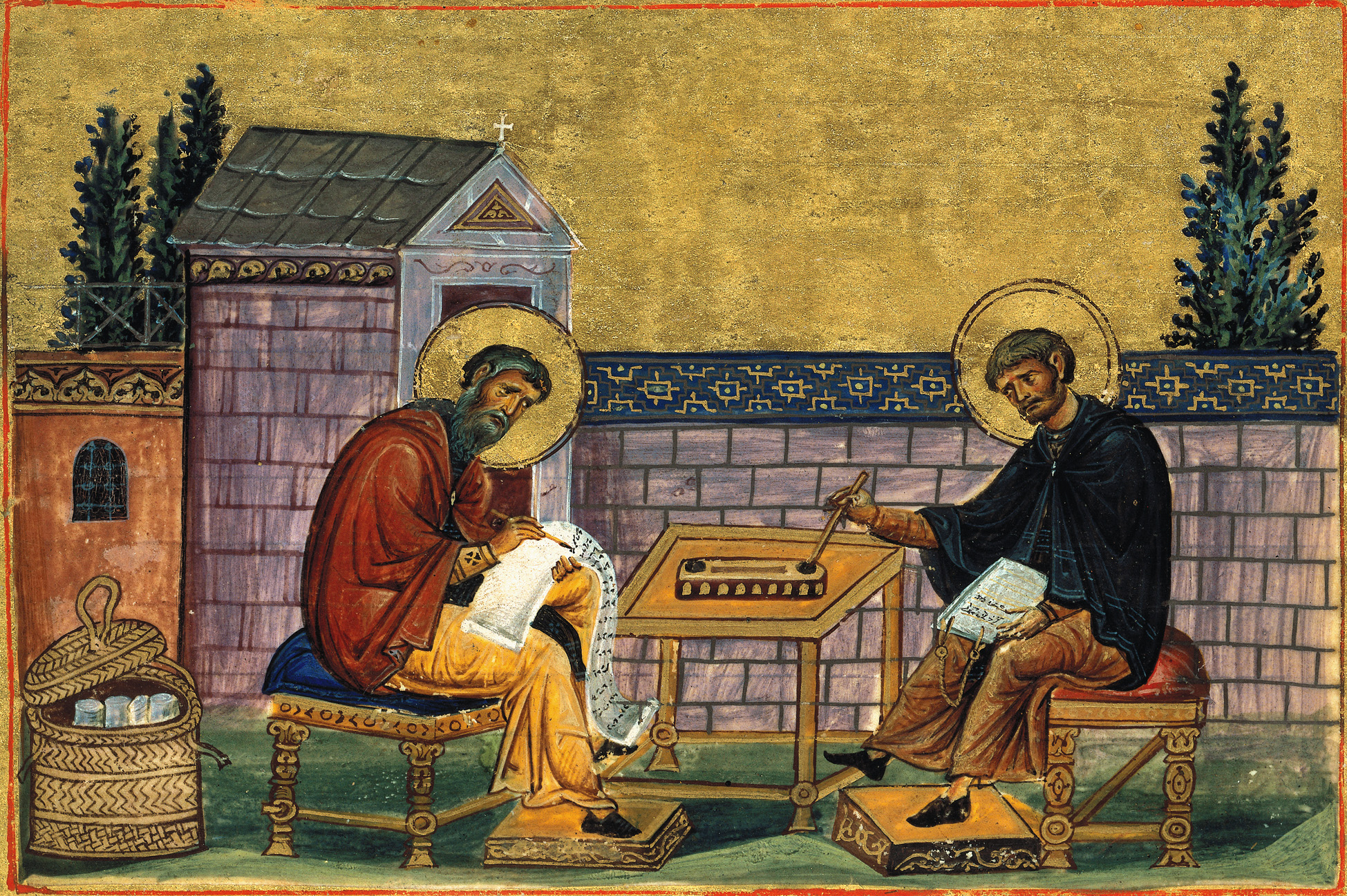
The divine musician [St. John of Damascus], besides the Canons of the Octoechos, also composed a brightest Canon of the feast of the light-bearing Resurrection «Ἀναστάσεως ἡμέρα, λαμπρυνθῶμεν λαοί». When Kosmas the Melodist, who had also composed a Canon for the same feast in tone II, [heard the verse of St. John's canon that reads:] «Νῦν πάντα πεπλήρωται φωτός οὐρανός τε καὶ γῆ καὶ τὰ καταχθόνια...» [Now all things have been filled with light, both heaven and earth and those beneath the earth...], he exclaimed: «And you brother John, you included everything in these three (words), and you left nothing outside; hence I have lost, and I acknowledge my loss; therefore let your canon have the primacy and the suppremacy, and let it be sung publically in the Churches of Christ, and let mine stay in darkness and in the corner as unworthy for the light for both its content and its mourning and lamentful tone, in which it was composed, which is totally inappropriate for the brightest and world-joyful day of the Lord's Resurrection.»
(http://www.ec-patr.net/en/history/damascenos.htm)
  
St. John of Damascus and St. Kosmas Bishop of Maiouma (http://en.wikipedia.org/wiki/Cosmas_of_Maiuma), foster brothers, and great hymnographers of the Church of Christ (http://days.pravoslavie.ru/jpg/im3863.jpg)

The Canon of Pascha, a composition by John of Damascus.
Ode 1. 1st Tone. Irmos.

The day of Resurrection, let us be radiant, O peoples! Pascha, the Lord’s Pascha; for Christ God has brought us from death to life, and from earth to heaven, as we sing the triumphal song. Twice.


Before each Troparion we sing:
Glory to your holy Resurrection, O Lord!


Troparia.
Let us purify our senses, and in the unapproachable light of the resurrection we shall see Christ shining forth, and we shall clearly hear him saying ‘Rejoice!’, as we sing the triumphal song.

Let the heavens, as is fitting, rejoice and let the earth be glad. Let the whole world, both seen and unseen, keep the feast: for Christ has risen, our eternal joy.


Katavasia.
The day of Resurrection, let us be radiant, O peoples! Pascha, the Lord’s Pascha; for Christ God has brought us from death to life, and from earth to heaven, as we sing the triumphal song.

Christ has risen from the dead, by death he has trampled on death, and to those in the graves given life.
(x3)

Jesus, having risen from the tomb as he foretold, has given us eternal life and his great mercy.

   
Ode 3. Irmos.
Come let us drink a new drink, not one marvellously brought forth from a barren rock, but a Source of incorruption, which pours out from the tomb of Christ, in whom we are established.

Troparia.
Now all things have been filled with light, both heaven and earth and those beneath the earth; so let all creation sing Christ’s rising, by which it is established.

Yesterday I was buried with you O Christ, today I rise with you as you arise. Yesterday I was crucified with you; glorify me with you, Saviour, in your Kingdom.


Katavasia.
Come let us drink a new drink, not one marvellously brought forth from a barren rock, but the Source of incorruption, which pours out from the tomb of Christ, in whom we are established.

Christ has risen from the dead, by death he has trampled on death, and to those in the graves given life.
(x3)

Jesus, having risen from the tomb as he foretold, has given us eternal life and great mercy.


Ode 4. Irmos.
Let the Prophet Avvakoum, inspired by God, keep the divine watch with us, and show forth the radiant Angel, who with resounding voice declares, ‘To-day is salvation for the world, for Christ has risen as omnipotent’.

Troparia.
Christ appeared as a ‘male’ who opened the virgin womb. As our food he is called ‘lamb’; ‘unblemished’, as our Passover without stain; and ‘perfect’, for he is true God.

As a yearling lamb, for us a crown of goodness, the Blessed One, the cleansing Passover has been sacrificed for all; and from the tomb the fair Sun of justice has shone for us again.

God’s forebear David, dancing, leaped before the Ark, mere shadow, but seeing the fulfilment of the types, let us, God’s holy people, inspired, rejoice, for Christ has risen as omnipotent.


Katavasia.
Let the Prophet Avvakoum, inspired by God, keep the divine watch with us, and show forth the radiant Angel, who with resounding voice declares, ‘To-day is salvation for the world, for Christ has risen as omnipotent’.

Christ has risen from the dead, by death he has trampled on death, and to those in the graves given life.
(x3)

Jesus, having risen from the tomb as he foretold, has given us eternal life and great mercy.


Ode 5. Irmos.
Let us arise in the early dawn, and instead of myrrh, offer praises to the Master; and we shall see Christ, the Sun of Justice, who causes life to dawn for all.

Troparia.
Those who were held by Hades’ bonds, seeing your measureless compassion, press forward to the light, O Christ, with joyful steps, praising an eternal Passover.

With torches in our hands let us go out to meet Christ as he comes from the grave like a bridegroom, and with the festive ranks of Angels, let us together feast God’s saving Passover.


Katavasia.
Let us arise in the early dawn, and instead of myrrh, offer praises to the Master; and we shall see Christ, the Sun of Justice, who causes life to dawn for all.

Christ has risen from the dead, by death he has trampled on death, and to those in the graves given life.
(x3)

Jesus, having risen from the tomb as he foretold, has given us eternal life and great mercy.


Ode 6. Irmos.
You went down to the deepest parts of the earth, and you shattered the everlasting bars of those that those that were fettered, O Christ. And on the third day, like Jonas from the whale, you arose from the tomb.

Troparia.
Keeping the seals intact, O Christ, you rose from the tomb, you who did not harm the locks of the Virgin’s womb at your birth, and you have opened to us the gates of Paradise.

O my Saviour, the living, unslain Victim, as God offering yourself willingly to the Father, you raised with yourself all Adam’s race, in rising from the tomb.


Katavasia.
You went down to the deepest parts of the earth, and you shattered the everlasting bars of those that those that were fettered, O Christ. And on the third day, like Jonas from the whale, you arose from the tomb.

Christ has risen from the dead, by death he has trampled on death, and to those in the graves given life.
(x3)

Jesus, having risen from the tomb as he foretold, has given us eternal life and great mercy.

  
And the remaining Odes of the Canon.
Ode 7. Irmos.
He who delivered the Young Men from the furnace, becoming man suffers as a mortal, and through suffering he clothes the mortal with the glory of incorruption: the only blessed and most glorious God of our fathers.

Troparia.
The holy women hastened after you with sweet spices. The One whom they sought with tears as a mortal, they worshipped with joy as the living God, and they proclaimed the mystic Passover, O Christ, to your disciples.

We feast death’s slaughter, the overthrow of Hell, the first fruits of a new eternal life: and dancing we hymn the cause: the only blessed and most glorious God of our fathers.

How truly holy and all-festive is this saving night, how full of light, herald of the bright day of the resurrection, in which the timeless Light shone bodily for all from the tomb.


Katavasia.
He who delivered the Young Men from the furnace, becoming man suffers as a mortal, and through suffering he clothes the mortal with the glory of incorruption: the only blessed and most glorious God of our fathers.

Christ has risen from the dead, by death he has trampled on death, and to those in the graves given life.
(x3)

Jesus, having risen from the tomb as he foretold, has given us eternal life and great mercy.


Ode 8. Irmos.
This chosen and holy day is the first of Sabbaths, the Queen and Lady, the Feast of Feasts and the Festival of Festivals on which we bless Christ to all the ages.

Troparia.
Come let us share in the new fruit of the vine, in divine joy, and in the kingdom of Christ, on the glorious day of the Resurrection, as we sing his praise as God to all the ages.

Lift your eyes around you, Sion, and see. For behold, like beacons shedding light divine your children have come to you, from West and North, from the Sea and from the East, blessing Christ in you to all the ages.

Almighty Father, Word and Spirit, nature united in three Persons, beyond all being and beyond all Godhead, into you we have been baptised and we bless you to all the ages.


Katavasia.
This chosen and holy day is the first of Sabbaths, the Queen and Lady, the Feast of Feasts and the Festival of Festivals on which we bless Christ to all the ages.

Christ has risen from the dead, by death he has trampled on death, and to those in the graves given life.
(x3)

Jesus, having risen from the tomb as he foretold, has given us eternal life and great mercy.


Ode 9. Irmos.
Megalynarion:
Magnify, O my soul, him who suffered willingly, and was buried, and rose from the grave on the third day.
Shine, shine, O New Jerusalem, for the glory of the Lord has risen upon you. Dance now and be glad, O Sion, and you too rejoice, pure Mother of God, at the arising of him to whom you gave birth.

Megalynarion: Magnify, O my soul, Christ the Giver of life, who arose from the grave on the third day.

Shine, shine, O New Jerusalem, for the glory of the Lord has risen upon you. Dance now and be glad, O Sion, and you too rejoice, pure Mother of God, at the arising of him to whom you gave birth.

Megalynarion: Christ is the new Passover, the living sacrificial victim, the Lamb of God, who takes away the sin of the world.

O divine! O beloved! O sweetest voice! You have truly promised that you will be with us unto the end of time, O Christ. And we the faithful rejoice, having this as an anchor of hope.

Megalynarion: The Angel cried to her that is full of grace: Pure Virgin, rejoice! And again I say: Rejoice! For your Son has risen from the tomb on the third day.

O divine! O beloved! O sweetest voice! You have truly promised that you will be with us unto the end of time, O Christ. And we the faithful rejoice, having this as an anchor of hope.

Megalynarion: Mary Magdalen ran to the tomb, and seeing Christ, questioned him as though he were the gardener.

O divine! O beloved! O sweetest voice! You have truly promised that you will be with us unto the end of time, O Christ. And we the faithful rejoice, having this as an anchor of hope.

Megalynarion: A dazzling Angel appeared to the women and cried: Cease your tears, for Christ has risen.

O divine! O beloved! O sweetest voice! You have truly promised that you will be with us unto the end of time, O Christ. And we the faithful rejoice, having this as an anchor of hope.

Megalynarion: You awoke and wakened the dead from every age, as the Lion of Juda, roaring like a king.

O great and most sacred Pascha, Christ! O Wisdom and Word and Power of God! Grant that we may partake of you fully in the day that has no evening of your Kingdom.

Megalynarion: Christ has risen, trampling on death and raising the dead. Rejoice all you peoples.

O great and most sacred Pascha, Christ! O Wisdom and Word and Power of God! Grant that we may partake of you fully in the day that has no evening of your Kingdom.

Megalynarion: Today the whole creation rejoices and is glad, for Christ has risen and Hell has been despoiled.

O great and most sacred Pascha, Christ! O Wisdom and Word and Power of God! Grant that we may partake of you fully in the day that has no evening of your Kingdom.

Megalynarion: Today the Master despoiled Hell and raised the prisoners whom it had held from the ages in harsh captivity.

O great and most sacred Pascha, Christ! O Wisdom and Word and Power of God! Grant that we may partake of you fully in the day that has no evening of your Kingdom.

Glory to the Father and to the Son and to the Holy Spirit.

Megalynarion: Magnify, O my soul, the might of the Godhead in three Persons yet undivided.

O great and most sacred Pascha, Christ! O Wisdom and Word and Power of God! Grant that we may partake of you fully in the day that has no evening of your Kingdom.

Both now and ever and to the ages of ages. Amen.

Megalynarion: Rejoice, O Virgin, rejoice! Rejoice, Blessed One! Rejoice, Glorified One. your Son has risen from his three days in the tomb.

O great and most sacred Pascha, Christ! O Wisdom and Word and Power of God! Grant that we may partake of you fully in the day that has no evening of your Kingdom.

Katavasia.
Megalynarion: Magnify, O my soul, him who suffered willingly, and was buried, and arose from the grave on the third day.

Shine, shine, O New Jerusalem, for the glory of the Lord has risen upon you. Dance now and be glad, O Sion, and you too rejoice, pure Mother of God, at the arising of him to whom you gave birth.
(All texts and translations on this page are copyright to Archimandrite Ephrem ©: http://anastasis.org.uk/pascha.htm)  


Christ has risen from the dead, by death he has trampled on death, and to those in the graves given life!
Truly the Lord is risen!

Wednesday, April 11, 2012

Kontakion of Holy Thursday

Christ praying in the Garden of Gethsemane before His Passion (http://www.stjosephmelkitecatholicchurch.org/holy_week/HOLY_THURSDAY_3.jpg)
  
Kontakion in Tone 2. By Romanos the Melodist.
After taking the bread into his hands the traitor secretly stretches them out and takes the price of the One who fashioned humankind with his own hands; and he remained unrepentant, Judas the slave and deceiver.


The Ikos.
As we all draw near with fear to the mystic table, let us receive the Bread with pure souls, remaining beside the Master that we may see how he washes the feet of the Disciples and dries them with the towel, and let us do as we have seen, being subject to one another and washing one another’s feet; for Christ himself so ordered his disciples, as he declared; but he did not listen, Judas the slave and deceiver.

The Menologion of the day and then the following notice:
On holy and great Thursday the godlike Fathers have arranged all things well and have handed on to us that we should celebrate in turn four events from the godlike Apostles and sacred Gospels: the sacred Washing, the mystical Supper (that is the handing on for us of the dread Mysteries), the transcendent Prayer and the Betrayal itself.


Verses for the sacred Washing

At evening God washed the Disciples’ feet,
Whose foot once walked in Eden before dusk.

For the Mystical Supper

Double the Supper that Law’s Pascha brings
And Pascha new: the Master’s Body, Blood.


For the transcendent Prayer

Prayer; and great terror, drops of blood,
O Christ, drop from your face, as pleading to
Escape from death, by this you cheat the foe.


For the Betrayal

What need of swords, of staves, O erring folk,
‘Gainst one who longs to die for world’s release?


In your ineffable compassion, Christ our God, have mercy on us. Amen.


Through the prayers of our Holy Fathers, Lord Jesus Christ our God, have mercy on us and save us! Amen!

Friday, April 6, 2012

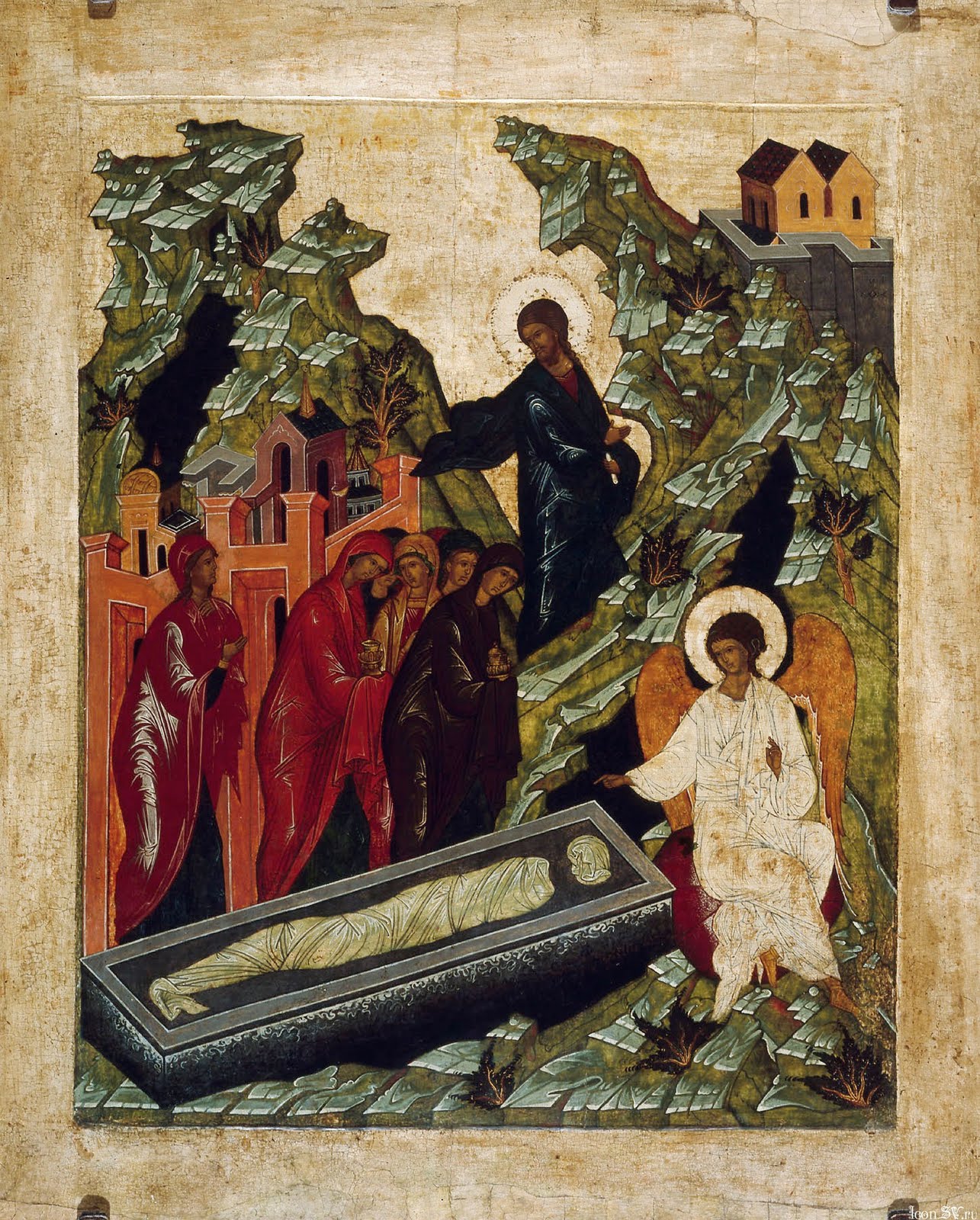
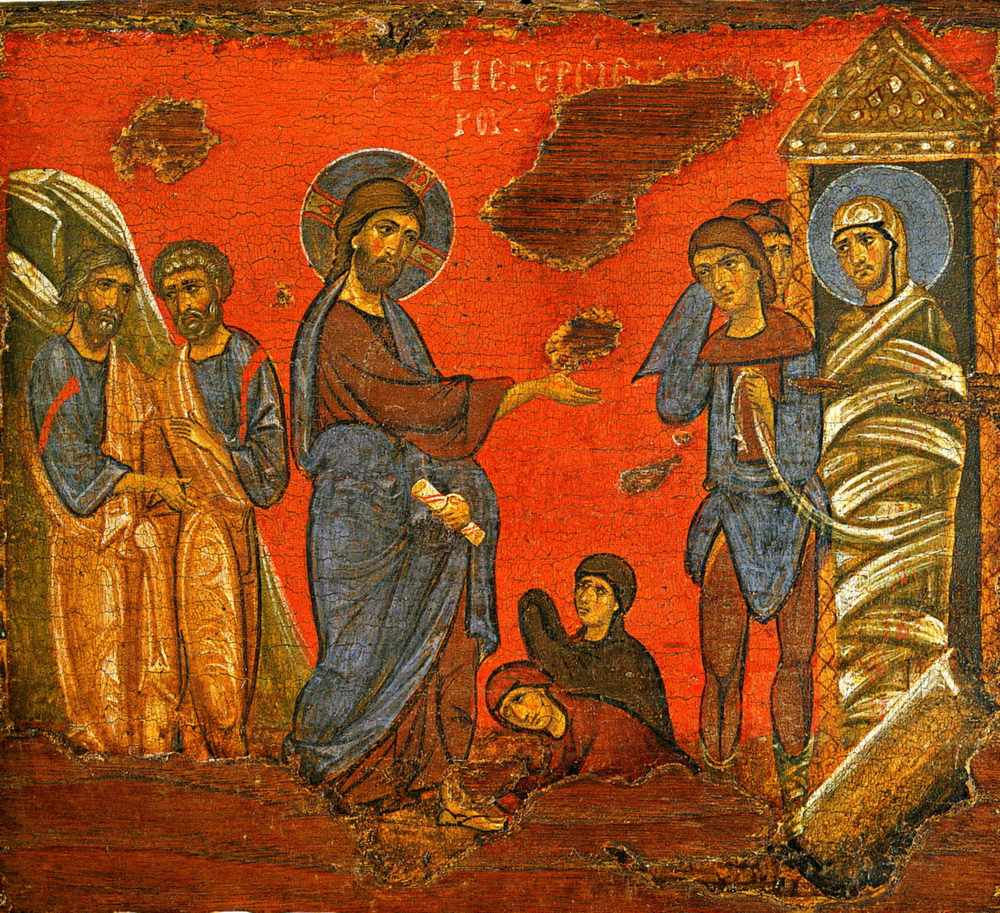
Excerpt from the Commentary on the Raising of Lazarus by St. John Chrysostom

  
Excerpt from the Commentary on the Raising of Lazarus by St. John Chrysostom (John 11)
“Jesus lifted up His eyes, and said, Father, I thank Thee that Thou hast heard Me; and I knew that Thou hearest Me always, but because of the people which stand by, I said it.” And what follows.
[1.] What I have often said, I will now say, that Christ looketh not so much to His own honor as to our salvation; not how He may utter some sublime saying, but how something able to draw us to Him. On which account His sublime and mighty sayings are few, and those also hidden, but the humble and lowly are many, and abound through His discourses. For since by these men were the rather brought over, in these He continueth; and He doth not on the one hand utter these universally, lest the men that should come after should receive damage, nor, on the other hand, doth He entirely withhold those, lest the men of that time should be offended. Since they who have passed from lowmindedness unto perfection, will be able from even a single sublime doctrine to discern the whole, but those who were ever lowminded, unless they had often heard these lowly sayings, would not have come to Him at all. In fact, even after so many such sayings they do not remain firm, but even stone and persecute Him, and try to kill Him, and call Him blasphemer. And when He maketh Himself equal with God, they say, “This man blasphemeth” ( Matt. ix. 3 ); and when He saith, “Thy sins be forgiven thee” ( c. x. 20 ), they moreover call Him a demoniac. So when He saith that the man who heareth His words is stronger than death, or, “I am in the Father and the Father in Me” ( c. viii. 51 ), they leave Him; and again, they are offended when He saith that He came down from heaven. ( c. vi. 33, 60.) If now they could not bear these sayings, though seldom uttered, scarcely, had His discourse been always sublime, had it been of this texture, would they have given heed to Him? When therefore He saith, “As the Father commanded Me, so I speak” ( c. xiv. 31 ); and, “I am not come of Myself” ( c. vii. 28 ), then they believe. That they did believe then is clear, from the Evangelist signifying this besides, and saying, “As He spake these words, many believed on Him.” ( c. v. 30.) If then lowly speaking drew men to faith, and high speaking scared them away, must it not be a mark of extreme folly not to see at a glance how to reckon the sole reason of those lowly sayings, namely, that they were uttered because of the hearers. Since in another place when He had desired to say some high thing, He withheld it, adding this reason, and saying, “Lest we should offend them, cast a hook into the sea.” ( Matt. xvii. 27.) Which also He doth here; for after saying, “I know that Thou hearest Me always,” He addeth, “but because of the multitude which standeth around I said it, that they might believe.” Are these words ours? Is this a human conjecture? When then a man will not endure to be persuaded by what is written, that they were offended at sublime things, how, when he heareth Christ saying that He spake in a lowly manner that they might not be offended, how, after that, shall he suspect that the mean sayings belonged to His nature, not to His condescension? So in another place, when a voice came down from heaven, He said, “This voice came not because of Me, but for your sakes.” ( c. xii. 30.) He who is exalted may be allowed to speak lowly things of himself, but it is not lawful for the humble to utter concerning himself anything grand or sublime. For the former ariseth from condescension, and has for its cause the weakness of the hearers; or rather (it has for its cause) the leading them to humblemindedness, and His being clothed in flesh, and the teaching the hearers to say nothing great concerning themselves, and His being deemed an enemy of God, and not being believed to have come from God, His being suspected of breaking the Law, and the fact that the hearers looked on Him with an evil eye, and were ill disposed towards Him, because He said that He was equal to God. But that a lowly man should say any great thing of Himself, hath no cause either reasonable or unreasonable; it can only be folly, impudence, and unpardonable boldness. Wherefore then doth Christ speak humbly, being of that ineffable and great Substance? For the reasons mentioned, and that He might not be deemed unbegotten; for Paul seems to have 235 feared some such thing as this; wherefore he saith, “Except Him who did put all things under Him.” ( 1 Cor. xv. 27.) This it is impious even to think of. Since if being less than Him who begat Him, and of a different Substance, He had been deemed equal, would He not have used every means that this might not be thought? But now He doth the contrary, saying, “If I do not the works of Him that sent Me, believe Me not.” ( c. x. 37.) Indeed His saying, that “I am in the Father and the Father in Me” ( c. xiv. 10 ), intimateth to us the equality. It would have behooved, if He had been inferior, to refute this opinion with much vehemence, and not at all to have said, “I am in the Father and the Father in me” ( c. x. 30 ), or that, “We are One,” or that, “He that hath seen Me, hath seen the Father.” ( c. xiv. 9.) Thus also, when His discourse was concerning power, He said, “I and the Father are One”; and when His discourse was concerning authority, He said again, “For as the Father raiseth up the dead and quickeneth them, even so the Son quickeneth whom He wilt” ( c. v. 21 ); which it would be impossible that He should do were He of a different substance; or even allowing that it were possible, yet it would not have behooved to say this, lest they should suspect that the substance was one and the same. Since if in order that they may not suppose Him to be an enemy of God, He often even uttereth words unsuited to Him, much more should He then have done so; but now, His saying, “That they should honor the Son even as they honor the Father” ( c. v. 23 ); His saying, “The works which He doeth, I do also” ( c. v. 19 ); His saying that He is “the Resurrection, and the Life, and the Light of the world” ( c. xi. 25; c. viii. 12 ), are the expressions of One making Himself equal to Him who begat Him, and confirming the suspicion which they entertained. Seest thou how He maketh this speech and defense, to show that He broke not the Law, and that He not only doth not remove, but even confirmeth the opinion of His equality with the Father? So also when they said, “Thou blasphemest, because thou makest thyself God” ( c. x. 33 ), from equality of works He established this thing.
  
[2.] And why say I that the Son did this, when the Father also who took not the flesh doeth the same thing? For He also endured that many lowly things should be said concerning Him for the salvation of the hearers. For the, “Adam, where art thou?” ( Gen. iii. 9 ), and, “That I may know whether they have done altogether according to the cry of it” ( Gen. xviii. 21 ); and, “Now I know that thou fearest God” ( Gen. xxii. 12 ); and, “If they will hear” ( Ezek. iii. 11 ); and, “If they will understand” ( Deut. v. 29 ); and, “Who shall give the heart of this people to be so?” and the expression, “There is none like unto Thee among the gods, O Lord” ( Ps. lxxx. 29 ); these and many other like sentences in the Old Testament, if a man should pick them out, he will find to be unworthy of the dignity of God. In the case of Ahab it is said, “Who shall entice Ahab for Me?” ( 2 Chron. xviii. 19.) And the continually preferring Himself to the gods of the heathen in the way of comparison, all these things are unworthy of God. Yet in another way they are made worthy of Him, for He is so kind, that for our salvation He careth not for expressions which become His dignity. Indeed, the becoming man is unworthy of Him, and the taking the form of a servant, and the speaking humble words, and the being clothed in humble (garments), unworthy if one looks to His dignity, but worthy if one consider the unspeakable riches of His lovingkindness. And there is another cause of the humility of His words. What is that? It is that they knew and confessed the Father, but Him they knew not. Wherefore He continually betaketh Himself to the Father as being confessed by them, because He Himself was not as yet deemed worthy of credit; not on account of any inferiority of His own, but because of the folly and infirmity of the hearers. On this account He prayeth, and saith, “Father, I thank Thee that Thou hast heard Me.” For if He quickeneth whom He will, and quickeneth in like manner as doth the Father, wherefore doth He call upon Him?
  
But it is time now to go through the passage from the beginning. “Then they took up the stone where the dead man lay. And Jesus lifted up His eyes, and said, Father, I thank Thee that Thou hast heard Me. And I knew that Thou hearest Me always, but because of the people that stand by I said it, that they might believe that Thou hast sent Me.” Let us then ask the heretic, Did He receive an impulse from the prayer, and so raise the dead man? How then did He work other miracles without prayer? saying, “Thou evil spirit, I charge thee, come out of him” ( Mark ix. 25 ); and, “I will, be thou clean” ( Mark i. 41 ); and, “Arise, take up thy bed” ( c. v. 8 ); and, “Thy sins be forgiven thee” ( Matt. ix. 2 ); and to the sea, “Peace, be still.” ( Mark iv. 39.) In short, what hath He more than the Apostles, if so be that He also worketh by prayer? Or rather I should say, that neither did they work all with prayer, but often they wrought without prayer, calling upon the Name of Jesus. Now, if His Name had such great power, how could He have needed prayer? Had He needed prayer, His Name would not have availed. When He wholly made man, what manner of prayer did He need? was there not then great equality of honor? “Let Us make,” It saith, “man.” ( Gen. i. 26 .) What could be greater sign of weakness, if He needed prayer? But let us see what the prayer was; “I thank Thee that Thou hast heard Me.” Who now ever prayed in this manner? Before uttering any prayer, He saith, “I thank Thee,” showing that He needed not prayer. “And I knew that Thou hearest Me always.” This He said not as though He Himself were powerless, but to show that His will and the Father’s is one. But why did He assume the form of prayer? Hear, not me, but Himself, saying, “For the sake of the people which stand by, that they may believe that Thou hast sent Me.” He said not, "That they may believe that I am inferior, that I have need of an impulse from above, that without prayer I cannot do anything; but, “That Thou hast sent Me.” For all these things the prayer declareth, if we take it simply. He said not, “Thou hast sent me weak, acknowledging servitude, and doing nothing of Myself”; but dismissing all these things, that thou mayest have no such suspicions, He putteth the real cause of the prayer, “That they may not deem Me an enemy of God; that they may not say, He is not of God, that I may show them that the work hath been done according to Thy will.” All but saying, “Had I been an enemy of God, what is done would not have succeeded,” but the, “Thou heardest Me,” is said in the case of friends and equals. “And I knew that Thou hearest Me always,” that is, “in order that My will be done I need no prayer, except to persuade men that to Thee and Me belongeth one will.” “Why then prayest Thou?” For the sake of the weak and grosser sort.
  
Ver. 43. “And when He had thus spoken, He cried with a loud voice.”
Why said He not, “In the name of My Father come forth”? Or why said He not, “Father, raise him up”? Why did he omit all these expressions, and after assuming the attitude of one praying, show by His actions His independent authority? Because this also was a part of His wisdom, to show condescension by words, but by His deeds, power. For since they had nothing else to charge Him with except that He was not of God, and since in this way they deceived many, He on this account most abundantly proveth this very point by what He saith, and in the way that their infirmity required. For it was in His power by other means to show at once His agreement with the Father and His own dignity, but the multitude could not ascend so far. And He saith,
  
“Lazarus, come forth.”
[3.] This is that of which He spake, “The hour is coming, when the dead shall hear the voice of the Son of God, and they that hear shall live.” ( c. v. 28.) For, that thou mightest not think that He received the power of working from another, He taught thee this before, and gave proof by deeds, and said not, Arise, but, “Come forth,” conversing with the dead man as though living. What can be equal to this authority? And if He doth it not by His own strength, what shall He have more than the Apostles, who say, “Why look ye so earnestly on us as though by our own power or holiness we had made this man to walk?” ( Acts iii. 12.) For if, not working by His own power, He did not add what the Apostles said concerning themselves, they will in a manner be more truly wise than He, because they refused the glory. And in another place, “Why do ye these things? We also are men of like passions as you.” ( Acts xiv. 15.) The Apostles since they did nothing of themselves, spoke in this way to persuade men of this; but He when the like opinion was formed concerning Him, would He not have removed the suspicion, if at least He did not act by His own authority? Who would assert this? But in truth Christ doeth the contrary, when He saith, “Because of the people which stand by I said it, that they might believe”; so that had they believed, there would have been no need of prayer. Now if prayer were not beneath His dignity, why should He account them the cause of His praying? Why said He not, “I do it in order that they may believe that I am not equal to Thee”; for He ought on account of the suspicion to have come to this point. When He was suspected of breaking the Law, He used the very expression, even when they had not said anything, “Think not that I am come to destroy the Law” ( Matt. v. 17 ); but in this place He establisheth their suspicion. In fact, what need was there at all of going such a round, and of using such dark sayings? It had been enough to say, “I am not equal,” and to be rid of the matter. “But what,” saith some one, “did He not say that, I do not My own will?” Even this He did in a covert way, and one suited to their infirmity, and from the same cause through which the prayer was made. But what meaneth “That Thou hast heard Me”? It meaneth, “That there is nothing on My part opposed to Thee.” As then the, “That Thou hast heard Me,” is not the saying of one declaring, that of Himself He had not the power, (for were this the case, it would be not only impotence but ignorance, if before praying He did not know that God would grant the prayer; and if He knew not, how was it that He said, “I go that I may awake him,” instead of, “I go to pray My Father to awake him?”) As then this expression is a sign, not of weakness, but of identity of will, so also is the, “Thou hearest Me always.” We must then either say this, or else that it was addressed to their suspicions. If now He was neither ignorant nor weak, it is clear that He uttereth these lowly words, that thou mayest be persuaded by their very excess, and mayest be compelled to confess, that they suit not His dignity, but are from condescension. What then say the enemies of truth? “He spake not those words, Thou hast heard me,” saith some one, “to the infirmity of the hearers, but in order to show a superiority.” Yet this was not to show a superiority, but to humble Himself greatly, and to show Himself as having nothing more than man. For to pray is not proper to God, nor to the sharer of the Throne. Seest thou then that He came to this from no other cause than their unbelief? Observe at least that the action beareth witness to His authority.
  
“He called, and the dead man came forth wrapped.” Then that the matter might not seem to be an appearance, (for his coming forth bound did not seem to be less marvelous than his resurrection,) Jesus commanded to loose him, in order that having touched and having been near him, they might see that it was really he. And He saith,
“Let him go.”
Seest thou His freedom from boastfulness? He doth not lead him on, nor bid him go about1814 with Him, lest He should seem to any to be showing him; so well knew He how to observe moderation.
  
When the sign had been wrought, some wondered, others went and told it to the Pharisees.1815 What then did they? When they ought to have been astonished and to have admired Him, they took counsel to kill Him who had raised the dead. What folly! They thought to give up to death Him who had overcome death in the bodies of others.
  
Ver. 47. “And they said, What do we? for this man doeth many miracles.”
They still call Him “man,” these who had received such proof of His divinity. “What do we?” They ought to have believed, and served, and bowed down to Him, and no longer to have deemed Him a man...
(Note: hosted by a non-Orthodox site: http://www.ccel.org/ccel/schaff/npnf114.iv.lxvi.html)
  
  
Through the prayers of our Holy Fathers, Lord Jesus Christ our God, have mercy on us and save us! Amen!

Monday, April 2, 2012

On the Sanctification of the Holy Myrrh (Chrism)


On the Sanctification of the Holy Myrrh (Chrism)
It is worth noting that this year, through the Grace of the Holy Spirit, the Patriarch of Constantinople will once again consecrate the Holy Myrrh (Chrism) that will then be distributed through the churches under his care. The Holy Chrism is a visible sign of the gift of the Holy Spirit bestowed upon the Church of Christ, and is thus used in baptism services, along with consecration of churches throughout the world. As this event only occurs every ten years or so, it is worth following this great and rich mystery of our Church. Below is the encyclical of Patriarch Bartholomew, followed by other information about the sanctification of the Holy Chrism, that occurs during Holy Week.

Mar 28, 2012
PATRIARCHAL ENCYCLICAL
Prot. No. 217
+ BARTHOLOMEW
By The Mercy Of God
Archbishop Of Constantinople-New Rome
And Ecumenical Patriarch
To The Holy Clergy And The Pious Plenitude
Of The Archdioceses
And Metropolises Of Our Most Holy Apostolic And Patriarchal Ecumenical Throne

Beloved children in the Lord,
Each person, created in the image and likeness of God, is a temple of the Lord. Much more so, those of us who have been baptized in Christ and chrismated with Holy Myrrh, grafted into the good olive tree of the Orthodox Church, are temples of the Holy Spirit that is within us, despite our various sins, both voluntary and involuntary, which alienate us from the Lord. “If we are faithless, yet He remains faithful. He cannot deny Himself.” (2 Tim. 2.13)

This grace is bestowed on us through the Holy Myrrh because, as St. Dionysios the Areopagite states, the service of myrrh perfects divine knowledge and understanding, whereby in a sacred manner our ascent to and blessed communion with the divinity is accomplished. The Myrrh grants the sanctification of the Spirit and is offered to the faithful as spiritual chrismation, a royal gift that sanctifies the soul and body.

Through the Myrrh we receive the pledge of the Spirit, from whom every good and perfect gift derive. Our God, who granted the Holy Spirit both in the law and to His Apostles, sanctifies all those who are anointed with holy myrrh and ranks them among the choir of those saved by grace, if only they preserve their garment of incorruption spotless from all defilement and struggle not to disappoint the Holy Spirit, which they received through Holy Chrism. For the myrrh renders the pious faithful familiar to and genuine servants of God; and when we are sealed with myrrh, we are known by the holy angels and by all heavenly powers, being conformed to these.

When we have holiness as the purpose of our existence in this life, we keep the commandments of God in order that the Holy Spirit, the good Comforter, may remain with us all and that we may inherit the heavenly Kingdom of God in accordance with the words: “Be holy, for I am holy.” (1 Peter 1.16)
Therefore, inasmuch as the periodical sanctification of the Holy Myrrh is a venerated institution of our Mother Church, our Modesty has, together with the Holy and Sacred Synod, decided that its consecration will be performed this year during the Holy and Great Week of our Lord’s Passion and will take place this coming Holy Thursday. The event will be preceded by the boiling of the Holy Myrrh from Holy Monday to Holy Wednesday, when we shall commemorate the sinful woman who anointed the Lord with precious fragrance and who was ultimately shown to be purer than everyone as a result of her great desire for Christ.

The sanctification of Holy Myrrh announced with this Patriarchal Encyclical constitutes a particular blessing for those of us performing, but also for all those who will attend and participate in this service. The Holy Myrrh will be distributed to other Orthodox Churches throughout the world, thereby becoming an unceasing source of sanctification, “a garment of incorruption and perfecting seal, marking those who receive the sacrament of Baptism with the sacred name of the Father and the only-begotten Son and the Holy Spirit.”

We ask you, then, beloved children and brothers in the Lord, not to overlook this historical event of the Sanctification of the Holy Myrrh at our Sacred Center and to do your utmost to participate in prayer and spirit, contributing in any way but especially by your presence at the most holy Patriarchal Church from Holy Monday to Holy Thursday, when the inspiring services of the Sanctification will conclude, so that we may all receive the blessing and grace of our Lord Jesus Christ as well as taste the benefits and gifts of the Holy Spirit.

May His divine grace and boundless mercy be with you all.
March 16, 2012
† BARTHOLOMEW of Constantinople
Fervent supplicant for all before God
  
Patriarch Bartholomew consecrating the Holy Chism in 2002 at the Patriarchate of Constantinople (http://www.amen.gr/uploads/Ecumenical%20Patriarchate%20life13%20/Myron2002.JPG)

The Sanctification of the Holy Chrism

In the Orthodox Church, the Holy Chrism is sanctified for use in the celebration of the sacrament of Chrismation.† It is a visible sign of the transmission of gifts of the Holy Spirit to those who are baptized.

During the early years of Christianity, the transmission of the gifts of the Holy Spirit to the baptized were given by the Apostles through the "laying of hands." It I stated in the Scriptures that, "Now when the Apostles at Jerusalem heard that Samaria had received the word of God, they sent to them Peter and John, who came down and prayed for them that they might receive the Holy Spirit, for it had not yet fallen on any of them, but they had only been baptized in the name of the Lord Jesus. Then they laid their hands upon them and they received the Holy Spirit." (Acts 8:14 17, R.S.V.)

When the Church spread throughout the world and the number of the baptized was greatly increased, it was not possible to continue the practice of Samaria. Consequently, the Apostles introduced the use of the sanctified Chrism.† The Holy Chrism was sanctified by the Apostles and was continued thereafter by the bishops through the Apostolic Succession. The "laying on of hands" was completely replaced by the Holy Chrism to transmit gifts of the Holy Spirit.

The use of the Holy Chrism was introduced to the Christian Church from the existing Old Testament practice. It is stated that, "The Lord said to Moses, 'Take the finest spices    12 pounds of liquid myrrh, 6 pounds of sweet smelling cinnamon, 6 pounds of sweet cane, and 12 pounds of cassia (all weighted according to official standard). Add one gallon of olive oil, and make a sacred anointing oil, mixed like perfume.''' (Exodus 30:22 25)

Over the years of its existence, the Holy Chrism has been known by many names, such as "oil," "oil of Thanksgiving," "oil of anointing," "Chrism," "Chrism of thanksgiving," "Chrism from heavens," "mystical Chrism," "myrrh," "divine myrrh," "mystical myrrh," "great myrrh," and "holy and great myrrh."† Today, the terms generally used are "Holy Myrrh" or "Holy Chrism."

The Holy Chrism is prepared from oil and another fragrant essences, which symbolize the variety of gifts of the Holy Spirit that the chrismated Christian receives. The most ancient list of materials and the aforementioned information "concerning the materials of the myrrh," which are still used today, date from the eighth century C.E.†† This list includes the materials used for the preparation and making of the Holy Chrism. At the Ecumenical Patriarchate of Constantinople, there is an official list of kinds of fragrances, from which the Holy Chrism is made," which includes 57 kinds of elements (***see below).
Information on how Holy Chrism was sanctified during the first centuries of Christianity is not available. The oldest reference is in The Apostolic Tradition of Hippolytos. Later, directions concerning the sanctification of the Holy Chrism were included in the Great Prayer Book (Mega Euchologion) and Goar's Euchologion. Constantinople presently uses this course in the preparation of the Holy Chrism.† During the nineteenth century and at the beginning of the present [twentieth] century, the Ecumenical Patriarchate made a special effort to revise carefully the prayer book containing the order and service of sanctification of the Holy Chrism.† The new revised edition was published for official use at the Ecumenical Throne.† Such services were published in 1890, 1912, and 1960.

In accordance with the rubrics followed by the Ecumenical Patriarchate, the sanctification of the Holy Chrism takes place in the following order:

After the doxology on Palm Sunday, the Patriarch blesses the Archon of the Myrrh who, along with the other Archons, work with him to make the Holy Chrism. They wear a white tunic reaching to the ground. After blessing the Archon of the Myrrh, the Patriarch then places a towel on him.

The next day, on Holy and Great Monday, after the Divine Liturgy of the Presanctified Gifts, the Patriarch enters the Patriarchal Church of the Great Myrrh, Saint George, where an appropriately decorated sepulched and the boilers for the Holy Chrism are located. The Patriarch then blesses the beginning of the cycle of the sanctification of the Holy Chrism with a special holy service. Following the blessing, he sprinkles holy water on the prepared materials, the utensils to be used, and the copper boilers. Then, holding a lighted candle, he touches each boiler, placing pieces of old charred holy icons in them. Then the Patriarch reads chapters from the Holy Gospel. The readings of the lessons (pericopes) from the New Testament are then continued by those present, including hierarchs, clergy from the Patriarchate, as well as visiting clergy. This order of readings continues all day on Holy Monday, Holy Tuesday, and Holy Wednesday.

On Holy and Great Tuesday, after the Divine Liturgy, a small supplication canon to the Theotokos is sung at the holy sepulcher. Prayers are offered for those who contributed material, money, and effort to prepare the Holy Chrism.

On Holy and Great Wednesday, after the Divine Liturgy of the Pre sanctified gifts, the Patriarch once again comes to the holy sepulcher and, after a brief service, places in the boilers rose oil, musk, and other sweet smelling oil. On this day, all preparations for making the Holy Chrism are completed.

On Holy and Great Thursday, after Matins (Orthros) at the Patriarchal chapel of Saint Andrew and after the complete vesting of the Patriarch and the other hierarchs, the procession from the Patriarchal Palace to the Patriarchal Church begins. The bells ring during the entire procession. During the procession, the Patriarch holds the small myrrh container.† The first in order of the hierarchs holds an alabaster containing pre sanctified Chrism.† The second in order of the hierarchs holds an alabaster containing unsanctified Chrism.† The other hierarchs hold small silver vases containing Chrism from the prepared materials to be sanctified. Twenty four archimandrites hold (one on each side) 12 silver containers filled with the Chrism to be sanctified.† During the Divine Liturgy, at the appointed time after the exclamation: "And may the mercy of our Great Lord," the Grand Archimandrite exclaims, "Let us attend."† The congregation kneels, and the Patriarch sanctifies the Holy Chrism according to the rubrics.

Saints of Constantinople: Panagia Pammakaristos (whose icon is kept in the Patriarchal Church of St. George), Sts. Euphemia, Theophano and Solomone (whose holy, incorrupt Relics adorn the Patriarchal Church, as well as part of the pillar of flagellation of the Lord, Holy Patriarchs of Constantinople, and depictions of Hagia Sophia and St. George (source)
  

[The Prayer of the Sanctification of the Holy Chrism (amateur translation)
O God, the Great and Exalted, Who is worshiped by all creation, the spring of wisdom and the abyss of goodness, the unlimited gulf of compassion, You, O Master Who loves man, God of the ages and wonders, Whom none is able to comprehend in mind: Look down and hearken to us, Your servants. We ask and entreat You and we pray to You, send down Your Holy Spirit and sanctify this Myrrh. And make this a myrrh of gladness of the Holy Spirit, and a myrrh of rebirth, a chrism of sanctification, a royal adornment, a breastplate of power against every attack and diabolic energy, an indelible seal, rejoicing of the heart, eternal gladness. That those who are anointed with it may shine as the stars in heaven with Your gladness, without spot or wrinkle, and be received into Your eternal resting place, and receive the confirmation of the calling from above. Through the grace and compassion and love for man of Your Only-begotten Son, through Whom You are blessed, together with Your All-holy and Good and Life-giving Spirit, now and ever, and unto the ages of ages. Amen. (http://voiotosp.blogspot.com/2009/07/19.html)]

At the end of the Divine Liturgy, the sanctified Holy Chrism is transferred from the church to the Patriarchal myrrh center in reverse order according to the order of the Procession. It is in the Patriarchal myrrh center that the alabasters and the containers that contain the Holy Chrism are deposited. Followingthis transfer, the dismissal of the Divine Liturgy takes place.

During the early centuries of Christianity, a firm tradition existed in the Church in which the Holy Chrism was sanctified only by the bishops of the Church and not by the presbyters (priests). At that time, there were no distinctions among bishops, that is among bishops of dioceses and metropolitanate bishops of greater church districts. As the years passed, however, the common right of all bishops was eventually transferred to the bishops of churches with greater status, that is, to the Patriarchs, and finally to the Ecumenical Patriarch, who today is able to transmit this right to the heads of local Orthodox churches. In other words, even though each bishop has the right to sanctify the Holy Chrism by his status as bishop, he is not permitted by canon law to do so. It appears that there are three reasons that restrict the right of sanctifying the Holy Chrism to the Ecumenical Patriarch. These reasons include: a) the scarcity of the materials and the difficulty for each bishop to prepare the Holy Chrism, b) the constant increase of dependence of the diocese on the head of the greater church and district, and c) the special position that the Ecumenical Patriarchate received through the centuries in relation to the other patriarchates of the East and that expresses the spiritual bond between the Church of Constantinople and the local churches of the people who received the Christian faith from its missionaries.

In reality, this exclusive right to sanctify the Holy Chrism of the Ecumenical Patriarchate does not mean that local churches are dependent and subordinate to Constantinople. This act of receiving the Holy Chrism from the Ecumenical Patriarchate is a tangible and visible sign of the amity and bond of local churches, patriarchates, and autocephalous churches with the Ecumenical Patriarchate.† It is a necessary sign, not a sign of superiority of the Ecumenical Patriarchate in the Orthodox Church, but an existing visible sign of unity among the cluster of local Orthodox churches. Nevertheless, in the Orthodox Church, the Holy Chrism, in addition to being sanctified in the Ecumenical Patriarchate, is sanctified in the contemporary patriarchates of Moscow, Belgrade, and Bucharest.

As was stated earlier, Holy Chrism is used mainly in the celebration of the sacrament of Chrismation, which takes place immediately following the sacrament of Baptism. It is, however, a separate, distinct sacrament from Baptism. According to Orthodox Church readings, through the administration of the sacrament of Chrismation, the baptized receive gifts (charismata) that are transmitted to them by the Holy Spirit.† Such gifts also help the baptized live a life in Christ, which they enter through baptism, and equip them in their struggle against sin and the attacks of evil.† Through the seal of Chrismation, the baptized attain "mature manhood, to the measure of the fullness of Christ." (Ephesians 4:13 R.S.V.)

The Holy Chrism is also used to chrismate the heterodox (non Orthodox) joining the Church, and to chrismate those fallen away from the Orthodox Faith and who are returning to the Orthodox Church.† In addition, it is also used to consecrate holy churches, altar tables, objects, and utensils, and for other sacred ceremonial circumstances. In past centuries, it was also used to anoint the Orthodox kings during their crowning.

The following is a list of dates and Patriarchs during the twentieth century when the Holy Chrism was sanctified in the Ecumenical Patriarchate:

1903, Patriarch Joachim III
1912, Patriarch Joachim III
1928, Patriarch Basileios III
1939, Patriarch Benjamin I
1951,Patriarch Athenagoras I
1960, Patriarch Athenagoras I
1973, Patriarch Demetrios 1
1983, Patriarch Demetrios 1
1992, Patriarch Bartholomew
  
  
***Ingredients used for the Holy Chrism
The following are the 57 ingredients that are by tradition used to prepare the Holy Chrism by the Patriarch of Constantinople. Though I can't translate the whole list right now, a few of the ingredients include: olive oil, wine, rose water, mastic, styrax, cassia, cinnamon, etc.

The great number and value of these components is not spurious; they are a visible symbol of the many-varied and diverse gifts of the one Holy Spirit, and His honor and worth that surpasses all human understanding.

Α) ΥΛΗ ΕΨΟΜΕΝΗ:
1. Έλαιον καθαρόν………όκ. 700
2. Οίνος στίφων μέλας………όκ. 200
3. Ανθόνερον αρ ποιότητος………λίτ. 32
4. Ροδόνερον αρ ποιότητος……….λίτ. 40
5. Μαστίχη καθαρά…………λίτ. 20
6. Μετζουβί ή κόμμι ευώδες (ασιλμπέντ παδεμί)………λίτ. 20
7. Άμωμον (γενί παχάρ)………..λίτ. 6
8. Ξυλαλόη μαβέρτη (μαβέρτι ή οδ-αγατζί)………..λίτ. 6
9. Πέπερι μακρόν (δάρι φιλφίλ)…………λίτ. 4 ½
10. Κάρυα αρωματικά (τσεβίζ πεβά ή χηντιστάν)………..λίτ. 6
11. Φύλλος ινδικός (σαδέτζ χηντί η χήντ γιαπραγί)………λίτ. 1 ½
12. Ξυλοκασία ήτοι αγγέλικα Βοεμίας (σελιχί καπουγιού ή ατζελίκ κιοκιού ή μελέκ κιοκιού) …………λίτ. 4
13. Στύραξ υγρά (μεχαΐ σαϊλέ ή καρά κισενλούκ γιαγί)……..λίτ. 4
14. Σμύρνα καθαρά (μουρού σαφί)………λίτ. 12
15. Πέπερις (καρά μπιμπέρ, ή φουλφούλι ασβέστι)…λίτ. 10
16. Εχινάνθη (ιτχίρι μεκαΐ ή κιαπέ σαμανί)………..λίτ. 4
17. Ξυλοβάλσαμον (ουδ-παλασάν)………….λίτ. 1 ½
18. Άκορος ή κάλαμος ευώδης (αζάκ εγιρί ή βέτζ)……….λίτ. 6
19. Ίρις φλωρεντινή (ίρισα ή μενεξε κιοκιού)……………λίτ. 12
20. Βάκχαρις ή άντ΄ αυτής εμπερατόρια (σαφρέντ παχαρί ή κράτ κιοκιού)…………..λίτ. 6
21. Αριστολοχία βέρα (τζεραβεντί ταβίλ)……………….λίτ. 1 ½
22. Καρποβάλσαμον ή κουβέβι (χαμπούλ παλασάν ή κεπαπέ)……………..λίτ. 4
23. Κύπερις (τοπαλάκ κιοκιού ή σαδ)…………………λίτ. 6
24. Μυρισινόκοκκα (μερσίν τοχουμού)………………λίτ. 2
25. Νάρδος κελτική (σουμπούλι φρεγκί ή σουμπούλι ρούμι)………λίτ. 4
26. Κασσία μέλαινα ή άντ΄ αυτής κασκαρίλια όπερ εστί φλοιός αμπάρεως (καρεμφίλ απουγιού ή άμπερκα πουγιού)………………λίτ. 4
27. Βάλανος μυριψική (χαμπούλ μπάν)…………………λίτ. 1 ½
28. Καρδάμωμον μικρόν (κακουλεγί σαγήρ)……….λίτ. 6
29. Καρυοφύλλα (καρεμφίλ)……………….λίτ. 12
30. Κινάμωμον (ταρζίν)………………….λίτ. 12
31. Άσσαρον βερόν (εσαρούν)…………λίτ. 6
32. Μάκερος Ολλάνδας (μπεσμπάσεγι χηντί)………λίτ. 6
33. Τερέβινθος βενετική (τιρεμεντίνη βενεδίκ)………λίτ. 14
34. Ρετσίνη λευκή καθαρά (τσάμ σακίζ εμπιάζ)……………λίτ. 28
35. Μυροβάλανον καθαρόν (χελιλεγί χηντί)……………………λίτ. 4
36. Σάμψυχος ή ματζουράνα (μερτζαντζού)………………λίτ. 4
37. Λάδανος καθαρά (λαδενί κιριντί)……………λίτ. 20
38. Στάχυς νάρδου ινδικού (σουμπούλι χηντί)…………………λίτ. 4
39. Λίβανος λευκός (κισινλούκ εμπιάζ)……………….λίτ. 20
40. Ζηγγίβερις λευκή (τζεντζεμπίλ εμπιάζ)………………λίτ. 12
41. Ζαρνάβας (ζουρουμπάτ)……………..λίτ. 5
42. Τύλλις (χαλαμπέ τοπόϊ τοχουμού)………………λίτ. 4
43. Ελένιον (ατζί κιοκιού)…………………..λίτ. 4
Β΄) ΥΛΗ ΜΕΤΑ ΤΗΝ ΕΨΗΣΙΝ ΤΩΝ ΑΝΩΤΕΡΩ ΤΩ ΜΥΡΩ ΕΓΧΕΟΜΕΝΗ
44. Έλαιον κινναμώμου σεϊλανικόν (ταρτζίν γιαγί)……….λίτ. 1 ½
45. Έλαιον καρυοφύλλων……………..λίτ. 1 ½
46. Μοσχοκαρυοέλαιον Ολλάνδας πηκτόν (χηντιστάν τζεβισί γιαγί)............λίτ. 3
47. Βάλσαμον Μέκκας ήτοι βαλσαμέλαιον (κιαμπέ πελεσανί ή πελεσέγκ γιαγί)………….λίτ. 14
48. Ροδέλαιον ή έλαιον τριαντάφυλλου (γκιούλ αγατζί γιαγί)…..δραμ. 200
49. Έλαιον μάκερις (πεσπασεί χηντί γιαγί)……….δραμ. 20
50. Έλαιον κύτρου…………δραμ. 70
51. Έλαιον καρποβαλσάμου……..δραμ. 35
52. Έλαιον σαμψύχου……….δραμ. 35
53. Έλαιον δάφνης……………δραμ. 70
54. Έλαιον δενδρολιβάνου……..δραμ. 35
55. Έλαιον νάρδου ή λεβάντας……..δραμ. 35
56. Μόσχος ινδικός (μίσκι χηντί)………δραμ. 40
57. Αμπάρι (αμπέρ εμπιάζ)…………δραμ.65
  
Prosomoia chanted during the consecration of the Holy Chrism, in the Second Tone (amateur translation)
Let us stand with fear and joy, let us stand with fervor, O faithful, in the courts of God; today a sacred mystery is accomplished, for the myrrh of anointing, the seal of gifts, is sanctified by the hands of the archpriests. Let us offer to our God glory, for He anoints us His children with chrism, the oil of gladness.
O ranks of pious priests that lead the faithful people, let us approach the mystery with trembling, in the city of the living God, and cleanse our souls, and with pure hands, let us faithfully receive the alabaster container of the myrrh, for now the choir of the Apostles, bestow the laying on of their hands with us, and through the will of the godhead.
  
Hail, O spotless bride of God, for to you was granted the spirit to cry: “Abba, Father”, for the Myrrh was consecrated in your arms, the seal of transformation that leads to grace. Within you was Christ your King, and we become truly sons of your sons in His kingdom, through the fragrant inbreathing of the Myrrh.
  
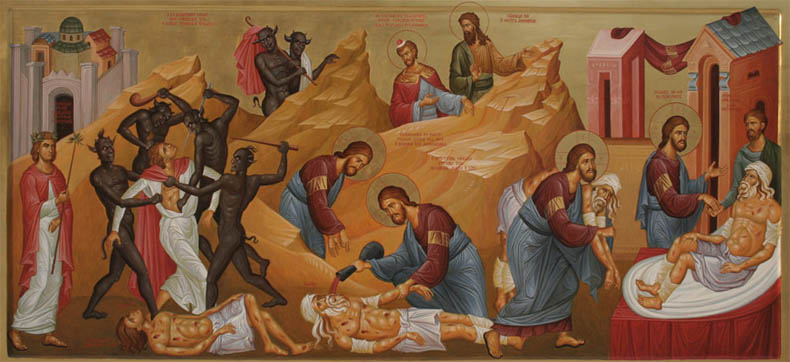
Christ the Good Samaritan (http://www.soldi.ee/images/samar1.jpg)
  
Through the prayers of our Holy Fathers, Lord Jesus Christ our God, have mercy on us and save us! Amen!