Tuesday, January 28, 2014

St. Ephraim the Syrian on Humility

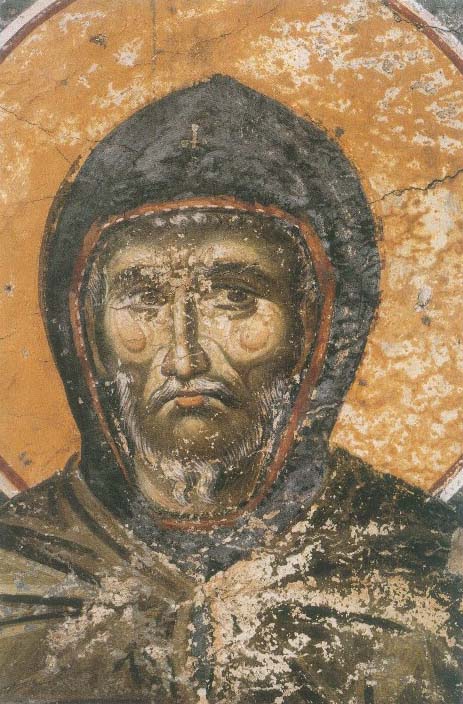
St. Ephraim the Syrian (source)
   
My beloved in the Lord, before every other thing set humility in thy mouth when thou art ready to make answer, for, forgive me, thou knowest that by humility all the power of the Enemy is brought to naught. And thou knowest the goodness of thy Master, Whom they blasphemed, and how He became humble, and obedient, even unto death. And do thou thyself, my son, set thy humility in thy mouth, and in thy heart, and in thy neck, for there is a commandment which inculcateth humility. Consider David, who boasted himself of his humility, and said, `Because I humbled myself the Lord delivered me, and He did good unto me.' [cf. Ps. 29(30): 8-12] My son, array thyself in humility, and thou shalt make the virtues of God be with thee. And if, my son, thou art in a state of humility, no passion whatsoever shall have power to draw nigh thee.
 
There is no measure (or, limit) to the beauty of the man who is humble. No passion whatsoever shall be able to draw nigh unto the man who is humble, and there is no measure to his beauty. The humble man is a sacrifice of God. With him that is humble the hearts of God and His angels rest. Moreover, when the angels glorify him, there is the excuse for him that hath produced in himself all virtues; but for him that hath produced humility in himself thou wilt find no excuse whatsoever needed, besides that he hath become humble.
 
My son, these are the virtues of humility. My son, hold thy peace, for it is written, `He who is wise at that time will hold his peace.' [Amos 5:13] Hold thy peace until thou art asked a question. When they ask thee a question speak, and use humble words, and a humble manner. Do not be wholly mournful. If it (i.e. the question) be too great for thee sit down. Speak not when others are speaking words of depreciation; compel thyself, thou shalt not forget, [and let] thy thoughts [be] 'I have not heard [them].' To all words wherin is profit give thy most earnest attention. For it is written, `If [thou art] a doer of the word and not a hearer thereof thou deceivest thyself, my son, in the Lord.' [2 Tim 3:15] I give thee commandments in thy beginning, do thou keep them in thy youth. Observe what Paul spake. He said, `Besides, from the time when thou wast a child thou didst know the Holy Scriptures, which have the power to save thee.'...
(source)
 
Through the prayers of our Holy Fathers, Lord Jesus Christ our God, have mercy on us and save us! Amen!
Saturday, January 25, 2014

St. Paisios on trials

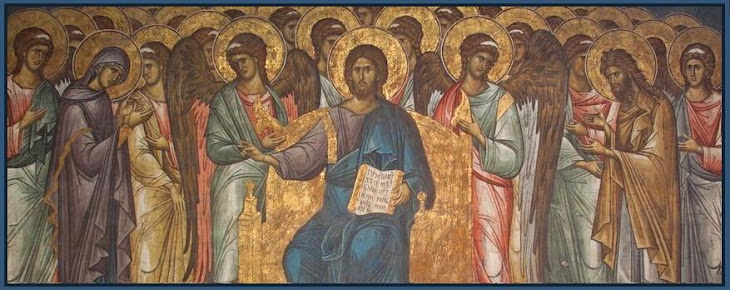
Christ being tempted in the wilderness (source)
 
Trials do good. Do not be afraid.

Our Christ struggled for forty days in the desert, but later he was served by Angels.

Our Christ is very loving.

Continuously, for our benefit, he allows great sorrow. For a short time we think that He has abandoned us, but because He feels sorrow, afterwards He loves us, He chokes us with His mercy, with His love.

Never fear, only love our Christ.
 
(amateur translation from source)
 
St. Paisios the Athonite (source)
  
Through the prayers of our Holy Fathers, Lord Jesus Christ our God, have mercy on us and save us! Amen!

St. Isaac the Syrian on Self-knowledge

St. Isaac the Syrian (sketch by Photios Kontoglou) (source)
 
He who senses his sins,
is greater than he who raises the dead
with his prayer.

He who groans one hour for his soul, is greater
than he who benefits the whole world.

He who is made worthy to see himself, is greater
than he who is made worthy to see angels.

To him who knows himself,
is given the knowledge of all things.
For the knowledge of ourselves is the fullness
of knowledge of all things.
 
(amateur translation of text from here)
   
Through the prayers of our Holy Fathers, Lord Jesus Christ our God, have mercy on us and save us! Amen!

St. Porphyrios on Prayer

St. Porphyrios of Kavsokalyvia (source)
 
God desires that we resemble the Angels.
The Angels only glorify God.
This is their prayer, only doxology.
Doxology is a delicate matter, fleeing from the things of man...
Doxology is selfless prayer.
The angels don't pray in order to gain something, for they are selfless.
God gave to us this ability, that our prayer might be a continuous doxology, an angelic prayer.
Here is found the great secret.
When we enter into this prayer, we glorify God continuously, leaving everything to Him, as our Church prays: “and offer all our life unto Christ our God.”
These are the “greatest lessons” of our religion!
Therefore, my beloved fellow walkers and travelers through life,
let us make a small effort to resemble the Angels.
Let us glorify God for everything, and let us leave our life in His Hands,
that He might lead us to the best harbor for us, where He knows.
May we all have good strength...
   
(amateur translation of text from here)
   
Through the prayers of our Holy Fathers, Lord Jesus Christ our God, have mercy on us and save us! Amen!

Friday, January 24, 2014

Prayer for the Recovery of the Relic of St. Polycarp of Smyrna

The martyrdom of St. Polycarp of Smyrna (source)
 
The following is a beautiful and moving prayer recently written by Metropolitan Ierotheos Vlachos for the return of the Holy Relic of St. Polycarp, recently stolen from the Monastery of Panagia Ampelakiotissa in his Metropolis. St. Polycarp is a great Saint and Apostolic Father of the Church, and he is a special protector and healer of the people of that region. Though the world has and will continue to go through trying times of poverty, disease, etc. the solution is to place our trust in God, not in our own passionate logic, and definitely not by defiling the holy things of Christ's Church. As the Metropolitan reminds us, unless we all turn to repentance for the evil that we have done, we all stand "self-condemned". As St. Polycarp's feast is approaching, may we all pray for his illumination, and that his Right Hand might return to console his saddened people.
   
Hierarchical Entreaty to God for the uncovering of the stolen Precious Relic of our Father among the Saints, the Hieromartyr Polycarp, Bishop of Smyrna, the Protector of the Region of Navpaktias.
written by Metropolitan Ierotheos of Navpaktos and Agiou Vlasiou.
O Lord Jesus Christ our God, Who sanctifies those who love You and rests within them, Who sets Your servants as vessels of Your Holy Name, precious members of Your Holy Body, temples of the Holy Spirit, Who loved Your servant and healer Polycarp, Bishop of Smyrna, granting him the rank of the Archpriesthood and the holy work of martyrdom, Who led the Holy Relic of Your Saint to this Holy Monastery of the Panagia named Ampelakiotissa, for the sanctification of Your people, and has shown this to be a dwelling place of glory and a spring of unemptying wonders, we thank You today, for the Divine Liturgy which we have celebrated, and we glorify Your holy and greatly-hymned Name.

You are the giver of good things and the source of life. You are He Who knows the depths of our hearts. You are He Who enriches us with every spiritual wisdom. You are He Who blesses us, through the intercessions of Your Saint, and placed within this Monastery an inexhaustible treasure, and made us inheritors of the holy Relics of this Apostolic Father. Therefore we hymn You, we bless You, we glorify You, our true God, Who works great, wondrous, glorious and magnificent deeds.

We take confidence, O Master of all, Lord of Heaven and earth, and all creation seen and unseen, that You know the pain of our hearts and our sorrow at the theft that took place in this holy place, for unclean hearts and unholy hands have defiled this Holy Temple, bursting through the doors, and seizing with impudence and deadly heart the all-holy Relic of the most-holy Father, who himself was honored even by the fire [in martyrdom], along with other nations and other faiths throughout the ages. Our heart is made grave at this profane and impious act and deed, truly filled with satanic inbreathing and to please the passions, we have been greatly wounded and vexed. We question in curiosity: What  satanic mind [literally "mind of the morning star"] planned this senseless deed? What purpose was there in defiling the holy dwelling-place of Your glory, of this sanctified relic? What brash hand stole this blessed right hand in insolence and impudence? Who was angry at the love of the people?

Truly, we are aghast before this act of cruelty, mute before this unholy deed and speechless before this satanic activity. Just a few days before, this blessed place, which is sanctified by the presence of Your Holy Mother, the Panagia Ampelakiotissa, and by the grace-bearing right hand of Your holy healer, Polycarp the wondrous, was defiled by wild impulses and barbaric acts, of senseless, thoughtless, impassioned, unholy and deluded men.

Therefore, cast a glance upon this, Your troubled people, and hearken to this prayer. Behold our sorrow and the tears for the loss of the sacred and greatly-loved treasure of our Protector of this Eparchy. Our eyes look upon You, our prayers pour forth from our hearts and rise to You as a sacrifice. Do not despise our prayer and the groaning of our heart.

We entreat You, O Lord our God, to open those unclean hearts and enlighten the darkened and [satanic] mind that worked this defiled and hideous act, that they might awake from the cloud of evil, and return the holy and sacred Relic to its home, in this Holy Monastery. Grant to them to come to know that this act inevitably brings to them to the pit of evil, to sickness of soul and body, and to the tartarus of Hades, to the place of desolation and torture. For it is fitting for those who work such deeds naturally and ethically, to be given to curses and anathemas, because through such a defiling deed they stand self-condemned, unless they repent bitterly, as Your Apostle Peter did upon his betrayal.

Grant to us, O Master of all, O Lord our God, the power to entreat Your healer, the Hieromartyr Polycarp the wondrous.

O Saint Polycarp, the protector of our hearts, come speedily near us, free the precious member of your body from the hands of the unrighteous, lawless, wicked and impious, and dwell newly among us, who love you with our whole heart. You, after God, are our Father and we are your children. We behold your dwelling-place empty, but adorned with our love and washed with our tears. Come, our consolation, our trainer and our benefactor.

O Lord Jesus Christ, the Son of the Living God, through the intercessions of Your Most-Holy Mother, and the entreaties of the holy Hieromartyr Polycarp, soften the pains of our soul, take away our pain and fulfill our desire, that we might newly behold the right hand of Your Saint, awesome in battle and gladsome to his friends.

For Yours is the glory and the honor and the worship, together with Your Beginningless Father, and Your All-Holy and Good and Life-giving Spirit, now and ever and to the ages of ages. Amen.

Sunday March 17th, the Holy Monastery of Ampelakiotissa.
(amateur translation from source)
 
Through the prayers of our Holy Fathers, Lord Jesus Christ our God, have mercy on us and save us! Amen!

Thursday, January 23, 2014

St. Paisios on the Prayer Rope

St. Paisios preaching to people outside his cell on the Holy Mountain (source)
 
-Elder, what meaning does the prayer rope (komboschoini) have?
-The prayer rope is an inheritance, a blessing, which was left to us by the Holy Fathers. And for this alone, it has great worth. You see, when someone's grandfather leaves him a meaningless object as an inheritance, he keeps it like a talisman, how much more should we keep the prayer rope as an inheritance of the Holy Fathers!

In olden times, when there were no clocks, monks counted the time with prayer with the prayer rope, but the knots of the prayer rope were simple. Once, an ascetic was doing great struggles, many prostrations, etc. and the devil went and broke the knots of his prayer rope. The poor man then did prostrations after prostrations, because he couldn't count them, as the devil broke his prayer rope to further continue his struggle. Then, an Angel of the Lord appeared to him and taught him how to weave the knots, so that each knot might contain nine crosses. The devil afterwards, who trembles at the cross, could not break them. Thus the knots of the prayer rope have nine crosses, which symbolize the nine ranks of the Angels.

-Elder, what do the 33, 50, 100 and 300 knots mean on prayer ropes?
-Only the number 33 is symbolic, for it symbolizes the 33 years that Christ lived upon the earth. The other numbers simply help us count the prostrations that we do or how many times we say the prayer.

Some machines have a rope with a grip in its side so that if you want it to go forward, you pull the rope strongly, until it warms it up with oil. Thus, the prayer rope is the rope which we pull one, two, five, ten times to warm up with spiritual oil and to move the spiritual machine forward of unceasing prayer, which afterwards, functions on its own. However, when the heart is going forward with the prayer, we still should not remove the prayer rope, so that others might not remove it, whose hearts have not moved forward with prayer.

-Elder, when I hold my prayer rope, and say the prayer mechanically, is there a danger of vainglory [ανθρωπαρέσκειας]?
-If you use the prayer rope externally, out of vainglory, even though your hands start to peel, it does not benefit you at all. It will only bring you fatigue, and the illusion that you are supposedly pursuing noetic prayer.

-Elder, I'm not used to carrying the prayer rope.
-You should carry the prayer rope, so that you might not forget the prayer, which should work internally, within the heart. When of course you exit your cell, you should remember that the enemy is ready to fight you. Thus, imitate the good soldier, who exits the barracks always with his automatic weapon “at hand”. The prayer rope has a great power, and is the weapon of the monk, and its knots are bullets, which [when fired at the feet of the demons] make their sandals dance.
(“On Prayer”, Words VII. Amateur translation of text from here.)
   
Through the prayers of our Holy Fathers, Lord Jesus Christ our God, have mercy on us and save us! Amen!

Tuesday, January 21, 2014

Elder Eliseus (Elisha) of Simonopetra on Sacrifice in Marriage and Monasticism

Sts. Joachim and Anna the Ancestors of God, holding the All-pure Theotokos (source)

Elder Eliseus (Elisha) of Simonopetra on Sacrifice in Marriage and Monasticism
Therefore, don't think that you don't aren't praying. You pray daily, if for the sole reason that you have decided to offer yourselves to God, and to live apart, against the worldly mindset. Thus you should know that this constitutes prayer. This is prayer. Prayer is when I become a monk, to offer myself to God. This is prayer.

You pray when you offer yourself to the church and as a sacrifice towards each other within marriage. One who gets married, therefore, in his married life, is a prototype. Marriage is a return to the former state in Paradise, in other words. It is to offer yourself in the married life, for what does it do? To offer myself to someone else is to sacrifice myself for the other.

No one can distinguish the lay person from the monk, for what are they? Being a monk is a return to a former state, in other words, that of Paradise, without compromises.

We sell our freedom to God, because God is our freedom.
(amateur translation of text from here)
   
Through the prayers of our Holy Fathers, Lord Jesus Christ our God, have mercy on us and save us! Amen!