Sunday, March 2, 2014

Homily of St. Tikhon of Moscow on Forgiveness (Cheesefare) Sunday

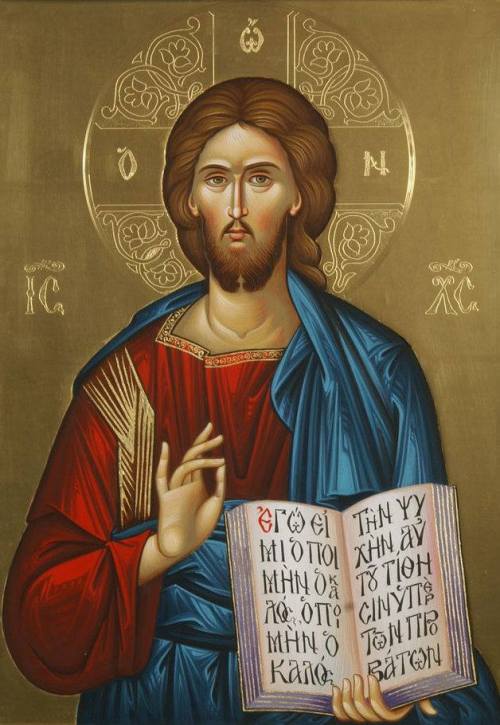
Jesus Christ, as He was seen by Elder Paisios of the Holy Mountain (source)

Homily of St. Tikhon of Moscow on Forgiveness (Cheesefare) Sunday

Today is called "Forgiveness Sunday." It received this name from the pious Orthodox Christian custom at Vespers of asking each other's forgiveness for discourtesy and disrespect. We do so, since in the forthcoming fast we will approach the sacrament of Penance and ask the Lord to forgive our sins, which forgiveness will be granted us only if we ourselves forgive each other. "If ye forgive men their trespasses, your heavenly Father will also forgive you. But if ye forgive not men their trespasses, neither will your Father forgive your trespasses."(Matt. 6. 14, 15)
 
Yet it is said to be extremely difficult to forgive discourtesy and to forget disrespect. Perhaps our selfish nature finds it truly difficult to forgive disrespect, even though in the words of the Holy Fathers it is easier to forgive than to seek revenge. (St. Tikhon of Zadonsk after St. John Chrysostom) Yet everything in us that is good is not accomplished easily, but with difficulty, compulsion and effort. "The Kingdom of Heaven suffereth violence, and the violent take it by force."(Matt. 11. 12) For this reason we should not be discouraged at the difficulty of this pious act, but should rather seek the means to its fulfillment. The Holy Church offers many means towards this end, and of them we will dwell on the one which most corresponds to the forthcoming season of repentance.
 
"Yea, O Lord and King, grant me to see my own transgressions and not to judge my brother." The source of forgiving our neighbors, of not judging them, is included in seeing (acknowledging) our sins. "Imagine," says a great pastor, who knows the heart of man, Father John of Kronstadt, "picture the multitude of your sins and imagine how tolerant of them is the Master of your life, while you are unwilling to forgive your neighbor even the smallest offense. Moan and bewail your foolishness, and that obstruction within you will vanish like smoke, you will think more clearly, your heart will grow calm, and through this you will learn goodness, as if not you yourself had heard the reproaches and indignities, but some other person entirely, or a shadow of yourself." (Lessons on a Life of Grace, p. 149) He who admits his sinfulness, who through experience knows the weakness of human nature and its inclination toward evil, will forgive his neighbor the more swiftly, dismissing transgressions and refraining from a haughty judgment of others' sins. Let us remember that even the scribes and Pharisees who brought the woman caught in adultery to Christ were forced to depart, when their conscience spoke out, accusing them of their own sins. (John 8. 9)
 
Unfortunately, brethren, we do not like to acknowledge our transgressions. It would seem natural and easy for a person to know his own self, his own soul and his shortcomings. This, however, is actually not so. We are ready to attend to anything but a deeper understanding of ourselves, an in vestigation of our sins. We examine various things with curiosity, we attentively study friends and strangers, but when faced with solitude without extraneous preoccupation even for a short while, we immediately become bored and attempt to seek amusement. For example, do we spend much time examining our own conscience even before confession? Perhaps a few minutes, and once a year at that. Casting a cursory glance at our soul, correcting some of its more glaring faults, we immediately cover it over with the veil of oblivion until next year, until our next uncomfortable exercise in boredom.
 
Yet we love to observe the sins of others. Not considering the beam in our own eye, we take notice of the mote in our brother's eye. (Matt. 7. 3) Speaking idly to our neighbor's detriment, mocking and criticizing him are not even often considered sins but rather an innocent and amusing pastime. As if our own sins were so few! As if we had been appointed to judge others! "There is one Lawgiver, who is able to save and to destroy" ? God. (James 4. 12) "Who art thou to judge another's servant? It is before his own master that he stands or falls." (Rom. 14. 4) "Thou hast no excuse, O man, whoever thou art who judgest. For wherein thou judgest another, thou dost condemn thyself. For thou who judgest dost the same things thyself." (Rom. 2. 1) "Examine yourselves, whether you are in the faith; put yourselves to the test." (2 Cor. 13. 5) The pious ascetics provide a good example of this. They turned their minds to themselves, meditated on their own sins and avoided judging their neighbors at all costs.
 
One pious starets, noticing that his brother had committed a sin, sighed and said, "Woe is me! As he sinned today, so will I tomorrow." And the following is a story about another ascetic, Abba Moisei. A monk committed a sin. The brethren, who had assembled to decide his case, sent for Abba Moisei, but the humble starets refused to attend the council. When the rector sent for him a second time, he appeared, but in quite a striking manner. He had taken an old basket, filled it with sand and was carrying it on his back. "What does this mean?" asked the monks, catching sight of him. "See how many sins I bear behind me?" answered Moisei, pointing to the heap of sand. "I don't see them, yet I have come to pass judgment upon another."
 
So therefore, brethren, following the example of the ascetics, upon observing others' sins, we should consider our own sins, regard our own transgressions and not judge our brother. And should we hold anything against him, let us pardon and forgive him, that our merciful Lord may forgive us also.
 
St. Tikhon (Bellavin), Then Bishop of Alaska and the Aleutian Islands, Later - Patriarch of Moscow and all Russia, 1901, Translated from Russian and published in Holy Trinity Cathedral's Bulletin on February 28, 1993. (source)
   
I ask you all to forgive me, the sinner, and may God grant us all forgiveness! May we all have a blessed Great Lent!

Through the prayers of our Holy Fathers, Lord Jesus Christ our God, have mercy on us and save us! Amen!

Saturday, March 1, 2014

Elder Ephraim of Arizona: How easily God forgives!

Jesus Christ, on His Gospel is written: "I am the Good Shepherd..." (source)
 
How easily God forgives! The only thing that must occur is to open the door of your souls to Him. God does not wait for any reward for that which He gives to men. And even if your sins are millions or billions, for God this is counted as nothing. What is the worth of a small amount of sand to the ocean?  All the sins of the world are like a virus to the ocean.

There is no sin which conquers the mercy on God. Thus, the sins of man are zero. When the child returns to the bosom of the Lord, all things cease before His mercy.
-Elder Ephraim of Arizona
 
(amateur translation of text from here)
 
Jesus Christ, the "Good Shepherd, Who lays down His life for the sheep" (source)
 
Through the prayers of our Holy Fathers, Lord Jesus Christ our God, have mercy on us and save us! Amen!

An Orthodox Prayer for Peace in the World

Jesus Christ "O Yperagathos" ("The Surpassing Good One") (source)

ΕΥΧΉ ΥΠΈΡ ΕΙΡΉΝΗΣ ΤΟΥ ΚΌΣΜΟΥ
Δέσποτα Θεέ, Πάτερ Παντοκράτορ, Κύριε του ουρανού και της γης, ο διά την ημετέραν σωτηρίαν εκ Παρθένου τεχθείς και διδάξας τοις ανθρώποις αγάπην και ειρήνην έχειν προς αλλήλους, κατάπεμψον την χάριν σου την επουράνιον και ελέησον ημάς, κατά το μέγα σου έλεος, πάσης ανάγκης ρυόμενος.

Παύσον τα φρυάγματα των εθνών, ειρήνευσον ημών την ζωήν, λύτρωσαι ημάς και τον κόσμον σου από πάσης απειλής εναντίας και δίδαξον τοις ηγέταις των εθνών εν ειρήνη επιλύειν τας διαφοράς αυτών και εν παντί ειρηνεύειν, υπόταξον δε πάντα τα βάρβαρα έθνη τα τους πολέμους θέλοντα.

Εξαπόστειλον περιστεράν, κλάδον ελαίας έχουσαν επί του στόματος, καταλλαγής σύμβολον, τους εν αιγμαλωσία αδελφούς ημών ανάρρυσαι, τους άρχοντας ημών εν ειρήνη και ομονοία διατήρησον, δώρησαι δε ημίνβαθείαν και αναφαίρετον ειρήνην, την πάντα νούν υπερέχουσαν, ίνα ήρεμον και ησύχιον βίον διάγωμεν, σου δεόμενοι υπέρ ειρήνης του σύμπαντος κόσμου και του ευσεβούς ημών έθνους, την συμμαχίαν έχοντες την σήν, όπλον ειρήνης, αήττητον τρόπαιον.

Συ γαρ ει ο Βασιλεύς της ειρήνης και Σωτήρ των ψυχών ημών και σοι την δόξαν αναπέμπομεν, τω Πατρί και τω Υιώ και τω αγίω Πνεύματι, νυν και αει και εις τους αιώνας των αιώνων. Αμήν

(source)
   
An Orthodox Prayer for Peace in the World (amateur translation)
O God and Master, Almighty Father, Lord of heaven and earth, Who for our salvation was born of a Virgin, and taught men to have love and peace among each other, send down Your heavenly grace and have mercy on us, according to Your great mercy, and deliver us from every want.

Cease the fragmentation of the nations, grant peace to our lives, deliver us and Your world from every danger that faces us, and teach the leaders of the nations to resolve their differences in peace and to be in all ways peace-makers, deposing all barbarian nations who desire war.

Send down the dove, bearing the olive branch in its mouth, as a symbol of reconciliation, deliver our brothers in captivity, keep our rulers in peace and harmony, and grant to us deep and inalienable peace, which surpasses all understanding, that we might live our life in peace and silence, praying to You for the peace of the whole world, and for our pious nation, having your alliance as a weapon of peace, and invincible standard.

For You are the King of peace, and the Savior of our souls, and to You we offer up glory, to the Father and to the Son and to the Holy Spirit, now and ever and unto the ages of ages. Amen.
   
Through the prayers of our Holy Fathers, Lord Jesus Christ our God, have mercy on us and save us! Amen!

Wednesday, February 19, 2014

The complaint of St. Nektarios

St. Nektarios the Wonderworker (source)
 
St. Nektarios once appeared to a most-pious cleric and complained:
"It's as if we Saints are in retirement...The people don't pray to us, don't entreat us, don't ask us for anything, don't give us any handiwork to do. They don't give us the opportunity to pray to God for them..."
 
(source: God is with us, are we with Him?, puublication of Orthodox Kypseli)
   
Through the prayers of our Holy Fathers, Lord Jesus Christ our God, have mercy on us and save us! Amen!

Tuesday, February 18, 2014

St. Isaac the Syrian: "The Lord is found hidden within the commandments..."

Jesus Christ "The Land of the Living", mosaic from the Chora Monastery, Constantinople (source)
 
The Lord is found hidden within the commandments which He Himself gave, and is revealed to those who seek Him. For exactly like a sensible home is to the clean air, so the rational mind corresponds to the divine grace. For the more material you remove from the dwelling place, the more it is filled with clean air. And on the contrary, the more material that is placed in the dwelling place, the more the clean air departs. By the words "materials of the house", we think of containers and goods, and by the words "materials of the nous", we think of vainglory and pleasure. Therefore, the more one removes vainglory and pleasure, the more our heart is filled with the grace of the Holy Spirit with the working of His commandments.
-St. Isaac the Syrian

(amateur translation of text from here)

Through the prayers of our Holy Fathers, Lord Jesus Christ our God, have mercy on us and save us! Amen!

Monday, February 10, 2014

St. Charalambos appears to St. Arsenios of Cappadocia

St. Charalambos the Hieromartyr and Wonderworker (source)
 
Elder Paisios of the Holy Mountain, in his Life of St. Arsenios of Cappadocia (Hatziefenti), relates a wondrous appearance of St. Charalambos to St. Arsenios and his chanter, Prodromos Kortsinoglou.
"Once, during the feast of St. Charalambos," Prodromos related, "we were going to Panagia (in Kantsi) to celebrate a vigil. When we reached the Praises [hymns near the end of the Orthros], Hatziefentis exited the Holy Altar, that we might chant together. While we were chanting at the same analogion [chanter's stand], I saw straightaway a white-haired Elder at the opposite analogion, who was bent over, leaning on his cane, and I began to tremble out of reverence.

Hatziefentis, when he saw me, asked: "Are you cold?"

And I told him "no", as I pointed to the white-haired Elder who was across from us. Hatziefentis was not at all shaken, but spoke to him in Turkish: "Come and let's chant together."

The white-haired Elder, however, did not respond, but only made a motion that we continue by ourselves. Because I was not paying attention to the book, because I was secretly gazing at that Elder while my mind was on him, there was created a cacophony, and the white-haired Elder moved to leave. He left, and we saw him disappear into the small pool of Holy Water, as the water splashed all over the Church.

Hatziefentis said that that white-hairded Elder was St. Charalambos.

We completed the Divine Liturgy, and afterwards went to the village to relate what happened. Then, the people of Farasa ran to the Chapel of Panagia out of reverence to gather the Holy Water which was splashed around the Church from the miracle from the Saint."

After this event, Hatziefentis remained locked within his cell for forty days and said that he was not available, while the villagers thought that he was sick. Others said that he was shaken by this event."
 
Elder Paisios of the Holy Mountain, St. Arsenios the Cappadocian, published by the Holy Hesychasterion of St. John the Evangelist, the Theologian, Souroti, Thessaloniki 1999, pgs. 62-63. Amateur translation of text from source.
 
St. Arsenios of Cappadocia (source)
 
Through the prayers of our Holy Fathers, Lord Jesus Christ our God, have mercy on us and save us! Amen!

Monday, February 3, 2014

St. Symeon the New Theologian: In Praise of those who have Love in their Hearts

The Crucifixion of Christ (source)
   
St. Symeon the New Theologian: In Praise of those who have Love in their Hearts

Let us therefore follow one and the same path, Christ’s commandments, which elevate us to heaven and to God. Even though the word shows us many paths and many ways for people to reach the kingdom of heaven, these paths are not, in fact, many, but one, though they’re divided into many, according to each person’s ability and disposition. While we may begin from many and varied works and actions, just as travelers depart from different places and many cities, the destination we are attempting to reach is the same: the kingdom of heaven.

The actions and ways of godly men must be understood as spiritual virtues. Those who begin to walk in them must head towards one goal, just as those who come from various countries and places come together, as we have said, to one city, the kingdom of heaven, where, together, they will become worthy to reign with Christ and become subjects of one King, our God and Father. By this city, which is one, not many, you should understand the holy and undivided trinity of virtues, faith, hope and love, especially that virtue which comes before the others but is also mentioned as the last, since it is the goal of all good things and greater than them all- love.

All faith comes from it and is built on its foundation; on it, hope is based. Without love no thing has ever taken shape, nor ever will. Its names and actions are numerous. Even more so are its distinctive features; its properties are divine and innumerable. Yet it is one in nature, wholly beyond the ken of angels or men or any other creatures, even those which are unknown to us. Reason cannot tell of it; its glory is inaccessible; its counsels unsearchable. It is eternal and beyond time, and beyond sight, though it may be perceived. How many are the delights of this Holy Zion not made by human hand. Those who have begun to see it no longer take any pleasure in perceptible, earthly objects; they become indifferent to the glory of this world.

Permit me, for a short time, to address myself to this love, to fulfill my desire for it, insofar as I can.

When I recalled the beauty of undefiled love, its light suddenly appeared in my heart. I was ravished with its sweetness and lost my senses; I lost all perception of this life and forgot all the things of this world. But then- I don’t know how- it departed from me and left me to lament my weakness.

Love desired, how fortunate are those who have embraced you, for they will no longer have a yearning to embrace any human beauty. How fortunate are they who are moved by divine love to cling to you: they’ll deny the whole world, and, to whatever degree they associate with others, they won’t be spoiled. How fortunate are those who caress your beauty and delight in it with great desire, for their souls will be sanctified by the undefiled blood and water which issue from you. How fortunate are those who passionately embrace you, for they will be altered for the better in spirit and will exult in their souls, because you are inexpressible joy.

How fortunate are they who gain possession of you, for they will count the treasures of the world as nothing, for you are indeed wealth “beyond the dreams of avarice”. How blessed and thrice-blessed are they whom you accept, for though they be apparently without any glory, they will be more glorious than those who are glorious, more honoured than those who are honoured. How worthy of praise are those who pursue you; even more so those who have found you. Most blessed are those who are loved by you, received by you, taught by you, those who have dwelt in you and been fed by you with immortal food, that is the Lord, Jesus Christ.

Love divine, where are you holding Christ? Where are you concealing Him​? Why have you taken the Redeemer of the world and departed from us? Open a wicket gate for us, so that we also may see Christ Who suffered for us, and so hope in His mercy that we’ll die no more when we once have seen Him. Open up to us, you who became the door allowing Him to be made manifest in the flesh. Love, you who’ve forced the unforced and abundant compassion of our Master to bear the sins and infirmities of all people, do not reject us by saying, “I do not know you”.

Be with us, so that you may come to know us, for we are not known to you. Dwell in us, so that, for your sake, the Master may visit even us, who are lowly; go before us to meet Him, since we are wholly unworthy. So that He will pause on His way, to converse with you and will permit even us sinners to fall at His unblemished feet. You’ll intercede on our behalf and plead with Him to forgive the debt of our sins, so that through you we may again be found worthy to serve Him, our Master, and be sustained and nourished by Him. Because even those who owe nothing are still at risk of dying from starvation and poverty and are punished and chastised, just as those who do owe.

 Holy Love may we then be pardoned through you and may we enter into the enjoyment of the good things of our Master, since no-one will taste their sweetness except through you. Those who don’t love you as they ought and are not, as they should be, the object of your love, may well run, but haven’t yet reached the goal. It’s far from certain that somebody who is running will actually complete the race. But for those who have laid hold on you, or on whom you have laid hold, [victory] is certain, since you are the end of the Law. It is you who surround me and inflame me, you who, by the pangs of my heart, kindle me with boundless desire for God and for others. You’re the teacher of the prophets, the companion of the apostles, the power of the martyrs, the inspiration of the fathers and teachers, the perfection of all the saints, and the commission for my own, present task of obedience.

Forgive me, brethren, for digressing somewhat  from the subject of my discourse, but my longing for love moved me to do so. When I recalled it, my heart rejoiced, as holy David says, and I hastened to sing the praise of its marvels. I therefore entreat you, of your goodness, to pursue it with all your strength and to run after it with faith so that you may lay hold on it. You will not be disappointed in your hopes. Because any zeal and any ascetic effort is in vain and with no useful outcome, unless they end in love, with a contrite spirit. By no other virtue, by no other observance of the Lord’s commandment, can anyone be known as a disciple of Christ, for He says, “If you have love for one another, by this will everyone know that you are my disciples,”.

It’s for this reason that “the Word became flesh and dwelt among us”. It was for love that He became flesh and dwelt among us; for love, He willingly endured His life-giving passion, in order that He might deliver us from the bonds of hell and lead us up to heaven; for love, the apostles ran that unceasing race and used the fish-hook and net of the word to drag the world out of the depths of idolatry and bring it into the haven of the kingdom of heaven; for love, the martyrs shed their blood, so that they might not lose Christ; for love, our God-bearing Fathers and teachers of the world eagerly laid down their lives for the Catholic and Apostolic Church; for love, I, who am of no account at all, have embarked on your protection and am struggling to teach you about the divine words, so that I can imitate those teachers of the Church, insofar as I am able, and suffer and endure for your sake and do everything I can for your edification and profit, so that I may present you as perfect sacrifices, burnt-offerings endowed with intellect, on the altar of Christ. For you are God’s children, whom He has given to me; you are my very heart, my eyes, my pride and the seal of my teaching, as Saint Paul says.

My dear brethren in Christ, let us then strive, as we serve Christ with the other virtues, to serve Him also with love, which should dwell among us, so that God may rejoice at your harmony and perfection. Then, in my lowliness, I will also rejoice as I see your progress in the life that is in accordance with God, as you increase in faith, purity, in the fear of God, reverence, in compunction and tears. By these the soul is purified and is filled with divine light, and the Holy Spirit. My joy will be a blessing for you and an increase of the eternal and blessed life in Christ Jesus our Lord, to Whom be glory forever. Amen
   
St. Symeon the New Theologian (source)
   
Through the prayers of our Holy Fathers, Lord Jesus Christ our God, have mercy on us and save us! Amen!